A Game Changer in Farmers’ Poverty Reduction
Arjumand Wani
SRINAGAR, Aug 2: “Significant growth in vermicompost has improved soil structure and increased its water holding capacity for better farming which has ultimately turned horticulture plants healthy,” said Ali Mohammad Mir, a septuagenarian farmer while talking to Kashmir Despatch.
The 70-years-old Mir runs a vermicompost unit in an apple rich district of south Kashmir for past 17 years. A resident of Gagran area of south Kashmir’s Shopian district Mir utilizes bio-fertilizers in farming and has been able to create employment and entrepreneurship after taking assistance and advice from the Department of Agriculture J&K.
With assistance from the Department of Agriculture, Mir has established a vermicompost facility and started manufacturing bio-fertilizers in 2005.
Mir, who is an active audience of traditional media regularly tuning into agricultural programs on Doordarshan and the radio, recalled watching an agricultural programme on television, during which he became aware of the harmful effects of chemical fertilizers on water quality and soil fertility and came to know about the benefits of vermicompost.
In the very beginning he manufactured just a few kilograms of bio-fertilizer. Then the level of expectations surged which made him super serviceable in expanding the production of organic manure.
“Presently, I produce more than 27 tons of fertilizers and I provide employment to the entire family and also to the three local boys whom I pay Rs. 45000 a month,” said Mir.
He further said that, he is now assisting other farmers as well as startups who choose vermicompost manufacturing especially in South Kashmir. “I have assisted and guided near about a hundred units in the area as I am skilled in manufacturing the bio-fertilizer now,” he said.
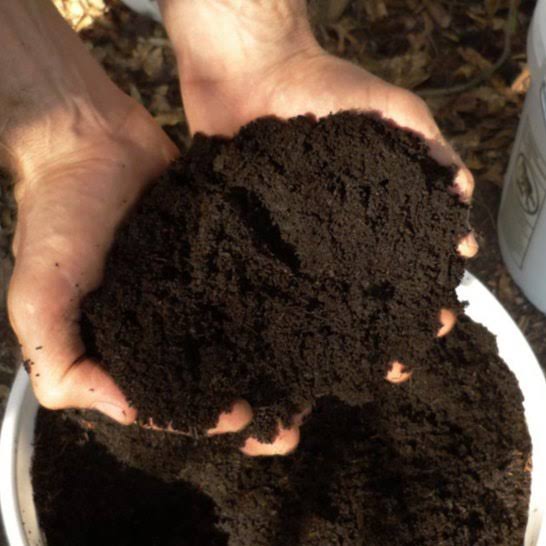
All the fertilizers he needed for his farm which sprawls over 10-15 Kanals came from this unit, and he makes a dignified livelihood out of this business, he remarked.
“Since I lack in formal education, I had several challenges. I can’t use a smartphone, so I still rely on traditional sources to be informed, but educated individuals can easily take advantage of numerous government programs by utilizing current technologies,” he added.
Empowering Farmers
To encourage groups of farmers to switch to organic farming, the Paramparagat Krishi Vikas Yojana (PKVY) was established to encourage organic cultivation and the export of organic food.
Over the past six years, the Horticulture Department of Kashmir has distributed 3661 vermicomposting units to farmers in an effort to turn organic waste into fertile soil.
Increasing the output of certain crops in a sustainable way, soil health cards have been established.
Pertinently the central government prioritized Jammu and Kashmir along with few other parts of the country to encourage organic farming due to its favorable environment and lower fertilizer use than other states.
According to data available In J&K, 1180 hectares of land have been designated for organic farming, 300 hectares for vegetable production under the urban cluster plan, 380 hectares under the horticulture mission, and 500 hectares under the Krishi Vikas Yojana. 3409 state farmers have received training in organic farming.
Following the recent unseasonal rains, the Government proactively declared that farmers would qualify for input subsidies if 33 percent or more of their crop was destroyed. Previously, a farmer could only receive assistance if the damage to their crops was at least 50%. Additionally, the amount of financial aid is increased by 50% in cases of crop losses.
Overall Development
According to an official, In order to improve farmer income, guarantee food security, and hasten UT’s economic progress, the budget for 2023–24 has allotted Rs. 3156 crore for the creation of an environment that would facilitate the transformation of J&K’s agricultural and related industries.
With a focus on post-harvesting management infrastructure, notably in the private sector, the government has made a number of significant moves to boost agricultural and horticulture productivity and enhance crop quality.
A high-level meeting to examine the performance of the Agriculture Production Department and the advancements achieved in agriculture, related industries, and the centerpiece project of the Holistic Agriculture Development Programme (HADP) was presided over by Lieutenant Governor Manoj Sinha on Thursday.
The establishment of 2000 Kisan Khidmat Centers, which prioritize handholding, clustering, and connecting all farmers to institutional loans, was ordered by Sinha to the officials. Production would increase if small and marginal farmers received timely, hassle-free finance, the speaker noted.
Agri Export-Import Policy
Recently the experts discussed the J&K’s first export-import policy as well as a number of tactical and strategic moves that might turn J&K into a net exporter of agricultural products with the support of policy and the integration of global value chains.
This policy shall aim at raising agricultural exports from a value of INR 190 billion in 2022-23, to an amount of INR 1500 billion by 2029-30 on the back of import substitution of different categories of farm produce and products with J&K’s dominant position thus contributing to India’s trade balance.

