By REYAN SOFI
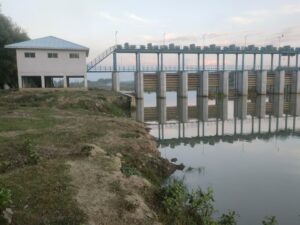
When gates were finally installed at Hokersar Wetland, many of us believed that the long-standing issue of fluctuating water levels had been solved. We hoped that this Ramsar site once home to thousands of migratory birds would once again remain filled with water throughout the year, supporting both its unique biodiversity and its role as a natural flood buffer for Srinagar.
But our hopes were short-lived. The moment the Department of Wildlife Protection tried to maintain the required water level, complaints began pouring in — not from conservationists, but from those who have illegally converted parts of the wetland into paddy fields and vegetable plots. Their argument is simple yet troubling: if the water level remains high, their paddy cultivation and vegetable farming will suffer.
This raises a critical question — how can the department protect the wetland if it must constantly bow to the pressures of encroachers?
The Tug of War Between Conservation and Cultivation
Hokersar, once called the “Queen of Wetlands,” is a lifeline for both wildlife and people. It provides habitat for thousands of migratory birds — from the elegant Northern Pintail to the striking Common Shelduck — and plays a vital role in groundwater recharge and flood control.
Yet, over the years, parts of this protected area have been taken over by people who cultivate rice and vegetables illegally within its boundaries. These makeshift fields not only destroy natural vegetation but also block the flow of water, accelerating siltation and habitat loss.
Now, when authorities try to restore the wetland’s water level — the very essence of its survival — they face resistance from those whose activities are harming it. The question is no longer just environmental; it has become social and administrative.
A Widespread Crisis: Not Just Hokersar
The problem extends far beyond Hokersar. Mirgund, Hygam, Shallabugh, Wular lake and even parts of the wetlands around Pampore are facing the same fate. These wetlands, once vibrant ecosystems supporting thousands of migratory birds every winter, are slowly being reclaimed for agriculture and construction.
Every year, water levels recede earlier than they should. What remains are patches of cracked mud and weeds where waterfowl once swam and fed. The sound of wings beating over the wetlands — a familiar winter symphony — is growing fainter with each passing season.
The Role of the Department of Wildlife
The Department of Wildlife Protection faces an uphill battle. Despite legal authority, its efforts are often hindered by lack of coordination with other departments, political pressure, and local resistance. The gates and control structures installed at Hokersar were a step in the right direction, meant to maintain ecological balance. But their effectiveness depends entirely on whether they can actually be used — and whether encroachment is tackled firmly.
If people continue to cultivate inside the wetland, if the water level continues to be manipulated for farming, and if illegal encroachments remain unchallenged, how will any wetland survive in Kashmir?
A Call for Firm Action and Community Awareness
Wetland protection cannot succeed through policies alone. It needs strict enforcement and public cooperation.
Authorities must:
Remove illegal encroachments within wetland boundaries.
Maintain water levels year-round as per ecological requirements.
Conduct awareness drives to help locals understand the long-term benefits of conservation.
Involve local communities in protection efforts rather than letting them exploit the ecosystem.
Our wetlands are not wastelands — they are living ecosystems that protect us from floods, provide habitat to countless birds, and regulate our climate.
Conclusion: Time Is Running Out
The fate of Hokersar, Mirgund, Hygam, Shallabugh, wular lake and the wetlands of Pampore reflects a deeper crisis — our collective failure to value nature beyond short-term gain. We cannot let paddy fields replace the homes of migratory birds, or let greed silence the calls of cranes and ducks that have visited these waters for centuries.
If we allow this destruction to continue, we will not only lose our wetlands — we will lose a part of Kashmir’s soul.
Author is a wildlife photographer and can be reached at [email protected]

