By Zulfiqar Naqvi
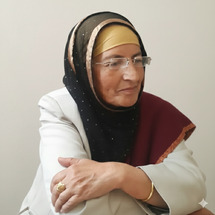
Rukhsana Jabeen, born in 1955 in Kashmir, occupies a distinguished position in contemporary Urdu poetry, combining literary excellence with an eminent career in broadcasting. After completing her formal education, she joined All India Radio as a Program Executive and served the institution with distinction for more than three decades. Her professional journey culminated in her elevation to the prestigious post of Station Director, from which she retired as Station Director, Radio Kashmir Srinagar. This prolonged engagement with public discourse, culture and language has deeply shaped her poetic temperament, lending her work clarity, balance and communicative depth.
Equally significant is her command over multiple linguistic traditions. Rukhsana Jabeen writes with equal authority in Urdu, Persian and Kashmiri, drawing upon the aesthetic refinement of Persian classical poetry and the emotional cadences of Kashmiri culture. Among her many works under publication, her versified Urdu translation of the Persian poetry of Hafiz Shirazi stands out as a major literary achievement, testifying to her mastery over classical Persian poetics and her ability to recreate its spiritual and lyrical essence in Urdu. Beyond authorship, she remains actively involved in literary life as a member of several national and international literary organizations, including the Global Association of Women Writers. These multiple roles, as an administrator, a cultural mediator, a translator and a poet, converge in her poetry, producing a voice that is intellectually mature, ethically grounded and aesthetically disciplined.
The quoted verses, read together, reveal a poet who speaks from within a patriarchal order yet refuses to internalize its hierarchies. She interrogates inherited myths of creation, challenges linguistic coercion and reclaims silence as a moral space. At the same time, her poetry is not confined to protest alone; it accommodates metaphysical doubt, ethical self-scrutiny, ecological sensitivity and a profound attentiveness to inner life. Each couplet unfolds as a distinct meditation and yet a shared consciousness binds them—one that insists on dignity, moral agency and the right to complex subjectivity.
“B’ham us ko fazā-e-āsmānī,
Main goyā band kamre mein dhuā̃ hoon”.
(He possesses the open sky; I am, as it were, smoke in a closed room.) This couplet establishes the structural asymmetry that underlies much of patriarchal life. The “open sky” is not merely freedom; it is sanctioned expansiveness—mobility, legitimacy and visibility. The speaker’s self-description as “smoke in a closed room” is profoundly telling: smoke exists, asserts its presence, even suffocates, yet is treated as a nuisance rather than a right-bearing entity. The metaphor captures the female condition within restrictive spaces where existence is tolerated but autonomy is denied. Importantly, the poet does not say she is air but smoke—suggesting that even her most organic expression is viewed as excess, as something to be ventilated out. The verse speaks quietly, but the quietness itself mirrors the normalized nature of confinement.
“Main phūṭī us kī paslī se to ṭeiṛhī ,
Woh sīdhā teer jaisā, main kamāa hoon,”
(If I was formed from his rib, then I am crooked; He is straight like an arrow, I am the bow.) Here Rukhsana Jabeen engages directly with a foundational patriarchal myth: woman’s derivative creation. Rather than rejecting the narrative outright, she exposes its internal contradiction. If straightness is virtue and curvature a flaw, then how does the arrow achieve motion without the bow? The “crooked” bow is the site of stored energy, intention and direction. This is not merely feminist irony; it is symbolic reasoning. The poet reframes agency as relational rather than linear. Masculine straightness without feminine curvature is inert. The verse dismantles the hierarchy embedded in origin myths and replaces it with logic of interdependence.
“Dalīlein ḍhēron sārī tu zamīn hai,
Ba-zid is par ke terā āsmān hoon.”
(He has countless arguments and calls me the earth, And despite that, insists that he is my sky.) This couplet is spoken from within a male argumentative stance that the poet exposes, not endorses. The man produces “numerous arguments” to naturalize hierarchy: woman as earth—solid, useful, but subordinate; man as sky—overarching, commanding. His insistence (“ba-zid”) reveals not truth but anxiety, the need to continuously reassert dominance. The brilliance of the verse lies in its ventriloquism: the poet allows patriarchal reasoning to speak itself into exposure. The sky–earth metaphor, traditionally romanticized, is shown here as rhetorical coercion masquerading as cosmic order.
“Ghuṭan sī sānsōn mein jin ke ṭufail hotī thī,
Woh sāre khauf, woh ḍar sab bhulā diye main ne.”
(Those fears that were the very cause of suffocating breaths—All those fears, all that dread, I have forgotten.) This couplet condenses an entire psychological history into the metaphor of breath, where “suffocated breaths” signify a life lived under relentless pressure, anxiety and confinement. Breath here functions as a symbol of existence itself, suggesting that fear had so deeply permeated the speaker’s life that even the act of living felt constricted. The phrase “jin ke tufail” subtly indicates external forces—social norms, oppressive relationships, or internalized authority—that produced this state of suffocation without being named, thereby universalizing the experience. Fear is presented not as a momentary emotion but as a cumulative condition, reinforced through the repetition of “khauf” and “dar,” implying a constant, normalized state of dread. The poet’s tone, however, shifts decisively in the final line, where forgetting fear becomes an act of conscious resistance rather than passive amnesia. “bhula diye meine” asserts agency and self-reclamation, marking a psychological break from the structures that once governed her inner life. The first-person assertion underscores a reclaimed subjectivity, where the speaker moves from being acted upon to becoming the actor. Feministically read, the verse reflects the unlearning of fear that women are often conditioned to internalize as survival. The shedding of fear also implies the restoration of voice, as free breath and free speech are deeply interconnected. Stylistically restrained yet emotionally dense, the couplet achieves its power through understatement rather than overt protest. Ultimately, the verse records an inward revolution in which liberation begins not in the external world but within the self.
“Khwāhish alag hai aur zarūrat kī shai judā,
Bujhtī nahī̃ hai bārishō̃ mein bhīgnay se pyās.”
(Desire is one thing, necessity another; Thirst is not quenched by merely getting wet in the rain.) The couplet draws a subtle yet powerful distinction between desire and need. It suggests that what the heart longs for is often very different from what survival or circumstance demands. The second line deepens this idea through a striking metaphor: rain symbolizes abundance or external fulfillment. Yet, despite being drenched in rain, thirst remains unquenched—implying an inner lack. This shows that not every abundance satisfies every need. Material availability or outward generosity cannot heal inner emptiness. The thirst here is not physical but emotional, spiritual, or existential. The verse critiques the illusion that excess or surplus automatically leads to fulfillment. It reminds us that true needs are specific and intimate, not interchangeable. Ultimately, the couplet reflects the tragedy of modern existence: being surrounded by plenty, yet still longing. It reminds us of a very meaningful phrase, “water, water everywhere, and not a drop to drink,” used by S.T. Coleridge in his poem “The Rime of the Ancient Mariners.” It illustrates the irony and anguish of being desperately thirsty whilst being surrounded by nothing but ocean. It would be more accurate to recall “The Waste Land” by T.S. Eliot where dryness, thirst and spiritual barrenness persist despite civilization and culture.
Rukhsana Jabeen is at her best in this verse. Here she achieves a rare fusion of thought, metaphor and emotional economy. With just two lines, she articulates a profound existential truth: the irreconcilable distance between what we desire and what truly sustains us. The image of rain failing to quench thirst is deceptively simple, yet philosophically charged, turning an everyday experience into a meditation on inner deprivation amid outer abundance.
“Zamīn kā rishta hai aflāk se abhī qāim,
Magar na āyegā is samt Jibrā’īl koī.”
(The bond between earth and the heavens still exists, But no Gabriel will descend in this direction.) Here the poetess acknowledges that the connection between the earthly and the transcendent has not been severed; meaning, faith, values and the idea of a higher moral order still exist. However, the poet firmly rejects the expectation of divine or miraculous intervention in human affairs. By saying that no (Jibrā’īl) will descend “this way,” she underscores a sense of ethical solitude—that guidance will not arrive from outside. The burden of justice, reform and moral choice, therefore rests squarely on human agency. Implicitly, the lines critique passive faith and warn against waiting for salvation instead of acting. In a feminist context, it also suggests that oppressed voices cannot rely on tradition or revelation to rescue them; they must speak and act for themselves.
“Mujh ko āwāz detī hain khāmōshiyā̃,
Mere andar na mar jāye koī sadā.”
(Silences call out to me, So that no voice within me dies.) The verse suggests that silence itself becomes a call, not an absence but a presence charged with responsibility. These silences represent suppressed truths, unspoken pain and ignored voices—both within the self and in the surrounding world. The poet listens to what has been muted; sensing that neglecting it would lead to an inner death of conscience and expression. Speaking, therefore, is not an act of vanity but of ethical survival. The line affirms that preserving one’s inner voice is essential to remaining human, especially in conditions where silence is imposed rather than chosen.
Hamārī bāt kahā̃n nukta-dā̃ samajhtay hain,
Nahī̃ kahein to usay bhī woh hā̃ nsamajhtay hain.”
(The so-called wise do not understand our meaning; Even when we say “no,” they interpret it as “yes.”) This couplet exposes a systematic failure of listening rooted in power rather than ignorance. The “nukta-dā̃n”—those who claim intellectual authority and cultural wisdom—position themselves as arbiters of meaning, yet they approach the speaker’s words with preconceived dominance. Their refusal to truly understand is deliberate, because genuine understanding would unsettle their privilege. The second line reveals the most disturbing consequence of this imbalance: a speaker’s clear negation is forcibly translated into affirmation. Here, language itself is violated—words lose their autonomy and are bent to serve authority. The verse thus reveals how patriarchy survives by controlling interpretation, erasing consent and turning speech into a site of coercion rather than communication.
“Kisī ne rait pe likhī̃n du‘ā’ẽn bārish kī,
Kahā̃n pe tū ne ai abr-e-ravā̃n rehā’ish kī.”
(Someone wrote prayers for rain upon the sand; Where have you chosen to dwell, O passing cloud?) The verse unfolds through a rich interplay of fragile hope, deprivation and moral questioning. Writing prayers for rain on sand is, at one level, an image of futility: sand cannot preserve words, just as desperation often cannot secure relief. Yet sand is also the emblem of drought, barrenness and those lives that exist without basic resources. The act of writing prayers there suggests the most afflicted people—those who have nothing left except supplication—placing their hope in the most vulnerable space.
The second line shifts the focus from the supplicant to the indifferent abundance. The abr-e-ravā̃n (the roaming cloud) symbolizes power, mercy and resources that are available but unevenly distributed. By asking where the cloud has chosen to dwell, the poet transforms the verse into an ethical interrogation: why does relief bypass the most desperate? The cloud’s movement elsewhere exposes structural injustice rather than divine absence. Together, the images critique a world in which grace circulates freely but does not arrive where need is greatest, turning the verse into a meditation on inequality, neglect and unanswered prayer.
“Bas itnā kāfī hai uss shakhs ke ta‘āruf mein,
Ke likh ke rakhtā hai woh zahr angbīn par bhī.”
(It is enough to introduce such a person: Who writes poison even upon honey.” This couplet offers a concise yet piercing moral portrait through a powerful paradox. Honey (Angbīn) traditionally symbolizes sweetness, trust, healing and persuasive charm, while (zahr) poison stands for harm, deception and moral corruption. By saying that the person “writes poison on honey,” the poet suggests a deliberate act of camouflaging danger in sweetness. Such a figure does not confront openly; instead, he misleads through pleasant language, attractive rhetoric, or seemingly benevolent gestures. The phrase “bas itnā kāfī hai… ta‘āruf mein” underscores that no further description is needed—this single trait defines the person’s entire ethical being. The verse thus indicts those who manipulate discourse to confuse right and wrong, turning oppression into eloquence and cruelty into persuasion. In a broader social and political sense, it critiques demagogues, propagandists and moral hypocrites who exploit language to poison public consciousness while appearing harmless or even benevolent.
“Woh jang khatm hu’ī, hār jīt bhool gaye,
Ham apne āp se kartay muqābila kitnā.”
(That war ended; victory and defeat were forgotten—How difficult it was to contend with one’s own self.) This verse moves from the spectacle of external conflict to the far more difficult terrain of inner struggle. The first line suggests that an outward war has ended and with it the conventional categories of victory and defeat have lost their meaning. What remains, however, is not peace but an unresolved interior condition. The second line turns inward with quiet honesty: contending with one’s own self proves far more demanding than confronting an external enemy. The adverb “kitnā” does not signal pride but limitation—it acknowledges how exhausting, painful and often incomplete self-accountability can be. The verse thus reflects a mature moral consciousness that recognizes true struggle as ethical self-scrutiny, where triumph is uncertain and perseverance itself becomes the measure of courage.
“Yeh sochnay kī bhī mohlat nahī̃ milī ham ko,
Ke laghzishō̃ kā bhī imkān bashar mein rehtā hai.”
(We were not even granted time to consider, That the possibility of error exists in being human.) This couplet voices a deep sense of moral pressure and denied humanity. The speaker laments that there was never even a pause allowed for reflection—no “mohlat” to consider that fallibility is an intrinsic part of being human. The verse critiques a social order that demands absolute correctness and instant moral perfection, leaving no room for error, learning, or growth. Such a standard is especially harsh when imposed on marginalized voices, where every misstep is magnified and punished. By asserting that the possibility of (laghzish) slip or error exists within (basher) the human condition, the poet reclaims the right to imperfection. The verse ultimately argues for compassion and ethical patience, reminding us that justice without acknowledgment of human fallibility becomes another form of cruelty.
In conclusion, Rukhsana Jabeen emerges as a poet whose feminism is neither strident nor reactive but deeply reflective and ethically grounded. Speaking from within patriarchal structures, she exposes their logic, language and silences with remarkable restraint and moral clarity. Her poetry resists domination not only through protest but through intellectual interrogation, self-scrutiny and symbolic re-visioning. By reclaiming breath, voice and interpretive authority, she restores dignity to lived female experience. At the same time, her verse moves beyond gender alone to engage questions of faith, power, injustice and inner responsibility. What distinguishes her is the fusion of emotional honesty with philosophical poise. In Rukhsana Jabeen’s poetry, defiance becomes an act of ethical consciousness and resistance a form of disciplined humanity.