KD NEWS SERVICE
SRINAGAR, April 18:A silent, insidious health crisis is tightening its grip on millions of women across India, cutting across geography, class, and age. Polycystic Ovary Syndrome (PCOS)—long underdiagnosed and often misunderstood—has now emerged as one of the most pressing public health challenges of the 21st century. A landmark study published in the prestigious Journal of the American Medical Association has revealed that nearly one in five young women in India—19.3 percent—are affected, translating into a staggering 44 million lives shaped by the disorder.
The study, conducted under the Indian Council of Medical Research Task Force and coordinated nationally by Prof. M. Ashraf Ganie, is being hailed as the largest of its kind globally, placing India at the forefront of scientific inquiry into PCOS. Beyond the numbers, it tells a deeper story—of a condition that is as much social and psychological as it is clinical.
Yet, within this national crisis lies a more troubling reality. In Kashmir, the burden is disproportionately heavier.
At the 6th Annual International Conference of the M.P-PCOS Society held at the Sher-i-Kashmir Institute of Medical Sciences, experts sounded an unmistakable alarm: nearly 30 percent of women in the region are affected by PCOS. The Valley, already grappling with a complex health landscape, is now confronting what many described as a “hotspot within a hotspot.”
“Such figures are not just statistics—they are a call to conscience,” said Dr. Yoginder Gupta, addressing a gathering of national and international experts. His voice carried both urgency and restraint as he underscored that PCOS can no longer be treated as an isolated medical condition. “It demands a collective, multi-sectoral response—from clinicians, researchers, educators, and policymakers alike.”
What makes PCOS particularly challenging is its multifaceted nature. It is a hormonal disorder, a metabolic condition, and increasingly, a social stigma. Women living with PCOS often navigate a complex web of symptoms—irregular menstrual cycles, infertility, weight gain, and psychological distress—frequently compounded by silence and societal pressure.
Much of the global understanding of this complexity has been shaped by the work emerging from SKIMS. Over the years, Prof. Ganie and his team have built an extensive body of research that goes beyond clinical diagnosis to explore the lived realities of patients. Their work has illuminated how lifestyle, environment, genetics, and cultural perceptions intersect to influence both the prevalence and experience of PCOS.
This depth of research has, in turn, enabled the ICMR to initiate multifactorial studies, expanding the lens from biology to society. The aim is no longer just to treat PCOS—but to understand it in its entirety.
The conference itself reflected this broadened perspective. Over two days, the SKIMS auditorium became a crucible of ideas, bringing together leading voices in endocrinology to deliberate on the rising tide of non-communicable diseases (NCDs)—a category increasingly described as a global epidemic in slow motion.
Among the distinguished speakers was Dr. Manilka Sumanatilleke, Chair-Elect of the International Diabetes Federation (South East Asia Region). She described PCOS as a “neglected crisis” in many parts of the world, where awareness lags far behind prevalence. Reflecting on the scientific sessions, she noted that the insights gained in Srinagar would inform healthcare strategies far beyond India’s borders.
In his presidential address, Prof. Ganie spoke not just as a clinician, but as a custodian of a growing body of knowledge. He highlighted the urgent need for evidence-based policymaking, warning that without systemic intervention, the burden of PCOS—and related metabolic disorders—will continue to rise unchecked. At the same time, he pointed to SKIMS’ expanding academic footprint as a sign that solutions, too, are within reach.
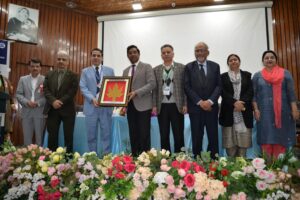
The gathering drew an eminent audience, including Prof. Nilofar Khan, alongside senior faculty, researchers, and students—each contributing to a dialogue that was as inclusive as it was urgent.
International perspectives added further depth. Experts like Dr. Faria Afsana and Dr. Robin Maskey brought insights from Bangladesh and Nepal, underscoring that while the manifestations of PCOS may vary, its impact is universally profound.
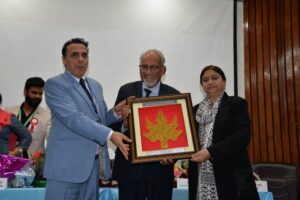
As the conference concluded with the recognition of outstanding research through poster and oral presentation awards, there was a palpable sense that the conversations initiated here would ripple far beyond the auditorium walls.
For in the end, this is not merely a story about a medical condition. It is a story about millions of women whose health, aspirations, and identities are shaped by a disorder that too often goes unseen.
And as the data grows clearer and the voices grow louder, one message emerges with undeniable force:
PCOS is no longer a hidden disorder—it is a public health imperative.

