Vinod Bhat
New Delhi: Bureau of Energy Efficiency (BEE), Ministry of Power, Government of India, organized the “Commercial Induction Cooking Showcase & Chef Challenge” in New Delhi, under the theme “Accelerating India’s Electric Cooking Ambition: From Technology Demonstration to Real-World Adoption.” The event brought together policymakers, public sector enterprises, manufacturers, technology providers, chefs, hoteliers, and commercial kitchen operators on a common platform to advance the adoption of energy-efficient electric cooking in India’s commercial and institutional kitchens.
Shri Pankaj Agarwal, Secretary, Ministry of Power, was the Chief Guest. He inaugurated an exhibition featuring commercial e-cooking appliances and technologies from seven leading manufacturers. Shri Krushna Chandra Panigrahy, Director General, BEE, delivered the keynote address, and Ms. Neha Dhingra, Director, CLASP, delivered the welcome address.
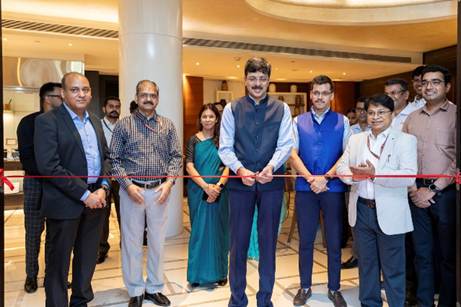
Addressing the gathering, Shri Pankaj Agarwal noted that energy security is the real driver behind India’s shift to electric cooking. Due to the ongoing global conflict and rising price of LPG, transitioning to e-cooking is not only a strategic shift but also an operational choice. He stated that the enabling base for this transition already exists, citing schemes such as Pradhan Mantri Sahaj Bijli Har Ghar Yojana (SAUBHAGYA) and PM Surya Ghar Muft Bijli Yojana, which provide a strong foundation for promoting e-cooking appliances in the residential sector. At the same time, he acknowledged that the barriers to wider adoption have been behavioural and infrastructural, ranging from chef and consumer comfort with the taste of food cooked on induction to gaps in local distribution capacity. Looking ahead, he identified awareness creation as the fastest lever to drive demand and accelerate the mainstreaming of electric cooking across the country.
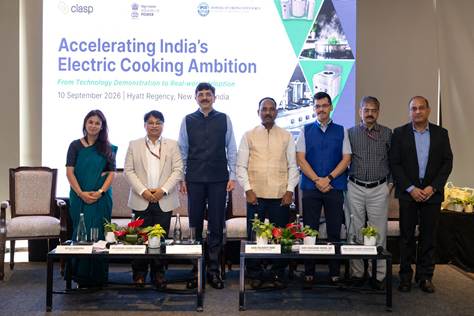
In his keynote address, Shri Krushna Chandra Panigrahy, Director General, BEE, welcomed representatives from the Ministry of Power, CLASP, industry, hospitality, PSUs, manufacturers, and chefs, and thanked them for their role in advancing India’s e-cooking ecosystem. He said India’s energy transition isn’t just about cleaner energy sources; it is also about using energy more efficiently, and electric cooking brings together efficiency, energy security, convenience, and sustainability in one shift. He announced that BEE is inviting manufacturers, distributors, system integrators, and solution providers to register for the Go Electric Commercial Electric Cooking Vendor Directory, a public platform that will help hotels, restaurants, canteens, hospitals, and institutions find credible providers. He also shared that BEE is working with the Bureau of Indian Standards to develop a Standards & Labeling framework for commercial induction hobs. Shri. Panigrahy informed that BEE’s objective is to move beyond individual demonstration projects towards a mature commercial e-cooking ecosystem, “where users have confidence in the technology, manufacturers understand market requirements, and policymakers have the evidence needed to support its scale-up.”
The inaugural session was followed by a Commercial Induction Chef Challenge, where three chefs prepared dishes using induction cooktops. The demonstration enabled participants to observe the cooking performance, ease of use, heat control, and cooking time of induction technology.
The event concluded with closing remarks from BEE, reiterating the Bureau’s commitment to working with the Ministry of Power, CLASP, manufacturers, industry associations, public sector enterprises and commercial kitchen operators to accelerate the adoption of energy-efficient electric cooking across India.
The event reaffirmed the shared responsibility of the Government, industry and hospitality sector to move India’s commercial kitchens from technology demonstration to real-world adoption, in line with the vision of a Viksit and Atmanirbhar Bharat.
About BEE
The Government of India set up the Bureau of Energy Efficiency (BEE) on1st March, 2002 under the provisions of the Energy Conservation Act, 2001. The mission of the Bureau of Energy Efficiency is to assist in developing policies and strategies with a thrust on self-regulation and market principles.
A key objective is reducing the energy intensity of the Indian economy. BEE coordinates with designated consumers, designated agencies and other organizations. It recognises, identifies and utilises the existing resources and infrastructure, in performing the functions assigned to it under the Act. The Act also provides for regulatory and promotional functions.

