Vinod Bhat
New Delhi: Industrial pollution abatement is emerging as a key pillar river rejuvenation, with regulation increasingly evolving from conventional enforcement to continuous compliances, scientific monitoring, cleaner production, resource efficiency and technological improvement.
Under Namami Gange Programme, industrial pollution control has been strengthened through systematic inventorisation and annual inspection of Grossly Polluting Industries (GPIs), independent technical assessments, implementing sector-specific Charters, monitoring of Common Effluent Treatment Plants (CETPs), targeted action plans and sustained regulatory follow-up. Together, these interventions are creating a more accountable and sustainable pathway for industries to reduce pollution while improving water and resource efficiency.
From periodic inspection to continuous compliance
A major intervention has been the establishment of an Annual Inspection mechanism for GPIs, which commenced in 2017 with support of CPCB, the National Regulatory Authority. The programme focusses on 100% inspection of GPIs in the Ganga basin, through third party agencies e.g., technical institutes of national importance and online submission of inspection reports through mobile applications/web portals to enhance efficacy and transparency. For the 2026 inspection cycle, 40 technical institutes have been nominated to participate in the inspection process.
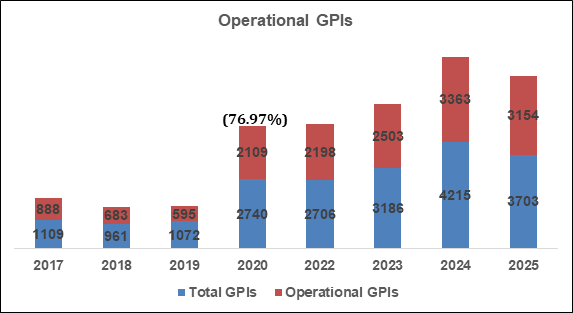
The scale of this monitoring framework has expanded considerably since 2017. In the 2025 inspection cycle, 3,703 GPIs were assessed (1,296 GPIs in the Ganga basin and 2,407 GPIs in the Yamuna basin). The exercise covered 113 districts across six States and one Union Territory, with the GPIs having potential to discharge into 46 tributaries and sub-tributaries of the Ganga and Yamuna.
The inspections go beyond visual assessment. The prescribed methodology includes studying the compliance of the industries against ‘Consent to Operate’ issued by State regulators (State Pollution Control Board) to the individual Industries, sampling from ETP inlets, outlets and aeration tanks, assessment of flow, pH, BOD, COD, TSS and TDS, verification of OCEMS connectivity, examination of recipient drains and water bodies, groundwater assessment, checks for any bypasses and ZLD profiling wherever applicable. Cases involving bypasses, multiple discharge points or defunct/non-existent/non-operational ETPs/ GPIs are reported with geo-tagged photographic or videographic evidence in the portal itself.
Regulation delivering measurable results
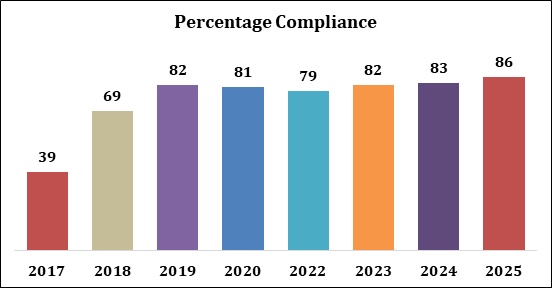
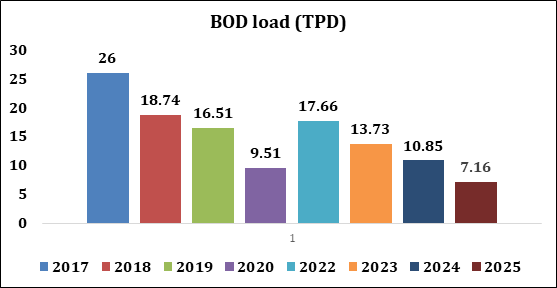
The progressive assessment of GPIs demonstrates the impact of sustained regulatory intervention. Across the assessed GPIs, compliance increased from 39% in 2017 to 70% in 2025, while the number of operational GPIs stood at 3,154 in 2025 increasing from 888 in 2017. During the same period, BOD load declined from 26 TPD (2017) to 12.02 TPD (2025), reflecting a substantial reduction in pollution load.
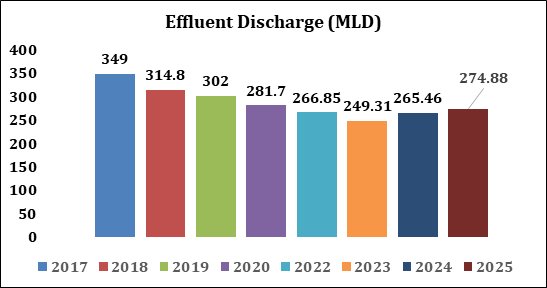
The Ganga basin has exhibited a progressive trend from 2017 to 2025, with compliance rising from 39% in 2017 to 86% in 2025. BOD load declined from 26 TPD to 7.16 TPD, representing a 72.46% reduction, while effluent discharge declined from 349 MLD to 274.88 MLD, a reduction of 21.24%.
The GPI Inspection further recorded that, among 3,145 operational GPIs, 2,715 were compliant, while non-compliant operational GPIs stood at 448, accounting for approximately 14% of operational GPIs. The regulatory process for non-compliant GPIs includes issuance of Show Cause Notices and closure action by State regulators (SPCBs), as applicable.
Thus, regulation is functioning not merely as an enforcement mechanism, but as a continuous self-improvement mechanism—inspection, identification, corrective action and follow-up.
Independent Technical Institutions: adding scientific rigour
A distinctive feature is the involvement of independent technical institutions in industrial inspections. The 2025 exercise engaged 25 technical institutes, while 40 institutes have been nominated for the 2026 cycle. The prescribed inspection team includes at least two experts from a technical institute, a SPCB officer alongwith the participation from State Mission for Clean Ganga/District Ganga Committees.
This model brings guidance from scientific and sector-specific expertise into regulatory oversight for technological or processes improvement in GPIs for pollution and resources reduction with overall improvement in efficiency and compliance to the norms. It also enables inspection findings to be supported by laboratory analysis, OCEMS verification, field observations and geo-tagged evidence, thereby strengthening the credibility and effectiveness of compliance assessment.
Sector-specific Charters: from pollution control to pollution prevention
The regulatory framework has also expanded upstream – from treating pollution after it is generated to preventing pollution at source. Sector-specific Charters have been developed for Pulp & Paper, Sugar, Distillery, Textile and Tannery sectors. These five sectors collectively represented around 70% of GPIs in the Ganga basin and 88% of the total pollution load in the earlier assessment.
The Charter for Water Recycling and Pollution Prevention Industries specifically seeks to optimise water and chemical use, reduce freshwater consumption and wastewater generation, improve effluent treatment and promote reuse and recycling, with the ultimate objective of preventing discharge of untreated effluent into recipient river streams.
The Charter establishes measurable targets, including reduction in water consumption, ETP/RO upgradation and, in the longer term, recycling of water against total input. It also explicitly envisages third-party involvement in planning, assessment, design and monitoring of process technologies and ETP upgradation, bringing regulators, technical institutions, research organisations and industry stakeholders together.
Targeted action for high pollution-load industries
Targeted interventions have also been undertaken for industries contributing significantly to pollution load. In 2022, 246 GPIs were identified as top contributors requiring priority action. To address their pollution load, 17 sector-specific workshops were conducted, with 222 GPIs participating and submitting action plans. The remaining 24 GPIs were either closed or had shifted to dry operations.
The progress of these industries was assessed against short-, medium- and long-term goals. 173 GPIs achieved short-term goals, 141 achieved medium-term goals and 126 achieved long-term goals. An estimated 65% reduction in pollution load was recorded during 2022–23 compared with 2021–22, with the pollution load declining from 18.68 TPD to 6.381 TPD. Subsequently, 156 industries came out of the priority list, while 66 remained for priority action
CETPs: strengthening pollution control at industrial clusters
Industrial clusters often require a collective approach to effluent treatment. Common Effluent Treatment Plants (CETPs) provide a shared treatment facility for industries located within such clusters, enabling their wastewater to be treated collectively. CETPs therefore form an important component of industrial pollution abatement, particularly in industrial clusters.
In 2025, 41 CETPs were assessed across the Ganga and Yamuna main-stem States, of which 40 were operational. Their combined operational capacity stood at 514.53 MLD, with utilisation of 286.31 MLD, while 27 CETPs were complying with the prescribed requirements. The assessment also identified specific operational and technological gaps and enabled measures such as improvement in operation and maintenance, upgradation of treatment systems, introduction of biological treatment where required, improved functioning of Primary Effluent Treatment Plants and regular monitoring of outlet quality.
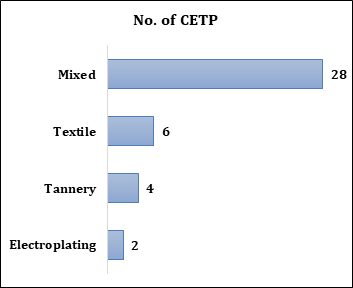
The assessment of CETPs has enabled specific interventions rather than one-size-fits-all approach. Measures include improvement in operation and maintenance, upgradation of treatment systems, introduction of biological treatment where required, improved operation of Primary Effluent Treatment Plants, regular outlet monitoring and cleaner chemical practices.
For textile clusters, recommended measures include adoption of a Chemical Management System, eco-friendly non-toxic chemicals and low-salt dyes. For tannery clusters, cleaner production measures, improved PETP treatment and mechanical desalting have been recommended.
Water conservation: turning treated wastewater into a resource
One of the important shifts has been the recognition of treated wastewater as a resource rather than merely a waste stream.
The Charter-based interventions have helped industries reduce specific freshwater consumption and wastewater generation through reuse and recycling. The latest assessment records substantial reductions across major sectors, alongside increased adoption of treatment and recycling technologies.
The Sugar sector, for instance, has witnessed a major improvement in resource efficiency. Between 2017 and 2025, freshwater consumption declined from 155 L/T cane to 58 L/T cane, wastewater discharge declined from 190 L/T cane to 136 L/T cane, and BOD discharge declined from 0.0065 kg/T cane to 0.0029 kg/T cane. The improvement has been supported by high-pressure boilers, Condensate Polishing Units, tertiary ETP upgradation, reuse of treated wastewater and other process improvements.
The Pulp & Paper sector has also recorded significant resource-efficiency gains. The latest assessment reports 60 recycled-fibre-based Pulp & Paper mills operating on Zero Liquid Discharge (ZLD), along with estimated savings of 928.89 MLD of groundwater and corresponding energy conservation of 1,649.80 MW annually.
Present CETPs in industrial clusters of Ganga basin are designed with an approach of reuse of treated water by the member industrial units.
A new paradigm of sustainable industrial regulation
The impact of industrial pollution-control measures is reflected not only in compliance statistics but also in broader environmental outcomes.
The assessment records no black liquor discharge from Pulp & Paper mills, no effluent discharge from distilleries, no incidence of coloured water discharge and fish mortality, approximately 719 million litres of groundwater saved per day, and improved water quality in tributaries including Ramganga, Kosi, Dhela and Bahela.
The interventions have also contributed to around 1,277.6 MW/year of energy savings and an estimated 1,162.6 tonnes CO₂e reduction in carbon footprint.
Sustaining pollution abatement through regulation
The industrial pollution abatement journey under Namami Gange reflects an important evolution in environmental governance leading to the efficient compliance achievement.
The approach combines regulation with science, enforcement with facilitation, monitoring with technology and compliance with resource efficiency. Annual GPI inspections provide the regulatory backbone; independent technical institutions add scientific rigour; sector-specific Charters encourage cleaner production and water recycling; targeted action plans address high pollution-load industries; and CETP assessments strengthen pollution control at industrial clusters.
The numbers tell the story. In the 2025 assessment, 3,703 GPIs were covered, including 1,296 in the Ganga basin and 2,407 in the Yamuna basin. The Ganga basin has seen compliance rise from 39% in 2017 to 86% in 2025, alongside a 72.46% reduction in BOD load.
The objective is therefore no longer limited to ensuring that industries comply with prescribed norms. It is about creating an enduring culture of responsible production, water conservation, pollution prevention, reuse and recycling.
From regulation to responsibility, from monitoring to measurable outcomes, and from pollution control to sustainable production, industrial pollution abatement is becoming a sustained and integral part of the journey towards cleaner and healthier rivers.

