Vinod Bhat
New Delhi: The Department of Drinking Water and Sanitation (DDWS), Ministry of Jal Shakti, today organised the third virtual conference with States and Union Territories as part of a series of thematic consultations being held in follow-up to the Departmental Summit on Water 2026 held on 1-2 September 2026. The conference focused on strengthening convergence between Jal Jeevan Mission (JJM) 2.0 and VB-G RAM G to advance source sustainability, water security and Gram Panchayat-led planning for sustainable rural drinking water service delivery.
The virtual conference brought together senior officials from State PHEDs/Rural Water Supply Departments, Rural Development Departments, Panchayati Raj Departments and representatives from the Ministries of Rural Development and Panchayati Raj, Government of India. States rural water supply departments including Odisha, Madhya Pradesh, and Rajasthan shared their experiences and initiatives on source sustainability, operation and maintenance of water supply assets and use of digital planning tools.
Addressing in the conference, Shri Ashok K.K. Meena, Secretary, DDWS, said that while Jal Jeevan Mission has enabled the creation of extensive rural drinking water infrastructure across the country, the focus of JJM 2.0 shifts towards ensuring long-term functionality, reliability and sustainability of these assets. He emphasised that sustainable drinking water services can only be ensured through systematic protection, recharge and management of drinking water sources alongside regular maintenance of infrastructure.
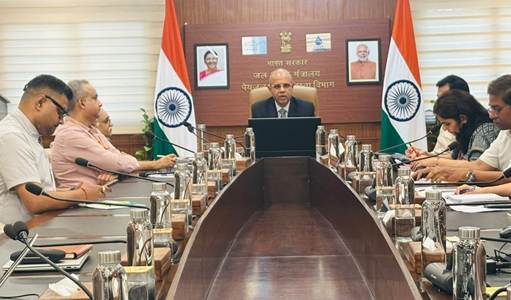
Highlighting the opportunities available through VB-G RAM G, the Secretary stated that the programme provides a strong framework for undertaking water conservation, groundwater recharge, source sustainability and maintenance-related interventions that directly contribute to drinking water security. He stressed that convergence should focus on two key objectives – sustainability of drinking water sources and continued functionality of infrastructure created under Jal Jeevan Mission.
The Secretary underscored the need for integrating JJM Village Action Plans and Source Sustainability Plans with the Viksit Gram Panchayat Plans (VGPPs) and ensuring their incorporation into the Gram Panchayat Development Plan (GPDP) process. He stated that water security interventions should emerge from scientific assessment of local water resources and be approved through the Gram Sabha to enable community ownership and accountability.
Emphasising the central role of Gram Panchayats in rural water governance, Shri Meena stated that Gram Panchayats, Village Water and Sanitation Committees (VWSCs) and local institutions possess critical knowledge regarding water sources, seasonal variations and local requirements. Their active participation in planning, implementation and monitoring is essential for ensuring long-term sustainability of drinking water systems.
He highlighted that the selection of source sustainability works should be based on scientific assessments and local needs. He referred to interventions such as check dams, gully plugs, recharge shafts, injection wells, underground dykes, rooftop rainwater harvesting structures and other groundwater recharge measures that can be undertaken based on local hydrogeological conditions. He urged States to utilise the Decision Support System (DSS) developed under JJM 2.0 and the Yuktdhara Standard Operating Procedures (SOPs) for identifying vulnerable drinking water sources and scientifically prioritising interventions.
Calling for stronger institutional coordination, the Secretary directed States to establish clear mechanisms for technical scrutiny, approval, implementation and monitoring of convergence works. He emphasised the importance of coordinated action among Rural Water Supply, Rural Development and Panchayati Raj Departments at the State, district and Gram Panchayat levels, supported by institutional platforms such as District Water and Sanitation Missions (DWSMs), State Water and Sanitation Missions (SWSMs) and State-level Apex Committees.
The Secretary identified five priority outcomes for States and UTs: alignment of JJM plans with Gram Panchayat plans under VB-G RAM G; scientific identification of source sustainability works using DSS and Yuktdhara; establishment of technical scrutiny and approval mechanisms; seamless inter-departmental data sharing; and creation of joint monitoring systems for tracking both physical progress and water security outcomes.
Ms. Deeksha S. Bisht, Assistant Commissioner, Ministry of Rural Development made a detailed presentation on the scope of convergence under VB-G RAM G and JJM for the planning framework for strengthening water security. She informed that the programme provides 128 water security-related works covering groundwater recharge, rainwater harvesting, watershed treatment, rejuvenation of water bodies, source sustainability and maintenance of water-related assets. She highlighted that water security continues to be a major focus area under VB-G RAM G and emphasised the importance of scientific planning, community participation and outcome-based implementation.
Referring to the joint advisories issued by the Ministry of Rural Development and Ministry Jal Shakti, she informed that States have been advised to prioritise water-related works in water-stressed areas based on groundwater stress classifications and local water security requirements. She also highlighted the importance of water budgeting, hydrogeological assessments and geospatial planning tools in identifying appropriate interventions and ensuring optimal utilisation of resources.
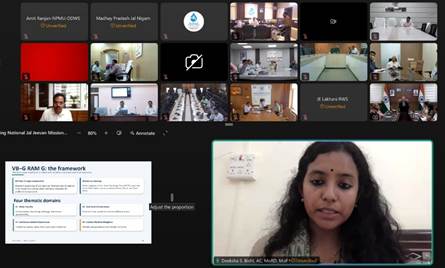
On planning convergence, Ms Bisht informed that annual plans prepared under the Viksit Gram Panchayat Planning framework would be integrated with the Gram Panchayat Development Plan (GPDP) process to enable a unified planning approach at the Gram Panchayat level. The discussion further emphasised the need to prioritise drinking water sources identified through the Decision Support System (DSS) and incorporate such information into village-level planning and implementation processes.
The State of Odisha shared its experience in implementing large-scale water conservation and source sustainability interventions through convergence and highlighted initiatives relating to groundwater recharge, greywater management, catchment treatment, source protection and climate-resilient water infrastructure. Odisha also presented examples of recharge structures, community recharge pits and restoration of traditional water bodies being implemented to strengthen drinking water security.
The State of Madhya Pradesh presented its initiatives to operationalise provisions under the O&M Rules, 2026, and facilitate maintenance of rural water supply schemes through Gram Panchayats. The State highlighted model estimates for rainwater harvesting, recharge structures and source sustainability works while also sharing institutional mechanisms established for improving coordination between Rural Development and Rural Water Supply Departments.
Rajasthan presented a framework for preventive, corrective and emergency maintenance of rural water supply infrastructure through convergence with VB-G RAM G. The State highlighted the role of Gram Panchayats, Paani Samitis and PHED functionaries in ensuring regular maintenance and sustained functionality of water supply assets.
Shri Sumit Priyadarshi, Deputy Advisor, NJJM made a detail presentation on Implementation of the Decision Support System (DSS) for Source Sustainability and Mitigation of Drinking-Water Risks. He said that the Decision Support System (DSS) is a key tool for identifying vulnerable drinking water sources facing water quality and water quantity risks. States were urged to utilise DSS data for prioritising interventions in habitations, validating risks through field assessments and monitoring outcomes following implementation of mitigation measures.
The State of Assam shared its experience in using DSS for identification and verification of water-quantity stressed villages and highlighted efforts relating to GIS mapping, field verification, development of standard operating procedures and preparation of remedial action plans for vulnerable drinking water sources.
Presenting the concluding remarks, Shri Kamal Kishore Soan, Additional Secretary & Mission Director, National Jal Jeevan Mission, stressed that States must ensure that investments under VB-G RAM G are directed towards addressing drinking water challenges identified through the DSS. Referring to the water-security advisories issued jointly by the Ministries of Jal Shakti and Rural Development, he noted that expenditure on water-related works in identified water-stressed blocks needs to translate expenditure into measurable improvements in drinking water security.
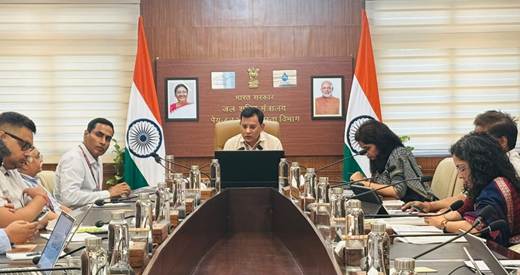
He informed that efforts were underway to integrate information relating to drinking water sources and associated Gram Panchayats into the Rural Development MIS so that planning, expenditure and implementation of water-related works could be monitored more effectively. He urged States and UTs to ensure that District Collectors, Chief Executive Officers of Zila Panchayats and relevant field functionaries actively utilise DSS data for identifying and prioritising vulnerable drinking water sources facing water quality and water quantity risks.
Shri Soan also called upon States to undertake post-monsoon assessment and testing of drinking water sources, validate water source conditions through field verification and prepare suitable mitigation plans. He emphasised the need for close coordination among Rural Water Supply, Rural Development and Panchayati Raj Departments to ensure that source sustainability interventions are scientifically planned, properly monitored and aligned with local requirements.
He further urged States to issue necessary advisories to district and field-level officials, prioritise interventions in water-stressed areas, and prepare concrete action plans for presentation during the regional conferences scheduled from November 2026. He reiterated that the ultimate objective of the convergence framework is not merely creation of assets, but ensuring long-term sustainability of drinking water sources and reliable rural drinking water services through coordinated institutional action and strengthened Gram Panchayat-led governance.
The conference concluded with a shared commitment by the Centre and States/UTs to operationalise the agreed convergence framework and accelerate implementation of source sustainability interventions under Jal Jeevan Mission 2.0 and VB-G RAM G.

