spot_imgspot_img
spot_img
Home Blog Page 102

India Gets a Raga in its Name – Raga Bharati by Pt. Abhay Sopori

0

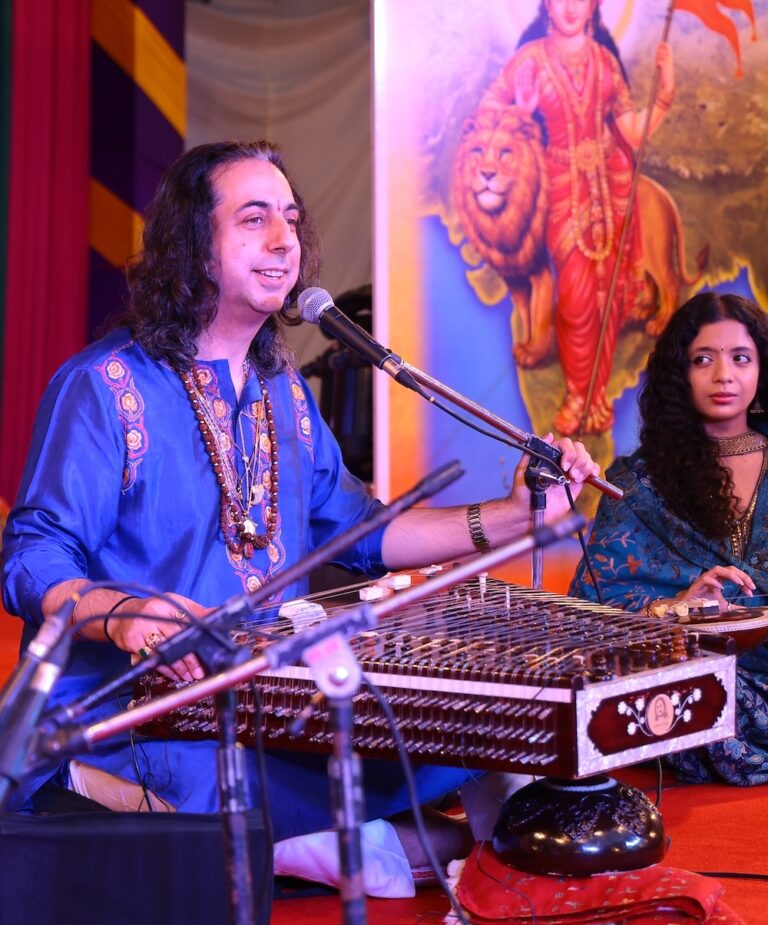
In a historic and momentous development in Indian Classical Music, the young music legend of India, Pandit Abhay Rustum Sopori, presented a newly composed raga dedicated to the nation and Motherland India, titled Raga Bharati. Pt. Sopori described the raga as an ode to the great country of India, stating that the Bharatiya tradition spans thousands of years, and Raga Bharati embodies the ethos of time, tradition, values, and culture that define India’s civilizational continuity.

The announcement and presentation of Raga Bharati took place at Ravindra Bhawan, New Delhi during the 3rd edition of the prestigious Delhi Kala Utsav, organized by Sanskar Bharati in New Delhi. The festival was presented in collaboration with the Art, Culture and Language Department and the Maithili-Bhojpuri Academy (Government of National Capital Territory of Delhi), along with India’s National Academies, the Sangeet Natak Akademi, Sahitya Akademi, and Lalit Kala Akademi (Ministry of Culture, Government of India).

Pt. Abhay Sopori commenced his recital of Raga Bharati with a brief Aalap and Jod, followed by two compositions set in Ektaal and Teentaal. The presentation highlighted the distinctive Sopori Baaj, the unique style created by his illustrious father Pandit Bhajan Sopori. The performance showcased his immense depth of Raagdari, Chhandkari, Layakari, Gayaki, and Tantrakari Ang enriched with his Meend, Gamak, Glides, Taans, along with intricate Bol, Chhand, and Laya patterns. He was ably accompanied by Pradip Sarkar on Tabla, Rishi Shankar Upadhyay on Pakhawaj, and his disciples Anoushka Majumdar and Poushali Dutta on Tanpura. The raga was received with great enthusiasm by the large gathering at the Utsav, who hailed Pt. Sopori’s significant contribution to Indian music.

Pt. Abhay Sopori is the present Uttaradhikari and Khalifa of the ancient Santoor tradition of India and the age-old Sopori – Sufiana Gharana of Kashmir, a 300-year-old traditional Santoor family that carries forward a legacy rooted in the spiritual Shaivite – Sufi musical tradition. He is the son of the great saintly music legend, the ‘Saint of Santoor’ and the ‘King of Strings’, late Pandit Bhajan Sopori ji.

Previously, Pt. Abhay Sopori has composed several acclaimed ragas, including Raga Nirmalkauns, Raga Mahakali, Raga Sharda, Raga Bhagwati, and Raga Bhajaneshwari. A double Top Grade awardee, both as a Santoor player and as a composer, he is also a recipient of the Sangeet Chudamani, the Doctorate of Philosophy (Ph.D.) in Music by Pracheen Kala Kendra. His numerous prestigious honours include the United Nations accredited Gandhi Global Family’s Mahatma Gandhi Seva Medal, Gandhi Global Peace Award, Maharaja Swati Tirunal Travancore Award, National Atal Shikhar Samman, Dr. S. Radhakrishnan National Award, Jammu & Kashmir Government Award, Sangeet Natak Akademi’s First Ustad Bismillah Khan Award, among many others.

Modi Launches ₹3,600 Cr PowerGrid Projects in Rajasthan

0
VINOD BHAT
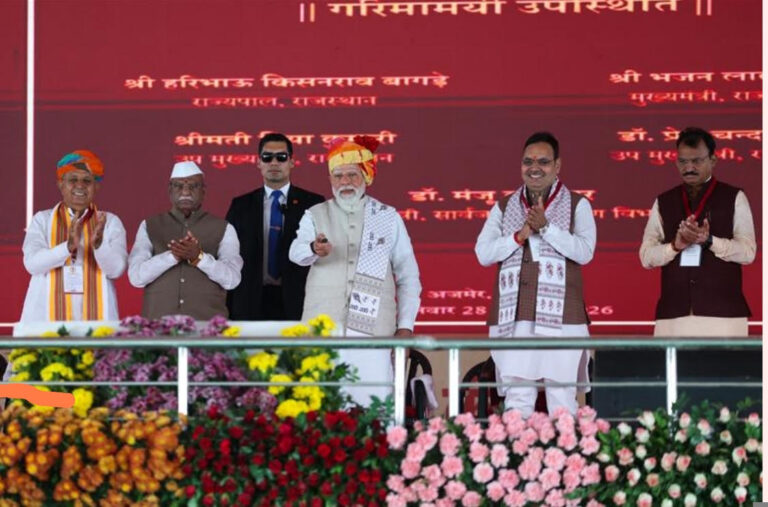
JAIPUR/GURUGRAM, Mar 2: Prime Minister Narendra Modi has inaugurated two major power transmission infrastructure projects of Power Grid Corporation of India Limited (POWERGRID) in Rajasthan, entailing a combined investment of over ₹3,600 crore. The projects are aimed at strengthening the evacuation of renewable energy from the state’s Renewable Energy Zones (REZ), particularly from the solar-rich Bhadla region.
POWERGRID, a Maharatna Public Sector Undertaking under the Ministry of Power, said the newly inaugurated projects form a critical part of India’s clean energy expansion strategy and will significantly enhance the national grid’s capacity to handle growing renewable power generation.
The projects include the “Transmission System for Evacuation of Power from REZ in Rajasthan (20 GW) under Phase-III Part-B1” and the “Transmission System Strengthening Scheme for Evacuation of Power from Solar Energy Zones in Rajasthan (8.1 GW) under Phase-II Part-E.”
Under Phase-III Part-B1, the infrastructure comprises the 765/400/220 kV Bhadla-III substation and the 765 kV double-circuit Bhadla-III–Sikar-II transmission line. The Phase-II Part-E component includes the 765 kV double-circuit Bhadla-II–Sikar-II second transmission line. These high-capacity lines are designed to ensure seamless transmission of large volumes of solar power generated in Rajasthan to load centres across the country.
Officials said the strategic transmission systems have been developed to facilitate large-scale evacuation of renewable energy from REZs in Rajasthan, especially from Bhadla, which hosts one of the world’s largest solar parks with a capacity exceeding 2.2 GW. The projects are expected to play a pivotal role in supporting India’s ambitious renewable energy targets and accelerating the transition towards a greener and more sustainable energy mix.
By enhancing grid reliability and strengthening inter-regional transmission capacity, the projects will not only improve energy security but also reduce transmission bottlenecks that often constrain renewable integration. The move is in line with the Government of India’s commitment to achieving 500 GW of non-fossil fuel-based energy capacity by 2030.
POWERGRID stated that the development reinforces its role as the backbone of India’s power transmission network. As of February 15, 2026, the corporation has commissioned and is operating 290 substations and more than 1,84,370 circuit kilometres of transmission lines, along with 6,02,016 MVA of transformation capacity nationwide.
With the adoption of advanced technological tools, automation, and digital solutions, POWERGRID has maintained an average transmission system availability of over 99.84 per cent, ensuring stable and uninterrupted power flow across the country.
Energy experts believe that such large-scale transmission infrastructure is critical for integrating renewable energy from resource-rich states like Rajasthan into the national grid, enabling equitable distribution of clean energy and supporting industrial growth, urban demand, and rural electrification.
The inauguration of these projects marks another milestone in India’s journey towards building a robust, future-ready transmission network capable of sustaining rapid economic growth while advancing climate commitments.

ASMITA League to Light Up J&K, Ladakh on Women’s Day

0
VINOD BHAT
NEW DELHI, Mar 2: In a major boost to women’s sports in the Union Territories of Jammu and Kashmir and Ladakh, four centres — Kargil, Rajouri, Srinagar and Udhampur — will host athletics competitions on March 8 as part of a massive nationwide ASMITA League to mark International Women’s Day. The announcement was made on Monday by Minister of State for Youth Affairs and Sports, Raksha Nikhil Khadse, who described the initiative as a historic opportunity to integrate young women across the country through sport.
The athletics events in J&K and Ladakh will form part of a simultaneous, countrywide celebration at 250 locations under the Union Ministry of Youth Affairs and Sports’ ASMITA (Achieving Sports Milestone by Inspiring Women Through Action) programme. Competitions will focus on sprint events — 100m, 200m and 400m — across three age categories: Under-13, 13–18 years and 18+.
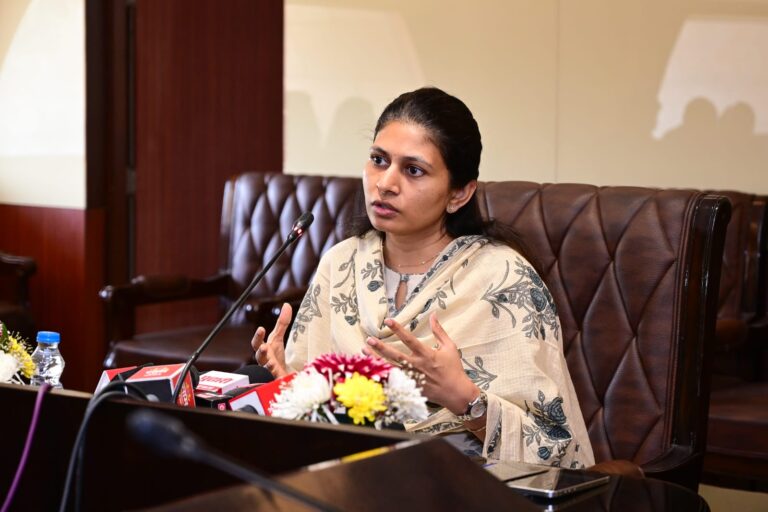
Addressing a media conference at the Major Dhyan Chand National Stadium in New Delhi, Shrimati Khadse said there could not be a better occasion than International Women’s Day to galvanize participation among young women nationwide. She noted that the ASMITA platform has already gained popularity across the length and breadth of the country and provides a powerful mechanism to encourage girls, particularly those in villages and small towns, to pursue sports as a serious career path.
“The objective is to encourage more and more girls in villages and small towns to take up sports as a career as envisioned by our Hon’ble Prime Minister Narendra Modi,” she said, underlining that the initiative aligns with the broader national vision of women-led development.
The March 8 league is expected to witness record participation, with nearly 2.5 lakh women projected to compete across the 250 venues on a single day. Each centre will have a structured team comprising technical officials, volunteers, a competition manager, a Past Champion Athlete and the District Youth Officer to ensure professional conduct of events. Importantly, women technical officials will also play a central role, reinforcing gender inclusion not only among athletes but in sports administration and officiating as well.
Launched in 2021 under the Khelo India initiative, ASMITA forms part of a gender-neutral mission to promote sports among women through structured leagues and competitions. The programme is supported by the Sports Authority of India, which collaborates with National Sports Federations to conduct Khelo India women’s leagues across zonal and national levels. Over the past few years, the ASMITA initiative has expanded rapidly, with more than 2,600 leagues organized across 34 disciplines in over 550 districts and 700 cities, enabling participation of more than three lakh women. The programme has also reached remote and previously underserved regions, including Arunachal Pradesh and Mizoram, as well as areas once affected by Naxalism.
Beyond competition, the Women’s Day initiative will emphasize capacity building. Each athletics event will be accompanied by developmental workshops, orientation in Athletics Federation of India-aligned officiating norms, and training in digital data management and competition documentation. These measures are aimed at strengthening the sporting ecosystem at the district level and ensuring that trained human resources are available across the country.
Shrimati Khadse linked the initiative to India’s long-term sporting ambitions, noting that as the country prepares for the Commonwealth Games 2030 and pursues its aspiration to host the 2036 Summer Olympics, groundwork must begin at the grassroots. “Hosting an Olympic Games requires more than infrastructure. It requires trained human resources in every district of India. It requires certified technical officials and administrative excellence. This International Women’s Day initiative is part of that preparation,” she said.
The nationwide ASMITA League will be implemented in collaboration with MY Bharat, Khelo India Centres, the SAI ecosystem and National Centres of Excellence, along with State and District Sports Associations and District Youth Officers. For young girls in Kargil, Rajouri, Srinagar and Udhampur, March 8 promises not just a celebration of women’s achievements, but a platform to sprint toward new sporting milestones and national recognition.

HAWS Emerges as Backbone of India’s Winter Sports Success at KIWG 2026

0

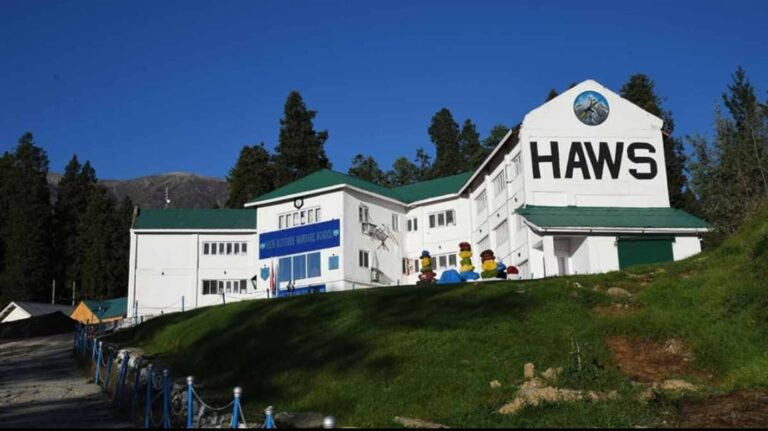
Gulmarg  March 1: The High Altitude Warfare School (HAWS) in Gulmarg has emerged as a key force behind India’s growing success in winter sports, with athletes at the 6th edition of the Khelo India Winter Games 2026 crediting the elite military institution for their podium finishes.

Held from February 23 to 26, the Games saw dominant performances by athletes from the Indian Army, the Central Reserve Police Force (CRPF) and the Indo-Tibetan Border Police (ITBP), many of whom trained at HAWS. The school also drew national attention after Union Minister for Youth Affairs and Sports Mansukh Mandaviya visited the facility on February 26.

Located at nearly 9,000 feet, HAWS was founded in December 1948 by General K S Thimayya as the 19 Infantry Division Ski School. Over decades, it evolved into India’s premier centre for snowcraft and winter warfare. Alongside its military mandate, the institution has quietly built a structured system for grooming competitive winter athletes.

At KIWG 2026, Army athletes swept multiple Nordic skiing events, while CRPF and ITBP competitors also secured medals. Several athletes said short- and long-term training stints at HAWS transformed them from first-time skiers into national-level competitors within months.

According to Indian Army officials, HAWS annually trains around 250–300 Army athletes across Alpine, Nordic, snowboarding and mountain skiing disciplines, while also supporting select civilian and other force personnel. The programme includes high-altitude conditioning, international-standard coaching, ski simulators, summer roller-ski training, sports science support and structured nutrition plans.

Coaches said expert trainers from Europe and Central Asia help align techniques with global standards, while Gulmarg’s altitude provides a natural endurance advantage. Officials from the CRPF confirmed that sustained access to HAWS infrastructure and Army coaches has significantly improved their athletes’ performances.

All schools, colleges to remain closed in Kashmir for two days: Sikana Itoo

0

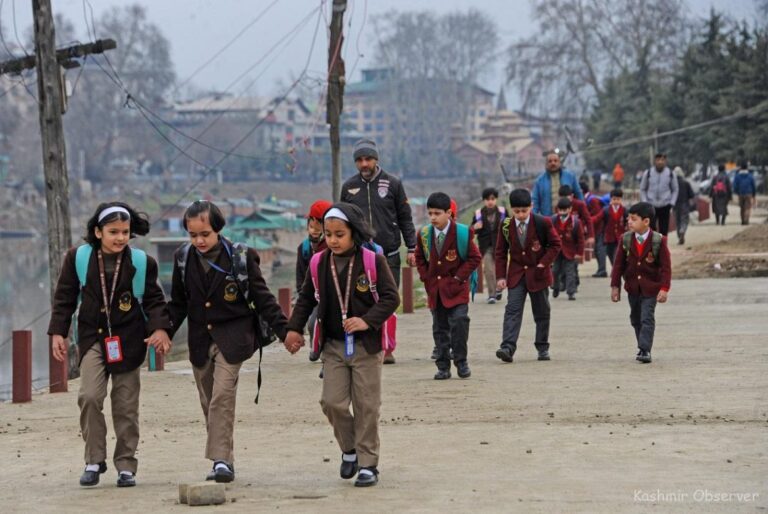
Srinagar, Mar 1: All schools and colleges across Kashmir will remain closed for next two days as a precautionary measure in view of the prevailing situation, officials said.

Speaking to tge media Education minister Sakina Itoo said the decision was taken to ensure the safety of students and staff amid ongoing protests in parts of the Valley.

“Classes in all government and private schools as well as colleges in Kashmir division shall remain suspended for two days,” the she said.

The move comes amid demonstrations reported from several areas following recent developments in West Asia, which affected normal life in parts of the Valley.

Authorities said the situation was being closely monitored and further decisions would be taken based on the ground assessment.

Security forces have been deployed in sensitive areas to maintain law and order, while senior police and civil administration officials are reviewing the situation.(KNS).

Bureau of Energy Efficiency Commemorates 25th Foundation Day

0
Vinod Bhat

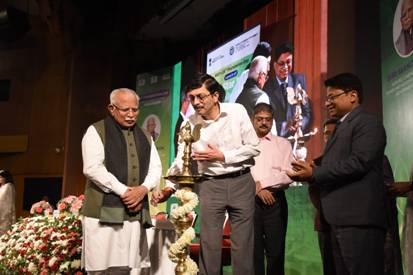
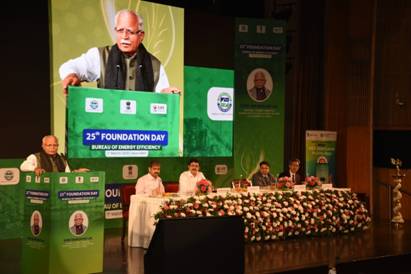
New Delhi: The 25th Foundation Day of the Bureau of Energy Efficiency (BEE), Ministry of Power, Government of India, was celebrated today at the India Habitat Centre, New Delhi, in the presence of senior dignitaries, policymakers, partner organisations, and stakeholders from across the country.

Shri Manohar Lal, Cabinet Minister of Power and Housing & Urban Affairs, graced the occasion as the Chief Guest. Shri Pankaj Agarwal, Secretary (Power), delivered the keynote address. Senior officials from Central Ministries, State Governments, State Designated Agencies (SDAs), and partner institutions were also present.
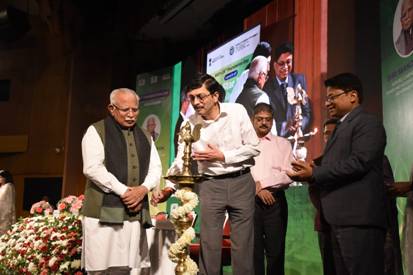
Recalling the famous saying, “Prevention is better than cure,” Shri Manohar Lal remarked that the Bureau of Energy Efficiency (BEE) functions as a preventive institution for the power sector. Every unit of electricity conserved today directly contributes to reducing the need for additional generation capacity and lowering emissions. By adopting energy-efficient practices, we not only protect the environment but also secure a cleaner and more sustainable future for coming generations. He also lauded BEE for its significant contribution to advancing energy efficiency initiatives in the country.

Shri Manohar Lal highlighted India’s significant progress in meeting its climate commitments and strengthening energy efficiency as a core pillar of national development. He noted that India has reduced the emissions intensity of its GDP by 36% from 2005 levels and achieved 52% non-fossil fuel installed capacity ahead of the 2030 target.
He outlined key achievements under major BEE initiatives, including the Renewable Consumption Obligation (RCO), the Perform, Achieve and Trade (PAT) Scheme, the transition to the Carbon Credit Trading Scheme (CCTS), Corporate Average Fuel Efficiency (CAFE), the ADEETIE scheme for MSMEs, the Standards & Labelling (S&L) Programme, the Energy Conservation and Sustainable Building Code (ECSBC), and transport sector efficiency measures.

Emphasising the way forward, he underscored the role of energy efficiency in achieving the vision of Viksit Bharat @2047, while drawing attention to emerging areas such as data centres and Artificial Intelligence, which require efficient and sustainable energy management solutions.

Shri Pankaj Agarwal, Secretary (Power), outlined the evolving contours of India’s energy landscape, marked by rising demand, expanding non-fossil capacity, and increasing digitalisation. He described energy efficiency as India’s “First Fuel” and a key instrument for balancing energy security, affordability, and sustainability.

He highlighted BEE’s initiatives in cooling efficiency through S&L and ECSBC, industrial decarbonisation through the Carbon Market and the ADEETIE scheme, the establishment of energy efficiency hubs, and fuel efficiency improvements in the transport sector.

Earlier, delivering his welcome address, Shri Krushna Chandra Panigrahy, Director General, BEE, reflected on the Bureau’s journey and reaffirmed its commitment to accelerating energy efficiency adoption across all sectors of the economy.

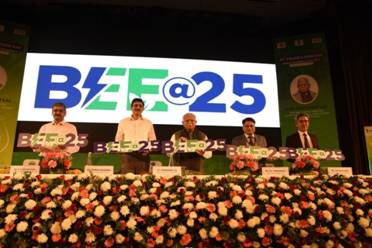
On the occasion, the BEE@25 logo was formally released to mark BEE’s entry into its 25th year. The logo symbolically reflects the core principles of energy efficiency, sustainability, and forward-looking innovation. The design prominently integrates the “@25” motif to signify the milestone year while incorporating visual elements that represent energy, growth, and environmental responsibility. The dynamic styling and colour scheme convey continuity, impact, and the Bureau’s evolving role in India’s energy transition. The commemorative logo will be used across official communications, outreach campaigns, publications, and awareness initiatives throughout the year, serving as the visual identity for the 25th year celebrations and reinforcing BEE’s commitment to advancing energy efficiency as a national priority.
A specially curated BEE Journey Video was screened during the event, highlighting the Bureau’s evolution over the past twenty-four years, its major milestones, flagship programmes, institutional partnerships, and its contribution to strengthening India’s energy efficiency ecosystem.

During the event, the RCO Portal (http://www.rco.beeindia.gov.in) was unveiled as a significant step towards strengthening monitoring, facilitating compliance, and streamlining coordination among stakeholders under various energy efficiency programmes. The portal is expected to enhance transparency, improve reporting mechanisms, and support data-driven decision-making within the implementation framework.

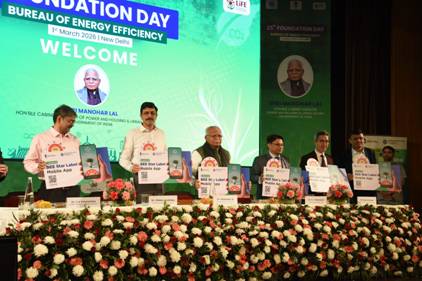
The Minister also launched the BEE Star Label Mobile Application, developed in collaboration with CLASP. The application will enable consumers to scan the QR code affixed to star-labelled appliances to instantly access authentic product information, including energy performance, model details, and compliance status. The app aims to enhance transparency, strengthen consumer awareness, and promote informed purchasing decisions by making energy efficiency information easily accessible at the point of sale. This initiative is expected to further reinforce the credibility of the Standards & Labelling Programme and encourage greater adoption of energy-efficient appliances across the country.
The celebration also featured a fireside interaction with former Directors General of BEE, moderated by Dr Satish Kumar, President and Executive Director of the Alliance for an Energy Efficient Economy (AEEE). Retired officials of State Designated Agencies were felicitated for their dedicated service and valuable contributions to advancing energy conservation initiatives at the State level.

The 25th Foundation Day celebration reaffirmed BEE’s continued resolve to promote energy efficiency as a driver of sustainable growth, national energy security, and environmental responsibility, and to pave the way for a Viksit and Atmanirbhar Bharat.
DC Baramulla holds introductory Media Interaction

0

Emphasizes collaborative role of media in promoting welfare schemes, transparency and people-centric governance

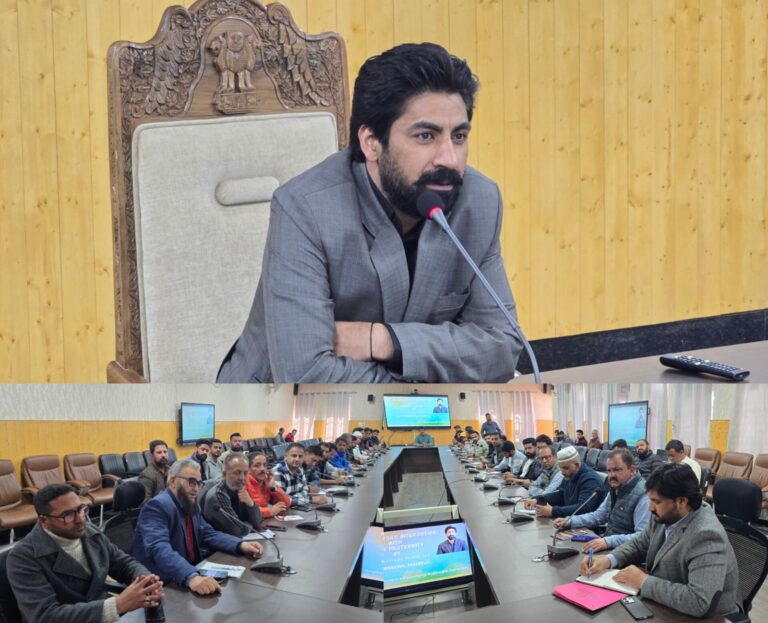
BARAMULLA, FEBRUARY 28: Deputy Commissioner Baramulla, S. F. Hamid, today held an introductory interaction meeting with media persons from across the district here at the DC Office meeting hall.

Speaking during the meeting, the DC emphasized that the media and the administration must work hand in hand in the larger interest of society, with a shared objective of ensuring responsive and people-centric governance.

The DC underscored that the media fraternity shall act as partner in the developmental journey of the district and suggested media fraternity to actively disseminate information regarding various government welfare schemes and flagship programmes so that the benefits reach the intended beneficiaries.

Speaking during the interaction, the speakers appreciated the DC for initiating a direct dialogue with the media at the outset of his tenure and assured full cooperation to the district administration in highlighting issues faced by the public, promoting transparency and the overall betterment of society.

GMC Srinagar Bids affectionate Farewell to Professor Shakeel and others

0

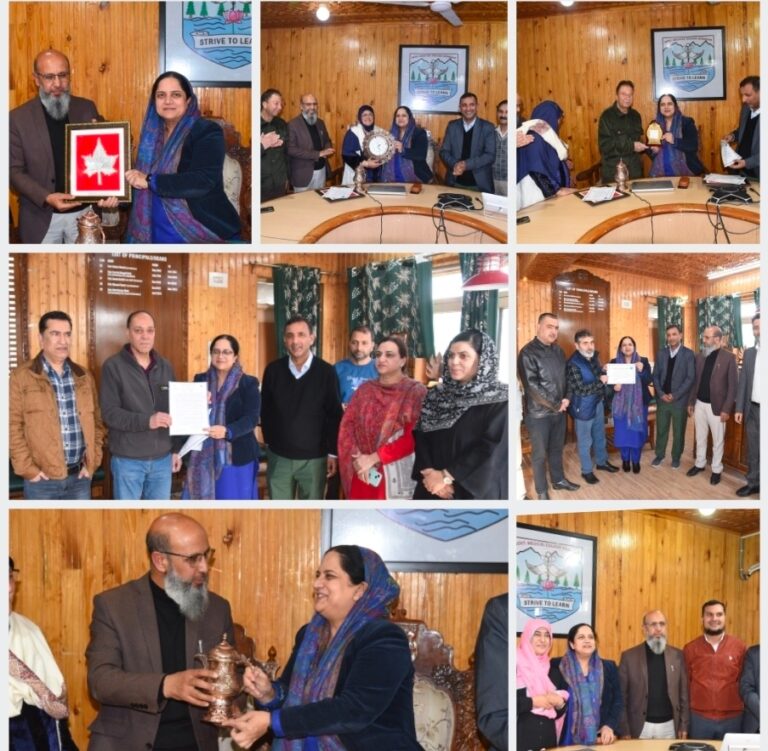
SRINAGAR, FEBRUARY 28: Government Medical College (GMC) Srinagar today bid an affectionate farewell to its six dedicated employees, including Professor Dr. Shakeel Ahmad, Department of Surgery; Shamshada Akhter, Principal AMT School; Mukhtar Jan, Lab Technician; Mohammad Shafi, Xerox Assistant; Tariq Ahmad, Senior X-Ray Technician; and Showkat Ahmad, ECG Technician.

The farewell function was attended by the Principal, Prof. Dr. Iffat Hassan, Administrator, Mohammad Ashraf Hakak and other medical, paramedical, and administrative staff.
As a token of affection, a memento, certificate of appreciation, and gift were presented to the retiring officers and officials.

Speaking on the occasion, Prof. Dr. Iffat Hassan highlighted the contributions of the retiring employees, praising their dedication and commitment to providing quality healthcare services. “Their tireless efforts will always be remembered with deep respect and admiration. We wish them a joyful and fulfilling retirement,” she said.

Prof. Dr. Mushtaq Ahmad Chalkoo, Department of Surgery, also spoke on the occasion, saying, “These retiring employees have been pillars of strength for our institution, and their dedication to healthcare will be an inspiration to us all. He wished them all the best in their future endeavors.

Administrator Mohammad Ashraf Hakak also expressed gratitude, acknowledging the professionalism and compassion each retiree brought to their roles.

DGP J&K Chairs Security Review Conference of District Baramulla at Tangmarg

0

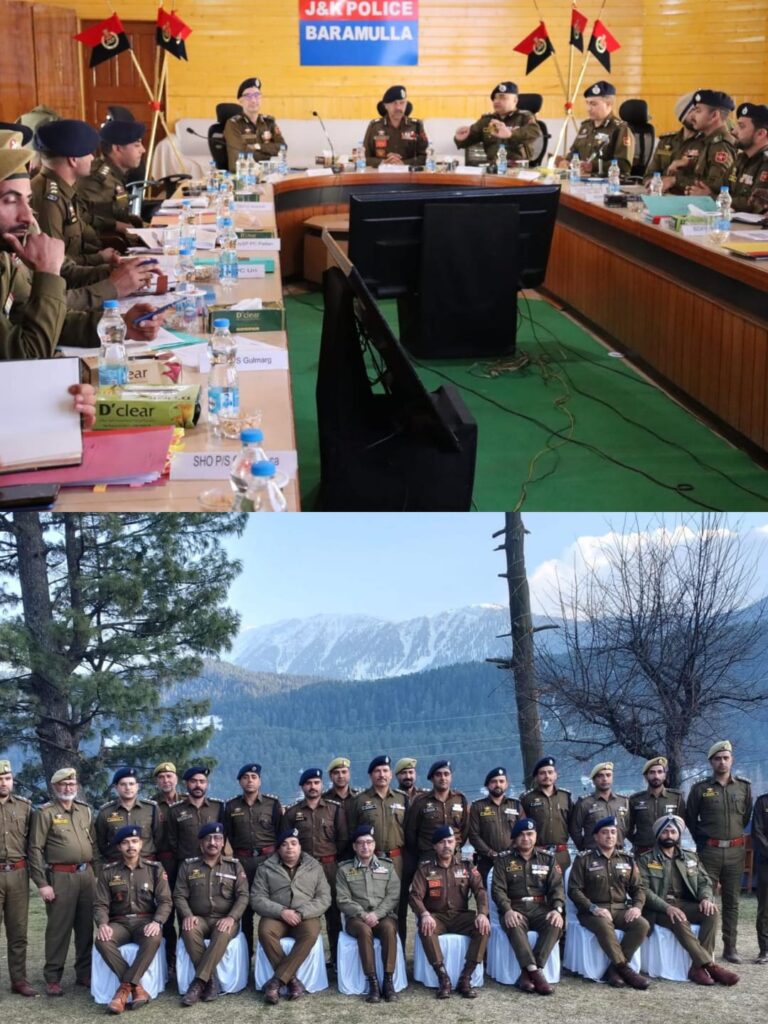
Baramulla,February 28:-The Director General of Police, J&K, Sh Nalin Prabhat (IPS), chaired a Security Review Conference of District Baramulla at Town Hall Tangmarg.

The meeting was attended by Spl DGP Coordination J&K Sh S.J.M. Gillani (IPS), IGP Kashmir Sh Vidhi Kumar Birdi (IPS), DIG Central Kashmir Range Srinagar, DIG North Kashmir Range Baramulla, SSP Baramulla, AdSP Baramula, SP Ops Baramulla, all DySP Ops, and SDPOs, SHOs and IC PPs of district police.

During the conference, the DGP reviewed the overall security situation and operational readiness of district Baramulla. He directed all officers to adopt a strict and uncompromising approach against terrorists and their support networks, reiterating zero tolerance towards terrorism. Security of tourists was specially emphasised upon. He directed for enhanced role of police stations and police posts in counter terror operations.

He stressed strong coordination, intelligence-based operations, and proactive policing to maintain peace and stability. The DGP appreciated the efforts of officers and jawans and urged all ranks to remain alert, disciplined, and mission-oriented.

EuroKids Shiv Nagar Annual Day Dazzles, Dignitaries Applaud 25-Year Legacy

0

KD NEWS SERVICE

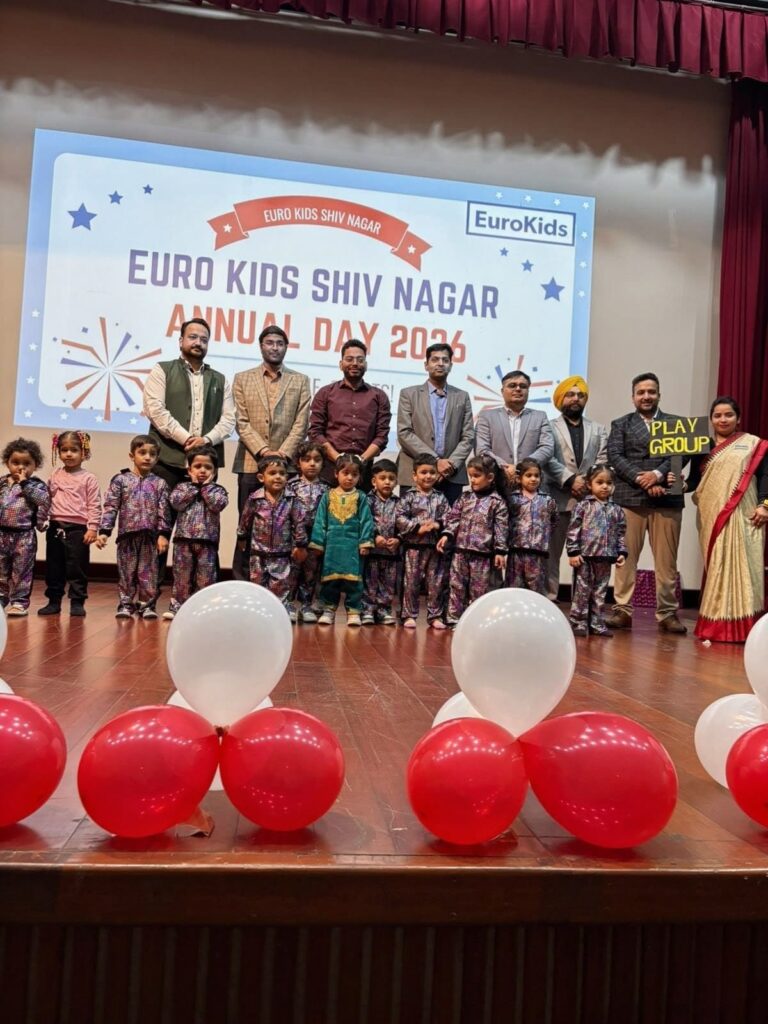
JAMMU, Feb 28: The Annual Day celebration of EuroKids Shiv Nagar was held with exceptional grandeur and enthusiasm at the prestigious Jammu Club Auditorium, where young learners captivated the audience with vibrant cultural performances rooted in Indian traditions, moral values, and the spirit of fearless learning.

The colourful event witnessed the gracious presence of Shri Sachin Kumar Vaishya, CEO of the Shri Mata Vaishno Devi Shrine Board, who attended as the Chief Guest. The occasion was further honoured by distinguished Guests of Honour including Shri Ananth Dwivedi (IAS), CEO State Health Agency J&K, and Shri Vidhu Shekhar (IAS), Additional Deputy Commissioner Jammu. Special Guests Shri Sandeep Seointra (JKAS) and Shri Karanjeet Singh (JKAS) also marked their presence, adding prestige to the celebration.

The programme unfolded as a vibrant blend of cultural performances, thematic presentations, and artistic displays by the tiny tots, reflecting Indian culture, patriotism, moral integrity, and self-confidence. The young students, dressed in colourful traditional attire, delivered well-coordinated dance performances, skits, and recitations that conveyed powerful messages about respecting heritage, embracing diversity, and developing strong ethical foundations from an early age. Their stage confidence and expressive participation drew repeated applause from the audience.

Addressing the gathering, the dignitaries lauded the 25-year legacy of the EuroKids brand, recognizing it as one of India’s leading preschool education networks known for its international standards, innovative curriculum, and child-centric approach. They appreciated EuroKids Shiv Nagar for successfully bringing global early childhood education practices to the region while preserving and promoting Indian cultural values.
The speakers emphasized that early childhood education forms the cornerstone of personality development and plays a decisive role in shaping responsible, confident, and emotionally resilient citizens. They commended the institution for nurturing creativity, curiosity, and leadership qualities among young learners, while ensuring a safe and encouraging environment that promotes fearless exploration and independent thinking.

Managing Director Shri Sahil Kishore Sharma, in his address, reiterated the institution’s vision of delivering scientific and modern education blended seamlessly with India’s rich cultural ethos. He stated that EuroKids Shiv Nagar remains committed to holistic development by fostering intellectual growth alongside emotional strength, moral grounding, and social awareness. He stressed that the preschool years are critical in building lifelong learning habits and self-belief, and the institution continuously strives to create confident learners prepared for future challenges.

The performances were widely appreciated by parents, who expressed pride in witnessing their children confidently perform on stage with discipline and enthusiasm. The meticulous planning, creative choreography, and meaningful themes reflected the dedication of the faculty and staff, who worked tirelessly to make the event a grand success.

Director Shri Rajat Sharma presented the vote of thanks, expressing heartfelt gratitude to the Chief Guest, Guests of Honour, special invitees, parents, teachers, and support staff for their invaluable presence and cooperation. He acknowledged the collective effort that transformed the Annual Day into a memorable celebration of learning, culture, and excellence.

The evening concluded amid resounding applause and joyful celebrations, marking yet another milestone in the remarkable journey of EuroKids Shiv Nagar towards strengthening the foundation of quality preschool education in the region.