Vinod Bhat
New Delhi: The Central Adoption Resource Authority (CARA), under the aegis of the Ministry of Women and Child Development, Government of India, organised its Fifth Regional Consultative Workshop for the Eastern Zone in Ranchi, Jharkhand, on 27 October 2026, in collaboration with the Government of Jharkhand and the State Adoption Resource Agency (SARA), Jharkhand. The workshop reaffirmed CARA’s commitment to strengthening family-based care and expanding opportunities for children with special needs (Divyaang children) to find safe, permanent and loving families.
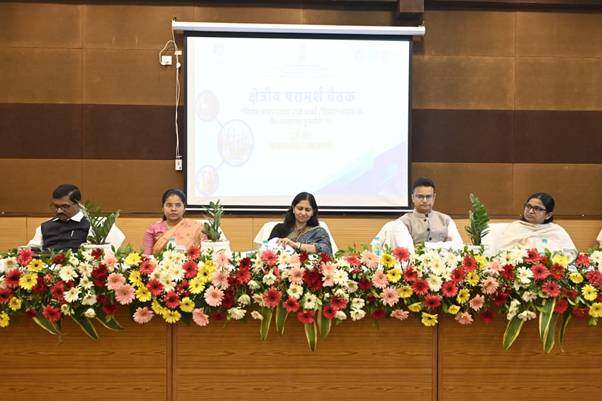
Organised as part of CARA’s continued efforts under the Adoption Awareness Campaign 2025, themed “Promoting Non-Institutionalised Rehabilitation of Children with Special Needs (Divyaang Children)”, the workshop focused on strengthening stakeholder convergence, addressing field-level challenges and identifying practical strategies to facilitate the adoption and rehabilitation of children with special needs.
The Eastern Zone, comprising Jharkhand, Bihar, Odisha, West Bengal and Sikkim, represents a diverse geographical and administrative landscape. The workshop brought together approximately 175 stakeholders representing around 115 districts across Jharkhand, Bihar, Odisha and West Bengal. It provided a vital platform for cross-sectoral dialogue, the exchange of best practices and the development of coordinated strategies to advance inclusive, family-based rehabilitation.
The workshop was graced by the presence of Smt. Bhavna Saxena, CEO, CARA; Shri Uma Shankar Singh, Secretary, DWCD&SS; Smt. Keerthishree G, State Commissioner for Persons with Disabilities; Smt. Kiran Pasi, Director, Social Welfare, Jharkhand; Shri Bijay Kumar Sinha, Director and Member Secretary, JSCPS; and other senior officials.
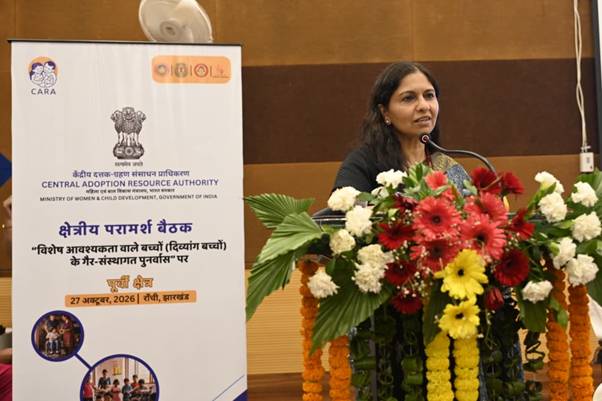
Addressing the gathering, Smt. Bhavna Saxena, CEO, CARA, highlighted the encouraging progress achieved through focused outreach and stakeholder engagement. Emphasising the importance of sustained and collaborative efforts, she underlined the need to address the barriers that delay adoption and strengthen the support available to prospective adoptive parents. She further stressed that sustained awareness and a sensitive, child-centric approach are essential to enabling more children with special needs to find permanent families.
Shri Uma Shankar Singh, Secretary, DWCD&SS, underscored the need to move beyond awareness towards sustained, result-oriented action to ensure that children with special needs receive equal opportunities for family life, care and belonging. He stated, “Through sustained collaboration among child protection authorities, healthcare professionals and adoption agencies, we must translate our commitment into meaningful outcomes for children.”
The workshop witnessed the participation of officials and representatives from State Adoption Resource Agencies (SARAs), Specialised Adoption Agencies (SAAs), Child Care Institutions (CCIs), District Child Protection Units (DCPUs), Chief Medical Officers (CMOs), Child Welfare Committees (CWCs), healthcare institutions and child protection organisations. The diverse participation enabled a comprehensive examination of the medical, legal, procedural and administrative dimensions of adoption.
Deliberations focused on key challenges relating to medical assessments, legal and procedural requirements, financial considerations, grievance redressal and inter-departmental coordination. Particular emphasis was placed on strengthening linkages between healthcare institutions and child protection systems to facilitate timely medical evaluations, appropriate care planning and smoother adoption processes.
Group discussions provided stakeholders with an opportunity to examine region-specific challenges and formulate practical, actionable and time-bound recommendations. The discussions explored measures to expand outreach, strengthen institutional capacities, address procedural bottlenecks and improve support for children with special needs at every stage of the adoption process.
A short documentary film portraying a successful adoption story involving children with special needs was unveiled during the workshop. Through a compelling real-life narrative, the film highlighted the transformative impact of family-based care, demonstrating how a nurturing family can provide children with security, emotional support, dignity and a lasting sense of belonging.
With the Ranchi workshop, CARA has completed the fifth in its series of Regional Consultative Workshops, following earlier consultations in Rajasthan for the Northern Zone, Assam for the North-Eastern Zone, Madhya Pradesh for the Central Zone and Maharashtra for the Western Zone. Together, these consultations have provided a structured platform to identify region-specific challenges, share effective practices and strengthen collaboration among stakeholders engaged in adoption and child protection.
The recommendations emerging from the Eastern Zone consultation are expected to inform future interventions aimed at improving adoption facilitation, strengthening convergence between healthcare and child protection systems, and expanding family-based rehabilitation opportunities for children with special needs across the country.
Through these consultative initiatives, CARA continues to advance a child-centric and inclusive approach to adoption, reinforcing the principle that every child deserves not just care, but the opportunity to grow up in a family where they are loved, valued and supported.

