What happened after that?
Abrar A. Mattoo
SRINAGAR : In 2018, Srinagar’s air was declared 10th most polluted in the world by the world health organization. However, since then, both this thought and the existential threat that it poses have left our collective conscience bewildered. Though in these past two years, the Covid-19 scenario has allowed the air to clean up a bit, nevertheless, Srinagar’s air quality is still one of the worse in the world.
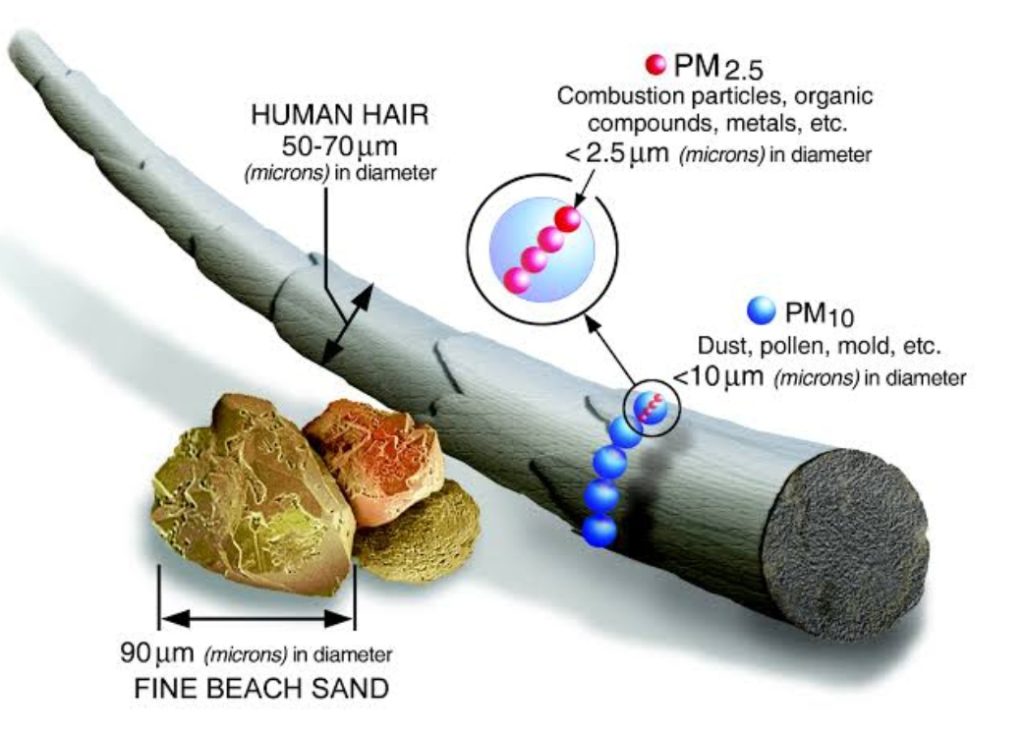
According to the data collected from varied researches, Srinagar’s ambient air quality is way more polluted than the limits prescribed by World Health Organization or the Central Pollution Control Board. The major pollutant in Srinagar’s Air is the particulate matter between 10 and 2.5 microns in diameter.
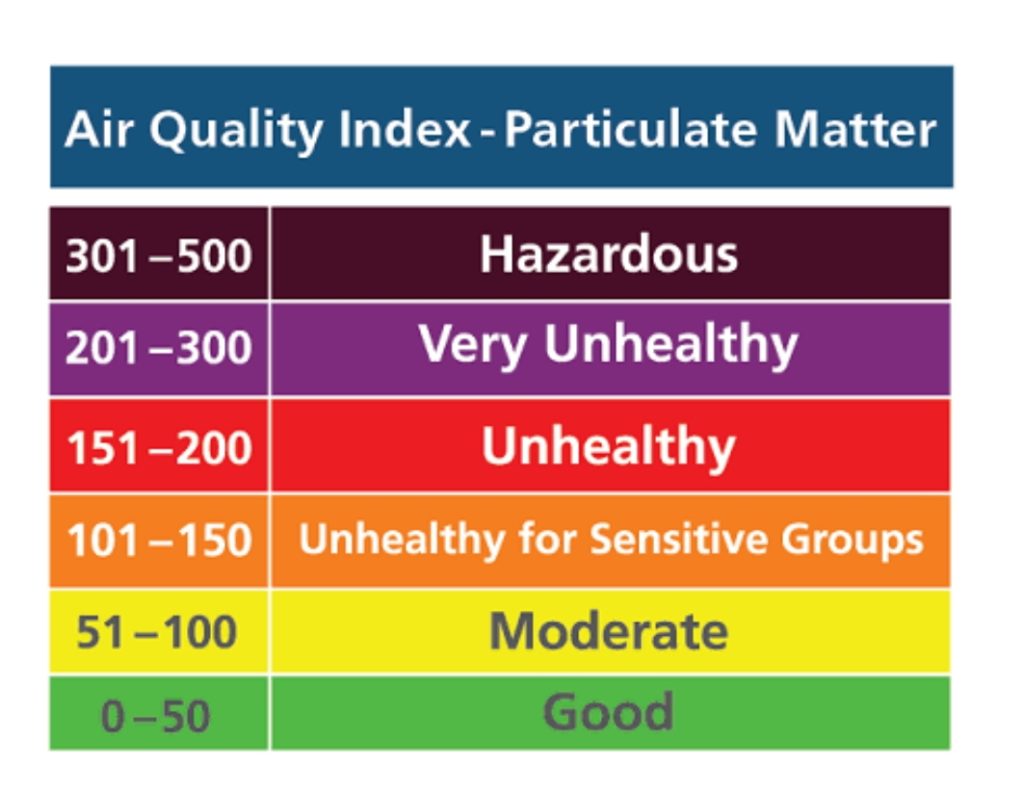
While analyzing the data collected at a continuous ambient air quality monitoring system, installed at Kashmir University, the department of Geo-informatics recorded that for a period of five years (2013-17) the annual PM10 and PM2.5 concentration was 2.0 – 3.2 and 1.7 – 2.8 times higher than the annual Indian National Ambient Air Quality Standards. The daily mean PM10 and PM2.5 concentrations were recorded at 135 ± 112 μg/m3 and 87 ± 93 μg/m3 respectively. It’s important to note, the healthy level is categorized at 60 μg/m3 for PM 10 and 40 μg/m3 for PM 2.5.
Pertinently, these two seemingly harmless particles that are generated by burning wood, coal, industrial and vehicular emissions, etcetera, are immensely dangerous for human health. Particularly, the PM 2.5 pollutant. The fine-sized PM 2.5 pollutant travels directly into the bloodstream and creates various health hazards in the body, including acute respiratory distress, asthma, chronic obstructive pulmonary disease, lung cancer, and kidney failure.
The data suggests that more than 90 percent of the global population breathes dangerously high levels of air pollution. Due to its ubiquity and severity, air pollution constitutes the world’s biggest environmental health hazard, contributing to as many as 7 million premature deaths globally per year (more than 3 times higher than deaths associated with COVID-19). Air pollution also dents the global economy with more than $5 trillion in welfare losses.
In 2020, the spread of COVID-19 raised new concerns, as exposure to pollutants like PM 2.5 and PM10 was found to increase vulnerability to the virus and its health impacts. Early reporting suggests that the proportion of COVID-19 deaths attributed to air pollution exposure ranges from 7 to 33 percent.
“Since 2016, the readings and the situation has remained the same with minor variations. It’s a fact that our air quality is not as pristine as people like to imagine. Though we may not be able to rank it, given the data inputs, our air quality is still one of the worse in the world,” Shakeel Romshoo, noted environmental scientist commented while speaking with Kashmir Despatch.
The reading recorded by the Continuous ambient air quality monitoring system, recently installed at Raj-Bagh in the premises of J&K Pollution Control Committee, evaluates Srinagar’s air in a 3.5 K.M patch from the direction of the wind. In the past week, the average concentration of PM 10 and PM 2.5 was recorded at 150 μg/m3 and 80 μg/m3 respectively.
Since the air quality is evaluated on an hourly basis, there were some nighttime hours in the past one week, when at 243, 289, and 314 micrograms in per cubic meter of air, the PM10 concentration in Srinagar’s air was three to five times higher than the normal level. Similarly, at 109, 106, and 80 micrograms per cubic meter of air, the PM 2.5 concentration was higher than 1.5 to 2X times during various nighttime hours. This concentration of particulate matter is higher than the average concentration of PM10 and PM 2.5 particulate matter in Delhi.
In research published by the Indian Institute of Tropical Meteorology, Pune, 2018, it was revealed that during the winter and autumn seasons, Kashmir’s air quality tends to be worse than Delhi’s. On average, the PM 2.5 concentration in Srinagar hovers around 400 – 600 μg/m3, while PM10 concentration averages around 600 – 800 μg/m3. At this level of concentration of particulate matter, the human body is at extreme risk on prolonged exposure. WHO recommends that everyone should avoid outdoor activities at this level of particulate pollution in the air to prevent adverse effects on health.
“Kashmir, as we know, is surrounded by mountains. When the winter comes, the moisture traps the particulate matter and it remains suspended in the air. The burning of agricultural waste, hard coke, and wood are the major contributors of PM concentration in winter and autumn,” one of the senior scientists at the Jammu and Kashmir pollution control committee said while talking to Kashmir Despatch.
Although many Kashmiri researchers are in conflict with this view, according to research conducted by a Kashmir University scholar, coal usage accounts for 84% of the total annual emissions of particulate matter in Kashmir. However, not to mention 660,627 registered vehicles plying on the roads of Kashmir are also a significant contributor to particulate emission.
To reduce the concentration of particulate matter in the air, scientists suggest various solutions that include proper macadamization of the roads, dumping of agricultural waste, and clean alternatives to coal and wood. Also, apart from these majors, scientists suggest regulating fuel adulteration by petrol pump owners and stress the need to introduce cleaner alternatives like CNG and battery-run vehicles.
“Additionally, we should make our public transport more efficient, because it has the potential to reduce the vehicular emissions to a great level,” Mr. Romshoo added further.
The government of Jammu and Kashmir has no specific policy to curb air pollution. However, with increasing population and no check on emissions, it’s assumed that the quality of air, especially in Srinagar, would deteriorate to a dangerous level.

