Vinod Bhat
New Delhi: Union Minister for Information & Broadcasting, Railways and Electronics & Information Technology, Shri Ashwini Vaishnaw, addressed the National Press Day celebrations organised by the Press Council of India at Rangbhawan Auditorium, Akashvani Bhawan, New Delhi, today.
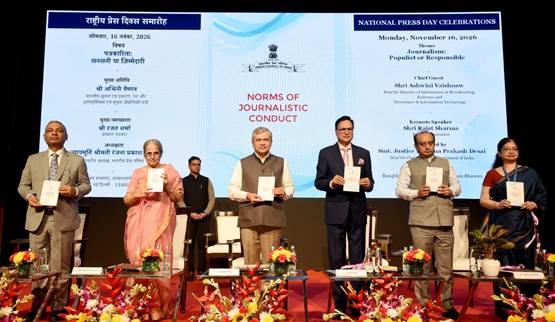
Underlining the vital role of media in strengthening democracy, he called upon media professionals to adapt to the rapidly evolving media landscape and technological advancements. He underscored the importance of upholding responsible journalism and the media’s responsibility towards society.
The event was attended by PCI Chairperson Justice (Retd.) Ranjana Prakash Desai; Secretary, Ministry of Information & Broadcasting, Shri Chanchal Kumar; renowned journalist Shri Rajat Sharma, who delivered the keynote address and PCI Member Dr. Sudhanshu Trivedi.This year’s theme, “Journalism: Populist or Responsible”, highlighted the evolving role of journalism in an era of rapid information dissemination and growing digital influence.
Shri Ashwini Vaishnaw Calls for Collective Efforts to Empower Citizens and Strengthen Society
Addressing the gathering, Shri Ashwini Vaishnaw highlighted the unprecedented pace of technological transformation, observing that the next five years could witness changes greater than those experienced over the previous two decades. He encouraged young journalists to embrace change and continuously upgrade their skills.
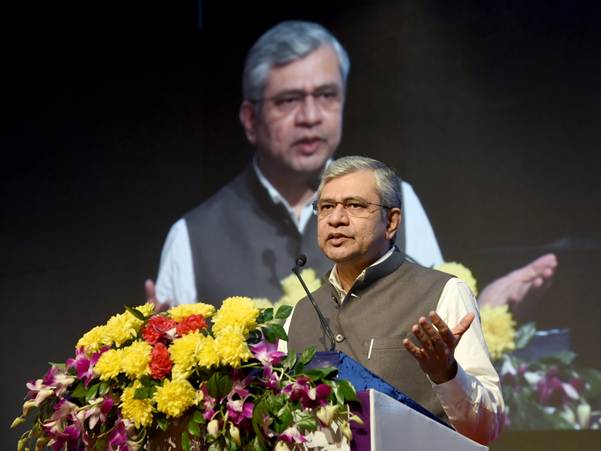
Emphasising accountability of digital platforms, he raised significant questions over whether community guidelines are enough in the face of increasing misinformation, deepfakes, misleading advertisements, digital arrests and harmful content affecting children. He stressed the need to deliberate on how this changing media landscape be governed to empower citizens and address emerging challenges.
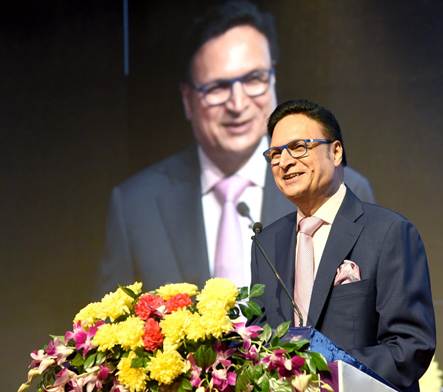
Shri Rajat Sharma Underscores the Thin Line Between Sensationalism and Responsibility
Delivering the keynote address, Shri Rajat Sharma emphasized that there is a thin line between sensationalism and responsibility, foregrounding the importance of editorial judgement and responsible reporting. Recalling experiences from the Emergency, the 26/11 Mumbai terror attacks and Operation Sindoor, he highlighted the need for restraint, verification and sensitivity, particularly while reporting on matters of national security. Calling for greater accountability in the digital media ecosystem, he urged journalists to prioritise accuracy over sensationalism, concluding with the message: “Less Noise, More News; Less Sensationalism, More Responsibility.”
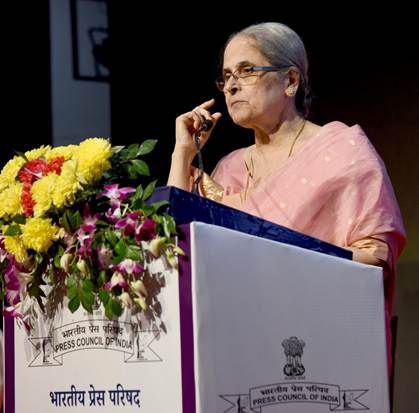
PCI Chairperson Reaffirms Commitment to Press Freedom and Journalistic Standards
PCI Chairperson Justice (Retd.) Ranjana Prakash Desai reaffirmed the Council’s commitment to protecting press freedom and improving journalistic standards. Underlining the rapid transformation in the media landscape, she observed that technological advancements have made information accessible to millions within seconds. She observed that anyone with a phone and internet connection can now become a news disseminator, but not everyone reporting the news is trained in or bound by journalistic ethics.
Shri Chanchal Kumar Emphasises Accuracy, Editorial Judgement and Human Accountability in the Age of AI
Secretary, Ministry of Information & Broadcasting, Shri Chanchal Kumar, emphasised that journalism must strike a balance between public engagement and credibility. He observed that popularity must not take precedence over truth, nor should virality outweigh verification. Highlighting the growing influence of TRPs, clicks and digital engagement, he stressed the importance of editorial judgement, fact-checking and distinguishing news from opinion. He underlined that AI can assist journalism but cannot assume the responsibility of a journalist.
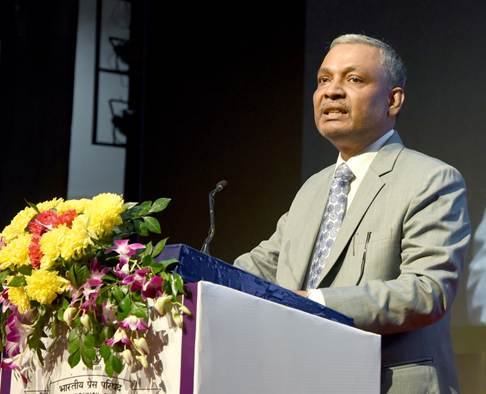
PCI Member and Rajya Sabha MP Dr. Sudhanshu Trivedi called for critical examination of international indices and emphasised that integrity and the responsible dissemination of information are essential as India progresses towards a new direction of development.
PCI Releases 2026 Edition of Norms of Journalistic Conduct
A key highlight of the celebrations was the release of the 2026 Edition of the Norms of Journalistic Conduct by the Press Council of India, incorporating updated guidelines on:
• Reporting during natural disasters and conflict situations.
• Coverage of protests and demonstrations.
• Reporting on sex workers and persons with disabilities.
• Protection of children’s privacy.
• Advertisements relating to online money games, in line with the Promotion and Regulation of Online Gaming Act, 2025.
About Press Council of India
The Press Council of India was set up by an Act of Parliament as a quasi-judicial authority in 1966 and re-established in 1979, with the objective of providing an internal self-regulatory mechanism for the print media to ensure free and responsible reporting. Since its inception, the Council has consistently strived to protect and preserve the freedom of the press and raise the standards of newspapers and news agencies in the country.

