spot_imgspot_img
spot_img
Home Blog Page 10

Petrol price up 87 paise, diesel 91 paise in third hike in 10 days

0

New Delhi, May 23 : Petrol and diesel prices were hiked by 87 paise and 91 paise per litre respectively on Saturday, the third increase in retail rates in less than 10 days, officials said.

In the national capital, petrol price rose from Rs 98.64 to Rs 99.51 per litre, while diesel increased from Rs 91.58 to Rs 92.49, according to a price notification from state-owned oil marketing companies.

The revision follows a Rs 3 per litre hike on May 15 and a 90 paise increase on May 19. The three hikes together have pushed up fuel prices by nearly Rs 5 per litre, officials added.

State-owned Indian Oil, Bharat Petroleum and Hindustan Petroleum had paused rate revisions for nearly four months before May 15. The calibrated increases are aimed at passing on higher international energy costs arising from geopolitical tensions in West Asia, officials told KNS.

Crude oil prices have remained volatile amid supply concerns and production cuts by OPEC+ nations, they said.

The latest price adjustment also comes at a time of rising seasonal fuel demand ahead of wheat harvesting and paddy sowing in several states, officials added.

Prime Minister Narendra Modi recently urged citizens to reduce fuel consumption by using public transport more frequently and opting for work-from-home arrangements to help curb India’s oil import bill and ease pressure on foreign exchange reserves.

Petrol and diesel prices vary across states due to differences in local taxes and levies.

One Lakh Engineering Jobs Expected from India’s Expanding Data Centre Sector: Dr Jitendra Singh

0

Vinod Bhat

New Delhi: Union Minister of State (Independent Charge) for Science & Technology, Earth Sciences and Minister of State for PMO, Personnel, Public Grievances, Pensions, Atomic Energy and Space, Dr. Jitendra Singh today said that India is entering a decisive phase where data centres, Artificial Intelligence, Quantum technologies and next-generation digital infrastructure will shape the future global economic order, asserting that the world now increasingly looks towards India for technology partnerships instead of India waiting for breakthroughs elsewhere. He said India is fully prepared to emerge as a trusted global data centre hub backed by policy reforms, private sector participation, clean energy integration and a rapidly expanding innovation ecosystem.

Delivering the keynote address during the Special Session on “Future-Proofing India’s Data Centres: Resilient Supply Chains and Opportunities” at the Annual Leadership Summit organised by AMCHAM India, Dr. Jitendra Singh said India can no longer view the data economy merely as a technological transition, but as a strategic national opportunity that will influence investments, employment, energy systems and geopolitical competitiveness in the decades ahead.

The Minister said India’s data centre capacity is projected to grow from 1.5 GW to nearly 6.5 GW by 2030 and the ongoing expansion is expected to generate nearly one lakh engineering jobs in areas such as AI systems, cooling technologies, smart grids, renewable energy integration and advanced digital infrastructure. He said India’s rapidly evolving ecosystem driven by AI, 6G, semiconductors and digital public infrastructure is creating unprecedented opportunities for global investments and technology collaboration.

Describing data centres as the “next oil economy”, Dr. Jitendra Singh said the future will increasingly revolve around data control, digital infrastructure and secure technology ecosystems. He stressed that India must move with an integrated national approach involving Government, private industry, infrastructure providers, telecom networks, renewable energy stakeholders and research institutions to fully leverage the emerging opportunities in hyperscale data centres and colocation markets.

Referring to the fast-changing global technology landscape, the Minister said India today stands at the same level of technological progression as leading nations in several frontier sectors. He cited the National Quantum Mission as a major example and said India has already achieved more than half of its planned targets in less than half the stipulated time. Against the target of establishing 2,000 kilometres of secure quantum communication infrastructure over eight years, India has already crossed 1,000 kilometres within just three years.

Dr. Jitendra Singh said the Government led by Prime Minister Narendra Modi has taken several bold and transformative decisions to prepare India for future technologies and strategic industries. He referred to long-term tax incentives for foreign cloud service providers, the National Research Foundation, the Semiconductor Mission and the opening of sectors such as space and nuclear energy to private participation. He said many of these reforms were considered unimaginable a few years ago, but India has demonstrated the political will to move rapidly in areas critical to future economic growth and technological leadership.

The Minister said the Government is not only facilitating technology development but also creating enabling frameworks to accelerate industry participation. Referring to recent initiatives supporting private sector innovation and deep-tech research, he said India is witnessing a new era where Government and industry are working as equal partners in nation-building through science and technology.

Dr. Jitendra Singh said India’s future growth in the data centre sector would depend upon resilient supply chains, sustainable energy systems, advanced telecom connectivity, subsea cable infrastructure, smart cooling solutions and coordinated policy support across sectors. He said the country’s growing compatibility between policy support and private sector participation has created an environment where India can emerge as one of the world’s most dependable digital infrastructure destinations.

PM to distribute more than 51,000 appointment letters to the newly appointed youth in Government on 23rd May

0

Vinod Bhat

New Delhi: Prime Minister Shri Narendra Modi will distribute more than 51,000 appointment letters to newly appointed youth in various Government departments and organisations at the 19th Rozgar Mela on 23rd May 2026 at 11 AM via video conferencing. He will also address the gathering on the occasion.

In keeping with the Prime Minister’s commitment to prioritising employment generation, the Rozgar Mela is a major initiative aimed at translating this vision into reality. Since its inception, around 12 lakh recruitment letters have been issued through 18 Rozgar Melas organised across the country.

The 19th Rozgar Mela will be held at 47 locations across the country. The newly recruited candidates, selected from all parts of India, will be joining various Ministries and Departments of the Government of India including Ministry of Railways, Ministry of Home Affairs, Ministry of Health & Family Welfare, Department of Financial Services, Department of Higher Education among others.

HM Amit Shah attends BSF Investiture Ceremony and Rustamji Memorial Lecture in New Delhi as Chief Guest

0

Vinod Bhat

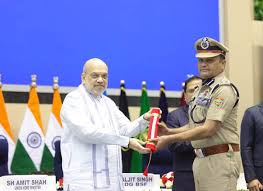
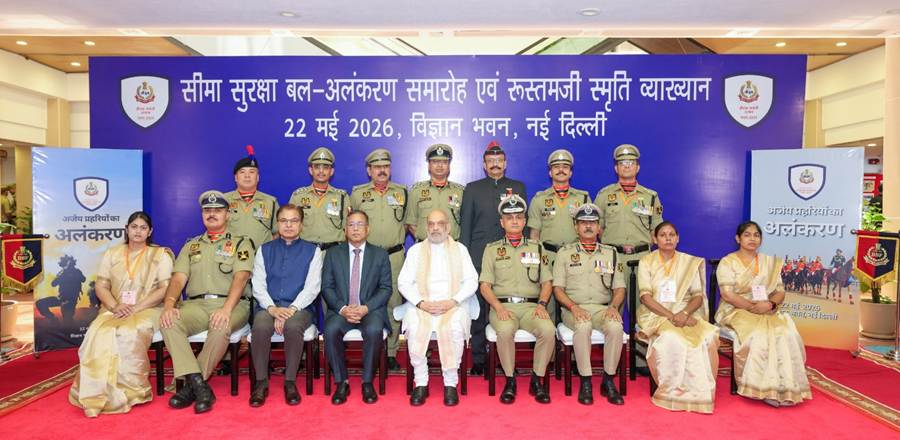
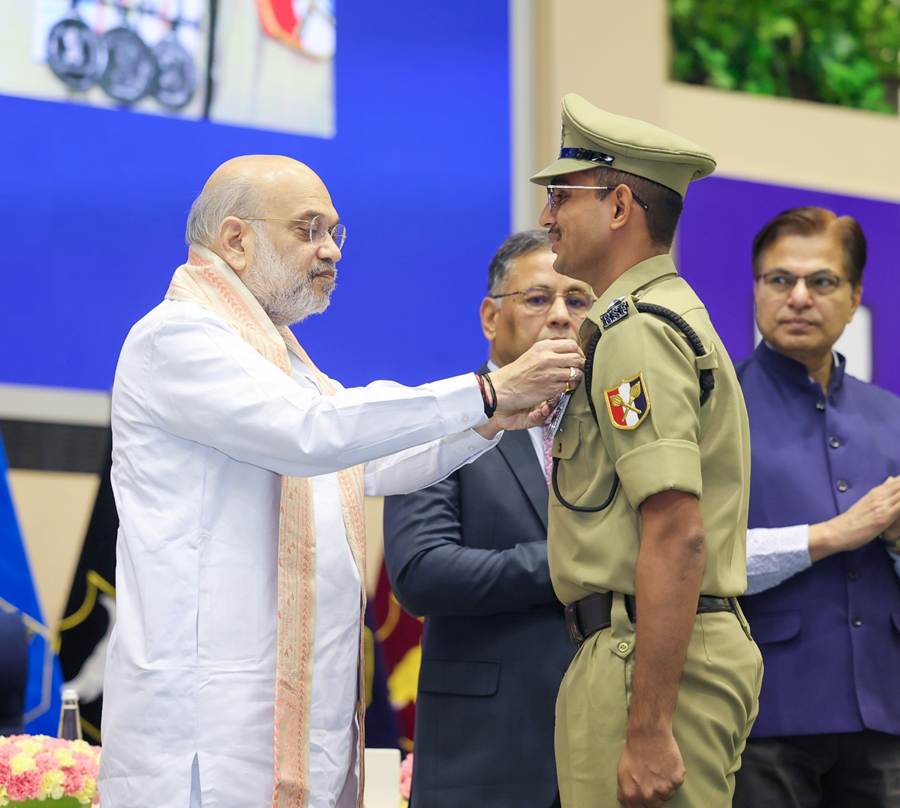
New Delhi: Union Home Minister and Minister of Cooperation Shri Amit Shah today attended the Border Security Force (BSF) Investiture Ceremony and Rustamji Memorial Lecture as the Chief Guest in New Delhi. Several dignitaries including the Director of the Intelligence Bureau, Secretary (Border Management), and the Director General of the BSF attended the event.

Addressing the gathering, Shri Amit Shah said that the investiture ceremony symbolizes the BSF’s unwavering dedication, commitment to duty, and complete devotion to the nation. He said that after the 1965 war, a detailed assessment of the shortcomings in border security led to the realization that a dedicated force was needed to secure India’s borders even during peacetime. At that time under the leadership of Padma Vibhushan K.F. Rustamji, the BSF was established and has since ensured the security of the country’s borders. He said that the strong foundation laid by Shri Rustamji has enabled the BSF to build aninstitution in the field of national security, bringing pride to the nation.

Addressing the gathering, Shri Amit Shah said that the investiture ceremony symbolizes the BSF’s unwavering dedication, commitment to duty, and complete devotion to the nation. He said that after the 1965 war, a detailed assessment of the shortcomings in border security led to the realization that a dedicated force was needed to secure India’s borders even during peacetime. At that time under the leadership of Padma Vibhushan K.F. Rustam, the BSF was established and has since ensured the security of the country’s borders. He said that the strong foundation laid by Shri Rustamji has enabled the BSF to build an institution in the field of national security, bringing pride to the nation.

Shri Amit Shah said that today, several new challenges have emerged in the field of border security. Illegal infiltration, narcotics smuggling, cattle smuggling, counterfeit currency, organized crime, and the smuggling of weapons and narcotics through drones are among the many challenges facing the BSF. However, the BSF has consistently made well-planned efforts to tackle these challenges. Shri Shah said that the BSF has safeguarded the nation by making the best possible use of its resources and effectively confronting all these challenges. He added that in the coming days, the role of the force will have to become even more coordinated and comprehensive.

Shri Amit Shah said that border security can no longer rely solely on traditional methods. Strengthening the security grid will require close coordination among State Police, Central Armed Police Forces (CAPFs), other armed forces, the Narcotics Control Bureau (NCB), intelligence agencies, and state administrations.He said that border security should no longer be viewed as an isolated responsibility but as a broader territorial responsibility. Shri Shah also stressed the need to remain vigilant against demographic changes caused by cross-border infiltration and against attempts to weaken the country’s economy through narcotics and fake currency. He said that India must adopt new strategies to address cyber threats, hybrid warfare, and drone-based challenges.

Union Home Minister said that the Border Security Force remains steadfast in some of the country’s most challenging terrains, including the icy mountains of Siachen and Kashmir, difficult regions such as Kupwara, Keran, and Uri, the deserts of Rajasthan, the Rann of Kutch, the marshy creeks of Sir Creek, the dense forests of the Sundarbans, the difficult eastern borders of Tripura, Meghalaya, and Mizoram, and the sensitive riverine areas connected to the Brahmaputra. He said that this is why the BSF, which began in 1965 with only 25 battalions and limited resources, has today grown into the world’s largest border guarding force with strength of 2.70 lakh personnel.

Shri Amit Shah said that since 2014, under the leadership of Prime Minister Shri Narendra Modi, India’s defence and border security policies have undergone a transformational change. Referring to incidents such as Uri, Pulwama, and Pahalgam, he said that India responded decisively through surgical strikes, air strikes, and Operation Sindoor by targeting terror infrastructure inside Pakistan. He said that the era of responding to terror attacks with negotiations is over, and that India has strengthened its security framework in line with the spirit of the Constitution. He described this as a new defence doctrine in which the BSF has played a major role.

Shri Amit Shah further said that the Government of India and the Ministry of Home Affairs will provide technological support to transform the country’s border into a ‘smart border’. He said that work is progressing towards creating an impregnable border security grid within the next year by integrating all kinds of technologies under the Smart Border concept. The Ministry of Home Affairs will soon introduce a Smart Border Project equipped with drones, radars, modern cameras, and other advanced technologies. The Home Minister said that once this initiative begins, the work of the Border Security Force will become significantly easier and stronger.


Shri Amit Shah said that in the 60th year of the Border Security Force’s establishment, the government will launch the Smart Border Project and make the entire borders with Bangladesh and Pakistan impenetrable, thereby providing the BSF with significant technological support. He said that along with courage, valour, dedication, and patriotism, the force will also be equipped with strong technological backing, which will further enhance the security of both borders.

Shri Amit Shah said that under the leadership of Narendra Modi, the Government of India has resolved not only to stop infiltration, but also to identify and expel every single infiltrator from the country, and will not allow unnatural demographic change. He said that the BSF must prevent conspiracies aimed at altering demographics through infiltration. He said that governments in Tripura, Assam, and West Bengal now follow policies that clearly oppose illegal infiltration. Shri Shah said that it is the responsibility of the BSF not only to secure the borders but also to maintain close coordination with village-level officials, police stations, district collectors, DDOs, and superintendents of police. He said that detailed information must be gathered about new infiltrators, their routes of entry, and the networks involved in smuggling, including cattle smuggling, and that all such routes must be systematically identified and shut down. He said that the available information should be used to build a structured system for preventing and removing infiltrators. Union Home Minister said that the time has come to decisively stop infiltration that has continued unchecked for years.

Shri Amit Shah also said that due to the Government’s determined efforts, the five-decade-old problem of Naxalismhas now been effectively eliminated from India. He said that security policy should not merely aim to contain problems, but to eradicate them completely. He urged the BSF to adopt the same determined approach in tackling infiltration.

Shri Amit Shah said that Vibrant Villages-1 and Vibrant Villages-2 are development programmes being implemented in a democratic manner with the cooperation of the Border Security Force. He also mentioned that the BSF’s jurisdiction has been extended from 15 kilometres to 50 kilometres and that decisions related to land allocation in West Bengal have also been finalized.

Shri Amit Shah said that PM Shri Narendra Modi has announced the High-Powered Demography Mission, and work on it will begin soon after its committee is constituted. He said that in the coming days, a strong security grid will have to be established along the borders of both countries, for which a major campaign will also need to be launched. Shri Amit Shah said that the 60th  year of the BSF is also a year dedicated to building a Smart Border and ensuring the welfare of BSF personnel. Shri Shah said that within the next two months, the Shri Narendra Modi government will introduce a major programme for the welfare of BSF personnel and all CAPF jawans.

Union Home Minister said that the government is going to launch a major nationwide campaign against narcotics, in which the Border Security Force will also play a very important role. He praised the force’s vigilance in gathering intelligence from both sides of the border to combat drug trafficking. He said that the next three to four years will bring transformative changes in border security. While technology will strengthen capabilities, he stressed that it will also increase responsibilities. Home Minister urged BSF personnel to embrace technology, build stronger ties with local communities, and improve coordination with local administrations to achieve the goal of making India infiltration-free.

Railways Unveil Major Connectivity Push for Rajasthan, Jaisalmer Gets Coach Care Complex

0

Vinod Bhat

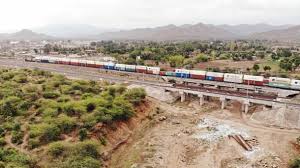
New Delhi: Union Minister for Railways, Information & Broadcasting and Electronics & Information Technology Shri Ashwini Vaishnaw and Union Minister for Culture and Tourism Shri Gajendra Singh Shekhawat flag off rail services from Jodhpur and inaugurated the Coach Care Complex, Jaisalmer

Jodhpur-Delhi Cantt Vande Bharat Express will now run with 20 coaches, Sabarmati-Jodhpur Express extended up to Jaisalmer

At a programme organised on Friday at Jodhpur Railway Station under the Jodhpur Division of North Western Railway, Union Minister for Railways, Information & Broadcasting and Electronics & Information Technology Shri Ashwini Vaishnaw and Union Minister for Culture and Tourism Shri Gajendra Singh Shekhawat dedicated rail services and projects to Rajasthan.

On this occasion, train number 04871, Jodhpur-Delhi Cantt Vande Bharat Superfast Express inauguration special rail service, was flagged off. At the same time, the coach composition of the Jodhpur-Delhi Cantt Vande Bharat Express was increased from 8 coaches to 20 coaches and the extension of the Sabarmati-Jodhpur Express rail service up to Jaisalmer was announced along with the inauguration of the Coach Care Complex, Jaisalmer.

Union Railway Minister Shri Ashwini Vaishnaw said that regular train number 26481/26482, Jodhpur-Delhi Cantt-Jodhpur Vande Bharat Superfast Express rail service, will have a total of 20 coaches from 24.05.2026 including 02 Executive Chair Cars, 16 Air Conditioned Chair Cars and 02 Driver Power Cars. This will provide more seats to passengers and significantly improve travel convenience.

On this occasion, Union Minister Shri Gajendra Singh Shekhawat said that under the leadership of Prime Minister Shri Narendra Modi, Indian Railways is rapidly moving towards world-class facilities. He said that railways are not only a means of transport, but also the lifeline of the country, and unprecedented transformation has been seen in Indian Railways in the last 12 years. He said that Union Railway Minister Shri Ashwini Vaishnaw has given many gifts to Rajasthan and especially Jodhpur in recent times, which have opened new dimensions of development in the Marwar region. Shri Gajendra Singh Shekhawat also expressed gratitude and thanks to the Union Railway Minister for railway works in Jodhpur, Pokhran and nearby areas and expressed hope that support for railway works would continue in the future as well. He also mentioned Prime Minister Shri Narendra Modi’s call for energy conservation and appealed to all to cooperate in it.

Union Railway Minister Shri Ashwini Vaishnaw said that the residents of western Rajasthan have long been demanding more rail services, keeping which in mind new rail services have been started for many major cities including Chennai, Pune, Hyderabad and Mumbai. He said that the coaching terminal being built in Jodhpur will prove to be a milestone in railway development and will facilitate operation of new trains from across the country in future. A Vande Bharat Sleeper terminal is also being developed at Bhagat Ki Kothi.

He said that preparations are underway to start a new rail service from Jodhpur to Haridwar in the next 10 months. At present, Rajasthan is being given a record budget of about ₹10,000 crore for railway development, whereas earlier this amount was only ₹700-800 crore.

The Union Railway Minister said that doubling work is in progress on Dhangra-Bandikui, Ajmer-Chittorgarh, Luni-Bhildi, Rewari-Khatuwas and Sawai Madhopur-Jaipur rail sections in Rajasthan. At the same time, Marwar Junction-Mavli gauge conversion, tunnel construction and new rail line works are also being carried out at a fast pace. Work is also underway on new rail line projects to connect Pushkar and Ambaji to the railway network.

Towards a better future with better rail facilities

The Union Ministers also inaugurated the newly built Coach Care Complex in Jaisalmer constructed at a cost of ₹67 crore. This project will increase train maintenance capacity, enable operation of more trains and provide better rail facilities to passengers.

The Golden City Jaisalmer is extremely important from tourism and strategic points of view. Sonar Fort, Patwon Ki Haveli, Bada Bagh and the Thar Desert are major attractions for tourists from India and abroad. The new rail facility will strengthen connectivity to Jaisalmer, boost tourism and create new employment opportunities in the region. At the same time, passengers travelling to Jodhpur and Ahmedabad for medical treatment and education will get better facilities.

The Union Railway Minister said that glimpses of Rajasthan’s culture, heritage and valour will now also be visible at railway stations. Redevelopment work of Jaisalmer Railway Station has been completed and he appealed to people to visit the station once. Jaipur Station is being developed on the Pink City theme and construction work at Pali Station is also progressing rapidly. He said that railway stations are now being developed as tourism centres of cities.

He said that 25 Gati Shakti Cargo Terminals are being developed in Rajasthan, out of which 12 have been completed. These projects will provide wide benefits to trade, tourism and passengers.

Extension of Sabarmati-Jodhpur Express up to Jaisalmer

Train number 20486, Sabarmati-Jaisalmer daily superfast express rail service, was virtually flagged off. This train will depart from Sabarmati at 07.00 AM from 23.05.2026, arrive at Jodhpur station at 14.40 PM, depart at 14.50 PM and reach Jaisalmer at 20.30 PM.

Similarly, train number 20485, Jaisalmer-Sabarmati daily superfast express rail service, will depart from Jaisalmer at 06.30 AM from 23.05.2026, arrive at Jodhpur station at 11.40 AM, depart at 11.50 AM and reach Sabarmati at 20.00 PM.

At the end of the programme, the Union Railway Minister expressed confidence that after completion of the current projects, Rajasthan will get the benefit of more than 200 new rail services and the state will be among the leading states of the country in the field of railway development. On this occasion, Rajya Sabha MP Shri Rajendra Gehlot, Bilara MLA Shri Arjun Ram Garg, Phalodi MLA Shri Pabba Ram Bishnoi, Jodhpur MLA Shri Atul Bhansali, Soorsagar MLA Shri Devendra Joshi, North Western Railway General Manager Shri Amitabh, Divisional Railway Manager Shri Anurag Tripathi and local public representatives and officials were present.

From Diplomacy to Deals: India and Cyprus Signal a New Financial Alignment with Historic Market Ceremony in Mumbai

0
KD NEWS SERVICE
MUMBAI, May 22:  In the grand theatre of global finance, symbolism often matters as much as strategy. On Thursday evening in Mumbai, beneath the glowing electronic boards and relentless rhythm of India’s financial capital, a ceremonial bell ringing evolved into something far more consequential — a declaration of intent between two nations seeking to redraw the contours of international capital markets.
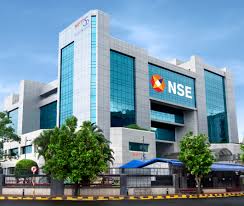
The occasion brought together political leadership, financial powerhouses, and institutional diplomacy in a rare convergence that highlighted the growing strategic partnership between India and Cyprus. At the center of the event stood Nikos Christodoulides, whose official visit to India culminated in a prestigious closing bell ceremony at the National Stock Exchange of India in Mumbai.
The event was attended by prominent financial leaders including Marinos Christodoulides, Srinivas Injeti, Ashishkumar Chauhan, and Shailesh Pathak — a gathering that reflected not merely ceremonial courtesy, but the emergence of a deeper economic and financial understanding between the two countries.
Yet the true significance of the moment extended well beyond the optics of diplomacy.
Behind the ceremony was a breakthrough that could reshape future cross-border investment flows between Europe and India. In what market experts are already describing as a landmark development, Ellinas Finance Public Company Ltd became the first foreign company ever to list its shares on the NSE International Exchange. The company, already listed on the Cyprus Stock Exchange, completed the milestone under a dual-listing framework designed to enhance cooperation between the two exchanges.
For global investors, the implications are profound.
The listing marks the beginning of what many believe could become a broader institutional bridge connecting European and Indian capital markets at a time when global finance is undergoing dramatic realignment. Traditional Western markets are grappling with slower growth, geopolitical uncertainty, and tightening monetary conditions, while India continues to emerge as one of the world’s most dynamic economic engines.
Against that backdrop, the collaboration between the Indian and Cypriot exchanges represents more than a bilateral agreement — it reflects a strategic shift toward diversified financial connectivity and multi-market capital access.
The framework for the cooperation was established through a Memorandum of Understanding between the two exchanges, focused on expanding investment opportunities, creating new financial products, and facilitating parallel listings for companies operating across jurisdictions.
Financial analysts say the agreement could significantly lower barriers for European firms seeking access to Indian investors, while simultaneously providing Indian companies with enhanced visibility and pathways into European financial systems.
The timing could hardly be more significant.
India’s markets have witnessed explosive growth in recent years, fueled by rising domestic participation, rapid digitalization, infrastructure expansion, and increasing confidence among global institutional investors. The country’s financial ecosystem is no longer viewed merely as an emerging-market opportunity; increasingly, it is being seen as a structural pillar of future global growth.
The NSE itself stands as a symbol of that transformation. Since pioneering electronic trading in India in 1994, the exchange has grown into one of the world’s most technologically sophisticated and influential financial institutions. It is now recognized as the world’s largest derivatives exchange by trading volume and among the top equity exchanges globally by number of trades.
For Cyprus, the partnership offers strategic depth of a different kind.
Positioned at the crossroads of Europe, the Middle East, and North Africa, Cyprus has long cultivated its role as an international financial gateway. The Cyprus Stock Exchange operates regulated and emerging-company markets while maintaining extensive international connectivity through partnerships with major European clearing and trading systems.
Its collaboration with India therefore represents a carefully calibrated move to deepen access to Asia’s fastest-growing major economy while strengthening its relevance within evolving global investment networks.
But beyond balance sheets and trading platforms lies another important dimension: diplomacy through finance.
Modern geopolitical influence is no longer exercised solely through military alliances or trade agreements. Increasingly, financial architecture — exchanges, payment systems, investment corridors, and cross-border capital platforms — has become a powerful instrument of strategic statecraft.
The Mumbai ceremony illustrated precisely that reality.
By standing together at one of Asia’s most influential financial institutions, India and Cyprus projected a message of mutual confidence, institutional cooperation, and long-term economic alignment. The symbolism was unmistakable: a Mediterranean European nation and an Asian economic powerhouse signaling that future growth will be built through interconnected markets rather than isolated economies.
There is also a broader geopolitical undercurrent to the partnership.
As nations across Europe seek stronger economic engagement with India amid shifting global supply chains and changing power balances, financial integration is becoming an increasingly important diplomatic tool. Cyprus, with its European Union membership and strategic location, could emerge as an important conduit for Indian companies seeking broader European expansion.
Likewise, India’s growing international exchange ecosystem offers European firms direct access to one of the world’s deepest reservoirs of investor enthusiasm and liquidity.
Market observers believe the success of this first dual listing may pave the way for additional international issuers, potentially transforming India into a more globally integrated fundraising destination over the coming decade.
Inside the exchange hall, applause followed the ceremonial ringing of the bell. Cameras flashed. Officials exchanged greetings. Traders watched the proceedings unfold on giant screens.
But beyond the spectacle, something more enduring may have quietly begun.
Not merely a ceremony.
Not merely a listing.
But the opening chapter of a new financial corridor connecting Europe and India in an increasingly multipolar economic world.

‘Kashmir Deserves the Best Healthcare’: Paras Health MD on Three-Year Journey

0

KD News Desk

Srinagar,.ay 21: Paras Health Srinagar on Thursday marked the completion of three years of operations in Kashmir, with the hospital announcing ambitious plans to establish a comprehensive cancer care centre equipped with advanced technologies including a LINAC machine and PET-CT facility by the end of this year.

The anniversary event in Srinagar brought together doctors, healthcare workers, government officials and members of the Paras Health network, as the institution reflected on its journey from a newly established private hospital to one of the Valley’s major healthcare centres.

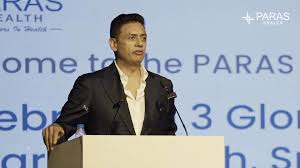
Speaking at the event, Managing Director Dr. Dharminder Nagar said the Srinagar facility was founded with a vision to make advanced healthcare accessible within Kashmir so that patients would no longer need to travel outside the region for specialised treatment.

“We will put a LINAC, we will put a PET-CT, we will create an integrated cancer center in this city and this region,” Dr. Nagar said. “By the end of the year, you will have a comprehensive cancer center.”

He said Paras Health aims to transform its Srinagar facility into “a beacon of hope” not only for Kashmir but for the entire country.

“This Srinagar facility is not going to be the best only in Srinagar or Kashmir. We are going to make it a beacon of hope for the entire country and a light visible across the nation,” he said.

Recalling the hospital’s early days, Dr. Nagar said many people doubted whether a corporate healthcare institution could survive in Kashmir.

“People thought we would pack up and leave. They believed we had only come here to take patients to Delhi,” he said. “But I wanted to ensure we would bring patients from Delhi here instead.”

He credited local doctors and healthcare workers for the hospital’s growth, describing Kashmiri medical professionals as among the most talented he had encountered.

According to Dr. Nagar, the hospital has already handled several complex procedures across cardiology, oncology, orthopaedics, critical care and general medicine that are often referred outside the region.

He also praised the Jammu and Kashmir government for supporting healthcare expansion in the private sector, particularly transplant and speciality care programmes.

Established in 2023 as part of Paras Health’s national healthcare network, the Srinagar hospital has expanded services over the last three years amid rising demand for advanced medical care in Kashmir. The healthcare group currently operates hospitals in Gurugram, Patna, Darbhanga, Ranchi, Panchkula, Udaipur and Kanpur.

Hospital officials said the celebration was not merely an anniversary event but a recognition of the trust patients and families across Kashmir had placed in the institution over the past three years.

Railway Minister Reviews Security Meeting with Field Officials in New Delhi Amid Recent Incidents Targeting Railways

0

Vinod Bhat

New Delhi: Railways are using the latest technology tools like AI, drones, CCTV etc. intensively to enhance the safety of trains, passengers, station premises and the vast rail network. This is being undertaken in a mission mode by strengthening the intelligence gathering mechanism at the beat level of the Railway Protection Force (RPF). In a crucial high-level security review meeting held in New Delhi today, the Railway Ministry carried out extensive consultations with field officers from across the country in the presence of senior officials in the national capital. The meeting was chaired by Railway Minister Ashwini Vaishnaw at Rail Bhawan. Ministers of State for Railways V. Somanna and Ravneet Singh Bittu were also present, besides the Chairman, Railway Board.


It was noted during the meeting that in the last few days, the involvement of anti-social elements has emerged during the initial probe into multiple incidents, including some recent fire incidents. Indian Railways has taken these incidents seriously and the RPF is actively probing them. In several cases, prompt and proactive action by Railways helped avert major eventualities. It was also felt that, besides strengthening intelligence systems and the use of technology to process inputs faster, Railways will further encourage passengers to actively support efforts in containing anti-social activities during their journey and while waiting at station premises. Railways has thus urged passengers to remain alert and vigilant while travelling. Any suspicious activity or suspicious person noticed on railway premises should be immediately reported on the Railway helpline number 139.

Discussions during the security review meeting focused on strengthening intelligence gathering mechanisms from the field through an improved reporting system. Emphasis was also laid on enhancing technology-driven security systems, expanding CCTV coverage across the railway network, and improving operational security coordination between Railway Board headquarters and field zones. The meeting also highlighted strengthening cyber security, upgrading camera specifications, and deploying AI-based surveillance and monitoring systems. The meeting further focused on strengthening coordination by improving information-sharing mechanisms between RPF and Government Railway Police for more effective security management across the railway network.

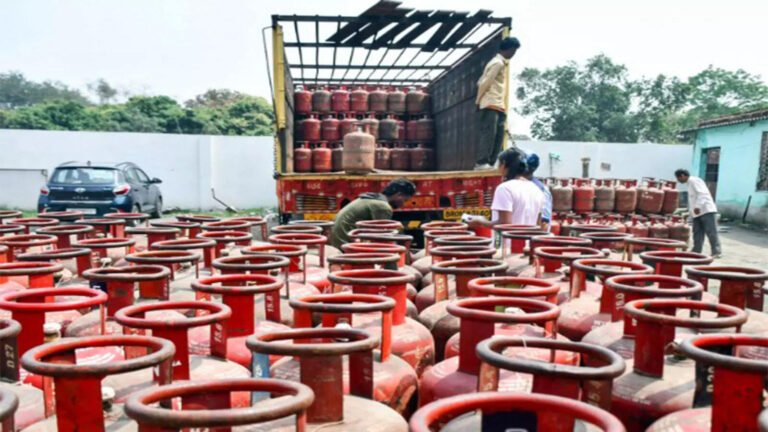
Delivery Authentication Code based LPG Cylinder deliveries increased to about 96% to prevent diversion

0

Vinod Bhat

New Delhi: Amid the evolving situation in West Asia, the Government of India continues its efforts to keep citizens informed through regular updates. In this regard, a media briefing was held today at the National Media Centre, where officers from the Ministries of Petroleum and Natural Gas, Ports, Shipping and Waterways provided updates on fuel availability, maritime operations, and measures being undertaken to maintain stability across key sectors.

Energy Supply and Fuel Availability

The Ministry of Petroleum and Natural Gas provided an update on the current fuel supply situation, outlining measures being taken to ensure uninterrupted availability of petroleum products and LPG in the context of the evolving situation in West Asia. It was noted that:

Public Advisory and Citizen Awareness

  • Citizens are advised to avoid panic purchase of petrol, diesel and LPG as the Govt is making all efforts to ensure availability of petrol, diesel and LPG.
  •  Beware of rumours and rely on official sources for correct information.
  • LPG consumers are requested to use digital booking platforms and avoid visiting distributors.
  •  Citizens are encouraged to use alternate fuels such as PNG and electric or induction cooktops.
  •  All citizens are requested to make necessary efforts to conserve energy in their daily use during the current situation.

Government Preparedness and Supply Management Measures

  • Despite the ongoing geopolitical situation, the Government has ensured that 100% supply is being made to Domestic LPG, Domestic PNG and CNG (Transport).
  • For commercial LPG, priority has been given to hospitals, educational institutions. Besides this, priority has also been given to pharma, steel, automobile, seed, agriculture, etc. In addition to this, supply of 5 Kg FTL to migrant labour is also doubled based on avg. daily supply on 2nd and 3rd March 2026.
  • The Government has already implemented several rationalisation measures on both the supply and demand side, including enhancing refinery production, increasing the booking interval from 21 to 25 days in urban areas and up to 45 days in rural areas and prioritising sectors for supply.

Coordinated Efforts with States/UTs and Institutional Mechanisms

  • State Governments are empowered under the Essential Commodities Act, 1955 and LPG Control Order, 2000 to monitor supply and act against hoarding and black marketing.
  • Govt. of States/UTs have to play a primary role in monitoring and regulating supply situation of essential commodities including Petrol, Diesel and LPG. Govt. of India has reiterated the same via multiple letters and VCs to all States/UTs.
  •  The Government of India vide letters dated 27.03.2026 and 02.04.2026 have stressed the need for proactive public communication to reassure citizens regarding adequate fuel availability. Regular review meetings are being held with States/UTs. In this context, meetings were convened on 02.04.2026 (Chaired by Secretary, MoPNG) and on 06.04.2026 (Chaired by Secretary, MoPNG along with Secretaries of I&B and Consumer Affairs), wherein the following was emphasized:

⮚    To issue daily press briefings and issue regular public advisories.

⮚    To actively monitor and counter fake news / misinformation on social media.

⮚    To intensify daily enforcement drives by District admin and to continue raids and inspections in coordination with OMCs

⮚    To promote PNG adoptions and alternate fuels.

⮚    To prioritize LPG supply, especially for domestic needs, and adopt targeted distribution of 5 kg FTL cylinders to ensure supply stability.

Enforcement and Monitoring Actions

  • Enforcement actions continue across the country to curb hoarding and black marketing of LPG. During last 3 days, more than 5000 raids were conducted across the country.
  • Similarly, the surprise inspections by the PSU OMCs officials are also continuing and during last 3 days, inspections at more than 3100 RO and LPG distributorships have been conducted.
  • PSU OMCs have strengthened and continued surprise inspections and imposed penalties on 463 LPG distributorships, and 81 LPG distributorships have been suspended till yesterday. 

LPG Supply

Domestic LPG Supply Status:

  • LPG supply continues to be affected by the prevailing geopolitical situation.
  • Supply of LPG to domestic households has been prioritized.
  • No dry-outs have been reported at LPG distributorships.
  • Online LPG cylinder bookings increased to about 99% on an industry basis yesterday.
  • Delivery Authentication Code (DAC) based deliveries have increased to about 96% to prevent diversion. DAC is received on the registered mobile number of the consumer.
  • During the last 3 days, about 1.34 Crore LPG cylinders were delivered against bookings of around 1.32 Crore LPG cylinders.
  • Yesterday, about 47.51 Lakh LPG cylinders were delivered against bookings of around 45.36 lakh LPG cylinders.

Commercial LPG Supply and Allocation Measures:

  • Total commercial LPG allocation has been increased to about 70% of pre-crisis levels, including 10% reform-linked allocation.
  • During last 3 days, about 1.87 Lakh – 5 Kg FTL cylinders were sold.
  • Since 3rd April 2026, PSU OMCs have organised more than 14,500 awareness camps for 5 Kg FTL Cylinders, wherein more than 2.34 Lakh – 5Kg FTL cylinders were also sold. 
  • Yesterday, around 4919 – 5kg FTL cylinders were sold through about 348 camps.
  • A three-member committee of Executive Directors of IOCL, HPCL and BPCL, in consultation with State authorities and industry bodies finalises the plan for the sale of Commercial LPG in the States/UTs.
  • Since May-26, total of 1,32,341 MT of Commercial LPG has been sold.
  • During last 3 days, total of 23,588 MT of Commercial LPG has been sold.
  • During last 3 days, about 963 MT of Auto LPG has been sold by PSU OMCs.

Natural Gas Supply and PNG Expansion Initiatives

  • Consumers have been prioritised with 100% supplies to D-PNG and CNG-Transport.
  • Gas supply to other industrial and commercial sectors, including supplies through CGD networks, is enhanced up to 80%.
  • CGD entities have been advised to prioritize PNG connections for commercial establishments such as hotels, restaurants and canteens across all their GAs, to address concerns regarding the availability of commercial LPG.
  • States/UTs and Central Ministries have been requested to expedite approvals required for expansion of CGD networks.
  • The Government of India vide letter dated 18.03.2026 has offered all States/UTs additional 10% allocation of commercial LPG to States provided they can help in long term transition from LPG to PNG.
  • 22 States/UTs are receiving additional commercial LPG allocation linked to PNG expansion reforms.
  • The Government of India vide Gazette dated 24.03.2026 has notified the Natural Gas and Petroleum Products Distribution (Through Laying, Building, Operation and Expansion of Pipelines and Other Facilities) Order, 2026 under the Essential Commodities Act, 1955. The Order provides a streamlined and time-bound framework for laying and expanding pipelines across the country, addressing delays in approvals and access to land, and enabling faster development of natural gas infrastructure, including in residential areas. It is expected to accelerate PNG network growth, enhance last-mile connectivity, and support the transition to cleaner fuels, thereby strengthening energy security and advancing India’s gas-based economy.
  • PNGRB has directed CGD entities to expedite D-PNG connections. Also, the National PNG Drive 2.0 has been extended till 30.06.2026 to sustain momentum in PNG expansion.
  • To encourage a cleaner, more secure and self-reliant energy future, the Government of India has developed a model draft State CBG Policy. The model policy is intended to serve as a comprehensive flexible guiding framework to enable States to create their own investor-friendly and implementation-oriented ecosystem for CBG development. Those States which opt for this, will be prioritized for the next tranche of additional allocation of commercial LPG.
  • Since March 2026, about 7.64 Lakh PNG connections have been gasified and infrastructure has been created for additional 2.81 Lakh connections, taking the total to 10.45 lakh connections. Further, about 7.99 Lakh customers have been registered for new connections.
  • Till 20.05.2026, more than 58,500 PNG consumers have surrendered their LPG connections via MYPNGD.in website.

Crude Position and Refinery Operations

  • All refineries are operating at high capacity with adequate crude inventories, while sufficient stocks of petrol and diesel are being maintained.
  • Domestic LPG production from refineries has been increased to support domestic consumption.
  • An inter-ministerial Joint Working Group (JWG) has been set up to ensure availability of petrochemical feedstock supply for the domestic market. Subsequently, Govt. of India vide order dated 01.04.2026 has permitted Oil Refinery companies including Petrochemical Complexes to make certain minimum quantities of C3 & C4 streams available for critical sectors as determined by Centre for High Technology (CHT).
  • Based on the requests received from the Department of Pharmaceuticals, Department of Chemicals & Petro Chemicals (DCPC), Dept. for Promotion of Industry and internal trade (DPIIT), the provision for C3-C4 molecules of 1120 MT/day, from LPG pool, has been made for Pharma, Chemical and Paint sector companies.
  • Since 1st May 2026, about 10600 MT of C3-C4 Molecules (comprising Propylene and Butylene) and about 3940 MT of Butyl Acrylate has been sold by Mumbai, Kochi, Vizag, Chennai, Mathura and Gujarat refineries to Chemical, Pharma and Paint Industry.

Retail Fuel Availability and pricing Measures

  • All Retail outlets are operating normally across the country.
  • Middle East crisis has resulted in abnormal increase in the crude prices. In order to protect consumers from this impact, the Government of India has decided to absorb a part of this burden through a reduction in excise duties on petrol and diesel by Rs. 10/litre.
  • Govt. of India vide Gazette notification dated 15.05.2026 has reduced the export levy on diesel from Rs. 23 per litre to Rs. 16.50 per litre and on ATF from Rs. 33 per litre to Rs. 16 per litre. Further, export duty on Petrol has been imposed to Rs. 3 per litre.
  • There are adequate stocks of petrol and diesel available at all Petrol Pumps in the country.

Maritime Safety and Shipping Operations

The Ministry of Ports, Shipping and Waterways provided an update on the prevailing maritime situation in the Persian Gulf, detailing the measures being undertaken to ensure the safety and security of Indian vessels and crew in the region. It was stated that:

  • The Ministry of Ports, Shipping and Waterways continues to coordinate with the Ministry of External Affairs, Indian Missions, and maritime stakeholders to ensure seafarer welfare and uninterrupted maritime operations.
  • All Indian seafarers in the region are safe, and no incident involving Indian-flagged vessels or foreign vessels with Indian crew has been reported in the past 72 hours.
  • DG Shipping Control Room has handled 10,106 calls and more than 22,215 emails since activation. In the last 72 hours, a total of 404 calls and 903 emails have been received from seafarers, their families, and maritime stakeholders.
  • The Ministry, through the Directorate General of Shipping (DG Shipping), has facilitated the safe repatriation of more than 3,316 Indian seafarers so far, including 99 in the last 72 hours from various locations across the Gulf region.
  • Port operations across India remain normal, with no congestion reported.

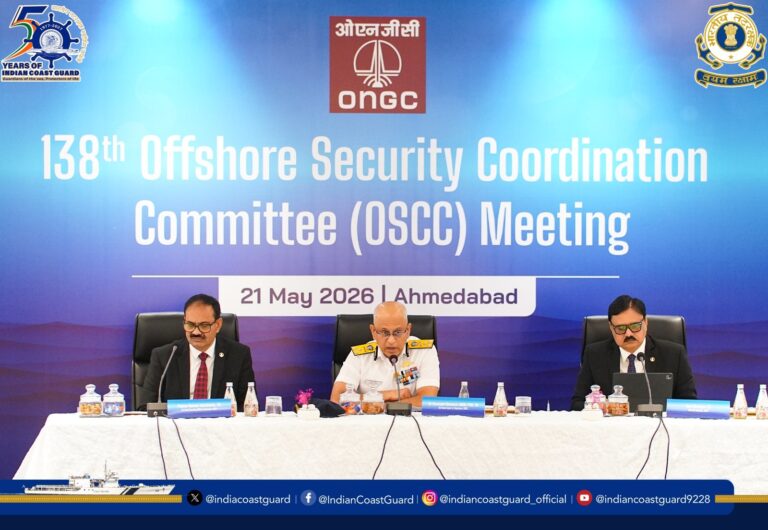
India Tightens Offshore Security Amid Rising Drone and Maritime Threats

0

KD NEWS SERVICE

AHMEDABAD/NEW DELHI, May 21: India has stepped up efforts to strengthen the security of its offshore energy assets and maritime infrastructure as the 138th Offshore Security Coordination Committee (OSCC) meeting concluded in Ahmedabad on Thursday under the chairmanship of Director General of the Indian Coast Guard, Paramesh Sivamani.
The high-level meeting assumed major significance amid growing concerns over evolving maritime threats, including drone-enabled attacks, unmanned surveillance systems, cyber vulnerabilities, and the increasing strategic competition in the Indo-Pacific region. Senior officials from India’s defence, intelligence, maritime, and energy sectors gathered to review the country’s offshore security preparedness and formulate coordinated responses to emerging challenges.

The OSCC meeting focused on enhancing the protection framework for India’s offshore installations, oil rigs, and critical energy infrastructure located across strategic maritime zones. Officials stressed that the security environment in the Indian Ocean Region has become increasingly complex due to rapid technological advancements in modern warfare and the expanding presence of non-traditional threats.

The deliberations were held in the context of the evolving global and regional security environment, modern warfare dynamics including unmanned and drone-enabled threats, and the expanding offshore exploration activities in the Andaman and Nicobar region. The island territories are strategically important for India because of their proximity to key international shipping routes and growing energy exploration operations.

The meeting witnessed participation from representatives of the Indian Coast Guard (ICG), Indian Navy, Indian Air Force (IAF), Ministry of Home Affairs (MHA), Ministry of External Affairs (MEA), Ministry of Petroleum and Natural Gas (MoPNG), Directorate General of Hydrocarbons (DGH), Directorate General of Shipping, Intelligence Bureau (IB), Oil and Natural Gas Corporation (ONGC), and state police forces. The presence of multiple agencies reflected the government’s integrated approach towards securing offshore and coastal infrastructure.

Officials reviewed current threat perceptions surrounding offshore assets and examined mechanisms to improve operational coordination among various maritime and security agencies. Discussions reportedly included strengthening maritime domain awareness through advanced surveillance technologies, coastal radar systems, aerial reconnaissance, intelligence-sharing frameworks, and integrated response networks.

The meeting concluded with a renewed commitment from all participating agencies to bolster offshore defence mechanisms and ensure the safety of India’s maritime economic interests. Commandant Amit Uniyal, Public Relations Officer of the Indian Coast Guard, later issued the official press brief on the proceedings of the meeting.

Particular attention during the discussions was directed toward the growing risk posed by drone-enabled threats. Security experts noted that unmanned aerial and maritime systems are increasingly being used globally for reconnaissance, sabotage, and asymmetric warfare operations targeting critical infrastructure. Officials emphasized the need for robust counter-drone capabilities and real-time monitoring systems to secure offshore platforms and maritime installations.

The Committee also focused on enhancing maritime domain awareness, inter-agency coordination, surveillance capabilities, and joint response mechanisms to effectively tackle emerging offshore security challenges.

Improved interoperability between defence forces, intelligence agencies, coastal authorities, and civilian stakeholders was identified as a key priority to ensure swift and coordinated action during emergencies at sea.
India’s offshore energy infrastructure remains a vital component of the nation’s economic and energy security framework. Offshore oil and gas fields contribute significantly to domestic production, making their protection essential for ensuring uninterrupted energy supplies and safeguarding national interests.

The OSCC reaffirmed its commitment to continuous modernization, enhanced preparedness, and stronger coordination mechanisms to counter evolving maritime threats. Officials said the meeting marked another important step in reinforcing India’s offshore security architecture at a time when maritime strategic challenges continue to grow across the region.