spot_imgspot_img
spot_img
Home Blog Page 11

India Tightens Offshore Security Amid Rising Drone and Maritime Threats

0

KD NEWS SERVICE

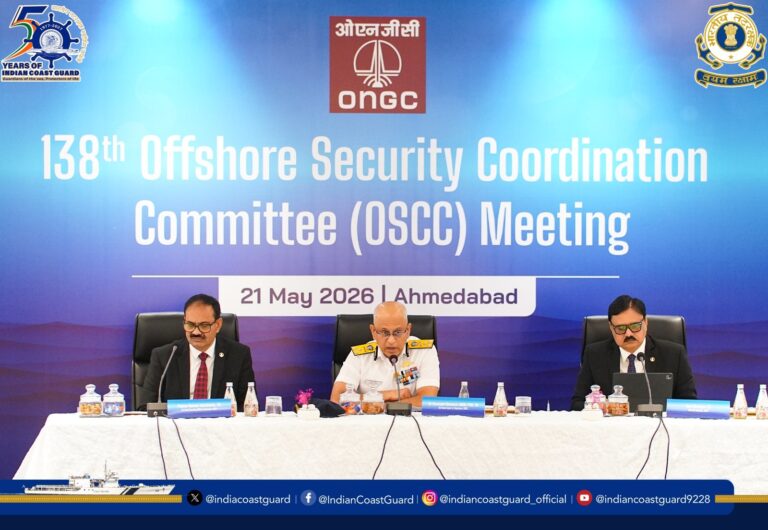
AHMEDABAD/NEW DELHI, May 21: India has stepped up efforts to strengthen the security of its offshore energy assets and maritime infrastructure as the 138th Offshore Security Coordination Committee (OSCC) meeting concluded in Ahmedabad on Thursday under the chairmanship of Director General of the Indian Coast Guard, Paramesh Sivamani.
The high-level meeting assumed major significance amid growing concerns over evolving maritime threats, including drone-enabled attacks, unmanned surveillance systems, cyber vulnerabilities, and the increasing strategic competition in the Indo-Pacific region. Senior officials from India’s defence, intelligence, maritime, and energy sectors gathered to review the country’s offshore security preparedness and formulate coordinated responses to emerging challenges.

The OSCC meeting focused on enhancing the protection framework for India’s offshore installations, oil rigs, and critical energy infrastructure located across strategic maritime zones. Officials stressed that the security environment in the Indian Ocean Region has become increasingly complex due to rapid technological advancements in modern warfare and the expanding presence of non-traditional threats.

The deliberations were held in the context of the evolving global and regional security environment, modern warfare dynamics including unmanned and drone-enabled threats, and the expanding offshore exploration activities in the Andaman and Nicobar region. The island territories are strategically important for India because of their proximity to key international shipping routes and growing energy exploration operations.

The meeting witnessed participation from representatives of the Indian Coast Guard (ICG), Indian Navy, Indian Air Force (IAF), Ministry of Home Affairs (MHA), Ministry of External Affairs (MEA), Ministry of Petroleum and Natural Gas (MoPNG), Directorate General of Hydrocarbons (DGH), Directorate General of Shipping, Intelligence Bureau (IB), Oil and Natural Gas Corporation (ONGC), and state police forces. The presence of multiple agencies reflected the government’s integrated approach towards securing offshore and coastal infrastructure.

Officials reviewed current threat perceptions surrounding offshore assets and examined mechanisms to improve operational coordination among various maritime and security agencies. Discussions reportedly included strengthening maritime domain awareness through advanced surveillance technologies, coastal radar systems, aerial reconnaissance, intelligence-sharing frameworks, and integrated response networks.

The meeting concluded with a renewed commitment from all participating agencies to bolster offshore defence mechanisms and ensure the safety of India’s maritime economic interests. Commandant Amit Uniyal, Public Relations Officer of the Indian Coast Guard, later issued the official press brief on the proceedings of the meeting.

Particular attention during the discussions was directed toward the growing risk posed by drone-enabled threats. Security experts noted that unmanned aerial and maritime systems are increasingly being used globally for reconnaissance, sabotage, and asymmetric warfare operations targeting critical infrastructure. Officials emphasized the need for robust counter-drone capabilities and real-time monitoring systems to secure offshore platforms and maritime installations.

The Committee also focused on enhancing maritime domain awareness, inter-agency coordination, surveillance capabilities, and joint response mechanisms to effectively tackle emerging offshore security challenges.

Improved interoperability between defence forces, intelligence agencies, coastal authorities, and civilian stakeholders was identified as a key priority to ensure swift and coordinated action during emergencies at sea.
India’s offshore energy infrastructure remains a vital component of the nation’s economic and energy security framework. Offshore oil and gas fields contribute significantly to domestic production, making their protection essential for ensuring uninterrupted energy supplies and safeguarding national interests.

The OSCC reaffirmed its commitment to continuous modernization, enhanced preparedness, and stronger coordination mechanisms to counter evolving maritime threats. Officials said the meeting marked another important step in reinforcing India’s offshore security architecture at a time when maritime strategic challenges continue to grow across the region.

85 Quintals of Potato Seed Distributed as SKUAST-K Launches Mega Vegetable Mission in Machil

0

KD NEWS SERVICE

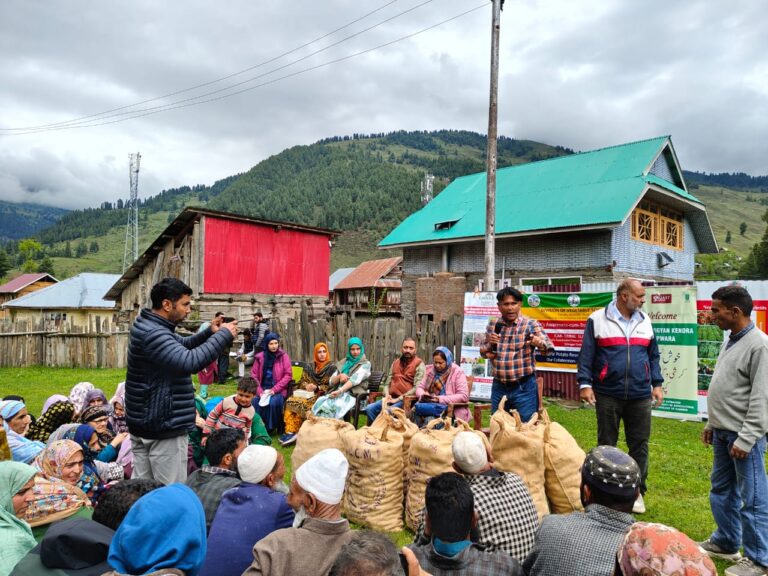
SRINAGAR, May 21: In a significant step towards transforming the vegetable cultivation landscape and creating sustainable livelihood opportunities in the remote tribal belt of Machil in north Kashmir’s Kupwara district, the Division of Vegetable Science, Faculty of Horticulture, at Sher-e-Kashmir University of Agricultural Sciences and Technology of Kashmir distributed 85 quintals of quality potato seed, vegetable seed kits, and several essential agricultural inputs among farmers during a Mega Farmers’ Awareness-cum-Training Programme organized in the high-altitude frontier region.

Held at nearly 8,000 feet above mean sea level, the programme marked a major scientific intervention aimed at strengthening decentralized seed production systems for potato, peas, beans, root crops, and other commercial vegetables while simultaneously enhancing nutritional security and employment generation through scientific vegetable cultivation in the Machil sector.

The initiative was organized by the Division of Vegetable Science, Faculty of Horticulture, SKUAST-K, in collaboration with Krishi Vigyan Kendra Kupwara under the Tribal Sub Plan (TSP) component of AICRP on Potato, AICRP on Vegetable Crops, and the ICAR-funded project titled “Transforming Tribal Agriculture in Kashmir: A Comprehensive Vegetable Development Initiative.”
The programme is being implemented under the dynamic guidance of Prof. Nazir Ahmad Ganai, Vice-Chancellor of SKUAST-K, with the proactive support of Prof. Raihana Habib Kanth, Director Extension-cum-Dean, and the leadership and guidance of Prof. Ishfaq Abidi, Head, Division of Vegetable Science, Faculty of Horticulture.

The initiative forms part of a broader vision of the Division of Vegetable Science to strengthen quality seed production of commercial vegetable crops through participatory seed production involving local farming communities. Officials said the programme seeks to build a sustainable and self-reliant seed production ecosystem in far-flung tribal regions of Kashmir.
The Machil intervention follows a similar successful endeavour initiated in the Gurez valley last year, where scientific vegetable cultivation and seed production programmes generated encouraging results among tribal farmers.

Addressing the gathering, Prof. Ishfaq Abidi highlighted the immense potential of Machil for decentralized and disease-free seed production owing to its geographical isolation, naturally low pest and disease incidence, and favourable temperate summer climate. He stated that these unique agro-climatic conditions make the region highly suitable for producing quality potato and vegetable seed capable of meeting local as well as regional demand.

Prof. Abidi stressed that farmers, krishi sakhis, and unemployed youth must adopt modern scientific technologies, improved seed varieties, and organic cultivation practices to fully harness the yield potential of the area. He said the initiative could become a game changer for the local economy by promoting scientific agriculture, increasing farm productivity, and opening new livelihood avenues through vegetable seed entrepreneurship and protected cultivation.
During the programme, beneficiary farmers were provided with quality vegetable seed kits, 85 quintals of potato seed, seed storage bins, vermicompost bags, safety kits, and farm machinery components aimed at improving scientific cultivation practices and post-harvest seed management at the grassroots level.

The technical sessions conducted during the programme focused extensively on scientific seed production protocols, nursery management, integrated nutrient management, integrated pest management (IPM), and low-cost protected cultivation technologies for off-season vegetable production.

Prof. Syed Faheema Mushtaq, Principal Investigator of AICRP on Potato, along with her team, impressed upon farmers the importance of adopting scientific seed production techniques, maintaining seed purity standards, and ensuring proper crop management practices to establish Machil as a sustainable and reliable quality seed production cluster.
Scientists also encouraged farmers to adopt organic and low-input farming practices to position Machil as a potential organic vegetable and seed production hub in the Kashmir region.

The programme witnessed active participation and technical deliberations by several scientists and experts from SKUAST-K, including Dr. Asima Amin, Principal Investigator of the ICAR-funded project; Dr. Syed Berjes Zehra, Co-Principal Investigator of AICRP on Vegetable Crops; and Dr. Ummyiah H. Masoodi, Assistant Professor, Division of Vegetable Science, along with other scientists and technical staff of the university.

Prof. Mohiuddin, Head of KVK Kupwara, appreciated the dedicated efforts of the scientific team led by Prof. Ishfaq Abidi for selecting district Kupwara, particularly the remote Machil sector, for this ambitious agricultural initiative. He observed that such interventions are crucial for integrating tribal farming communities into mainstream agricultural development and strengthening the rural economy of border areas.

All scientists addressed the gathering and conducted multiple technical and interactive sessions with farmers, focusing on scientific vegetable production technologies, seed management, crop protection, and sustainable farming practices suited to high-altitude conditions.

During their visit, the scientific team also conducted field assessments across the Machil region to identify suitable sites for developing seed production clusters. Officials said groundwork has already been initiated for preparing a comprehensive long-term strategy aimed at sustainable potato and vegetable seed production in the area.

The initiative is expected to significantly enhance farmers’ income, strengthen local seed systems, improve household nutritional security, and generate employment opportunities through seed production, value addition, and protected cultivation technologies in the Machil sector.

Farmers and local participants appreciated the efforts of the Division of Vegetable Science, SKUAST-K Shalimar, and KVK Kupwara for bringing scientific expertise and developmental support to one of Kashmir’s most remote and strategically important frontier regions.

Agricultural experts associated with the programme believe that with sustained institutional support, scientific guidance, and active community participation, Machil has the potential to emerge as a model high-altitude vegetable and seed production hub in Jammu and Kashmir, paving the way for long-term agricultural transformation and rural prosperity in the region.

NHAI Moves Ahead With DPR for Strategic Katra-Kulgam 4-Lane Highway

0

KD NEWS SERVICE

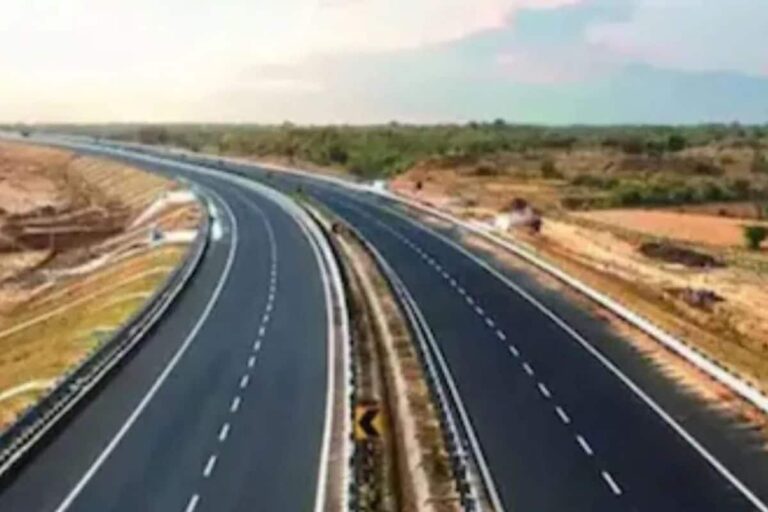
SRINAGAR, May 21: The National Highways Authority of India (NHAI) has initiated the process for preparing a Detailed Project Report (DPR) for the proposed four-laning of the Katra–Reasi–Mahor–Gulabgarh–Nandimarg–Kulgam highway corridor, a major road infrastructure project planned to strengthen surface connectivity between the Jammu and Kashmir regions.

According to the tender notification, the proposed corridor will pass through several key areas, including Katra, Reasi, Mahor, Gulabgarh, Nandimarg, and Kulgam, before connecting with the Srinagar-Jammu National Highway (NH-44). The project is expected to play a significant role in enhancing transportation facilities, reducing travel time, and improving access across mountainous and remote regions of Jammu and Kashmir.

The tender has been floated for consultancy services related to the preparation of the DPR, which will include technical studies, surveys, alignment planning, traffic assessment, feasibility analysis, environmental considerations, and other engineering requirements necessary for the execution of the four-lane highway project.
Officials said the proposed highway corridor is aimed at boosting regional connectivity and supporting economic activity by improving road infrastructure in areas that presently face difficult terrain and limited transport facilities.

Once developed, the corridor is expected to provide smoother and safer travel for commuters, commercial transport, and tourism movement between different districts.

As per the tender schedule, the bidding process has already commenced, while June 22, 2026, has been fixed as the last date for submission of bids. The technical bids submitted by participating agencies will be opened on June 23, 2026.

The project is being handled under the jurisdiction of the NHAI headquarters in New Delhi.

Pulwama attack mastermind, Hamza Burhan, killed by unknown men in POK

0

Srinagar, May 21: One of the masterminds of the 2019 Pulwama attack, which left over 40 CRPF personnel dead, was killed by unknown gunmen in Pakistan-occupied Kashmir (POK). Hamza Burhan, known as ‘Doctor’, sustained multiple bullet injuries after he was attacked in Muzaffarabad.

A resident of Pulwama, Burhan was designated as a terrorist by the Union Home Ministry in 2022.

Born in Kharbatpora in the Ratnipora area of Pulwama, Burhan left for Pakistan in 2017 under the pretext of pursuing higher studies. However, he joined the banned terror outfit Al-Badr and soon rose to the rank of commander in the outfit.

The Pulwama incident was the deadliest attack on security personnel in India, carried out by the Jaish-e-Muhammad (JeM). On February 14, 2019, a JeM terrorist rammed an explosives-laden car into a convoy of the CRPF at Lethpora, killing 40 personnel.

The attack led the Indian Air Force to launch a surgical strike in Balakot, Pakistan, a few days later, raising tensions between the two countries

J&K High Court Rules Suspension Period Cannot Be Erased From Service Career

0

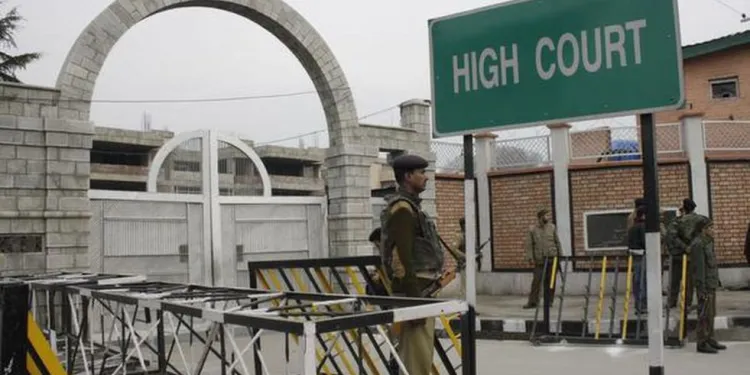
Srinagar, May 21:The High Court of Jammu & Kashmir and Ladakh has ruled that an employee’s suspension period cannot be excluded from regular service merely because it was treated as “not spent on duty,” observing that such an interpretation would amount to imposing a “second punishment” without due process of law.

Delivering the significant judgment, Justice Sanjay Dhar observed that once a disciplinary authority allows the suspension period to qualify for leave, increments and retirement benefits, the same period must also be counted for regular service, seniority and promotional eligibility, except for back wages.

The Court said excluding the suspension period entirely from service would effectively wipe out a part of an employee’s career and adversely affect future service prospects.

Justice Dhar noted that denial of further service benefits beyond the penalty already imposed would amount to a “second punishment”, which cannot be inflicted without following proper legal procedure.

The Court clarified that treating a suspension period as “not spent on duty” should ordinarily be limited to denial of back wages under the principle of “no work, no pay” and should not affect continuity of service, seniority or promotion benefits.

The case pertained to an employee of J&K Bank who, despite being reinstated after facing a minor disciplinary penalty, was denied consideration for promotion after the bank excluded his suspension period while calculating the required years of regular service.

Allowing the plea, the Court directed the bank to treat the suspension period as part of the employee’s regular service for all service-related benefits, including promotional eligibility.

India, Italy Elevate Ties to ‘Special Strategic Partnership’ During Modi-Meloni Summit

0

Vinod Bhat

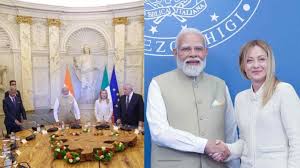
New Delhi: At the invitation of the President of the Council of Ministers of the Italian Republic, Giorgia Meloni, the Prime Minister of India, Shri Narendra Modi, paid an official visit to Italy on 19-20 May 2026. The visit, following Prime Minister Modi’s visit to Italy in June 2024 for the G7 Summit and Prime Minister Meloni’s visit to India for the G20 Summit in 2023, provided renewed momentum to the bilateral ties. The two leaders decided to elevate India-Italy relations to the level of a Special Strategic Partnership.

Political Dialogue

The two Prime Ministers welcomed the strong momentum of high-level exchanges and agreed to hold annual meetings of leaders including on the sidelines of multilateral events, as well as regular Ministerial and institutional-level meetings.

They appreciated the concrete progress achieved across the diverse pillars of the Joint Strategic Action Plan 2025-2029 adopted by the two leaders in their meeting during the G20 Summit held in Rio de Janeiro in November 2024. They agreed to establish Foreign Ministers-led mechanism to review the India-Italy Joint Strategic Action Plan 2025-29 and provide strategic guidance to India-Italy Special Strategic Partnership.

Economic Cooperation and Investments

Both leaders expressed satisfaction at the growing dynamism of bilateral economic and industrial cooperation, with three high level business fora held since the last year. Building on the opportunities arising from India’s rapid and consistent economic growth and the successful conclusion of the negotiations for the EU–India Free Trade Agreement, they reaffirmed the shared objective of expanding bilateral trade in both direction with aim to reach to € 20 billion by 2029.

They welcomed the increase of bilateral investments in key sectors and encouraged the respective industries to forge industrial and technology partnerships in order to build resilient supply chains. They welcomed the prospect of greater investments, particularly in textiles, clean technologies, semiconductors, automotive, energy, tourism, pharmaceuticals and medical technologies, digital technologies, critical raw materials, steel, ports and infrastructure. They encouraged industries to utilize the policy incentives and schemes in place in both countries which seek to enhance business linkages and production facilities.

Both Prime Ministers agreed to encourage dialogue and cooperation among stock exchanges, investment funds, venture capital, banks, insurance companies and financial institutions.

They agreed to facilitate industrial partnerships, including between SMEs, to foster deeper integration of supply chains. They encouraged new sectoral missions in the coming months in priority areas of mutual interest.

The two Prime Ministers welcomed the signing of the Memorandum of Understanding for cooperation in Critical Minerals. They agreed to further strengthen and expand bilateral cooperation in field of critical minerals by establishing a structured framework for collaboration, with particular emphasis on sustainability and resilient supply chains. They underscored the importance of promoting joint efforts in recovery of critical minerals from unconventional sources, including electronic waste and mine tailings, as an integral component of circular economy initiatives. They also expressed satisfaction on signing of the Memorandum of Understanding for cooperation in the field of agriculture and agricultural research between respective ministries and institutions.

Connectivity

The two Prime Ministers reaffirmed their commitment to cooperate on the India-Middle East-Europe Economic Corridor (IMEC), recognising its transformational potential in reshaping and promoting global trade, connectivity and prosperity. Appreciating the preliminary discussions around the project, they encouraged the first IMEC Ministerial meeting to take concrete steps for advancing this initiative in 2026.

They welcomed the signing of an MoU on maritime transport and ports and directed their respective ministries/departments to establish a joint working group to implement the MoU at the earliest.

Science, Technology, Innovation, Start-ups and Artificial Intelligence

The two Prime Ministers reaffirmed that innovation, science and technology are core drivers of the India-Italy partnership.

They announced the creation of INNOVIT India, an innovation hub located in India aimed at strengthening cooperation between the respective innovation ecosystems, support startup acceleration programs, market access and business matching, joint research, university collaboration, and talent mobility in sectors including fintech, healthcare, semiconductors, logistics and supply chains, agritech, energy, quantum computing, and artificial intelligence. Both leaders welcomed the inaugural Science and Innovation Dialogue between Indian and Italian universities and research centres held in Delhi in April 2025 and look forward to holding its next edition in Italy later this year.

Both leaders underlined the importance of an open, free, secure, stable, accessible and peaceful ICT environment, which is an enabler for innovation and economic growth. PM Modi thanked PM Meloni for Italy’s constructive participation in the AI Impact Summit that took place on 19th February 2026 in New Delhi. Both leaders reaffirmed their commitment to a human-centric, secure, trustworthy and robust Artificial Intelligence. They agreed to collaborate in this domain including in third countries.

The two Prime Ministers placed particular emphasis on opportunities for cooperation in the field of supercomputing.

Building on the 2025–2027 Executive Program for Scientific Cooperation, they supported the implementation of joint projects and the facilitation of mobility of researchers in area of quantum technologies, renewable energy, green hydrogen and sustainable blue economy. They also welcomed the ongoing implementation of the Memorandum of Understanding for cooperation in the field of scientific research and the launching of a joint call for proposals to fund research projects.

The two Prime Ministers acknowledged the longstanding scientific collaboration between the Indian Academia and the International Centre for Theoretical Physics (ICTP) in Trieste and welcomed the signing of a Letter of Intent between the Indian Department of Science and Technology and the Elettra Sincrotrone center in Trieste, Italy in support of activities related to the access of synchrotron radiation facility at Elettra for Indian researchers.

Space

While appreciating the ongoing collaboration between Italian Space Agency and the Indian Space Research Organisation, the two leaders agreed to strengthen the partnership on Earth observation, heliophysics and space exploration, with focused thematic engagement and to explore cooperation on access to space and protection of space infrastructures. They expressed satisfaction with the recent reciprocal visits of their respective space industry delegations and looked forward to further promote commercial collaboration through exchanges of experts and joint initiatives also in third countries.

Defence

Both Prime Ministers expressed satisfaction with the deepening of defence cooperation including through Ministerial exchanges, service-to-service ties, port visits, and welcomed the adoption of a Joint Declaration of Intent and a Defence Industrial Roadmap which will promote partnerships for technological cooperation, co-production and co-development projects, including helicopters, naval platforms, marine armament and electronic warfare. They also recognized the importance of protecting critical infrastructures and their related supply chains through the strengthening of industrial resilience.

The two sides agreed to examine the feasibility of establishing an annual high level military structured dialogue, complementing the work of the Joint Defence Committee and the Military Cooperation Group, and to promote joint exercises and inter-force courses.

Both leaders agreed to launch a Dialogue on Maritime Security, with the aim of increasing maritime security cooperation, coordination, and the exchange of information and best practices in the maritime domain.

Security

The two leaders strongly condemned terrorism and violent extremism in all its forms and manifestations, including cross border terrorism. The two leaders strongly condemned the April 2025 Pahalgam terror attack and reiterated their commitment to cooperate in the fight against terrorists and terrorist groups and their affiliates including those listed in the UN Security Council 1267 Sanctions regime. They called upon all countries to continue to work towards eliminating terrorist safe havens and infrastructure, disrupting terrorist networks and combating the financing of terrorism, consistent with the Financial Action Task Force’s guidelines. Both leaders reiterated their commitment to work together at the UN, FATF and other multilateral platforms.

Both leaders welcomed the first meeting of the Permanent Task Force between India and Italy on countering the financing of terrorism and the upcoming meeting of the Joint Working Group on Counter Terrorism.

Both leaders welcomed the conclusion of an MoU between the Italian Guardia di Finanza and the Directorate of Enforcement of India and looked forward to early conclusion of the Agreement on Exchange and Mutual Protection of Classified Information and the Agreement on strengthening of Police Cooperation. They also welcomed the ongoing discussions on other agreements including Extradition Treaty and Mutual Legal Assistance Treaty.

Migration and Mobility

The two leaders agreed to enhance mobility of students, researchers and skilled workers, particularly in STEM sectors, and to expand cooperation on skills development, in line with the needs of the labour market, including through a specific Joint Declaration of Intent on the facilitation of mobility of nurses from India to Italy. In this context, they welcomed the ongoing discussions between relevant agencies on Social Security Agreement (SSA).

They welcomed the launch of “ICI – Italy Calls India: a University-Enterprise talent bridge” aimed at enhancing the talent of Indian students enrolled in Italian universities by offering concrete pathways for guidance, matching, and qualified integration into Italian enterprises.

They also discussed the possibility of strengthening the cooperation to fight against irregular migration, labour exploitation and human trafficking to ensure safe and legal migration.

Culture and Educational Exchanges

The two leaders highlighted culture as a key pillar of bilateral dialogue and welcomed the signing of an MoU regarding Italy’s participation in the development of the National Maritime Heritage Complex in Lothal. They acknowledged the Indian National Pavilion at the Venice Art Biennale in 2026. They expressed their intention to celebrate 2027 as the “Year of Culture and Tourism between Italy and India”, which will feature a broad calendar of initiatives, and pave the way to a major exhibition on ancient cultural relations between Italy and India to be co-organized by the two Ministries of Culture.

The two leaders encouraged the organization of an Italy–India Cultural Forum, bringing together institutions, experts, and representatives of the creative industries. The two leaders appreciated the launching of the twinning program between Indian and Italian sites inscribed on the UNESCO World Heritage List, aimed at strengthening cooperation in the protection, enhancement and management of cultural heritage.

The two leaders agreed to further develop the film and audio-visual cooperation between the two Nations, building on the strength and innovative capacities of their industries and on the legal framework provided by the bilateral co-production agreement.

The two Prime Ministers reaffirmed their intention to strengthening cooperation in higher education and welcomed the adoption of the Indo-Italian Roadmap on Higher Education and Research. Prime Minister Modi invited Italian universities and institutions of excellence to open campuses in India under India’s New Education Policy.

India-EU Relations

The Leaders welcomed the new Joint India–EU Comprehensive Strategic Agenda agreed at the India–EU Summit on 27 January 2026 and the conclusion of negotiations of the India–EU Free Trade Agreement which would elevate ties to a new level by enhancing market access, reducing trade barriers, and strengthening economic security and resilience through diversified value chains and new market opportunities.

They also reaffirmed their support for strengthening the India–EU Trade and Technology Council as a key platform for cooperation in trade, critical technologies, and economic security. The leaders welcomed the India–EU Security and Defence Partnership and appreciated progress in mobility cooperation, including the MoU on a Comprehensive Framework for Mobility.

Multilateral Cooperation

Both Leaders stressed the urgent need to reform the United Nations to make it more representative and suited to present-day realities.

Both Leaders emphasized the importance of working together in the United Nations and other global platforms including G20 to protect multilateralism and uphold a rules-based international order.

Recognizing the strategic priority both countries attach to Africa, the two Prime Ministers agreed to work together in trilateral initiatives with African partners in areas such as Digital Public Infrastructure (DPI), agriculture, education, healthcare, artificial intelligence, connectivity and infrastructure and renewable energy in line with India’s development partnership in Africa and Italy’s Mattei Plan.

The Leaders reaffirmed their shared commitment to a free, open, peaceful and prosperous Indo-Pacific, in line with international law, including UNCLOS. They look forward to their continued partnership in Science and Technology and Academic cooperation pillar of Indo-Pacific Ocean Initiatives.

Both leaders expressed deep concern over the situation in the West Asia/the Middle East and its effects in the region as well as the rest of the world. The leaders welcomed the ceasefire announced on 8 April 2026 and underlined the importance of de-escalation, dialogue and diplomacy for a lasting peace in the West Asia/the Middle East. They also called for freedom of navigation and the resumption of global flows through Strait of Hormuz.

Both leaders expressed concern over the ongoing war in Ukraine, which continues to cause immense human suffering and negative global consequences. They agreed to continue to support efforts towards the achievement of a comprehensive, just and lasting peace in Ukraine through dialogue and diplomacy, in accordance with the international law and the principles of the UN Charter.

Conclusion

Noting the impressive growth and deepening of India-Italy Special Strategic Partnership, the two leaders reaffirmed their commitment to further expand cooperation across all sectors and continue close high-level consultations on key global and regional developments.

Prime Minister Modi thanked Prime Minister Meloni for the warm hospitality extended by the Government and the people of the Italian Republic and invited Prime Minister Meloni to visit India at a mutually convenient time.
CUK Orders Online Classes, WFH on Fridays and Green Saturdays Under Austerity Measures

0
Ganderbal, May 20: The Central University of Kashmir (CUK) has announced a series of austerity measures, including online classes and Work From Home (WFH) provisions, in view of the prevailing situation in the country while ensuring continuity of academic activities.

According to an order issued by the university administration, the measures were approved following recommendations of the Dean’s Committee meeting held on May 13, 2026, under the chairmanship of the Vice Chancellor.

As per the order, with effect from May 22, 2026, the university will observe online teaching and WFH on Fridays and Green Saturdays for both teaching and non-teaching staff as part of the austerity initiative.

The administration has also directed that practical components and laboratory classes scheduled on Fridays, if any, be shifted to Thursday afternoons to avoid disruption in academic activities.

Further, departmental and school meetings, including PhD vivas and workshops, will be conducted online as far as possible. However, offline mode may be permitted with approval of the competent authority in unavoidable situations or where multiple activities are required to be undertaken simultaneously.

The order, issued by the Deputy Registrar (Administration), will remain in effect until further directions from the university authorities.

Country Must Stay Alert Amid West Asia Crisis: Civil Aviation Minister Naidu

0
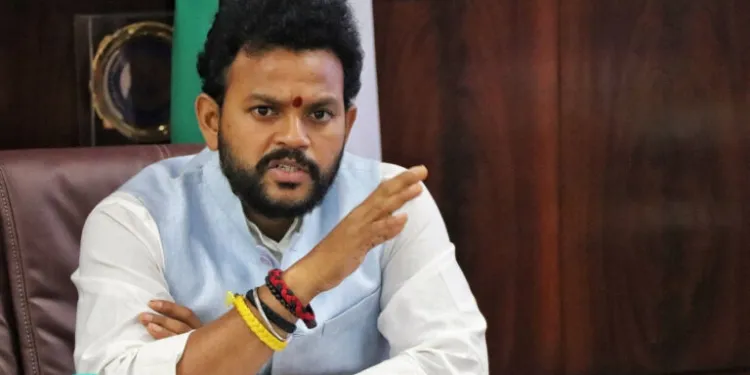
RANCHI, May 20: Union Civil Aviation Minister Kinjarapu Rammohan Naidu on Wednesday cautioned that the country must remain vigilant and prepared to tackle any possible fallout of the escalating crisis in West Asia, although “it is not worrisome for India at present”.

Naidu, during his maiden visit to Ranchi, said every sector, including civil aviation, must take responsibility and plan proactively to minimise the impact on citizens and the country.

“The situation is not worrisome at present, but we need to remain alert. Every sector, including civil aviation, has to assess the impact and prepare short-term, medium-term and long-term strategies,” Naidu told reporters.

On concerns over rising travel costs amid global uncertainty, Naidu said the Centre had already initiated measures to shield domestic passengers from any burden.

He said the government reduced aviation turbine fuel (ATF) prices along with landing and parking charges at airports to stabilise fares and support the aviation sector.

Last week, the Delhi government had reduced the value-added tax on aviation turbine fuel from 25 per cent to 7 per cent.

“Nearly five lakh passengers travel daily on domestic routes. We are continuously monitoring airfares. If demand rises, we will increase connectivity and deploy more aircraft,” he said.

On the ongoing investigation into the Ahmedabad aircraft accident, Naidu said the probe was in its final stages and was being conducted in a “fair, transparent and accountable manner”.

Emphasising the international nature of the investigation due to passengers from multiple countries, he said the final report would be released soon and would stand up to global scrutiny.

The minister unveiled a series of passenger-friendly initiatives at Ranchi airport, including the Udan Yatri Cafe, aimed at offering affordable food to travellers.

Calling the initiative a success across several airports, Naidu said the government’s focus is to make air travel more accessible and comfortable.

Naidu received a warm welcome on his arrival in Ranchi and rode pillion with Union Minister of State for Defence Sanjay Seth on a motorcycle from the airport.

Dilapidated Roads in Wakura Trigger Public Outcry, Residents Demand Immediate Repairs

0

Touseef Wani

Ganderbal, May 20: Residents of Wakura village in Ganderbal district have expressed strong resentment over the deteriorating condition of local roads, accusing the authorities of neglect and failing to address the long-pending issue.

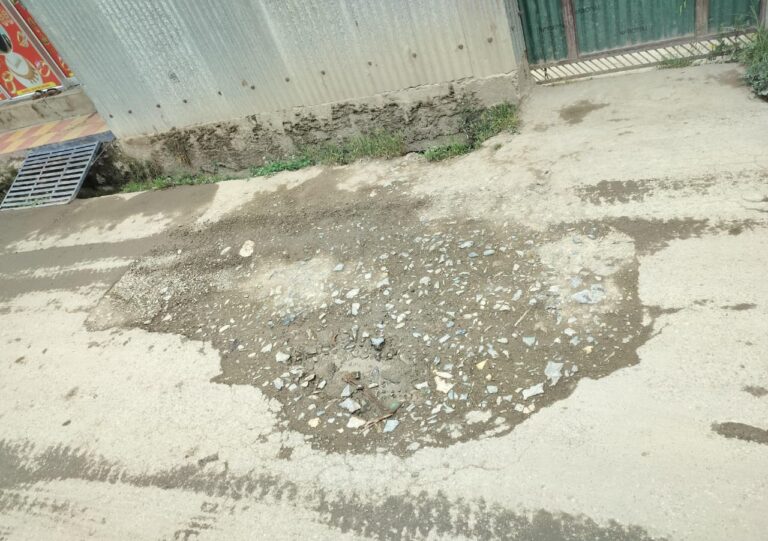
Locals said the road connecting Wakura with other parts of Ganderbal is in a severely damaged condition, riddled with potholes, causing major inconvenience to commuters and pedestrians.

They alleged that despite repeated appeals and representations, the concerned authorities have failed to undertake necessary repairs, leaving residents to cope with daily hardships.

“The roads in our area are badly damaged and uneven, making travel difficult for everyone. The authorities have completely ignored the area,” several residents said, expressing anger over official apathy.

Residents further stated that several stretches of the road were dug up for development works but later left unattended, worsening the situation.

Accumulated garbage and stagnant water along the road have further added to the difficulties faced by commuters and locals.

“The road has been dug up at many places and left incomplete. Garbage and stagnant water are creating serious inconvenience for the public,” said Basit Bashir, a local resident.

Locals added that conditions worsen during rainfall, as water accumulates on damaged stretches, turning the road into a hazard and making movement difficult.

“When rainwater remains stagnant for a long time, it further damages the road and creates problems for commuters,” said another resident, Ehsaan Yousuf.

Residents said several vehicles have been damaged due to the pothole-ridden surface, while the risk of accidents has also increased significantly.

They added that the road serves as an important link and is frequently used by public transport vehicles and school buses.

“The condition of the road poses a serious threat to commuters, especially schoolchildren travelling daily on this route,” Ehsaan added.

Locals also blamed the absence of a proper drainage system for the worsening condition of the road, saying rainwater and wastewater continue to accumulate, leading to severe waterlogging and further deterioration.

The residents have appealed to the district administration and concerned departments to immediately undertake repair and macadamisation of the road, along with the construction of proper drainage facilities to ease public hardship.

CME on World Hypertension Day held at SKIMS Medical College Srinagar

0

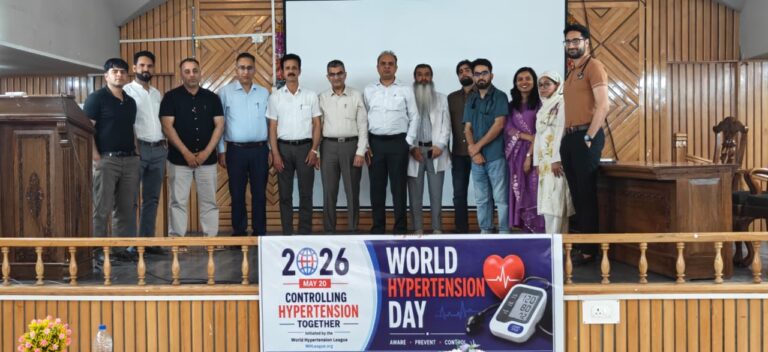
SRINAGAR, MAY 20: Department of General Medicine, SKIMS Medical College Srinagar today organized a Continuing Medical Education (CME) programme in the College Auditorium to mark World Hypertension Day, observed globally on May 17.

The CME programme was attended by Principal, SKIMS Medical College, Prof. Dr. Fazal Qadir Parray, Heads of various departments, senior and junior faculty members, Medical Superintendent, residents, nursing staff and students.

Addressing the gathering, the Principal appreciated the Department of General Medicine for organizing the programme on a significant public health issue. He described hypertension as a “silent killer” and stressed the importance of timely diagnosis and proper management to prevent complications.

Head, Department of General Medicine, Prof. Dr. Tariq Bhat, in his welcome address, highlighted the importance of conducting such academic activities and emphasized the clinical relevance of the topics discussed during the CME.

During the scientific sessions, Senior Resident Dr. Khalid Bin Mushtaq delivered a presentation on “Preoperative Management of Hypertension,” while senior faculty member Dr. Naik Muzafar, who is also a co-author of the Indian Hypertension Society Guidelines for Home Blood Pressure Monitoring, spoke on “Home Blood Pressure Monitoring (HBPM).”

The scientific sessions were chaired by senior faculty members including Prof. Basharat, Prof. Shams Bari, Prof. Javed Malik, Prof. Tariq and Dr. Manzoor.

A key highlight of the programme was the on-site hypertension screening of faculty members using automated blood pressure monitoring apparatus.

The CME concluded with an interactive discussion focusing on early detection of hypertension, lifestyle modification and adherence to evidence-based guidelines for effective blood pressure control.