spot_imgspot_img
spot_img
Home Blog Page 105

Six vehicles involved in illegal mining seized in Ganderbal: Police

0

Touseef Wani

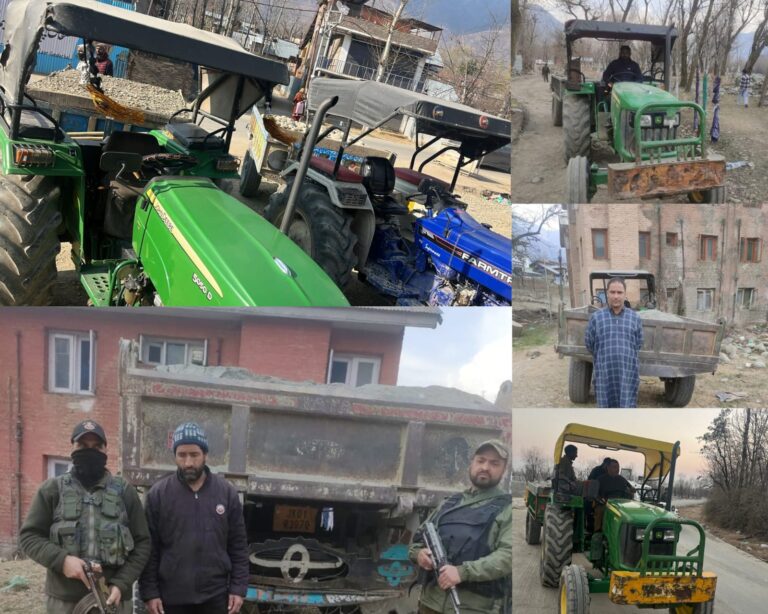
Ganderbal, Feb 26: Action against illegal mining continues as Ganderbal Police seized 06 more Vehicles including 05 Tractors & 01 Tipper involved in the illegal extraction and transportation of minor minerals in the jurisdiction of PS Kanganand PS Lar.

These vehicles were found transporting illegally extracted material from Nallah Sindh without the mandatory permissions. Acting swiftly and in close coordination with the Geology & Mining Department, teams from the respective police stations intercepted and seized these vehicles on the spot, tightening the clampdown on illegal mineral transportation in the area.

Illegal extraction not only causes loss to the public exchequer but also poses a serious threat to the ecological balance of the region. Ganderbal Police reaffirms its unwavering commitment to protecting natural resources and curbing such unlawful activities.

Offenders are once again strictly warned to desist from illegal mining and mineral transportation. Ganderbal Police will continue to take stringent legal action against all violators involved in unlawful extraction, transportation, or trade of minerals.

Indian Railways Sanctions Key Capacity and Connectivity Projects Worth ₹871 Crore to Accelerate Infrastructure Modernisation

0

Vinod Bhat

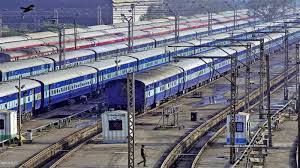
New Delhi: Continuing its transformative push to build a future-ready, high-capacity rail network, Indian Railways has sanctioned a series of strategic infrastructure projects across Northern, Southern and Eastern Railway zones. These projects aim to modernise coaching maintenance ecosystems, decongest high-density corridors, eliminate operational bottlenecks and significantly enhance both passenger and freight capacity.

Development of Coach Maintenance Facilities at Shri Ganganagar Station (Phase-I), North Western Railway: ₹174.2644 Crore

Indian Railways has sanctioned the Development of Coach Maintenance Facilities at Shri Ganganagar Station in Rajasthan under Phase-I at a cost of ₹174.2644 crore. The project is part of the broader initiative to upgrade and develop maintenance infrastructure for modern rolling stock, including LHB and Vande Bharat trains.

At present, the existing facilities cater to current operational requirements, but with increasing introduction of modern rakes and new services, enhanced infrastructure has become essential. The sanctioned works include construction of two 600-metre-long washing lines, three 650-metre stabling lines, two pit lines, a wheel lathe line and a 650-metre engine escape line. A sick line shed measuring 120 metres by 24 metres will also be developed. In addition, conventional Over Head Equipment (OHE) will be provided over the washing line along with modern machinery and plants such as synchronized jacks, forklifts, Electric Overhead Travelling (EOT) cranes and an Automatic Coach Washing Plant.

Upon commissioning, the project is expected to increase the average maintenance capacity by an additional six rakes per day, thereby improving operational efficiency, supporting seamless rake movement and enabling introduction of additional train services in the region.

Augmentation of Coaching Maintenance Facilities at Lalgarh (Phase-II), North Western Railway: ₹139.6820 Crore

To meet the growing maintenance needs arising from the expansion of Vande Bharat and LHB services in the Bikaner region, Indian Railways has sanctioned the Augmentation of Coaching Maintenance Facilities at Lalgarh, Rajasthan under Phase-II at a cost of ₹139.6820 crore.

Given the limited scope for further augmentation at Bikaner, Lalgarh is being developed into a modern, fully equipped coaching maintenance depot capable of handling advanced trainsets. The sanctioned works include construction of a 600-metre washing line, provision of a covered shed over four washing lines, extension of the sick line by 120 metres by 16 metres, and construction of a 1000 square metre service building. The project also includes installation of retractable OHE over washing line number four, two synchronized coach lifting systems, two Automatic Coach Washing Plants and two 25-tonne EOT cranes.

This augmentation will significantly enhance maintenance preparedness for additional Vande Bharat trainsets and other rolling stock, ensuring improved reliability, faster turnaround times and better passenger service outcomes in the region.

Turavur–Mararikulam Doubling (21.10 km), Southern Railway: ₹450.59 Crore

In a major capacity enhancement initiative in Kerala, Indian Railways has sanctioned the doubling of the 21.10-kilometre Turavur–Mararikulam section of Southern Railway at a cost of ₹450.59 crore. The section lies on the strategically important Ernakulam–Alappuzha–Kayankulam corridor, which handles substantial passenger as well as freight traffic, including port-linked cargo.

The doubling project will enable the operation of nine additional passenger trains per day in each direction and facilitate increased freight movement of approximately 2.88 million tonnes per annum. It will also result in significant time savings by reducing detention of freight trains by up to 17 to 19 minutes and passenger trains by about 12 to 15 minutes. The section is currently operating at high levels of capacity utilisation, and doubling will ease congestion, enhance punctuality and strengthen overall corridor efficiency.

The project will also support freight connectivity linked to Cochin Port, contributing to smoother logistics operations and regional economic development.

Kalipahari Bypass Line (4.75 km), Eastern Railway: ₹107.10 Crore

Indian Railways has also sanctioned the construction of the 4.75-km Kalipahari Bypass Line under Eastern Railway in West Bengal at a cost of ₹107.10 crore to address operational constraints in the Asansol area.

At present, trains moving between South Eastern Railway and Eastern Railway are required to enter Asansol Yard for engine reversal, leading to congestion, avoidable detention and suboptimal utilisation of infrastructure. The proposed bypass line will provide direct connectivity between the two zones, eliminating the need for engine reversal at the yard.

The project is expected to save around 90 minutes of detention for approximately nine freight trains per day and about 30 minutes for eight coaching trains. By reducing yard congestion and improving operational fluidity, the bypass will enhance line capacity, reduce turnaround time and significantly improve efficiency in one of the busiest railway regions in eastern India.

With the sanction of these projects, Indian Railways continues to advance its vision of a modern, efficient and high-capacity rail network. Through targeted investments in maintenance modernisation, corridor doubling and operational decongestion, the national transporter is reinforcing its commitment to delivering faster, safer and more reliable services for passengers and industry alike, while strengthening the backbone of India’s economic growth.

Union Minister Ashwini Vaishnaw Announces Rail Tech Policy and Launches e-RCT System for End-to-End Digitisation of Railway Claims Tribunal under “52 Reforms in 52 Weeks” Initiative

0

Vinod Bhat

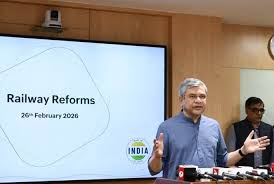
New Delhi: In a major push towards technology-driven governance and innovation-led transformation, the Union Minister for Railways, Information & Broadcasting, and Electronics & Information Technology, Shri Ashwini Vaishnaw, today announced the RailTech Policy and the complete digitisation of the Railway Claims Tribunal (RCT) as Reform Number Three and Reform Number Four under Indian Railways’ flagship “52 Reforms in 52 Weeks” initiative.
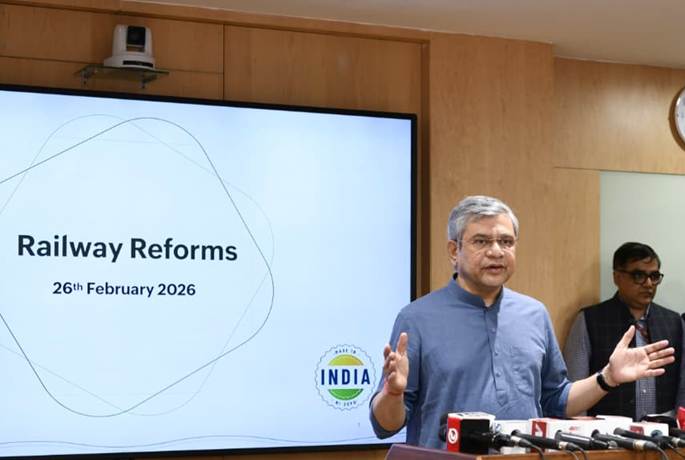
Rail Tech Policy Reform

The Rail Tech Policy aims to engage innovators, startups, industry and institutions to promote innovation in Indian Railways. The new policy simplifies the selection of innovators and introduces a dedicated “Rail Tech Portal” for innovation. Innovation challenges can be initiated by any innovator or departmental user, with a single-stage detailed submission of proposals.
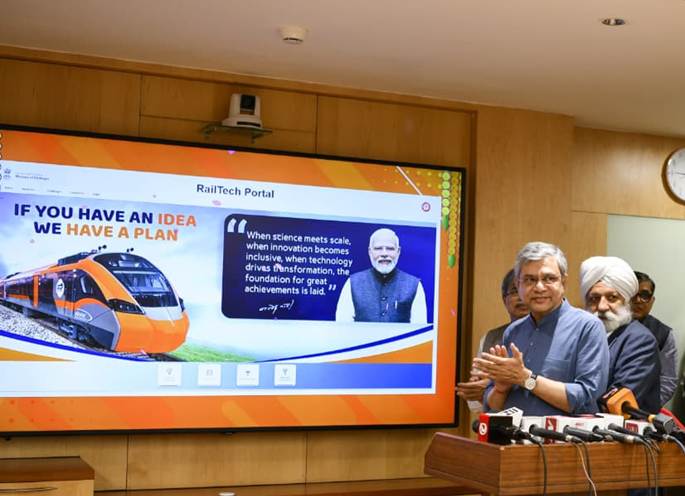
The policy provides a user-friendly interface, increases the scale-up grant more than three times and doubles the maximum grant for prototype development and trials.

Key innovation areas include AI-based Elephant Intrusion Detection System (EIDS), AI-based fire detection system in coaches, drone-based broken rail detection system, rail stress monitoring system, sensor-based load calculation device on parcel vans (VPUs), solar panels on coaches, AI-based coach cleaning monitoring system, obstruction detection in foggy environments, and AI-based pension and dispute resolution systems.

Outlining the third reform, Shri Vaishnaw said the RailTech Policy is designed to enable massive and systematic induction of technology into the Railways. He emphasised that startups, researchers and innovators must be able to connect with Indian Railways in a structured, meaningful and simplified manner. He said that anyone with a strong technological idea should be able to approach the Railways through a dedicated RailTech portal, which will function through a completely digital, end-to-end process. The objective, he explained, is to shift away from the earlier complex system of vendor selection based strictly on rigid specifications and to instead create a simplified, innovation-driven framework focused on trial and adoption of new technologies.

Shri Vaishnaw stated that the RailTech Policy has been designed after studying successful models such as the iDEX initiative in defence, the startup frameworks in the Ministry of Electronics & IT, and telecom sector innovation policies. Drawing from these experiences, the Railways has attempted to remove procedural bottlenecks and create a transparent, simplified and innovation-friendly ecosystem. He said that if successful, this model could serve as a template for other sectors as well.

Explaining the funding structure, he noted that when a startup or innovator proposes a viable technological solution, for example, AI-based camera systems to detect elephants near railway tracks — the Railways would support up to 50 percent of the development funding required. Once the project proves successful, substantial long-term orders would be placed to enable scaling of the solution. The policy is designed not merely to experiment but to ensure that successful innovations are implemented at scale.

He cited several potential application areas for innovation, including AI-enabled CCTV systems for passenger security, referencing how CCTV footage in a recent incident in Kerala helped in quickly apprehending culprits. He said proactive crime detection systems, predictive monitoring and enhanced passenger safety technologies could significantly strengthen railway security. He also highlighted the need for advanced track monitoring solutions using radar, AI, infrared cameras and ultrasonic technologies to detect deformation or defects in tracks before they lead to accidents. Predictive technologies capable of analysing electrical parameters in overhead wires to foresee potential failures were also mentioned as promising areas where startups are already working.

Shri Vaishnaw further referred to drone-based systems for detecting rail fractures, broken grills, and monitoring overhead equipment, including identifying overheating insulators through AI-based analytics. He added that technology solutions could also address administrative challenges such as faster processing of pension documents for retired railway employees, ensuring timely commencement of pension payments. The policy, he said, has been framed with an open and forward-looking mindset to encourage such comprehensive innovation across operational and administrative domains.

E-RCT: Reform in disposal of ‘Railway Claims Tribunal’ Cases

In Reform Number Four, Shri Vaishnaw announced the complete digitisation and AI-enabled transformation of the Railway Claims Tribunal (RCT). The E-RCT system will enable end-to-end computerisation and digitisation of the Railway Claims Tribunal. It will transform the filing, processing and adjudication of claims by making the process faster, more transparent and accessible from anywhere in the country.

Shri Vaishnaw stated that there are 23 RCT benches across the country and that filing claims currently poses challenges, especially for passengers who may be travelling across states when an incident occurs. Determining the appropriate jurisdiction for filing a claim often becomes a significant issue.

He said the reform aims to make claim filing simple, digital and accessible from anywhere in the country. Under the new system, aggrieved passengers will be able to file claims electronically, irrespective of their location, even while travelling or upon reaching their destination. The entire process, from e-filing to case information systems will be digitised and AI-enabled. Shri Vaishnaw stated that within the next 12 months, all benches of the Railway Claims Tribunal will be fully digitised under this initiative.

He further indicated that if the model proves successful, similar digital solutions could be extended to other tribunals such as the Central Administrative Tribunal. The goal, he said, is to ensure faster processing, improved transparency and a citizen-centric approach to justice delivery.

From Physical Filing to Digital Access

Earlier, claimants and advocates were required to physically visit Tribunal offices for filing cases, submitting documents and tracking case progress, which involved travel, time and procedural delays. With the introduction of the e-RCT System, cases can now be filed online from anywhere at any time, significantly improving accessibility, convenience and transparency for litigants.

The Railway Claims Tribunal, constituted under the Railway Claims Tribunal Act, 1987, adjudicates claims against Railway Administration relating to compensation for death or injury in railway accidents and untoward incidents, loss or non-delivery of goods, and refund of fares and freight. At present, RCT functions through 23 Benches located in 21 cities across India, with the Principal Bench at Delhi, each comprising a Judicial Member and a Technical Member.
Govt Appoints Inam Ul Haq Siddiqui as Ombudsman for Srinagar and Ganderbal

0

KD News Service

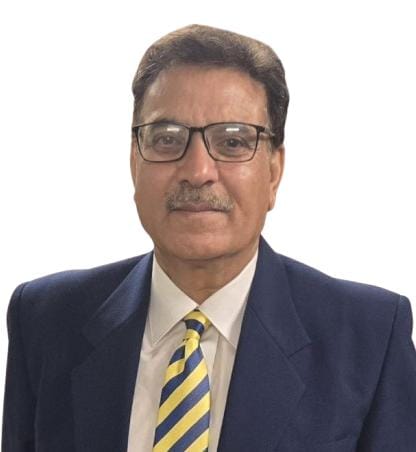
Srinagar, Feb 26: The Government of Jammu and Kashmir on Wednesday appointed former senior KAS officer Inam Ul Haq Siddiqui as Ombudsman for the districts of Srinagar and Ganderbal, in accordance with Government Order No. 61-JK (RD&PR) of 2026 dated February 26.

The appointment entrusts Siddiqui with oversight of grievance redressal mechanisms in two key districts, including Srinagar, which also comprises the Chief Minister’s constituency. Officials said the decision was taken in view of his long administrative experience and service record.

Siddiqui has over three decades of service in the government and has held several important administrative and developmental positions during his career. These include Additional Secretary to the Government, Chief Executive Officer of the Gulmarg Development Authority, Joint Director in the Information Department, and Project Director of the Governor’s Grievance Cell. He has also served as Assistant Commissioner (Revenue), Assistant Commissioner (Settlement), Assistant Commissioner (Development), and Deputy Director in the Social Welfare and Planning departments.

During his tenure in these roles, officials said, Siddiqui was involved in strengthening grievance redressal systems, improving accountability, and streamlining governance delivery. He has also worked on World Bank–funded development projects, contributing to planning, monitoring and evaluation, financial oversight, land records modernisation, and inter-departmental coordination.

Siddiqui has received advanced professional training in Management Information Systems and data monitoring and evaluation from the University of East Anglia. He has also undergone specialised training with the Department of Space in Hyderabad.

In recognition of his service, he was earlier awarded the Lieutenant Governor’s Award for Honesty, Integrity and Meritorious Public Service by the Government of Jammu & Kashmir.

CRPF Constable Wins Three Silver Medals at Khelo India Winter Games in Gulmarg

0

Gulmarg, Feb 26: The first time Renu Danu saw snow, she didn’t touch it. She studied it as she stood on the slopes of Gulmarg, the silence broken only by the crunch of skis slicing across frozen earth. The snow was not soft like in films. It did not care that she was 26, that she was a constable in the Central Reserve Police Force (CRPF), that she had grown up in Haldwani, Uttarakhand, where winters were cold but never white.

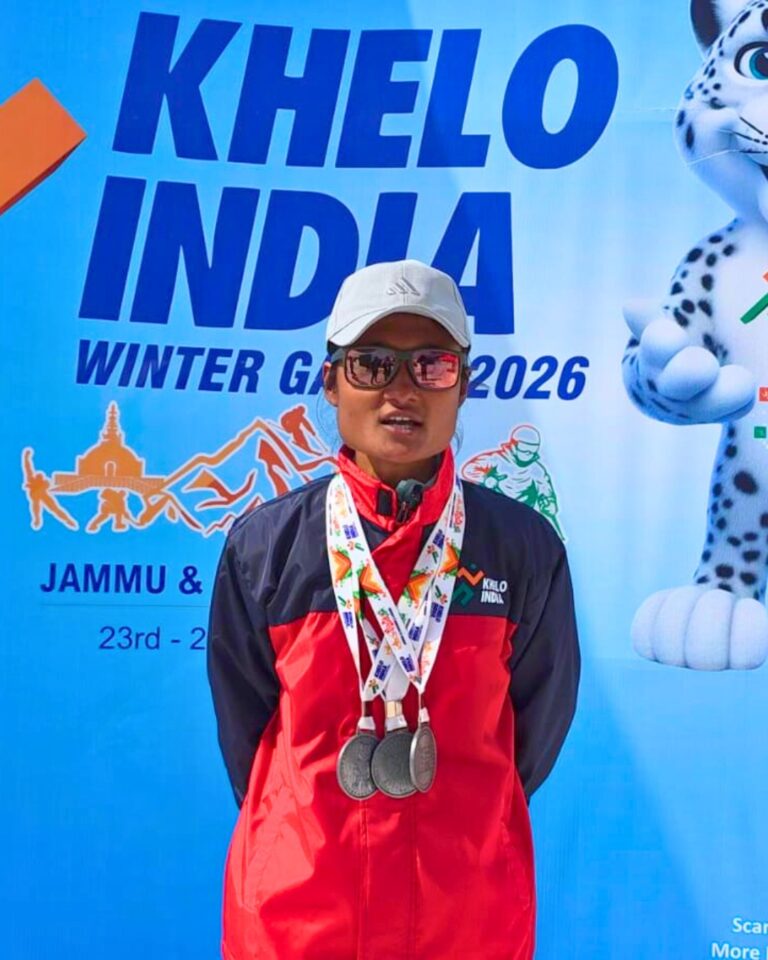
Two years later, Renu stood on the podium with three silver medals around her neck at the Khelo India Winter Games 2026. Her’s is not just a story about winning. It is a story about arrival.

Back home, her father drives trucks for a living. Renu’s mother keeps the house steady. One brother serves in the Air Force. Another runs a business. They understand sacrifice. They understand discipline. But they did not understand skiing. “They know cricket, football, volleyball,” Renu says with a smile. “They don’t understand what Nordic skiing is. They don’t understand what Ski Mountaineering is. They only see videos of me.”

In Haldwani, there were no ski tracks, no winter sport academies, no dreams shaped like mountains. There were only dusty grounds, where she ran races and played kabaddi, unknowingly building the endurance that would one day carry her across frozen valleys.
Sports was always there but opportunity was not. For her studies came first, life came first, and sport had to wait. In 2021, Renu joined the CRPF as a Constable General Duty. It was supposed to be a job, stability, and security. It became something else.

In 2024, Renu was posted to Srinagar. Kashmir introduced her to a new geography. And then, Gulmarg introduced her to herself. She trained for just one month before competing at the Khelo India Winter Games 2024. She did not win. She did not even come close. But she finished. For most athletes, finishing is routine. For Renu, finishing was defiance.

“I was new,” she says. “I didn’t know the techniques but I completed the races.”
Completion became belief and belief became momentum.

In 2025, Renu returned stronger and finished fourth in a Nordic event. However, she won silver in Ski Mountaineering relay. The same year, she won gold at the National Winter Biathlon Championship in Gulmarg, racing through exhaustion, balancing speed with precision shooting.

Each year, she moved forward, each year, the mountain gave her more. This year, it gave her three silvers in women’s Nordic 15-km, women’s Nordic 1.5-km Sprint, and women’s Ski Mountaineering Relay. Three medals, three affirmations. This is proof that she belonged.

The Army’s High Altitude Warfare School became her classroom. Olympian coach Nadeem Iqbal taught her technique and CRPF coach K K Shukla and team manager Magesh K gave her something equally valuable – belief.

“When she came, she knew nothing about winter sports,” Shukla says. “But she worked harder than anyone. Her future is bright. I see her at the World Championships, even the Olympics.”

Discipline Renu already had, endurance she had built unknowingly, in childhood games. What she needed was exposure and now she has it. But she also sees what’s missing.
“We only get to train two months a year,” Renu says. “Imagine if we could train all year. Imagine how good we could be.”

Her voice carries neither complaint nor frustration, only vision.

“Artificial snow tracks, better gyms, year-round training facilities,” Renu wants not just for her, for everyone who comes after. Her ambitions now stretch beyond Gulmarg, beyond India. She wants to compete in FIS races, World Championships, and the Olympics.

The journey from Haldwani to Gulmarg once seemed unimaginable. Now, Gulmarg is just the beginning. What makes her story powerful is not how fast she became good, it is how late she began. In just two years, she went from never seeing snow to standing on the podium.

“Some girls think winter sports needs too much endurance,” she says. “But if I can do this, anyone can.” This is not motivational rhetoric, it is lived truth.

Silver medals are often described as near misses. But on this mountain, silver means something else, it means transformation, it means that somewhere in Haldwani, a transporter’s daughter outran her past, it means that snow, once foreign, now feels like home, it means that India’s winter sports story is still being written, and athletes like Renu Danu are holding the pen.

And perhaps, somewhere in the near future, when she stands on a different mountain, under the Indian flag, those silver medals will no longer represent arrival, they will represent the beginning.

UIDAI joins hand with Google for displaying authorised Aadhaar Centres on Google Maps

0

Vinod Bhat

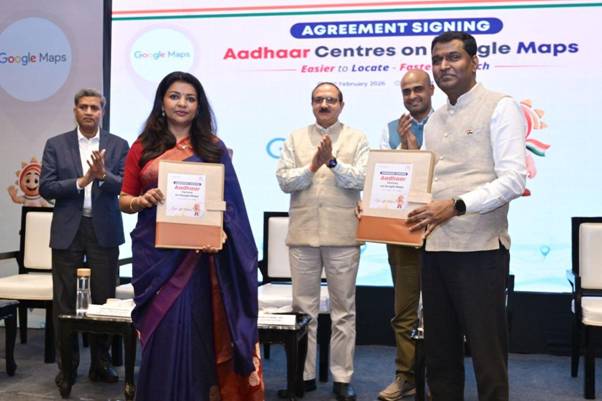
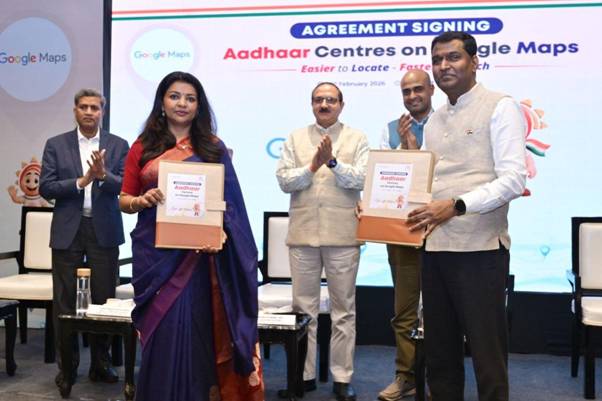
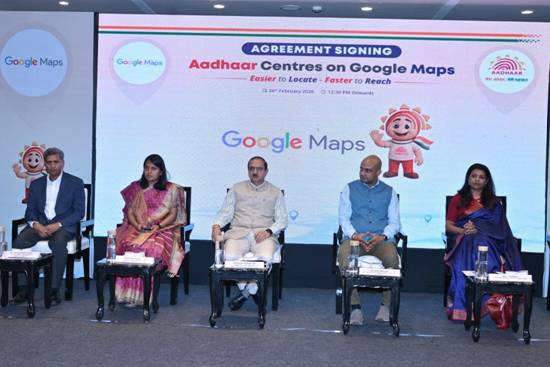
New Delhi: The Unique Identification Authority of India (UIDAI) and Google have joined hands to enable the display of authorised Aadhaar centres on Google Maps, a move that will enhance ease of access and convenience for residents across the country.

The initiative will help residents identify Aadhaar Centres based on the nature of services offered, like adult enrolment, child enrolment or only address and mobile update. In addition, information related to centre accessibility, including features such as divyang-friendly infrastructure and availability of parking facilities, operating hours, will also be displayed wherever applicable, further enhancing convenience for residents.

The facility is expected to be available in the coming months.

The collaboration is designed to enhance public convenience, combat misinformation, and ensure residents have seamless access to over 60,000 Aadhaar centres including state-of-the-art Aadhaar Seva Kendras (ASKs), nationwide. This will ensure that when users search on Google Maps they are directed to verified Aadhaar centres.

“UIDAI is always focused on improving ease of living for Aadhaar number holders. This collaboration will ensure that navigating the authorised Aadhaar centres is now simpler, faster, and more transparent,” said Sh. Bhuvnesh Kumar, CEO, UIDAI.

In the subsequent phase of the collaboration, UIDAI will use Google Business Profile to manage centre information and respond directly to people’s feedback, ensuring a transparent and responsive service ecosystem.

Looking ahead, the partnership will explore direct appointment booking through the Google Maps interface allowing residents to plan their visits with even greater efficiency.

“By joining hands with UIDAI to integrate verified Aadhaar centres, we are making it easier for millions of residents to find trusted services with confidence and bridging the gap between essential government infrastructure and the people who need it most,” said Ms. Roli Agarwal, Country Head, Strategic Partnerships at Google India.

Character, discipline key to success: VP Radhakrishnan at KU convocation

0

Srinagar, Feb 26 : Vice President C P Radhakrishnan on Thursday urged graduates of the University of Kashmir to stay away from drugs, use social media responsibly and respect diversity, saying success in life depends on character and discipline.

Addressing the 21st convocation of the university, VP Radhakrishnan,  said students must be prepared to face challenges beyond academics while remaining firm in their values.

“Until now you answered questions set by your professors. From today onwards, life will set you the questions,” he said, adding that patience, courage and character would determine how one responds to setbacks.

The Vice President said parents expect their children to succeed and find fulfilment, and urged graduates to become responsible professionals and citizens.

Making a strong appeal against narcotics, he asked the youth to stay away from drugs and encourage others to do the same. “There is no religion in this world which encourages narcotic drugs,” he said.

He also cautioned against excessive use of social media and stressed the importance of time management for long-term success.

He also said special scholarship schemes for students from Jammu and Kashmir have expanded educational opportunities and strengthened national integration by enabling them to study across the country.

Describing degrees as the beginning of new responsibilities, the Vice President urged graduates to contribute to society with knowledge and commitment—(KNO)

J&K Govt Keeps Order on JKBOSE/SSSA as TET Nodal Agency in Abeyance

0

Srinagar, Feb 26: The Jammu and Kashmir Government on Thursday kept in abeyance its recent order designating the Jammu and Kashmir Board of School Education (JKBOSE) and the State School Standards Authority (SSSA) as the nodal agency for conducting the Teachers Eligibility Test (TET) in the Union Territory.

According to Government Order No. 87-JK (Edu) of 2026, issued by the School Education Department, reads that the earlier Government Order No. 82-JK (Edu) of 2026 dated February 23 has been put on hold “till further orders.”

The order has been issued by Commissioner/Secretary to Government, School Education Department, Ram Niwas Sharma (IAS), and circulated to senior officials including the Ministry of Home Affairs, Samagra Shiksha authorities, Directors of School Education, and the JKBOSE/SSSA.

J&K border villages now ‘symbols of connection’, not conflict: CM Omar

0

Srinagar, Feb 26: Jammu and Kashmir Chief Minister Omar Abdullah on Thursday said border villages in the region are no longer symbols of conflict but have emerged as “symbols of connection,” as the government partners with the Centre to promote tourism in these areas.

Addressing the 21st convocation of the University of Kashmir, CM Omar,  said his government is working to transform Jammu and Kashmir into a hub of innovation and knowledge-based industries, while ensuring inclusive and sustainable development.

Hailing the graduating students as the “spring of J&K in full bloom,” the Chief Minister underlined key challenges facing the region, including climate change, agricultural transformation and youth mental health.

“We are meeting at a pivotal moment,” Omar said, referring to the recently presented 2026–27 budget. Describing it as a “fiscal compass,” he said the budget reflects the government’s intent to build a modern, progressive and economically vibrant Jammu and Kashmir.

“For decades, we were defined by tourism alone or agriculture alone. The J&K of 2026 is evolving into a centre of innovation and participatory governance,” he said, acknowledging that the region has faced economic setbacks following the trauma of 2025.

“Our resilience has defined us,” Omar added. The Chief Minister said his government’s vision rests on three pillars—meritocracy, sustainability and digital sovereignty.

On tourism, Omar said the government is moving beyond traditional destinations like Gulmarg and Pahalgam by promoting border tourism. “Villages like Keran, Gurez and Teetwal, once synonymous with conflict, are now symbols of connection,” he said.

He added that the government, in collaboration with the Union Government, is developing nine new tourist destinations to ensure the benefits of tourism reach the last mile.

Stressing the need for balance, Omar said climate concerns remain central to policy planning. “Our glaciers are receding and our winters are changing. We must protect what we promote, which is why we are investing in sustainable infrastructure,” he said—(KNO)

Sadaqat‑ul‑Fitr fixed at Rs 80 in J&K: Grand Mufti

0

Srinagar, Feb 26 : The Grand Mufti of Jammu and Kashmir, Mufti Nasir‑ul‑Islam, on Thursday announced that Sadaqat‑ul‑Fitr for 2026 has been fixed at Rs 80 per person, urging Muslims to fulfil the obligation before Eid‑ul‑Fitr prayers.

He said Zakat‑ul‑Fitr is compulsory for every Muslim, including men, women and infants. Parents must pay on behalf of minor children, while adult children are responsible for themselves. A husband, he clarified, cannot pay on behalf of his wife without her consent.

The Mufti explained that the amount is based on the value of half a Sa’ of wheat, calculated at Rs 77 and rounded off to Rs 80 as a precaution.

Wealthier individuals may give Sadaqat‑ul‑Fitr in wheat, cash, dates, raisins or other approved food items instead of the fixed amount.

He said the charity should be distributed among the poor, destitute, needy relatives, orphans and travellers within local communities, and must not be given to mosques, khanqahs or political and religious organisations—(KNO)