spot_imgspot_img
spot_img
Home Blog Page 107

Global Honour Spurs Rouble Nagi’s Digital Education Drive in LoC Villages

0
TAQWA SHAFI
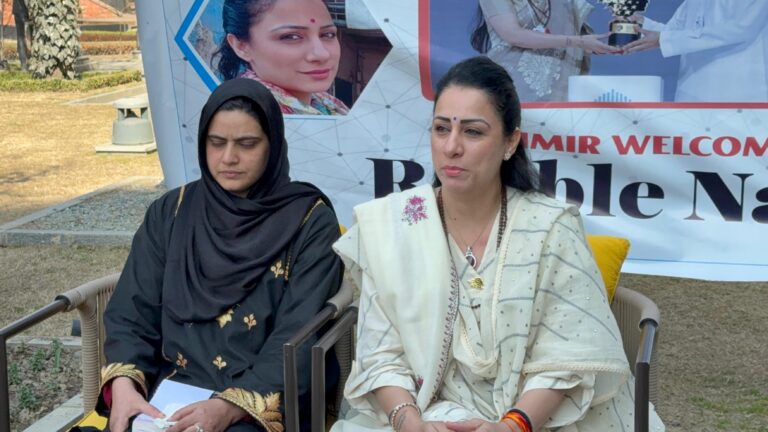
SRINAGAR, Feb 25: Days after being conferred the 2026 GEMS Global Teacher Prize, noted educationist and social reformer Rouble Nagi has announced an expansive education and digital inclusion campaign targeting some of the most remote and border villages of Jammu and Kashmir. The announcement came upon her return to the Valley, where she unveiled a structured plan to strengthen learning infrastructure and technological access in underserved regions.
The initiatives will be implemented through the Rouble Nagi Art Foundation (RNAF), which has been active in the Kashmir Valley for over two decades. This latest intervention will focus primarily on villages situated along the Line of Control (LoC) in Kupwara district, including Amrui and Jabri, areas that have historically struggled with limited access to quality educational resources due to geographical isolation and security-related constraints.
As part of the first phase, smart digital classrooms and computer centres will be established in Jabri, Amrui and Tithwal. The programme will cover several institutions in these areas, including the Tithwal Cultural Development Centre, where stitching classes are conducted for girls, Girls Madarsa Gummal, Boys Madarsa Tangdhar, the Madarsa at Amrui and the Army Goodwill School in Tithwal. These institutions will be equipped with modern digital infrastructure designed to integrate technology into everyday classroom learning rather than treating it as a peripheral activity.
The foundation has also extended its outreach to central Kashmir, with plans to set up additional digital education and computer centres in Narbal and Bandgam near Soibugh in Budgam district. By expanding into these rural pockets, RNAF aims to bridge the technological divide that continues to separate students in urban centres from their counterparts in remote villages.
According to the foundation, the digital classrooms will incorporate artificial intelligence as a guided learning tool under the supervision of trained teachers. The AI-enabled modules are intended to make subjects such as mathematics and languages more accessible through visual explanations and interactive exercises, thereby improving comprehension and retention. The approach seeks to encourage creativity, build confidence and introduce early career awareness among students who often have little exposure to evolving educational and professional pathways.
“The objective is exposure, dignity of opportunity and future readiness,” Nagi said, emphasising that children living in border areas must not be excluded from the benefits of technological progress. She reiterated that quality education and digital literacy are essential tools for empowerment in an increasingly competitive world.
Beyond classroom digitisation, the foundation has identified broader areas of intervention aimed at community upliftment. These include strengthening school infrastructure, expanding digital learning hubs across rural belts and promoting inclusive policies that ensure marginalised communities gain equitable access to quality education. Women’s economic empowerment through skill development initiatives will also remain central to the foundation’s long-term engagement in the region.
Nagi dedicated her Global Teacher Prize to children living in India’s villages and urban slums, underscoring her belief that education must be treated as a right rather than a privilege. She noted that the international recognition has reinforced her commitment to building an inclusive and empowered India aligned with the vision of Viksit Bharat.
Having worked in the Kashmir Valley for more than twenty years, RNAF’s renewed push in border and rural districts marks a significant step toward addressing educational disparities in conflict-affected and geographically isolated communities. Observers say the initiative signals a sustained effort to ensure that children in Jammu and Kashmir’s frontier regions are not left behind in the digital age.
J&K ACB registered Disproportionate Assets case against Vijay Singh Choudhary, Inspector, J&K Police

0
Jammu: Based on a specific input, a Verification was conducted by J&K Anti-Corruption Bureau into the allegations of possession of huge disproportionate assets by Vijay Singh Choudhary, Inspector J&K Police S/o Jia Lal Choudhary R/o Nonial, Nowshera District Rajouri A/P Santokh Vihar, Kaluchack, Jammu posted in UT of Ladakh, which revealed that the suspect while posted in different places raised huge assets amounting to crores of rupees which were found highly disproportionate to his known sources of income. Further, it revealed that more than 10 properties in the shape of houses, shops & plots of land in 100 of kanals valued in crores have been raised by him mostly in the name of family members, his relatives and others
On the basis of the verification conducted, a prima facie case of criminal misconduct was found made out against the accused Vijay Singh Choudhary, Inspector J&K Police under offences punishable U/S 13(1)(b) r/w section 13 (2) of PC Act 1988. Accordingly, a formal case FIR No. 02/2026 was registered at P/S ACB Central and investigation was taken up.
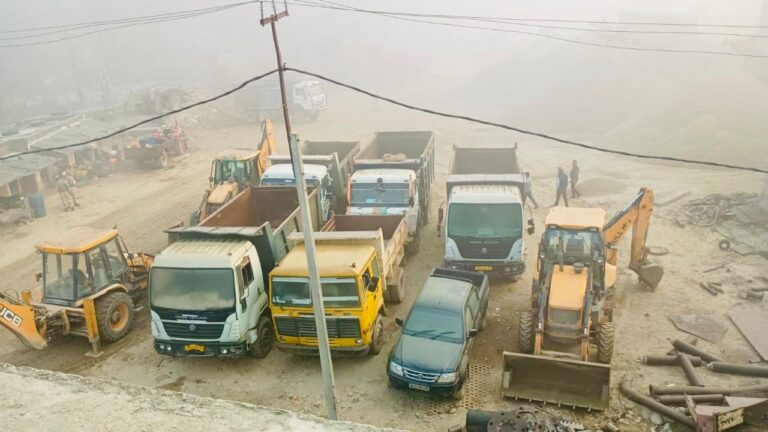
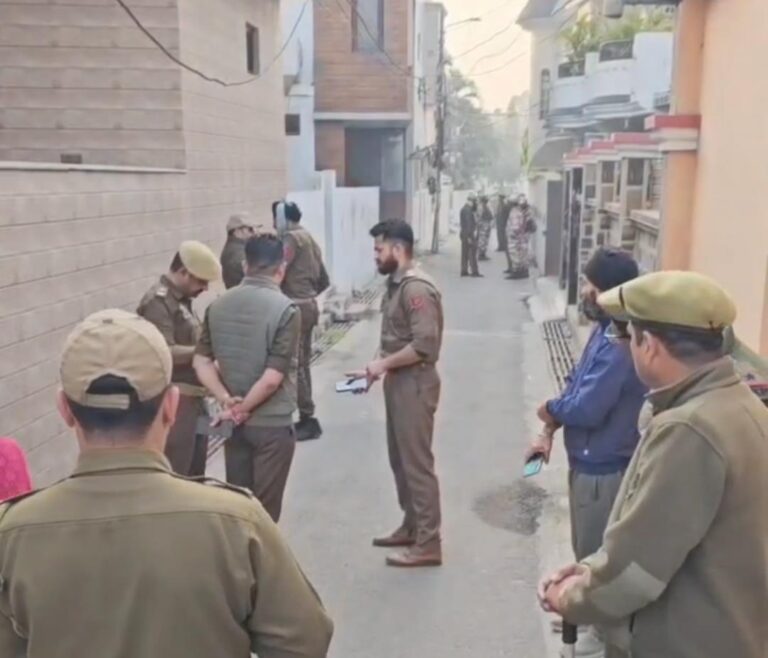
During the course of investigation, search warrants were obtained for conducting searches from the Hon’ble court of Special Judge Anti-Corruption Jammu. Thereafter, searches were conducted by the ACB teams at different locations which includes his residential houses at Santokh Vihar, Kaluchak, Jammu, residential house at Nonial, Nowshera, Rajouri, business premises Stone Crusher and Tile Factory situated at Tutte di Khui, Bajalta, Jammu. Also on the basis of information revealed during investigation, some other locations of Jammu were searched in terms of section 185 BNSS.
During search, incriminating documents have been recovered and seized in the case. Further investigation of the case is going on.

ACB Raids Brother of J&K Deputy CM in Alleged Illegal Mining Case

0
Official sources told the ACB team, accompanied by police officials, conducted the search operation at Santokh Vihar in the Talo Kalo Chak area of Jammu on wednesday morning.
According to sources, the action by the anti-corruption agency is part of an ongoing investigation into alleged illegal mining activities in specific areas of the region.
Vijay Choudhary, who is an Inspector in the Jammu and Kashmir Police, was transferred to Ladakh in September of last year. Sources said he is currently under suspension, although the specific reasons for his suspension could not be immediately ascertained. (KNS)

LG Kavinder Gupta Grants Notional Increments to SRO-202 Employees, Boosting Pay and Pension Prospects

0

TAUSEEF AHMAD

LEH, Feb 25: In a significant move aimed at ensuring service parity and financial justice for government employees, the Lieutenant Governor of Ladakh, Kavinder Gupta, has approved the grant of Notional Annual Increments for the probation period to employees appointed under the Jammu & Kashmir Special Recruitment Rules, 2015 (SRO-202).

The landmark decision is set to benefit a large number of employees who were appointed under the special recruitment rules but had not been granted annual increments during their probation period. By allowing these increments on a notional basis, the Administration has sought to correct a long-standing anomaly and ensure that affected employees are placed at the appropriate stage in the pay matrix.

Upward Revision of Basic Pay
Under the newly approved provision, the annual increments that were earlier withheld during the probation period will now be calculated and added notionally to the employees’ service records. Although the increments will not result in arrears for the probation period, they will lead to an upward revision of Basic Pay going forward.

Officials explained that this adjustment will ensure that employees are placed correctly within the pay matrix, reflecting the service period they have already rendered. The move is being seen as a technical yet crucial correction that aligns pay progression with the actual length of service.

Positive Impact on Allowances and Promotions

The revision in Basic Pay will have a cascading financial impact. Since allowances such as Dearness Allowance (DA) are calculated as a percentage of Basic Pay, employees will witness a proportional increase in these benefits as well. Other allowances linked directly to pay structure will also rise accordingly.

Moreover, the decision will ensure more advantageous pay fixation at the time of promotion. Employees will now move to higher posts with their pay calculated from a corrected and higher basic stage, preventing cumulative financial disadvantage over the course of their careers.

Boost to Retirement Benefits

Significantly, the move is also expected to enhance retirement benefits. Pension, gratuity, and leave encashment are computed on the basis of the last drawn pay. With the notional increments raising the Basic Pay, retiring employees will now be entitled to improved post-retirement financial security.

Official sources indicated that the decision was taken after careful consideration of representations highlighting disparities faced by SRO-202 appointees. The lack of increments during probation had resulted in employees falling behind their counterparts in other States and Union Territories, despite similar service conditions.

Ensuring Parity and Fairness

According to officials, the Administration’s decision brings Ladakh employees at par with their counterparts elsewhere in the country, addressing a long-standing grievance related to pay progression. The step is being viewed as part of a broader effort to streamline service conditions and uphold fairness in government employment in the Union Territory.
Employees and staff associations have widely welcomed the announcement, describing it as a just, rational, and morale-boosting measure. Many termed it a long-overdue correction that acknowledges their rightful service entitlements and restores confidence in the system.

With this decision, the Ladakh Administration has reaffirmed its commitment to ensuring equity in service matters and safeguarding the financial interests of its workforce.

PM Modi Terms Srinagar Civil Enclave Approval Major Fillip for J&K Economy

0

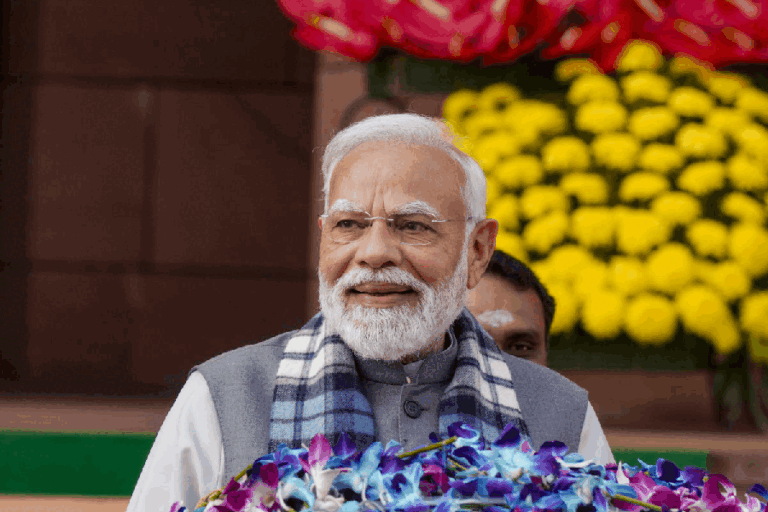
New Delhi, Feb 24: Prime Minister Narendra Modi on Tuesday described the Cabinet Committee on Economic Affairs’ (CCEA) approval for the development of a civil enclave at Srinagar Airport as a significant boost for Jammu and Kashmir.

The approval was announced by Union Minister for Information and Broadcasting Ashwini Vaishnaw during a media briefing following the Cabinet meeting in the national capital.

Reacting to the decision, as per news agency JKNS, the Prime Minister said the expansion of Srinagar Airport would give fresh momentum to the Union Territory’s economy. In a post on X, he stated that the move would enhance connectivity and further promote tourism in Jammu and Kashmir.

The project is expected to improve passenger handling capacity and strengthen air infrastructure in the region.

Tenure of District Development Councils Concludes Across J&K

0

RDD Secretary Lauds Role in Strengthening Grassroots Democracy

Srinagar, Feb 24: With the tenure of District Development Councils (DDCs) across all 20 districts of Jammu and Kashmir formally coming to an end, the Department of Rural Development and Panchayati Raj (RDD&PR) has termed the period a defining chapter in the Union Territory’s democratic journey.

Secretary Rural Development & Panchayati Raj, Mohammad Aijaz Asad (IAS), said the tenure marked a historic milestone as it witnessed the first full operationalisation of a robust three-tier Panchayati Raj system in J&K. He noted that the functioning of the DDCs played a crucial role in strengthening decentralised planning and empowering grassroots governance.

Addressing the Chairpersons and Members of the District Development Councils, the Secretary said their tenure was foundational not only in governance but also in institution-building. He appreciated their efforts in deepening public participation, bridging the gap between policy and people, and reinforcing faith in local self-governance.

On behalf of the department, he placed on record sincere appreciation for their commitment and constructive engagement, stating that beyond execution of projects and plans, their leadership fostered trust and strengthened public confidence in democratic institutions.

While the formal term has concluded, he said, the spirit of public service endures, and extended his best wishes to all members for continued strength, clarity, and purpose in their public life ahead.

Upgrade JVC Medical College Now

0
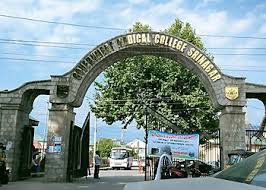
Healthcare infrastructure forms the backbone of any progressive society. In Jammu and Kashmir, where the population is steadily rising and disease patterns are rapidly changing, strengthening medical education and healthcare delivery systems is not a matter of luxury but of urgent necessity. In this regard, the Government of Jammu and Kashmir must take immediate and concrete steps to augment the infrastructure of JVC Medical College and bring it at least at par with the government medical colleges established in districts like Baramulla, Handwara and Anantnag.
Over the past few years, the Union Territory has witnessed the establishment and upgradation of several Government Medical Colleges (GMCs) across various districts. These institutions have been equipped with improved hospital buildings, modern lecture theatres, fully functional laboratories, hostels, residential quarters, skill labs, advanced diagnostic facilities and upgraded operation theatres. While these developments are welcome and reflect the government’s intent to decentralize healthcare and medical education, it is unfortunate that JVC Medical College continues to lag behind in critical areas of infrastructure and facility positioning.
A medical college is not merely a building with classrooms; it is a comprehensive ecosystem that integrates academics, clinical training, research, patient care and community outreach. For JVC Medical College to fulfill its mandate effectively, it requires state-of-the-art lecture halls equipped with modern audio-visual systems, well-stocked libraries with digital access to journals, fully functional laboratories for pre-clinical and para-clinical departments, and simulation-based skill labs for hands-on training. Without these foundational elements, the quality of medical education inevitably suffers.
Equally important is the upgradation of the associated teaching hospital. The bed strength must be enhanced in accordance with National Medical Commission norms. Super-specialty and specialty services should be strengthened with adequate equipment, including advanced imaging facilities such as MRI, CT scan, digital radiography and well-equipped intensive care units. Modular operation theatres, functional blood banks, trauma centres and emergency care units are essential to ensure that students receive comprehensive clinical exposure while patients receive quality treatment.
Another area demanding urgent attention is faculty strength and accommodation. A medical college can only perform to its potential if it has adequate, well-qualified faculty across all departments. Vacant posts must be filled on a priority basis, and incentives should be provided to attract experienced doctors and academicians. Residential quarters for faculty and hostels for students must be developed to create a conducive academic environment. Without proper accommodation, faculty retention becomes a challenge, and students face unnecessary hardships.
Research infrastructure is another domain where JVC Medical College needs significant support. In an era where medical advancements are driven by evidence-based research, the absence of functional research labs, ethical committees with streamlined processes, and funding support hampers academic growth. The government must establish dedicated research units, encourage collaborations with national institutions, and provide grants for community-based health studies that address region-specific health concerns such as cardiovascular diseases, cancer, lifestyle disorders and emerging infections.
The disparity in infrastructure between JVC Medical College and newer GMCs in districts like Baramulla, Handwara and Anantnag sends an unintended but troubling message of uneven development. All medical colleges under the government’s umbrella must adhere to uniform standards in terms of infrastructure, staffing patterns, equipment availability and academic facilities. Students enrolled in JVC Medical College deserve the same academic environment and exposure as their counterparts in other districts.
Moreover, strengthening JVC Medical College is not merely about institutional pride; it directly impacts public healthcare delivery. An upgraded teaching hospital would ease the burden on tertiary care centres in Srinagar and reduce patient referrals. It would improve access to specialized healthcare services for surrounding populations and enhance emergency response capacity. Better facilities would also reduce the need for patients to seek treatment outside the Union Territory, thereby saving time, money and lives.
The government must allocate a dedicated budget for phased infrastructure development at JVC Medical College. A time-bound action plan should be formulated with clear milestones for construction, procurement of equipment, recruitment of faculty and commissioning of new facilities. Regular monitoring mechanisms should be instituted to ensure transparency and accountability in execution.
In addition, public representatives, civil society members and the medical fraternity must collectively advocate for this long-overdue upgradation. Healthcare cannot be compromised due to administrative delays or financial constraints. Investment in medical education yields long-term dividends in the form of skilled doctors, improved healthcare outcomes and strengthened public confidence in government institutions.
Jammu and Kashmir stands at a crucial juncture where it seeks to modernize and strengthen its institutions. Bringing JVC Medical College at par with GMCs in Baramulla, Handwara and Anantnag is not an unreasonable demand—it is a rightful expectation. The government must act decisively and without delay to ensure that JVC Medical College emerges as a centre of excellence, capable of delivering quality medical education and healthcare services to the people of the region.
The time to act is now. Healthcare infrastructure cannot wait.

Biotechnology will power the next industrial revolution; India moving towards $1 Trillion Bioeconomy by 2047, says Dr Jitendra Singh

0

Vinod Bhat

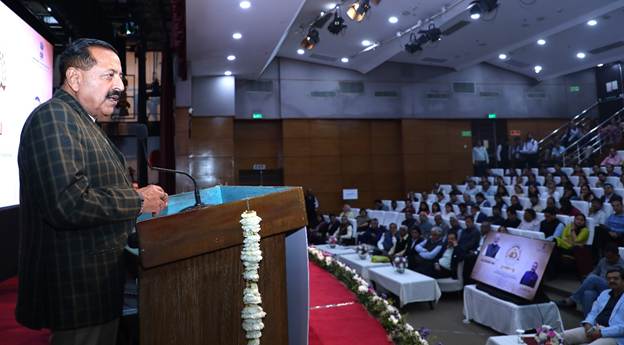
New Delhi: To mark the 40th Foundation Day of the Department of Biotechnology (DBT) today, Union Minister of State (Independent Charge) for Science & Technology, Earth Sciences; and MoS PMO, Personnel, Public Grievances, Pensions, Atomic Energy and Space, Dr Jitendra Singh launched “SUJVIKA” AI driven Biotech Product Data Portal, developed in collaboration with Industry partners ABLE.

SUJVIKA is a Trade Statistics Digital Intelligence Platform that presents authenticated biotechnology product import data in a structured and accessible format. The portal provides sector-wise insights into biochemical products, industrial enzymes, and other biotechnology imports. It enables researchers, startups, and industry to identify high-value and high-volume imports, assess import dependency and prioritise indigenisation and R&D efforts. The portal also supports evidence-based planning and promotes public–private partnerships for strengthening domestic biomanufacturing.

Addressing the gathering, the Minister said, the next industrial revolution will be biotechnology-driven and India is steadily moving towards building a $1 trillion bioeconomy by 2047 under the vision of Viksit Bharat. He said India has ensured that it will not remain a late entrant in emerging technologies and has positioned biotechnology as a key driver of future economic growth.

Dr Jitendra Singh was addressing the 40th Foundation Day celebrations of the Department of Biotechnology (DBT) at the Civil Services Officers Institute (CSOI), Chanakyapuri, New Delhi. The programme was attended by Dr Rajesh S. Gokhale, Secretary, DBT; Ms Ekta Vishnoi, Joint Secretary, DBT; senior officials of DBT, BIRAC and BRIC; members of the scientific community; directors of institutions; industry representatives; and young researchers. The event featured pitch presentations by young scientists and DBT Directorates, a presentation on DBT’s 40-year journey, and the launch of the revamped DBT website and the “SUJVIKA” Bio Product Web Portal.

Congratulating the DBT fraternity on completing four decades since its establishment in 1986, Dr Jitendra Singh said the Department has grown into a premier organisation nurturing startups, strengthening academia–industry partnerships, building scientific infrastructure and enabling innovation for societal use. He said that while India had fewer than 100 biotech startups in 2014, the number has now crossed 11,000, reflecting a strong expansion of the ecosystem. During this period, India’s bioeconomy has grown from nearly USD 10 billion in 2014 to about USD 165.7 billion in 2024. The country is now ranked among the top biotech destinations globally and stands as one of the leading vaccine manufacturers in the world.

Referring to policy reforms, the Minister said that under the leadership of Prime Minister Shri Narendra Modi, biotechnology has emerged as a central pillar of India’s development strategy. He recalled that the Union Cabinet approved the integrated BioE3 Policy- Biotechnology for Economy, Environment and Employment, aimed at fostering high-performance biomanufacturing across the country. He said DBT, BIRAC and the Biotechnology Research and Innovation Council (BRIC) are implementing this policy to strengthen indigenous capabilities and expand India’s bioindustrial base.

Dr Jitendra Singh spoke about the establishment of the National Biofoundry Network comprising six specialised biofoundries and 21 advanced bio-enabler facilities across the country to accelerate scale-up and commercialisation. He also referred to the network of 95 bio-incubators across 21 States and UTs, four regional mentoring centres and technology transfer offices that are supporting more than 1,800 incubatees. He said the recently announced first national call of ₹2,000 crore under the ₹1 lakh crore Research, Development and Innovation (RDI) initiative will further strengthen the biotech sector and support enterprises ready for large-scale growth.

Highlighting emerging frontiers, the Minister said India has entered new domains such as space biotechnology and space medicine through an MoU between DBT and ISRO/Department of Space. He referred to biotechnology experiments conducted in space missions, including studies related to life sciences and muscle physiology, and said such initiatives place India at the forefront of cutting-edge scientific exploration.

Dr Jitendra Singh also mentioned the GenomeIndia Project, under which whole genome sequencing data of 10,000 individuals from 99 diverse populations has been made available through the Indian Biological Data Centre. He said this will enable future development of personalised therapies and strengthen India’s genomic research capabilities. He further referred to India’s first human gene therapy trial for Severe Hemophilia A, supported through DBT and BIRAC, which achieved sustained Factor VIII production and reduced dependence on repeated infusions.

The Minister said biotechnology’s integration with digital tools, including artificial intelligence, will significantly enhance research efficiency, reduce timelines, and improve precision in areas such as gene sequencing, diagnostics, and drug discovery. He emphasised the importance of greater synergy among scientific departments to fully harness the potential of biotechnology.

On the occasion, Dr Jitendra Singh launched DBT’s revamped website aligned with the Government of India’s Digital Brand Identity Manual (DBIM) framework designed by MeitY/NIC, marking a step towards a unified and standardised digital presence across Ministries and Departments.

Earlier, Secretary DBT Dr Rajesh S. Gokhale described DBT as a driver of transformative change and outlined its evolution from building scientific capacity to fostering entrepreneurship and advancing the bioeconomy. He explained the Department’s integrated approach spanning knowledge creation, translation through startups and partnerships, and societal impact. He highlighted recent progress in genome editing and high-performance biomanufacturing, and said that the BioE3 framework integrates biological systems, digital intelligence, and socio-economic design to create sustainable growth models.

Concluding his address, Dr Jitendra Singh expressed confidence that DBT, BIRAC and BRIC will together drive India’s bio revolution from laboratory research to large-scale industrial application, contributing to sustainable development and positioning India among the leading bio economies of the world.

The programme was attended, among others, by Ekta Vishnoi, Joint Secretary, DBT; senior officials of DBT, BIRAC and BRIC; members of the scientific community; directors of institutions; industry representatives; and young researchers. The event featured pitch presentations by young scientists and DBT Directorates, a presentation on DBT’s 40-year journey.

Vande Bharat to Run Directly Between Srinagar and Jammu from March 1

0

New Delhi, Feb 24: Northern Railway has announced the extension of the Vande Bharat Express service to provide direct rail connectivity between  Srinagar and Jammu from March 1, 2026.

According to an official communication, the Shri Mata Vaishno Devi Katra–Srinagar–Shri Mata Vaishno Devi Katra (SVDK–SINA–SVDK) Vande Bharat Express will be extended up to Jammu Tawi with effect from March 1.

The train, which was earlier operating between Srinagar and Shri Mata Vaishno Devi Katra, will now run directly between Srinagar and Jammu Tawi, offering seamless connectivity between the Valley and the Jammu region.

Global Leaders Hail India’s Clean Energy Momentum

0

Clean Energy Future Within Reach, Calls for System-Wide Transformation After Engagements in India, Says UN Secretary-General António Guterres

French President Emmanuel Macron Hails International Solar Alliance as Flagship of India–France Strategic Partnership

Vinod Bhat

New Delhi:  India’s accelerating clean energy transition under the leadership of Shri Narendra Modi is receiving widespread recognition from leaders, governments and multilateral institutions across the world, reflecting the country’s sustained expansion of renewable energy capacity and its early achievement of key climate milestones. India’s rapid scale-up of non-fossil fuel power generation, strong policy frameworks and ambitious long-term targets have positioned the country at the forefront of the global energy transition.
UN Secretary-General Highlights Clean Energy Potential
United Nations Secretary-General António Guterres has underscored the promise of renewable energy as part of the global transition from fossil fuels. In a verified post on X, he stated, “The clean energy future is within reach – but we need a system-wide transformation to accelerate the transition from fossil fuels.”
He made these remarks following engagements with leaders from across India’s renewable energy ecosystem during his visit to the country for the Global AI Impact Summit 2026. His statement reflects the importance of expanding clean energy deployment worldwide and the need for collective action to accelerate the global energy transition.
https://x.com/antonioguterres/status/2025718363104666079?s=20
India–France Cooperation and Solar Energy
During the official visit of the President of the French Republic, Emmanuel Macron, to India, he highlighted the International Solar Alliance (ISA) as a stellar example of delivery under the India–France strategic partnership.
Co-founded by India and France, ISA demonstrates how aligned ambition can translate into tangible impact by integrating policy, finance, technology and partnerships to expand access to solar energy, particularly in regions where it is needed most. From strengthening institutional capacities to enabling implementation on the ground, ISA reflects a collaboration defined by execution and measurable outcomes rather than intent alone.
With 2026 designated as the India–France Year of Innovation, the partnership is poised to deepen further, with ISA continuing to advance solar diplomacy and broader systems innovation anchored in trust, alignment and results-driven cooperation for people, planet and progress.
https://x.com/isolaralliance/status/2024813888186065117
India–UK Collaboration on Offshore Wind
Addressing the India–UK Offshore Wind Task Force, UK Deputy Prime Minister David Lammy congratulated India on its “remarkable” and “absolutely outstanding” clean energy achievements, noting that India has surpassed the milestone of achieving 50 percent of installed electricity capacity from non-fossil sources five years ahead of its 2030 target, thereby “clearly now leading much of the global community.”
He commended India’s strong policy frameworks and flagship initiatives, including the rooftop solar programme and the National Green Hydrogen Mission, which he said are positioning India as a global leader in clean energy.
https://x.com/PralhadJoshiOfc/status/2024369788538278045
The engagements at the World Economic Forum Annual Meeting 2026 have further consolidated India’s position as a reliable, scalable and forward-looking partner in the global clean energy transition. Backed by policy certainty, strong institutional frameworks and a clear long-term roadmap towards 500 GW of non-fossil capacity by 2030, India continues to inspire confidence among global investors, multilateral institutions and industry leaders. The visit reaffirmed that India’s renewable energy journey is not only central to its own sustainable development goals but also integral to shaping an inclusive, resilient and investment-ready global energy future.
PM Surya Ghar Installations cross 30 lakhs
The achievement of 30 lakh rooftop solar installations under PM Surya Ghar marks a major milestone in India’s energy transition, reinforcing citizen participation in climate action and distributed clean power generation.
India remains one of the fastest-growing solar energy markets globally, with renewable sources now accounting for over half of the country’s total installed electricity capacity.
This landmark achievement underlines India’s commitment to sustainable development, climate action and energy security. The appreciation from global leaders highlights the country’s growing role in advancing the clean energy transition and fostering international cooperation on sustainable solutions.
India will continue to deepen its clean energy efforts through policy support, technology adoption and multilateral engagement with partners across the world.