spot_imgspot_img
spot_img
Home Blog Page 108

After turning grief into joy Kajal Kumari Rai eyes Olympics glory after double gold at Khelo India Winter Games

0

Shillong girl, who trained at High Altitude Warfare School in Gulmarg, keeps CRPF flag fluttering at KIWG 2026

Gulmarg: The finish line arrived quietly, almost reverently, as if the snow itself understood what it meant. Kajal Kumari Rai did not raise her arms immediately. She slowed, her skis whispering over Gulmarg’s powder, her breath visible in the mountain air. For a moment, she simply stood there, eyes searching somewhere far beyond the white expanse, somewhere beyond the cheering officials, beyond the medals, beyond the moment. Somewhere, perhaps, where her father still lives.
Then the realisation settled in. Another gold medal. Her second in as many days. And suddenly, the grief, the promise, the year-long burden Kajal had carried alone, all found its answer in gold.
https://www.instagram.com/reel/DVIzzJ8gAQA/?utm_source=ig_web_copy_link&igsh=MzRlODBiNWFlZA==
Just five days before the Khelo India Winter Games in 2025, Kajal’s world had collapsed. Her father died unexpectedly, forcing her to abandon training and return home to Shillong for his last rites. The rituals ended, but the grief did not. Still, Kajal returned to Gulmarg to compete, carrying shock and sorrow heavier than any snowfall.
Nordic skier Kajal raced last year, but her body moved without her spirit. The mountains felt colder then. The snow, indifferent. But somewhere in that silence, the CRPF cross-country athlete made herself a promise. She would come back. And she would win, not for herself, but for her father. This February, on the Golf Course at Gulmarg, she kept that promise.
On Monday, the 25-year-old from Meghalaya won gold in the Nordic Women’s 15 km sprint. On Tuesday, she returned and did it again, claiming gold in the 10 km sprint, completing a sweep that transformed grief into glory. Two races. Two gold medals. One daughter fulfilling a promise.
Kajal’s journey to this moment makes the achievement even more improbable. Kajal comes from a land of rain and green hills, not snow and ice. Nordic skiing is not just uncommon there, it is almost unimaginable.
“We don’t have this kind of weather,” she said. “Even surviving in snow is a big deal for us. Forget competing in a sport that tests your endurance like this.”
She had only started skiing in 2024. No family history. No childhood winters on skis. No legacy to inherit. Just belief.
For the past three weeks, Kajal trained relentlessly at the Indian Army’s High Altitude Warfare School (HAWS) in Gulmarg. There, she learned not just technique, but survival, how to move with the snow, how to endure it, and how to belong in it. “They trained us well,” she said. “They improved our technique and gave us confidence.”
The mountains, once foreign, became familiar. She found herself mesmerised by Kashmir, its vast silence, its powdery snow, its beauty.
“The natural views are amazing,” Kajal said. “The snow here is perfect for Nordic skiing.”
But Kajal’s strength was forged long before Gulmarg. She serves in the CRPF, where endurance is not optional but an identity. It was there she discovered endurance sports. It was there she watched Army athletes compete at the Olympics and World Championships. It was there she allowed herself to dream.
Her team manager, Magesh K, saw that transformation first-hand.
“She has always worked extremely hard,” he said. “But more than that, she has the spirit of an athlete. That spirit is rare.”
Mangesh saw it again at the finish line today. Another CRPF skier, Hiral from Gujarat, had just won bronze. Kajal, fresh off her own victory, walked to her and embraced her. They celebrated together, not as rivals, but as soldiers, as sisters. Victory had not hardened her. It had humanized her.
Back home in Shillong, her mother, sister, brother, and sister-in-law were eagerly waiting for the results from afar and soon after the win she called them over video and broke the good news to them.
No one in Kajal’s family had ever pursued sports professionally. No one had walked this path before her. She carved it herself.
Kajal credits her friend and fellow CRPF soldier Lokesh Kumar for helping her believe she could. But belief alone was never enough. Consistency was.

“I saw athletes from states without infrastructure succeed,” Kajal said. “I promised myself I would not complain. I would focus on my goal.”

She did. And now, standing in Gulmarg with two gold medals, Kajal Kumari Rai is no longer just a participant. She is no longer just a skier from a state without snow. She is a champion. And somewhere, perhaps beyond the mountains, beyond the sky, beyond the finish line, a father’s promise has been kept.
Her journey, Kajal says, is only beginning. She now dreams of the Olympics. Of World Championships. Of carrying her story, her father’s story, onto the world stage. Because some victories are measured not in seconds, but in courage. And some gold medals weigh more than others.

ABOUT KHELO INDIA WINTER GAMES

Under the Khelo India Scheme, the Ministry of Youth Affairs & Sports (MYAS) organizes National-level competitions, i.e., Khelo India Youth Games, Khelo India University Games, Khelo India Para Games and Khelo India Winter Games to provide a platform for talented athletes to showcase their sporting and competitive skills. Starting in 2020, five editions of Khelo India Winter Games have been successfully conducted. While the Union Territory of Jammu & Kashmir have hosted all editions of KIWG, UT Ladakh started hosting the ice sports from 2024. In January 2026, UT Ladakh hosted the ice Games for the third consecutive time. Gulmarg in J&K will be hosting the snow events in February 2026. Apart from tapping talent, Khelo India Winter Games also showcase a region’s art, culture, heritage, and promotes tourism through sports.
Cabinet approves extension of existing North-South corridor from GIFT City to Shahpur of Gujarat Metro Rail Corporation Limited (GMRC)

0
Vinod Bhat

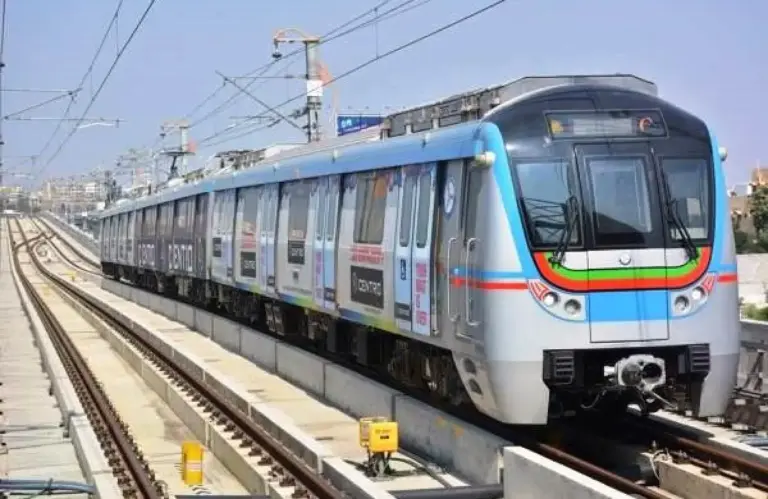
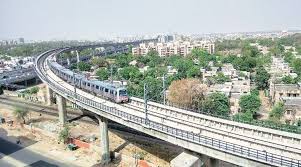
New Delhi: The Union Cabinet chaired by the Prime Minister, Shri Narendra Modi, today approved the extension, from GIFT City to Shahpur, will be 3.33 kilometers long and include three elevated stations. The project is scheduled to be completed in approximately four years.

The estimated cost of the project is Rs.1,067.35 crore. This extended corridor is expected to benefit approximately 23,702 passengers in 2029 and approximately 58,059 passengers in 2041.

This corridor will strengthen connectivity between Ahmedabad & GIFT region. Major multinational companies, educational institutions, and commercial centers located along the proposed route will directly benefit.

Additionally, this extension will be beneficial to the daily commuters travelling between Ahmedabad & GIFT region for catering the travel need related to Business, Employment and Education, thereby significantly enhancing network integration and passenger convenience.

The project is expected to generate approximately 1,000 jobs in construction. Approximately 250 people will be employed in the post-construction phase for operations and maintenance. This project will generate a significant number of direct employment opportunities, equivalent to the number mentioned above. Additionally, other activities will generate indirect employment for even more people.

The project will be implemented by Gujarat Metro Rail Corporation Limited (GMRC), a 50:50 joint venture between the Government of India and the Government of Gujarat.

Background:

Currently, the Gujarat Metro’s 68.28-km Ahmedabad Metro Phase-I {APMC to Motera Stadium (North-South Corridor) & Thaltej Gam to Vastral Gam (East-West Corridor)} & Phase-II (Motera Stadium to Mahatma Mandir & GNLU to GIFT City), with total 53 stations have been successfully made operational since Sep-2022 (Phase-I) and January-2026 (Phase-II). The daily ridership on this line is approximately 1,60,000.

Rs 1,677 Cr Boost: Union Cabinet Clears New Civil Enclave to Transform Srinagar Airport

0

VIINOD BHAT

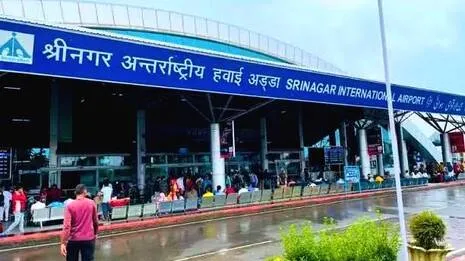
NEW DELHI, Feb 24: The Union Cabinet has approved a major expansion of the Civil Enclave at Srinagar International Airport, paving the way for a transformative upgrade of aviation infrastructure in Jammu and Kashmir.

The decision was taken by the Cabinet Committee on Economic Affairs (CCEA), chaired by Prime Minister Narendra Modi, with the project estimated to cost Rs 1,677 crore.
The ambitious development plan marks a significant milestone in strengthening air connectivity to the Kashmir Valley and positioning Srinagar as a modern aviation hub in northern India. In addition to expanding passenger infrastructure, the project will also provide for the construction of barracks for security personnel, further enhancing safety and operational readiness at the airport.
Modern Terminal with 10 Million Passenger Capacity

The new Civil Enclave will be developed over 73.18 acres and will feature a state-of-the-art integrated terminal building covering a total area of 71,500 square metres. This includes 20,659 square metres of the existing structure, which will be integrated into the upgraded facility.

Designed to handle 2,900 passengers during peak hours, the expanded terminal will have an annual handling capacity of 10 million passengers (MPPA), a substantial increase over current levels. The upgraded apron area will provide space for 15 aircraft parking bays, including one Code E wide-body aircraft bay. Of these, nine are existing bays while six will be newly constructed.

The 3,658-metre-long and 45-metre-wide runway will continue to be operated by the Indian Air Force (IAF), as the airport functions within the Budgam Airbase. The airport, located approximately 12 kilometres from Srinagar city centre, has been designated as an international airport since 2005 and is operated by the Airports Authority of India (AAI).

To ease congestion and enhance passenger convenience, a modern multi-level car parking facility with capacity for 1,000 vehicles will also be constructed as part of the project.
Blending Modern Design with Kashmiri Heritage

The architectural design of the new terminal aims to combine contemporary functionality with the rich cultural ethos of Kashmir.

Traditional elements such as intricate woodwork, locally inspired motifs, and indigenous craftsmanship will be integrated into the structure. The design will ensure seamless passenger movement through streamlined check-in counters, advanced security systems, spacious waiting lounges, and efficient baggage handling systems.
The expansion is intended not only to meet rising passenger demand but also to elevate the overall travel experience, aligning the airport with global standards in comfort, safety, and operational efficiency.

Focus on Sustainability
Sustainability has been placed at the core of the project. The new terminal will incorporate advanced water harvesting systems and maximize the use of natural lighting to reduce energy consumption. Eco-friendly, locally sourced construction materials will be used to minimize the project’s carbon footprint. The facility is targeted to achieve a prestigious 5-star GRIHA rating, underscoring the government’s emphasis on green and sustainable infrastructure development.

Boost to Tourism and Economy
The expansion is expected to provide a major impetus to tourism and economic growth in the region. Improved air connectivity will enhance access to iconic attractions such as Dal Lake, Shankaracharya Temple, and the famed Mughal Gardens. With higher passenger capacity and better facilities, Srinagar is poised to attract more domestic and international visitors.

Officials believe the project will generate substantial employment opportunities during both construction and operational phases, stimulate private investment in hospitality and allied sectors, and reinforce Srinagar’s status as a premier tourist and economic destination.
With this Rs 1,677 crore investment, the development of the Civil Enclave represents a decisive step toward world-class aviation infrastructure in Jammu and Kashmir, promising enhanced connectivity, improved passenger amenities, and a stronger gateway for the Valley to the rest of the world.

Cabinet approves alteration of the name of the State of “Kerala” to “Keralam”

0
Vinod Bhat

New Delhi: The Union Cabinet chaired by the Prime Minister, Shri Narendra Modi, today approved the proposal for alteration of name of State of ‘Kerala’ as ‘Keralam’.

After approval of Union Cabinet, the  President of India will refer a Bill, namely the Kerala (Alteration of Name) Bill, 2026 to the State Legislative Assembly of Kerala for expressing its views under proviso to article 3 of the Constitution of India. After receipt of the views of the State Legislative Assembly of Kerala, Government of India will take further action and the recommendation of President will be obtained for introduction of the Kerala (Alteration of Name) Bill, 2026 for alteration of name of State of ‘Kerala’ as ‘Keralam’ in Parliament.

Legislative Assembly of Kerala passed a resolution on 24.06.2024 to alter the name of the State of “Kerala” to “Keralam”, which is as under:

“The name of our State is ‘Keralam’ in Malayalam Language. States were formed on the basis of language on the 1st day of November, 1956. The Kerala Piravi Day is also on the 1st day of November. Since the time of National Independence Struggle, there has been a strong demand for the formation of United Kerala for the people speaking Malayalam language. But in the First Schedule to the Constitution the name of our State is recorded as ‘Kerala’. This Assembly unanimously appeal to the Central Government to take urgent steps as per Article 3 of the Constitution for modifying the name as ‘Keralam’.”

Thereafter, Government of Kerala has requested Government of India to take necessary steps to amend the First Schedule to the Constitution by altering the name of State of ‘Kerala’ as ‘Keralam’ as per article 3 of the Constitution.

Article 3 of the Constitution provides for alteration of names of existing States. According to article 3, Parliament may by law alter the name of any State. Further proviso to article 3 states that no Bill for the purpose shall be introduced in either House of Parliament except on the recommendation of the President and unless, where the proposal contained in the Bill affects the area, boundaries or name of any of the States, the Bill has been referred by the President to the Legislature of that State for expressing its views thereon within such period as may be specified in the reference or within such further period as the President may allow and the period so specified or allowed has expired.

The matter regarding alteration of name of State of ‘Kerala’ as ‘Keralam’ was considered in the Ministry of Home Affairs, Government of India and with the approval of Shri Amit Shah, Union Minister of Home Affairs and the Union Minister of Cooperation, the draft Note for the Cabinet for the alteration of name of State of ‘Kerala’ as ‘Keralam’ was circulated to the Department of Legal Affairs and Legislative Department, Ministry of Law and Justice for their comments. The Department of Legal Affairs and Legislative Department, Ministry of Law and Justice have concurred with the proposal for the alteration of name of State of ‘Kerala’ as ‘Keralam’.

Cabinet approves Minimum Support Prices for Raw Jute for 2026-27 Season

0
Vinod Bhat

New Delhi: The Cabinet Committee on Economic Affairs, chaired by the Prime Minister Shri Narendra Modi, today has approved Minimum Support Prices (MSP) of Raw Jute for Marketing season 2026-27.

The MSP of Raw Jute (TD-3 grade) has been fixed at Rs. 5,925/- per quintal for 2026-27 season. This would ensure a return of 61.8 percent over the all India weighted average cost of production. The announced MSP of raw jute for Marketing season 2026-27 is in line with the principle of fixing MSP at a level of at least 1.5 times all India weighted average cost of production as announced by the Government in the Budget 2018-19.

The MSP of Raw Jute for Marketing season 2026-27 is an increase of Rs.275/- per quintal over the previous Marketing season 2025-26. Government has increased MSP of Raw jute from Rs.2400/-per quintal in 2014-15 to Rs.5,925/- per quintal in 2026-27, registering an increase of Rs.3,525/- per quintal (2.5 times).

The MSP amount paid to Jute growing farmers during the period 2014-15 to 2025-26 was Rs. 1342 Crore while during the period 2004-05 to 2013-14, amount paid was Rs. 441 Crore.

The Jute Corporation of India (JCI) will continue as Central Government Nodal Agency to undertake Price Support Operations and the losses incurred, if any, in such operations, will be fully reimbursed by the Central Government.


Cabinet approves enhanced delegation to POWERGRID from the extant guidelines on delegation of powers to Maharatna CPSEs for increasing equity investment threshold from Rs.5000 crore per subsidiary to Rs.7500 crore per subsidiary

0
Vinod Bhat

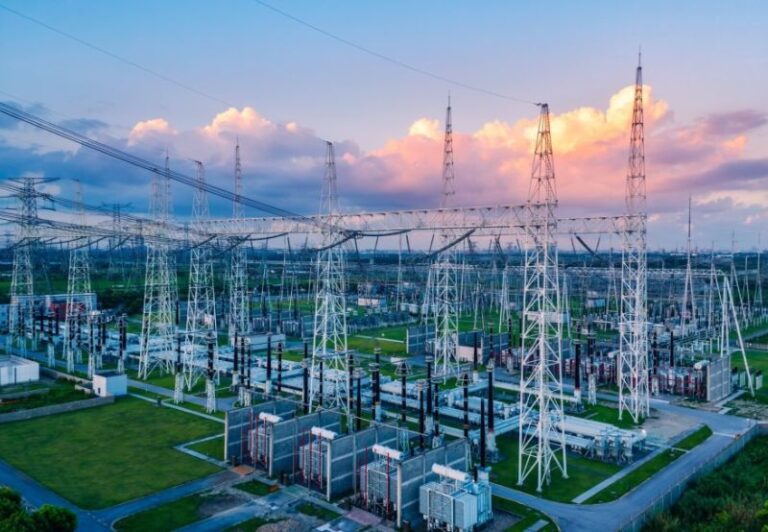
New Delhi: The Cabinet Committee on Economic Affairs, chaired by the Prime Minister Shri Narendra Modi, today has approved enhanced delegation to POWERGRID under the extant guidelines dated 4th February, 2010 of the Department of Public Enterprises (DPE) on delegation of powers applicable to Maharatna CPSEs. The approval enhances the permissible equity investment limit of POWERGRID from the current threshold of Rs.5,000 crore per subsidiary to Rs.7,500 crore per subsidiary, while retaining the existing cap of 15% of the company’s net worth.

The approval will enable POWERGRID, the largest and most experienced transmission service provider in the country, to expand its investment in its core business and support the evacuation of renewable energy capacity, helping achieve the target of 500 GW from non-fossil-based sources.

POWERGRID can now participate in the bids for capital-intensive transmission projects, such as Ultra High Voltage Alternating Current (UHVAC) and High Voltage Direct Current (HVDC) transmission networks. Additionally, it will broaden competition in the Tariff Based Competitive Bidding (TBCB) for selection of bidders for critical transmission projects. This ensures better price discovery, and ultimately lead to the availability of affordable and clean energy for consumers.


Cabinet approves three multitracking projects covering 8 Districts across the states of Maharashtra, Madhya Pradesh, Bihar and Jharkhand, increasing the existing network of Indian Railways by about 307 Kms

0
Vinod Bhat

New Delhi: The Cabinet Committee on Economic Affairs, chaired by the Prime Minister Shri Narendra Modi, today has approved 3 (Three) projects of Ministry of Railways with total cost of Rs. 9,072 crore (approx.). These projects include:

  1. Gondia – Jabalpur Doubling
  2. Punarakh – Kiul 3rd and 4th line
  3. Gamharia – Chandil 3rd and 4th line

The 3 (three) projects covering 8 Districts across the states of Maharashtra, Madhya Pradesh, Bihar and Jharkhand will increase the existing network of Indian Railways by about 307 Kms.

The proposed multi-tracking project will enhance connectivity to approx. 5,407 villages, which are having a population of about 98 lakhs.

The increased line capacity will significantly enhance mobility, resulting in improved operational efficiency and service reliability for Indian Railways. These multi-tracking proposals are poised to streamline operations and alleviate congestion. The projects are in line with the  Prime Minister Shri Narendra Modiji’s Vision of a New India which will make people of the region “Atmanirbhar” by way of comprehensive development in the area which will enhance their employment/ self-employment opportunities.

The projects are planned on PM-Gati Shakti National Master Plan with focus on enhancing multi-modal connectivity & logistic efficiency through integrated planning and stakeholder consultations. These projects will provide seamless connectivity for movement of people, goods, and services.

The proposed capacity enhancement will improve rail connectivity to several prominent tourist destinations across the country, including Kachnar Shiv Temple (Jabalpur), Kanha National Park (Balaghat), Gangulpara Dam and Waterfall, Pench National Park, Dhuandhar waterfall, Bargi Dam, Gomji-Somji temple, Chandil Dam, Dalma Hill Top, Hesakocha Waterfall, Raijama Ghati, Dalma Wildlife Sanctuary, etc.

The projects are essential routes for transportation of commodities such as coal, steel, iron ore, cement, ballast and stone chips, fly ash, fertilizers, limestone, manganese, dolomite, foodgrains, POL etc. The capacity augmentation works will result in additional freight traffic of magnitude 52 MTPA (Million Tonnes Per Annum). The Railways being environment friendly and energy efficient mode of transportation, will help both in achieving climate goals and minimizing logistics cost of the country, reduce oil import (6 Crore Litres) and lower CO2 emissions (30 Crore Kg) which is equivalent to plantation of  One Crore trees.

Stakeholder Consultation Held for Inputs on Proposed Advanced Manufacturing Systems Mission at CMTI, Bengaluru

0

Vinod Bhat

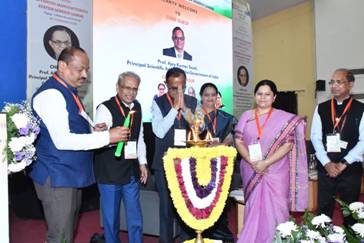
New Delhi: The Office of the Principal Scientific Adviser to the Government of India (OPSA) and Ministry of Heavy Industries (MHI) coorganised a Stakeholder Consultation on 23rd  February 2026 at CMTI with support from the Central Manufacturing Technology Institute (CMTI), Bengaluru, to discuss the modalities of a cohesive Advanced Manufacturing Strategy.

The consultation brought together representatives from Government, industry associations, manufacturing enterprises, MSMEs, startups, academia, research institutions, and technology developers to provide structured inputs on strengthening India’s capabilities in advanced manufacturing systems. Deliberations focused on critical domains such as CNC machine tools and controllers, advanced machines, testing and metrology infrastructure, robotics and robotic arms, and advanced additive manufacturing (3D & 4D printing).

A person standing at a podiumAI-generated content may be incorrect.

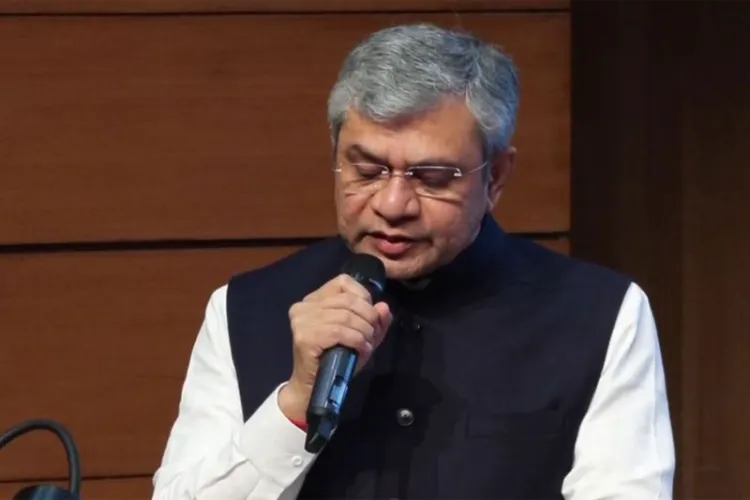
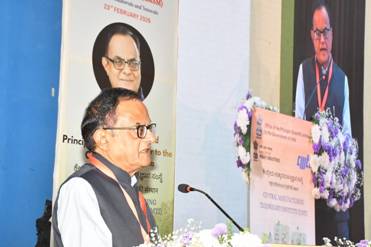
Addressing the gathering, Prof. Ajay Kumar Sood, Principal Scientific Adviser to the Government of India, emphasised that advanced manufacturing systems form the backbone of contemporary industrial ecosystems and are pivotal to India’s aspirations in aerospace, defence, electronics, automotive, energy, and medical devices. He underscored that technological sovereignty and resilient supply chains require strong indigenous capabilities in high-precision machines, production systems, CNC controllers, sensors, and quality infrastructure. Prof. Sood highlighted that advanced manufacturing is central to the vision of Viksit Bharat and called for sustained coordination among Government, industry, and research institutions. He cited the industry-led Research, Development and Innovation (RDI) Fund and the grant-based Anusandhan National Research Foundation (ANRF) as key enablers supporting deep-technology research and translational innovation. He stressed localisation of critical technologies, alignment with global standards, enhanced Industry 4.0 readiness and advanced skilling initiatives.

A person speaking at a podiumAI-generated content may be incorrect.

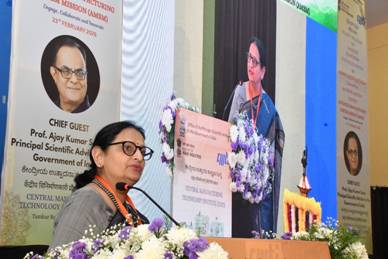
In her special remarks, Dr. Parvinder Maini, Scientific Secretary, OPSA, elaborated on the exhaustive consultative process undertaken for the past one year to shape the contours of Advanced Manufacturing Programs. She also emphasised the need for a systems-level approach and a Technology Readiness Level (TRL)-aligned mission architecture to bridge the gap between research and industrial deployment. She highlighted the importance of targeted R&D, shared testing infrastructure, internationally benchmarked certification systems, and strengthened industry-academia collaboration.

S. Kris Gopalakrishnan, President of the Governing Council of CMTI and Co-founder of Infosys, noted that the capital goods sector is fundamental to advanced manufacturing and must enhance technological depth to support high-value industries. He highlighted CMTI’s contributions through innovation and industry collaboration and called for sustained partnerships to reduce import dependence and enhance technological sovereignty.

Shri Vijay Mittal, Joint Secretary, MHI, highlighted the need to recognise the contributions of capital goods, particularly from the machine tool sector. He noted that the MHI, through its capital goods scheme, has supported indigenous efforts in several capital goods and establishment of test infrastructure. The proposed mission on advanced manufacturing systems will provide sustainable growth in the country. Dr. Rakesh Kaur, Adviser/Scientist ‘G’, OPSA, also emphasised that the mission framework is still being shaped and that inputs from stakeholders across Government, academia, and industry would be critical in identifying priorities, addressing gaps, and defining practical implementation pathways.

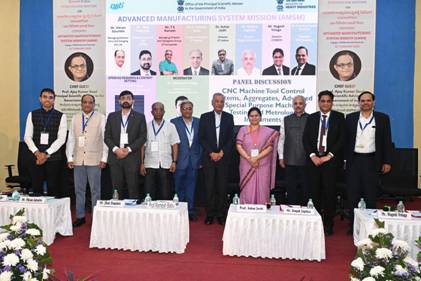
The inaugural session also featured welcome remarks by Dr. Nagahanumaiah, Director, CMTI, and context presentations from Ms Mohini Kelkar, President IMATM and Prof. B. Ravi, Director, NIT Surathkal.

Following the inaugural session, the dignitaries visited laboratory and witnessed demonstrations of several machines and instruments designed and developed by the Central Manufacturing Technology Institute over the past few years. The technologies showcased included vertical planetary mixing machines, aerospace Line Replaceable Units (LRUs), specialised test rigs, automatic optical inspection systems, and developments from the Sensor Technology Development Centre.

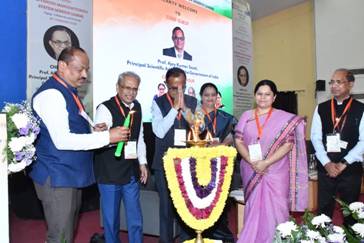
On this occasion, Prof. Sood, formally inaugurated the Ball Screw Lead Error Testing and Certification System, the first such facility in India, established at CMTI under the Capital Goods Scheme of the Ministry of Heavy Industries.

The consultation thereafter progressed into three parallel thematic technical sessions focusing on key advanced manufacturing domains, namely:

(i) CNC Machine Tool Control Systems, Advanced and Special Purpose Machines, Testing and Metrology,

(ii) Robotics and Robotic Arms, and

(iii) Advanced Additive Manufacturing Systems (3D and 4D Printing).

A group of people sitting in a roomAI-generated content may be incorrect.

A group of people standing in front of a large posterAI-generated content may be incorrect.

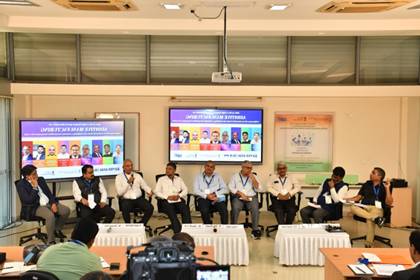
The discussions highlighted critical technology gaps and value chain challenges in high end machine tools and aggregates, the need for localisation of critical components, strengthening domestic manufacturing capabilities, and the role of policy support and public procurement in accelerating adoption of indigenous technologies. Deliberations on robotics underscored robotics and physical AI as key enablers of advanced manufacturing and noted ecosystem constraints, limited scale and gaps in precision supply chains, with emphasis on coordinated national efforts and active industry participation. The session on additive manufacturing focused on materials and process qualification, shared prototyping and validation infrastructure, and pathways for industrial scale up, with emphasis on industry defined problem statements and stronger academia industry collaboration. The sessions were moderated by Dr. Vishwas R. Puttige, CEO and Director, Amace Solutions Pvt. Ltd.; Prof. B. Gurumoorthy, Professor, Indian Institute of Science; and Dr. Chandrashekar U. C., Vice Chancellor, Godavari Technical University, with participation from industry and academic institutions.

Breakout working groups of 16 identified sub-themes discussed strategic technology priorities, collaborative R&D projects, budgets, timelines, and risk mitigation measures. Cross-group synthesis highlighted infrastructure needs and policy recommendations essential for a mission-oriented approach.

The consultation attracted around 220 stakeholders, including the Government, industry, MSMEs, startups, academia, and research institutions. The inputs will further feed into the draft Advanced Manufacturing Systems proposal and support the development of a coordinated national architecture that integrates R&D, validation, testing, and industrial deployment to strengthen India’s advanced manufacturing ecosystem.

More countries join the New Delhi Declaration on AI Impact

0

Vinod Bhat

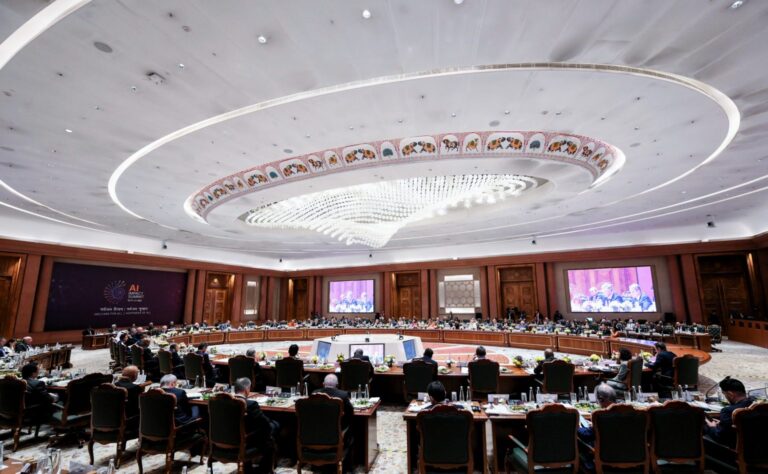
New Delhi: The AI Impact Summit 2026, held in New Delhi on 18–19 February, concluded with the adoption of the New Delhi Declaration on AI Impact, marking a significant milestone in global cooperation on artificial intelligence.

As on 21 February, 2026, 88 countries and international organisations had endorsed this declaration. Since then, 3 more countries – Bangladesh, Costa Rica and Guatemala have joined the declaration, taking the total number of signatories to 91 countries and organisations.

JNV Aglar Principal dies after collapsing at SBI branch in Awantipora

0

Srinagar, Feb 24:  Principal of Jawahar Navodaya Vidyalaya (JNV) Aglar in south Kashmir’s Shopian district, Kailash Chander (55), died after collapsing at a State Bank of India (SBI) branch in Awantipora on Tuesday, officials said.

An official told that Kailash was initially taken to Primary Health Centre (PHC) Awantipora and later referred to SMHS Hospital in Srinagar, where doctors declared him brought dead.

According to preliminary information, the deceased had lost consciousness inside the SBI branch in Awantipora. Further details are awaited. (KNC)