spot_imgspot_img
spot_img
Home Blog Page 109

HC Admits PIL on PSGA Implementation, Civil Society Calls It a Turning Point

0
TAUSEEF AHMAD
SRINAGAR, Feb 24: In what has been described as a significant constitutional moment in the journey toward accountable and citizen-centric governance, the Hon’ble High Court of Jammu and Kashmir and Ladakh has admitted and heard a Public Interest Litigation (PIL) seeking effective implementation of the Jammu and Kashmir Public Services Guarantee Act (PSGA), 2012. The Court has issued notice to the administration, a move that civil society groups say reinforces the constitutional mandate of transparency, accountability, and rule of law.
In a detailed joint statement, the J&K RTI Movement, Civil Society for Justice & Development (CSJD), Gujjar Bakerwal Youth Welfare Conference (GBYWC), Forest Rights Coalition J&K (FRC J&K), and Himalayan Pastoral Foundation expressed deep gratitude to the Hon’ble High Court for recognizing the urgency of ensuring that this historic legislation functions in both letter and spirit. The organizations stated that the admission and hearing of the PIL is not merely procedural, but a reaffirmation that constitutional institutions remain vigilant guardians of citizens’ statutory rights.
The signatories to the statement — Shameem Ahmed Shah, Junaid Andrabi, Adv. Naveed Bukhtiyar, Umer Ahmad, and Ghulam Mustafa Rahi — said they remain hopeful that the judicial process will lead to structured monitoring mechanisms, strict enforcement of penalty provisions, improved transparency, and proactive disclosure of service delivery data.
A Landmark Reform with Transformative Vision
The Jammu and Kashmir Public Services Guarantee Act was enacted in 2012 during the tenure of the Omar Abdullah-led government. It was considered a landmark governance reform aimed at guaranteeing time-bound delivery of public services. The Act institutionalized a transformative principle: that citizens are rights-holders entitled to services within prescribed timelines, not supplicants before bureaucratic systems.
However, the organizations emphasized that a law is only as strong as its implementation.
They recalled that the J&K RTI Movement, under the leadership of Dr. Shaikh Ghulam Rasool, was among the earliest civil society platforms to advocate for a time-bound service delivery framework in Jammu and Kashmir. At a time when administrative delays, file pendency, and lack of accountability had become normalized, the Movement consistently argued that transparency achieved through the Right to Information framework must be complemented by enforceable service guarantees. This sustained advocacy, they noted, contributed meaningfully to the public discourse that culminated in the passage of the PSGA in 2012.
Awareness, Monitoring, and Systemic Gaps
Following the enactment of the law, the Movement did not limit itself to symbolic celebration. Extensive awareness campaigns were conducted across districts to educate citizens, students, community leaders, and grassroots groups about their rights under the Act. Workshops, public interactions, and field-level engagements were organized to ensure that people understood how to apply for services, file appeals, and seek penalties in cases of delay.
Subsequently, numerous RTI applications were filed across departments to monitor implementation of the Act. These applications sought detailed information regarding notified services, prescribed timelines, penalty proceedings, awareness initiatives, inspection mechanisms, appellate performance, and compliance reporting.
According to the statement, the responses to these RTIs revealed concerning gaps. These included inconsistent enforcement of timelines, inadequate record-keeping, limited imposition of penalties, weak monitoring systems, and insufficient compliance mechanisms.
Despite repeated representations, constructive engagement, and sustained policy advocacy, tangible systemic reform remained limited in several sectors. After exhausting administrative remedies and democratic avenues of engagement, the organizations stated that judicial intervention became necessary to safeguard the integrity and purpose of the law. Accordingly, a PIL was filed before the Hon’ble High Court seeking structured monitoring, enforcement of accountability provisions, and effective implementation of the Act.
Statements from Civil Society Representatives
Shameem Ahmed Shah, Convenor of Civil Society for Justice & Development (CSJD), stated that effective implementation of the Act is essential to restore public trust in governance. He emphasized that timely service delivery is not an administrative luxury but a democratic obligation. Delays, he said, disproportionately harm the poor, marginalized, and rural populations who lack access to influence and resources.
Junaid Andrabi, Convenor of the J&K RTI Movement and Kissan Trade Union leader, emphasized that the journey — from advocating for the enactment of the law, to educating citizens, monitoring implementation through RTIs, conducting research and policy analysis, and finally approaching the judiciary — reflects a responsible and democratic approach to reform. He clarified that the objective is not confrontation but correction, not criticism but constructive accountability.
Adv. Naveed Bukhtiyar, Legal Head and General Secretary of the J&K RTI Movement, stated that without implementation, even the most rights-based and noble law becomes lifeless and redundant. A statute written on paper, he said, cannot transform society unless it is actively enforced and responsibly used. He observed that it becomes imperative for civil society to intervene at the policy level to ensure proper implementation. However, he added that a significant responsibility also rests upon the general public to use the law actively and wisely for redressal of grievances, to strengthen its spirit, to hold officials accountable, to curb red-tapism, and above all, to participate meaningfully in improving the service delivery system. He described this as the true essence of participatory democracy.
Umer Ahmad, representing the Himalayan Pastoral Foundation, observed that the Hon’ble High Court’s decision to admit and hear the matter is a welcome and progressive step. By exercising its constitutional authority, he said, the Court has reinforced the principle that governance must remain accountable to the people. He added that the judicial intervention strengthens democratic oversight and affirms that no law should remain dormant when citizens’ rights are at stake.
Ghulam Mustafa Rahi of the Gujjar Bakerwal Youth Welfare Conference (GBYWC) highlighted that nomadic and tribal communities often face disproportionate challenges in accessing certificates, revenue documents, and essential government services. For these communities, he emphasized, time-bound delivery is not a technical issue but a matter of dignity, inclusion, and equal citizenship.
Collective Reaffirmation
Collectively, the organizations reaffirmed that the Public Services Guarantee Act remains one of the most progressive governance reforms in Jammu and Kashmir’s recent history. Its effective implementation, they stated, can significantly reduce corruption, minimize discretionary delays, strengthen administrative efficiency, institutionalize accountability, and enhance citizen satisfaction.
They once again extended heartfelt appreciation to the Hon’ble High Court for accepting and hearing the crucial matter. The coalition expressed hope that the judicial process will result in structured monitoring mechanisms, strict enforcement of penalty provisions, improved transparency, and proactive disclosure of service delivery data.
“The ultimate goal is simple yet profound,” the statement concluded, “a governance system where citizens receive their rightful services on time, without repeated visits, without influence, and without uncertainty.”
The organizations reaffirmed their continued commitment to constructive engagement, democratic reform, and participatory governance, stating that accountable administration is not merely an aspiration but achievable through collective civic will and institutional integrity.

J-K opt to bat against Karnataka in maiden Ranji Trophy final

0

Hubballi, Feb 24: Jammu and Kashmir opted to bat against Karnataka in their maiden Ranji Trophy final here on Tuesday.

Karnataka made no changes to their playing eleven from the last game while Jammu and Kashmir brought in Sahil Lotra and Qamran Iqbal at the expense of Shubham Khajuria and Vivrant Sharma.

Karnataka: KL Rahul, Mayank Agarwal, Devdutt Padikkal(c), Karun Nair, Smaran Ravichandran, Shreyas Gopal, Kruthik Krishna(w), Vidyadhar Patil, Vijaykumar Vyshak, Shikhar Shetty, Prasidh Krishna.

Jammu and Kashmir: Qamran Iqbal, Yawer Hassan, Shubham Pundir, Paras Dogra(c), Abdul Samad, Kanhaiya Wadhawan(w), Abid Mushtaq, Auqib Nabi Dar, Yudhvir Singh Charak, Sahil Lotra, Sunil Kumar.

At the time of filing this report, J&K were 68 for the loss of one wicket in 23 overs.

‘Israel Group’ of Jaish neutralised after 18-month operation in J&K: IGP Jammu

0

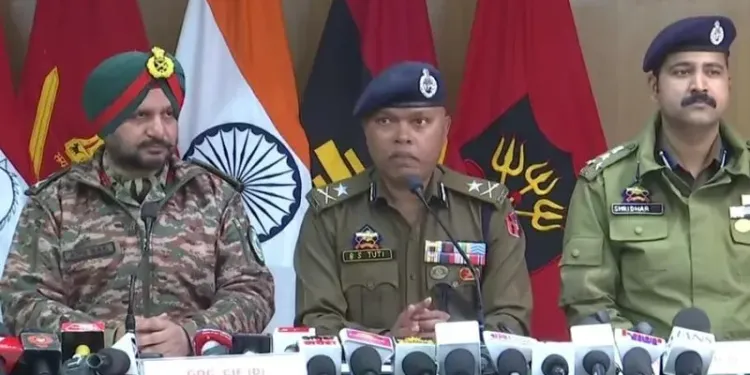
Jammu, Feb 23: Inspector General of Police (Jammu Zone) Bhim Sen Tuti said on Monday that in a joint operation, security forces have neutralised a seven-member Jaish-e-Mohammed (JeM) terror module, dubbed the “Israel Group”, bringing an end to a year-and-a-half-long operation in the Kishtwar belt of Jammu and Kashmir.

Three members of the module, including its self-styled commander, Saifullah, were killed in an encounter with the security forces in Kishtwar district on Sunday.

“The group of seven JeM terrorists had infiltrated into Indian territory in April 2024. Since then, this group was engaged on 17 different occasions. Over the last year and a half, we have successfully neutralised all of them. Sunday marked the culmination of this year-and-a-half-long operation,” the IGP told reporters at Kishtwar.

Describing the module as a “hardcore terrorist group”, he said, “The group was known as the Israel Group. It was a hardcore terrorist module that inflicted significant damage on security forces and also caused harm to civilians.”

Tuti said acting on precise intelligence, the last three members of the group, including Saifullah, were neutralised in the Chatroo area of Kishtwar.

The IGP asserted that the campaign against terror would continue.

“This operation will continue. Our pursuit is long and in the coming time, we expect more successful operations. This fight will continue until the entire terror network is completely dismantled,” he said.

Meanwhile, General Officer Commanding (GOC) of Counter-Insurgency Force Delta, Major General A P S Bal, issued a stern warning to anti-national elements, saying they would be identified and neutralised wherever they are.

“My message to anti-national elements is clear — anyone who is an enemy of the nation, wherever they may be and in whatever form, will be identified, targeted and neutralised,” he told reporters in Kishtwar.

The officer asserted that intelligence-based operations would continue with sustained momentum.

“To the Awam, I want to say — no matter how grave the challenges are, our courage will never diminish. Whatever we have achieved has been possible because of the support of every single person in the region,” he said.

The GOC said recent successes in anti-terror operations are the results of months of sustained and coordinated efforts by security forces. “We have been collectively working on this for months. Despite challenges of terrain, rain, snowfall and landslides, operations were carried out relentlessly,” he said.

The GOC highlighted the extraordinary coordination among the Army, Jammu and Kashmir Police (JKP) and Central Reserve Police Force (CRPF), stating that seamless collaboration at every level ensured operational success even in confined and rugged areas.

“We were conscious that such prolonged operations can lead to fatigue among the troops. Therefore, we had planned in a manner that ensured adequate rotation of forces. We always had sufficient troops in the reserve — either to be air-dropped by helicopters or to move on foot across extremely difficult terrain. Sometimes it would take six to eight hours to reach a location, but we ensured that we got there.”

The JeM module was under pursuit since April-May last year. Three of its members — all hardcore terrorists — were eliminated in April 2025, while the remaining members – including Saifullah, Adil and two others — were on the run, the GOC said.

Based on intelligence inputs from police, the Intelligence Bureau (IB) and other sources, a joint counter-terrorist operation, codenamed Operation Trashi-I, was launched on January 14 in the Chhatroo area by CIF Delta troops under the aegis of White Knight Corps. Contact with the terrorists was established on January 18 and their well-stocked hideout was busted, the GOC added.

Relentless pursuit led to the elimination of one terrorist, codenamed Adil, on February 4, he said.

The security forces re-engaged the remaining terrorists at around 11 am on February 22. The final encounter site, located on steep mountain slopes, was cordoned off on the intervening night of February 21 and 22. In the ensuing operation, the three hardcore terrorists were eliminated, completing the dismantling of the group, the GOC said.

He said the large-scale operation showcased high tactical precision, real-time drone surveillance, the use of night-vision equipment and swift mobilisation of reinforcements, including special forces. He added that despite harsh weather and challenging terrain, there was no casualty among the security personnel.

Major General Bal also made a special mention of Army-trained dog Tyson, who was injured after the terrorists opened fire. Tyson was deployed to verify the presence of the ultras inside the “dhok” (hut).

“The injured elite German Shepherd, who was the first to charge at the terrorist hideout and sustained a bullet injury in the exchange of fire, was immediately airlifted for medical treatment and is reported to be safe and stable,” an official said.

During the search operations, war-like stores, including three AK-47 rifles, were seized.

The operations were conducted on both extremes of the area of responsibility – one in the Udhampur sector and the other in the Kishtwar sector.

The IGP said action would be taken against those who supported the terrorists.

“Those who provided shelter and support to this group will soon see decisive action against them as well. In the coming days, you will witness how firmly we act against their collaborators,” he said, adding that the efforts to dismantle the terror ecosystem would be intensified.

“More operations are in the pipeline and you will see the results for yourselves,” he said.

The IGP said there are only three local terrorists in Kishtwar district now. “These are the same three individuals who have been active in the region for nearly two decades. During 2018, 2019 and 2020, some new recruits had joined terror ranks, but all of them have been neutralised,” he added.

Tuti appreciated the public support for the success of the operations. “I believe the society is not supporting them. Otherwise, such successful operations would not have been possible. Most of the intelligence inputs we receive come through civilians. The public stands with us, the public stands with India and these terrorists will never succeed in their nefarious designs,” he asserted.

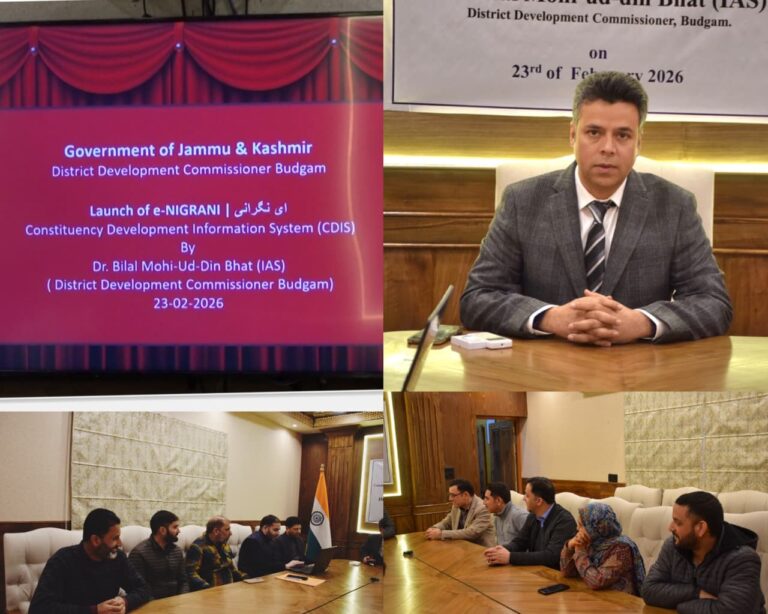
DC Budgam Launches ‘e-Nigrani App’-Constituency Development Management Information System (CDMIS)for Real-Time Monitoring of Development Works Across District

0

Says Digital Platform to Strengthen Coordination Between Legislators and District Administration

Budgam, February 23:The Deputy Commissioner (DC) Budgam, Dr. Bilal Mohi-Ud-Din Bhat, IAS, today launched the ‘e-Nigrani App’, a Constituency Development Management Information System (CDMIS), developed for effective management and real-time monitoring of development projects across the Assembly Constituencies of District Budgam.
The ‘e-Nigrani App’ (CDMIS) has been conceptualized as a dedicated digital portal to streamline tracking, supervision, and reporting of constituency-level developmental works. The system aims to establish stronger coordination between Government officials and Legislators, ensuring efficient execution and timely completion of projects.
On the occasion, the DC said that the digital platform has been introduced to bring greater transparency and accountability in implementation of developmental works. Through this system, Legislators will be enabled to monitor ongoing projects in their respective Assembly Constituencies in a structured and systematic manner.
The DC further informed that the portal has been designed to collect, compile, and securely store detailed information related to development projects, including project descriptions, funding sources, implementing agencies, timelines, financial allocations, and progress reports. Real-time monitoring features have been incorporated into the system to facilitate continuous oversight and minimize delays.
It was highlighted that the CDMIS-based ‘e-Nigrani App’ will streamline communication between departments and public representatives, promote better planning, and support data-driven decision-making. The platform is expected to significantly enhance transparency in project implementation and strengthen institutional monitoring mechanisms across the district.
“With the launch of the ‘e-Nigrani App’, District Budgam has taken another step towards technology-driven governance and efficient delivery of developmental initiatives,” said the DC.
The launch ceremony was attended by the Additional Deputy Commissioner (ADC) Budgam, Chief Planning Officer (CPO) Budgam, Assistant Commissioner Revenue (ACR), all Sub-Divisional Magistrates (SDMs), Executive Engineer R&B, District Informatics Officer (DIO) NIC, and other senior district officers of the district.

DC Budgam Inaugurates Hybrid Learning System at BHSS Kanir; Delivers Inaugural Lecture on Periodic Table & Semiconductors

0

Says Push for Technology-Enabled Education Gains Momentum in the District
15+ Schools Digitally Connected as Budgam Adopts Hub-and-Spoke Smart Learning Model: DC budgam

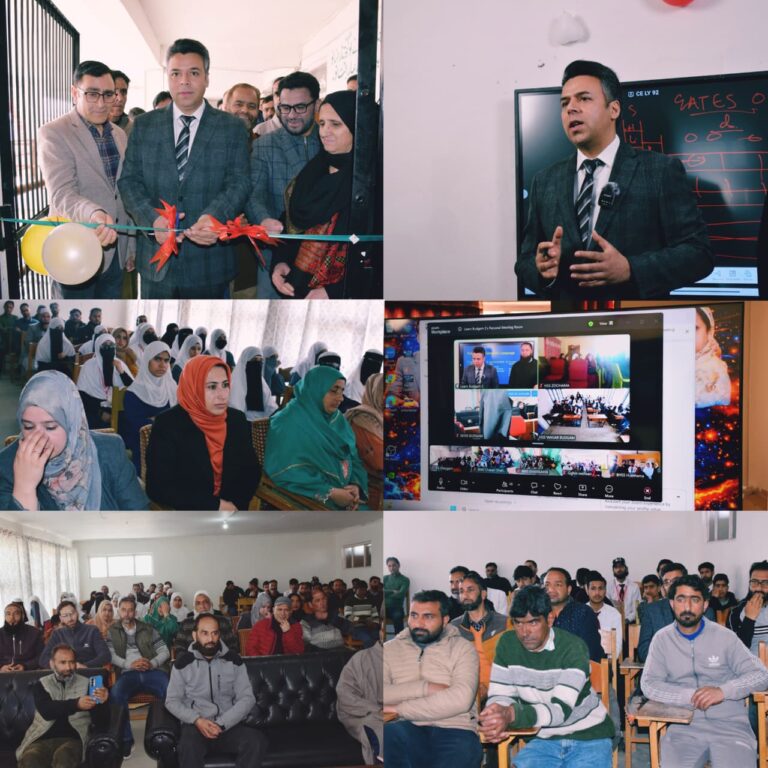
Budgam, February 23: The Deputy Commissioner (DC) Budgam, Dr. Bilal Mohi-Ud-Din Bhat (IAS), today inaugurated the newly installed Hybrid Learning System at Boys Higher Secondary School (BHSS) Kanir, marking a significant milestone in the district’s mission to strengthen technology-enabled and inclusive education.
On the occasion, the DC also delivered an inaugural academic lecture to the students of BHSS Kanir on the Periodic Table and Semiconductors, highlighting the importance of scientific temperament and conceptual clarity in foundational subjects. The session, conducted through the hybrid platform, demonstrated the practical utility of the system in enabling high-quality, interactive learning.
The inauguration ceremony was attended by the Chief Planning Officer, the Chief Education Officer, along with other officials and faculty members.
The hybrid learning initiative represents a transformative step towards modernization of the education sector in Budgam. With the launch of this system, more than 15 schools across the district have been successfully connected through an innovative digital platform. Additionally, 55 ICT laboratories established in various schools have been integrated with the hybrid smart classroom learning system, substantially enhancing the district’s digital education infrastructure.
The Hybrid Learning System operates on a Hub-and-Spoke model, wherein centralized studios (Hubs) equipped with advanced digital infrastructure enable subject experts and best-performing teachers to deliver live lectures. These lectures are relayed in real time to connect schools with a two-way communication interface, allowing students to interact directly with teachers, ask questions, and actively participate in discussions. This model ensures optimal utilization of expert faculty and equitable academic access across geographically dispersed institutions.
During the visit, the DC interacted with students both virtually through the hybrid interface and physically with those present on campus. Students enthusiastically shared their experiences, aspirations, and feedback regarding the new system. Their confidence and adaptability to modern educational tools were widely appreciated.
On the occasion, the DC stated that integration of technology into the education system is being actively pursued to ensure that no student is left behind due to geographical or infrastructural limitations. He emphasized that access to quality education is a fundamental pillar of inclusive development, and the administration remains committed to bridging learning gaps through innovative and sustainable interventions.
The DC observed that the hybrid model has been envisioned as a scalable and sustainable solution to promote academic collaboration among schools. He highlighted that through this platform, subject experts can simultaneously deliver lectures to multiple institutions, thereby optimizing resources, improving academic outreach, and ensuring uniform quality standards.
To ensure measurable academic progress, a Learning Management System (LMS) software has also been integrated with the hybrid platform. The LMS will facilitate monitoring of attendance, tracking of lesson delivery, assessment of student performance, and measurement of learning outcomes through structured digital evaluation tools, thereby strengthening accountability and outcome-based education.
The DC underscored the importance of effective utilization of digital infrastructure and impressed upon the concerned authorities the need for regular monitoring, teacher training, and capacity building to fully realize the platform’s potential. He directed that periodic evaluations be conducted to assess operational efficiency and measurable academic impact.
He further stated that continuity of education, particularly during challenging circumstances, remains a priority for the district administration. The hybrid setup was described as a proactive and resilient mechanism designed to safeguard uninterrupted learning while building a future-ready education ecosystem.
The DC reiterated that sustained efforts are being made to create an educational environment where innovation, inclusivity, and quality go hand in hand, equipping students with the necessary skills and opportunities to thrive in an increasingly digital and competitive world.
Speaking on the occasion, the Principal of BHSS Kanir expressed heartfelt gratitude to the Deputy Commissioner for facilitating the installation of the Hybrid Learning System and for delivering an inspiring academic lecture to the students.
The District Administration Budgam remains steadfast in its commitment to harness technology for transforming the educational landscape of the district and ensuring that every student benefits from modern, accessible, and outcome-driven learning opportunities.

Sports reflect J&K’s identity, national unity: LG Sinha at Khelo India Winter Games in Gulmarg

0

*Says sports connect every citizen, inspire individuals to build strong character*

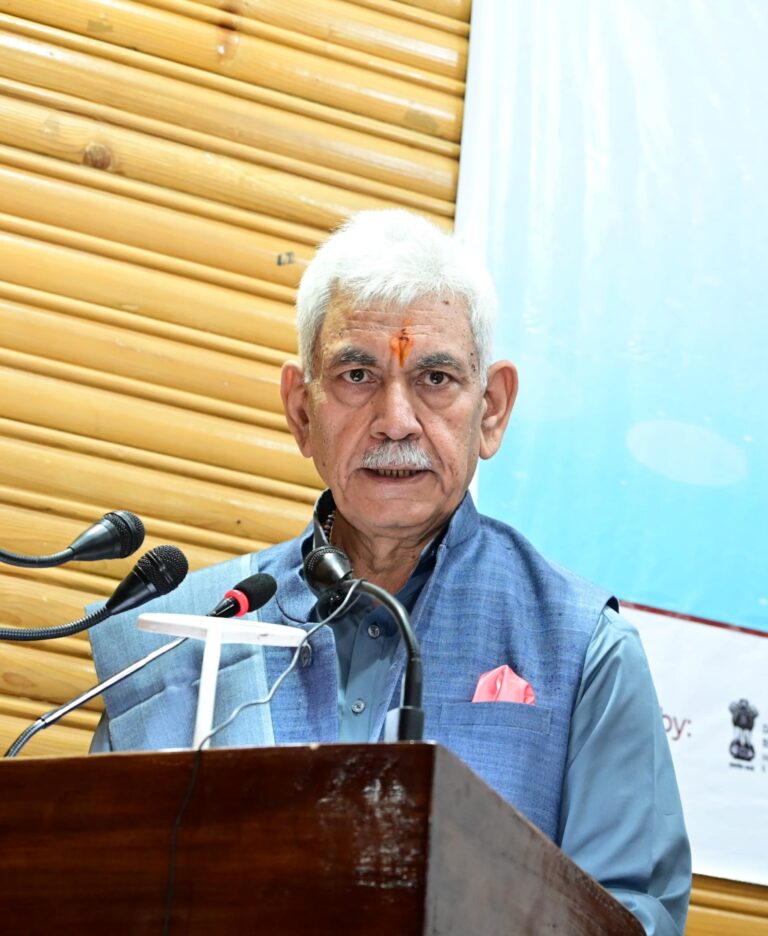
Gulmarg, Feb 23: Terming Khelo India Winter Games (KIWG) as the reflection of Jammu and Kashmir’s identity, Lieutenant Governor Manoj Sinha on Monday said sports connect every citizen and inspire individuals to build a strong character and discipline.

Addressing a ceremony of the sixth edition of KIWG-2026 here in North Kashmir, LG Sinha, said that sports reflect Jammu and Kashmir’s identity and the spirit of national unity.

“It is a happy coincidence that the Winter Wanchit festival concluded on February 22 and today we are commencing the Khelo India Winter Games here. This is not merely an event but a reflection of Jammu and Kashmir’s identity in sports, national unity and the creative power of sports, especially for our youth,” he said.

Welcoming the athletes, coaches, managers and sports enthusiasts present on the occasion, LG Sinha extended his best wishes to all participants. “This is not just a competition but is gradually transforming into a national festival with everyone’s support,” he said.

Highlighting the progress in the sports sector over the past few years, the LG said Jammu and Kashmir has witnessed remarkable development, with significant support from the Union Ministry of Youth Affairs and Sports and under the leadership of Prime Minister Narendra Modi.

He said the expansion of Khelo India Centres has played a major role in strengthening sports infrastructure in the region.

He credited the youth of J&K for their dedication and talent, along with the relentless efforts of officials, for the successful organisation of the Games.

Extending a warm welcome to skiers from across the country, the LG said they are not just athletes but honoured guests of Jammu and Kashmir. “The people of J&K wholeheartedly welcome you and wish that you experience not just competition but also the tradition and dignity of this paradise on earth,” he said.

Referring to the ski slopes of Gulmarg, LG Sinha said the competitions held here symbolise not only sporting excellence but also courage, determination and self-confidence of the participants.—(KNO)

PSA case of Mehraj Malik: Arguments concluded, judgment reserved

0

Srinagar, Feb 23: The hearing in the Public Safety Act (PSA) case of MLA Mehraj Malik was conducted today as per the scheduled date, an official said.

Sources said that during the proceedings, arguments from both sides were completed.

After hearing detailed submissions, the court reserved its judgment in the matter.

The court has granted one week’s time to the concerned parties for the submission of any written synopsis or additional documents, if they wish to file the same.

The case now awaits the final verdict, which is expected after the completion of the stipulated period.

It is important to mention, Mehraj Malik was detained under the Public Safety Act (PSA), a law that allows preventive detention in Jammu and Kashmir on grounds related to security and public order. Following his detention, the matter was challenged before the court, seeking relief and questioning the grounds of detention.

Notably, the case has since been under judicial consideration, leading to the present stage where arguments have been concluded and judgment reserved. Further updates will follow as the matter progresses.— KNC

Voices of India Unite at Sahitya Akademi’s Multilingual Poets’ Meet

0

Kashmiri poet Ravinder Kaul ‘Ravi’ mesmerises audience with poem on the beauty of valley snowfall

VINOD BHAT

NEW DELHI, Feb 22: Celebrating the linguistic diversity and literary richness of the nation, the Sahitya Akademi organized a grand Multilingual Poets’ Meet on the occasion of International Mother Language Day on February 21, 2026, at its Conference Hall in New Delhi. The event brought together eminent poets representing a wide spectrum of Indian languages, reaffirming the Akademi’s commitment to preserving and promoting the country’s vibrant literary heritage.
The programme was chaired by noted Hindi writer and Sahitya Akademi Bal Sahitya Puraskar awardee Divik Ramesh, who opened the session by congratulating participants and highlighting the significance of mother tongues in shaping cultural identity. Quoting lines from Bharatendu Harishchandra, often regarded as the father of modern Hindi literature, he underlined the importance of nurturing one’s own language as a pillar of intellectual and emotional expression.
At the outset, the gathering paid homage to recently deceased literary figures. The audience was informed about the sad demise of Taren Boro, Convener of the Bodo Advisory Board; eminent Bengali writer Mani Shankar Mukhopadhyay, popularly known as Shankar; and Devendra Kumar, distinguished Hindi writer and Sahitya Akademi Bal Sahitya Puraskar awardee. A minute’s silence was observed in their memory, lending a solemn note to the otherwise celebratory occasion.
The poets’ meet unfolded as a rich tapestry of languages and themes. Ratnottama Das, an eminent Assamese poet, recited her poem “I Was Fine As I Was” in Assamese, followed by its English rendition. Kaushik Sen presented Bengali poems, including a sharp political satire. Kiran Boro, representing Bodo literature, recited “Hamara Desh Bharat” and “Chandni Ke Munh Par Kale Daag,” which were later rendered in Hindi translation.
Dogri poet Kajal Suri captivated listeners with “Meri Sannate Di Kavita,” “Suno,” and “Amrod Da Boota.” Amlanjyoti Goswami presented English poems including “Mother,” “My Father Searched For A Poem,” and “Grandfather’s Postcard,” along with one of his Assamese works.
Gujarati poet Bhagyendra Patel delivered a moving poem depicting the agony of a sparrow injured by a kite’s sharp thread during the Uttarayan festival. Kannada poet Ramesh Aroli recited a poignant poem about the plight of a three-year-old boy arrested with his family in Zimbabwe and also sang a song reflecting on the impact of mobile phones in the modern world.
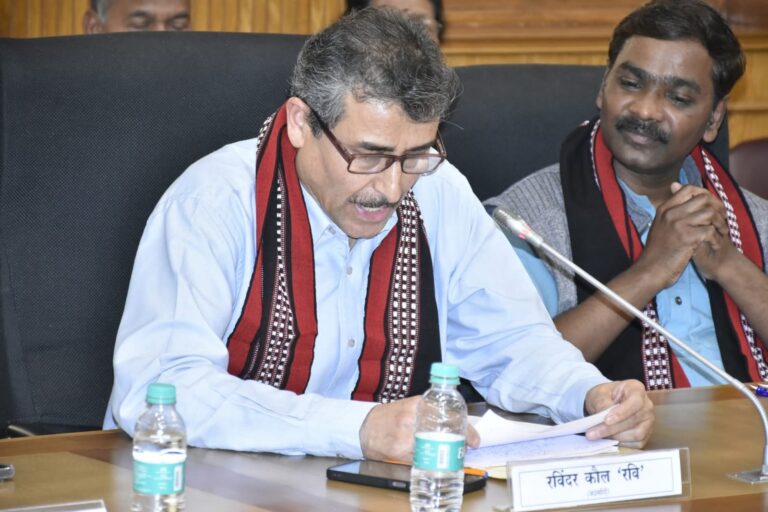
Among the highlights of the evening was the recital by Kashmiri poet Ravinder Kaul ‘Ravi’, who presented a poem in Kashmiri celebrating the serene beauty of snowfall in the Valley. His evocative verses painted vivid imagery of winter landscapes, resonating deeply with the audience and adding a distinct Himalayan flavour to the multilingual gathering.
Konkan poet Lilesh V. Kudalkar recited a poem commemorating Konkani attaining the status of a State language. Maithili poet Nivedita Jha presented a poem on forest fires and their consequences, followed by its Hindi translation. Malayalam poet Sindhu Suresh rendered a lyrical composition titled “Silent Houses,” while Manipuri poet Misna Chanu recited poems from an anthology of world mother tongues.
Marathi poet Jeevan Prakash Talegaonkar recited his poems “Bapu” and “Ram Hamare,” and Nepali poet Harka Bahadur Lamgade presented “Udhar Ka Yauvan.”
The second session continued the celebration of linguistic plurality. Biraja Mahapatra recited an Odia poem on the current political situation and another on the sufferings of immigrants in cities. Punjabi poet Akramal Kaur presented a ghazal emphasizing the importance of language and recited “Keedi Ka Aata.” Sanskrit poet Pramod Kumar Sharma offered a poem dedicated to Prime Minister Narendra Modi in Sanskrit.
Santali poet Sarojini Besha recited “Matru Bhasha” and “Meri Pehchan,” followed by Hindi translations. Sindhi poet Mohini Hingorani presented short poems addressing contemporary issues and human emotions. Tamil poet Vinitha S. R. recited “The Death” and “The Venom” in Tamil, with English translations. Telugu poet Dattaiah Attem spoke on the theme of mother tongue and also rendered his poem in English translation.
Urdu poet Moien Shadab recited couplets and a ghazal, while Divik Ramesh concluded the programme by quoting Kedarnath Singh’s celebrated poem “Matrubhasha” and presenting one of his own compositions.
The event was conducted by N. Suresh Babu, Deputy Secretary of Sahitya Akademi, who extended a vote of thanks on behalf of Secretary Ms. Pallavi Prashant Holkar.
The Multilingual Poets’ Meet stood as a vibrant tribute to India’s linguistic mosaic, reinforcing the message that every mother tongue carries within it the soul of its people. Through poetry that ranged from political reflection and social commentary to personal memory and natural beauty, the evening affirmed that India’s unity thrives in its diversity of voices.

Sat Sharma Marks 1994 PoJK Resolution Anniversary, Urges Unity for Justice to ‘Forgotten’ Families Across LoC

0

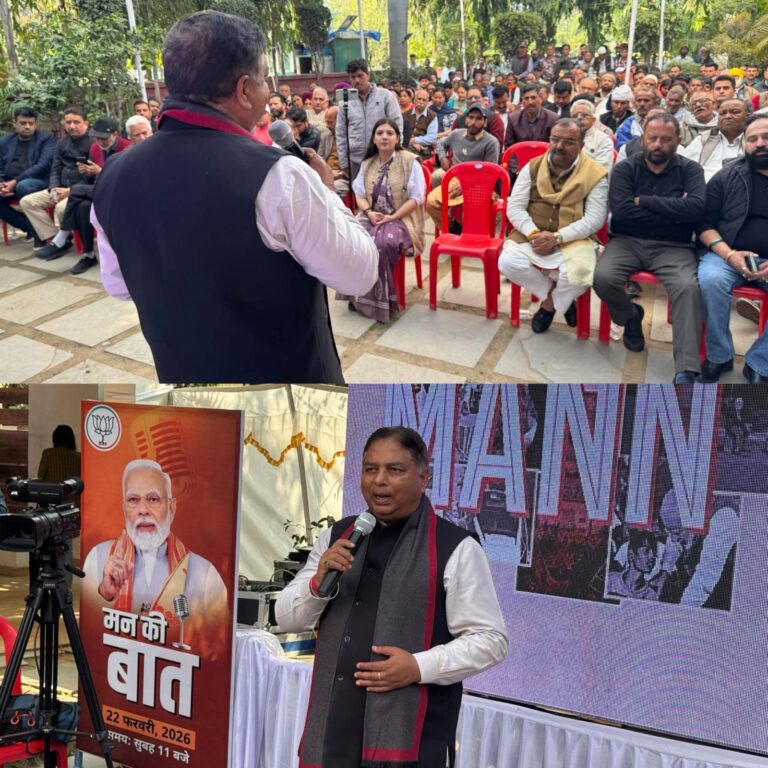
Jammu, 22 February:On the 32nd anniversary of Parliament’s historic resolution affirming Jammu and Kashmir’s complete integration with India, senior BJP leader and Jammu MP Sat Sharma today renewed the call for justice to the people of Pakistan-occupied Jammu and Kashmir (PoJK), describing their suffering as a direct result of past political betrayals.

Speaking at a gathering in Jammu, Sharma said many families in PoJK still live with deep hope and pain. “There is a dire need to give justice to those old ladies who still make two extra chapatis every night, waiting for the Indian Army to liberate them from atrocities and the clutches of illegal occupation by the ISI and Pakistan,” he told the gathering.
The February 22, 1994, resolution—passed unanimously by both Houses of Parliament—declared that the entire state of Jammu and Kashmir, including territories under Pakistani control since 1947, is an “integral part of India.” It demanded Pakistan vacate the illegally occupied areas, condemned the ethnic cleansing of Kashmiri Pandits, and rejected any dilution of India’s sovereignty in the face of continued cross-border terrorism sponsored from across the border.

Sharma recalled how certain Kashmir-based leaders and the Congress leadership in Delhi at the time played a role in keeping these regions separated from the rest of Bharat. He appealed to Kashmiris and Dogras on the Indian side to stand in solidarity with their brethren in PoJK, many of whom continue to raise the slogan “Maharaja Gulab Singh Amar Rahe” as a symbol of their enduring connection to the larger Indian identity.

The remarks come against the backdrop of repeated waves of public anger in PoJK. In May 2024, protests erupted over inflated electricity tariffs and the withdrawal of wheat subsidies, turning violent and leaving several people dead. The unrest peaked again in late September–early October 2025 when the Jammu Kashmir Joint Awami Action Committee (JKJAAC) led a massive shutdown and wheel-jam strike across Muzaffarabad, Mirpur, Rawalakot, Kotli, and other towns.

The protesters presented a charter of up to 39 demands, including affordable electricity (despite PoJK generating a large share of Pakistan’s hydropower), subsidised food grains, improved roads, healthcare, education, and greater local control over resources. Security forces responded with force: at least nine people (civilians and police) were killed, more than 200 injured, mobile and internet services suspended, and large parts of the region placed under lockdown. An agreement was eventually signed on October 4, 2025, promising a 25-point package of relief and reforms to be implemented within 90 days. However, reports in early 2026 suggest significant delays, sparking fresh disappointment and sporadic protests.

Beyond economic grievances, residents of PoJK routinely face arbitrary arrests, enforced disappearances, custodial torture, discrimination against religious minorities (particularly Ahmadis and Shias), sectarian violence, severe curbs on freedom of expression, harassment of journalists, and misuse of anti-terror laws. Women and children have reported instances of sexual violence and forced recruitment into militant outfits, adding layers of trauma to daily life.

Sat Sharma’s statement reflects a growing sentiment that the time has come for stronger solidarity. With youth-led actions continuing in PoJK—especially against failing education systems, ongoing disappearances, and systemic neglect—the demand for justice and eventual reunion appears to be gaining momentum.

CISF Coastal Cyclothon Ends at Kochi After 6,553-km Unity Ride

0

VINOD BHAT

KOCHI, Feb 22: The 25-day-long CISF Vande Mataram Coastal Cyclothon–2026 culminated in a grand and emotionally charged ceremony at Kochi on Saturday, marking the successful completion of a 6,553-kilometre journey across India’s eastern and western coastlines. The nationwide outreach initiative, which began on January 28, evolved into a powerful movement connecting coastal communities with the message of unity, vigilance and national resolve.

The valedictory function was graced by Hon’ble Shri Bandi Sanjay Kumar, Minister of State for Home Affairs, and Shri Praveer Ranjan, Director General, CISF, along with senior officers of the Force. The event witnessed participation from prominent personalities from the film and sports fraternity, including Malayalam actors Shri Jayasurya, Shri Major Ravi and Shri Vijay Babu, actresses Miss Prayaga Martin and Miss Manasa Radhakrishnan, former footballer and Padma Shri Arjuna awardee Shri I.M. Vijayan, Indian badminton coach Shri Joy T Antony and noted music composer Shri Rathish Vega.
Flagged off virtually from New Delhi by the Minister of State for Home Affairs, the Cyclothon travelled through nine States and two Union Territories, linking historic ports, bustling industrial hubs, fishing villages and tourist beaches. Held under the unifying theme “Surakshit Tat, Samridh Bharat” (Secure Coasts, Prosperous India), the initiative commemorated 150 years of the iconic national song Vande Mataram and sought to embed the ideals of unity, collective responsibility and participative security among citizens.

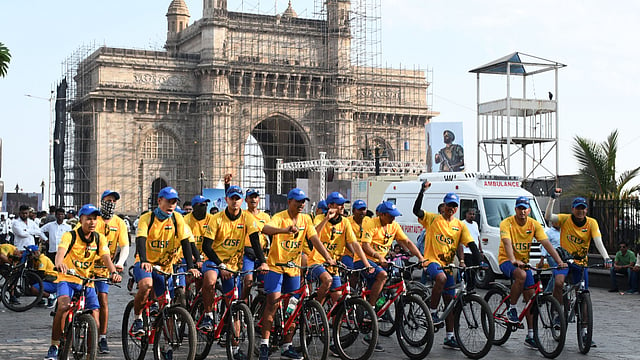
Over the course of the expedition, 130 CISF cyclists, including a historic 50 per cent women contingent, pedalled not just across challenging terrain but deep into the social fabric of coastal India. From Lakhpat Fort in Gujarat to Bakkhali in West Bengal, passing through Mumbai’s Gateway of India, Goa’s shores, Karnataka’s New Mangalore Port, Odisha’s coastal belt and Tamil Nadu’s southern maritime stretches, the Cyclothon underscored the strategic and economic importance of India’s 7,500-kilometre coastline. With over 250 ports handling nearly 95 per cent of India’s trade by volume, the message was clear: coastal security is integral to economic prosperity and national resilience.

Throughout the journey, the cyclists engaged communities on pressing maritime threats such as narcotics trafficking, arms smuggling and infiltration, reinforcing the need for community vigilance as the first line of defence. In 52 carefully selected coastal villages, CISF personnel halted overnight, lived among residents and held open dialogues with fishermen, elders, youth groups and women’s self-help collectives. These engagements were marked by sincere discussions on livelihood challenges, environmental concerns, maritime risks and developmental aspirations.

Significantly, these 52 villages have now been formally adopted for year-long sustained engagement. With support from key stakeholders, including ONGC and port authorities through Corporate Social Responsibility initiatives, structured programmes will focus on rural sports promotion, fitness and wellness camps, recruitment awareness and career guidance sessions, Swachh Bharat drives, plantation campaigns, awareness and facilitation of government welfare schemes, and school infrastructure support including distribution of educational kits.
CISF’s 47 coastal units will spearhead this long-term outreach drive to ensure continuity beyond the Cyclothon and transform awareness into enduring partnership.

Youth participation emerged as the strongest pillar of the movement. NCC cadets, school students and local sports clubs joined the cyclists in rallies and interactive sessions on maritime vigilance and national development. Recruitment awareness programmes demystified opportunities in uniformed services, while sports activities—from volleyball and football to tug-of-war—fostered camaraderie between CISF personnel and rural youth. The distribution of sports kits and school supplies added tangible value to the outreach, with many young participants experiencing their first direct engagement with a national security force.

The 50 per cent women participation in the cycling contingent stood out as a powerful symbol of change and empowerment. From Gujarat’s coastal settlements to Karnataka’s fishing hamlets and Tamil Nadu’s southern shores, the sight of women cyclists in uniform inspired admiration and aspiration.

Discussions on Beti Bachao Beti Padhao, girls’ education and women’s participation in nation-building resonated strongly in village interactions. Women’s self-help groups shared entrepreneurial journeys, linking economic empowerment with social security and dignity.
The Cyclothon also reaffirmed the central role of fishermen as ‘Tat Praharis’—natural sentinels of the coast. Interactive sessions at fishing docks highlighted how local vigilance can deter smuggling and suspicious maritime activity. Fishermen, panchayat leaders and youth forums pledged to act as responsible coastal guardians committed to protecting both livelihood and nation.

Environmental stewardship formed another key pillar of the initiative. Beach clean-ups, plantation drives and Swachh Bharat activities were conducted at multiple locations, reinforcing that secure and clean coasts are fundamental to tourism, fisheries and sustainable growth. Fitness demonstrations, martial arts displays and public cycling events amplified the message of discipline and resilience—values central to both national security and youth development.

The Kochi finale brought together representatives of coastal communities, youth groups, women’s collectives, sister security agencies, industry stakeholders and civil administration on a shared platform. Cultural performances, patriotic renditions of Vande Mataram and public pledges of vigilance marked the symbolic culmination of a journey that transcended geography.

Addressing the gathering, DG CISF Shri Praveer Ranjan remarked that the Cyclothon represented the emergence of a confident and aware coastal India. He emphasised that when young girls see women in uniform leading from the front and students cycle alongside security personnel, security transforms from a distant concept into a shared aspiration.

The Cyclothon, he noted, was not an endpoint but the beginning of a structured outreach framework aligning maritime security with citizen participation.

As the cyclists symbolically handed over the baton of vigilance to coastal communities at Kochi, the message resonated strongly: secure coasts are not built by forces alone, but by united citizens committed to safeguarding the nation’s maritime frontiers.