spot_imgspot_img
spot_img
Home Blog Page 110

CISF Coastal Cyclothon Ends at Kochi After 6,553-km Unity Ride

0

VINOD BHAT

KOCHI, Feb 22: The 25-day-long CISF Vande Mataram Coastal Cyclothon–2026 culminated in a grand and emotionally charged ceremony at Kochi on Saturday, marking the successful completion of a 6,553-kilometre journey across India’s eastern and western coastlines. The nationwide outreach initiative, which began on January 28, evolved into a powerful movement connecting coastal communities with the message of unity, vigilance and national resolve.

The valedictory function was graced by Hon’ble Shri Bandi Sanjay Kumar, Minister of State for Home Affairs, and Shri Praveer Ranjan, Director General, CISF, along with senior officers of the Force. The event witnessed participation from prominent personalities from the film and sports fraternity, including Malayalam actors Shri Jayasurya, Shri Major Ravi and Shri Vijay Babu, actresses Miss Prayaga Martin and Miss Manasa Radhakrishnan, former footballer and Padma Shri Arjuna awardee Shri I.M. Vijayan, Indian badminton coach Shri Joy T Antony and noted music composer Shri Rathish Vega.
Flagged off virtually from New Delhi by the Minister of State for Home Affairs, the Cyclothon travelled through nine States and two Union Territories, linking historic ports, bustling industrial hubs, fishing villages and tourist beaches. Held under the unifying theme “Surakshit Tat, Samridh Bharat” (Secure Coasts, Prosperous India), the initiative commemorated 150 years of the iconic national song Vande Mataram and sought to embed the ideals of unity, collective responsibility and participative security among citizens.

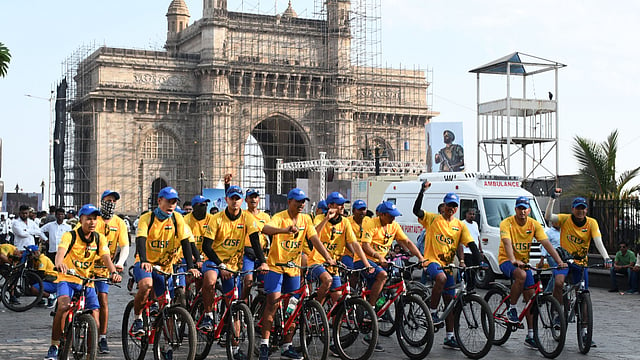
Over the course of the expedition, 130 CISF cyclists, including a historic 50 per cent women contingent, pedalled not just across challenging terrain but deep into the social fabric of coastal India. From Lakhpat Fort in Gujarat to Bakkhali in West Bengal, passing through Mumbai’s Gateway of India, Goa’s shores, Karnataka’s New Mangalore Port, Odisha’s coastal belt and Tamil Nadu’s southern maritime stretches, the Cyclothon underscored the strategic and economic importance of India’s 7,500-kilometre coastline. With over 250 ports handling nearly 95 per cent of India’s trade by volume, the message was clear: coastal security is integral to economic prosperity and national resilience.

Throughout the journey, the cyclists engaged communities on pressing maritime threats such as narcotics trafficking, arms smuggling and infiltration, reinforcing the need for community vigilance as the first line of defence. In 52 carefully selected coastal villages, CISF personnel halted overnight, lived among residents and held open dialogues with fishermen, elders, youth groups and women’s self-help collectives. These engagements were marked by sincere discussions on livelihood challenges, environmental concerns, maritime risks and developmental aspirations.

Significantly, these 52 villages have now been formally adopted for year-long sustained engagement. With support from key stakeholders, including ONGC and port authorities through Corporate Social Responsibility initiatives, structured programmes will focus on rural sports promotion, fitness and wellness camps, recruitment awareness and career guidance sessions, Swachh Bharat drives, plantation campaigns, awareness and facilitation of government welfare schemes, and school infrastructure support including distribution of educational kits.
CISF’s 47 coastal units will spearhead this long-term outreach drive to ensure continuity beyond the Cyclothon and transform awareness into enduring partnership.

Youth participation emerged as the strongest pillar of the movement. NCC cadets, school students and local sports clubs joined the cyclists in rallies and interactive sessions on maritime vigilance and national development. Recruitment awareness programmes demystified opportunities in uniformed services, while sports activities—from volleyball and football to tug-of-war—fostered camaraderie between CISF personnel and rural youth. The distribution of sports kits and school supplies added tangible value to the outreach, with many young participants experiencing their first direct engagement with a national security force.

The 50 per cent women participation in the cycling contingent stood out as a powerful symbol of change and empowerment. From Gujarat’s coastal settlements to Karnataka’s fishing hamlets and Tamil Nadu’s southern shores, the sight of women cyclists in uniform inspired admiration and aspiration.

Discussions on Beti Bachao Beti Padhao, girls’ education and women’s participation in nation-building resonated strongly in village interactions. Women’s self-help groups shared entrepreneurial journeys, linking economic empowerment with social security and dignity.
The Cyclothon also reaffirmed the central role of fishermen as ‘Tat Praharis’—natural sentinels of the coast. Interactive sessions at fishing docks highlighted how local vigilance can deter smuggling and suspicious maritime activity. Fishermen, panchayat leaders and youth forums pledged to act as responsible coastal guardians committed to protecting both livelihood and nation.

Environmental stewardship formed another key pillar of the initiative. Beach clean-ups, plantation drives and Swachh Bharat activities were conducted at multiple locations, reinforcing that secure and clean coasts are fundamental to tourism, fisheries and sustainable growth. Fitness demonstrations, martial arts displays and public cycling events amplified the message of discipline and resilience—values central to both national security and youth development.

The Kochi finale brought together representatives of coastal communities, youth groups, women’s collectives, sister security agencies, industry stakeholders and civil administration on a shared platform. Cultural performances, patriotic renditions of Vande Mataram and public pledges of vigilance marked the symbolic culmination of a journey that transcended geography.

Addressing the gathering, DG CISF Shri Praveer Ranjan remarked that the Cyclothon represented the emergence of a confident and aware coastal India. He emphasised that when young girls see women in uniform leading from the front and students cycle alongside security personnel, security transforms from a distant concept into a shared aspiration.

The Cyclothon, he noted, was not an endpoint but the beginning of a structured outreach framework aligning maritime security with citizen participation.

As the cyclists symbolically handed over the baton of vigilance to coastal communities at Kochi, the message resonated strongly: secure coasts are not built by forces alone, but by united citizens committed to safeguarding the nation’s maritime frontiers.

J&K PET Welfare Society Mourns Demise of Former Chief Architect Muneer Ahmad Khan

0


KD NEWS SERVICE
SRINAGAR, Feb 22: The J&K PET Welfare Society on Saturday expressed profound grief and sorrow over the demise of former Chief Architect Muneer Ahmad Khan, terming his passing an irreparable loss.
In a condolence message issued from its head office at Dar-ul-Salam Children’s Home, Jadeed Baghat Sopore, the Society said that the members of its General Body, supporting staff, boarders of Dar-ul-Salam Children’s Home Sopore, Dar-ul-Muzaffar Children’s Home Baramulla, and trainers and trainees of the Skill Development Centre at Khawaja Bazar, Srinagar, joined together to offer their heartfelt condolences to the bereaved family.
The Society remembered the late Muneer Ahmad Khan, Ex-Chief Architect, as a distinguished professional who rendered valuable services in his field and contributed significantly to the architectural landscape. His dedication and commitment to his profession earned him respect and admiration from colleagues and the community alike.
Expressing solidarity with the grieving family, the members prayed for eternal peace to the departed soul. “Inna Lillah Wa Inna Illaihe Rajioon. Verily we belong to Him and shall return to Him,” the condolence message read.
The Society prayed to Almighty Allah to grant the departed noble soul the highest place in Janatul Firdous and bestow patience and strength upon the bereaved family to endure this immense loss.
Prof Mohammad Ismail, Chairman of the J&K PET Welfare Society, conveyed his personal condolences and said that the void left by Muneer Ahmad Khan’s demise would be difficult to fill. He extended sympathies on behalf of the entire organization and its associated institutions, praying for fortitude for the family during this difficult time.

Two Terrorists Killed in Joint Operation in Kishtwar

0

KD Correspondent

Jammu, Feb 22: Two terrorists were killed on Sunday in a joint counter-terror operation launched by security forces in Jammu and Kashmir’s Kishtwar district, officials said.

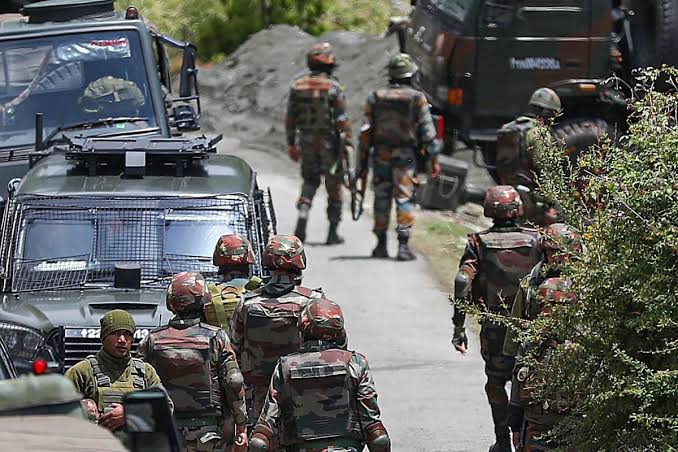
According to officials, the operation—codenamed Trashi-I—was initiated after specific intelligence inputs indicated the presence of militants in a remote area. Troops of the Army’s White Knight Corps, working in close coordination with the Jammu and Kashmir Police and the Central Reserve Police Force, launched a search operation and established contact with the suspected militants earlier in the day.

Officials said the forces re-engaged the militants around 11 a.m. in challenging terrain marked by dense vegetation and rugged slopes. During the ensuing encounter, both suspects were neutralised after an exchange of fire. Their identities and group affiliations are yet to be confirmed, authorities added.

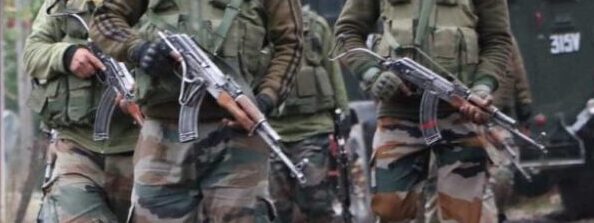
In a statement posted on social media, the Army said troops displayed “tactical precision, seamless synergy and resolute aggression” while dominating the encounter site. Security personnel recovered two AK-47 rifles along with other war-like stores from the spot, indicating the militants were well armed.
The area has since been cordoned off, and additional search operations are underway to rule out the presence of any more militants or support elements, officials said.

Security forces have intensified anti-militancy operations across Jammu and Kashmir in recent months, particularly in mountainous districts such as Kishtwar, where difficult terrain often poses operational challenges.

Top JeM Commander Killed in Kishtwar Gunfight

0

Jammu, February 22: A top commander of Jaish-e-Mohammad oufit has been killed on Sunday in Chatroo area of Kishtwar district.

Official sources told that during a fierce gunfight with joint team of police, 2 Para and army, one top JeM commander was killed. However, the body of the slain terrorist has not been retrieved yet. Meanwhile official confirmation is awaited.

The operation in the area was underway when this story was being filed.

Taking on micro-blogging platform X, the army’s WhiteKnight Corps wrote, “Troops of WhiteKnightCorps, alongwith @JmuKmrPolice and CRPF, in a joint operation, established contact with terrorists in the general area of Passerkut, Kishtwar. Firefight is on. Troops have cordoned off the area. Operation continues, reads the post.(GNS)

Global Imprint of India on the Railway Map — BLW’s Tenth Indigenous 3300 HP Locomotive Dispatched to Mozambique

0

Varanasi Emerging as a Railway Locomotive Export Hub

Indigenous 3300 HP Locomotive Built by BLW to Run on Mozambique Tracks — A Global Success of ‘Make in India’


Vinod Bhat

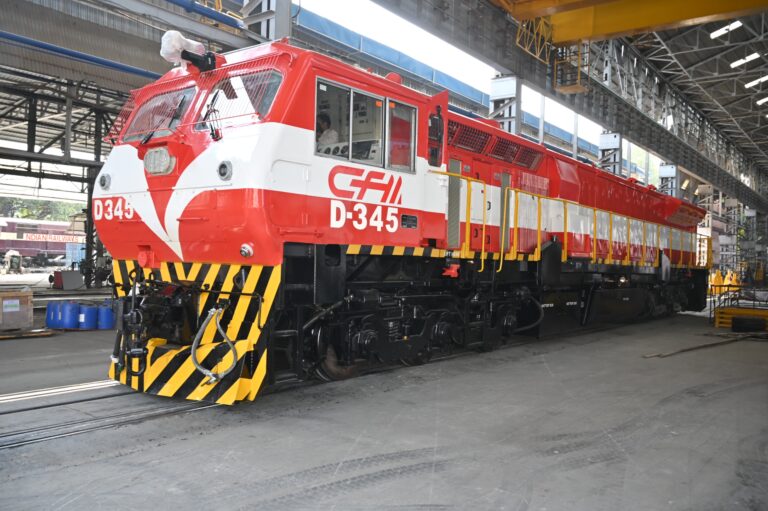
New Delhi: Banaras Locomotive Works (BLW) has once again hoisted India’s flag on the international stage in the field of locomotive manufacturing. The tenth unit of the indigenously manufactured 3300 horsepower AC–AC diesel-electric locomotive built by BLW was successfully dispatched to Mozambique on February 21, 2026. This marks a significant milestone, as BLW had received an export order for a total of 10 units of 3300 HP AC–AC diesel-electric locomotives for Mozambique.

The supply of these locomotives has been carried out through RITES Limited under a contract for the manufacture and export of 10 locomotives. The first two locomotives were dispatched in June 2025, followed by the third in September, the fourth in October, and the fifth on December 12, 2025. Subsequently, the sixth locomotive was dispatched on December 15, 2025, the seventh on January 8, 2026, the eighth on January 23, and the ninth on February 17, 2026. This export reflects India’s growing capabilities in locomotive manufacturing at the global level.

These state-of-the-art 3300 horsepower Cape gauge (1067 mm) locomotives manufactured by BLW are capable of operating at speeds of up to 100 km/h. They are equipped with internationally benchmarked, driver-friendly features such as a refrigerator, hot plate, mobile holder, and a modern cabin design, enhancing both operator comfort and operational efficiency.

Banaras Locomotive Works, a production unit of Indian Railways located in Varanasi, is now emerging as a major hub for locomotive manufacturing and exports. Leveraging its expertise in indigenous design and advanced railway technology, BLW is strengthening India’s presence in the global railway market. Since 2014, BLW has exported locomotives to countries such as Sri Lanka, Myanmar, and Mozambique, contributing to the development of their railway systems.

In line with the vision of “Make in India” and “Make for the World,” these exports demonstrate the capability of Indian Railways to design, manufacture, and supply rolling stock suited to various gauge systems in use worldwide. Through such initiatives, Indian Railways is supporting partner countries in upgrading their rail infrastructure while reinforcing India’s position as a reliable exporter of railway rolling stock and related services.

BLW’s achievements in the field of locomotive exports reflect India’s growing technological self-reliance and its expanding influence in the global railway equipment market.

Encounter breaks out in Kishtwar

0

Kishtwar, Feb 22  ; An encounter broke out between security forces and terrorists in the Chatroo area of Kishtwar district on Sunday, officials said.

A joint cordon and search operation was launched by the Army and Jammu and Kashmir Police in the forested region following specific intelligence inputs regarding the presence of terrorists officials said.

“As the security forces were cordoning the area, the hiding terrorists opened fire on them, which was retaliated, triggering an encounter,” a police official said.

Officials confirmed that additional reinforcements have been rushed to the spot to strengthen the cordon and thwart any attempt by the terrorists to flee. The exchange of fire was underway when the last reports came in.

Further details are awaited. (KNS)

India–Brazil MoU Signed to Deepen MSME Cooperation and Advance Green Transition

0

Vinod Bhat

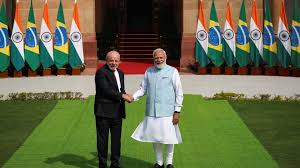
New Delhi:During the ongoing visit of delegation led by H.E. Luiz Inácio Lula da Silva, President of Brazil to India, the Ministry of MSME, Government of India, has signed a Memorandum of Understanding (MoU) with the Ministry of Entrepreneurship, Micro and Small Enterprises of the Federative, Republic of Brazil on 21.02.2026.

The MoU will provide a platform for both sides to discuss the issues concerning Micro, Small and Medium Enterprises (MSMEs) and explore possible areas of cooperation for mutual benefit  of MSMEs in the two countries. It will provide a framework and enabling environment for the MSMEs of both countries to understand each other’s strengths, markets, technologies and policies.

The MoU also seeks to create enabling conditions for advancing the green transition, including facilitating MSMEs’ access to green finance, thereby enabling their integration into global markets and value chains, improving productivity, competitiveness and strengthening their capacity for sustainable development.

Commissioner SMC Visits Vending Zone at Lal Chowk

0

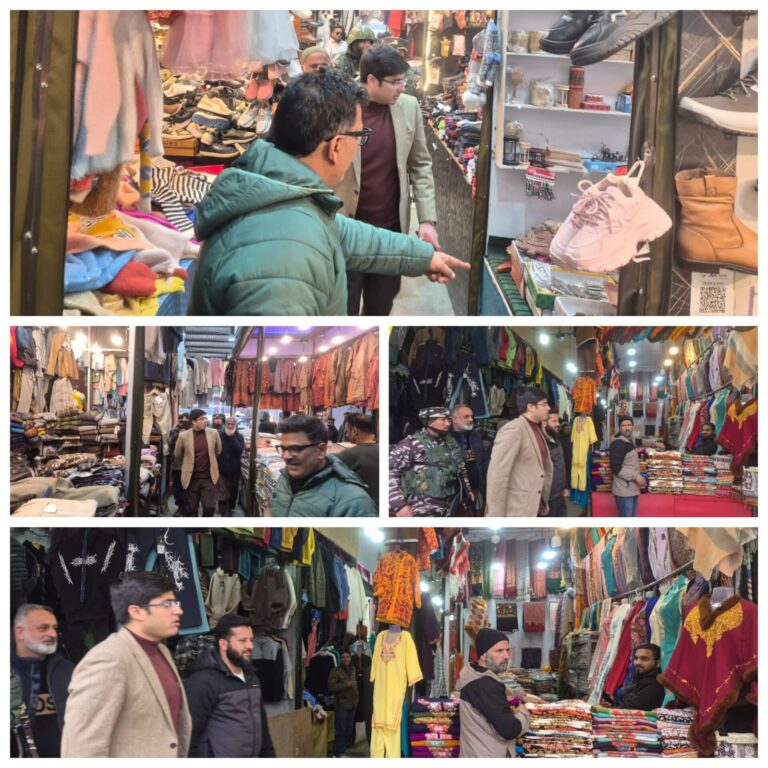
Srinagar, February 21: Commissioner, Srinagar Municipal Corporation (SMC), Mr. Faz Lul Haseeb, IAS, today conducted an on-site inspection of the SMC Vending Zone Opposite Tyndale Biscoe School at Lal Chowk to assess civic infrastructure and review issues raised by the local vending community.

During the visit, the Commissioner held extensive interactions with stakeholders, who apprised him of various concerns including sanitation management, drainage systems, street lighting, and the need for augmentation of essential civic facilities. The vendors sought immediate intervention to address bottlenecks affecting smooth commercial activities.

Giving a patient and attentive hearing to the grievances, the Commissioner assured that all genuine demands would be examined on priority and addressed in a phased, transparent, and time-bound manner. He reiterated the Corporation’s commitment to strengthening civic amenities across key commercial areas to ensure a clean, accessible, and business-friendly environment.

The Commissioner directed the concerned officers to undertake a comprehensive assessment and submit a detailed action plan for prompt follow-up. He emphasized coordinated departmental efforts to upgrade basic infrastructure, improve sanitation standards, and ensure sustained maintenance in line with SMC’s broader urban development objectives.

The local vending community appreciated the Commissioner’s proactive outreach and expressed confidence in the Corporation’s assurance of timely and effective resolution of their concerns.

Free E-Buses Redefine Srinagar’s Roads, Leave Traditional Operators in Survival Mode

0
TAQWA SHAFI
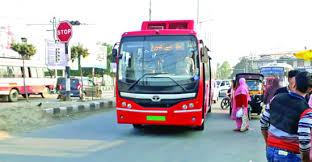
SRINAGAR, Feb 21: The gentle, almost whispering hum of electric buses gliding through Srinagar’s bustling streets has become the newest sound of change in the city. Painted in bright hues and fitted with modern amenities, these zero-emission vehicles are more than just a mode of transport—they are a symbol of Srinagar’s leap into a cleaner, smarter urban future.
Launched under Srinagar Smart City Limited as part of the nationwide Smart Cities Mission, the e-buses promise eco-friendly mobility, enhanced passenger safety, and, most significantly, free rides for women. For commuters, especially women, the initiative has been nothing short of transformative. But for hundreds of traditional minibus operators who have long formed the backbone of Srinagar’s public transport system, the arrival of these electric buses has triggered a growing sense of uncertainty—and distress.
At Batamaloo, A Silent Struggle
At the sprawling Batamaloo bus stand, once alive with the hurried calls of conductors and the steady churn of diesel engines, a different picture is emerging. Rows of ageing minibuses sit idling longer than usual, their drivers scanning the thinning crowds for passengers.
For Ghulam Nabi, a veteran driver who has ferried passengers along the Hazratbal–Lal Chowk route for over two decades, the shift has been stark.
“Women used to make up nearly half of my passengers,” he says, leaning against his weathered vehicle. “Now most of them prefer the electric bus. It’s free, it’s comfortable, and it’s new. My daily income has dropped by nearly 40 percent.”
The financial strain is immediate and unforgiving. Rising diesel prices, routine maintenance costs, and loan repayments have turned into mounting pressures. “We are not against development,” Nabi insists, his voice carrying both resignation and frustration. “But development should not push us into hunger. How do we survive if our buses run half empty?”
His concern is echoed across the stand. Bashir Ahmad, another operator, describes the competition as uneven. “Government buses have subsidies, modern facilities, and publicity. We depend only on passenger fares. If commuters shift entirely, we have nothing to fall back on.”
Transport union representatives warn that if the trend continues unchecked, many operators may be forced to sell their vehicles. “This sector feeds hundreds of families,” says a union member. “Without some support or integration into the new system, traditional operators could disappear.”
A Welcome Change for Women
For women commuters, however, the electric buses have opened new doors.
Shazia, a university student, says the daily savings are significant. “I save around fifty rupees every day. For a student, that matters. It helps with books, meals, and other expenses. And I feel safer. There are CCTV cameras, proper seating, and the environment is more respectful.”
Working women share similar sentiments. Rubeena, an Anganwadi worker, says the free service has eased her household burden. “Earlier, even small trips meant calculating the fare. Now I travel without that worry. The money I save goes toward groceries or my children’s needs.”
The buses, equipped with CCTV surveillance, GPS tracking systems, and low-floor access for the elderly and persons with disabilities, have raised the standard of public transport in the city. The promise of safer, inclusive, and environmentally sustainable travel has resonated strongly with commuters.
The Official Stand
Officials associated with the Smart City initiative maintain that the project’s broader goal is to modernise urban mobility while reducing carbon emissions and promoting social inclusion.
“The idea is to make public transport accessible and sustainable,” says an official who requested anonymity. “Free travel for women encourages greater participation in education and employment. Cleaner buses mean cleaner air for everyone.”
Indeed, Srinagar’s air quality and traffic congestion have long been areas of concern. The electric fleet is seen as a step toward addressing both.
Between Progress and Livelihood
Yet, the larger question remains: can modernisation coexist with the survival of traditional operators?
Transport unions argue that integration—not replacement—should be the way forward. Suggestions include route rationalisation, financial subsidies, or incorporating private operators into the electric mobility framework. “We are ready to adapt,” says a union representative. “But we need policy support. Otherwise, families dependent on this trade will suffer.”
For now, Srinagar’s roads present a tale of two systems running parallel. On one side, sleek electric buses symbolise aspiration, sustainability, and inclusivity. On the other, ageing diesel minibuses represent decades of service—and livelihoods hanging in the balance.
As dusk settles over the city, a nearly full electric bus quietly pulls away from a crowded stop. A few metres behind, a traditional minibus waits a little longer, its driver hoping for enough passengers to make the day worthwhile.
Srinagar’s journey toward becoming a “smart” city is undeniably underway. For commuters, especially women, the road ahead looks brighter and more affordable. But for those who have long steered the city’s public transport, the path forward remains uncertain—shadowed by questions of survival in the face of progress.

PM Unveils Major HCL Technologies–Foxconn Chip Plant, Signals India’s Tech Ambitions

0

Vinod Bhat

New Delhi:Prime Minister Shri Narendra Modi, today, participated in the groundbreaking ceremony of HCL-Foxconn Semiconductor Unit in Uttar Pradesh, via video conferencing. The ceremony marks a historic milestone in India’s journey toward becoming a global semiconductor hub, following closely on the heels of the Global AI Impact Summit held in New Delhi.

Addressing the gathering, the Prime Minister emphasized that India is working towards the aim of Viksit Bharat rapidly. “I have said from the ramparts of the Red Fort, India has no time to stop or pause. Since the beginning of 2026, India has accelerated its pace,” the Prime Minister remarked. Shri Modi cited the recent milestones such as the Viksit Bharat Young Leaders Dialogue, National Startup Day which energized the start up revolution in India, and the India Energy Summit through which India’s strength caught the attention of the world.

Prime Minister  noted that the Budget for Viksit Bharat has injected fresh momentum into the nation’s progress, making this a truly historic week for India. He highlighted that at the Global AI Impact Summit, world leaders, heads of state, and tech giants gathered to witness India’s AI capabilities, ultimately recognizing and praising the country’s strategic vision. He remarked that immediately following the conclusion of the AI summit yesterday, the nation is already moving forward today with this massive program to strengthen India’s semiconductor ecosystem. “India is now striving to stand alongside the world’s top nations in providing the processing power required to run the modern world and is working simultaneously on software and hardware aspects”, Shri Modi emphasised.

The Prime Minister reiterated his vision of the current decade as India’s Techade, stating that investments in Green Energy, Space Tech, Digital Technology, and AI will form the foundation of 21st-century capability. He further stated that India is making unprecedented investments today in every technology that will determine the future of humanity and development of this robust semiconductor ecosystem in India is a prime example of this.

Highlighting the strategic importance of chips, the Prime Minister compared their value in the 21st century to oil in the 20th century.  “During the Corona pandemic, the world saw the fragility of the chip supply chain. When supply hit a brake, global economies faltered”, Shri Modi noted. He highlighted that India learned from that crisis to turn it into an opportunity and decided that India must become self-reliant in chip manufacturing. “Today’s programme is a reflection of this vision”, Shri Modi emphasised.

Prime Minister Modi stated that “Made-in-India” chips are the backbone of a Viksit Bharat, powering critical sectors from AI and 6G to Defense and EVs. To support this vision, he highlighted the Chips to Startup initiative, set to train 85,000 specialists, alongside Budget-led advancements like the Semiconductor Mission’s second phase and the establishment of Rare Earth Corridors for end-to-end R&D and manufacturing support.

As a Member of Parliament from Uttar Pradesh, the Prime Minister expressed immense pride in the state’s transformation. “UP is becoming a major center for the semiconductor ecosystem, which will bring design houses, R&D centers, and startup ecosystems to the region, creating vast employment opportunities for the youth”, Shri Modi noted.

Prime Minister underscored that in the last 11 years, India has witnessed a monumental shift in its industrial landscape, with electronics manufacturing growing six-fold. “This growth is most evident in the mobile revolution, where domestic production has increased 28-fold and exports have surged by a staggering 100-fold”, he added. Shri Modi remarked that Uttar Pradesh has emerged as a powerhouse and a strong pillar in this success story, currently accounting for more than half of all mobile phones manufactured in the country. This transformation marks a significant milestone in India’s journey toward becoming a global manufacturing hub.

The Prime Minister credited the “Double-Engine Government” for changing the identity of Uttar Pradesh from a state once associated with crime and migration to one known for Expressways, Defense Corridors, and world-class infrastructure like the Jewar International Airport and Dedicated Freight Corridors.”Global investors are coming to UP because they know their investment is guaranteed a fantastic return,” the Prime Minister said. Shri Modi  also announced that he would be inaugurating the Delhi-Meerut Namo Bharat Train Corridor tomorrow, further boosting the region’s connectivity.

Concluding his address, the Prime Minister thanked HCL Technologies Chairperson Roshni Nadar and Foxconn Semiconductor Business Group President Bob Chen for their partnership. He noted that Foxconn’s presence sends a global message: “A democratic India is a trusted partner. Our participation in the value chain increases its resilience, a win-win for India and the world.”