spot_imgspot_img
spot_img
Home Blog Page 111

Cabinet approves Minimum Support Prices for Raw Jute for 2026-27 Season

0
Vinod Bhat

New Delhi: The Cabinet Committee on Economic Affairs, chaired by the Prime Minister Shri Narendra Modi, today has approved Minimum Support Prices (MSP) of Raw Jute for Marketing season 2026-27.

The MSP of Raw Jute (TD-3 grade) has been fixed at Rs. 5,925/- per quintal for 2026-27 season. This would ensure a return of 61.8 percent over the all India weighted average cost of production. The announced MSP of raw jute for Marketing season 2026-27 is in line with the principle of fixing MSP at a level of at least 1.5 times all India weighted average cost of production as announced by the Government in the Budget 2018-19.

The MSP of Raw Jute for Marketing season 2026-27 is an increase of Rs.275/- per quintal over the previous Marketing season 2025-26. Government has increased MSP of Raw jute from Rs.2400/-per quintal in 2014-15 to Rs.5,925/- per quintal in 2026-27, registering an increase of Rs.3,525/- per quintal (2.5 times).

The MSP amount paid to Jute growing farmers during the period 2014-15 to 2025-26 was Rs. 1342 Crore while during the period 2004-05 to 2013-14, amount paid was Rs. 441 Crore.

The Jute Corporation of India (JCI) will continue as Central Government Nodal Agency to undertake Price Support Operations and the losses incurred, if any, in such operations, will be fully reimbursed by the Central Government.


Cabinet approves enhanced delegation to POWERGRID from the extant guidelines on delegation of powers to Maharatna CPSEs for increasing equity investment threshold from Rs.5000 crore per subsidiary to Rs.7500 crore per subsidiary

0
Vinod Bhat

New Delhi: The Cabinet Committee on Economic Affairs, chaired by the Prime Minister Shri Narendra Modi, today has approved enhanced delegation to POWERGRID under the extant guidelines dated 4th February, 2010 of the Department of Public Enterprises (DPE) on delegation of powers applicable to Maharatna CPSEs. The approval enhances the permissible equity investment limit of POWERGRID from the current threshold of Rs.5,000 crore per subsidiary to Rs.7,500 crore per subsidiary, while retaining the existing cap of 15% of the company’s net worth.

The approval will enable POWERGRID, the largest and most experienced transmission service provider in the country, to expand its investment in its core business and support the evacuation of renewable energy capacity, helping achieve the target of 500 GW from non-fossil-based sources.

POWERGRID can now participate in the bids for capital-intensive transmission projects, such as Ultra High Voltage Alternating Current (UHVAC) and High Voltage Direct Current (HVDC) transmission networks. Additionally, it will broaden competition in the Tariff Based Competitive Bidding (TBCB) for selection of bidders for critical transmission projects. This ensures better price discovery, and ultimately lead to the availability of affordable and clean energy for consumers.


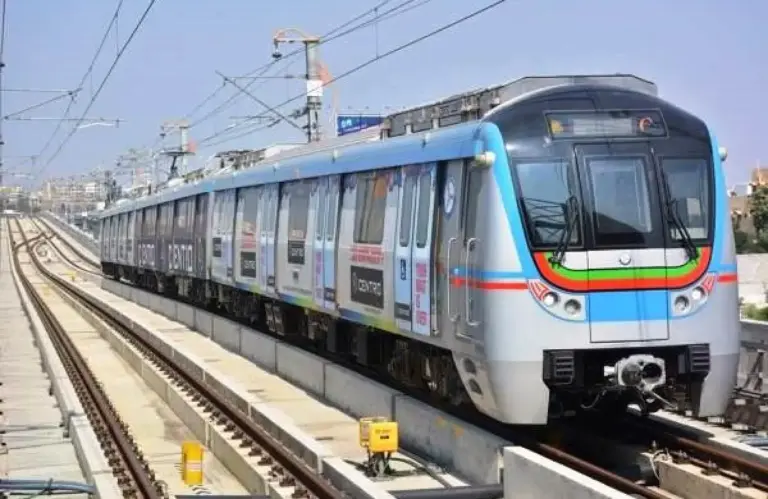
Cabinet approves three multitracking projects covering 8 Districts across the states of Maharashtra, Madhya Pradesh, Bihar and Jharkhand, increasing the existing network of Indian Railways by about 307 Kms

0
Vinod Bhat

New Delhi: The Cabinet Committee on Economic Affairs, chaired by the Prime Minister Shri Narendra Modi, today has approved 3 (Three) projects of Ministry of Railways with total cost of Rs. 9,072 crore (approx.). These projects include:

  1. Gondia – Jabalpur Doubling
  2. Punarakh – Kiul 3rd and 4th line
  3. Gamharia – Chandil 3rd and 4th line

The 3 (three) projects covering 8 Districts across the states of Maharashtra, Madhya Pradesh, Bihar and Jharkhand will increase the existing network of Indian Railways by about 307 Kms.

The proposed multi-tracking project will enhance connectivity to approx. 5,407 villages, which are having a population of about 98 lakhs.

The increased line capacity will significantly enhance mobility, resulting in improved operational efficiency and service reliability for Indian Railways. These multi-tracking proposals are poised to streamline operations and alleviate congestion. The projects are in line with the  Prime Minister Shri Narendra Modiji’s Vision of a New India which will make people of the region “Atmanirbhar” by way of comprehensive development in the area which will enhance their employment/ self-employment opportunities.

The projects are planned on PM-Gati Shakti National Master Plan with focus on enhancing multi-modal connectivity & logistic efficiency through integrated planning and stakeholder consultations. These projects will provide seamless connectivity for movement of people, goods, and services.

The proposed capacity enhancement will improve rail connectivity to several prominent tourist destinations across the country, including Kachnar Shiv Temple (Jabalpur), Kanha National Park (Balaghat), Gangulpara Dam and Waterfall, Pench National Park, Dhuandhar waterfall, Bargi Dam, Gomji-Somji temple, Chandil Dam, Dalma Hill Top, Hesakocha Waterfall, Raijama Ghati, Dalma Wildlife Sanctuary, etc.

The projects are essential routes for transportation of commodities such as coal, steel, iron ore, cement, ballast and stone chips, fly ash, fertilizers, limestone, manganese, dolomite, foodgrains, POL etc. The capacity augmentation works will result in additional freight traffic of magnitude 52 MTPA (Million Tonnes Per Annum). The Railways being environment friendly and energy efficient mode of transportation, will help both in achieving climate goals and minimizing logistics cost of the country, reduce oil import (6 Crore Litres) and lower CO2 emissions (30 Crore Kg) which is equivalent to plantation of  One Crore trees.

Stakeholder Consultation Held for Inputs on Proposed Advanced Manufacturing Systems Mission at CMTI, Bengaluru

0

Vinod Bhat

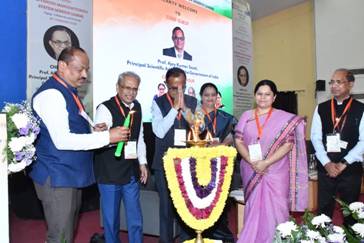
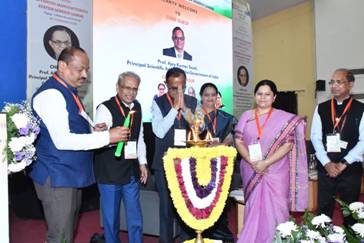
New Delhi: The Office of the Principal Scientific Adviser to the Government of India (OPSA) and Ministry of Heavy Industries (MHI) coorganised a Stakeholder Consultation on 23rd  February 2026 at CMTI with support from the Central Manufacturing Technology Institute (CMTI), Bengaluru, to discuss the modalities of a cohesive Advanced Manufacturing Strategy.

The consultation brought together representatives from Government, industry associations, manufacturing enterprises, MSMEs, startups, academia, research institutions, and technology developers to provide structured inputs on strengthening India’s capabilities in advanced manufacturing systems. Deliberations focused on critical domains such as CNC machine tools and controllers, advanced machines, testing and metrology infrastructure, robotics and robotic arms, and advanced additive manufacturing (3D & 4D printing).

A person standing at a podiumAI-generated content may be incorrect.

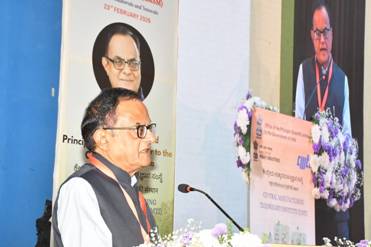
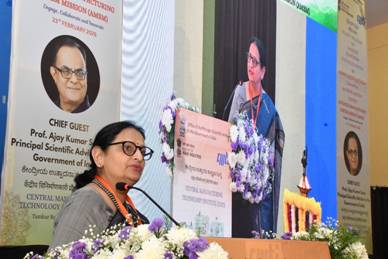
Addressing the gathering, Prof. Ajay Kumar Sood, Principal Scientific Adviser to the Government of India, emphasised that advanced manufacturing systems form the backbone of contemporary industrial ecosystems and are pivotal to India’s aspirations in aerospace, defence, electronics, automotive, energy, and medical devices. He underscored that technological sovereignty and resilient supply chains require strong indigenous capabilities in high-precision machines, production systems, CNC controllers, sensors, and quality infrastructure. Prof. Sood highlighted that advanced manufacturing is central to the vision of Viksit Bharat and called for sustained coordination among Government, industry, and research institutions. He cited the industry-led Research, Development and Innovation (RDI) Fund and the grant-based Anusandhan National Research Foundation (ANRF) as key enablers supporting deep-technology research and translational innovation. He stressed localisation of critical technologies, alignment with global standards, enhanced Industry 4.0 readiness and advanced skilling initiatives.

A person speaking at a podiumAI-generated content may be incorrect.

In her special remarks, Dr. Parvinder Maini, Scientific Secretary, OPSA, elaborated on the exhaustive consultative process undertaken for the past one year to shape the contours of Advanced Manufacturing Programs. She also emphasised the need for a systems-level approach and a Technology Readiness Level (TRL)-aligned mission architecture to bridge the gap between research and industrial deployment. She highlighted the importance of targeted R&D, shared testing infrastructure, internationally benchmarked certification systems, and strengthened industry-academia collaboration.

S. Kris Gopalakrishnan, President of the Governing Council of CMTI and Co-founder of Infosys, noted that the capital goods sector is fundamental to advanced manufacturing and must enhance technological depth to support high-value industries. He highlighted CMTI’s contributions through innovation and industry collaboration and called for sustained partnerships to reduce import dependence and enhance technological sovereignty.

Shri Vijay Mittal, Joint Secretary, MHI, highlighted the need to recognise the contributions of capital goods, particularly from the machine tool sector. He noted that the MHI, through its capital goods scheme, has supported indigenous efforts in several capital goods and establishment of test infrastructure. The proposed mission on advanced manufacturing systems will provide sustainable growth in the country. Dr. Rakesh Kaur, Adviser/Scientist ‘G’, OPSA, also emphasised that the mission framework is still being shaped and that inputs from stakeholders across Government, academia, and industry would be critical in identifying priorities, addressing gaps, and defining practical implementation pathways.

The inaugural session also featured welcome remarks by Dr. Nagahanumaiah, Director, CMTI, and context presentations from Ms Mohini Kelkar, President IMATM and Prof. B. Ravi, Director, NIT Surathkal.

Following the inaugural session, the dignitaries visited laboratory and witnessed demonstrations of several machines and instruments designed and developed by the Central Manufacturing Technology Institute over the past few years. The technologies showcased included vertical planetary mixing machines, aerospace Line Replaceable Units (LRUs), specialised test rigs, automatic optical inspection systems, and developments from the Sensor Technology Development Centre.

On this occasion, Prof. Sood, formally inaugurated the Ball Screw Lead Error Testing and Certification System, the first such facility in India, established at CMTI under the Capital Goods Scheme of the Ministry of Heavy Industries.

The consultation thereafter progressed into three parallel thematic technical sessions focusing on key advanced manufacturing domains, namely:

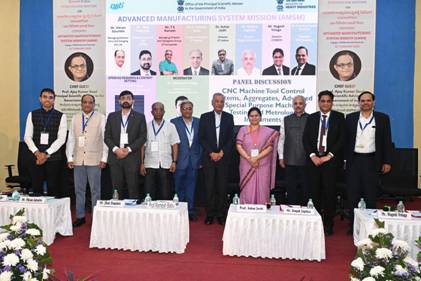
(i) CNC Machine Tool Control Systems, Advanced and Special Purpose Machines, Testing and Metrology,

(ii) Robotics and Robotic Arms, and

(iii) Advanced Additive Manufacturing Systems (3D and 4D Printing).

A group of people sitting in a roomAI-generated content may be incorrect.

A group of people standing in front of a large posterAI-generated content may be incorrect.

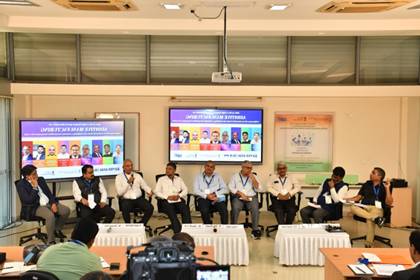
The discussions highlighted critical technology gaps and value chain challenges in high end machine tools and aggregates, the need for localisation of critical components, strengthening domestic manufacturing capabilities, and the role of policy support and public procurement in accelerating adoption of indigenous technologies. Deliberations on robotics underscored robotics and physical AI as key enablers of advanced manufacturing and noted ecosystem constraints, limited scale and gaps in precision supply chains, with emphasis on coordinated national efforts and active industry participation. The session on additive manufacturing focused on materials and process qualification, shared prototyping and validation infrastructure, and pathways for industrial scale up, with emphasis on industry defined problem statements and stronger academia industry collaboration. The sessions were moderated by Dr. Vishwas R. Puttige, CEO and Director, Amace Solutions Pvt. Ltd.; Prof. B. Gurumoorthy, Professor, Indian Institute of Science; and Dr. Chandrashekar U. C., Vice Chancellor, Godavari Technical University, with participation from industry and academic institutions.

Breakout working groups of 16 identified sub-themes discussed strategic technology priorities, collaborative R&D projects, budgets, timelines, and risk mitigation measures. Cross-group synthesis highlighted infrastructure needs and policy recommendations essential for a mission-oriented approach.

The consultation attracted around 220 stakeholders, including the Government, industry, MSMEs, startups, academia, and research institutions. The inputs will further feed into the draft Advanced Manufacturing Systems proposal and support the development of a coordinated national architecture that integrates R&D, validation, testing, and industrial deployment to strengthen India’s advanced manufacturing ecosystem.

More countries join the New Delhi Declaration on AI Impact

0

Vinod Bhat

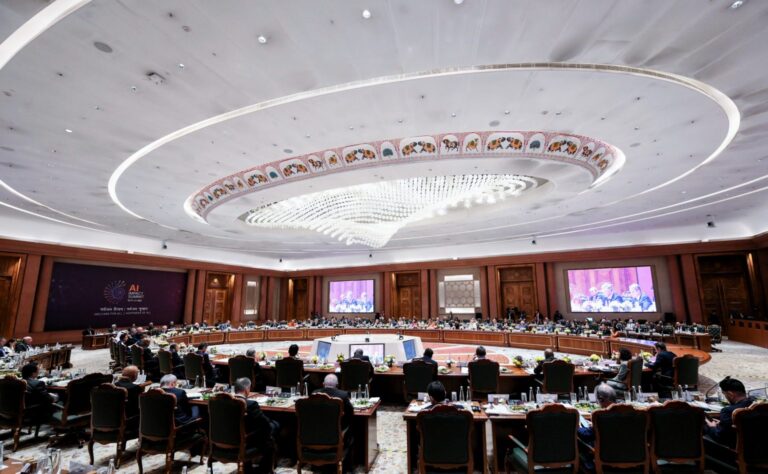
New Delhi: The AI Impact Summit 2026, held in New Delhi on 18–19 February, concluded with the adoption of the New Delhi Declaration on AI Impact, marking a significant milestone in global cooperation on artificial intelligence.

As on 21 February, 2026, 88 countries and international organisations had endorsed this declaration. Since then, 3 more countries – Bangladesh, Costa Rica and Guatemala have joined the declaration, taking the total number of signatories to 91 countries and organisations.

JNV Aglar Principal dies after collapsing at SBI branch in Awantipora

0

Srinagar, Feb 24:  Principal of Jawahar Navodaya Vidyalaya (JNV) Aglar in south Kashmir’s Shopian district, Kailash Chander (55), died after collapsing at a State Bank of India (SBI) branch in Awantipora on Tuesday, officials said.

An official told that Kailash was initially taken to Primary Health Centre (PHC) Awantipora and later referred to SMHS Hospital in Srinagar, where doctors declared him brought dead.

According to preliminary information, the deceased had lost consciousness inside the SBI branch in Awantipora. Further details are awaited. (KNC)

HC Admits PIL on PSGA Implementation, Civil Society Calls It a Turning Point

0
TAUSEEF AHMAD
SRINAGAR, Feb 24: In what has been described as a significant constitutional moment in the journey toward accountable and citizen-centric governance, the Hon’ble High Court of Jammu and Kashmir and Ladakh has admitted and heard a Public Interest Litigation (PIL) seeking effective implementation of the Jammu and Kashmir Public Services Guarantee Act (PSGA), 2012. The Court has issued notice to the administration, a move that civil society groups say reinforces the constitutional mandate of transparency, accountability, and rule of law.
In a detailed joint statement, the J&K RTI Movement, Civil Society for Justice & Development (CSJD), Gujjar Bakerwal Youth Welfare Conference (GBYWC), Forest Rights Coalition J&K (FRC J&K), and Himalayan Pastoral Foundation expressed deep gratitude to the Hon’ble High Court for recognizing the urgency of ensuring that this historic legislation functions in both letter and spirit. The organizations stated that the admission and hearing of the PIL is not merely procedural, but a reaffirmation that constitutional institutions remain vigilant guardians of citizens’ statutory rights.
The signatories to the statement — Shameem Ahmed Shah, Junaid Andrabi, Adv. Naveed Bukhtiyar, Umer Ahmad, and Ghulam Mustafa Rahi — said they remain hopeful that the judicial process will lead to structured monitoring mechanisms, strict enforcement of penalty provisions, improved transparency, and proactive disclosure of service delivery data.
A Landmark Reform with Transformative Vision
The Jammu and Kashmir Public Services Guarantee Act was enacted in 2012 during the tenure of the Omar Abdullah-led government. It was considered a landmark governance reform aimed at guaranteeing time-bound delivery of public services. The Act institutionalized a transformative principle: that citizens are rights-holders entitled to services within prescribed timelines, not supplicants before bureaucratic systems.
However, the organizations emphasized that a law is only as strong as its implementation.
They recalled that the J&K RTI Movement, under the leadership of Dr. Shaikh Ghulam Rasool, was among the earliest civil society platforms to advocate for a time-bound service delivery framework in Jammu and Kashmir. At a time when administrative delays, file pendency, and lack of accountability had become normalized, the Movement consistently argued that transparency achieved through the Right to Information framework must be complemented by enforceable service guarantees. This sustained advocacy, they noted, contributed meaningfully to the public discourse that culminated in the passage of the PSGA in 2012.
Awareness, Monitoring, and Systemic Gaps
Following the enactment of the law, the Movement did not limit itself to symbolic celebration. Extensive awareness campaigns were conducted across districts to educate citizens, students, community leaders, and grassroots groups about their rights under the Act. Workshops, public interactions, and field-level engagements were organized to ensure that people understood how to apply for services, file appeals, and seek penalties in cases of delay.
Subsequently, numerous RTI applications were filed across departments to monitor implementation of the Act. These applications sought detailed information regarding notified services, prescribed timelines, penalty proceedings, awareness initiatives, inspection mechanisms, appellate performance, and compliance reporting.
According to the statement, the responses to these RTIs revealed concerning gaps. These included inconsistent enforcement of timelines, inadequate record-keeping, limited imposition of penalties, weak monitoring systems, and insufficient compliance mechanisms.
Despite repeated representations, constructive engagement, and sustained policy advocacy, tangible systemic reform remained limited in several sectors. After exhausting administrative remedies and democratic avenues of engagement, the organizations stated that judicial intervention became necessary to safeguard the integrity and purpose of the law. Accordingly, a PIL was filed before the Hon’ble High Court seeking structured monitoring, enforcement of accountability provisions, and effective implementation of the Act.
Statements from Civil Society Representatives
Shameem Ahmed Shah, Convenor of Civil Society for Justice & Development (CSJD), stated that effective implementation of the Act is essential to restore public trust in governance. He emphasized that timely service delivery is not an administrative luxury but a democratic obligation. Delays, he said, disproportionately harm the poor, marginalized, and rural populations who lack access to influence and resources.
Junaid Andrabi, Convenor of the J&K RTI Movement and Kissan Trade Union leader, emphasized that the journey — from advocating for the enactment of the law, to educating citizens, monitoring implementation through RTIs, conducting research and policy analysis, and finally approaching the judiciary — reflects a responsible and democratic approach to reform. He clarified that the objective is not confrontation but correction, not criticism but constructive accountability.
Adv. Naveed Bukhtiyar, Legal Head and General Secretary of the J&K RTI Movement, stated that without implementation, even the most rights-based and noble law becomes lifeless and redundant. A statute written on paper, he said, cannot transform society unless it is actively enforced and responsibly used. He observed that it becomes imperative for civil society to intervene at the policy level to ensure proper implementation. However, he added that a significant responsibility also rests upon the general public to use the law actively and wisely for redressal of grievances, to strengthen its spirit, to hold officials accountable, to curb red-tapism, and above all, to participate meaningfully in improving the service delivery system. He described this as the true essence of participatory democracy.
Umer Ahmad, representing the Himalayan Pastoral Foundation, observed that the Hon’ble High Court’s decision to admit and hear the matter is a welcome and progressive step. By exercising its constitutional authority, he said, the Court has reinforced the principle that governance must remain accountable to the people. He added that the judicial intervention strengthens democratic oversight and affirms that no law should remain dormant when citizens’ rights are at stake.
Ghulam Mustafa Rahi of the Gujjar Bakerwal Youth Welfare Conference (GBYWC) highlighted that nomadic and tribal communities often face disproportionate challenges in accessing certificates, revenue documents, and essential government services. For these communities, he emphasized, time-bound delivery is not a technical issue but a matter of dignity, inclusion, and equal citizenship.
Collective Reaffirmation
Collectively, the organizations reaffirmed that the Public Services Guarantee Act remains one of the most progressive governance reforms in Jammu and Kashmir’s recent history. Its effective implementation, they stated, can significantly reduce corruption, minimize discretionary delays, strengthen administrative efficiency, institutionalize accountability, and enhance citizen satisfaction.
They once again extended heartfelt appreciation to the Hon’ble High Court for accepting and hearing the crucial matter. The coalition expressed hope that the judicial process will result in structured monitoring mechanisms, strict enforcement of penalty provisions, improved transparency, and proactive disclosure of service delivery data.
“The ultimate goal is simple yet profound,” the statement concluded, “a governance system where citizens receive their rightful services on time, without repeated visits, without influence, and without uncertainty.”
The organizations reaffirmed their continued commitment to constructive engagement, democratic reform, and participatory governance, stating that accountable administration is not merely an aspiration but achievable through collective civic will and institutional integrity.


J-K opt to bat against Karnataka in maiden Ranji Trophy final

0

Hubballi, Feb 24: Jammu and Kashmir opted to bat against Karnataka in their maiden Ranji Trophy final here on Tuesday.

Karnataka made no changes to their playing eleven from the last game while Jammu and Kashmir brought in Sahil Lotra and Qamran Iqbal at the expense of Shubham Khajuria and Vivrant Sharma.

Karnataka: KL Rahul, Mayank Agarwal, Devdutt Padikkal(c), Karun Nair, Smaran Ravichandran, Shreyas Gopal, Kruthik Krishna(w), Vidyadhar Patil, Vijaykumar Vyshak, Shikhar Shetty, Prasidh Krishna.

Jammu and Kashmir: Qamran Iqbal, Yawer Hassan, Shubham Pundir, Paras Dogra(c), Abdul Samad, Kanhaiya Wadhawan(w), Abid Mushtaq, Auqib Nabi Dar, Yudhvir Singh Charak, Sahil Lotra, Sunil Kumar.

At the time of filing this report, J&K were 68 for the loss of one wicket in 23 overs.

‘Israel Group’ of Jaish neutralised after 18-month operation in J&K: IGP Jammu

0

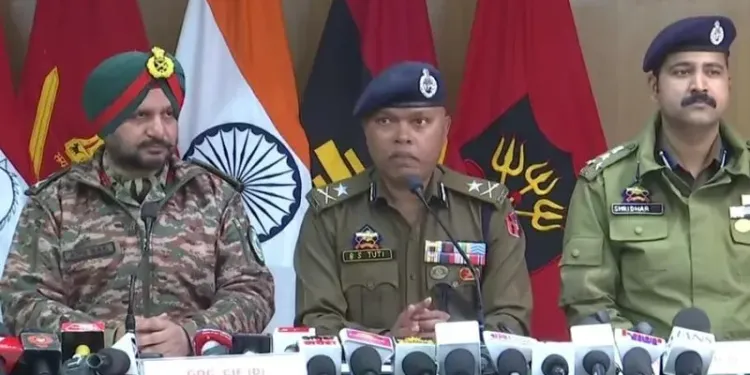
Jammu, Feb 23: Inspector General of Police (Jammu Zone) Bhim Sen Tuti said on Monday that in a joint operation, security forces have neutralised a seven-member Jaish-e-Mohammed (JeM) terror module, dubbed the “Israel Group”, bringing an end to a year-and-a-half-long operation in the Kishtwar belt of Jammu and Kashmir.

Three members of the module, including its self-styled commander, Saifullah, were killed in an encounter with the security forces in Kishtwar district on Sunday.

“The group of seven JeM terrorists had infiltrated into Indian territory in April 2024. Since then, this group was engaged on 17 different occasions. Over the last year and a half, we have successfully neutralised all of them. Sunday marked the culmination of this year-and-a-half-long operation,” the IGP told reporters at Kishtwar.

Describing the module as a “hardcore terrorist group”, he said, “The group was known as the Israel Group. It was a hardcore terrorist module that inflicted significant damage on security forces and also caused harm to civilians.”

Tuti said acting on precise intelligence, the last three members of the group, including Saifullah, were neutralised in the Chatroo area of Kishtwar.

The IGP asserted that the campaign against terror would continue.

“This operation will continue. Our pursuit is long and in the coming time, we expect more successful operations. This fight will continue until the entire terror network is completely dismantled,” he said.

Meanwhile, General Officer Commanding (GOC) of Counter-Insurgency Force Delta, Major General A P S Bal, issued a stern warning to anti-national elements, saying they would be identified and neutralised wherever they are.

“My message to anti-national elements is clear — anyone who is an enemy of the nation, wherever they may be and in whatever form, will be identified, targeted and neutralised,” he told reporters in Kishtwar.

The officer asserted that intelligence-based operations would continue with sustained momentum.

“To the Awam, I want to say — no matter how grave the challenges are, our courage will never diminish. Whatever we have achieved has been possible because of the support of every single person in the region,” he said.

The GOC said recent successes in anti-terror operations are the results of months of sustained and coordinated efforts by security forces. “We have been collectively working on this for months. Despite challenges of terrain, rain, snowfall and landslides, operations were carried out relentlessly,” he said.

The GOC highlighted the extraordinary coordination among the Army, Jammu and Kashmir Police (JKP) and Central Reserve Police Force (CRPF), stating that seamless collaboration at every level ensured operational success even in confined and rugged areas.

“We were conscious that such prolonged operations can lead to fatigue among the troops. Therefore, we had planned in a manner that ensured adequate rotation of forces. We always had sufficient troops in the reserve — either to be air-dropped by helicopters or to move on foot across extremely difficult terrain. Sometimes it would take six to eight hours to reach a location, but we ensured that we got there.”

The JeM module was under pursuit since April-May last year. Three of its members — all hardcore terrorists — were eliminated in April 2025, while the remaining members – including Saifullah, Adil and two others — were on the run, the GOC said.

Based on intelligence inputs from police, the Intelligence Bureau (IB) and other sources, a joint counter-terrorist operation, codenamed Operation Trashi-I, was launched on January 14 in the Chhatroo area by CIF Delta troops under the aegis of White Knight Corps. Contact with the terrorists was established on January 18 and their well-stocked hideout was busted, the GOC added.

Relentless pursuit led to the elimination of one terrorist, codenamed Adil, on February 4, he said.

The security forces re-engaged the remaining terrorists at around 11 am on February 22. The final encounter site, located on steep mountain slopes, was cordoned off on the intervening night of February 21 and 22. In the ensuing operation, the three hardcore terrorists were eliminated, completing the dismantling of the group, the GOC said.

He said the large-scale operation showcased high tactical precision, real-time drone surveillance, the use of night-vision equipment and swift mobilisation of reinforcements, including special forces. He added that despite harsh weather and challenging terrain, there was no casualty among the security personnel.

Major General Bal also made a special mention of Army-trained dog Tyson, who was injured after the terrorists opened fire. Tyson was deployed to verify the presence of the ultras inside the “dhok” (hut).

“The injured elite German Shepherd, who was the first to charge at the terrorist hideout and sustained a bullet injury in the exchange of fire, was immediately airlifted for medical treatment and is reported to be safe and stable,” an official said.

During the search operations, war-like stores, including three AK-47 rifles, were seized.

The operations were conducted on both extremes of the area of responsibility – one in the Udhampur sector and the other in the Kishtwar sector.

The IGP said action would be taken against those who supported the terrorists.

“Those who provided shelter and support to this group will soon see decisive action against them as well. In the coming days, you will witness how firmly we act against their collaborators,” he said, adding that the efforts to dismantle the terror ecosystem would be intensified.

“More operations are in the pipeline and you will see the results for yourselves,” he said.

The IGP said there are only three local terrorists in Kishtwar district now. “These are the same three individuals who have been active in the region for nearly two decades. During 2018, 2019 and 2020, some new recruits had joined terror ranks, but all of them have been neutralised,” he added.

Tuti appreciated the public support for the success of the operations. “I believe the society is not supporting them. Otherwise, such successful operations would not have been possible. Most of the intelligence inputs we receive come through civilians. The public stands with us, the public stands with India and these terrorists will never succeed in their nefarious designs,” he asserted.

DC Budgam Launches ‘e-Nigrani App’-Constituency Development Management Information System (CDMIS)for Real-Time Monitoring of Development Works Across District

0

Says Digital Platform to Strengthen Coordination Between Legislators and District Administration

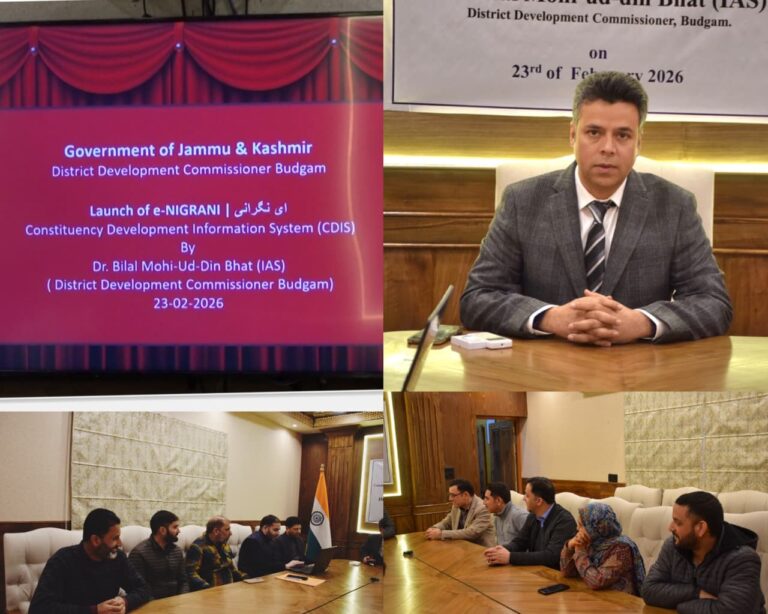
Budgam, February 23:The Deputy Commissioner (DC) Budgam, Dr. Bilal Mohi-Ud-Din Bhat, IAS, today launched the ‘e-Nigrani App’, a Constituency Development Management Information System (CDMIS), developed for effective management and real-time monitoring of development projects across the Assembly Constituencies of District Budgam.
The ‘e-Nigrani App’ (CDMIS) has been conceptualized as a dedicated digital portal to streamline tracking, supervision, and reporting of constituency-level developmental works. The system aims to establish stronger coordination between Government officials and Legislators, ensuring efficient execution and timely completion of projects.
On the occasion, the DC said that the digital platform has been introduced to bring greater transparency and accountability in implementation of developmental works. Through this system, Legislators will be enabled to monitor ongoing projects in their respective Assembly Constituencies in a structured and systematic manner.
The DC further informed that the portal has been designed to collect, compile, and securely store detailed information related to development projects, including project descriptions, funding sources, implementing agencies, timelines, financial allocations, and progress reports. Real-time monitoring features have been incorporated into the system to facilitate continuous oversight and minimize delays.
It was highlighted that the CDMIS-based ‘e-Nigrani App’ will streamline communication between departments and public representatives, promote better planning, and support data-driven decision-making. The platform is expected to significantly enhance transparency in project implementation and strengthen institutional monitoring mechanisms across the district.
“With the launch of the ‘e-Nigrani App’, District Budgam has taken another step towards technology-driven governance and efficient delivery of developmental initiatives,” said the DC.
The launch ceremony was attended by the Additional Deputy Commissioner (ADC) Budgam, Chief Planning Officer (CPO) Budgam, Assistant Commissioner Revenue (ACR), all Sub-Divisional Magistrates (SDMs), Executive Engineer R&B, District Informatics Officer (DIO) NIC, and other senior district officers of the district.