spot_imgspot_img
spot_img
Home Blog Page 113

Encounter breaks out in Kishtwar

0

Kishtwar, Feb 22  ; An encounter broke out between security forces and terrorists in the Chatroo area of Kishtwar district on Sunday, officials said.

A joint cordon and search operation was launched by the Army and Jammu and Kashmir Police in the forested region following specific intelligence inputs regarding the presence of terrorists officials said.

“As the security forces were cordoning the area, the hiding terrorists opened fire on them, which was retaliated, triggering an encounter,” a police official said.

Officials confirmed that additional reinforcements have been rushed to the spot to strengthen the cordon and thwart any attempt by the terrorists to flee. The exchange of fire was underway when the last reports came in.

Further details are awaited. (KNS)

India–Brazil MoU Signed to Deepen MSME Cooperation and Advance Green Transition

0

Vinod Bhat

New Delhi:During the ongoing visit of delegation led by H.E. Luiz Inácio Lula da Silva, President of Brazil to India, the Ministry of MSME, Government of India, has signed a Memorandum of Understanding (MoU) with the Ministry of Entrepreneurship, Micro and Small Enterprises of the Federative, Republic of Brazil on 21.02.2026.

The MoU will provide a platform for both sides to discuss the issues concerning Micro, Small and Medium Enterprises (MSMEs) and explore possible areas of cooperation for mutual benefit  of MSMEs in the two countries. It will provide a framework and enabling environment for the MSMEs of both countries to understand each other’s strengths, markets, technologies and policies.

The MoU also seeks to create enabling conditions for advancing the green transition, including facilitating MSMEs’ access to green finance, thereby enabling their integration into global markets and value chains, improving productivity, competitiveness and strengthening their capacity for sustainable development.

Commissioner SMC Visits Vending Zone at Lal Chowk

0

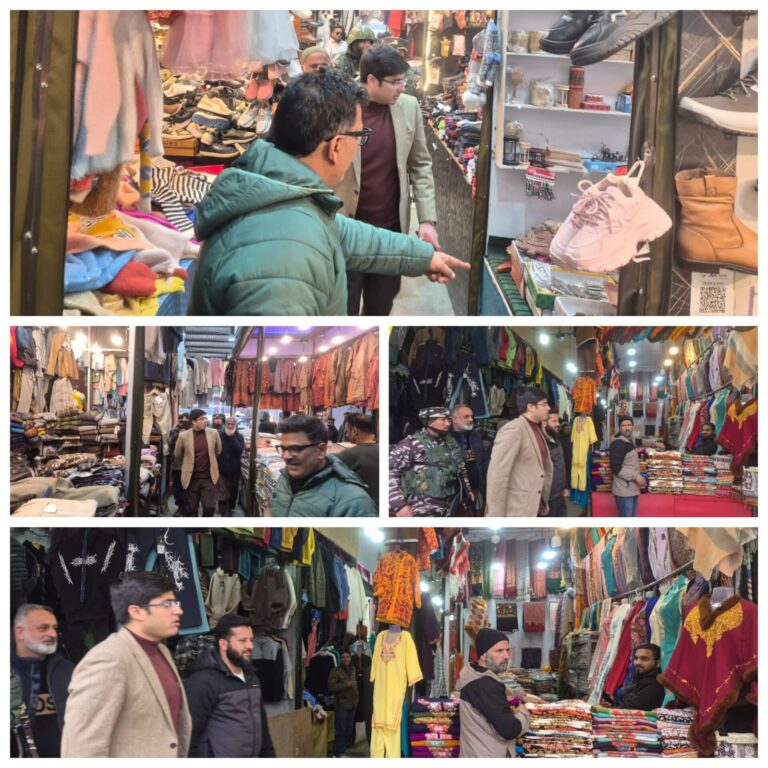
Srinagar, February 21: Commissioner, Srinagar Municipal Corporation (SMC), Mr. Faz Lul Haseeb, IAS, today conducted an on-site inspection of the SMC Vending Zone Opposite Tyndale Biscoe School at Lal Chowk to assess civic infrastructure and review issues raised by the local vending community.

During the visit, the Commissioner held extensive interactions with stakeholders, who apprised him of various concerns including sanitation management, drainage systems, street lighting, and the need for augmentation of essential civic facilities. The vendors sought immediate intervention to address bottlenecks affecting smooth commercial activities.

Giving a patient and attentive hearing to the grievances, the Commissioner assured that all genuine demands would be examined on priority and addressed in a phased, transparent, and time-bound manner. He reiterated the Corporation’s commitment to strengthening civic amenities across key commercial areas to ensure a clean, accessible, and business-friendly environment.

The Commissioner directed the concerned officers to undertake a comprehensive assessment and submit a detailed action plan for prompt follow-up. He emphasized coordinated departmental efforts to upgrade basic infrastructure, improve sanitation standards, and ensure sustained maintenance in line with SMC’s broader urban development objectives.

The local vending community appreciated the Commissioner’s proactive outreach and expressed confidence in the Corporation’s assurance of timely and effective resolution of their concerns.

Free E-Buses Redefine Srinagar’s Roads, Leave Traditional Operators in Survival Mode

0
TAQWA SHAFI
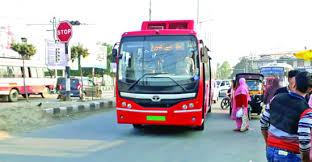
SRINAGAR, Feb 21: The gentle, almost whispering hum of electric buses gliding through Srinagar’s bustling streets has become the newest sound of change in the city. Painted in bright hues and fitted with modern amenities, these zero-emission vehicles are more than just a mode of transport—they are a symbol of Srinagar’s leap into a cleaner, smarter urban future.
Launched under Srinagar Smart City Limited as part of the nationwide Smart Cities Mission, the e-buses promise eco-friendly mobility, enhanced passenger safety, and, most significantly, free rides for women. For commuters, especially women, the initiative has been nothing short of transformative. But for hundreds of traditional minibus operators who have long formed the backbone of Srinagar’s public transport system, the arrival of these electric buses has triggered a growing sense of uncertainty—and distress.
At Batamaloo, A Silent Struggle
At the sprawling Batamaloo bus stand, once alive with the hurried calls of conductors and the steady churn of diesel engines, a different picture is emerging. Rows of ageing minibuses sit idling longer than usual, their drivers scanning the thinning crowds for passengers.
For Ghulam Nabi, a veteran driver who has ferried passengers along the Hazratbal–Lal Chowk route for over two decades, the shift has been stark.
“Women used to make up nearly half of my passengers,” he says, leaning against his weathered vehicle. “Now most of them prefer the electric bus. It’s free, it’s comfortable, and it’s new. My daily income has dropped by nearly 40 percent.”
The financial strain is immediate and unforgiving. Rising diesel prices, routine maintenance costs, and loan repayments have turned into mounting pressures. “We are not against development,” Nabi insists, his voice carrying both resignation and frustration. “But development should not push us into hunger. How do we survive if our buses run half empty?”
His concern is echoed across the stand. Bashir Ahmad, another operator, describes the competition as uneven. “Government buses have subsidies, modern facilities, and publicity. We depend only on passenger fares. If commuters shift entirely, we have nothing to fall back on.”
Transport union representatives warn that if the trend continues unchecked, many operators may be forced to sell their vehicles. “This sector feeds hundreds of families,” says a union member. “Without some support or integration into the new system, traditional operators could disappear.”
A Welcome Change for Women
For women commuters, however, the electric buses have opened new doors.
Shazia, a university student, says the daily savings are significant. “I save around fifty rupees every day. For a student, that matters. It helps with books, meals, and other expenses. And I feel safer. There are CCTV cameras, proper seating, and the environment is more respectful.”
Working women share similar sentiments. Rubeena, an Anganwadi worker, says the free service has eased her household burden. “Earlier, even small trips meant calculating the fare. Now I travel without that worry. The money I save goes toward groceries or my children’s needs.”
The buses, equipped with CCTV surveillance, GPS tracking systems, and low-floor access for the elderly and persons with disabilities, have raised the standard of public transport in the city. The promise of safer, inclusive, and environmentally sustainable travel has resonated strongly with commuters.
The Official Stand
Officials associated with the Smart City initiative maintain that the project’s broader goal is to modernise urban mobility while reducing carbon emissions and promoting social inclusion.
“The idea is to make public transport accessible and sustainable,” says an official who requested anonymity. “Free travel for women encourages greater participation in education and employment. Cleaner buses mean cleaner air for everyone.”
Indeed, Srinagar’s air quality and traffic congestion have long been areas of concern. The electric fleet is seen as a step toward addressing both.
Between Progress and Livelihood
Yet, the larger question remains: can modernisation coexist with the survival of traditional operators?
Transport unions argue that integration—not replacement—should be the way forward. Suggestions include route rationalisation, financial subsidies, or incorporating private operators into the electric mobility framework. “We are ready to adapt,” says a union representative. “But we need policy support. Otherwise, families dependent on this trade will suffer.”
For now, Srinagar’s roads present a tale of two systems running parallel. On one side, sleek electric buses symbolise aspiration, sustainability, and inclusivity. On the other, ageing diesel minibuses represent decades of service—and livelihoods hanging in the balance.
As dusk settles over the city, a nearly full electric bus quietly pulls away from a crowded stop. A few metres behind, a traditional minibus waits a little longer, its driver hoping for enough passengers to make the day worthwhile.
Srinagar’s journey toward becoming a “smart” city is undeniably underway. For commuters, especially women, the road ahead looks brighter and more affordable. But for those who have long steered the city’s public transport, the path forward remains uncertain—shadowed by questions of survival in the face of progress.

PM Unveils Major HCL Technologies–Foxconn Chip Plant, Signals India’s Tech Ambitions

0

Vinod Bhat

New Delhi:Prime Minister Shri Narendra Modi, today, participated in the groundbreaking ceremony of HCL-Foxconn Semiconductor Unit in Uttar Pradesh, via video conferencing. The ceremony marks a historic milestone in India’s journey toward becoming a global semiconductor hub, following closely on the heels of the Global AI Impact Summit held in New Delhi.

Addressing the gathering, the Prime Minister emphasized that India is working towards the aim of Viksit Bharat rapidly. “I have said from the ramparts of the Red Fort, India has no time to stop or pause. Since the beginning of 2026, India has accelerated its pace,” the Prime Minister remarked. Shri Modi cited the recent milestones such as the Viksit Bharat Young Leaders Dialogue, National Startup Day which energized the start up revolution in India, and the India Energy Summit through which India’s strength caught the attention of the world.

Prime Minister  noted that the Budget for Viksit Bharat has injected fresh momentum into the nation’s progress, making this a truly historic week for India. He highlighted that at the Global AI Impact Summit, world leaders, heads of state, and tech giants gathered to witness India’s AI capabilities, ultimately recognizing and praising the country’s strategic vision. He remarked that immediately following the conclusion of the AI summit yesterday, the nation is already moving forward today with this massive program to strengthen India’s semiconductor ecosystem. “India is now striving to stand alongside the world’s top nations in providing the processing power required to run the modern world and is working simultaneously on software and hardware aspects”, Shri Modi emphasised.

The Prime Minister reiterated his vision of the current decade as India’s Techade, stating that investments in Green Energy, Space Tech, Digital Technology, and AI will form the foundation of 21st-century capability. He further stated that India is making unprecedented investments today in every technology that will determine the future of humanity and development of this robust semiconductor ecosystem in India is a prime example of this.

Highlighting the strategic importance of chips, the Prime Minister compared their value in the 21st century to oil in the 20th century.  “During the Corona pandemic, the world saw the fragility of the chip supply chain. When supply hit a brake, global economies faltered”, Shri Modi noted. He highlighted that India learned from that crisis to turn it into an opportunity and decided that India must become self-reliant in chip manufacturing. “Today’s programme is a reflection of this vision”, Shri Modi emphasised.

Prime Minister Modi stated that “Made-in-India” chips are the backbone of a Viksit Bharat, powering critical sectors from AI and 6G to Defense and EVs. To support this vision, he highlighted the Chips to Startup initiative, set to train 85,000 specialists, alongside Budget-led advancements like the Semiconductor Mission’s second phase and the establishment of Rare Earth Corridors for end-to-end R&D and manufacturing support.

As a Member of Parliament from Uttar Pradesh, the Prime Minister expressed immense pride in the state’s transformation. “UP is becoming a major center for the semiconductor ecosystem, which will bring design houses, R&D centers, and startup ecosystems to the region, creating vast employment opportunities for the youth”, Shri Modi noted.

Prime Minister underscored that in the last 11 years, India has witnessed a monumental shift in its industrial landscape, with electronics manufacturing growing six-fold. “This growth is most evident in the mobile revolution, where domestic production has increased 28-fold and exports have surged by a staggering 100-fold”, he added. Shri Modi remarked that Uttar Pradesh has emerged as a powerhouse and a strong pillar in this success story, currently accounting for more than half of all mobile phones manufactured in the country. This transformation marks a significant milestone in India’s journey toward becoming a global manufacturing hub.

The Prime Minister credited the “Double-Engine Government” for changing the identity of Uttar Pradesh from a state once associated with crime and migration to one known for Expressways, Defense Corridors, and world-class infrastructure like the Jewar International Airport and Dedicated Freight Corridors.”Global investors are coming to UP because they know their investment is guaranteed a fantastic return,” the Prime Minister said. Shri Modi  also announced that he would be inaugurating the Delhi-Meerut Namo Bharat Train Corridor tomorrow, further boosting the region’s connectivity.

Concluding his address, the Prime Minister thanked HCL Technologies Chairperson Roshni Nadar and Foxconn Semiconductor Business Group President Bob Chen for their partnership. He noted that Foxconn’s presence sends a global message: “A democratic India is a trusted partner. Our participation in the value chain increases its resilience, a win-win for India and the world.”

BJP’s Valley Push Gains Momentum: Danish Bhat, Khalid Rathore among key entrants as LoP Sunil Sharma slams NC over ‘24,000 outsourced jobs’ claim

0

AZHAR HUSSAIN

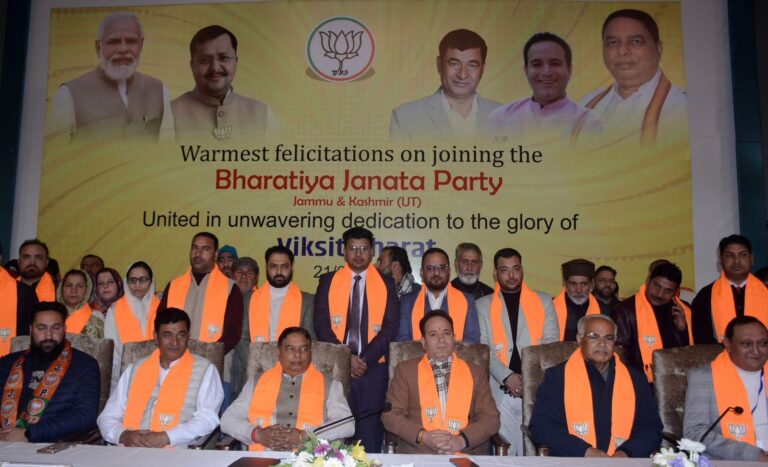
SRINAGAR, Feb 21: In a significant political development that signals shifting alignments in the Kashmir Valley, the Bharatiya Janata Party (BJP) on Saturday organised a grand induction ceremony at the iconic Srinagar International Convention Centre (SKICC), where several District Development Council (DDC) members, former corporators, and prominent political figures formally joined the party.

The high-profile event, attended by senior BJP leadership and a large gathering of party workers, was marked by visible enthusiasm as the new entrants were ceremonially draped in saffron scarves emblazoned with the party’s lotus symbol. The convention hall reverberated with slogans of “Viksit Bharat,” while party banners and flags adorned the venue, underscoring the BJP’s assertive outreach in a region traditionally dominated by regional parties.

Among those who joined the BJP were Manzoor Ahmad Ganai, DDC Member from Aripal–Pulwama; Mansha Akhtar, DDC Member from Achgoza–Pulwama; Mehmooda Akhtar, DDC Member from Shadimarg; Danish Bhat, former Corporator of the Srinagar Municipal Corporation; Nazir Gilkar, former Corporator; Altaf Mir, former BDC Chairman; Khalid Rathore; and Hujjatul Islam Aga Syed Abbas Rizvi, who serves as State General Secretary of the All India Shia Personal Law Board and was formerly associated with the DPAP as State Secretary. Their induction is being viewed by political observers as a strategic step by the BJP to consolidate its grassroots presence and strengthen its organisational base in the Valley.

The ceremony was led by J&K BJP President and Rajya Sabha MP Sat Sharma, Leader of Opposition Sunil Sharma, General Secretary (Organisation) Ashok Koul, and General Secretary Anwar Khan. Addressing the gathering, the leaders described the joining of elected representatives and influential local figures as a reflection of growing confidence in the BJP’s development agenda and governance model.

In his address, Leader of Opposition Sunil Sharma launched a sharp attack on the ruling Jammu & Kashmir National Conference (NC), accusing it of misleading the electorate during the 2024 Assembly elections by promising the restoration of Article 370. Calling the constitutional provision “a closed chapter,” Sharma questioned the legal and constitutional basis of references to “special status” and said he had repeatedly sought clarity from the government on the Assembly floor regarding its position. He argued that raising expectations about the revival of Article 370 amounted to political rhetoric without constitutional backing.

Sharma further alleged inconsistency in the NC’s political conduct, claiming that the party had at various times aligned with the BJP for convenience while publicly opposing it. He urged voters to reflect on what he described as contradictions in the party’s political stance.
A substantial portion of his speech focused on allegations that nearly 24,000 government posts had been outsourced to a private company without transparent recruitment procedures such as public advertisements, written examinations, or interviews. Describing the move as a betrayal of the educated youth of Jammu and Kashmir, Sharma demanded that the government disclose the identity of the company involved and make public all recruitment-related details. He warned that the BJP would pursue the matter vigorously both inside and outside the Assembly if the government failed to provide a clear explanation, asserting that employment concerns could not be ignored in a region grappling with high unemployment.

He also criticised the administration over what he termed unfulfilled promises, including the pledge of providing 200 units of free electricity, and accused it of attempting to claim credit for centrally sponsored schemes initiated under Prime Minister Narendra Modi’s leadership. Reaffirming the BJP’s commitment to transparency, merit-based employment, anti-corruption measures, and accountable governance, Sharma called upon party workers to intensify grassroots outreach and counter what he described as misinformation campaigns.

There was no immediate response from the National Conference, PDP, or Congress at the time of filing this report.

The event at SKICC reflects the continuing churn in Jammu and Kashmir’s political landscape. By inducting elected DDC members, former corporators, and influential leaders such as Danish Bhat and Khalid Rathore, the BJP has sought to project an image of steady expansion in the Valley, signalling its intent to deepen organisational roots and recalibrate the region’s political equations in the months ahead.

Mega Medical Camp organized by 53 RR in Chalyan Budgam

0

Locals thank Army for getting specialist doctors to a far-lung village

KD NEWS SERVICE

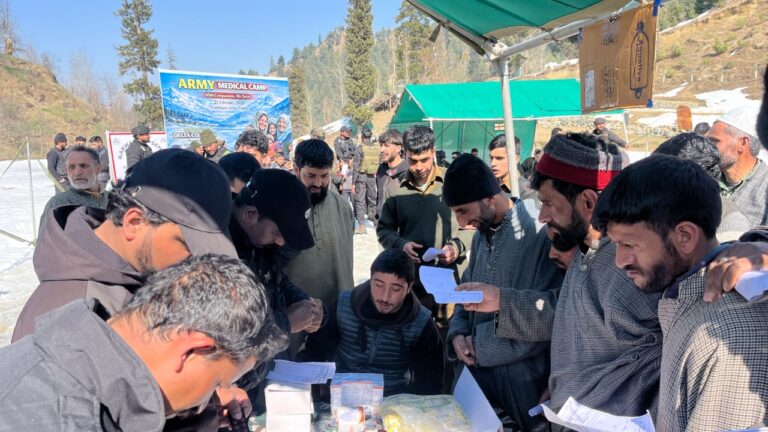
BUDGAM, Feb 21: With an aim of mitigating the medical health needs of people living in far-flung area of Budgam district a mega medical camp was organized by 53 Rashtriya Rifles (53 RR) in association with Health Department at Chalyan Choontinad village in Chararsharief tehsil. Around 523 patients were examined by the specialist doctors from Sub District Hospital Charar Sharief along with doctors and paramedical staff of the army.

While addressing the local residents and media persons Col Nitin Sharma Commanding Officer 53 RR Nagam appreciated the team of doctors from Health Department for examining such a huge number of patients. He said that in coming months the Army would facilitate holding such medical camps around the upper reaches of Chararsharief. He greeted the locals for the holy month of Ramzan and thanked CMO Budgam, Dr Gulzar, BMO Chararsharief Dr Tasawur , ZMO Mohanpora Dr Parvez for their support.

Along with Capt Pankaj and his team of 5 Nursing Assistants from 53 RR, the doctors team from J&K Health Department consisted of Dr Tariq Aziz General Physician, Dr Shaheen Gynecologist, Dr Sheikh Sarwar Orthopedician , Dr Adil Pediatrician, Dr Iqbal Medical Officer and Lateef Ahmad Bhat Ophthalmic Technician. Local respected citizens, social activists namely Dr Raja Muzaffar Bhat, Mushtaq Ahmad Lone, Mudaser Yatoo, Shabir Ahmad, Nazir Ahmad Nengroo and Rafiq Ahanger.

“Holding this medical camp in such a far flung area and getting specialist doctors to examine poor and disadvantaged people that too in the holy month of Ramzan is highly appreciated & I am highly grateful to Army especially Col Nitin and his team and CMO Budgam as well” said Dr Raja Muzaffar

CO 53 RR Col Nitin Sharma was accompanied by his second in command Lt Col Mohsin and OC – Kanidajan Camp Maj Amay Bhardwaj.

Financial Accountability in Focus: J&K Judicial Academy Holds Refresher Programme on DDO Powers & GeM Procedures

0

*Training Aims to Strengthen Transparency, Budgetary Control and Digital Procurement in Judicial Institutions*

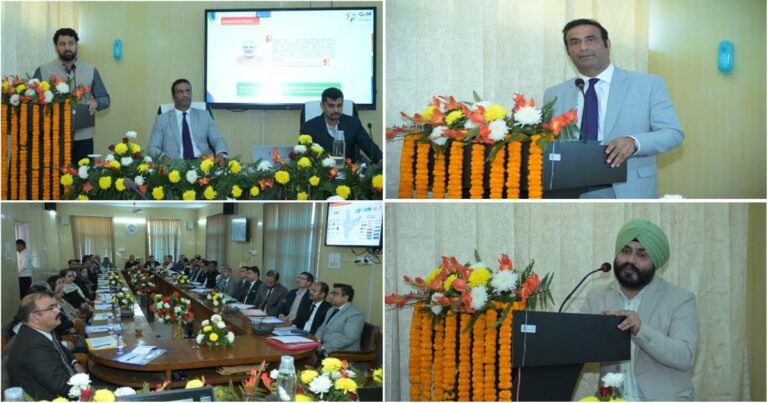
Jammu, Feb 21: The Jammu & Kashmir Judicial Academy on Saturday organised a One Day Refresher Training Programme on “Power and Duties of Drawing and Disbursing Officer including GeM Training” at its Janipur Campus, Jammu, reinforcing its commitment to financial discipline and transparent governance within the judicial system.

Under the patronage of Mr. Justice Arun Palli, Chief Justice, High Court of Jammu & Kashmir and Ladakh (Patron-in-Chief, J&K Judicial Academy), and under the guidance of the Chairperson and Members of the Governing Committee, the Academy conducted the programme (A-061/25) on February 21, 2026.

The programme was attended by Judicial Officers and Nazirs/Buyers dealing with Government e-Marketplace (GeM) matters in Jammu Province.

The programme commenced with registration of participants, followed by a formal welcome and introduction by Mr. Naseer Ahmad Dar, Director, J&K Judicial Academy. In his address, the Director underscored the importance of financial discipline, accountability and digital procurement systems in strengthening institutional efficiency and transparency within the judicial system.

Sessions I & II were conducted by Sarthak Khoda, GeM Trainer, who provided an in-depth overview of the Government e-Marketplace platform. The sessions covered registration and onboarding processes, procurement workflow, order placement, contract management, billing, invoicing and payment reconciliation.

The resource person also apprised participants of recent features and policy updates on GeM and addressed practical challenges faced by stakeholders. The technical sessions were also graced by Mr. Amir Ali, Senior Assistant Director, Government e-Marketplace, whose presence added value to the deliberations.

Sessions III & IV were delivered by Er. Jagteshwar Singh (JKAS), Accounts Officer, Civil Aviation Department, J&K. He elaborated on the legal and administrative framework governing the role of Drawing and Disbursing Officers, including powers and duties under General Financial Rules (GFRs), Treasury Rules and Financial Codes.

The sessions further focused on budgetary control, expenditure management, maintenance of financial records, preparation and submission of bills, advances and recoveries, pension matters, GPF/NPS issues, audit procedures and common objections. The technical sessions were also attended by Mr. Sandeep Singh Manhas, FA/CAO, High Court of Jammu & Kashmir and Ladakh, whose presence enriched the deliberations.

The programme concluded with an interactive session wherein participants actively engaged with the resource persons, raised queries and shared field-level experiences. The deliberations enriched the learning experience and clarified practical aspects of financial compliance and procurement procedures.

The refresher programme forms part of the Academy’s ongoing commitment to capacity building of judicial officers and ministerial staff, ensuring enhanced efficiency, transparency and accountability in financial administration and procurement processes within the judicial system.

AI Impact Summit 2026 Concludes with Adoption of New Delhi Declaration

0
Vinod Bhat

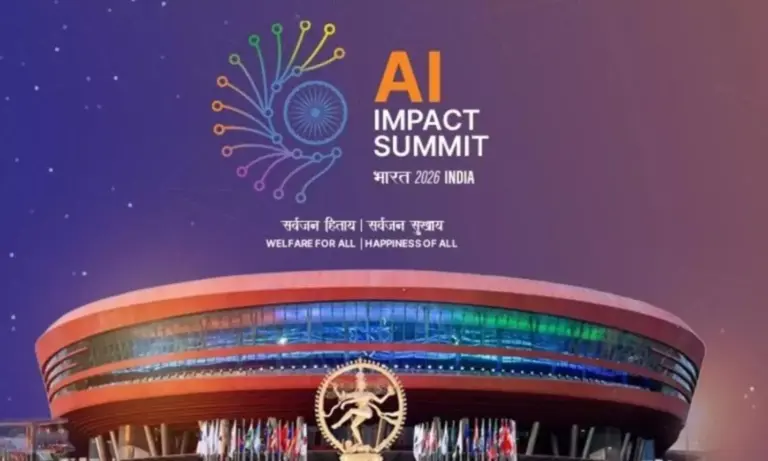
New Delhi: The AI Impact Summit 2026, held in New Delhi on 18–19 February, concluded with the adoption of the New Delhi Declaration on AI Impact, marking a significant milestone in global cooperation on artificial intelligence.

The Declaration has been endorsed by 88 countries and international organisations, reflecting a broad-based global consensus on leveraging AI for economic growth and social good.

A Shared Global Vision for AI

Guided by the principle of “Sarvajan Hitaya, Sarvajan Sukhaya” (Welfare for all, Happiness for all), the Declaration underscores that the benefits of AI must be equitably shared across humanity.

It emphasizes:

  • Strengthening international cooperation and multistakeholder engagement
  • Respecting national sovereignty
  • Advancing AI through accessible, and trustworthy frameworks

Seven Pillars (Chakras) of Action

The Declaration is structured around seven key pillars, forming the foundation of global AI cooperation:

  1. Democratizing AI Resources
  2. Economic Growth & Social Good
  3. Secure & Trusted AI
  4. AI for Science
  5. Access for Social Empowerment
  6. Human Capital Development
  7. Resilient, Efficient & Innovative AI Systems

Major Global Deliverables Announced

The Summit delivered a series of voluntary, collaborative global initiatives, including:

1. Charter for the Democratic Diffusion of AI

  • Promotes affordable access to foundational AI resources
  • Supports locally relevant innovation ecosystems

2. Global AI Impact Commons

  • A platform to scale and replicate AI use cases globally
  • Enables cross-country collaboration for development impact

3. Trusted AI Commons

  • Repository of tools, benchmarks, and best practices
  • Supports development of secure and trustworthy AI systems

4. International Network of AI for Science Institutions

  • Facilitates global scientific collaboration
  • Enhances AI-driven research capabilities

5. AI for Social Empowerment Platform

  • Enables knowledge exchange and scalable solutions
  • Focuses on equitable AI adoption

6. AI Workforce Development Playbook & Reskilling Principles

  • Supports AI skilling, reskilling, and literacy
  • Prepares nations for an AI-driven economy

7. Guiding Principles on Resilient & Efficient AI

  • Focus on energy-efficient AI systems
  • Supported by a Playbook on AI Infrastructure Resilience

Focus on Economic Growth and Efficiency

The Declaration highlights:

  • The role of AI in driving economic transformation
  • Importance of open-source and accessible AI ecosystems
  • Need for energy-efficient AI infrastructure
  • Expanding AI’s role in science, governance, and public service delivery

Strengthening Global Cooperation

Participants reaffirmed their commitment to:

  • Advancing shared global priorities in AI governance
  • Promoting voluntary, non-binding frameworks
  • Translating vision into action through continued collaboration

The Summit is expected to catalyze long-term international partnerships and position AI as a key driver of economic growth.

The Summit declaration as endorsed by 88 countries and International Organizations is annexed.

Annexure

AI Impact Summit Declaration

New Delhi 18-19 February 2026

Preamble

Inspired by the principle of “सर्वजन हिताय, सर्वजन सुखाय” (Welfare for all, Happiness of all), we believe that AI’s promise is best realized only when its benefits are shared by humanity.

We, the participants from countries and international organizations, gathered in New Delhi on 19 February 2026 to hold the AI Impact Summit. The advent of AI marks an inflection point in the trajectory of technological evolution. The choices that we make today will shape the AI-enabled world that future generations will inherit.

This calls for further international cooperation and multistakeholder engagement across our countries along the seven Chakras (pillars) of the AI Impact Summit centred around the principles of development of human capital; broadening access for social empowerment; trustworthiness of AI systems; energy efficiency of AI systems; use of AI in science; democratizing AI resources; and use of AI for economic growth and social good. In complementarity with existing international and other initiatives, we will work to foster shared understanding, while respecting national sovereignty, on how AI could be made to serve humanity, noting the initiatives across the seven Chakras (pillars) of the Summit.


Democratizing AI Resources

Robust digital infrastructure and meaningful and affordable connectivity are prerequisites for deploying AI and unlocking its full potential. Inspired by the principle of “Vasudhaiva Kutumbakam” (the world is one family), we recognize the importance of enhancing the affordability of and access to AI resources that would be critical to enabling all countries to develop, adopt and deploy AI for the benefit of their citizens.

To this effect, we take note of the Charter for the Democratic Diffusion of AI as a voluntary and non-binding framework to promote access to foundational AI resources, support locally relevant innovation, and strengthen resilient AI ecosystems while respecting national laws.


Economic Growth and Social Good

Wide-scale adoption of AI and AI-based applications hold unprecedented potential to drive economic and social development. Open-source AI applications and other accessible AI approaches, where appropriate, and wide-scale diffusion of AI use cases can contribute to scalability, replicability, and adaptability of AI systems across sectors.

We take note of the Global AI Impact Commons as a voluntary initiative that provides a practical platform to encourage and enable the adoption, replication, and scale-up of successful AI use cases across regions.


Secure and Trusted AI

Advancing secure, trustworthy and robust AI is foundational to building trust and maximizing societal and economic benefits. Noting that deepening our understanding of the potential security aspects remains important, we recognize the importance of security in AI systems, industry-led voluntary measures, and the adoption of technical solutions, and appropriate policy frameworks that enable innovation while promoting the public interest throughout the AI’s lifecycle.

We recognize the development of the voluntary and non-binding Trusted AI Commons, a collaborative platform consolidating technical resources, tools, benchmarks and best practices that all can access and adapt to their contexts; as well as its voluntary guidance note.


Science

We recognize that removing structural barriers to and increasing availability of AI research infrastructure can promote the use of AI in scientific research and development across countries. International scientific collaborations can unlock the potential of AI in research and development by bringing unique expertise, perspectives, and resources.

We take note of the voluntary and collaborative International Network of AI for Science Institutions as a platform to connect scientific communities and pool AI research capabilities across regions among participating institutions, in order to accelerate the impactful adoption of AI.


Access for Social Empowerment

AI holds the potential to uplift all sections of society by enabling individuals to access knowledge, cross-border AI solutions, information, services, opportunities and enhancing participation in social and economic activities. We recognize the importance of collaborations that would facilitate AI adoption for social empowerment.

We take note of the development of a voluntary and collaborative platform to facilitate exchange of learning, knowledge, and scalable practices to advance AI adoption for social empowerment.


Human Capital

Realizing the full promise of AI requires equipping individuals with relevant skills by expanding AI human resource development, specific initiatives on education, AI workforce development, training of public officials, enhancing public awareness of AI capabilities, increasing AI literacy as well as upgrading vocational and training ecosystems.

While encouraging international collaboration on meaningful skilling and reskilling AI initiatives, we take note of the voluntary guiding principles for reskilling in the age of AI and the playbook on AI workforce development, which would support participants in preparation for a future AI driven economy.


Resilience, Innovation, and Efficiency

Recognizing the growing demands of AI on energy, infrastructure, and natural resources, we underscore the importance of developing energy efficient AI systems. Affordable AI systems may expand access to AI and accelerate local innovation that would advance shared developmental aspirations.

We recognize that the Voluntary Guiding Principles on Resilient, Innovative, and Efficient Artificial Intelligence would guide us towards development of resilient and efficient AI systems. We also take note of the Playbook on Advancing Resilient AI Infrastructure as a knowledge output, which is a reference resource to support resilient AI development.


Conclusion                                                                                                       

We acknowledge that the AI Impact Summit will contribute to strengthening international cooperation and multistakeholder approach to advance shared priorities as well as voluntary and non-binding guidelines and principles, which can promote AI for ensuring a prosperous future for humanity.

We remain committed to advancing our shared aspirations for realizing the benefits of AI and look forward to continued cooperation for translating these aspirations into concrete actions for the three Sutras of the India AI Impact Summit 2026.

Minor Driving Case: Srinagar Court Awards 3-Year Jail to Guardian, Imposes ₹25,000 Fine; Grants Probation, Cancels Vehicle Registration

0

Srinagar, Feb 21: A Special Mobile Magistrate (Traffic) Court in Srinagar convicted a Budgam resident after a minor was found driving a vehicle, holding the guardian liable under Section 199-A of the Motor Vehicles Act, 1988.

The case, titled UT of J&K through Traffic Police, Rural Kashmir, was instituted and decided on February 18, 2026, by the Court of Special Mobile Magistrate (Traffic) Kashmir at Srinagar, presided over by Shabir Ahmad Malik.

According to the judgment, a copy of which lies with news agency Kashmir Dot Com, the challan was produced against Syed Mohammad Hussain Razvi, son of Syed Ibrahim Razvi, a resident of Heewader, Jawalapora, Budgam, who is the guardian and owner of the vehicle driven by a minor at the time of the offence.

The court observed that under Section 199-A of the Motor Vehicles Act, when an offence is committed by a juvenile, the guardian or owner of the motor vehicle is deemed guilty and is liable to be proceeded against and punished accordingly. The provision also presumes that the vehicle was used with the guardian’s consent unless proven otherwise.

During the proceedings, the accused appeared before the court along with his counsel and pleaded guilty. The court recorded his statement in writing and noted that he did not wish to contest the charges despite being given sufficient opportunity.

Upon conviction under Section 199-A of the Motor Vehicles Act, the court sentenced the accused to three years of simple imprisonment and imposed a fine of Rs 25,000. Additionally, the registration of the vehicle bearing number JK04K-0673 was ordered to be cancelled for a period of twelve months.

However, considering that the offence did not involve moral turpitude and that the accused had no prior convictions, the court extended the benefit of the Probation of Offenders Act. The accused was directed to execute a bond of Rs 2 lakh to maintain peace and good behaviour for a period of two years. In case of violation of the bond conditions, he would undergo the proposed sentence and the bond amount would be forfeited to the government.

The court further ordered that the vehicle and related documents, if any, be released in favour of the registered owner after due process. The challan was accordingly disposed of and consigned to records.