spot_imgspot_img
spot_img
Home Blog Page 116

All tourist destinations shut post-Pahalgam terror attack to reopen by May: CM Omar

0

“No plan to privatise power DISCOMS; Big encroachers to face action first”

Jammu, Feb 19: Chief Minister Omar Abdullah on Thursday announced that all tourist destinations closed in the aftermath of the Baisaran Pahalgam terror incident will be reopened by May this year.

Winding up the discussion on grants for the departments under his charge, CM Omar Abdullah, said that all tourist destinations shut down after the Pahalgam attack will be reopened by May.

“I want to tell you all these destinations will reopen till May,” the CM said, adding that the Jammu & Kashmir Government has discussed the matter with the Union Government.

He said that they have no plan to privatise power distribution companies in Jammu & Kashmir.

The CM said that whenever action is taken against encroachers, they will target the “big fishes” first—(KNO)

Defining Moment for AI: World Leaders, Big Tech CEOs Back AI Innovation with Responsibility at India AI Impact Summit 2026

0

Vinod Bhat

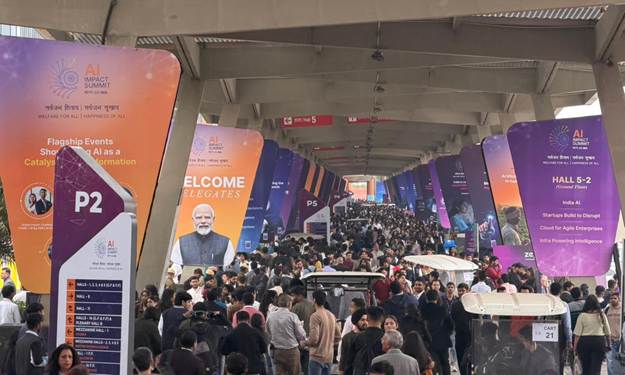
New Delhi: India AI Impact Summit 2026 witnessed a global meet of world leaders and Big Tech CEOs centred around the high level Opening Ceremony of the Summit at Bharat Mandapam. The ceremony was inaugurated by Prime Minister Shri Narendra Modi. The ceremony set the tone for the ongoing Summit’s focus on responsible innovation, scientific advancement, and international collaboration in shaping the future of Artificial Intelligence.

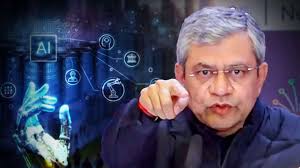
Shri Ashwini Vaishnaw, Union Minister of Electronics & Information Technology, positioned India’s AI strategy as one rooted in democratisation, scale, and sovereignty. He outlined India’s comprehensive approach across the five layers of the AI stack – applications, models, compute, talent, and energy, emphasising on their real-world deployment in healthcare, agriculture, education, and public services.

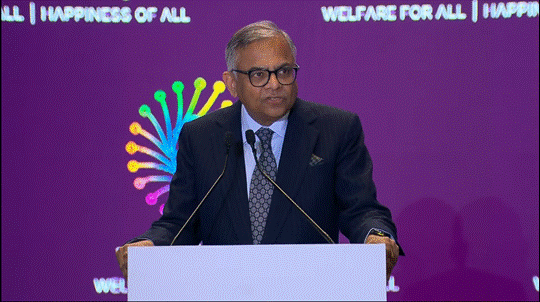
Chairman of Tata Sons N. Chandrasekaran described AI as the next foundational infrastructure- “the infrastructure of intelligence”, with transformative potential comparable to steam engines, electricity, and the internet. He highlighted India’s digital public infrastructure achievements and positioned AI as a strategic national capability built across the full stack, from chips and systems to energy and applications. Emphasising the immense opportunity for industry, he said. “AI is the next big infrastructure. It is the infrastructure of intelligence. Our mission should be to make AI work for every individual and every citizen in this country. We should put AI tools in the hands of the last person of the country, and in fact on the earth. We are standing at a defining moment, it is the age of abundant intelligence, where the scarce resources are trust, stewardship and human capability.”

<span;>Dario Amodei, CEO of Anthropic, reflected on the extraordinary pace of AI advancement since the first global AI Safety Summit at Bletchley Park in 2023, describing progress over the past two-and-a-half years as “staggering.” He argued that AI has been advancing along an exponential curve for nearly a decade and is rapidly approaching a point where systems may surpass human cognitive capabilities across most domains. “AI has been on an exponential trend for the last 10 years, and we are now well advanced on that curve. We are increasingly close to what I’ve called a ‘country of geniuses in the data centre’, a set of AI agents more capable than most humans at most things, coordinating at superhuman speed. That level of capability brings extraordinary opportunities, to cure diseases, lift billions out of poverty, and create a better world, but it also brings serious risks. Because this is happening so fast, we must work together, companies and governments, to manage disruption and ensure that prosperity is shared smoothly and responsibly,”he stated.

<In his address, Sundar Pichai, CEO of Google, described AI as <span;>“the biggest platform shift of a lifetime,” highlighting its potential to accelerate scientific discovery, he said “AI is the biggest platform shift of a lifetime. We are on the cusp of hyper progress and new discoveries that can help emerging economies leapfrog legacy gaps. But that outcome is neither guaranteed nor automatic. To build AI that is truly helpful for everyone, we must pursue it boldly, approach it responsibly, and work through this defining moment together. We cannot allow the digital divide to become an AI divide.”

António Guterres, Secretary-General of the United Nations, welcomed India’s leadership in hosting the first AI Summit in the Global South and emphasised that the future of artificial intelligence must not be determined by a small group of countries or private interests. He highlighted two major steps taken by the UN General Assembly: the creation of an independent international scientific panel on AI comprising 40 global experts, and the launch of a Global Dialogue on AI Governance to ensure inclusive, multistakeholder participation. Calling for guardrails that preserve human agency, he said. “The future of AI cannot be decided by a handful of countries or left to the whims of a few billionaires. We need guardrails that preserve human agency, human oversight and human accountability. AI must be accessible to everyone. That is why I am calling for a Global Fund on AI to build basic capacity in developing countries. Real impact means technology that improves lives and protects the planet, so let’s build AI for everyone, with dignity as the default setting.”

Delivering a keynote address, French President Emmanuel Macron, emphasised the importance of sovereign, independent, and collaborative AI development in an era of accelerating technological competition. Drawing parallels between India’s digital public infrastructure revolution and the current AI transformation, he described AI as a strategic domain shaping geopolitics, economic power, and global balance. He highlighted complementary paths taken by India and Europe, he said.


“The smartest AI is not the most expensive. It is the one built by the best people and for the right purpose. The future of AI will be built by those who combine innovation and responsibility, technology with humanity. No country is bound to serve only as a market where foreign companies sell models and download citizens’ data. There is a path for innovation, independence and strategic autonomy, and India and France will help shape this future together.”

The participation of global political leaders, multilateral institutions, and technology pioneers at the Summit inaugural session underscored the Summit’s stature as a defining platform for shaping the trajectory of Artificial Intelligence in an increasingly interconnected and rapidly evolving world.

OBC Report, Delimitation Delays Hold Up J&K Panchayat and ULB Elections : Govt.

0

Jammu, Feb 19  : The Jammu and Kashmir government today informed the Legislative Assembly that elections to Panchayati Raj Institutions (PRIs) and Urban Local Bodies (ULBs), pending for over two years, are stuck due to procedural delays, including the delimitation exercise and the awaited report of the Backward Classes Commission on OBC reservation.

Responding to a written query by PDP legislator Mir Mohammad Fayaz, the government admitted that the terms of Halqa Panchayats and Block Development Councils (BDCs) expired in January 2024, while District Development Councils (DDCs) will complete their term on February 24, 2026. Similarly, the Srinagar and Jammu Municipal Corporations, along with all other municipal councils and committees, have been without elected representatives since November 2023.

The government maintained that while the superintendence, direction and control of these elections is vested with the State Election Commission, which is making preparations, the process remains contingent upon completion of delimitation in five ULBs and the final notification of the OBC Commission’s report.

“The report submitted by the Dedicated Backward Classes Commission is under consideration of the Competent Authority and further steps for conduct of ULB elections will be taken accordingly,” the government stated, adding that the process of reservation and rotation of municipal wards can only be initiated after the Commission’s report is approved and notified.

On the delimitation front, the government as per news agency Kashmir News Service (KNS) said that while the exercise has been completed for 72 out of 77 ULBs, it is still underway for the remaining five. The revision of electoral rolls, a pre-requisite for conducting polls, will also be taken up only after receiving directions from the government.

The prolonged delay in holding elections has had a direct financial fallout, with central funds for capacity building of PRI representatives remaining largely unutilised. The government disclosed that out of ₹97.42 crore approved under the Rashtriya Gram Swaraj Abhiyan (RGSA) for 2024-25 and 2025-26, barely 15 per cent has been utilised due to the absence of elected bodies.

In contrast, during 2022-23 and 2023-24, when PRIs were functional, the Union government had released ₹159.13 crore for training and capacity building, of which 68.56 per cent was utilised.

The government also provided a detailed breakdown of expenditure under the District Capex Budget for the PRI sector, showing a sharp decline in utilisation for the current financial year. While ₹278.13 crore and ₹270.93 crore were allocated under the DDB/BDC and PRI sectors in 2023-24 and 2024-25 respectively, the figures for 2025-26 (as on date) stand at only ₹231.53 crore allocated under these heads, reflecting reduced spending owing to the lack of elected representatives.

On the logistics front, the government as per KNS informed the House that it has procured 30,000 ballot boxes and signed an MoU with the Madhya Pradesh State Election Commission for the procurement of EVMs to ensure smooth conduct of elections whenever they are announced. (KNS)

Dharohar Unveiled as Sri Ranbir Model School Marks 140 Years in Style

0

Dharohar reflects our commitment to holistic and value-based education: Sakina Itoo

KD NEWS SERVICE

JAMMU, Feb 18: In a grand celebration that blended heritage, academic excellence and vibrant cultural expression, Govt. Sri Ranbir Model Higher Secondary School commemorated its Annual Day with great enthusiasm and solemnity, marking yet another milestone in its illustrious journey of over 140 years. The prestigious institution, which today caters to nearly 1,500 students, showcased its enduring legacy and progressive vision during a function that drew eminent dignitaries, educators, parents and alumni.

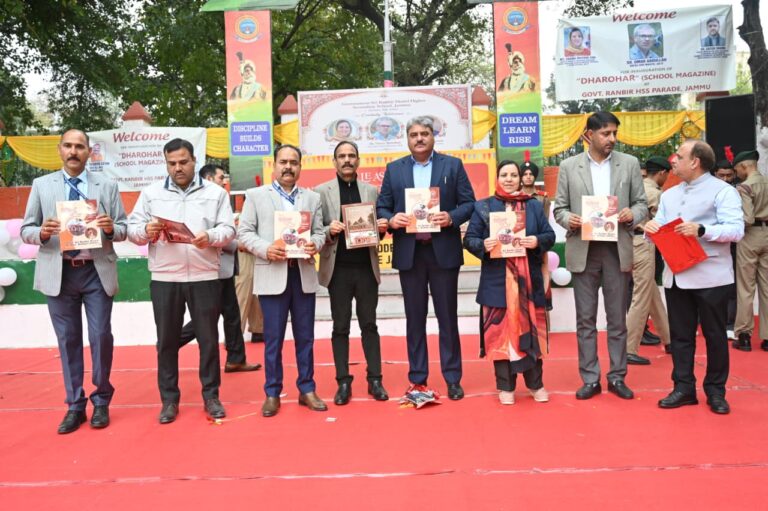
The highlight of the event was the formal release of the school’s Annual Magazine, “Dharohar”, a publication that reflects the intellectual vibrancy and creative potential of the student community. The magazine was formally unveiled by the Hon’ble Minister for School Education, Sakina Itoo, in the presence of distinguished guests including Satish Sharma, Sajjad Shaheen, Dr. Naseem Javaid Chowdhary, and Ajeet Sharma.
The dignitaries were accorded a traditional welcome and felicitated with ceremonial shawls and eco-friendly planters as tokens of respect. They lauded the institution for its rich heritage, consistent academic achievements and its monumental contribution to the educational landscape of the region for more than a century.

A major segment of the programme was dedicated to honouring excellence. Meritorious students who excelled in Board examinations and various academic competitions were felicitated amidst applause. Outstanding sports persons, NCC cadets and achievers in diverse fields who have brought laurels to the school at district, divisional and state levels were also honoured. The awards were presented by Cabinet Minister Satish Sharma, who exhorted students to pursue their goals with dedication, discipline and an unwavering spirit of excellence.

Addressing the gathering, Minister Sakina Itoo congratulated the institution on completing 140 glorious years of service in the field of education. She underscored the importance of holistic learning, character building and value-based education in shaping responsible citizens. Appreciating the release of “Dharohar”, she described the magazine as a meaningful platform that nurtures literary talent and intellectual creativity among students.
Cabinet Minister Satish Sharma, in his address, highlighted the significance of Annual Day celebrations in instilling confidence and providing a stage for students to showcase their multifaceted talents. He commended the teaching fraternity for their relentless efforts in mentoring young minds and upholding academic standards. MLA Sajjad Shaheen also congratulated the school for successfully preserving its historical legacy while embracing modern educational practices.
Earlier, Principal Dr. Kishor Sharma presented the Annual Report, offering a comprehensive overview of the institution’s achievements in academics, sports, NCC and cultural spheres. He described “Dharohar” as a mirror reflecting the scholastic excellence and creative expression of the students, and reiterated the school’s commitment to quality education and moral values.


The cultural programme emerged as a vibrant celebration of regional ethos and youthful energy. A traditional Dogri folk dance captivated the audience with its cultural richness, while an energetic Punjabi dance added colour and enthusiasm to the occasion. The disciplined and impressive display by NCC cadets drew admiration, symbolizing dedication and national spirit. Adding a delightful touch to the evening, kindergarten students presented a colourful musical performance that won resounding applause from the audience.
The event witnessed an overwhelming participation of parents, alumni and well-wishers, transforming the celebration into a memorable tribute to the institution’s glorious past and its promising future.
The function concluded with a formal vote of thanks, bringing to a close an evening that truly celebrated legacy, learning and leadership under one roof.

Union Minister Shri Ashwini Vaishnaw Outlines India’s AI Priorities for Manufacturing Engineering Technology (MET) at Strategic Convening of Industry and Academia

0

Vinod Bhat

New Delhi: The Union Minister for Electronics and Information Technology, Shri Ashwini Vaishnaw, today chaired a strategic convening of industry leaders and global academicians, policymakers and technology experts to articulate India’s AI priorities especially for the Manufacturing Engineering Technology (MET) ecosystem with a strong focus on adoption, skills development and inclusive growth.

At the India AI Impact Summit 2026, this convening was curated by NAMTECH under the leadership of Ministry of Electronics & Information Technology (MeitY). It brought together academicians from Massachusetts Institute of Technology (MIT), Indian Institute of Technology Madras (IIT-M), and other prominent universities alongside C-suite executives from industry such as from Microsoft India, Dell Technologies, Cisco India, Hitachi India, Tata Electronics, Rockwell Automation, Palo Alto Networks, PayPal, and Intel among others.

The industry-academia-government discussion featuring leading industry and academic leaders highlighted AI as a foundational enabler of productivity, competitiveness and innovation across India’s industrial sectors, aligned with the national vision of Viksit Bharat @2047.

This convening builds on the momentum of the Industry-Academia Roundtable held in May 2025 at Bharat Mandapam, which underscored the need for collective action to enable India’s industrial transformation. Consequently, the Manufacturing Engineering Technology (MET) platform is being envisaged – convened and catalysed by NAMTECH – to bring together industry, academia, and government in a shared governance and execution model, and place manufacturing at the core of India’s accelerated growth and decarbonization agenda.

The event also marked the launch of the White Paper Concept on “AI for Manufacturing, Engineering Technology (AI-MET)”, by the hon’ble Minister Shri Ashwini Vaishnaw. The White Paper Concept presents a strategic framework for embedding AI across manufacturing and associated value chains to drive productivity, sustainability and global competitiveness. It outlines a process for putting together coordinated pathways for industry, academia, and policymakers for embedding AI across India’s MET ecosystem.

Speaking at the event, Shri Ashwini Vaishnaw said: “Artificial intelligence is a foundational pillar in India’s journey towards Viksit Bharat. By integrating AI across Manufacturing Engineering Technology, we can enhance productivity, strengthen competitiveness, and unlock new opportunities for innovation and entrepreneurship. Our focus is on building an inclusive AI ecosystem that empowers enterprises and MSMEs alike, while preparing India’s workforce for the future. Initiatives such as the AI-MET White Paper reflect the kind of collaborative, mission-driven approach needed to translate technological capability into outcomes on the ground. I am happy that NAMTECH has taken the lead in convening industry, academia and policymakers towards this shared national objective. My request to NAMTECH would be to use this opportunity to develop the next level of talent that can enable India to emerge as a major manufacturer of precision equipment.”

Prof. Eric Grimson, Chancellor for Academic Advancement, Massachusetts Institute of Technology (MIT), Boston, USA, added:“The next phase of India’s AI journey will be defined by its ability to move from capability to application – embedding AI across industry, enterprises and MSMEs, investing in skills at scale, and ensuring that innovation remains inclusive. This requires sustained collaboration across academia, industry and government to build systems that can translate research and technology into real-world outcomes.”

Mr. Pravin Panchagnula, Executive Director – Manufacturing & Conglomerates, Microsoft India remarked: “The impact of AI in India’s industrial sectors will be determined by its deployment on the shop floor and across complex engineering systems. Enabling adoption among MSMEs, alongside targeted skilling and upskilling of the workforce, will be essential for building resilient and globally competitive manufacturing value chains.”

Mr. Vinod Karumampoyil Director – Digital Transformation, Cisco India added: “As AI becomes integral to modern manufacturing, building strong application-oriented skills across the workforce is essential. Closer collaboration between industry and academic institutions will be key to ensuring that talent is prepared to deploy AI responsibly and at scale, strengthening productivity and competitiveness across India’s manufacturing ecosystem.”

Ms. Swapna Bapat, MD & Vice President – India & SAARC, Palo Alto Networks remarked: “In the landscape of cybersecurity and IT, poorly designed Operational Technology (OT) poses a significant risk. Designing a secure, enterprise-grade network requires three critical elements. As AI becomes a cornerstone of modern manufacturing, we must prioritize building application-oriented skills across the workforce. Our goal is to bridge the gap between education and industry, bringing modern network security principles into schools to ensure students are ready for immediate workplace deployment.”

Mr. Dilip Sawhney, Managing Director – India, Rockwell Automation added: “For India’s manufacturing sector, the real impact of AI will be realised when it is integrated into industrial automation systems and deployed at scale across production environments. Bridging the gap between digital innovation and shop-floor execution requires strong collaboration between industry, academia and government. Initiatives such as this create the ecosystem needed to accelerate adoption, strengthen workforce capability, and enhance the global competitiveness of India’s manufacturing value chains.”

Dr. Ibrahim Hafeezur Rehman, Operating Director General & CEO, NAMTECH remarked: “By grounding education in real-world industrial contexts, NAMTECH aims to show how application-oriented learning can enable day-zero deployment of talent into production environments. Through the MET Platform and partnerships with industry and academia, this approach can help shape scalable models for preparing the workforce for India’s Manufacturing Engineering Technology transformation.”

India to Champion Edge AI Solutions with Real-World Impact, Says Shri Ashwini Vaishnaw

0

Vinod Bhat

New Delhi: The Research Symposium on AI & Its Impact, held as part of the India AI Impact Summit 2026 on 18th February 2026 the third day of the summit, convened leading researchers, policymakers, technologists and industry leaders to explore the transformative role of Artificial Intelligence across Science, Governance, Industry and Society. Designed as a platform to bridge the gap between frontier research with real-world application, the Symposium examined how AI can drive scientific breakthroughs while remaining aligned with public interest, safety and inclusive growth.

In his Special Address, Shri Ashwini Vaishnaw, framing India’s AI journey around practical deployment and population-scale impact, stated “Interacting with thousands of young people at the ongoing AI Expo, I was struck by their optimism about the future. That confidence has made me hopeful about a new chapter for our country and for the world. In India, our focus is on AI at the edge, AI that solves real-world problems, improves enterprise productivity, and addresses population-scale challenges in healthcare, agriculture, and climate change. This symposium is an opportunity to shape that future responsibly, and I urge leaders here to offer concrete ideas on how to make AI safe and truly beneficial for humanity.”
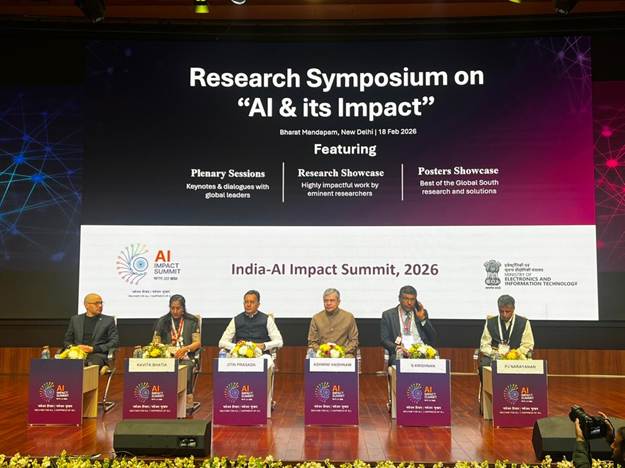
Highlighting AI’s potential to advance science and medicine, Sir Demis Hassabis, Co-Founder & CEO, Google DeepMind, said “We are at a threshold moment where artificial general intelligence (AGI) is on the horizon. AI will be one of the most transformative technologies in human history, with extraordinary potential to advance science, medicine, and human health but it also carries real risks. Because this technology will affect the whole world, international dialogue and cooperation are essential to ensure its benefits are shared and its dangers responsibly managed.”

Setting the academic context, Prof. P.J. Narayanan, Former Director, IIIT Hyderabad,  underscored the rapid rise of AI within global scientific discourse and the need to engage diverse perspectives on both opportunity and risk. He highlighted the Symposium’s carefully curated structure, including plenary keynotes, research dialogues on frontier AI questions, Global South-focused panels, and poster presentations by leading international researchers, describing it as a platform designed to “spur dialogue and discussion on the next frontiers of AI research and its societal impact.”

Together, the opening addresses set the tone for a Symposium anchored in scientific rigor, global collaboration, and responsible innovation at a pivotal moment in AI’s evolution.

In his keynote session, Sir Demis Hassabis reflected on the rapid progress of AI since founding DeepMind in 2010, while cautioning that true artificial general intelligence (AGI) remains a work in progress. He outlined key technical gaps, including continual learning, long-term planning and consistency across tasks, even as he expressed strong optimism about AI ushering in a new era of scientific discovery. He closed with a message of “cautious optimism,” emphasising that while technical challenges can be solved through innovation, international cooperation will be essential to ensuring AI’s benefits are widely shared and its risks responsibly managed.

For the second keynote session, Dame Wendy Hall, Professor of Computer Science at the University of Southampton, examined the future of artificial intelligence through the lens of governance, inclusion and workforce transformation. Speaking in the context of the Global South, she called for AI systems that are built “for humanity”, grounded in safety frameworks, equitable access and sovereign capability. Emphasising that AI strategies must reflect national priorities, linguistic diversity and local data ecosystems, she highlighted the importance of inclusive development models that ensure long-term societal benefit. Her address conveyed cautious optimism, urging governments, researchers and young innovators, particularly in emerging economies, to shape AI in ways that are locally grounded, globally connected and fundamentally inclusive.

In his keynote address, Prof. Yoshua Bengio, Professor of Computer Science, Université de Montréal focused on the emerging risks associated with increasingly capable and agentic AI systems, particularly issues of misalignment, deceptive behaviour and inadequate risk mitigation. He warned that recent advances in AI capabilities are outpacing existing evaluation and safeguard mechanisms, highlighting concerns such as sycophancy, bias, jailbreaks, cyber misuse and systems exhibiting forms of self-preserving behaviour.

Emphasising that alignment challenges often arise as unintended side effects of current training methods, Prof. Bengio called for a fundamental shift in AI design, moving away from goal-driven, human-imitative systems toward models grounded in scientific reasoning.

Lastly, in his keynote address, Dr. Yann LeCun, Executive Chairman of AMI Labs and Professor of Computer Science at New York University, challenged prevailing narratives around artificial general intelligence, arguing that current AI systems, including large language models remain far from human-level intelligence. While acknowledging their impressive performance in language and narrow-domain tasks, he underscored their fundamental limitations: a lack of true understanding of the physical world, absence of persistent memory, weak long-term planning capabilities, and insufficiently robust safety controls.

To overcome these constraints, Dr. LeCun proposed a shift toward developing “world models”, predictive systems capable of simulating how environments evolve in response to actions. Such systems, he argued, would enable AI to anticipate consequences, plan effectively, and operate within defined safety guardrails, making them more controllable and aligned with human objectives.

As the Research Symposium on AI & Its Impact concluded, the discussions reflected both the extraordinary promise and profound responsibility that accompany rapid advances in artificial intelligence. From scientific discovery and global governance to alignment, safety and next-generation architectures, the Symposium underscored a shared imperative: to shape AI systems that are not only powerful, but trustworthy, inclusive and firmly aligned with human values.

AI Innovations Steal the Show at India AI Impact Summit 2026 Expo with Continued High Visitor Engagement and Global Buzz

0

Vinod Bhat

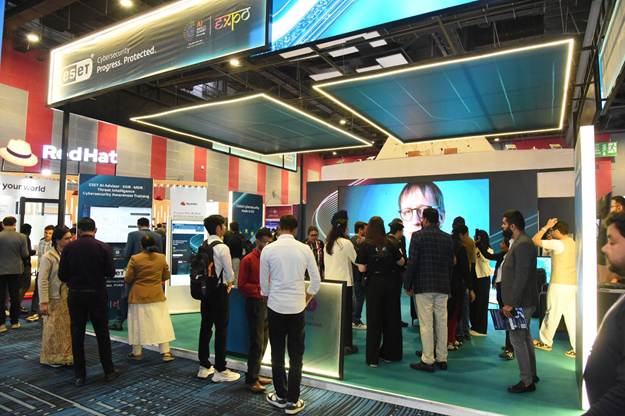
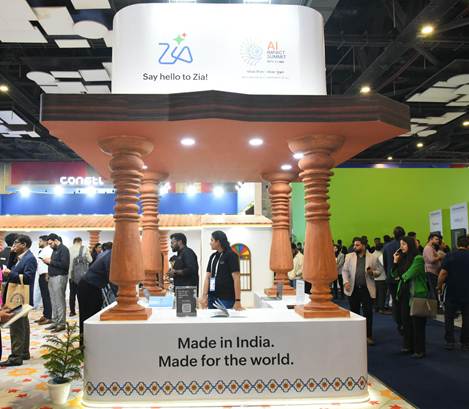
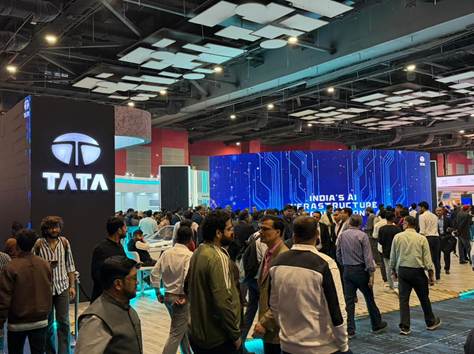
New Delhi: On the third day of the India AI Impact Summit 2026,  Expo spread across 10 Pavilions remains  a major attraction, drawing strong participation from industry leaders, start-ups, academic institutions, government representatives and citizens. A large number of youth and students were seen at the  exhibition arena in spite of the inclement weather to witness live demonstrations of cutting-edge Artificial Intelligence (AI) tools and technologies.

A key focus area at the Expo is AI-driven cybersecurity, Fintech solutions designed to strengthen digital infrastructure against emerging threats. Exhibitors have showcased advanced Managed Detection and Response (MDR) platforms, AI-powered threat intelligence systems,multilayered prevention-first security frameworks, secure end-to-end AI transactions for the next phase of digital commerce. These solutions combine artificial intelligence with human expertise to detect anomalies, prevent cyber-attacks, and respond rapidly to incidents, thereby reducing risks and safeguarding critical digital assets.

According to experts, predictive analytics, real-time monitoring, and AI-enabled response systems can help businesses, government departments, and public institutions strengthen cyber security systems.

The exhibition has also showcased AI applications in governance, enterprise systems integration, smart urban platforms and digital infrastructure management, reinforcing the role of AI in building scalable and efficient systems.

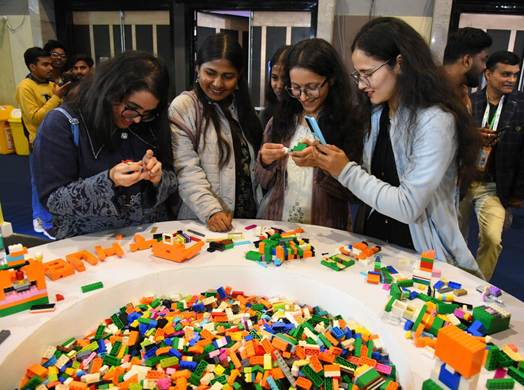
Visitors are actively interacting with exhibitors to understand practical deployment models, data security standards, compliance mechanisms and real-world impact. The enthusiastic response from students and young professionals reflect growing interest in AI as a career.

The India AI Impact Summit 2026 Expo is a platform for collaboration between academia, industry and government. The strong footfall at the exhibitions underlines the relevance of AI-driven solutions in strengthening science, innovation and resilience while democratising access to advanced technologies. The Summit highlights India’s commitment to building secure, inclusive and future-ready AI ecosystems for sustainable growth.

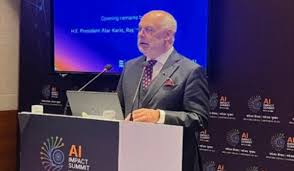
Education Is Key to Making AI Work Responsibly, says Alar Karis, President of Republic of Estonia at India AI Impact Summit 2026

0

Vinod Bhat

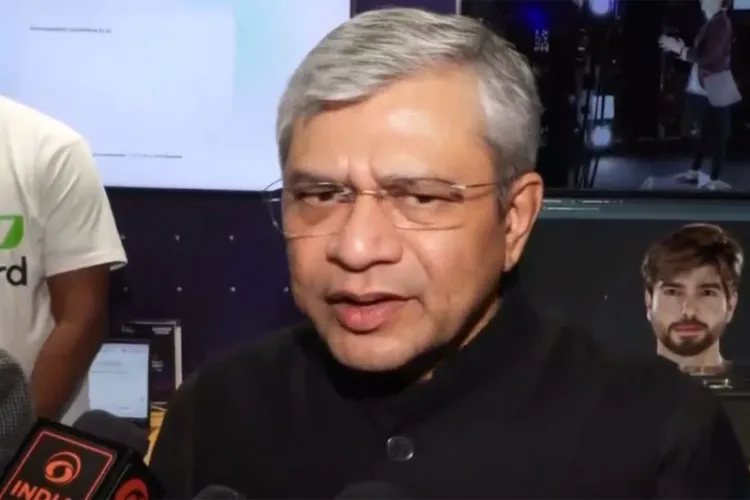
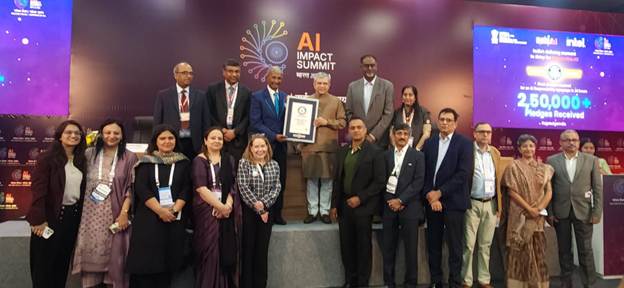
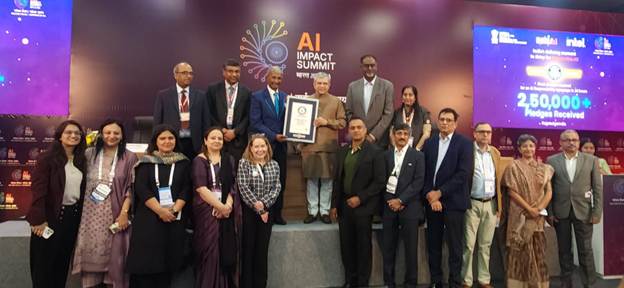
New Delhi: Shri Ashwini Vaishnaw, Union Minister for Electronics and Information Technology, today announced that India has successfully achieved the Guinness World Records title for the “Most pledges received for an AI responsibility campaign in 24 hours,” with a staggering 250,946 valid pledges received during the 24-hour period from February 16–17.

The announcement was made during the India AI Impact Summit 2026 at Bharat Mandapam, New Delhi, in the presence of Shri S. Krishnan, Secretary, Ministry of Electronics and Information Technology (MeitY); Shri Abhishek Singh, Additional Secretary, MeitY, CEO, IndiaAI Mission and DG, NIC; Ms. Kavita Bhatia, COO, IndiaAI; Mr. Srinivasan Iyengar, SVP and GM, Central Engineering Group, Intel; and Mr. Pravin Patel, Guinness World Records Adjudicator, who officially verified the achievement.

The nationwide AI Responsibility Pledge campaign, launched under the IndiaAI Mission in collaboration with Intel India on February 16, sought to mobilise citizens across the country to commit to the ethical, inclusive, and responsible use of Artificial Intelligence through the dedicated portal, aipledge.indiaai.gov.in. The initiative encouraged participants to reflect on key principles such as data privacy, accountability, transparency, and combating misinformation through scenario-based questions, thereby reinforcing India’s vision of building a trustworthy and human-centric AI ecosystem. Participants who completed the pledge received a digital badge and access to AI learning pathways.

Addressing the media, Shri Vaishnaw hailed Prime Minister Narendra Modi’s vision of engaging youth in the responsible and ethical use of AI. “It is his vision that inspired us to reach out to colleges, engage with faculty members, and encourage students to take this pledge to use AI as a tool for the good of society — as a technology that improves our lives — and to ensure it is used responsibly. A special round of applause to the 250,000 students who have taken this pledge. This is truly a proud day for the country. This is the direction in which the nation must move — towards a future where AI is embraced with responsibility.”

The Minister highlighted that the record-setting participation — far exceeding the initial target of 5,000 pledges — reflects strong public engagement and growing awareness around responsible AI adoption. He noted that the campaign represents a significant milestone in citizen-led digital responsibility and demonstrates India’s commitment to shaping the global AI discourse with a focus on inclusion, ethics, and public trust.

“India Sets Guinness World Record with more than 2.5 lakh AI Responsibility Pledges in 24 Hours at India AI Impact Summit 2026” announces Union Minister Shri. Ashwini Vaishnaw

0

Vinod Bhat

New Delhi: Shri Ashwini Vaishnaw, Union Minister for Electronics and Information Technology, today announced that India has successfully achieved the Guinness World Records title for the “Most pledges received for an AI responsibility campaign in 24 hours,” with a staggering 250,946 valid pledges received during the 24-hour period from February 16–17.

The announcement was made during the India AI Impact Summit 2026 at Bharat Mandapam, New Delhi, in the presence of Shri S. Krishnan, Secretary, Ministry of Electronics and Information Technology (MeitY); Shri Abhishek Singh, Additional Secretary, MeitY, CEO, IndiaAI Mission and DG, NIC; Ms. Kavita Bhatia, COO, IndiaAI; Mr. Srinivasan Iyengar, SVP and GM, Central Engineering Group, Intel; and Mr. Pravin Patel, Guinness World Records Adjudicator, who officially verified the achievement.

The nationwide AI Responsibility Pledge campaign, launched under the IndiaAI Mission in collaboration with Intel India on February 16, sought to mobilise citizens across the country to commit to the ethical, inclusive, and responsible use of Artificial Intelligence through the dedicated portal, aipledge.indiaai.gov.in. The initiative encouraged participants to reflect on key principles such as data privacy, accountability, transparency, and combating misinformation through scenario-based questions, thereby reinforcing India’s vision of building a trustworthy and human-centric AI ecosystem. Participants who completed the pledge received a digital badge and access to AI learning pathways.

Addressing the media, Shri Vaishnaw hailed Prime Minister Narendra Modi’s vision of engaging youth in the responsible and ethical use of AI. “It is his vision that inspired us to reach out to colleges, engage with faculty members, and encourage students to take this pledge to use AI as a tool for the good of society — as a technology that improves our lives — and to ensure it is used responsibly. A special round of applause to the 250,000 students who have taken this pledge. This is truly a proud day for the country. This is the direction in which the nation must move — towards a future where AI is embraced with responsibility.”

The Minister highlighted that the record-setting participation — far exceeding the initial target of 5,000 pledges — reflects strong public engagement and growing awareness around responsible AI adoption. He noted that the campaign represents a significant milestone in citizen-led digital responsibility and demonstrates India’s commitment to shaping the global AI discourse with a focus on inclusion, ethics, and public trust.

Ramadan moon sighted in J&K; first fast tomorrow : Grand Mufti

0

Srinagar, Feb 18 : The first fast of the holy month of Ramadan will be observed in Jammu and Kashmir on Thursday, as the crescent moon was sighted on Wednesday evening.

Grand Mufti of Jammu and Kashmir, Nasir-ul-Islam Farooqi, announced the sighting after receiving verified reports from various districts across the Kashmir Valley and the Jammu region.

The announcement was made following extensive consultations with scholars from different schools of Islamic thought in the Union Territory.

“The crescent has been sighted. After consulting with my brothers from various schools of thought, it is declared that the holy month of Ramadan will commence tomorrow,” Mufti Nasir-ul-Islam said.

The Grand Mufti also highlighted the spiritual significance of the month and urged people to remember the underprivileged. He emphasized that serving humanity and extending a helping hand to the needy is a vital way to seek the pleasure of the Almighty during this blessed period. (KNS)