spot_imgspot_img
spot_img
Home Blog Page 119

Intoxicated Man Sentenced to 7-Day Community Service in Ganderbal

0

Court Adopts Reformative Approach; Conviction Secured Under Section 355 BNS

Touseef Wani

Ganderbal, Feb 17 : Ganderbal Police on Tuesday secured the conviction of an accused under Section 355 of the Bharatiya Nyaya Sanhita (BNS) from the Court of Judicial Magistrate 1st Class (JMIC), Kangan, in a case related to breach of public peace.

Police has successfully secured the Conviction of an accused under Section 355 of the Bharatiya Nyaya Sanhita (BNS) from the Hon’ble Judicial Magistrate 1st Class (JMIC), Kangan.

The accused, Amir Ahmad Beigh, S/O Ghulam Rasool Beigh, R/O Thune, Kangan, was found guilty of attempting to disturb public peace and tranquility of the area while being in an intoxicated condition.

Taking a reformative approach, the Hon’ble Court sentenced the accused to undergo Community Service for a period of Seven (07) days at any institution under the Social Welfare Department, Ganderbal. The Case was prosecuted by Prosecuting officer Ilyas Khawaja, it reads.

Ganderbal Police reiterates its commitment to maintaining public order and ensuring peace in the district. Strict legal action shall continue against any individual found indulging in activities that disturb communal harmony or public tranquility.

Kangri’s Glow Fades in the Age of Modern Heating, Leaving Craftsmen With Fewer Buyers

0
TAQWA SHAFI
SRINAGAR, Feb 17: For generations, the gentle warmth of the kangri defined winter in Kashmir. The small earthen firepot, filled with glowing embers and cradled in a finely woven wicker casing, was more than just a source of heat — it was a symbol of resilience against the Valley’s biting cold. Slipped discreetly beneath the traditional pheran, the kangri travelled with its owner from dawn to dusk, warming hands, feet and spirits alike. Entire families depended on it, and hundreds of artisans across Kashmir depended on crafting it for their livelihood.
Today, that intimate warmth is steadily being replaced by the uniform heat of hamams and electric heaters.
Hamams, once largely confined to mosques, shrines and a few affluent homes, have in recent decades become a common feature in private houses. Built beneath floors and fueled by firewood or electricity, they provide steady, room-wide warmth. In recent years, electric hamams and portable room heaters have further transformed winter living. They require little maintenance, produce no smoke and eliminate the risk of burns — all factors that make them attractive to modern households. For families able to bear the cost of installation and electricity, heated rooms offer a level of convenience the kangri cannot match.
But for the artisans who have shaped clay pots and woven wicker frames for decades, this transition has come at a heavy price.
In Bandipora, second-generation kangri maker Ghulam Nabi recalls a time when winters meant brisk business. Orders would pour in weeks before snowfall, and artisans would work tirelessly to meet demand. “We used to sell hundreds every winter,” he says, his voice tinged with disbelief at how quickly things have changed. “Now, if I manage to sell 30 or 40, it is considered good. Hamams and electric heaters have replaced most of our customers. People don’t carry kangris under their pherans anymore.”
The decline has not only reduced sales but also shaken the continuity of the craft itself. Abdul Hamid, an artisan from Srinagar, learned the skill from his father, as generations before him had done. Yet he sees little interest among his own children. “I learned this craft from my father, but my sons are not interested,” he says quietly. “They see that no one wants kangris now. Hamams give warmth without our work. It feels like years of our labor are being ignored.”
The financial strain is evident. Gulam Qadir Bhand, also from Bandipora, explains how prices have dropped sharply in a desperate attempt to attract buyers. “We once sold a kangri for ₹280. Now we are begging customers to buy it for ₹200 or even less. This winter, I have sold only 20 kangris. There are no buyers anymore,” he says. Faced with mounting expenses and shrinking returns, he is contemplating leaving the craft altogether. “I am thinking of switching to another business. We cannot survive like this.”
Retailers confirm the shift in consumer preference. Bashir Ahmad, who runs a household goods shop in Nowhatta, Srinagar, remembers winters when families purchased multiple kangris in preparation for the cold. “Earlier, every family bought several before winter,” he says. “Now they invest in hamams, electric hamams or room heaters. The kangri market is shrinking fast, and artisans are struggling to earn even a basic living.”
Even in rural areas, where high construction and electricity costs limit access to modern heating systems, reliance on kangris is no longer as strong as it once was. In parts of Kupwara, households still use them, but alternatives such as wood stoves and small heaters are increasingly preferred. “In our village, kangris are still used, but fewer people depend on them,” says Naseema, a resident. The gradual shift suggests that modernization is reaching even those communities that once clung firmly to tradition.
In an effort to adapt, some artisans have turned to crafting decorative kangris, adorned with intricate patterns and bright colors, marketed for weddings and special occasions. Mohammad Yousuf from Batmaloo in Srinagar says these designer pieces provide occasional sales, but not enough to sustain a family. “I can sell a few decorative kangris,” he explains. “But it does not cover our expenses. Hamams have made it very hard to survive only by making kangris.”
Beyond the economic implications lies a deeper concern: the erosion of cultural heritage. The kangri has long occupied a special place in Kashmir’s social and cultural life, referenced in poetry, folklore and daily conversation. It was once inseparable from the pheran, a pairing that defined winter identity in the Valley. Now, as electric warmth replaces ember heat, the kangri risks becoming more of a nostalgic artifact than a living tradition.
For artisans like Qadir, the change feels definitive. “Our traditional hamams and now electric systems have pushed craftsmen into other businesses,” he says. “We are forced to think of other work because there are no buyers left.”
In some homes, the kangri still glows softly beneath a pheran, carrying with it the scent of charcoal and memories of another era. But for the craftsmen who once shaped each piece by hand, that glow is fading — not just from living rooms, but from their livelihoods and from a tradition that once warmed the very heart of Kashmiri winter.


Food Safety Team Conducts Rigorous Market Surveillance in Parimpora & Tengpora Markets — Ensures Compliance with FSS Act

0

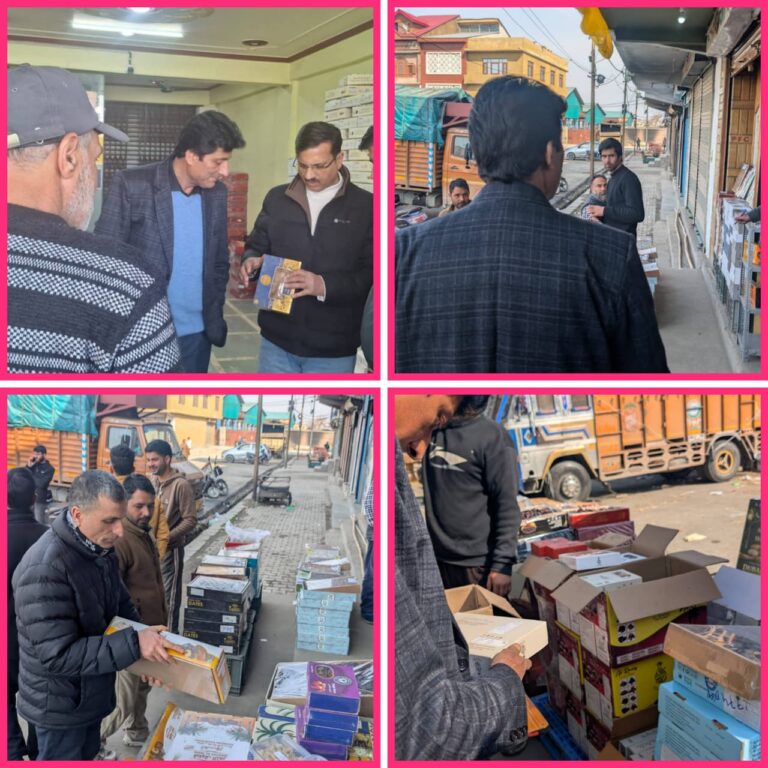
Srinagar: The Food Safety Team Srinagar (DFCO), led by *Assistant Commissioner Food Safety, Srinagar*, yameen ul nabi conducted an intensive market inspection drive today at *Parimpora Fruit Mandi and Tengpora Market* to ensure strict adherence to food safety standards.

The inspection focused primarily on the quality, hygiene, storage, and labeling of key food items widely consumed by the public, including:
Like ,Dates, Fresh Fruits, Vegetables, Dry Fruits

During the inspection, officials verified compliance with mandatory labeling requitements and quality

*Strict Directions Issued to Wholesalers & Traders:*

All wholesalers, retailers, and vendors have been *formally directed to strictly follow Good Storage Practices (GSP)* and ensure that *every food item sold bears complete, accurate, and compliant labeling as per FSSAI regulations*.
Any deviation — including missing labels, expired goods, misbranded products, or improper storage will invite immediate legal action under the Food Safety and Standards Act, 2006.*
Zero Tolerance Policy
No food item violating any labeling or safety norm will be permitted to remain in the market. Non-compliant stock will be seized and destroyed as per law.
*Consumer Awareness:*
Consumers are encouraged to report any suspected unsafe, mislabeled, or adulterated food product by calling *Helpline No. 104* or visiting the nearest DFCO office.
All Food Business Operatrs are directed to Verify that every product they receive meets FSSAI labeling & packaging norms
Failure to comply will lead to penalties, cancellation of licenses, and prosecution under FSS Act.

India to Add 20,000 GPUs Beyond Existing 38,000 to Strengthen National AI Infrastructure; Announces MEITY Minister Shri Ashwini Vaishnaw at Day Two of India AI Impact Summit 2026

0
Vinod Bhat

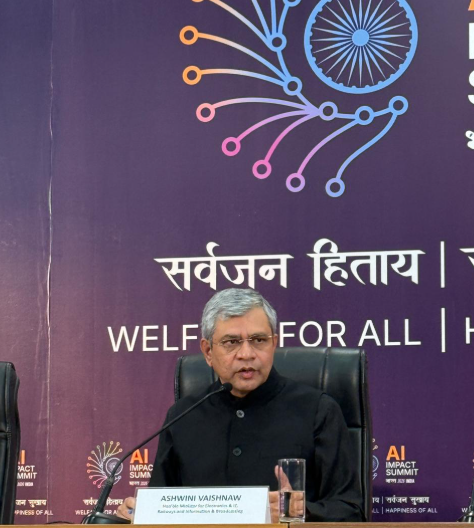
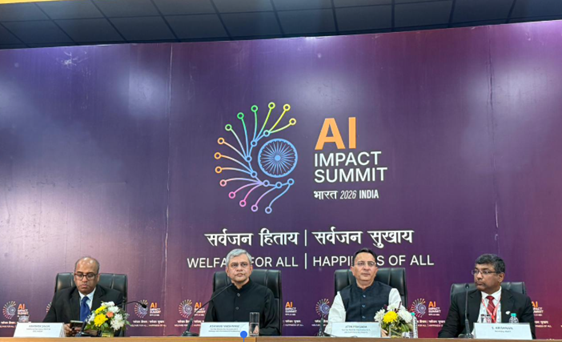
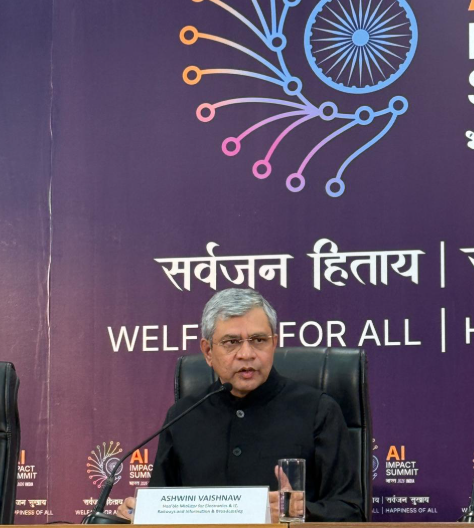
New Delhi : Union Minister for Electronics & Information Technology, Shri. Ashwini Vaishnaw, announced on the second day of the India AI Impact Summit 2026 that India will scale its compute capacity beyond the existing 38,000 GPUs with the addition of 20,000 GPUs in the coming weeks. He highlighted that this marks the next phase of India’s AI strategy, with a significant expansion of compute infrastructure and a focus on responsible AI deployment.

Addressing the media at the Summit, the Minister reiterated that the focus remains on responsible AI development and wider deployment across sectors such as healthcare and education to ensure that AI benefits all.

Shri. Vaishnaw emphasized that India’s AI strategy demonstrates the Prime Minister’s Shri Narendra Modi’s vision of democratizing technology. Unlike many other countries where AI infrastructure is controlled by a few companies, India has provided AI compute access to a wide section of its population.

The interaction was attended by Shri. Jitin Prasada, Minister of State for Electronics & Information Technology and Commerce & Industry; Shri. S. Krishnan, Secretary, Ministry of Electronics and Information Technology; and Shri. Abhishek Singh, CEO, IndiaAI Mission.

The Summit, being held from 16–20 February in New Delhi, has brought together Heads of State and Government, ministers, global technology leaders, researchers, multilateral institutions, industry stakeholders, startups, and students.

The Minister also highlighted strong global participation in the Summit, with top executives conducting around 20 sessions and demonstrating commitment from global AI leaders.He acknowledged that the entire team is working day and night to organize what is being called the world’s biggest AI Summit.

Shri. Vaishnaw shared his optimism regarding the investment opportunity, stating that over the next two years, more than $200 billion worth of investment is likely to come. He noted the commitment of venture capital firms to deep-tech startups and stated that investments are coming across all five layers of the AI stack. He added that venture capital firms and other players are committing funds for large solutions and major applications.

The Minister stated that the IT industry is one of India’s biggest strengths and that every technology transition must be managed jointly by industry, academia, and government. Work is currently underway on three fronts: reskilling and upskilling the existing workforce, creating a new talent pipeline, and ensuring that future generations are prepared for emerging technologies. All three efforts are progressing in parallel.

Referring to energy capacity, the Minister noted that India is among the rare countries where more than 50 percent of power generation capacity comes from clean sources, currently about 51 percent, which provides a significant advantage for the country. He further said that the Future Skills programme, launched three years ago, is now being deployed for AI-based reskilling. The Ministry of Education and AICTE are working on revising course curricula to ensure that the talent pipeline remains updated and that youth are equipped with new opportunities.

Regarding India’s sovereign AI models, the Minister stated that several models launched at the Summit have been tested and measured against multiple parameters. When compared with global models, several Indian models have been rated better than many large international AI systems, underscoring India’s innovation capabilities. He also noted that Stanford has ranked India among the top three AI nations globally.

Acknowledging the potential misuse of AI, the IT minister highlighted the importance of a techno-legal approach to ensure AI is used for good while minimizing harmful impacts. This approach combines technological solutions with regulatory frameworks. He noted that India’s AI Safety Institute, a virtual institute working with multiple academic institutions, is developing technical solutions to prevent AI misuse.

On sectoral deployment, Shri Vaishnaw described AI as driving the fifth industrial revolution, impacting every sector of the economy and society. He cited healthcare solutions showcased at the Summit that can make healthcare more affordable and education solutions that enable tailored learning for every student.

Regarding chip development, the Minister reaffirmed India’s commitment to the Semiconductor Mission, emphasizing that design will be the primary focus in Semiconductor 2.0. He projected that at least 50 deep-tech startups are expected to emerge from India in the coming years, driven by current innovation and development efforts.

Addressing sustainability, the Minister highlighted investments in clean energy to power AI data centres and ongoing research to reduce power and water consumption. Emerging innovations indicate the potential to reduce AI infrastructure energy use by up to 35 percent.

The Minister noted that on the first day of the Summit, over 2.5 lakh students took a pledge to use AI for responsible innovation. The initiative is being submitted for recognition by Guinness World Records.

The Minister concluded that India is committed to advancing AI responsibly, fostering innovation, and ensuring widespread deployment across sectors to benefit society at large.

Sovereign AI Key to India’s Transition from Consumer to Global AI Creator

0
Vinod Bhat

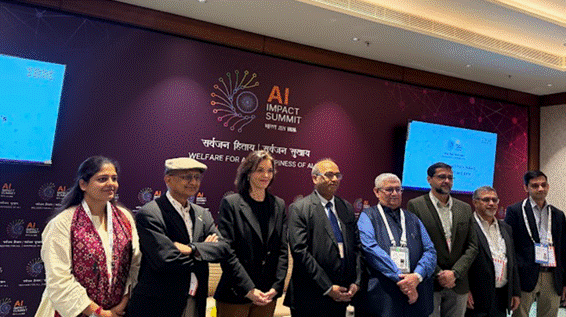
New Delhi : The session titled “Scaling Impact from India’s Sovereign AI and Data” at the India AI Impact Summit 2026 focused on how India can move from being primarily a consumer of Artificial Intelligence (AI) to becoming a creator of AI systems with global relevance.

The discussion highlighted the need to address gaps in deep research talent and long-term innovation investment. The panel emphasised that true AI capacity is built through sustained research ecosystems and strong mentorship, rather than through short-term interventions. Speakers underlined three key pillars of AI sovereignty: development of indigenous models adapted to Indian languages and social contexts; creation of resilient domestic infrastructure; and strengthening of foundational research.

The session also linked advanced AI research to national priorities such as financial inclusion, agriculture, healthcare, and education. The speakers noted that AI must be aligned with India’s development goals to deliver meaningful and inclusive outcomes.

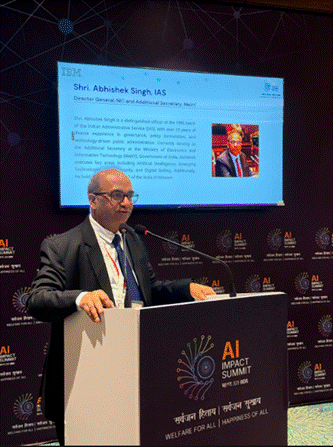
Shri Abhishek Singh, Director General, National Informatics Centre (NIC) and Additional Secretary, Ministry of Electronics and Information Technology (MeitY), stated that sovereign AI does not mean working in isolation. He said that sovereignty in AI means having control over how AI systems are designed, deployed, and governed. He emphasised that AI must be used to solve real challenges in healthcare, education, agriculture, and financial inclusion so that citizens can access services in their own languages and improve their quality of life.

Shri Rishi Bal, Chief Executive Officer, BharatGen, said that AI adoption will take place across sectors but must be phased and carefully implemented, beginning with priority and sensitive areas such as governance, citizen services, and finance. He described AI development as a continuous journey rather than a sector-by-sector deployment exercise. He stressed the importance of building shared digital infrastructure, including common models, inference architectures, and components that enable innovators to build faster and safer solutions. He added that AI sovereignty requires the creation of a national ecosystem of models and infrastructure that can be widely used, while also enabling startups to innovate. He noted that such an ecosystem requires collaborative efforts across the country.

Shri Rajiv Ratan Chetwani, Director, Directorate of Information Systems and Management (DISM), Indian Space Research Organisation (ISRO), highlighted the strategic importance of AI. He stated that for ISRO, sovereign AI is a strategic necessity and a critical infrastructure for space observation and national autonomy. He emphasised that AI systems used in strategic sectors must operate offline without direct internet dependence and must be transparent and auditable. He underlined the need for explainable models, clear data lineage, and training pipelines aligned with national legal frameworks. He added that India’s vast geospatial data resources can be leveraged through AI to strengthen agriculture, disaster management, climate prediction, and urban planning, thereby delivering both security and societal benefits.

The session contributed to the overall focus of the India AI Impact Summit 2026 on strengthening India’s AI ecosystem through sustained research, infrastructure development, and institutional collaboration. The discussions reflected a shared commitment to building long-term capacity to support innovation and advance national priorities.

India Sets Global Benchmark in Green Hydrogen Pricing: Union Minister Shri Pralhad Joshi

0

Vinod Bhat

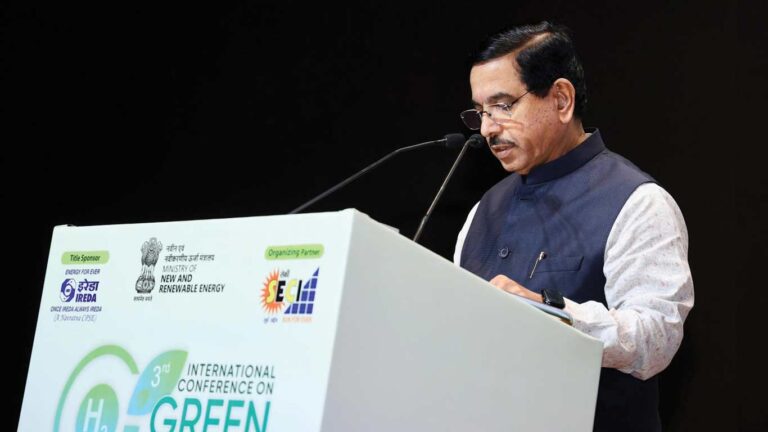
New Delhi: Union Minister of New and Renewable Energy, Shri Pralhad Joshi, addressed the inaugural Mumbai Climate Week today, underscoring that India’s climate ambition is now translating into decisive climate action on the ground. The Minister said under the National Green Hydrogen Mission, India has set a new global benchmark in green hydrogen pricing, with discovered prices falling to ₹279 per kg. He further noted the discovery of globally competitive green ammonia pricing, reinforcing India’s leadership in emerging clean fuel markets.

At the national level, he informed that India is set to cross the milestone of 30 lakh beneficiary households under PM Surya Ghar: Muft Bijli Yojana this week, marking a major step in scaling distributed rooftop solar across the country.

The Union Minister highlighted that India’s non-fossil fuel capacity has reached 272 GW, reflecting rapid expansion over the past decade. Solar capacity stands at 141 GW and wind capacity at 55 GW, reinforcing India’s position as one of the world’s leading renewable energy nations. He reiterated that India has already achieved over 52 per cent non-fossil capacity in its installed power mix ahead of schedule.

He stated that under the visionary leadership of Hon’ble Prime Minister Shri Narendra Modi, India has transformed the global climate narrative by positioning sustainability as a powerful engine of growth. The country’s renewable manufacturing ecosystem has expanded rapidly, supported by policy stability, financial allocation and institutional coordination.

The Union Minister stated that Maharashtra, under the leadership of Chief Minister Shri Devendra Fadnavis, is demonstrating how economic growth and environmental progress can advance together. He highlighted that through flagship schemes such as PM-KUSUM and PM Surya Ghar: Muft Bijli Yojana, farmers and households are becoming active participants in the clean energy transition, transforming from consumers to energy producers.

Shri Joshi noted that Maharashtra is targeting nearly 16 GW of solar capacity by the end of the year, with significant monthly additions strengthening the State’s renewable footprint. He emphasised that solarisation of agricultural feeders under PM-KUSUM has substantially reduced the cost of power supply to farmers, lowering subsidy burdens while enhancing sustainability.

The Union Minister emphasised that Mumbai Climate Week should mark not merely a platform for dialogue, but a defining step towards cleaner cities, competitive industries and a resilient, sustainable future. He called for stronger partnerships, scalable innovation, integration of advanced technologies including artificial intelligence in renewable energy systems, and accelerated deployment of storage and green hydrogen solutions.

Wular Lake Reopens After 10 Months, Locals Hope for Economic Revival

0

Tauseef Ahmad

Bandipora, Feb 17: Residents living around Wular Lake on Tuesday welcomed Lieutenant Governor Manoj Sinha’s decision to reopen the lake to tourists after nearly ten months of closure imposed in the aftermath of the Pahalgam attack, saying the move is expected to revive livelihoods dependent on tourism.

Earlier on Monday, Sinha announced on X that 14 tourist destinations across Jammu and Kashmir would be reopened in a phased manner. The sites had remained shut for security and administrative reasons following last year’s incident, which led to a sharp decline in visitor arrivals and economic activity in several tourism-dependent areas.

Local residents while speaking with the Kashmir Despatch said the reopening is likely to provide immediate relief to families who rely on seasonal tourism for income.

Communities around Wular Lake depend heavily on visitors for earnings generated through boat rides, food stalls, handicrafts, and guiding services. Many said the prolonged closure had pushed them into financial distress, forcing some to take loans or seek daily-wage work outside their villages.

Fayaz Ahmad, a shikara operator, said the announcement has brought hope after months of uncertainty. “For almost a year we had no tourists and no steady income. If visitors return, we can finally support our families again,” he said.

Manzoor Ahmad, who runs a small tea stall near the lakeshore, said tourism is the backbone of the local economy. “When the lake was closed, our earnings stopped overnight. Reopening it means business will restart not just for me but for many others,” he said.

Meanwhile, Rukhsana Bano, a visitor from Bandipora who arrived after hearing the news, said the reopening was encouraging for both tourists and locals. “Places like Wular should remain accessible. Tourism helps local youth find work and keeps these destinations alive,” she said.

Residents hope the government will work to improve the roads and will increase the facilities in villages around the lake so that people will earn their livelihood easily as they said the lake has more potential for tourism than other tourist destinations.

RailTel Successfully Curates AI Healthcare Panel Discussions at AI Impact Summit 2026

0

Vinod Bhat

New Delhi: RailTel Corporation of India Ltd., a Navratna CPSE under the Ministry of Railways, successfully curated and hosted two important panel discussions on Artificial Intelligence–driven healthcare at the AI Impact Summit 2026, held at Bharat Mandapam. The mega summit was organized under the aegis of the Ministry of Electronics and Information Technology and the IndiaAI Mission, bringing together policymakers, technology leaders, healthcare professionals, researchers, and innovators from India and across the globe.

RailTel curated two focused sessions titled “Public Health Powered by AI: RailTel’s Collaborative Model for AI-enabled Inclusive Healthcare for Bharat and Beyond” and “AI for Inclusive, Accessible, and Universal Healthcare.” Both sessions witnessed engaging discussions on leveraging Artificial Intelligence to strengthen public health systems, enhance healthcare accessibility, and ensure inclusive and equitable healthcare delivery.

The panel discussion on “Public Health Powered by AI” emphasized the importance of collaborative models involving government institutions, healthcare providers, research organizations, and technology partners. Panellists highlighted AI’s potential to strengthen disease surveillance, enable early detection, enhance clinical decision support, and improve population-scale health management. It was also stressed that AI must be developed and deployed as a catalyst for equity, ensuring it helps bridge healthcare gaps rather than widen existing disparities.

The second session on “AI for Inclusive, Accessible, and Universal Healthcare” focused on ensuring that AI-driven healthcare solutions reach underserved and remote populations. Experts underscored the need for patient-centric government policies, noting that healthcare innovation cannot be driven solely by profitability. The discussion highlighted key challenges such as limited high-bandwidth infrastructure in remote regions, the need for realistic deployment expectations aligned with on-ground realities, and the importance of measuring meaningful outcome-based indicators to assess AI’s impact. Panellists also emphasized that improving healthcare literacy is essential to prevent confusion and ensure AI supports truly universal and inclusive healthcare delivery.

The sessions featured distinguished panellists and moderators from government, healthcare institutions, academia, and industry, whose insights helped translate AI’s potential into actionable strategies for real-world implementation.

Talking about the sessions shri Sanjai Kumar, CMD/RailTel said “We express our sincere gratitude to MeitY and the IndiaAI Mission for entrusting RailTel with the responsibility of organizing these important panel discussions at the India AI Impact Summit 2026. This summit provided a valuable platform to deliberate on how Artificial Intelligence can drive inclusive and accessible healthcare for Bharat and beyond. As a public sector enterprise committed to supporting national digital initiatives, RailTel sees itself as a key enabler in building secure, scalable, and resilient digital infrastructure that can power AI-driven public health services.”

RailTel’s participation and leadership in curating these sessions reaffirm its commitment to supporting India’s digital transformation and enabling next-generation public service delivery through secure and scalable ICT infrastructure. With its nationwide optical fibre network and extensive experience in deploying mission-critical digital platforms, RailTel continues to play a vital role in enabling technology-driven innovation across sectors including healthcare, governance, and citizen services.

RailTel Corporation of India Ltd., a Navratna PSU under Ministry of Railways, is one of the largest neutral telecom infrastructure providers in India and a trusted end-to-end IT & ICT service provider. RailTel has extensive optical fibre network of 63,000 RKM along the railway tracks, a 21,000 KM citywide access network, 11000+ Point of Presence (PoPs) and 1,100 telecom towers Nationwide. RailTel has also created one of the world’s largest integrated public Wi-Fi networks, offering services at 6,115 railway stations across the country. This robust infrastructure is supported by a Central Network Operation Centre (CNOC) and four region-based Network Operation Centres (NOCs).

RailTel is a unique PSU with telecom licenses (IP-1, NLD, ISP) in-house Tier III data centre services, own Security Operation Centre and MeitY- empaneled cloud services under one roof. The company’s wide-ranging service portfolio includes MPLS VPN, leased lines, tower co-location, data centre services, cloud services, security operation centre services, HD video conferencing, Aadhaar-based authentication systems, e- tendering, retail broadband under the brand RailWire, IT and ICT projects, railway Signalling projects, and many more.

Media Delegation from Mizoram arrives in Srinagar on Five-Day Press Tour

0
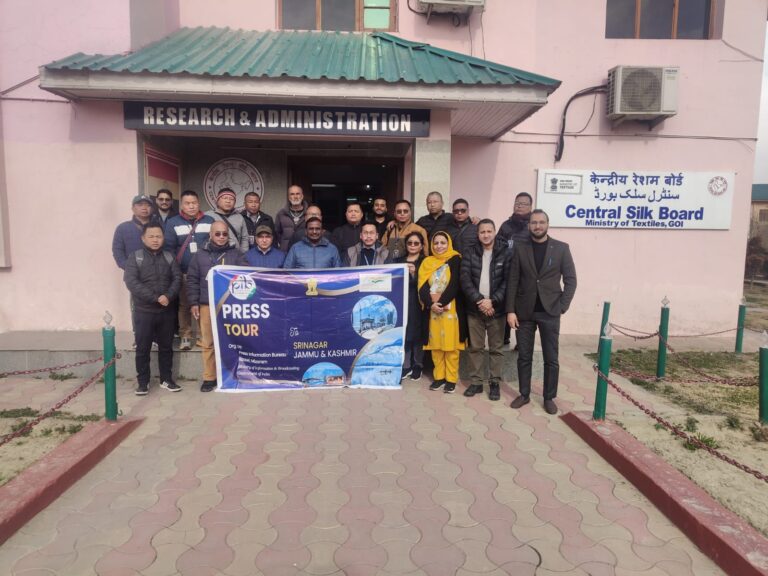
Srinagar: A media delegation from Mizoram arrived in Srinagar today as part of a five-day Press Tour organised by the Press Information Bureau (PIB), Aizawl. The delegation comprises 13 media persons representing various districts of Mizoram, accompanied by two officials from PIB Aizawl.
The delegation was welcome by Shri Qazi Salman, Director, PIB Srinagar. On the occasion the team held an interactive session at the PIB Srinagar.  During the interaction, discussions were held on media outreach strategies and dissemination of government information. During the interaction, the President of the Mizoram Journalists’ Association (MJA) spoke about the historical background and formation of Mizoram State, highlighting the role of the media in fostering awareness, peace-building, and democratic engagement in the region.
The delegation also visited the Central Silk Board (CSB), Srinagar. The team was welcomed by Dr. N. Sakthivel, Director, CSB–CSR&TI, Pampore, J&K, who briefed the delegates on the Board’s key initiatives, research activities, and technological interventions aimed at strengthening the sericulture sector in the region. The interaction provided insights into advancements in silk production, capacity-building programmes for farmers, and efforts to promote sustainable livelihoods. The delegation also engaged with scientists and technical experts of CSB to understand the scientific processes and innovations supporting the silk industry.
The Press Tour is aimed at fostering greater understanding, professional exchange, and national integration by facilitating firsthand exposure to developmental initiatives, institutional frameworks, and cultural linkages between Mizoram and Jammu & Kashmir.

Indian Army Holds CPR, Medical Camp for Fishermen Community in Bandipora

0

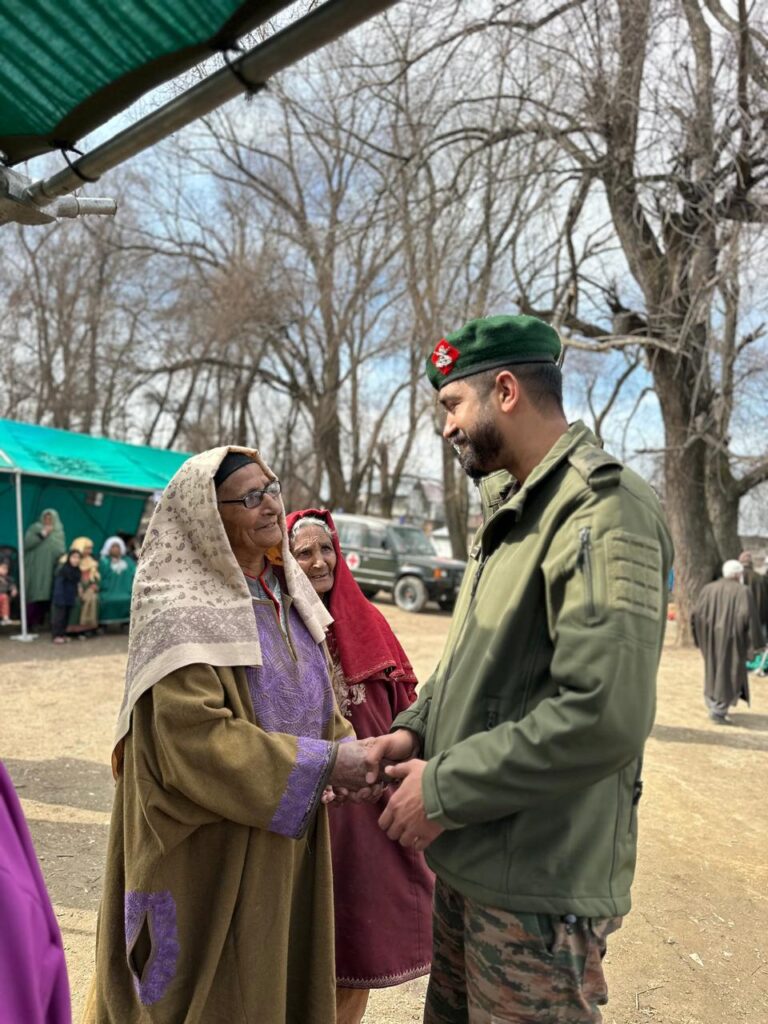
Bandipora, Feb 16: The 14 RR unit of the Indian Army on Monday conducted a CPR awareness and free medical camp for the fishermen community in Kulhama village of north Kashmir’s Bandipora district.

Around 400 fishermen, including women, received free medicines, CPR training, and pregnancy-related health awareness from women doctors of the Army.

A local resident, Yasir Ahmad, told the media that CPR training would help fishermen respond to emergencies and potentially save lives in Wular Lake, especially when water levels rise. He added that the community is particularly prone to drowning incidents during the summer months when the lake’s water level increases, noting that most families in the area depend on Wular Lake for their livelihood.

Another local residemt said that CPR awareneas is important for yhe fishetman community ahead of summers when water level increases in Wular lake and most of the community remain in wular for extract water chestnut or catch fishes.

He thanked the Army for consistently supporting people living in far-flung areas, saying the initiative would greatly benefit the local community.