spot_imgspot_img
spot_img
Home Blog Page 118

Jammu and Kashmir storm into maiden Ranji Trophy final

0

*Auqib Nabi, Sunil Kumar shine with ball to script historic win over Bengal*

Srinagar, Feb 18: Jammu and Kashmir scripted the biggest moment in their cricketing history by qualifying for the Ranji Trophy final for the first time, defeating Bengal by six wickets in a sensational semifinal victory at the Bengal Cricket Academy Ground on Wednesday.

The historic win, was powered by a fiery pace bowling display from Auqib Nabi and Sunil Kumar, who dismantled Bengal’s batting in the second innings to set up the famous win.

Resuming the decisive Day 4 with victory in sight, Jammu and Kashmir comfortably chased down the target of 126 runs, overcoming early setbacks to seal their place in the final and trigger jubilant celebrations in the camp—(KNO)

Ashwani Vaishnaw inaugrates WAVES creators corner at AI Summit in Delhi

0
Vinod Bhat

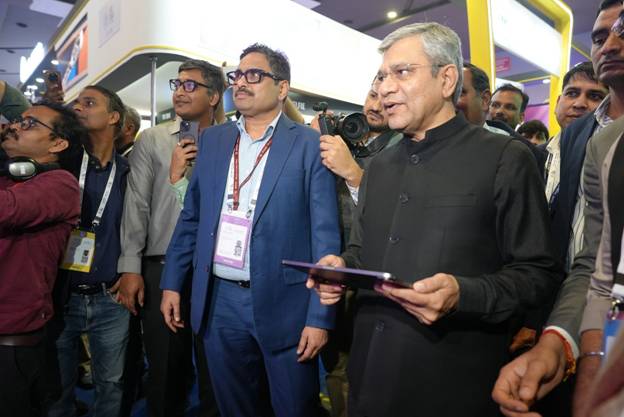
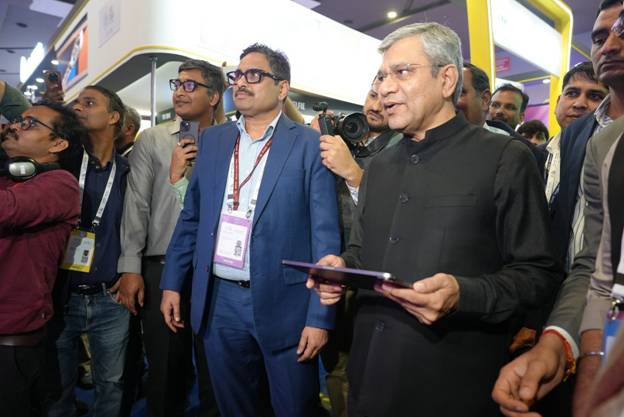
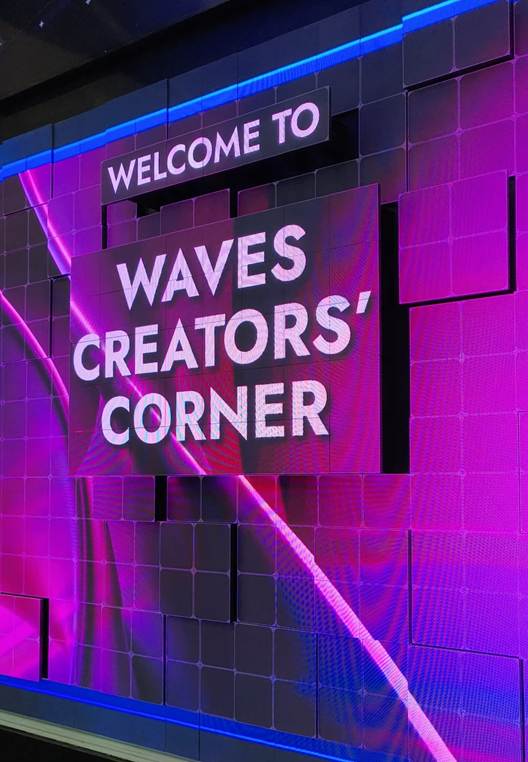
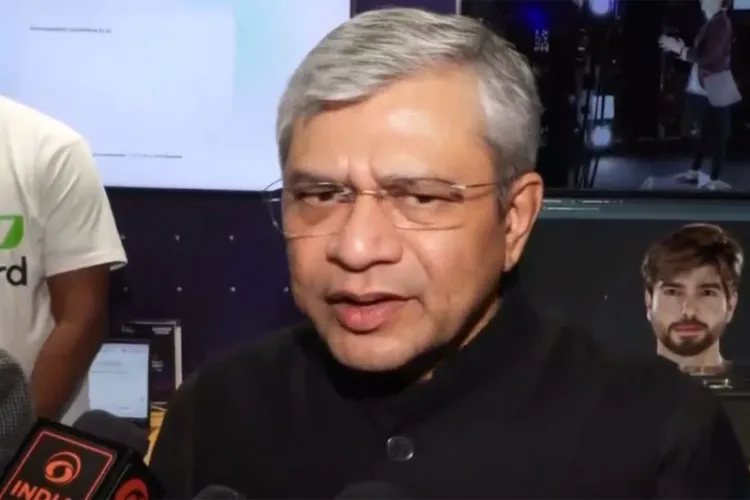
New Delhi: The Union Minister for Information and Broadcasting, Shri Ashwini Vaishnaw, inaugurated the WAVES Creators’ Corner on the second day of the India AI Impact Summit 2026. Conceptualized as a fully operational, hands-on innovation workspace, the Pavilion is designed to demonstrate the transformative applications of Artificial Intelligence within the AVGC-XR (Animation, VFX, Gaming, Comics, and Extended Reality) ecosystem.

During the inaugural ceremony, the Minister underscored that the WAVES Creators’ Corner serves as a strategic extension of the Ministry’s key initiatives, including WaveX, Waves Bazaar, and the Create in India Challenges. Shri Vaishnaw conducted an extensive walkthrough of the pavilion, interacting with emerging entrepreneurs from the WaveX startup cohort and senior leadership from global entities such as Adobe, Netflix, Sony, and Amazon.

51 Startups Got Exposure

In a significant boost to the Media & Entertainment ecosystem, 51 promising AVGC-XR and Media Tech startups, supported by WaveX, are showcasing AI-powered solutions and immersive technologies at the Pavilion. Shri Ashwini Vaishnaw interacted with these entrepreneurs, including winners of the Bhasha Setu and Kalaa Setu challenges.

Fireside Chat with Shradha Sharma

The Minister also participated in a high-profile fireside conversation with Shradha Sharma of YourStory at the Media Lounge. In this session, he shared his perspective on the profound impact of AI on society, highlighting how technology is bridging the gap for talent from rural India to establish world-class startups.

Key Technological Highlights at WAVES Creators’ Corner

The Pavilion showcased cutting-edge AI experiences, from real-time game development and prompt-to-cinema live studios to an Agentic AI-powered newsroom by AWS and BharatGen enabling automated editorial workflows. Innovations included Sarvam’s real-time voice cloning and Indus Chat App for multilingual interaction, 270-degree AI film screenings curated by NFDC, Sony Research India’s face and voice re-aging technology, and Whistling Woods International’s marker-less motion capture using a DSLR or iPhone.

Capacity Building and Future Readiness:
The Minister praised IICT for integrating AI into creative education to equip students for evolving industry demands.

WAVES Creators’ Corner:
The platform will continue hosting expert dialogues, filmmaker masterclasses, and technical sessions by global leaders throughout the Summit.

HDFC Bank Fraud Case: Five Employees Arrested; EOW Kashmir Conducts Searches in Shopian and Budgam

0

Srinagar, February 18:The Economic Offences Wing (EOW), Kashmir of Crime Branch J&K said that it is conducting searches in the districts of Shopian and Budgam in connection with case FIR No. 30/2025, registered under the relevant provisions of the Bharatiya Nyaya Sanhita and the IT Act at Police Station EOW Kashmir, Crime Branch J&K.

In a handout, The CBK said that the matter came to light following a written complaint regarding large-scale financial fraud at Branch Unit Shopian of HDFC Bank.

In compliance with the directions of PHQ J&K, the case was transferred from Police Station Shopian to the Crime Branch J&K for comprehensive investigation.

In connection with the case, five bank employees have been arrested so far. The arrested employees are Adil Ayoub Ganai, S/o Mohammad Ayoub Ganai, R/o Memendar, Shopian; A/P Hamza Colony, Baghat-e-Kanipora, Nowgam, Irfan Majeed Zargar, S/o Abdul Majeed Zargar, R/o Sheikh Mohalla, Bonigam, Shopian, Mubashir Hussain Sheikh, S/o Ghulam Mohammad Sheikh, R/o Karena, Kulgam, Zaid Manzoor, S/o Manzoor Ahmad Din, R/o Dagerpora, Khannabal, Anantnag and Javaid Ahmad Bhat, S/o Abdul Rahim Bhat, R/o Below Rajpora, Pulwama.

Searches are presently underway at multiple locations in Shopian and Budgam to collect material evidence in the case.

The Economic Offences Wing, Kashmir will continue to pursue all lawful measures to safeguard financial integrity, reads the statement.(GNS)

India AI Impact Summit emerged as the world’s largest AI summit, reflecting the scale and ambition of India’s AI vision: Shri Ashwini Vaishnaw

0

Vinod Bhat

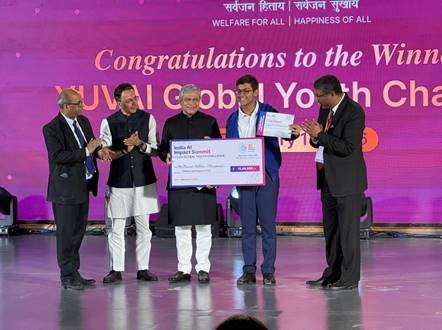
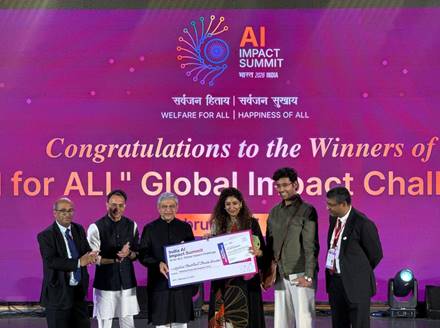
New Delhi: The second day of the India AI Impact Summit 2026 concluded with an Awards Ceremony recognising outstanding artificial intelligence innovations across multiple national and global challenges, followed by a cultural programme celebrating India’s rich artistic and cultural heritage. The Awards Ceremony recognised winners across three flagship initiatives — AI by HER, AI for ALL, and YuvaAI, highlighting the Summit’s focus on inclusive innovation, large-scale societal impact, and youth-led participation in India’s AI ecosystem.

A defining theme of the Summit was the empowerment of unconventional innovators and non-traditional coders to build solutions for real-world challenges. Through hackathons and open innovation platforms, the initiative has created opportunities from the grassroots level, ensuring that citizens, young and old alike, do not remain mere users of AI, but become creators and solution-builders. In contrast to traditional technology models where solutions are centrally determined, this approach places ownership in the hands of communities. Participants are encouraged to identify problems they face, harness open AI tools, and build scalable solutions not just for themselves but for society at large, democratising innovation and reinforcing India’s people-centric AI vision.

Congratulating the winners of the Global Innovation Challenges, Shri Ashwini Vaishnaw, Union Minister of Electronics & Information Technology, Information & Broadcasting and Railways, commented, “The India AI Impact Summit has emerged as the world’s largest AI summit, reflecting the scale and ambition of India’s AI vision. I congratulate all the winners for their outstanding contributions and for demonstrating how AI can deliver a transformative impact for society.”

Shri Jitin Prasada, Union Minister of State for Electronics and Information Technology and Commerce and Industry of India, said, YuvaAI reflects Ashwini Vaishnaw’s vision that youth are the future of India’s AI journey. “AI is a mix of people, technology, and opportunity, and when everyone has skin in the game and contributes in their own way, India can rise as a major global AI service provider. Initiatives like AI by Her show why inclusion matters because empowering women and youth together is what will truly shape India’s AI future and the responsibility it carries.”

YuvaAI – Global Youth Challenge

The YUVAi – Global Youth Challenge, implemented in partnership with MyBharat and NIELIT, invites young innovators aged 13–21 years to develop AI-based solutions addressing real-world challenges.

Under the YUVAI – Global Youth Challenge, the First Prize winners were Paraspeak, AgniSena, and Z-TRACS, who were awarded grants of ₹15 lakh each. The Second Prize was awarded to CytoScanZ, WAYV, and VOX-AID, with grants of ₹10 lakh each. In addition, MalariaX and KedovoAI received Special Recognition Awards carrying grants of ₹5 lakh each.

AI by HER Challenge

The AI by HER Challenge was designed to recognise and support women-led teams developing impactful AI-driven solutions addressing real-world challenges across sectors such as talent intelligence, health diagnostics, precision nutrition, AI-enabled learning platforms, speech therapy, ESG intelligence, and MSME enablement.

The winner of the AI by HER Challenge was Farmer Lifeline, while Periwinkle Technologies was named First Runner-up. The Second Runner-up position was jointly awarded to Volar Alta and Remidio. Each of the top winners received a grant of ₹25 lakh, and an additional aggregate grant of ₹10 lakh was awarded to selected teams from the Top 10 shortlisted startups under the AI by HER programme.

AI for ALL: Global Impact Challenge

The AI for ALL: Global Impact Challenge recognises scalable AI solutions with the potential to deliver large-scale societal impact across sectors. The programme received a strong global response, with entries evaluated through a rigorous multi-stage process by panels comprising domain experts, policymakers and industry leaders.

Under the AI for ALL Challenge, the Top 10 selected solutions were Infiheal Healthtech Private Limited; EQUITWIN by Infiuss Health; One Global Medical Technology Limited (dba Helium Health); Resilience360; SatSure’s Farm Score for Climate-Smart Lending; Wysa’s conversational AI for improved mental health; Kidaura Innovations Pvt Ltd; MadhuNetrAI for diabetic retinopathy screening; CarbGeM Inc.; and Biome Makers Inc.’s BeCrop® soil intelligence platform. Each of the Top 10 teams was awarded a grant of ₹25 lakh.

These solutions span high-impact areas including healthcare diagnostics, climate-resilient agriculture, financial inclusion through data-led lending, mental health support, soil intelligence and technology-enabled resilience, aligned with key development priorities.

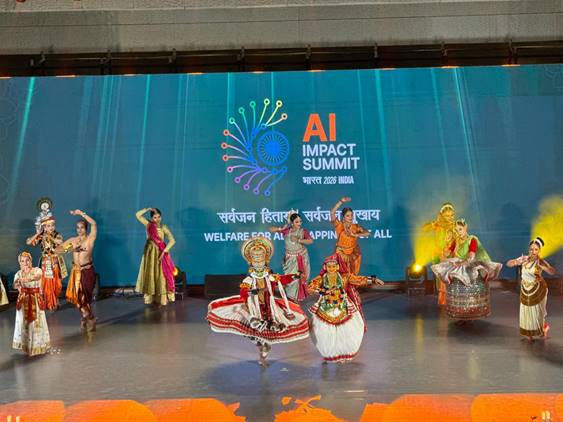
The Awards Ceremony was followed by a cultural programme that showcased India’s diverse artistic traditions. The programme featured “Nṛtta Melakam”, a special dance presentation by Sangeet Natak Akademi, New Delhi, representing multiple states of India and reflecting the country’s cultural plurality, artistic heritage, and the themes of unity, inclusiveness, and national development. The performance brought together artists from across regions, highlighting India’s rich legacy of folk and classical traditions.

India AI Impact Summit 2026 Session Emphasises Evidence-Based AI Adoption in Governance

0

Vinod Bhat

New Delhi: As part of the second day of the India AI Impact Summit 2026, the session “AI in Governance: Revolutionising Government Efficiency” brought together global researchers and senior policymakers to examine how artificial intelligence can strengthen public service delivery at scale. The discussion focused on moving beyond pilots and promise toward measurable impact, emphasizing rigorous evaluation, responsible deployment and systems-level readiness across government.

The session opened with a research presentation by Dean Karlan on the use of machine learning to improve targeting of public service delivery in Togo. The study demonstrated measurable improvements in food security, mental health and socio-economic indicators when AI-supported targeting was applied. At the same time, it revealed important limitations: phone metadata alone failed to capture treatment effects, exposing model drift and the challenges of predicting short-term vulnerability.

The findings reinforced the need for rigorous experimentation, iterative testing and evidence-based AI procurement. Speakers emphasized that AI systems must be carefully evaluated before large-scale deployment, particularly when they are used to identify beneficiaries, allocate resources or inform policy decisions.

The discussion then moved to a panel on India’s preparedness for AI implementation in government. While progress is visible in building compute capacity, breaking data silos and upskilling public sector employees, significant challenges remain, particularly around scalability, data heterogeneity and ethical clarity. It was noted that only a small proportion of AI implementers fully understand their ethical frameworks, highlighting a governance gap that must be addressed alongside technical capability.

Assessing the current landscape Shri Mohammed Y. Safirulla, Director, IndiaAI Mission, Ministry of Electronics and Information Technology (MeitY) pointed to areas such as banking and financial systems, including tax analytics and expenditure tracking, where AI adoption has advanced due to the availability of high-quality, structured data.

In contrast, sectors such as education and other citizen-centric services face greater complexity due to data heterogeneity and decision-making ambiguity. The need for carefully designed experiments, third-party audits and strong validation protocols was highlighted as critical to enabling scale. He concluded by recalling an unsupervised learning that was carried out during COVID and how the availability of high quality data enabled pre-emptive action to be taken.

A key theme throughout the session was the importance of addressing immediate operational pain points first, using AI to solve defined, high-impact problems before attempting broader systemic transformation. Speakers agreed that measuring intermediate outputs, conducting rigorous pilots and institutionalizing third-party audits will be central to building public trust and ensuring AI deployments are both effective and equitable.

The session underscored a central takeaway that AI can significantly enhance government efficiency and service delivery, but only when grounded in robust data, scientific validation and responsible governance frameworks.

“Advancing AI Readiness and Adoption in Manufacturing MSMEs” Session Held at India AI Impact Summit 2026, New Delhi

0

Vinod Bhat

New Delhi: A high-level thematic session titled “Advancing AI Readiness and Adoption in Manufacturing MSMEs” was held today on the second day of the India AI Impact Summit 2026 in New Delhi. The session brought together key Ministries of the Government of India, including the Ministry of Electronics and Information Technology (MeitY), Ministry of Micro, Small and Medium Enterprises (MSME), Ministry of Textiles, and the Department of Pharmaceuticals (Ministry of Chemicals & Fertilizers), along with policymakers, industry representatives, and academia.

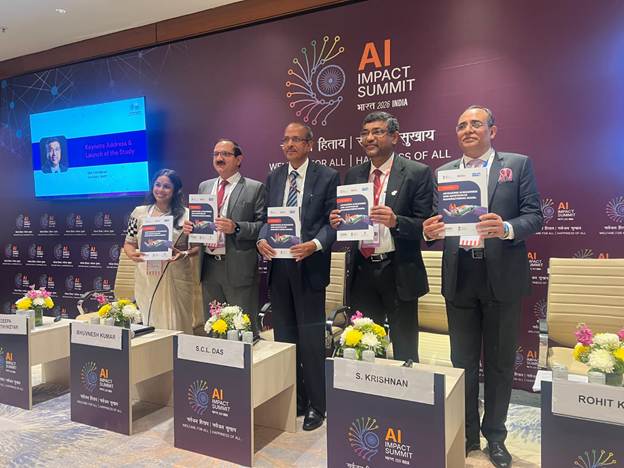
During the session, a study jointly undertaken by the National Institute of Smart Governance (NISG) and Athena Infonomics, under the aegis of MeitY and the India AI Mission, was launched. This study will focus on developing a practical and operational roadmap to accelerate AI adoption in manufacturing MSMEs across sectors such as textiles, pharmaceuticals (including medical devices), and electronics. The findings will inform MSME adoption pathways and guide government interventions that directly impact national manufacturing output, export competitiveness, and employment outcomes.

Shri S. Krishnan, Secretary, MeitY, emphasized the need for harnessing AI to enhance productivity, efficiency, and capabilities in the manufacturing MSME sector. He stated that the India AI Mission is committed to ensuring that AI meaningfully impacts real sectors of the economy, particularly in boosting manufacturing MSMEs.

In his address, Shri S. C. L. Das, Secretary, MSME, highlighted AI as a “great force multiplier” and emphasized that the industry would drive the AI-powered transformation of the Indian economy toward Atmanirbhar Bharat. He further pointed out that the confluence of AI at the shop floor level is crucial for MSMEs to become more competitive.

According to the Economic Survey 2025–26, the MSME sector contributes approximately 31.1% of India’s GDP, accounts for 35.4% of total manufacturing output, and 48.6% of the country’s exports. Given that manufacturing is a key driver of India’s ambition to become a $35 trillion economy by 2047, accelerating technology adoption, improving access to finance, and strengthening market linkages will be vital to future-proofing MSMEs’ contribution to national economic growth.

This study will cover over 350 MSME manufacturing factories across India, gathering a granular, experience-based understanding from the shop floor to senior management. The research aims to identify AI interventions that can materially improve unit economics, enhance product-service extension, and expand global market access and participation.

Shri Bhuvnesh Kumar, CEO of NISG, expressed his enthusiasm about undertaking this study, noting that it would provide an implementable roadmap for driving AI adoption among manufacturing MSMEs. He further emphasized that AI will play a pivotal role in India’s journey to becoming the third-largest economy globally.

Shri Rohit Kansal, Additional Secretary, Ministry of Textiles, stressed that India’s AI dividend will be realized on the factory floor. He underlined that the long-term economic shift of India will depend on whether AI can modernize legacy industries such as textiles, food processing, and more.

Shri Aman Sharma, Joint Secretary, Department of Pharmaceuticals, pointed out that AI can significantly reduce costs and improve the quality of production for MSMEs, which represent over 80% of the manufacturing units in the sector.

The thematic session formed an essential part of the India AI Summit 2026, serving as a platform for structured dialogue, knowledge exchange, and coordinated action across various stakeholders in the AI ecosystem.

Artificial Intelligence is no longer an option but an essential component of working in every sphere of life: Union Minister Dr. Jitendra Singh

0

Viniod Bhat

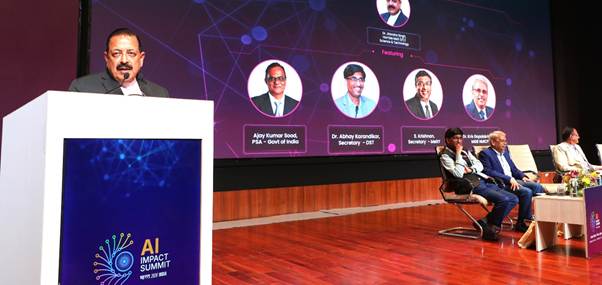
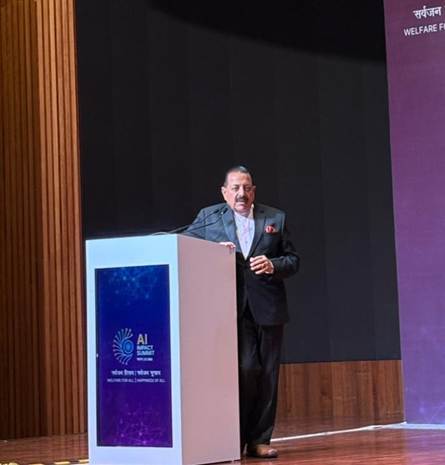
New Delhi: Lauding India’s first government owned, sovereign “Large Language Model”, Multilingual AI stack, Union Minister of State (Independent Charge) for Science & Technology; Earth Sciences; and Minister of State for PMO, Personnel, Public Grievances and Pensions, Department of Atomic Energy and Department of Space, Dr. Jitendra Singh today said that Artificial Intelligence is no longer an option but an essential component of working in every sphere of life, as he addressed the session on “BharatGen Models: Vision and Technical Execution 2026” at Bharat Mandapam, New Delhi.

The session was hosted by BharatGen in association with the India AI Mission, Ministry of Electronics & Information Technology (MeitY), and the Department of Science and Technology (DST), as part of the Global AI Summit.

Congratulating the BharatGen team, the Minister said the initiative represents a significant milestone in India’s journey towards technological self-reliance. He underlined that BharatGen stands out as a government-owned sovereign multilingual and multimodal Large Language Model (LLM) initiative, tailored to India’s socio-cultural context and linguistic diversity. While large language models are known globally, he noted that BharatGen’s distinct feature lies in its sovereign, government-supported character, reflecting a proactive policy approach at an early stage of technological evolution.

Union Minister observed that BharatGen exemplifies a “whole-of-science, whole-of-government and whole-of-nation” model. The initiative is implemented through a consortium led by the TIH Foundation for IoT and IoE at IIT Bombay, with partner institutions including IIIT Hyderabad, IIT Hyderabad, IIT Mandi, IIT Kanpur, IIM Indore and IIT Madras. It is supported by DST through the National Mission on Interdisciplinary Cyber-Physical Systems (NM-ICPS) with ₹235 crore of funding, and further strengthened through the India AI Mission of MeitY with an outlay of ₹10,585 crore.

Highlighting the technological depth of the project, the Minister noted that BharatGen spans multiple AI modalities, including text-based large language models, speech technologies such as text-to-speech and automatic speech recognition, and document vision-language models. He stated that BharatGen’s foundational models are designed for inclusive, India-centric applications in governance, healthcare, education, agriculture and legal systems, especially in linguistically diverse regions.

Referring to recent developments, Dr. Jitendra Singh said that BharatGen has already released domain-specific fine-tuned models such as Ayur Param for Ayurveda, Agri Param for agriculture and Legal Param for the Indian legal domain. He further noted that the Hon’ble Prime Minister launched BharatGen’s latest models, including the Param-2 text foundation model in 22 scheduled Indian languages with 17 billion parameters, Shrutam speech-to-text models in 12 Indian languages, Sooktam text-to-speech models in 12 languages, and Patram models under the DocBodh framework for multilingual access to complex Indian documents.

The Minister emphasised that India’s linguistic diversity extends beyond the 22 scheduled languages, and stressed the need to continuously expand datasets to include widely spoken regional languages and dialects. He noted that scientific advancement cannot be confined by administrative boundaries and must respond to real-world linguistic diversity, particularly in sectors such as digital health and public service delivery.

Dr. Singh also highlighted that BharatGen’s ecosystem integrates academia, government and industry, supported by collaborative funding mechanisms. He stated that the initiative has transformed into a Section-8 company, the BharatGen Technology Foundation, enabling it to operate at national scale while ensuring data and model sovereignty through initiatives such as Bharat Data Sagar.

Calling for a change in mindset across public and private sectors, the Minister said that emerging technologies such as AI require collaborative approaches rather than siloed functioning. He underscored that the Government is committed to enabling innovation through supportive policies, early-stage funding and openness to private participation, ensuring that India keeps pace with global advancements.

The session also featured presentations by Shri Rishi Bal, CEO BharatGen; Prof. Ganesh Ramakrishnan, Principal Investigator, IIT Bombay; Prof. S. Ravi Kiran, IIIT Hyderabad; and Dr. Amol Gite, Vice President, BharatGen, who outlined the ecosystem, data journey, deployment-ready platforms and sectoral partnerships. Addresses were delivered by Dr. Kris Gopalakrishnan, Chairman, NMICPS; Shri S. Krishnan, Secretary MeitY; Prof. Abhay Karandikar, Secretary DST; and Prof. Ajay Kumar Sood, Principal Scientific Adviser. An MoU exchange between BharatGen and the IIT Bombay Heritage Foundation also took place in the presence of the Minister.

Concluding his address, Dr. Jitendra Singh said that BharatGen represents a new phase in India’s AI journey combining sovereign capability, collaborative execution and inclusive design and will play a vital role in building a robust national AI infrastructure aligned with the vision of Viksit Bharat.

MIB Pavilion Emerges as India’s Premier AI Innovation Workspace at India AI Impact Summit 2026

0

Vinod Bhat

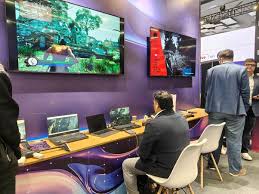
New Delhi: The WAVES Creators’ Corner has been conceptualized not merely as a showcase pavilion, but as a fully operational, hands-on innovation workspace. Designed to demonstrate real-world, game-changing applications of Artificial Intelligence across the AVGC-XR (Animation, VFX, Gaming, Comics and Extended Reality) ecosystem, the Corner offers visitors an immersive and participatory experience.

This space serves as a strategic extension of WAVES and its key verticals: WaveX, Waves Bazaar, and the Create in India Challenges, with WaveX startups taking center stage through impactful demonstrations and live deployments.

Alongside emerging innovators, leading global and Indian industry players such as Adobe, Netflix, Sony, Collective, Inshorts, KukuFM, and Whistling Woods International will showcase cutting-edge AI tools and transformative media technologies.
Key Experience Zones

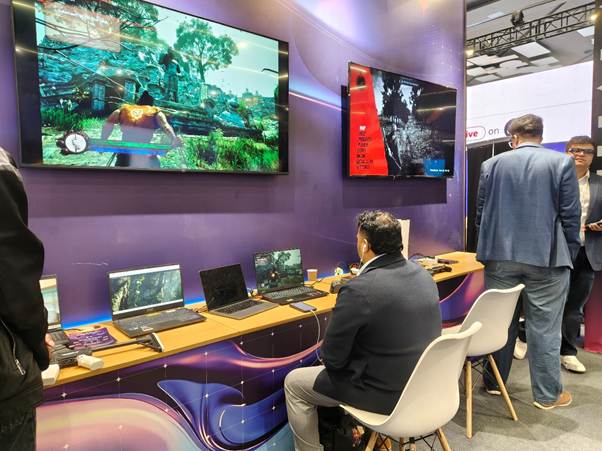
AI Gaming Lab
Visitors experienced AI-powered game development in real time today, from concept generation to playable prototypes, and engaged with AI-built video games within an interactive gaming lab environment. The AI Gaming Lab will continue to offer live demonstrations and interactive engagements over the coming days.
AI Content Creation Lab (Powered by Adobe)
The live studio environment demonstrated AI-assisted filmmaking, where prompts evolved into scripts, visuals and cinematic sequences in real time, redefining digital storytelling workflows. The lab will continue to showcase AI-enabled creative processes for visitors in the days ahead.

AI-Powered Newsroom
Powered by AWS, BharatGen, India Today and Kalasetu startups, the newsroom installation showcased how AI agents streamline newsroom operations, from automated content generation to voice-command-based editorial management, transforming the future of media operations. The installation will remain operational and continue demonstrations during the upcoming days of the Summit.

Narad Muni Interactive Installation
Inspired by the mythological messenger, the immersive installation demonstrated how AI-powered Large Language Models convert real-world questions into dynamic, conversational user experiences, showcasing the power of interactive intelligence. The interactive experience will continue to engage visitors in the coming days.


AI Theatre
The dedicated cinematic space featured approximately 150 AI-generated films curated by NFDC, LTIMindtree and Adobe, providing visitors an opportunity to unwind while witnessing the artistic and technological evolution of AI-driven filmmaking. Screenings will continue over the next few days at the Pavilion.

YourStory Lounge
The lounge hosted live fireside conversations with leaders from the AI ecosystem today. The sessions were moderated by Shraddha Sharma of YourStory, fostering dialogue at the intersection of innovation, entrepreneurship and artificial intelligence. The lounge will continue to host discussions and interactive sessions over the coming days.

Key Booth Highlights at MIB Pavilion

The MIB Pavilion features leading global and Indian innovators showcasing cutting-edge AI applications across filmmaking, broadcasting, language technologies, education, and digital storytelling.

  • Adobe is accelerating AI-powered filmmaking through collaborations like India Film Project, showcasing AI-generated films and live AI-first creative workflows.
  • BharatGen is demonstrating Multimodal RAG technology to convert video and audio “dark data” into searchable, interactive assets.
  • Sony Research India is presenting AI-driven translation, dubbing, face and voice re-aging, and accessibility solutions for TV and OTT platforms.
  • Sarvam is enabling multilingual AI interaction through voice cloning, live speech-to-text, and real-time language AI tools.
  • Amazon Web Services (AWS) is showcasing an “Agentic AI Assisted Newsroom” for hands-free, AI-enabled broadcast production and hyperlocal news delivery.
  • Whistling Woods International is demonstrating AI-based marker-less motion capture workflows using minimal hardware.
  • Galleri5 (Collective Artists Network) is presenting AI-native cinematic production platforms powering large-scale mythological and theatrical projects.
  • Kuku FM is launching India’s first slate of AI-powered microdramas, highlighting grassroots digital storytelling innovation.
  • Prismix is integrating Generative AI with VFX and traditional media for narrative-driven content creation.
  • Inshorts is showcasing AI-powered news summarization with personalized content delivery.
  • Indian Institute of Creative Technologies (IICT) is redefining AI-integrated creative education with immersive production environments.

AI Immersive Theatre:

It featured 270-degree projection and AI-powered cinematic experiences that redefined storytelling and audience engagement today. The AI Cinema Showcase, presented by the National Film Development Corporation and Waves Bazaar in collaboration with LTM, highlighted emerging filmmakers using AI as a storytelling medium. The programme also featured Kathāvatār, a curated collection of AI short films, alongside finalist works from India’s first CinemAI Hackathon.

Screened at the Waves Creators’ Corner within Bharat Mandapam, the initiative positioned India at the forefront of AI-driven cinematic innovation. The immersive screenings and showcase will continue over the coming days, offering visitors further opportunities to experience cutting-edge AI-enabled storytelling.

Content Creation Lab Powered by Adobe

It showcased AI-led video creation workflows designed for today’s content creators, with a strong focus on advanced creative technologies. The lab demonstrated how ideas were transformed into high-quality videos using text prompts, images, audio inputs and generative AI tools.

Through live demonstrations, creators experienced end-to-end AI workflows across video, audio and images, including text-to-video, image-to-video storytelling, generative edits and rapid content iteration. The showcase highlighted how AI simplified complex production processes, automated editing, enhanced visuals and accelerated storytelling from concept to final output. Overall, the experience presented AI as a catalyst for faster, smarter and more scalable multimedia content creation.

Media Lounge

Shradha Sharma from YourStory conducted interviews with founders and thought leaders today, and all sessions were live streamed on WAVES OTT, making the Summit’s insights and outcomes widely accessible. Expert dialogues covered public policy, platform ecosystems, sovereign AI capabilities and digital resilience, with insights from institutions such as the National Forensic Sciences University and KOGO, alongside ecosystem experiences from Kuku FM, Garage Labs and Oracle. Startup showcases, founder pitches and discussions on AI applications in healthcare, societal challenges and localised content further highlighted innovation-driven impact across India.

The Media Lounge engagements will continue over the coming days, featuring additional interactions, discussions and live sessions aimed at broadening access to the Summit’s key deliberations and outcomes

Panel Discussions and Masterclasses

The Pavilion at Bharat Mandapam today witnessed a series of panel discussions and masterclasses focusing on AI-led disruptions in the Media and Entertainment (M&E) industry. The discussions at the WAVES Creators’ Corner were curated as high-impact knowledge forums, bringing together industry leaders, venture capitalists, technologists, creators and policymakers.

Over the course of the sessions, deliberations explored the future of AI in gaming, cinema, newsroom automation, interactive media, monetisation models and ethical AI frameworks. Founder roundtables, masterclasses by noted filmmaker Shekhar Kapur, and technology deep-dive sessions by leading global technology companies formed part of today’s programme.

The sessions moved beyond theoretical discussions and featured practical demonstrations, real-world case studies and live Q&A interactions. Participants gained insights into the immediate applications of AI-powered media, its investment potential and its long-term creative impact on the M&E ecosystem.

The panel discussions and masterclasses will continue over the coming days at the WAVES Pavilion, further deepening engagement on the transformative role of AI in the Media and Entertainment sector.

Intoxicated Man Sentenced to 7-Day Community Service in Ganderbal

0

Court Adopts Reformative Approach; Conviction Secured Under Section 355 BNS

Touseef Wani

Ganderbal, Feb 17 : Ganderbal Police on Tuesday secured the conviction of an accused under Section 355 of the Bharatiya Nyaya Sanhita (BNS) from the Court of Judicial Magistrate 1st Class (JMIC), Kangan, in a case related to breach of public peace.

Police has successfully secured the Conviction of an accused under Section 355 of the Bharatiya Nyaya Sanhita (BNS) from the Hon’ble Judicial Magistrate 1st Class (JMIC), Kangan.

The accused, Amir Ahmad Beigh, S/O Ghulam Rasool Beigh, R/O Thune, Kangan, was found guilty of attempting to disturb public peace and tranquility of the area while being in an intoxicated condition.

Taking a reformative approach, the Hon’ble Court sentenced the accused to undergo Community Service for a period of Seven (07) days at any institution under the Social Welfare Department, Ganderbal. The Case was prosecuted by Prosecuting officer Ilyas Khawaja, it reads.

Ganderbal Police reiterates its commitment to maintaining public order and ensuring peace in the district. Strict legal action shall continue against any individual found indulging in activities that disturb communal harmony or public tranquility.

Kangri’s Glow Fades in the Age of Modern Heating, Leaving Craftsmen With Fewer Buyers

0
TAQWA SHAFI
SRINAGAR, Feb 17: For generations, the gentle warmth of the kangri defined winter in Kashmir. The small earthen firepot, filled with glowing embers and cradled in a finely woven wicker casing, was more than just a source of heat — it was a symbol of resilience against the Valley’s biting cold. Slipped discreetly beneath the traditional pheran, the kangri travelled with its owner from dawn to dusk, warming hands, feet and spirits alike. Entire families depended on it, and hundreds of artisans across Kashmir depended on crafting it for their livelihood.
Today, that intimate warmth is steadily being replaced by the uniform heat of hamams and electric heaters.
Hamams, once largely confined to mosques, shrines and a few affluent homes, have in recent decades become a common feature in private houses. Built beneath floors and fueled by firewood or electricity, they provide steady, room-wide warmth. In recent years, electric hamams and portable room heaters have further transformed winter living. They require little maintenance, produce no smoke and eliminate the risk of burns — all factors that make them attractive to modern households. For families able to bear the cost of installation and electricity, heated rooms offer a level of convenience the kangri cannot match.
But for the artisans who have shaped clay pots and woven wicker frames for decades, this transition has come at a heavy price.
In Bandipora, second-generation kangri maker Ghulam Nabi recalls a time when winters meant brisk business. Orders would pour in weeks before snowfall, and artisans would work tirelessly to meet demand. “We used to sell hundreds every winter,” he says, his voice tinged with disbelief at how quickly things have changed. “Now, if I manage to sell 30 or 40, it is considered good. Hamams and electric heaters have replaced most of our customers. People don’t carry kangris under their pherans anymore.”
The decline has not only reduced sales but also shaken the continuity of the craft itself. Abdul Hamid, an artisan from Srinagar, learned the skill from his father, as generations before him had done. Yet he sees little interest among his own children. “I learned this craft from my father, but my sons are not interested,” he says quietly. “They see that no one wants kangris now. Hamams give warmth without our work. It feels like years of our labor are being ignored.”
The financial strain is evident. Gulam Qadir Bhand, also from Bandipora, explains how prices have dropped sharply in a desperate attempt to attract buyers. “We once sold a kangri for ₹280. Now we are begging customers to buy it for ₹200 or even less. This winter, I have sold only 20 kangris. There are no buyers anymore,” he says. Faced with mounting expenses and shrinking returns, he is contemplating leaving the craft altogether. “I am thinking of switching to another business. We cannot survive like this.”
Retailers confirm the shift in consumer preference. Bashir Ahmad, who runs a household goods shop in Nowhatta, Srinagar, remembers winters when families purchased multiple kangris in preparation for the cold. “Earlier, every family bought several before winter,” he says. “Now they invest in hamams, electric hamams or room heaters. The kangri market is shrinking fast, and artisans are struggling to earn even a basic living.”
Even in rural areas, where high construction and electricity costs limit access to modern heating systems, reliance on kangris is no longer as strong as it once was. In parts of Kupwara, households still use them, but alternatives such as wood stoves and small heaters are increasingly preferred. “In our village, kangris are still used, but fewer people depend on them,” says Naseema, a resident. The gradual shift suggests that modernization is reaching even those communities that once clung firmly to tradition.
In an effort to adapt, some artisans have turned to crafting decorative kangris, adorned with intricate patterns and bright colors, marketed for weddings and special occasions. Mohammad Yousuf from Batmaloo in Srinagar says these designer pieces provide occasional sales, but not enough to sustain a family. “I can sell a few decorative kangris,” he explains. “But it does not cover our expenses. Hamams have made it very hard to survive only by making kangris.”
Beyond the economic implications lies a deeper concern: the erosion of cultural heritage. The kangri has long occupied a special place in Kashmir’s social and cultural life, referenced in poetry, folklore and daily conversation. It was once inseparable from the pheran, a pairing that defined winter identity in the Valley. Now, as electric warmth replaces ember heat, the kangri risks becoming more of a nostalgic artifact than a living tradition.
For artisans like Qadir, the change feels definitive. “Our traditional hamams and now electric systems have pushed craftsmen into other businesses,” he says. “We are forced to think of other work because there are no buyers left.”
In some homes, the kangri still glows softly beneath a pheran, carrying with it the scent of charcoal and memories of another era. But for the craftsmen who once shaped each piece by hand, that glow is fading — not just from living rooms, but from their livelihoods and from a tradition that once warmed the very heart of Kashmiri winter.