spot_imgspot_img
spot_img
Home Blog Page 137

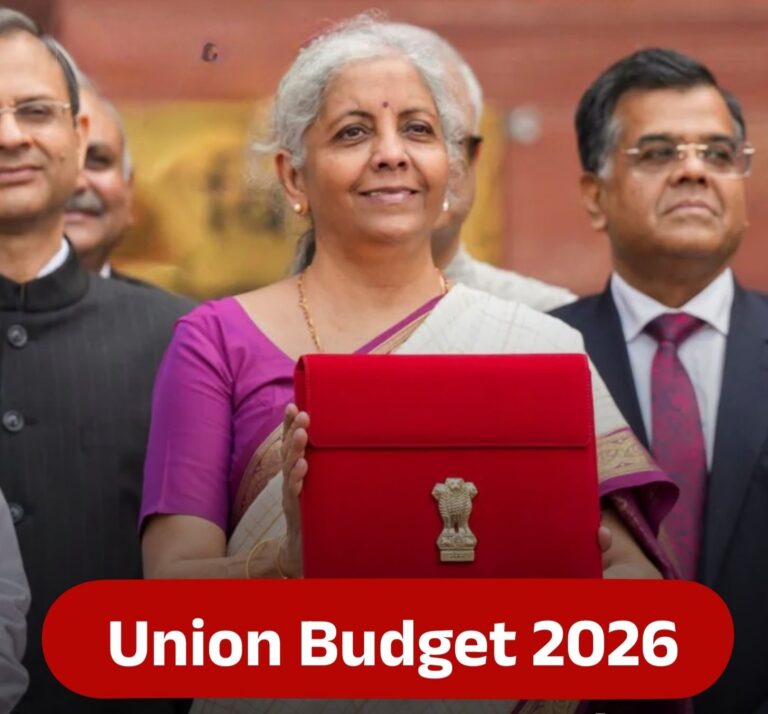
Union Budget 2026-27: FM Nirmala Sitharaman Announces Major Boost for Orange Economy and Creative Education

0

VINOD BHAT

Delhi, Feb 01:

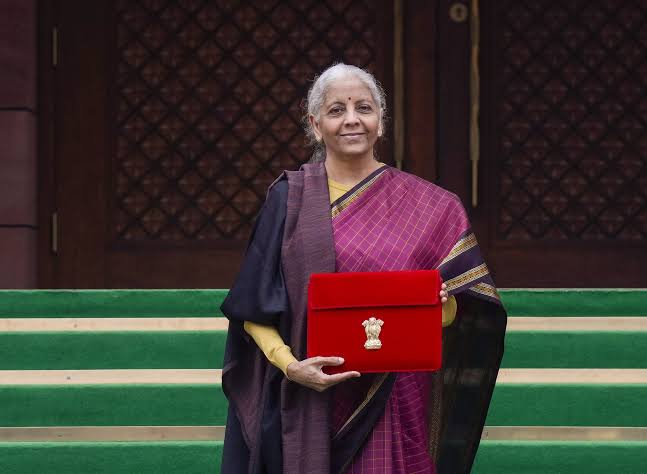
The Union Budget was announced today in Parliament by the Union Minister for Finance and Corporate Affairs, Smt. Nirmala Sitharaman. Presenting a transformative roadmap for India’s education and skills ecosystem, the Finance Minister outlined key initiatives to promote the Orange Economy and strengthen the country’s creative industries.


Highlighting the rapid growth of India’s animation, visual effects, gaming and comics (AVGC) sector, the Finance Minister noted that the industry is projected to require nearly 2 million professionals by 2030. To support this expanding ecosystem, she proposed assistance to the Indian Institute of Creative Technologies, Mumbai, for setting up AVGC Content Creator Labs in 15,000 secondary schools and 500 colleges across the country. These labs are expected to unlock new creative career opportunities for youth.


The initiative marks a significant push towards building a future-ready workforce, strengthening India’s creative economy, and expanding opportunities for learners across the country.


Union Minister for Information & Broadcasting, Shri Ashwini Vaishnaw, addressing the media at Rail Bhawan today on the Union Budget announcements, said, “This is a duty-driven budget inspired by the power of youth and the strength of women”. He noted that Prime Minister Shri Narendra Modi has placed India’s creative economy on the global stage through WAVES. He added that IICT Mumbai, established on the lines of IITs and IIMs, will connect with 15,000 schools and 500 colleges through Creators’ Labs, creating 20 lakh new jobs


The Economic Survey also noted that India’s media and entertainment (M&E) sector has emerged as a major pillar of the services economy, covering audio-visual production, broadcasting, digital content, animation, gaming, advertising and live entertainment. Over the past decade, the sector has shifted strongly towards digital and platform-based delivery, transforming revenue models, employment and value chains. Estimated at around ₹2.5 trillion in 2024, growth is driven by rising incomes, internet penetration, OTT expansion and AI-led innovation.


About Orange Economy


The “Orange Economy” refers to the part of the economy driven by creativity, culture and intellectual property, where value comes mainly from ideas, knowledge, artistic expression and cultural content rather than physical goods.

PIB Srinagar Organises Media Tour for Journalists from Srinagar to Kerala

0

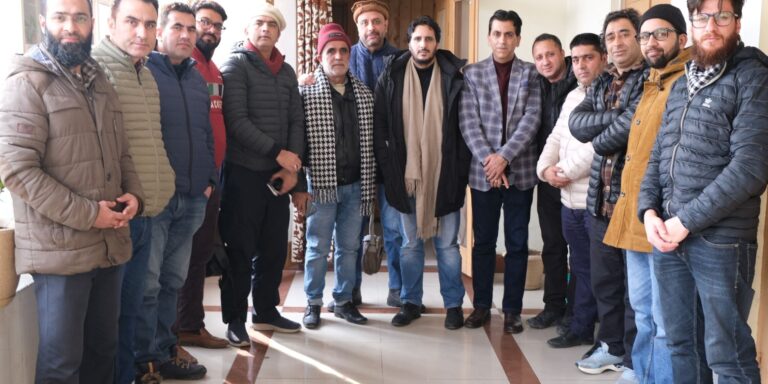
Srinagar, Feb 01: The Press Information Bureau (PIB), Srinagar Region, has organised a press tour for journalists from Srinagar, as part of its ongoing media outreach initiatives. The tour commenced today and will continue till 7 February 2026.


A 14-member press delegation, comprising journalists from Srinagar, including organising officials from PIB, is participating in the tour. Ahead of the departure, Qazi Salman, Director, PIB Srinagar, briefed the delegation at Srinagar, outlining the objectives of the media visit and encouraging journalists to engage constructively during the interactions. Majid Pandit, Media & Communication Officer, PIB Srinagar, is leading the delegation as the conducting officer.


The five-day media tour to Kerala (February 2–6, 2026) is designed to provide regional journalists an opportunity to gain a firsthand exposure of groundbreaking Central Government initiatives and provide an in-depth understanding of national-level programmes and initiatives.


During the briefing, Salman congratulated the participants and said, “I extend my heartfelt congratulations to all participants and wish you all the best for the upcoming tour to Kerala. This visit will be an enriching experience, offering valuable insights into the functioning of key government institutions and fostering stronger professional engagement.”


The delegation will visit several Central Government establishments and projects in Kochi and Thiruvananthapuram and interact with senior functionaries to understand their operations and functioning.


Class 11th results tomorrow: Chairman JKBOSE

0

Srinagar, Feb 1: The Jammu and Kashmir Board of School Education (JKBOSE) will declare the results of the Class 11th examination on February 2, 2026. Chairman JKBOSE, Ghulam Hassan Sheikh, said the results are scheduled to be announced after 11:30 am on Monday.


He stated that the evaluation process has been completed and the Board is hopeful of officially declaring the results as planned. However, he added that the exact timing may vary slightly as the declaration is dependent on technical processes handled by the National Informatics Centre (NIC).


As reported earlier, around 81,469 students had registered for the Class 11th examination, including 64,007 students from Kashmir division and 17,462 from winter zone areas of Jammu. The Chairman further noted that JKBOSE has undertaken significant reforms in its evaluation system over the past year to ensure timely declaration of results. KDC

Budget 2026-27 announces the launch of India Semiconductor Mission (ISM) 2.0

0

VINOD BHAT

Delhi, Feb 01:

Union Finance Minister Smt. Nirmala Sitharaman today presented the Union Budget for the Financial Year (FY) 2026-27. The announcements also included significant measures for accelerating the growth of India’s Electronics and Information Technology Sector.


The Finance Minister announced the launch of India Semiconductor Mission (ISM) 2.0 to produce equipment and materials, design full stack Indian IP, and fortify supply chains. The focus will be on industry led research and training centres to develop technology and skilled workforce. Provision of Rs. 1,000 crores has been made towards this for FY 2026-27. ISM 1.0 has expanded India’s semiconductor sector capabilities and ISM 2.0 will build on the same.


The Electronics Components Manufacturing Scheme (ECMS), launched in April 2025 with an outlay of 722,919 crore, already has investment commitments at double the target. It has now been proposed to increase the outlay to Rs. 40,000 Crores to capitalize on the momentum.


In order to support the IT sector as India’s growth engine and to provide tax certainty, Budget 2026-27 has proposed new safe harbour provisions for IT/ITeS with higher threshold and competitive margin. India is a global leader in software development services, IT enabled services, knowledge process outsourcing services and contract R&D services relating to software development. Acknowledging the inter-connectedness of these business segments, the Budget has proposed to club all these services under a single category Information Technology Services with a common safe harbour margin of 15.5 percent applicable to all.


The threshold for availing safe harbour for IT services is also proposed to be enhanced substantially from 300 crore rupees to 2,000 crore rupees.

Safe harbour for IT services shall be approved by an automated rule-driven process without any need for a tax officer to examine and accept the application.

Once applied by an IT Services company, the same safe harbour can be continued for a period of 5 years at a stretch at its choice.

Further, for IT services companies who want to conclude Advance Pricing Agreement (APA), it was proposed to fast track the Unilateral APA process for IT services and endeavour to conclude it within a period of 2 years. The period of 2 years can be extended by a further period of 6 months on taxpayer’s request. Moreover, it is proposed to extend the facility of modified returns available to the entity entering APA to its associated entities also.


Recognising the need to enable critical infrastructure and boost investment in data centres, Budget 2026-27 has also proposed to provide tax holiday till 2047 to any foreign company that provides cloud services to customers globally by using data centre services from India. It will, however, need to provide services to Indian customers through an Indian reseller entity. Further, a safe harbour of 15 percent on cost has also been proposed in case the company providing data centre services from India is a related


entity.


A High-Powered ‘Education to Employment and Enterprise’ Standing Committee has also been proposed to recommend measures that focus on the Services Sector as a core driver of Viksit Bharat. The committee will also assess the impact of emerging technologies, including Al, on jobs and skill requirements and propose measures thereof.

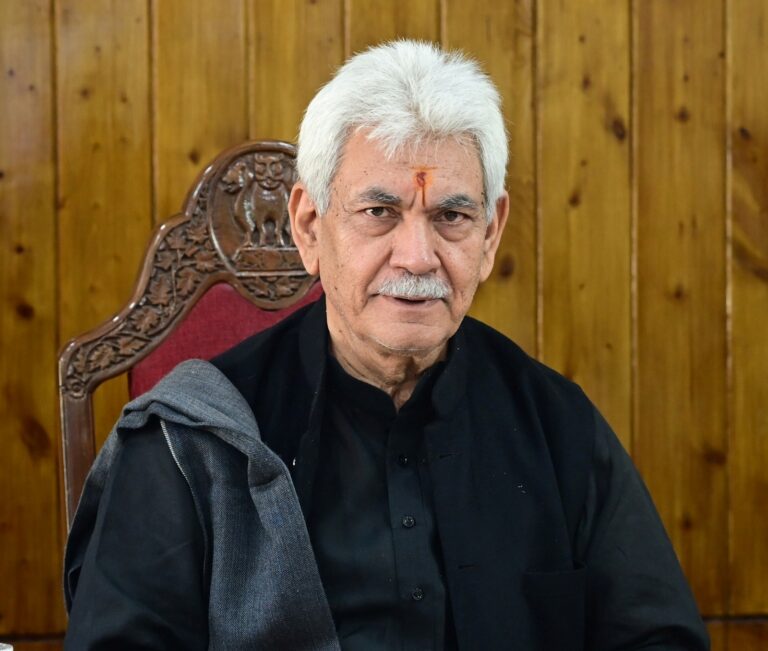
LG Sinha Lauds Budget 2026–27, Calls It a Blueprint for India’s $5 Trillion Leap

0


‘Manufacturing, MSMEs and tourism thrust to spur growth in J&K’


TAUSEEF AHMAD

JAMMU, Feb 1: Lieutenant Governor of Jammu and Kashmir, Shri Manoj Sinha, on Saturday hailed the Union Budget 2026–27 as a pragmatic, forward-looking and growth-oriented financial roadmap, asserting that it lays a strong foundation for accelerating India’s economic momentum and steering the country towards the coveted $5 trillion economy milestone within the next few years.

Describing the budget as a carefully balanced fiscal strategy, the Lieutenant Governor said it successfully harmonises economic ambition with social welfare, while simultaneously focusing on the creation of future-ready infrastructure, expansion of domestic manufacturing, and sustained inclusive growth.

“The Budget 2026–27 prioritises economic acceleration, strengthens infrastructure, and charts a clear path towards achieving the $5 trillion economy target in the near future. It is a comprehensive financial blueprint that will ensure sustained growth while safeguarding the welfare of every section of society,” Shri Sinha said.

The Lieutenant Governor expressed his gratitude to Prime Minister Shri Narendra Modi and Union Finance Minister Smt. Nirmala Sitharaman for their special focus on Jammu and Kashmir, particularly the announcement related to the development of ecologically sustainable mountain trails in the Union Territory. He said the initiative would not only protect fragile ecosystems but also generate new employment opportunities and give a significant boost to the region’s tourism sector.

“The development of sustainable mountain trails in J&K will invigorate tourism with renewed vigour, attract adventure and eco-tourism enthusiasts, and open up fresh livelihood avenues for local communities,” he added.

Highlighting the broader national vision outlined in the budget, Shri Sinha said the 2026–27 fiscal plan places strong emphasis on accelerating economic expansion, strengthening infrastructure, and advancing manufacturing capabilities across seven strategic sectors, while maintaining an unwavering commitment to welfare schemes.

He noted that the budget would have a transformative impact on emerging industries, with renewed momentum for the semiconductor ecosystem through India Semiconductor Mission (ISM) 2.0. He also welcomed the proposed creation of specialised rare earth zones, calling it a decisive step towards reducing India’s dependence on foreign countries for critical rare earth elements, which are vital for electronics, renewable energy, and defence manufacturing.

The Lieutenant Governor further observed that the budget’s sharp focus on Artificial Intelligence, job creation, and service sector enhancement would significantly strengthen India’s competitive edge across all economic domains.

“With AI-driven growth, employment generation and service sector expansion taking centre stage, India’s global competitiveness will be further reinforced. This progressive financial roadmap lays a strong foundation for comprehensive sectoral growth and enhances India’s standing on the global economic map,” he said.

Reiterating the long-term vision of the Union Budget, Shri Sinha said it not only charts the course towards a $5 trillion economy but also presents an ambitious roadmap to transform India into a developed economy within the next two decades.

He emphasised that the budget promises unprecedented empowerment of youth, women, and farmers, placing them at the heart of the nation’s development journey.

“With manufacturing, infrastructure, MSMEs, healthcare, urban development, electronics and resilient supply networks forming the core of our future strategy, the country will be able to expand domestic production capacities and ensure large-scale employment generation,” the Lieutenant Governor said.

He expressed confidence that the Budget 2026–27 would act as a catalyst for inclusive growth, technological advancement and economic self-reliance, reinforcing India’s march towards long-term prosperity.

Union Budget 2026–27: Centre allocates Rs 43,290 crore for J&K

0


Srinagar, Feb 1: The Union government has proposed an allocation of Rs 43,290.29 crore for Jammu and Kashmir in the Union Budget for 2026–27, marking an increase of nearly Rs 2,000 crore over the current financial year.


Budget documents show that the Centre has enhanced financial support to the Union Territory as part of its continued assistance to bridge resource gaps and fund key sectors.


For the ongoing financial year, Jammu and Kashmir’s total assistance has been revised to Rs 41,340 crore, up from the earlier estimate of Rs 41,000.07 crore, reflecting an upward revision of Rs 340 crore.


In the 2026–27 Budget, the Centre has proposed Rs 42,650 crore as central assistance to cover the Union Territory’s resource deficit. An additional Rs 279 crore has been earmarked as grants towards the Union Territory Disaster Response Fund.


The allocation also includes Rs 259 crore as equity support for the Jhelum–Tawi Flood Recovery Project and Rs 101 crore to support capital expenditure in Jammu and Kashmir.


The increased allocation comes as the Union Territory continues to depend heavily on central assistance for developmental spending and disaster mitigation efforts.(KNS).

WaveX Invites Applications for India AI Impact Summit 2026

0

VINOD BHAT

Delhi, Jan 31:

WaveX has invited applications from startups for participation in the India AI Impact Summit 2026, to be organised by the Ministry of Electronics and Information Technology (MeitY), Government of India, from 16th to 20th February 2026 at Bharat Mandapam, New Delhi. The Summit will serve as a key national platform for showcasing innovative Artificial Intelligence (AI) solutions and fostering collaboration across India’s rapidly growing AI ecosystem.


As part of the Summit, WaveX will facilitate a dedicated Startup Exhibition Programme, enabling selected startups to showcase their AI-driven products and solutions to a diverse national and international audience. Startups operating in the AVGC-XR segment and working on AI-driven products will be provided with dedicated showcase and business networking opportunities at the MIB Pavilion during the AI Impact Summit.


The MIB Pavilion will serve as a central hub for showcasing cutting-edge and emerging AI technologies in the media and entertainment sector, enabling innovators to engage with policymakers, industry leaders, investors, and global stakeholders, and fostering collaboration across the creative and technology ecosystem.


The India AI Impact Summit 2026 is expected to play a significant role in strengthening India’s AI innovation ecosystem by facilitating structured engagement between startups and key stakeholders.


About WaveX


WaveX is the dedicated startup accelerator platform under the Ministry of Information & Broadcasting’s WAVES initiative, focused on fostering innovation in the media, entertainment, and language technology ecosystem. Launched to support India’s next generation of creative and technology-driven startups, WaveX serves as a bridge between innovators, government institutions, and industry leaders.WaveX continues to support breakthrough ideas through focused hackathons, structured incubation programs, mentorship, and integration with national platforms. To ensure a strong and seamless incubation ecosystem, WaveX has partnered with T-Hub Hyderabad and IIT Delhi, operating across nine incubation centres in India: IICT Mumbai, FTII Pune, SRFTI Kolkata, IIMC Delhi, IIMC Aizawl, IIMC Amravati, IIMC Dhenkanal, IIMC Kottayam, and IIMC Jammu.

Let the Budget Do Justice to Anganwari Workers

0


As the Budget Session of the Jammu and Kashmir Legislative Assembly takes place in Jammu, it presents the government with a timely opportunity to reaffirm its commitment to social welfare and inclusive governance. Budgets are not merely statements of income and expenditure; they are reflections of political will and social conscience. This session must rise above routine financial announcements and address one of the most persistent injustices in the welfare system—the neglect of Anganwari workers, who remain the backbone of social service delivery across Jammu and Kashmir.

Anganwari workers, mostly women, have for decades carried the responsibility of implementing crucial welfare schemes at the grassroots level, particularly those linked to maternal health, child nutrition, early childhood education and women empowerment. In a region marked by difficult terrain, harsh winters, scattered habitations and frequent disruptions, their work assumes even greater significance. Despite these challenges, Anganwari workers continue to serve with commitment, often travelling long distances, operating from poorly equipped centres and working far beyond prescribed hours. Their dedication has ensured that some of the most vulnerable sections of society remain connected to the welfare net.

Over the years, the role of Anganwari workers has expanded significantly. In addition to their core duties under the Integrated Child Development Services, they are routinely engaged in immunisation drives, health surveys, nutrition campaigns, election-related work and emergency response measures. Yet, their honorarium has failed to keep pace with the growing workload and rising cost of living. In an era of inflation and economic uncertainty, the meagre honorarium paid to Anganwari workers in Jammu and Kashmir barely suffices to meet basic household needs, even though for many it remains the sole source of income.

The continuation of the “honorarium” tag itself reflects an outdated mindset that undervalues their contribution. Anganwari workers perform the duties of full-time government functionaries, yet are denied the dignity of fair wages, job security and social protection. This disparity becomes even more troubling when viewed through the lens of gender justice, as the workforce is overwhelmingly female and drawn largely from economically weaker backgrounds. A government that speaks of women-led development must ensure that women delivering essential public services are not left struggling for survival.

The implications of neglecting Anganwari workers extend beyond questions of fairness. Their work directly influences critical indicators such as child nutrition, maternal health and early learning outcomes. Any weakening of this frontline workforce risks undermining the effectiveness of flagship welfare schemes and eroding public trust in governance. Strengthening Anganwari services therefore requires more than policy rhetoric; it demands material support and financial security for those who implement these schemes on the ground.

The ongoing Budget Session in Jammu offers a clear and immediate opportunity to correct this long-standing imbalance. By making a concrete provision for enhancement of Anganwari workers’ honorarium, the government can send a powerful message that grassroots welfare delivery matters and that those who shoulder this responsibility will be treated with dignity. Such a move should be seen not as an additional fiscal burden but as an investment in human development, social stability and effective governance.

Anganwari workers have remained steadfast through years of uncertainty, administrative changes and increasing demands, often without recognition or reward. Their patience and perseverance now call for a meaningful response. As the budget is finalised, the government must ensure that it speaks for these unsung workers whose quiet service sustains the welfare framework of Jammu and Kashmir. Enhancing their honorarium in this budget would not only be an act of economic justice but a reaffirmation of the values that a welfare state claims to uphold.


Celebrating a Legacy of Service: CBC Bids Farewell to Director Ghulam Abbas on his Superannuation

0

Colleagues recall his leadership, outreach initiatives and commitment to public service


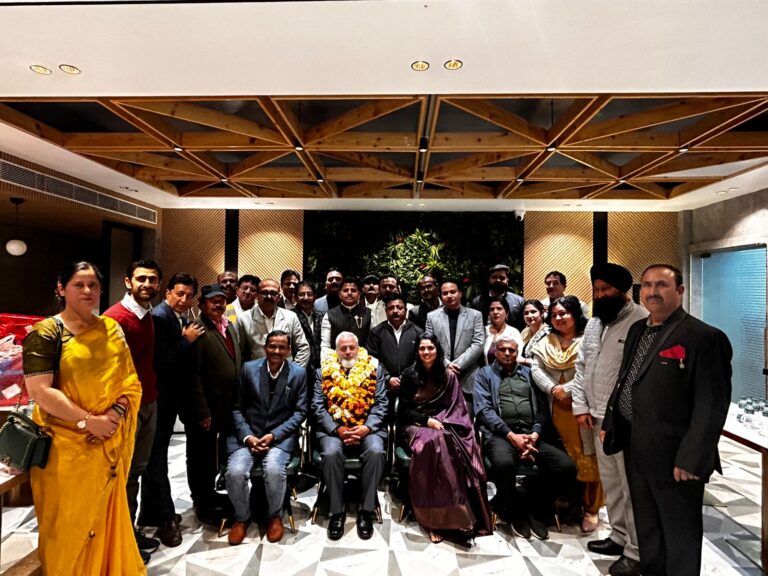
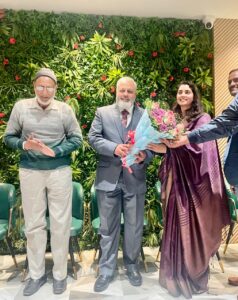
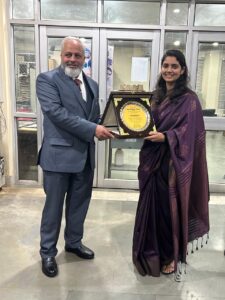
Jammu, 31 Jan: A farewell function was organised by the officers and staff of the Central Bureau of Communication (CBC), Regional Office Jammu, at the Amar Singh Club to honour, Director CBC, Shri Ghulam Abbas on the occasion of his superannuation. The event marked the culmination of his distinguished career spanning over 28 years in the field of government communication, media management and public information dissemination.

During his tenure as Director and Head of Department, CBC J&K and Ladakh, Shri Ghulam Abbas provided visionary leadership and administrative acumen, ensuring effective implementation of national communication policies and strengthening government outreach in the region.


A senior officer of the Indian Information Service (IIS), Shri Ghulam Abbas served the Government of India in various key capacities across organisations including Central Bureau of Communication (CBC), Press Information Bureau (PIB) and All India Radio (AIR) where he earned a reputation for strategic leadership, professional integrity and credibility driven communication.

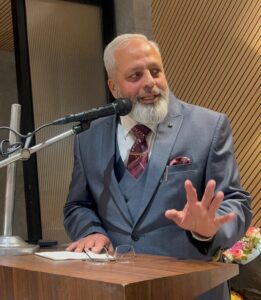
During the farewell function, speakers fondly recalled their experiences of working, with Shri Abbas, highlighting his calm leadership, administrative acumen, mentorship, and unwavering commitment to public service communication, particularly in sensitive and challenging environments. Many staff members shared personal anecdotes, underscoring the respect and warmth he commanded across all levels of the organisation.


The programme was attended by Deputy Director, CBC, Ms Ayushi Puri; Senior Accounts Office, Shri Rajesh Malik; Administrative Officer, Shri O.P. Mauriya; along with officers and staff members of CBC’s Regional Office Jammu, who gathered to express their gratitude and affection for the outgoing Director.


The programme concluded on an emotionally resonant note, reflecting the strong bonds of professional respect, and affection shared within the CBC fraternity, and carrying forward the legacy of service, dedication, and excellence left behind by the retiring Director.


On the same occasion, a farewell was also accorded to Ms Ayushi Puri, Deputy Director, CBC, on her transfer to Doordarshan, Jammu. Colleagues appreciated her contributions and extended their best wishes for success in her new assignment.


One of the remarkable contributions of the outgoing director was during his tenure in CBC J&K Ladakh was his commitment to taking government communication to the remotest areas. Under his guidance, CBC organised publicity and awareness programmes on government schemes in Turtuk in Ladakh and Marwah in Kishtwar district – areas that were covered for the first time in the history of CBC J&K. These initiatives significantly strengthened grassroots outreach and reflected his belief that government communication must reach the last mile.


Earlier, in 2022, Shri Abbas held additional charge of Joint Director, Press Information Bureau (PIB), Jammu, where he managed dual institutional responsibilities, supervised media coordination and strengthened mechanisms for transparent and timely dissemination of official information across print, electronic and digital platforms.


From 2010 to 2022, he served in various capacities including Assistant Director, Deputy Director and Head of Office at PIB Regional Office Srinagar, acting as the principal communication interface of the Government of India in the region. During this period, he oversaw preparation and dissemination of press releases, policy briefs and background material, and played a significant role in communication during sensitive periods, ensuring accuracy, responsibility and public confidence.


In addition to his core responsibilities, Shri Abbas contributed to several important national assignments. He was deputed by the Government of India to Consulate General of India Jeddah for Hajj operations in 2003. He served as a Member of the Media Certification and Monitoring Committee (MCMC) during Assembly and Parliamentary Elections in Jammu & Kashmir from 2014 to 2024, for which he was recognised by the Chief Electoral Officer, J&K. He also participated in professional development programmes at institutions including Indian Institute of Mass Communication (IIMC) and the National Productivity Council.


Shri Abbas superannuates leaving behind a legacy of institutional leadership, editorial integrity and commitment to public service communication, contributing significantly to strengthening government outreach and media governance.

5 LoC Villages in Boniyar Without Power Supply, Road Access for Nine Days

0


Uri, Jan 31: Five villages located along the Line of Control in the Boniyar area have remained without electricity and road connectivity for the past nine days following heavy snowfall.


The affected villages include Chotali, Gigerhill, Jabdi, Samali, and Korali. Residents said electricity supply and road access were disrupted after the first major snowfall during the night of January 22 and 23 and have not been restored since.


Talking to GNS, locals said the prolonged power outage during extreme winter conditions has severely affected daily life. The absence of electricity has disrupted lighting, heating, and other basic necessities. They added that damaged poles and transmission lines have delayed restoration work.


Residents also said road blockages have cut off the villages from the tehsil headquarters, leaving a large population isolated. Patients and elderly residents are facing serious difficulties due to the lack of connectivity.


While snowfall and avalanches are common in the area, villagers said living without electricity and road access for such an extended period has added to their hardship. They stressed the need for better preparedness by the authorities to deal with recurring winter emergencies.


Meanwhile, officials said men and machinery have been deployed in the affected areas. They expressed hope that electricity supply and road connectivity would be restored soon, subject to weather conditions. (GNS)