spot_imgspot_img
spot_img
Home Blog Page 138

Condolence meeting held in memory of Late Dr. Rozi Jeelani

0


Srinagar: A condolence meeting (Majlis-e-Ta‘ziyat) was held on Saturday at the Community Hall, Elahibagh, near Power Grid Station, in memory of Late Dr. Rozi Jeelani, Medical Officer, Health Services, who passed away in Mecca Mukarramah while performing Umrah.


Late Dr. Rozi Jeelani, wife of Dr. Rouf Jeelani, Senior Dental Surgeon, Health Services, was remembered as a compassionate and dedicated medical professional whose services to the community earned her immense respect and admiration. Her demise has left the medical fraternity and society at large in deep mourning.


The condolence meeting was attended by a large number of relatives, friends, colleagues from the Health Department, senior officials, social figures, and members of the public. Attendees expressed heartfelt condolences and paid glowing tributes to the departed soul, recalling her humility, professional integrity, and lifelong commitment to patient care.


During the meeting, special prayers were offered for the maghfirah of Late Dr. Rozi Jeelani. The gathering prayed that Almighty Allah grants her the highest place in Jannat-ul-Firdous, accepts her Umrah, and bestows Sabr-e-Jameel upon the bereaved family to bear this irreparable loss.


The family of the deceased conveyed their sincere gratitude to all those who attended the condolence meeting and stood by them in this time of grief. They also thanked well-wishers for their prayers, messages of support, and solidarity.


The condolence meeting concluded in an atmosphere of solemnity and collective remembrance, reflecting the deep respect and affection Late Dr. Rozi Jeelani commanded throughout her life.

Two Women Injured As Car Hits Pole Near Manigam, Ganderbal

0


Touseef Wani


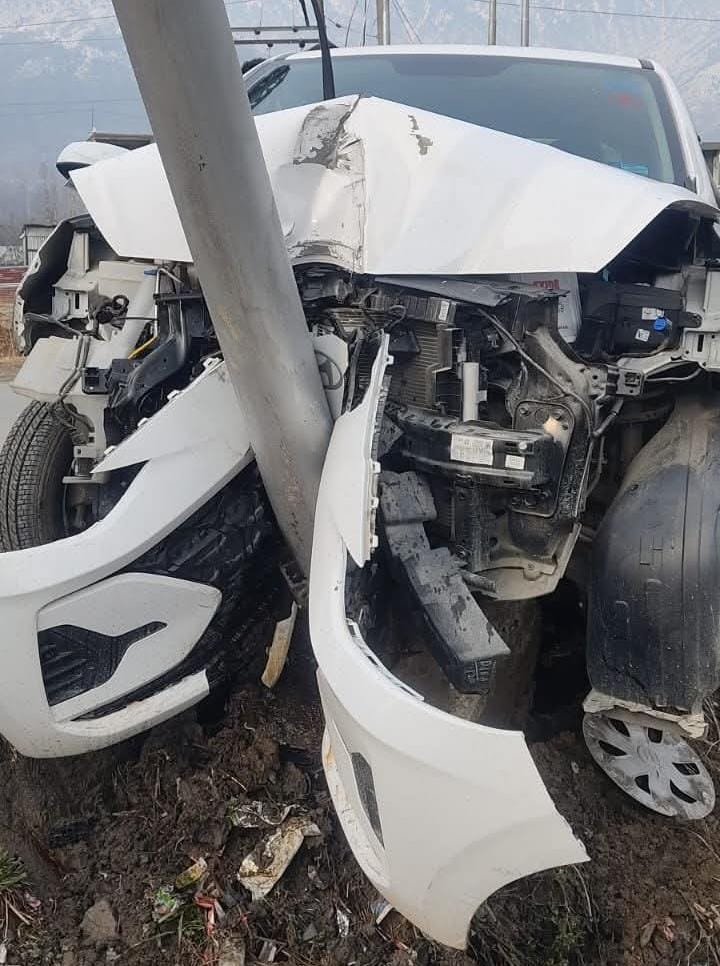
Ganderbal, Jan 31: Two women were injured after a car met with an accident near Zero Point Manigam in Ganderbal district on Saturday.


An official told Kashmir Despatch that a Grand i10 car bearing registration number JK16C-1665 was on its way from Kangan towards Ganderbal when the driver lost control of the vehicle near Zero Point Manigam, causing it to collide with a pole.


The vehicle was being driven by a woman, and another girl was accompanying her. Both sustained injuries in the accident.


Locals rushed to the spot, extended immediate assistance and shifted the injured women to Ganderbal in another vehicle for treatment.


The injured have been identified as one resident of Beehama, and another resident of Saloora.

Woman Dies of Cardiac Arrest After Assault Incident in Srinagar

0

Two Attackers at Large, Police Register Case


Srinagar, Jan 31: A woman died of a suspected cardiac arrest following panic and commotion triggered by an assault incident in the Zeithyar area of Nishat in Srinagar outskirts, while police have launched a manhunt for two unidentified attackers involved in the case.


According to official sources, two unknown persons forcibly entered the house of a Sumo driver, a resident of Zeithyar Nishat, and allegedly assaulted him, leaving him injured.


During the chaos that followed the incident, a woman living in the neighbourhood suffered a heart attack and collapsed. She was declared dead shortly thereafter.


Police from Nishat Police Station rushed to the spot, but by the time they arrived, the assailants had fled. The injured man was taken into custody for questioning after police found him under the influence of alcohol. He was provided medical treatment and is presently lodged at the police station, officials said.


A case has been registered under FIR No. 7/26 at Police Station Nishat, and further investigation is underway to ascertain the motive behind the attack and to trace the accused persons.


Police said all angles, including the sequence of events leading to the woman’s death, are being examined. [KNT]

Celebrating 50 years of India’s ‘Saviours at Sea’

0

Indian Coast Guard Marks Golden Jubilee of Service


VINOD BHAT

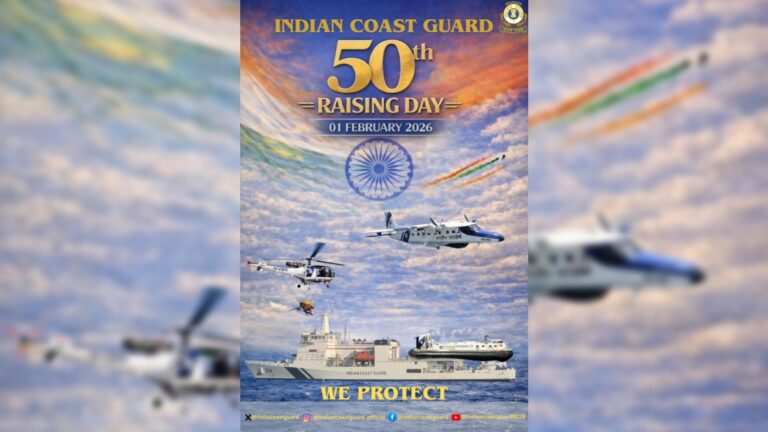
NEW DELHI, Jan 31: The Indian Coast Guard (ICG) is set to commemorate its 50th Raising Day on February 1, 2026, marking five decades of unwavering service in safeguarding India’s vast maritime frontiers. Raised on February 1, 1977, the ICG has grown from a modest force of just seven surface platforms into a formidable maritime organisation, today operating 155 ships and 80 aircraft, with an ambitious roadmap to reach 200 surface platforms and 100 aircraft by 2030.

According to Commandant Amit Uniyal, Public Relations Officer, Indian Coast Guard, the Golden Jubilee celebrations reflect not just an institutional milestone but a tribute to the dedication, courage and professionalism of generations of Coast Guard personnel who have served the nation selflessly at sea.

Conceived to address emerging maritime challenges and protect India’s expanding maritime interests, the Indian Coast Guard has steadily evolved into a multi-dimensional force entrusted with maritime law enforcement, coastal security, search and rescue operations, marine environmental protection, and humanitarian assistance. Over the years, the service has earned the enduring recognition of being the nation’s “Saviours at Sea.”

The Bharatiya Tatrakshak maintains constant vigilance over 2.01 million square kilometres of India’s Exclusive Economic Zone (EEZ) and a coastline stretching 11,098.01 kilometres. Through extensive deployment of ships and aircraft, supported by advanced electronic surveillance systems, the ICG ensures a persistent presence at sea, deterring illegal activities and reassuring the maritime community.

At the core of its mission lies the noble duty of saving lives at sea. From navigating tempestuous waters during emergencies to carrying out critical medical evacuations and extending assistance to mariners in distress far from shore, the Indian Coast Guard has rescued over 11,800 lives since its inception. Its operational preparedness has been demonstrated in close coordination with the Indian Navy during Operation Sindoor, rescue missions in Lakshadweep, and the effective handling of three major maritime incidents off the Kerala coast.

Environmental protection remains a defining pillar of the Coast Guard’s mandate. In alignment with the national vision of Aatmanirbhar Bharat and Make in India, the ICG continues to strengthen self-reliance through the induction of indigenously built ships, aircraft, helicopters and advanced surveillance systems, while also focusing on infrastructure development and personnel welfare.

The organisation has also reaffirmed its commitment to gender neutrality and inclusivity, ensuring equal opportunities for women across seagoing, aviation and shore-based roles, and fostering a professional work environment built on respect, merit and trust.

Guided by the Prime Minister’s vision of Amrit Kaal and anchored in the maritime doctrines of SAGAR and MAHASAGAR, the Indian Coast Guard has emerged as a key pillar of India’s maritime resurgence. The service continues to promote security, growth and cooperation, viewing the seas not merely as boundaries to be guarded but as pathways of partnership and shared prosperity.

On the global stage, the ICG has strengthened maritime partnerships through Humanitarian Assistance and Disaster Relief (HADR) missions and capacity-building initiatives, inspired by the ethos of Vasudhaiva Kutumbakam. A significant recognition of India’s growing maritime stature came in 2025, when World Coast Guard agencies unanimously decided to hand over the presidency of the 50th Coast Guard Global Summit to the Indian Coast Guard.

The organisation paid rich tributes to its veterans, acknowledging their vision and dedication in laying the foundation of the service, and recognised the unwavering support of Coast Guard families, described as the silent strength behind its operational success.

On the occasion of the 50th Raising Day, the President of India, Vice President of India, Prime Minister of India and the Defence Minister extended heartfelt congratulations to all ranks of the Indian Coast Guard, lauding its remarkable achievements and its vital role in safeguarding the nation’s maritime interests, PRO Commandant Amit Uniyal said.


MeitY Launches Compendium on the Future of AI with Reflections from 60 Leading Industry Experts

0

VINOD BHAT

Delhi, Jan 30:

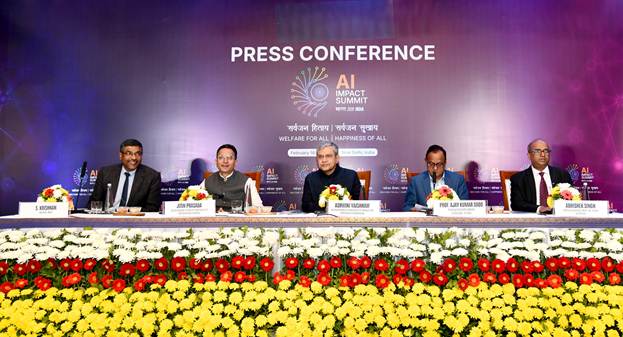
The Ministry of Electronics and Information Technology (MeitY), Government of India, today held a high-level press conference ahead of the India AI Impact Summit 2026, chaired by Shri Ashwini Vaishnaw, Minister for Electronics & Information Technology. The event was also attended by Shri Jitin Prasada, Minister of State for Electronics & IT; Shri Ajay Sood, Principal Scientific Adviser to the Government of India and other senior MeitY officials. The press conference outlined key developments, confirmed global participation, and previewed the India AI Impact Summit’s anticipated outcomes as India prepares to host the first-ever global AI summit in the Global South from February 16–20, 2026, at Bharat Mandapam, New Delhi.


Addressing the audience, Shri Ashwini Vaishnaw said that the India AI Impact Summit has received a phenomenal response from across the world and is shaping up to be the biggest AI summit so far globally. He referred to the recent interactions of Prime Minister Narendra Modi with industry leaders, developers and innovators working across the AI value chain, including models, applications and infrastructure, noting that these engagements reflected the systematic progress of India’s AI ecosystem and a strong focus on deployment-led solutions. The Minister stated that leading IT companies have developed more than 200 focused, sector-specific AI models, which are proposed to be launched during the AI Impact Summit. He further said that investments worth nearly USD 70 billion are already flowing into the AI infrastructure layer, with the potential to double by the conclusion of the Summit, and that AI talent development will be scaled up by extending AI infrastructure and industry-finalised curricula to 500 universities, creating a strong talent pipeline for the sector.


A Compendium featuring reflections from around 60 leading industry experts on the future of AI and its role in driving inclusive growth, innovation, and societal impact, titled “The Impact Agenda: Leadership Reflections” was also launched by Shri Ashwini Vaishnaw.


The conference drew attention to the milestones achieved in the lead up to the Summit and outlined what was to be expected during the landmark convening of industry, governments, academia, and civil society. Shri S. Krishnan highlighted that hybrid meetings of all seven thematic Working Groups anchored around the Sutras of People, Planet and Progress have successfully concluded, with their core deliverables now at an advanced stage of finalisation. In parallel, all seven Regional AI Impact Conferences held across Meghalaya, Gujarat, Odisha, Madhya Pradesh, Uttar Pradesh, Rajasthan, and Kerala have concluded, firmly grounding national AI priorities in regional strengths, use cases, and governance contexts. The Summit’s deeply participatory model is also reflected in the successful completion of nearly 480+ Pre-Summit events across India and globally, including 83 international engagements across 30 countries, with further activities scheduled through February 10, 2026.


Addressing the gathering, Shri S. Krishnan, Secretary (MeitY) said that the central objective of the India AI Impact Summit is to advance the democratisation of technology, particularly artificial intelligence, to ensure that its benefits reach a wide cross-section of society. He noted that as the first global AI summit being hosted in the Global South, the Summit places emphasis on aligning approaches to AI governance and standards, with the aim of fostering a shared global understanding on the safe and responsible deployment of AI in real-world applications.


Additionally, it was announced that the Summit week will feature around 500+ curated events across Bharat Mandapam and Sushma Swaraj Bhawan, enabling parallel leader-level dialogues, exhibitions, and outcome-oriented sessions. The AI Impact Expo will host 840+ exhibitors, including Country Pavilions, Ministries, State Governments, Industry, Startups, and Research Institutions, showcasing AI solutions with proven real-world impact. IndiaAI will also demonstrate progress on India’s foundational AI models.


Furthermore, the conference confirmed participation of 15 Heads of State/Government, 40+ Ministers, over 100 leading CEOs and CXOs, and more than 100 eminent academics. Industry engagement has emerged as a cornerstone of the Summit. Industry partners including Jio, Qualcomm, OpenAI, Nvidia, Google, Microsoft, Adobe, and the Gates Foundation are expected to join the Summit.


The press conference reaffirmed the Government of India’s commitment to ensuring that AI remains safe, trusted, and inclusive, while driving innovation, economic growth, and societal impact through the India AI Impact Summit 2026.

Indian Railways Speeds Up Kavach 4.0 Safety Rollout with 472 km Commissioned Across Three Sections

0

VINOD BHAT

Delhi, Jan 30:

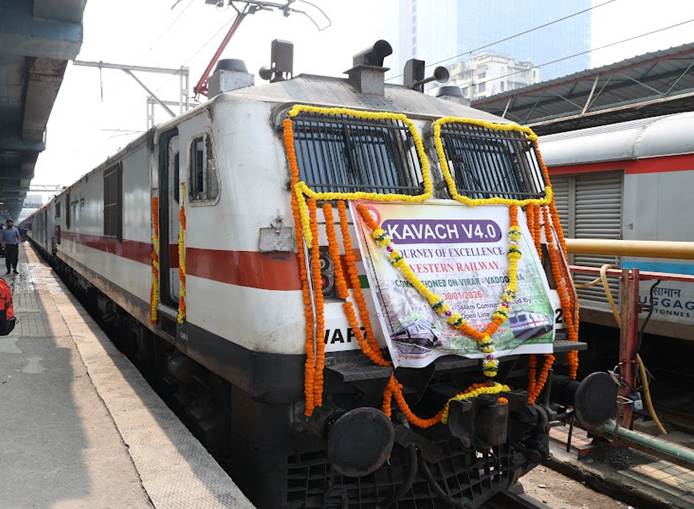
Indian Railways today commissioned 472.3 route kilometres of Kavach Version 4.0 (Automatic Train Protection System) across three sections of its network, marking another significant milestone in strengthening rail safety. The newly commissioned sections include Vadodara–Virar (344 km) on Western Railway, Tuglakabad Junction Cabin–Palwal (35 km) on Northern Railway, and Manpur–Sarmatanr (93.3 km) on East Central Railway. With this commissioning, Indian Railways continues to accelerate the deployment of the indigenous Kavach system to enhance train protection, operational safety, and reliability across high-density routes.


This commissioning marks the highest ever route kilometres of Kavach commissioned on a single day as well as in a month, with 472.3 RKm brought under Kavach Version 4.0. The previous highest commissioning stood at 324 RKm on the Kota–Mathura section of West Central Railway. With the latest addition, Kavach Version 4.0 has now been commissioned across five zones of Indian Railways.


After today’s inclusion, Kavach Version 4.0 has been commissioned over a total of 1,306.3 Route Kilometres across Indian Railways. Prior to this, Kavach Version 4.0 had been commissioned on 834 Route Kilometres. This included the Palwal–Mathura–Nagda section (633 RKm) of the Delhi–Mumbai route and the Howrah–Bardhaman section (105 RKm) of the Delhi–Howrah route. In addition, 96 Route Kilometres were commissioned on Gujarat’s first Bajwa (Vadodara)–Ahmedabad section.


Progress of Kavach 4.0 Implementation on Northern Railway


Indian Railways successfully commissioned Kavach 4.0 on the 35-km Tuglakabad Junction Cabin–Palwal section of the four-line Delhi–Mumbai route, which spans 152 main line track kilometres. Kavach has been installed in a complete stretch of this corridor comprising Major station Yards, two Main lines with Automatic Signaling system and two lines with Absolute Block signalling.


This commissioning marks a significant safety upgrade on one of the busiest and high-density corridors of the Indian Railways covering Delhi suburban and long-distance rail network. This section is a high-traffic stretch catering to passenger, suburban, and freight trains. Commissioning of Kavach on this section significantly enhances operational safety, reliability, and passenger confidence.


Progress of Kavach 4.0 Implementation on East Central Railway


Indian Railways has also commenced train operations with Kavach 4.0 on the 93.3 km Manpur–Sarmatanr section of the DDUGJ–Pt. Deen Dayal Upadhyaya division. The first Kavach-enabled service, Train No. 13305 Sasaram Intercity Express, operated successfully on this section, departing Sone Nagar at 07:42 hrs and arriving at Manpur at 09:35 hrs. During the run, a head-on collision test was conducted, in which the train automatically stopped, validating the system’s effectiveness.


Kavach is being installed over 4,235 route kilometres of East Central Railway, including 417 route kilometres on the Pt. Deen Dayal Upadhyaya Junction–Manpur section, a critical part of the Delhi–Howrah trunk route passing through Uttar Pradesh, Bihar, and Jharkhand. The section carries mixed traffic and is currently cleared for 130 kmph, with works in progress under Mission Raftar to enhance the speed potential to 160 kmph.


Progress of Kavach 4.0 Implementation on Western Railway


Work on the Vadodara–Surat–Virar section on Delhi-Mumbai route commenced in January 2023, and on 30 January 2026, Kavach has been successfully commissioned on this 344-km section. This historic milestone was achieved with Train No. 20907, Dadar–Bhuj Sayajinagri Express, becoming the first KAVACH equipped train to run from Mumbai.


Work on the Vadodara–Nagda section is progressing at a fast pace and is expected to be commissioned by March 2026, while work on the Virar–Mumbai Central section is also progressing well and is targeted for completion by September 2026. Simultaneously, Kavach installation on locomotives is advancing steadily, with 364 locomotives on Western Railway equipped with Kavach so far. In addition, works on several other sections of Western Railway have been sanctioned, covering a total of 2,667 Route Kilometres, with execution underway on all sanctioned sections.


About Kavach


Kavach Version 4.0, the latest and most advanced iteration of India’s indigenous Automatic Train Protection system, has been developed through continuous technological upgrades based on operational feedback and independent safety assessments. Approved by the Research Designs and Standards Organisation (RDSO), Kavach 4.0 represents a major advancement in railway safety.


It is specifically designed to address the operational demands of India’s diverse, high-density and multi-line rail network, offering enhanced reliability, faster response, and seamless integration with existing signalling and interlocking systems. Certified by an Independent Safety Assessor (ISA) to meet global safety standards, Kavach 4.0 is fully equipped for large-scale deployment across Indian Railways.


Kavach integrates microprocessors, Global Positioning System (GPS), and radio communication technologies to ensure safe train operations. When another train is detected on the same track within a predefined distance, the system alerts the locomotive pilot and, if required, automatically applies brakes through onboard equipment.


Kavach provides automatic protection against Signal Passing at Danger (SPAD) and effectively prevents side, head-on, and rear-end collisions. It also continuously monitors and controls overspeeding, ensuring safe operations even under low visibility and adverse weather conditions. In addition, the system generates alerts during wrong-direction and reverse movements and provides automatic information on level crossing gates.


Kavach complies with SIL-4 safety standards, the highest level of safety integrity globally. Being an indigenously designed and cost-effective system, it reduces dependence on imported technologies and promotes Indian signaling industry.


Indian Railways is progressively expanding Kavach coverage, reinforcing its commitment to safe and reliable train operations and safer rail travel for millions of passengers. This commissioning is another step in commitment towards a safer, smarter, and self-reliant Indian Railways.

Railways-Fertilizer Dept Coordination Boosts Kharif and Rabi Supplies

0

VINOD BHAT

Delhi, Jan 30

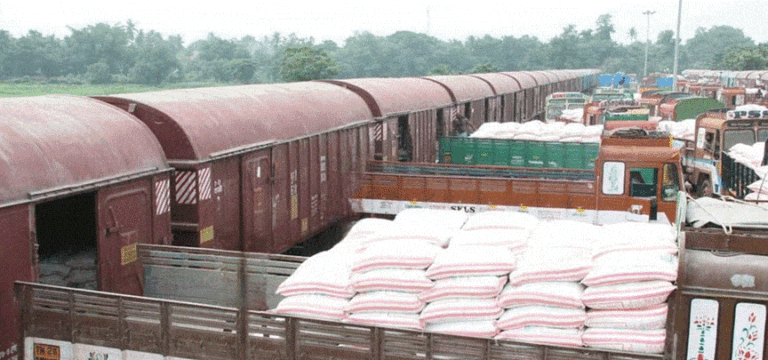
Ensuring the timely availability of fertilizers to farmers has remained one of the Government’s highest priorities. In this direction, the improved coordination between the Ministry of Railways and the Department of Fertilizers during Kharif 2025 and the ongoing Rabi season was clearly visible at the ground level. Faster and smoother movement of fertilizer rakes enabled timely supplies to States, ensuring that farmers did not face any shortages during the critical stages of cultivation. Department of Fertilizers, appreciated this close cooperation by the Ministry of Railways and stated that such coordinated efforts have helped ensure adequate availability of fertilizers across the country.


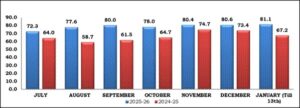
During this period, average rake loading increased to 72 rakes per day in July 2025, rose to 78 rakes per day in August 2025 and reached 80 rakes per day in September 2025.


During the Financial Year 2025-26, from April to December 2025, the Government has ensured sufficient and comfortable availability of all major fertilizers across States. For urea, against a requirement of 312.40 Lakh Metric Tons, availability of 350.45 Lakh Metric Tons was ensured. Further, major P&K fertilizers (viz. DAP, MOP & NPKS) saw availability of 287.69 LMT against the requirement of 252.81 LMT consistently exceeding assessed requirement and ensuring uninterrupted supply. States also took concerted measures to ensure last-mile availability to farmers.


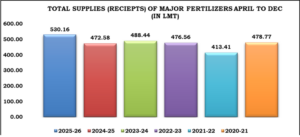
Total Supplies of Major Fertilizers April to Dec (In LMT)


Fertilizer movement during April-December 2025 reached an all-time high, with net supplies crossing 530.16 Lakh Metric Tons, surpassing the 500 Lakh Metric Ton mark for the first time during this period. This represents a 12.2 percent increase over the corresponding period of FY 2024–25 and is 8.5 percent higher than the previous record of FY 2023–24.


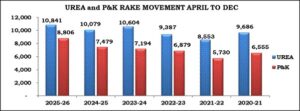
Urea and P&K Rake Movement April to Dec


Urea rake movement rose to 10,841 rakes, registering an 8 percent increase over last year, while P&K fertilizers recorded 8,806 rakes, marking an 18 percent growth. Enhanced coordination with the Ministry of Railways, Ports, State Governments, and fertilizer companies ensured seamless and timely supply to States during peak agricultural seasons.


Average Fertilizer Rakes per Month


A month-wise comparison from July to January (till 13th January) highlights the sustained increase in the corresponding period last year.


The remarkable performance in fertilizer movement reflects the Government’s robust planning, real-time coordination, proactive resolution of bottlenecks, and focused monitoring at State and national levels.

Union Minister Hardeep Singh Puri highlights India’s preparedness, resilience and growing global energy influence

0

VINOD BHAT


IEW 2026 concludes with strong affirmation of India’s energy leadership amid geopolitical flux and recognition of innovation excellence


Delhi, Jan 30:

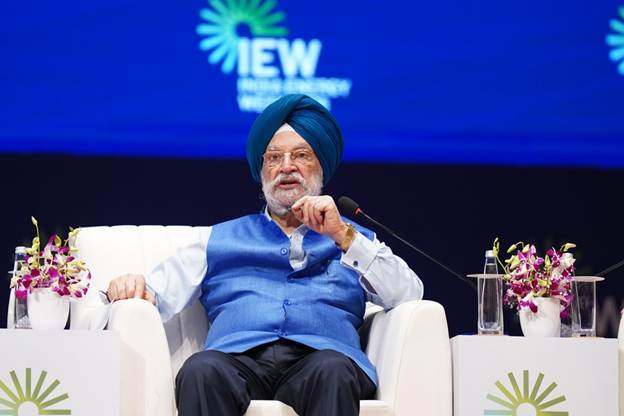
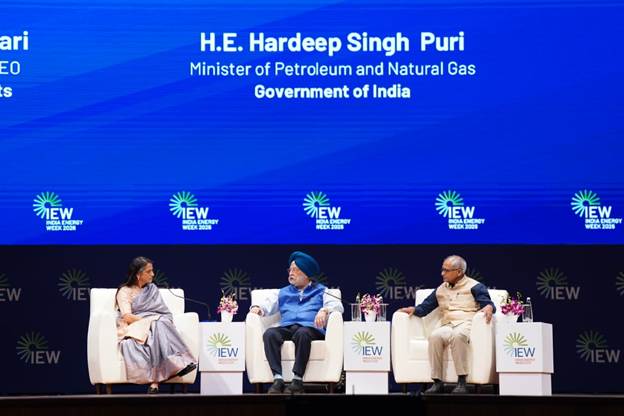
India has demonstrated strong preparedness to navigate sustained geopolitical volatility in global energy markets while remaining firmly at the centre of global energy dialogue, Union Minister of Petroleum and Natural Gas Shri Hardeep Singh Puri said at the Closing Ceremony of India Energy Week (IEW) 2026 in Goa.


Speaking during the closing fireside chat, the Union Minister underlined that India’s energy strategy is anchored in diversification, resilience and forward-looking transitions. “India has coped very well with successive geopolitical shocks. Each challenge has been converted into an opportunity—through diversification of supply sources and a rapid transition towards cleaner fuels,” Shri Puri said.


Highlighting India’s growing global standing, he noted that the country is today the world’s third-largest energy consumer, fourth-largest refiner and among the leading exporters of petroleum products. “India will continue to ensure availability, affordability and sustainability of energy, even amid global uncertainty,” he added.


Following the Minister, Dr. Neeraj Mittal, Secretary, Ministry of Petroleum and Natural Gas, outlined the government’s roadmap to support India’s projected economic growth of over 7 percent. He emphasised strengthening domestic exploration and production to enhance energy self-reliance, alongside positioning India as a reliable global supplier of refined products. Dr. Mittal also highlighted the growing role of digitalisation, artificial intelligence and logistics optimisation in improving operational efficiency and resilience across the energy value chain.


The closing day also marked the culmination of IEW 2026 with awards recognising innovation, technological excellence and leadership across startups, academia and industry.


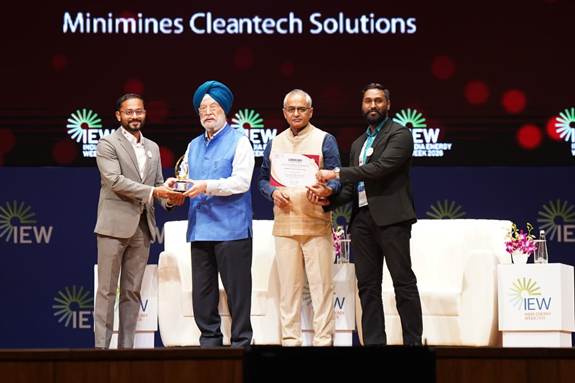
Under AVINYA – The Energy Startup Challenge, Minimines Cleantech Solutions emerged as the winner, recognised for its proprietary HHM process enabling low-carbon recovery of high-value materials from end-of-life lithium-ion batteries, with applications extending to solar panels, catalytic converters and permanent magnets.


The VASUDHA – Overseas Upstream Startup Challenge was won by SENERGETICS, The Netherlands, for its AI-driven corrosion monitoring solutions that enhance safety, reliability and sustainability in upstream operations.


The Hackathon Challenge was won by IIT Bombay for Aura, an AI-powered unified reservoir analysis platform that integrates advanced machine learning to improve exploration and production decision-making.


Industry excellence was recognised through the FIPI/IIP Annual Awards, with Oil and Natural Gas Corporation Limited (ONGC) named Exploration Company of the Year and Oil India Limited awarded Oil & Gas Production Company of the Year (Over 1 MTOE). Reliance Industries Limited’s SEZ Refinery at Jamnagar was recognised as Refinery of the Year, while innovation leadership was jointly awarded to Indian Oil Corporation Limited’s R&D Division and Mangalore Refinery & Petrochemicals Limited’s Innovation Center.


India Energy Week 2026 concluded by reinforcing India’s position as a steady, credible and pragmatic energy leader—capable of balancing energy security, affordability and sustainability—while fostering innovation and global collaboration across the energy ecosystem.

IEW 2026 Concludes with Awards Recognising Innovation and Leadership in Energy

0

VINOD BHAT

Delhi, Jan 30:

India Energy Week 2026 wrapped up on a laudatory note, celebrating the innovators, startups, and industry leaders shaping India’s energy future. The event was held in Goa from 27th January to 30th January, 2026. Over the course of the week, the flagship global energy conclave highlighted India’s central role in the global energy ecosystem while uniting policymakers, business leaders, innovators and investors to drive pragmatic solutions for a secure, sustainable and affordable energy future.


AVINYA – The Energy Startup Challenge


The AVINYA challenge recognised emerging Indian startups delivering innovative, technology-driven solutions for the energy sector:


Winner: Minimines Cleantech Solutions – Mr. Hardhik, Mr. Anupam Kumar, recognised for their proprietary HHM process that delivers low-carbon recovery of high-value materials from end-of-life (EOL) lithium-ion batteries, with expansion underway into solar panels, catalytic converters, and permanent magnets.

1st Runner-Up: Ossus Biorenewables – Dr. Suruchi Rao, Mr. Kamar Suhail Basha, for their biochemical process converting industrial wastewater into green hydrogen.


2nd Runner-Up: Tranzmeo IT Solutions – Mr. Safil Sunny, Mr. Rakaesh Mishra, for AI-driven fiber-sensing applications enabling accurate monitoring of pipelines, vents, and CCUS processes.


3rd Runner-Up: Rezlytix Technologies – Mr. Dipshankar Nanda, Mr. Vinay Bhardwaj, for an AI-powered deep information maximisation engine revolutionising oil and gas exploration.


4th Runner-Up: Petrobot Technologies – Mr. Sahab Gurjar, Mr. Shashi Fagna, for robotic inspection solutions in hydrocarbon plants and vessels.

VASUDHA – Overseas Upstream Startup Challenge


This international challenge recognised startups advancing upstream technology:


Winner: SENERGETICS, The Netherlands –Mr. Franciscus Johanna Jacobs, Ms. Anitha, for AI-driven corrosion monitoring ensuring safer, sustainable operations.

Runner-Up: Resermine Inc, USA – Mr. Anton Malkov, Mr. Amit Kumar, for their Hawkeye hybrid model engine optimising reservoir engineering workflows.

Hackathon Challenge


Seven premier institutes participated, with awards recognising innovative problem-solving in energy technology:


Winner: IIT Bombay – Soutik Bhakta, Prof. Kumar Hemant Singh, for Aura, an AI-driven unified reservoir analysis platform using a semi-supervised CNN transformer framework.

Runner-Up: IIT Delhi – Swagat Sabyasachi Sahoo, Akshit Agarwal, Manogya Sunil Chordia, Debarun Banerjee, Prof. Vikrant, for a circular economy approach using bi-basic solvent-based CO₂ capture and mineralisation via steel industry slag.

FIPI / IIP Annual Industry Awards


The Federation of Indian Petroleum Industry recognised companies and individuals for excellence across exploration, production, refining, innovation, and gas distribution:


Exploration Company of the Year: Oil and Natural Gas Corporation Limited (ONGC) – recognised for excellence in efficient, safe, and sustainable exploration.


Oil & Gas Production Company of the Year (Over 1 MTOE): Oil India Limited – for leadership in efficient, safe, and sustainable production leveraging advanced recovery technologies.

Oil & Gas Production Company of the Year (Under 1 MTOE): Sun Petrochemicals Pvt. Ltd.

Refinery of the Year: Reliance Industries Ltd., SEZ Refinery, Jamnagar – for exceptional performance in throughput, operational efficiency, energy conservation, and sustainability.

Innovator of the Year (Joint Winners):


R&D Division, Indian Oil Corporation Limited – for conceptualising and implementing the indigenous ZOMAX CAP light-naphtha isomerisation technology.

Innovation Center, Mangalore Refinery & Petrochemicals Ltd. – for introducing orderless process technology in industrial operations.


Best Managed Project of the Year: Shell India (PMG Joint Venture) – for executing India’s first offshore decommissioning project at Kaki.

City Gas Distribution Company of the Year: Indraprastha Gas Limited – for expanding pipeline networks and growing CNG infrastructure.

Pipeline Transportation Company of the Year: Bharat Petroleum Corporation Limited – for operational excellence and sustainable pipeline management.


Oil Marketing Company of the Year: Hindustan Petroleum Corporation Limited – for operational throughput, digital initiatives, and promoting sustainable energy solutions.

Young Achiever of the Year:

Female: Ms. Vanashree Mahatre, Pipeline Infrastructure Limited – for professional grit and contributions to reducing unaccounted-for gas and enabling alternative supply paths.

Male: Mr. Karthik R., Mangalore Refinery & Petrochemicals Limited – for leading the Innovation Center team, commercialising inventions, and driving operational efficiency.

India Energy Week 2026 successfully concluded by recognising these innovators and leaders, underscoring India’s expanding energy leadership, the country’s drive for sustainability, and its role in shaping the future of global energy.

 

India Energy Week 2026 concludes with India reinforcing its role in the global energy landscape ​​​​​​​

0

VINOD BHAT

​​​​​​Delhi, Jan 30:

India has demonstrated strong preparedness to navigate sustained geopolitical volatility in global energy markets and will continue to occupy centre stage in international energy discourse, Union Minister for Petroleum and Natural Gas Shri Hardeep Singh Puri said at the Closing Ceremony of India Energy Week (IEW) 2026. The event was organised in Goa from 27th January to 30th January 2026.


Speaking during the closing fireside chat, Shri Puri emphasised that India’s energy strategy is anchored in diversification, resilience and forward-looking transitions. “We have coped very well with successive geopolitical shocks. Each challenge has been converted into an opportunity—through diversification of supply sources and a rapid transition towards cleaner fuels,” the Union Minister said.


Highlighting India’s global standing, Shri Puri noted that the country is today the third-largest energy consumer, fourth-largest refiner and among the top exporters of petroleum products, “India will continue to ensure availability, affordability and sustainability of energy, even amid global uncertainty,” Shri Puri added.


The Union Minister also emphasised the government’s push on compressed biogas (CBG), green hydrogen and indigenous clean-energy technologies, alongside continued investments in conventional fuels. “Traditional energy will remain essential, but the strides we are making—from ethanol blending to CBG, hydrogen and biofuels—give us confidence that greener fuels will play an expanding role,” he said.


Addressing concerns around consumer impact during global price shocks, the Minister said that India has successfully insulated its citizens from volatility. “Global turmoil has never been passed on to the consumer. India today has among the lowest energy prices in the world, and uninterrupted supply has been maintained even during crises,” he said, citing timely interventions by oil marketing companies in ensuring fuel prices, including that of LPG, remained affordable to consumers.


Following the Minister, Dr. Neeraj Mittal, Secretary, Ministry of Petroleum and Natural Gas, presented the government’s blueprint to support India’s growth trajectory. “With projected economic growth of over 7 percent, energy demand will rise sharply. Our focus rests on two pillars: strengthening domestic exploration and production, and positioning India as a reliable supplier of refined products to the world,” the Secretary said.


Dr. Mittal outlined ambitious plans to accelerate upstream activity, including increased drilling and exploration to enhance self-reliance. He also stressed on integration of refining and petrochemicals to maximise value addition and reduce imports. “We are building scale at home while remaining competitive globally,” he added.


On energy transition, Dr. Mittal highlighted the importance of technology and digitalisation. “From logistics optimisation to AI-driven efficiencies, technology is becoming central to lowering costs and improving operational resilience,” he noted. He added that India is well on track to meet its targets on CBG, with a goal of achieving 5 percent blending by 2030, supported by active state participation and farmer-led biomass supply chains.


The closing session reinforced India Energy Week 2026’s role as a platform that bridges energy security, affordability and sustainability, while positioning India as a steady, credible and pragmatic leader in a rapidly evolving global energy landscape.