spot_imgspot_img
spot_img
Home Blog Page 143

Desert bacteria rides in the wind to affect health in the Himalayas

0

Vinod Bhat

New Delhi: A new study has identified airborne pathogens carried along with elevated desert dust plume from Western India to the top of the Eastern Himalayas that are associated with respiratory and skin diseases.

The Himalayan hill-top atmosphere is widely considered beneficial for human health vulnerability in these regions have been found to be intensified by cold climatic conditions & hypoxia. There are limited evidences connecting airborne microbial exposure to respiratory disease outcomes in high-altitude Himalayan populations and the microbiological dimension of transboundary dust transport remains poorly understood. This gap in knowledge prompted researchers to take up the present study.

Through over two years of continuous monitoring of dust storms rising from the arid regions of western India, Researchers from Bose Institute, an autonomous institute of the Department of Science and Technology (DST), found that powerful dust storms can travel hundreds of kilometers, crossing densely populated and polluted Indo-Gangetic Plain before finally settling over Himalayan hilltops.

Fig: Schematic illustrating the Himalayan hill-top atmospheric bacterial community influenced by horizontally transported desert dust–associated pathogens and vertically uplifted polluted air carrying airborne pathogens from the Himalayan foothills, collectively contributing to human health impacts over the Eastern Himalayas.

They carry airborne bacteria, including pathogens that can affect human health.

In addition to respiratory and skin diseases due to the transported pathogens, vertical uplift injects locally sourced pathogens into high-altitude atmosphere, where they mix with long-range travellers arriving from afar. Together, they reshape the bacterial community floating above the Himalayas, contributing to gastrointestinal infections as well.

The results of this first of its kind study published in the Journal,” Science of the Total Environment”, quantitatively demonstrates the perturbation of atmospheric bacterial community over Himalayas due to horizontal long-range dust transport and vertical uplifting of foothill air pollution, which has direct implications on public health.

This research provides critical insights to strengthen national action plans for human health and development of health forecast systems aligned with the vision of Viksit Bharat @ 2047.

LG Manoj Sinha, CM Omar condole demise of Ajit Pawar

0

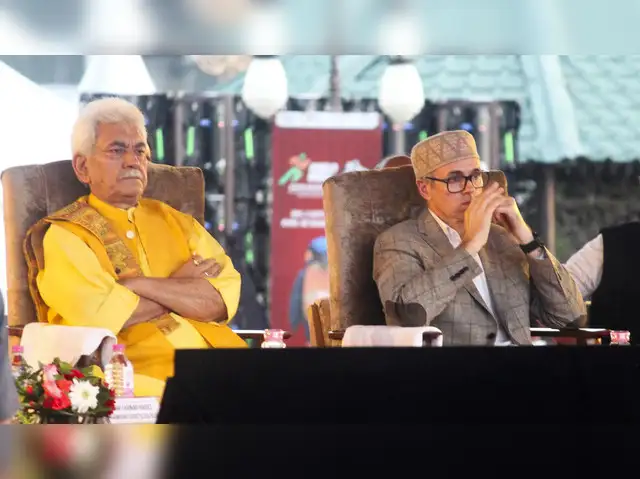
Srinagar, Jan 28: Lieutenant Governor Manoj Sinha and Jammu and Kashmir Chief Minister Omar Abdullah have expressed deep shock and sorrow over the untimely demise of senior leader Ajit Pawar.

In his condolence message, LG Manoj Sinha said he was “shocked and deeply saddened” by the passing away of “Shri Ajit Pawar”, describing him as a widely respected leader committed to the welfare of the people who served Maharashtra with distinction.

He extended condolences to the bereaved family and admirers and prayed for peace to the departed soul.

Chief Minister Omar Abdullah also expressed grief, recalling his long association with Ajit Pawar from his college days in Bombay.

He described Ajit Pawar as an able administrator and a skilled political organiser whose loss would be deeply felt. Omar Abdullah, along with his father, conveyed condolences to Sharad Pawar, Supriya Sule and the entire Pawar family.(KINS)

After Day-Long Shutdown, Srinagar Airport Prepares to Resume Flights

0

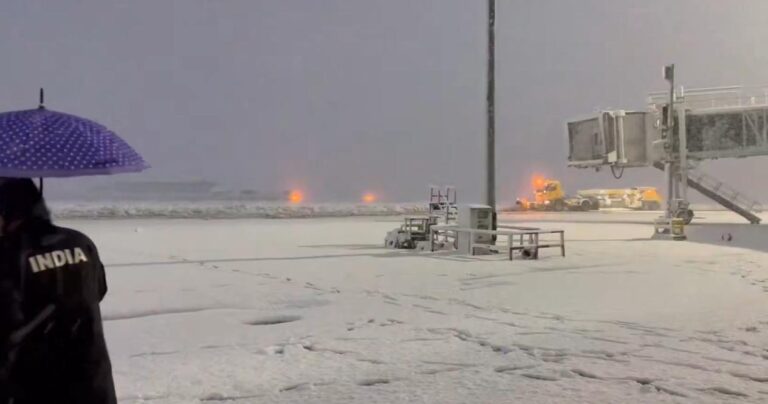
Srinagar, Jan 28: Flight operations at Srinagar International Airport are expected to resume soon after improvement in weather conditions, airport authorities said on Wednesday after all flights were cancelled the previous day due to continuous snowfall.

In a post on X, Srinagar Airport said the runway, taxiway and apron have been cleared following the improvement in weather and are now ready for operations.

“However, visibility is currently on the lower side due to haze conditions,” it said.

The airport said airline and airport authorities are closely monitoring the situation and resumption of flight operations is expected shortly.

“Delays may be expected during the initial phase of operations,” it added, advising passengers to stay in touch with their respective airlines and follow official communication channels for updates.

All flights to and from Srinagar were cancelled on Tuesday due to continuous snowfall in the Kashmir Valley.

“Due to adverse weather conditions and continuous snowfall in Srinagar, the runway is currently not available for safe aircraft operations. In the interest of passenger safety, all flight operations to and from Srinagar have been cancelled for the day,” an official of the Airport Authority of India said.

He said airlines and airport authorities were closely monitoring the weather situation and flight operations would resume as soon as conditions improve to a level where the runway is declared safe.

As many as 58 flights — 29 inbound and 29 outbound — were cancelled due to the snowfall, the official said, adding that passengers have been advised to remain in contact with their airlines for the latest updates and alternate arrangements.

The cancellation of flights left hundreds of tourists, who were scheduled to return home after spending the weekend and Republic Day holiday in the Valley, stranded.

Caught on CCTV: Swoosh of snow sweeps Sonamarg after avalanche, no causalities

0

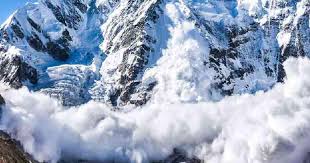
Ganderbal, Jan 28: A massive swoosh of snow swept across Sonamarg after an avalanche hit near the Sarbal area of central Kashmir’s Ganderbal district on Tuesday late evening. No loss of life or damage has been reported in the incident, officials said.

An official told that the avalanche that was caught on a CCTV hit near the truck yard in Sonamarg around 10:13 pm.

He said that the avalanche was triggered by heavy snowfall in the area since late Monday evening. “No loss of life or damage has been reported in the incident so far,” he added.

Several videos, captured on CCTVs in the nearby hotels, went viral on social media in which a swoosh of snow swept across some structures in the area.

Officials said that the authorities concerned are monitoring the situation, while teams have been deputed to the area. “The blowing snow triggered by the avalanche swept across several houses and structures in the nearby village,” they added.

Confirming the incident, a senior official said that an avalanche struck the Sonamarg area, but no casualties or property damage were reported. “Authorities are monitoring the situation and have advised residents to exercise caution in avalanche-prone zones,” he said—(KNO)

Union Minister Shri Ashwini Vaishnaw interacts with Semiconductor Chip Design Companies approved under the DLI Scheme

0

Vinod Bhat

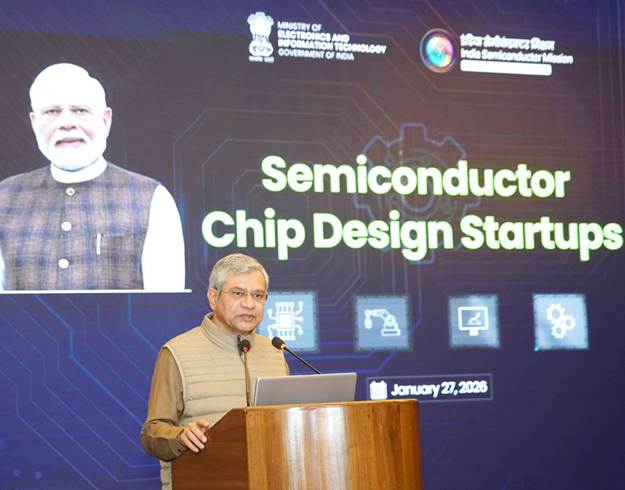
New Delhi: Union Minister for Electronics and Information Technology Shri Ashwini Vaishnaw, interacted with semiconductor chip design companies approved under the Design Linked Incentive (DLI) Scheme of the Semicon India Programme in New Delhi today. The interaction focused on reviewing progress, understanding design innovations, and reinforcing the Government’s commitment to building a robust, indigenous semiconductor design ecosystem. The DLI Scheme aims to accelerate domestic chip design capabilities by supporting startups and companies across areas such as SoCs, telecom, power management, AI, and IoT, thereby strengthening India’s self-reliance in critical semiconductor technologies.

The DLI-supported companies are engaged in semiconductor design across a broad range of areas, including indigenous SoCs and ASICs for surveillance, networking and embedded systems, RISC-V–based processors and accelerators, and AI-enabled, low-power chips for IoT and edge applications. Their work also covers telecom and wireless chipsets, power management and mixed-signal ICs, and strategic sectors such as automotive, energy, space and defence, contributing to the development of a self-reliant semiconductor design ecosystem in the country. Advanced EDA tools have been provided to these organizations, leading to approximately 2.25 crore tool-hours of usage, with 67,000 students and over 1,000 startup engineers actively engaged. In academia, 122 designs have been taped out, with 56 chips fabricated at 180 nm at SCL, Mohali, while startups have completed 16 tape-outs, resulting in six chips fabricated at advanced foundry nodes as advance as 12 nm. Additionally, 75 patents have been filed by academic institutions and 10 patents by startups.

Addressing the stakeholders, Shri Vaishnaw said that the government’s multi-year, ecosystem-driven approach to semiconductor development is delivering tangible results. He added that the programme was conceived in 2022 with a clear vision articulated by Prime Minister Narendra Modi, to build the entire semiconductor ecosystem, pursue a long-term strategy rather than isolated schemes, and transform India from a services-led economy into a product nation.

Highlighting the success of the Design Linked Incentive (DLI) Scheme, the Minister noted that while expectations were modest initially, the programme today supports 24 startups, many of which have already completed tape-outs, validated products and found market traction. This, he said, has validated the government’s core approach of removing key barriers faced by semiconductor startups by providing access to advanced design tools, IP libraries, wafer and tape-out support—an architecture of support that is unique globally.

The Minister underlined that the comprehensive support extended by the India Semiconductor Mission to semiconductor startups is unparalleled, and the government now intends to scale up the programme, with a target of enabling at least 50 fabless semiconductor companies in the country in the next phase. He expressed confidence that India would, in the coming years, see the emergence of globally competitive fabless companies comparable to leading international players.

Sharing feedback from recent global engagements at the World Economic Forum in Davos, the Minister said that international industry leaders have increasingly recognised the seriousness, scale and execution capability of India’s semiconductor programme. From initial scepticism in 2022, global perception has shifted significantly, with industry leaders now keen to partner with India’s growing semiconductor ecosystem.

The Minister outlined a focused strategy to strengthen India’s semiconductor design capabilities across six key system categories – compute, RF and wireless, networking, power management, sensors, and memory. These categories, he said, form the foundational building blocks for most modern electronic systems and would enable India to design and build solutions for a wide range of applications spanning defence, space, automotive, railways, drones and other strategic sectors.

Referring to infrastructure development, the Minister stated that SCL Mohali will support tape-outs in the 180-nanometre range, while advanced nodes up to 28 nanometres will be enabled through the upcoming fabrication facility at Dholera, providing a strong manufacturing base to complement domestic design capabilities. He also highlighted the government’s sustained focus on talent development, noting that against a target of 85,000 skilled professionals over ten years, over 67,000 semiconductor professionals have already been trained in just four years.

Expressing confidence in India’s growing role in the global semiconductor ecosystem, the Minister said that a significant share of the world’s semiconductor design work would be carried out in India in the coming years, driven by domestic startups, engineers and innovators creating their own IP, patents and enterprises.

Looking ahead, the Minister said that by 2029, India would achieve the capability to design and manufacture chips required for nearly 70–75 per cent of domestic applications. Building on this foundation, the next phase under Semicon 2.0 will focus on advanced manufacturing, with a clearly defined roadmap to achieve 3-nanometre and 2-nanometre technology nodes. By 2035, India aims to be among the top semiconductor nations globally.

The Minister further noted that startups supported under the scheme have attracted nearly ₹430 crore in venture capital funding, reflecting growing confidence in India’s design ecosystem. He informed that of the 24 startups participating in the DLI programme, 14 startups have secured venture capital funding. He said the India Semiconductor Mission, launched four years ago, has delivered strong outcomes, including 10 projects under construction, four projects expected to begin production this year, and 67,000 students trained in semiconductor chip design across 315 academic institutions.

The Minister also announced that the government will institute Deep Tech Awards in 2026 to recognise and encourage innovation across key sectors including semiconductors, artificial intelligence, biotechnology, space and other deep-tech domains. The first round of awards is expected to be held towards the end of the year.

During the event, several startups unveiled their tape-out milestones and commercialization roadmaps, enabled by funding and EDA tools support under the DLI Scheme. These startups highlighted the importance of indigenization at the component and chip level to achieve a trusted supply chain and self-reliance. They attributed their achievements to the effective enablement provided under the DLI Scheme. The event was also attended by the Secretary, MeitY, Shri S. Krishnan, and CEO, ISM, Shri Amitesh Kumar Sinha.
Kargil Stars Shine as Ladakh Clinches Ice Hockey Medals

0

KD NEWS SERVICE

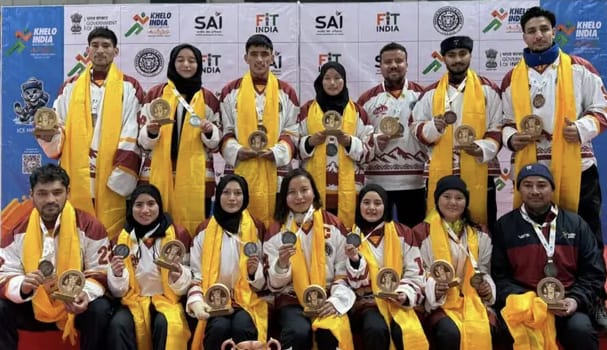
KARGIL, Jan 27: The Union Territory of Ladakh etched its name in the national sporting arena with a stellar performance at the recently concluded Khelo India Winter Games (Ice Hockey), as its men’s and women’s teams returned home with prestigious medals, underscoring the region’s growing dominance in winter sports.

At the highly competitive national event, the Ladakh Men’s Ice Hockey Team secured the Bronze Medal, while the Women’s Ice Hockey Team delivered an impressive campaign to win the Silver Medal, competing against some of the strongest teams from across the country. The twin achievements marked a proud moment for Ladakh and highlighted the immense potential of athletes nurtured in the harsh yet sport-friendly climatic conditions of the region.

The success assumed even greater significance due to the decisive contribution of players from Kargil, who formed the backbone of both teams. Demonstrating exceptional skating skills, tactical awareness, discipline, and team spirit, the Kargil athletes played a crucial role in steering Ladakh to the podium. Their performances reflected years of rigorous training on frozen lakes and makeshift rinks, often under extreme weather conditions.

A historic milestone was achieved during the tournament when Rigzin Yangdol of Kukshow became the first-ever woman ice hockey player from Kargil to captain the Ladakh Women’s Ice Hockey Team. Her leadership on the ice not only guided the team to a silver medal finish but also marked a landmark moment in the sporting history of Kargil. Her achievement stands as a powerful symbol of empowerment and serves as a source of inspiration for young girls across Ladakh, particularly in remote and border areas.

The women’s team featured a strong contingent from Kargil, including Rigzin Yangdol (Kukshow – Captain), Rinchen Dozang (Kukshow), Mehroon Nissa (Shargole), Samina Khatoon (Trespon), Hasina Banoo (Wakha), Aqeela Banoo (Karit), and Leela Banoo (Pashkum). Their collective effort, resilience, and determination played a vital role in Ladakh’s remarkable run in the tournament.

Similarly, the men’s team benefitted immensely from the presence of seasoned players from Kargil. The Kargil contingent comprised Mohammad Ali Baba, Sajjad Hussain, Irfan Ali, and Nawaz Ali from Pashkum, along with Wasim Billal and Muhaib Mir from Drass. These players showcased outstanding endurance and tactical play, helping the team clinch the bronze medal at the national level.

Congratulating the medal-winning athletes, General Secretary of the District Kargil Olympic Association, Syed Mehraj Uddin Shah, extended heartfelt appreciation to the Kargil players in particular and Team Ladakh as a whole. He lauded their dedication and perseverance and expressed strong confidence that these athletes would continue to shine in future national and international competitions.

He also congratulated the UT Ladakh Administration, led by Lieutenant Governor Kavinder Gupta, Chief Secretary Ashish Kundra, Administrative Secretary (Sports) Moses Kunzang, Joint Secretary Tahir Hussain Zubdavi, and the entire Khelo India Committee for their unwavering support in promoting winter sports infrastructure and nurturing sporting talent in the region.
The outstanding performance of the Ladakh Ice Hockey teams at the Khelo India Winter Games has not only added another feather to the region’s sporting cap but has also ignited fresh enthusiasm among the youth. The success story is expected to inspire a new generation of athletes from Kargil and other parts of Ladakh to pursue excellence in ice hockey and other winter sports, further strengthening the region’s reputation as a powerhouse of winter athletics.

EPFO Srinagar conducts Nidhi Aapke Nikat 2.0 outreach programme in Ganderbal

0

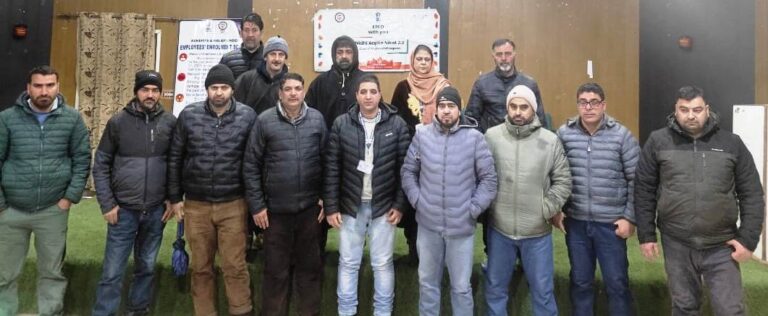
GANDERBAL, JANUARY 27: Employees’ Provident Fund Organisation (EPFO), Regional Office Srinagar, successfully conducted its flagship outreach programme “Nidhi Aapke Nikat (NAN) 2.0” today, in District Ganderbal, amid heavy snowfall.

Despite the challenging weather conditions, EPFO ensured the smooth conduct of the NAN programme to extend social security services to members and stakeholders at their doorstep.

The programme was led by the Regional Provident Fund Commissioner-II, Vinay Kumar, along with a team of EPFO officials. The outreach aimed to educate employers, employees, and other stakeholders about various EPFO services, schemes, and recent Government initiatives related to social security.

During the interaction, the EPFO team apprised participants of key Government initiatives aimed at strengthening social security and labour welfare across the country.

It was highlighted that the Government has launched the Employees’ Enrolment Campaign-2025 to expand social security coverage. The campaign will remain operational till 30 April 2026, providing establishments an opportunity to enrol eligible employees and regularise past records with ease.

Participants were also briefed about the Government’s decision to implement the Four Labour Codes, which aim to simplify, consolidate, and modernise labour laws, thereby improving compliance and ease of doing business.

The EPFO team further highlighted the objectives of Prayaas Yojana, an important initiative to ensure the timely settlement of Provident Fund and Pension benefits on the day of superannuation, enabling employees to transition into retirement in a smooth and dignified manner.

Information was also provided regarding the Pradhan Mantri Viksit Bharat Rozgar Yojana (PMVBRY).

The objectives, key benefits, and implementation strategy of the scheme were explained in detail.

Special emphasis was laid on improving member services, including Joint Declaration, KYC updation, UAN generation and activation, bank account seeding, and other online facilities available on the EPFO portal.

During the programme, several grievances and queries raised by employers and employees were addressed on the spot, reinforcing EPFO’s commitment to timely and effective grievance redressal even under adverse weather conditions.

Speaking on the occasion, Vinay Kumar, stated that EPFO Regional Office Kashmir remains committed to extending social security coverage to the maximum number of employees working in the private sector. He emphasized that EPFO schemes such as Provident Fund, Pension, and Insurance (EDLI) play a vital role in providing financial security to employees and their families. He urged employers to ensure timely compliance and encouraged workers to actively use EPFO’s digital services for faster and transparent service delivery.

The programme concluded with an interactive session, reaffirming EPFO’s resolve towards a member-centric, transparent, and technology-driven social security system, even in difficult terrain and weather conditions.

India Energy Week 2026: Hydrogen Zone Inauguration Spotlighting India’s Low-Carbon Energy Transition

0

Vinod Bhat

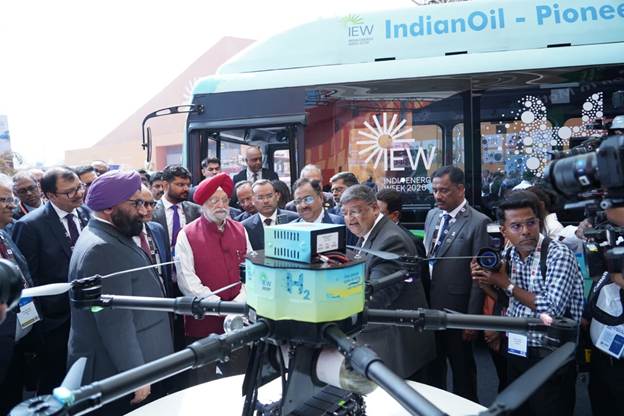
New Delhi: Union Minister for Petroleum and Natural Gas Shri Hardeep Singh Puri inaugurated the Hydrogen Zone following the Inaugural Ceremony of India Energy Week 2026 today in Goa. Hosted by Oil India, the Hydrogen Zone showcases cutting-edge hydrogen technologies and solutions shaping India’s low-carbon future.

The zone brings together innovations across hydrogen production, storage and utilisation, offering visitors a comprehensive view of pathways that are powering clean energy transitions globally.

Through curated exhibits and industry participation, the Hydrogen Zone provides a focused platform to understand how hydrogen can decarbonise hard-to-abate sectors such as refining, fertilisers, steel and mobility, while positioning India as a competitive and reliable player in emerging global hydrogen markets.

The Hydrogen Zone forms part of India Energy Week 2026’s eleven strategically curated thematic zones. These zones are central to the exhibition experience, allowing policymakers, industry leaders, investors and technology providers to directly engage with solutions, business models and partnerships aligned with their priorities.

As part of India Energy Week’s broader exhibition, the Hydrogen Zone reinforces IEW’s role as a platform where technologies, policies and partnerships converge to advance secure, affordable and sustainable energy outcomes for India and the world.

India Energy Week 2026 brings together over 75,000 energy professionals, more than 700 companies and participants from over 120 countries. The thematic zones span priority areas including Hydrogen, Renewable Energy, Digitalisation & AI, Biofuels, LNG Ecosystem, City Gas Distribution, Petrochemicals, Make in India and the India Net-Zero Zone, along with new

About India Energy Week

India Energy Week is the country’s flagship global energy platform, bringing together government leaders, industry executives and innovators to accelerate progress toward a secure, sustainable and affordable energy future. As a neutral international forum, IEW drives investment, policy alignment and technological collaboration shaping the global energy landscape.

Northern Railway Runs Lifeline Special Train Between Katra and Srinagar Amid Heavy Snowfall

0

*Over 1,350 Passengers Ferried as Rail Service Steps In to Restore Connectivity Disrupted by Snowfall; Tourists and Pilgrims Laud Timely Move*

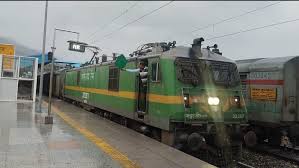
JAMMU, Jan 27: Amid heavy snowfall, Northern Railway’s Jammu Division operated a special reserved train between Shri Mata Vaishno Devi Katra and Srinagar on Tuesday, ferrying over 1,350 passengers in both directions.

Officials told the news agency Kashmir News Service (KNS) that the move aimed to mitigate travel disruptions caused by heavy snowfall and inclement weather, which had severely impacted air and road connectivity in the Kashmir Valley.

Train No. 04627 departed from Shri Mata Vaishno Devi Katra at 8:10 AM as scheduled with more than 650 passengers on board. In the return direction, Train No. 04628 left Srinagar at 2:00 PM, carrying over 700 passengers to Katra.

Passengers expressed gratitude to the railways for providing a safe and reliable travel option when other modes of transport remained suspended or erratic.

“The railways emerged as the only dependable mode of travel today. This special train service has been a great help,” said a passenger traveling from Katra to Srinagar.

Another traveler, part of a tourist group from outside the state, said the service ensured a smooth journey despite the challenging weather, allowing them to continue their pilgrimage and sightseeing plans without major delays.

Senior Divisional Commercial Manager Uchit Singhal told that the initiative was part of the railways’ commitment to passenger convenience, especially during extreme weather.

“The special train recorded an occupancy of over 100 percent and has ensured seamless connectivity between Katra and the Kashmir Valley. Such services are crucial during the snowy season, enhancing travel safety and supporting tourism in the region,” Singhal told KNS.

He added that the proactive operation of special trains during weather emergencies is likely to boost tourist confidence and inflow into Kashmir during the winter months.

The railway authorities said they are monitoring the weather and passenger demand and may run additional special trains if required in the coming days. (KNS)

Principal GMC Srinagar Reviews Healthcare Preparedness Amid Adverse Weather

0

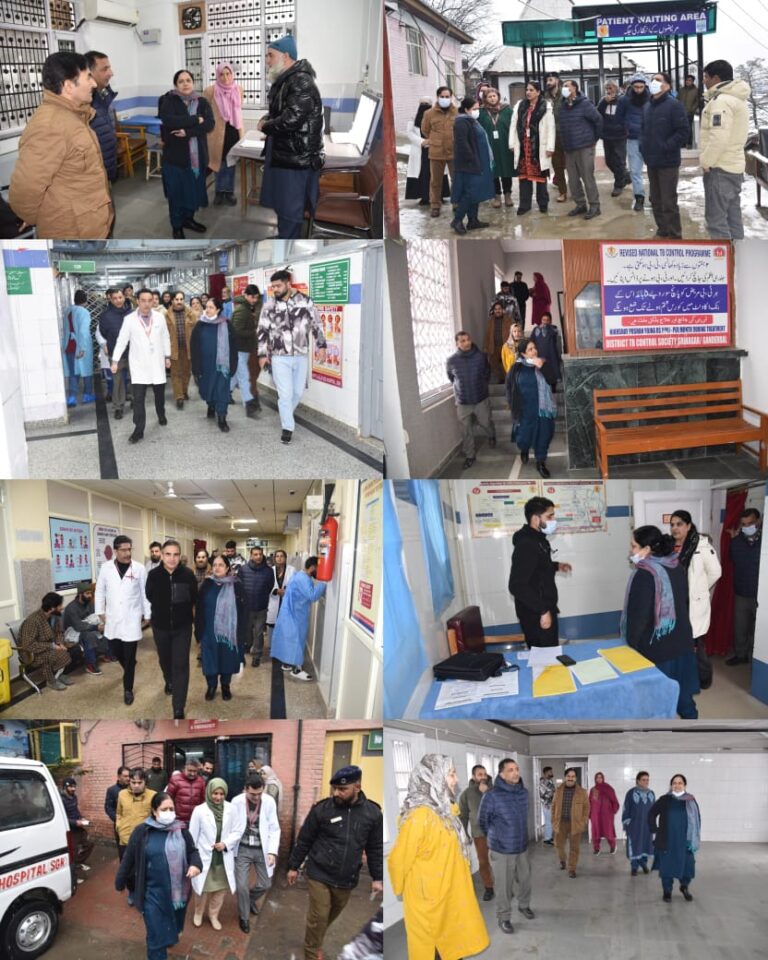
Srinagar, Jan 27: In view of the prevailing adverse weather conditions, Principal/Dean Government Medical College (GMC) Srinagar, Prof. (Dr.) Iffat Hassan, on Tuesday conducted an extensive inspection of all associated hospitals to assess healthcare preparedness.

She was accompanied by Administrator Associated Hospitals, Mohammad Ashraf Hakak, during the visit, which covered Children Hospital Bemina, Lal Ded (LD) Hospital, Chest Disease Hospital, Bone and Joint Hospital, and Kashmir Nursing Home. During the inspection, Prof. Iffat reviewed the availability of essential medicines, emergency and critical care services, manpower deployment, and overall patient care arrangements. She directed the Medical Superintendents to ensure uninterrupted healthcare services and stressed zero tolerance for any lapse in patient care during harsh weather conditions.

Administrator Mohammad Ashraf Hakak assured full administrative and logistical support, stating that all departments have been put on high alert to deal with any exigency. Medical Superintendents informed that adequate arrangements are in place and staff has been deployed to ensure smooth functioning of healthcare services.
Personnel Officer Bashir Ahmad Bhat and other officers also accompanied the Principal/Dean during the inspection.