spot_imgspot_img
spot_img
Home Blog Page 142

IEW 2026: OPEC Outlook Projects India as the Largest Driver of Global Energy Demand Growth

0

Vinod Bhat

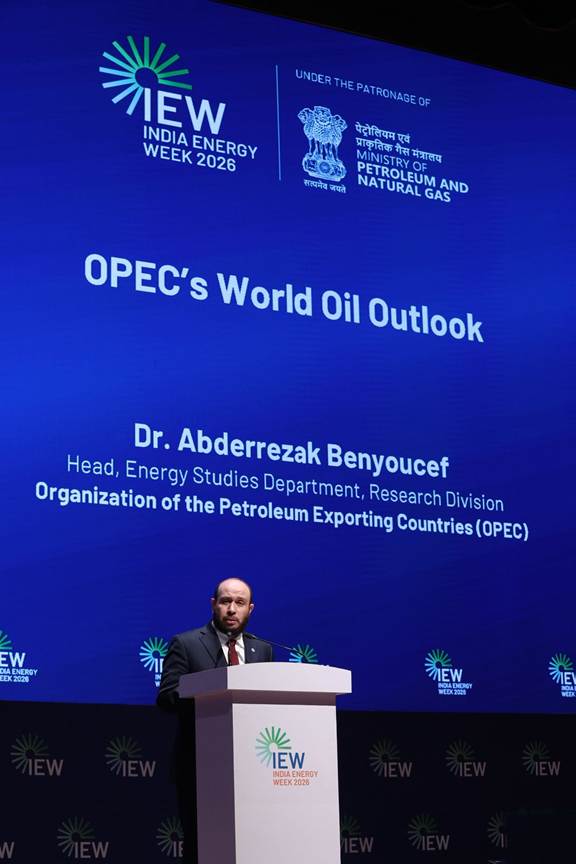
New Delhi: India is projected to be the largest contributor to global oil demand growth till 2050, according to the World Oil Outlook 2025 presented by Dr. Abderrezak Benyoucef, Head, Energy Studies Department, Research Division, Organization of the Petroleum Exporting Countries (OPEC), at India Energy Week 2026 being organised in Goa from 27th to 30th January 2026.

Presenting OPEC’s flagship long-term outlook on the Resilience Stage on the second day of the event, Dr. Benyoucef stated that India alone is expected to add 8.2 million barrels per day of oil demand by 2050. This growth will be driven primarily by transportation, petrochemicals and industrial activity. At the global level, oil demand is projected to continue rising over the medium and long term, reaching nearly 123 million barrels per day by 2050, with demand growth concentrated in non-OECD regions.

The report projects India to be the largest and most stable contributor to global primary energy demand growth. India’s total primary energy demand is expected to almost double, increasing from around 22 million barrels of oil equivalent per day in 2024 to about 43.6 million barrels of oil equivalent per day by 2050.

Globally, primary energy demand is projected to increase by 23 per cent over the same period, rising from about 308 million barrels of oil equivalent per day to around 378 million barrels of oil equivalent per day, with non-OECD countries accounting for nearly 72 percent of total demand by 2050.

On the economic front, The OECD report said that India is expected to emerge as the world’s fastest-growing major economy, with average annual GDP growth of around 5.8 per cent between 2024 and 2050. India’s share of global GDP is projected to rise from about 8 percent in 2024 to 17 percent by 2050, significantly increasing its influence on global energy markets. Globally, economic growth over the outlook period is expected to be driven primarily by non-OECD countries.

The report said that demographic trends will consolidate India’s central role in future energy demand. India, already the world’s most populous country, will continue to anchor global population growth and rising energy consumption. At the global level, population is projected to increase by around 1.5 billion by 2050, with almost all growth occurring in non-OECD countries, alongside increasing urbanisation and improving living standards.

The Outlook underscores the need for sustained investment to meet rising demand and offset natural decline rates. Globally, cumulative oil-related investment requirements are estimated at around USD 18.2 trillion between 2025 and 2050, including nearly USD 15 trillion in upstream investment.

About India Energy Week

India Energy Week is the country’s flagship global energy platform, bringing together government leaders, industry executives and innovators to advance a secure, sustainable and affordable energy future. As a neutral international forum, IEW catalyses investment, policy alignment and technological collaboration shaping the global energy landscape.

New Aadhaar App Puts Identity Control in Citizens’ Hands

0

VINOD BHAT
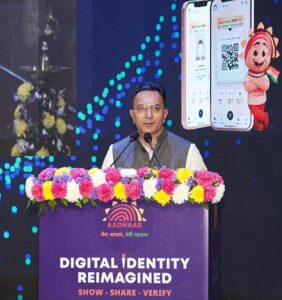
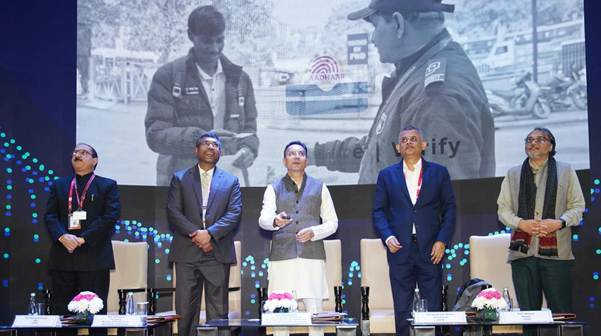
NEW DELHI, Jan 28: Minister of State for Commerce and Industry and Electronics & Information Technology, Shri Jitin Prasada, on Tuesday dedicated the new Aadhaar App to the nation, marking a major step forward in India’s journey towards secure, citizen-centric digital governance. Developed by the Unique Identification Authority of India (UIDAI), the next-generation mobile application has been designed with a strong focus on privacy, consent and convenience, redefining how Aadhaar number holders access, share and verify their identity.
The new Aadhaar App enables residents to carry their Aadhaar digitally, while giving them complete control over how and when their personal information is shared. Built on the principles of selective data sharing and explicit user consent, the app allows users to show, share and verify their identity securely without the need to disclose unnecessary personal details.
After unveiling the application, Shri Prasada congratulated UIDAI for its sustained efforts in strengthening India’s digital public infrastructure. He described Aadhaar as a flagship achievement of digital governance, noting that it has transformed service delivery across sectors by making processes faster, simpler and more transparent. The Minister said the new app would further accelerate seamless service delivery at scale, while reinforcing trust between citizens and digital systems.
“At India’s scale, a digital identity system is not just a technological innovation—it is a matter of public trust, good governance and citizen empowerment,” Shri Prasada said. He emphasised that the new Aadhaar App embodies these values by placing control, consent and ease of use firmly in the hands of residents.
Speaking on the occasion, Shri S. Krishan, Secretary, Ministry of Electronics and Information Technology (MeitY), highlighted that the app strongly promotes data minimisation and enhanced security. He said it enables Aadhaar number holders to share only limited and relevant information, thereby reducing the risk of misuse and strengthening privacy safeguards.
Designed to cater to users across age groups and digital literacy levels, the Aadhaar App supports a wide range of real-life, everyday use cases. These include hotel check-ins through scanning of Offline Verification Seeking Entity (OVSE) QR codes, optional face verification, age verification for cinema ticket bookings, verification of visitors and attendants in hospitals, and authentication of gig workers and service partners, among several others.
The app is equipped with a host of advanced features aimed at improving usability and security. These include face verification for proof of presence, one-click biometric lock and unlock, access to authentication history, and a QR-based contact card that allows users to easily share verified contact details.
In a significant convenience boost, the app allows users to manage up to five Aadhaar profiles on a single device, promoting the concept of “One Family – One App.” Residents can also update their address and now even change their registered mobile number directly through the app, with additional update services expected to be rolled out in the future.
Shri Neelkanth Mishra, Chairman, UIDAI, said the transition from paper-based identity to a paperless and digital ecosystem is a major milestone, reiterating that UIDAI will continue to place people at the centre of innovation and service delivery.
Shri Bhuvnesh Kumar, CEO, UIDAI, underlined that selective credential sharing is one of the app’s most important features. He explained that residents can share only specific identity attributes required for a particular service through customised QR codes generated by requesting entities. This ensures that Aadhaar numbers are not stored by verifiers and that only digitally signed, verifiable credentials are exchanged.
Such an approach, he said, is fully aligned with the Digital Personal Data Protection (DPDP) Act, reinforcing India’s commitment to privacy-by-design and responsible data use.
With the launch of the new Aadhaar App, India once again reaffirms a core principle of its digital public infrastructure—that technology must be inclusive, resident-centric and built on trust, empowering citizens while safeguarding their personal data.

Global Delegations Visit PM Vishwakarma Haat 2026 in New Delhi, MSME Ministry Showcases Tradition and Trade

0

Vinod Bhat

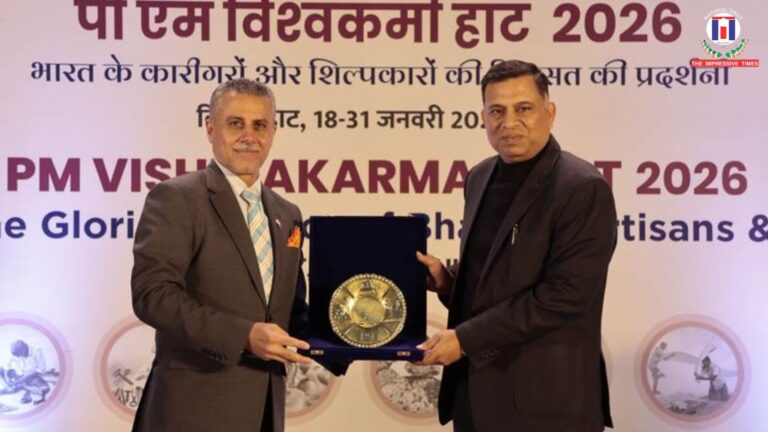
New Delhi, 27 January 2026: A distinguished group of envoys and senior officials from 18 foreign missions visited PM Vishwakarma Haat 2026, an artisan-centric exhibition hosted by the Ministry of Micro, Small & Medium Enterprises (MSME) at Dilli Haat, INA, New Delhi. The visiting dignitaries, including Ambassadors and High Commissioners from countries such as Algeria, Belarus, Cameroon, Cuba, Ecuador, Ethiopia, Guyana, Indonesia, Iraq, Kenya, Malaysia, Nigeria, Peru, Somalia, South Africa, Timor-Leste, Uzbekistan and Venezuela, explored India’s traditional craftsmanship and engaged with artisans participating in the event.

Organised under the PM Vishwakarma Scheme, the Haat has been open to the public since 18 January and will run through 31 January 2026, welcoming visitors daily from 10:30 AM to 10 PM. The exhibition aims to create a vibrant marketplace where skilled craftspeople from across India can present their handmade products, interact with buyers, and access broader market opportunities.

At the event, Danish Ashraf, Joint Development Commissioner of the Office of the Development Commissioner (MSME), greeted the international guests and outlined the goals of the PM Vishwakarma initiative. He emphasised the programme’s focus on uplifting artisans by enhancing visibility and income through structured support and market exposure.

Dr. Rajneesh, Additional Secretary & Development Commissioner, Ministry of MSME, provided the visiting delegations with an overview of key MSME programmes, highlighting how these schemes contribute to job creation, entrepreneurial growth and inclusive economic development. He expressed appreciation for the global representatives’ interest in India’s craft sector.

The Haat also featured dynamic cultural presentations from Assam, Rajasthan, Punjab and Ladakh, infusing the exhibition with rich artistic performances that reflect the diversity of India’s cultural heritage.

The event’s closing remarks were delivered by Anuja Bapat, Deputy Director General, Office of the Development Commissioner (MSME). She reiterated the importance of platforms like PM Vishwakarma Haat in connecting traditional artisans with national and international stakeholders and fostering sustainable livelihoods.

Over 117 artisans representing all States and Union Territories are participating in the Haat, offering a broad spectrum of traditional handicrafts and skills. By presenting Indian craftsmanship on both national and international stages, PM Vishwakarma Haat 2026 underscores the Government of India’s commitment to preserving cultural legacy while promoting economic empowerment for grassroots artisanal communities.

Class 11th Results likely by Feb 3: Chairman JKBOSE

0

Srinagar, Jan 28: The Jammu and Kashmir Board of School Education (JKBOSE) is likely to announce the Class 11th examination results next week, officials said on Wednesday.

Speaking to news agency JKNS, Chairman JKBOSE, Ghulam Hassan Sheikh, said the results may take a few more days to be finalised due to ongoing technical processes.

“Class 11th results will take a few more days. We are expecting to declare the results next week, possibly on February 2 (Tuesday) or February 3 (Wednesday),” he said.

Aroumd 81622 students, 654001 from Kashmir and 17621 from winter zone areas of Jammu were registered for class 11th annual examination. —(JKNS)

Football, Cricket Super Leagues set for launch in Jammu

0

Srinagar, Jan 28:Jammu, the City of Temples, is gearing up for a high-octane sporting season as the Department of Youth Services and Sports (YSS), in collaboration with the Jammu and Kashmir Sports Council (JKSC), prepares to roll out two marquee events – the YSS-JKSC Football Premier League and the YSS-JKSC Cricket League – promising double the thrill, double the crowds, and a renewed buzz around grassroots sport in the winter capital.

Set across two iconic venues, the leagues will bring together the roar of football fans at the Synthetic Turf Football Ground, Parade, and the unmistakable sound of the willow at the M A Stadium, as Jammu readies itself for weeks of competitive action.
“The YSS-JKSC Cricket and Football Premier League Tournaments 2025-26 are a much-needed initiative to significantly contribute towards the revival of Jammu’s professional cricket and football tournaments,” a spokesperson of the J&K Sports Council said.
The YSS-JKSC Football Premier League, slated for the Synthetic Turf at Parade, marks the return of the beautiful game to the heart of the city.

With the turf primed and floodlights waiting, the league is expected to showcase sharp tackles, long-range screamers, and an atmosphere that only football in Jammu can generate.
According to the JKSC spokesperson, organising committees and additional sub-committees comprising former national and international players, referees, umpires, coaches, club owners, and JKSC officials have been constituted to ensure that the matches are conducted professionally.
Running parallel will be the YSS-JKSC Cricket League at the historic M A Stadium, signalling the comeback of big-league cricket at one of Jammu’s most cherished sporting venues.
As the pitch is curated and teams begin their preparations, anticipation is building over who will lift the cup when the league gets underway.
“The competition will consist of a total of 41 matches in football and 39 matches in cricket, with the final format and match composition to be framed after the finalisation of the participating teams,” the spokesperson said, adding that every match would be played strictly in accordance with FIFA and AIFF rules in football and ICC and BCCI regulations in cricket.
Emphasising the focus on local talent, the spokesperson said that, after scrutiny by the Technical and Registration Committees, only permanent resident players from the Jammu Division would be permitted to participate in the tournaments.
“However, in cricket, there will be a cap of five out-stationed players per team. The objective is to give players from the Jammu Division ample opportunities to participate in a competitive competition,” he said.
The spokesperson said that the Mini Stadium Parade had been made available for football matches, while the M A Stadium would host the cricket league.
“To give the event more significance, grand opening and closing ceremonies will be arranged. Matches will also be conducted under floodlights to attract maximum sports enthusiasts, and these matches will be telecast live on social media platforms,” he said.
To ensure high professional standards, AIFF-accredited referees and BCCI-certified umpires would officiate the matches, the spokesperson said, adding that the JKSC would provide match-day refreshments through its approved EMAs and would also arrange trophies, mementoes, medallions, branding, stationery, and medical facilities on the closing day of the tournaments.
“It is anticipated that large audiences will return to the stands of the Mini Stadium Synthetic Turf Parade and the M A Stadium Jammu to witness these high-profile matches,” the spokesperson said. “This platform will provide aspiring sportspersons in Jammu with the opportunity to exhibit their talent and achieve podium finishes at the national and international levels.”
With two venues, two formats, and one city buzzing with expectation, the twin leagues are being seen as a significant boost for athletes and fans alike, signalling a renewed push to bring competitive sport back into Jammu’s public spaces.
—————

Wild Goat Strays into Uri Village; Wildlife Department En Route to Take Custody

0

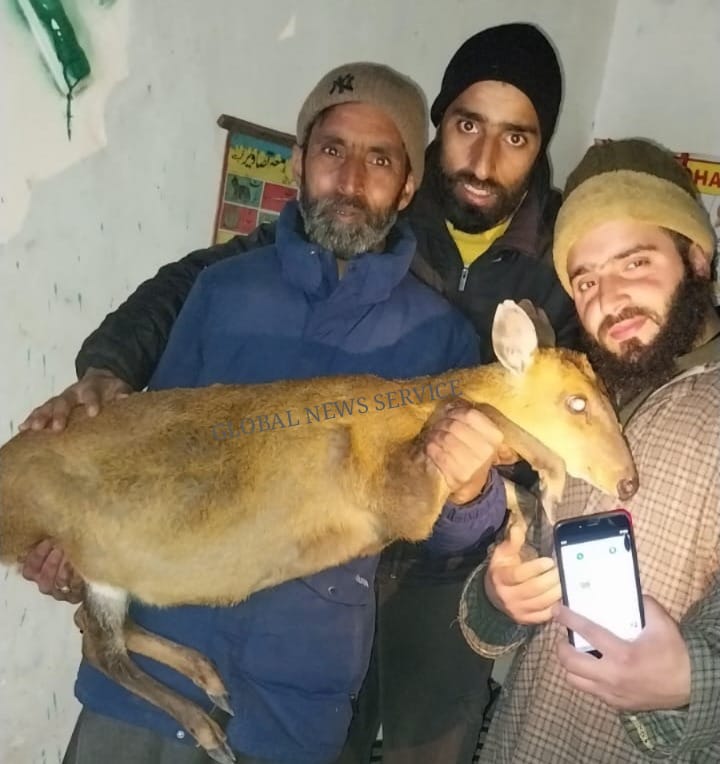
Uri, Jan 28: A wild goat was spotted in Sukhdar village of Uri on Wednesday evening after it strayed into a residential area.

Wildlife Block Officer Raja Suhail told that the animal entered the village after being chased by stray dogs, prompting residents to intervene and secure it to prevent any harm. The matter was immediately reported to the Wildlife Department.

“Although the animal is currently in the safe custody of locals, a departmental team led by the Wildlife Range Officer Uri-Boniyar, along with police personnel, is on its way to take over the animal,” he said.

“The wild goat will be medically examined after being taken into custody and subsequently shifted to a wildlife facility in Baramulla as per standard procedure,” he further said.

The Wildlife officer in the meantime hailed the villagers for their prompt response, which he said helped avert injury to the animal. (GNS)

India ready to play larger global role in AI-led climate action, says Science Minister Dr Jitendra Singh

0

Vinod Bhat

NEW DELHI, January 28 : Union Minister of State (Independent Charge) for Science and Technology and Earth Sciences, Dr Jitendra Singh, today said that India is ready to play a larger global role in Artificial Intelligence (AI) -led climate action.

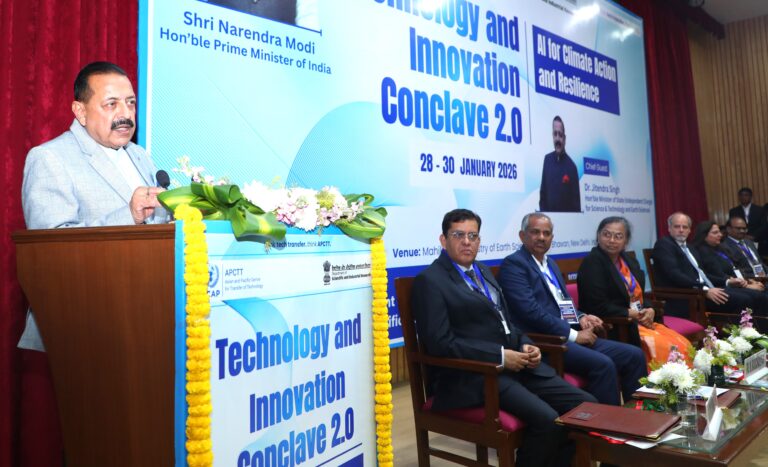
Union Minister Dr Jitendra Singh addressing the “Technology and Innovation Conclave 2.0”, organised by “Asian and Pacific Centre for Transfer of Technology” (APCTT) and DSIR, at Prithvi Bhawan, New Delhi, on Wednesday.

However, the Minister hastened to add, Artificial Intelligence must be deployed alongside human judgement, institutional cooperation and global partnerships if it is to effectively address climate change and build resilience against extreme weather events.

Speaking at the Technology and Innovation Conclave 2.0, jointly organised by the Asian and Pacific Centre for Transfer of Technology (APCTT) of the United Nations Economic and Social Commission for Asia and the Pacific (ESCAP) and Department of Scientific and Industrial Research (DSIR) Govt of India, Dr Jitendra Singh said climate change was “too serious a subject to be left to one nation alone” and could not be mitigated unless countries worked together across borders.

The conclave, themed “AI for Climate Action and Resilience”, opened with the introduction of innovators and startups, followed by a high-level inaugural session that brought together senior Indian officials and United Nations representatives, reflecting the growing convergence between national science priorities and global climate action. Speakers highlighted the role of technology, international cooperation and innovation ecosystems in responding to climate challenges faced by vulnerable regions.

As part of the programme, Dr. Jitendra Singh inaugurated the exhibition of innovations, walked through the displays and interacted with young innovators from participating member states. He later presented awards to winners of a hackathon focused on AI-driven solutions for climate and resilience challenges.

During the inaugural session, DSIR and APCTT formally announced the launch of “SANKALP” (Synergy for Advanced Networks, Knowledge, and Academia–Industry Learning Progress), a new lecture series aimed at strengthening structured engagement between academia, industry and policymakers, and accelerating the translation of research into real-world applications.

In his address, Dr. Jitendra Singh said the era of working in silos was over, stressing that climate action required collaboration across scientific disciplines, public and private sectors, and even between science and non-science institutions. Innovation, he said, could no longer succeed in isolation and needed early and sustained linkages with industry, markets and technology transfer mechanisms.

Highlighting India’s evolving global role, the Minister said the country was no longer inward-looking and was increasingly expected to contribute ideas and solutions to international efforts on climate and technology. India’s geographic diversity, he noted, offered a unique advantage in studying climate impacts and developing adaptable solutions that could be shared with other countries.

Dr. Jitendra Singh linked artificial intelligence with India’s broader technology roadmap, noting that the country was among the early movers in emerging areas such as quantum technologies, having already launched a national quantum mission. Artificial intelligence, he said, was similarly transformative and had become critical for analysing climate data, forecasting disasters and managing resources.

Citing practical examples, the Minister said AI-based models were already being used in disaster response and environmental monitoring, including the analysis of extreme weather events. He also referred to the use of AI in healthcare, where diagnostics that earlier took days could now be completed in minutes, and in drug trials, where technology was improving both speed and precision.

At the same time, Dr. Jitendra Singh issued a clear caution against blind or uncritical use of artificial intelligence. Drawing from governance experiences, he said systems driven entirely by AI often failed to meet public expectations, even when disposal rates were high. He emphasised the importance of hybrid models that combine artificial intelligence with human oversight, judgement and empathy.

Illustrating this approach, the Minister referred to initiatives where AI-driven systems work alongside human professionals, including in healthcare delivery, to ensure better outcomes and public satisfaction. “One has to be intelligent enough to use artificial intelligence,” he said, underlining that technology should be treated as an essential tool rather than a substitute for human responsibility.

Dr. Jitendra Singh also stressed the need for early linkage between innovation, academia, industry and technology transfer, warning that research without a clear application pathway risked remaining underutilised. Industry engagement, he said, should begin at the innovation stage itself rather than after technologies were developed.

In this context, he highlighted the role of CSIR as one of the few institutions globally that integrates innovation, academic research, technology transfer and industry engagement within a single framework, making it well placed to drive mission-oriented science aligned with national priorities.

Secretary, DSIR and Director General, CSIR, Dr. N. Kalaiselvi, described the conclave as a significant milestone for both DSIR and APCTT, noting that the second edition reflected a growing and structured partnership focused on AI for climate action and resilience. She said artificial intelligence should be viewed as a powerful tool guided by human and natural intelligence, enabling better understanding of climate impacts. Highlighting the international character of the conclave, she said APCTT’s network spanning 53 member states and nine associate states had enabled participation from delegates of nine countries, underscoring the importance of cross-border collaboration. She called for responsible research and urged that the outcomes of the conclave be assessed in measurable terms to guide future initiatives.

Concluding his remarks, the Minister said the real value of the conclave would lie in the outcomes it generated and expressed his expectation that the discussions would lead to concrete conclusions and actionable directions for future collaboration in AI-driven climate action.

The high-level inaugural session was attended by senior government and United Nations officials, including UN Resident Coordinator for India Stefan Priesner, Secretary, Ministry of Earth Sciences Dr. M. Ravichandran, Head of APCTT Dr. Preeti Soni, Joint Secretary, DSIR Mahendra Kumar Gupta, and senior officials and scientists from DSIR and CSIR.

IEW 2026: Leadership Panel Pegs Natural Gas as Instrumental Reducing Emission

0

Vinod Bhat

New Delhi: A high-level Leadership Panel on the inaugural day of India Energy Week 2026 brought together global energy leaders to examine the evolving role of natural gas and LNG in strengthening energy resilience, supporting economic growth and enabling a realistic and inclusive energy transition amid geopolitical uncertainty.

The panel, titled “Repositioning Natural Gas and Energy Transformation: Pragmatic Bridging Resource to Pivotal Destination Fuel,” featured Shri Arvinder Singh Sahney, Chairman, IndianOil Corporation Limited, Shri Sandeep Kumar Gupta, Chairman & Managing Director, GAIL (India) Limited, Ms Fatema Al Nuaimi, CEO, ADNOC Gas, and Mr Steven Kobos, President & CEO, Excelerate Energy.

Panelists underscored that natural gas and LNG are increasingly emerging as long-term, foundational components of modern energy systems. With global gas demand projected to increase by 30–35% by 2050, the panel highlighted coal-to-gas switching as the most tangible near-term pathway to reduce emissions while preserving grid stability.

From India’s perspective, speakers noted the country’s rapidly expanding gas ecosystem, supported by growing domestic production, diversified LNG imports and continued investments in pipelines, terminals and city gas distribution. The panel earmarked natural gas for playing a critical role across fertilisers, transport fuels and urban energy access.

The discussion reinforced the view that the energy transition must be approached as energy addition rather than abrupt replacement, as highlighted by the Union Minister of Petroleum and Natural Gas earlier in the day. Properly abated gas-fired power generation, which is supported by efficiency improvements, methane mitigation and emerging carbon management technologies, was identified as an essential complement to renewables for providing flexibility, reliability and dispatchability in increasingly electrified systems.

The panel agreed that affordability of the fuel was a hurdle in its widespread adoption. Panelists stressed that natural gas and LNG must become more cost competitive not only to displace coal, but also to remain viable alongside renewables and alternative fuels.

The panel identified policy stability, supportive regulatory frameworks, access to long-term finance, reduced infrastructure costs and the development of a liquid and transparent global gas market key to accelerated uptake of natural gas. The panel also highlighted the importance of renewed upstream investment to address emerging global supply gaps.

Panelists also emphasised the importance of expanding LNG import capacity, regasification infrastructure, including floating storage and regasification units (FSRUs), pipelines and last-mile connectivity to ensure that increased global supply translates into accessible and affordable energy.

About India Energy Week

India Energy Week is the country’s flagship global energy platform, bringing together government leaders, industry executives and innovators to accelerate progress toward a secure, sustainable and affordable energy future. As a neutral international forum, IEW drives investment, policy alignment and technological collaboration shaping the global energy landscape.

Union Minister of State for Home Affairs Shri Nityanand Rai virtually flags off CISF Vande Mataram Coastal Cyclothon–2026 from New Delhi

0

Vinod Bhat

New Delhi: The CISF Vande Mataram Coastal Cyclothon–2026, a flagship national public outreach and awareness initiative, was virtually flagged off today morning from Major Dhyan Chand National Stadium, New Delhi. The event was inaugurated by the Union Minister of State for Home Affairs, Shri Nityanand Rai, who graced the occasion as the Chief Guest.

With the flag-off, the 25-day mega national movement formally commenced, as two CISF cycling teams simultaneously set out from Bakkhali (West Bengal) and Lakhpat (Gujarat). The teams will collectively traverse approximately 6,500 kilometres along India’s eastern and western coastlines, covering nine coastal States and two Union Territories, before culminating at Kochi on 22 February 2026.

The flag-off ceremony was attended by several eminent dignitaries, including Dr. Pallavi Jain Govil, Secretary, Ministry of Youth Affairs & Sports; Shri Shatrujeet Kapur, Director General, ITBP; Shri Praveer Ranjan, Director General, CISF; Shri Rakesh Aggarwal, Director General, NIA; Shri Gaurav Dwivedi, CEO, Prasar Bharati and, Shri Sanjay Singhal, Director General, SSB along with other senior officers.

The dignitaries also participated in a cycle rally near India Gate, symbolically extending their support to the cyclists. Their presence reflected strong inter-ministerial and inter-agency cooperation, underscoring the national importance of the initiative and conveying a unified message of vigilance, solidarity and shared national resolve.

Addressing the gathering on the occasion of the second edition of the Coastal Cyclothon, the MoS (Home) Shri Nityanand Rai stated that the event is being organised to commemorate 150 years of ‘Vande Mataram’, the iconic song that inspired India’s freedom struggle and continues to guide generations in the spirit of national service. Shri Rai emphasised that under the leadership of Union Home Minister and Minister of Cooperation Shri Amit Shah ji, the Ministry of Home Affairs (MHA) is placing special emphasis on strengthening coastal security. He stated that coastal security can be strengthened only through active public participation, particularly by coastal communities.

Highlighting a key institutional milestone, the Minister noted that it is a matter of national pride that CISF has been designated as the Recognised Security Organisation (RSO) under the International Ship and Port Facility Security (ISPS) Code, placing the Force at the core of India’s maritime and port security architecture. He further underlined that the initiative aligns with Prime Minister Shri Narendra Modi’s vision of “SAGAR – Security and Growth for All in the Region” for the Indian Ocean anchored in the theme of ‘Surakshit Tat, Samriddh Bharat’ (Secure Coast, Prosperous India).

The ceremony was marked by choral singing of “Vande Mataram” and a CISF Band performance, with rousing compositions resonating across the venue and infusing the atmosphere with pride and patriotism.

On the occasion, Shri Praveer Ranjan, Director General, CISF stated that “The Cyclothon is being organised as part of the commemoration of 150 years of “Vande Mataram”, the iconic song that inspired India’s freedom struggle and symbolises national unity, sacrifice and collective resolve. In this historic context, the initiative seeks to translate the spirit of Vande Mataram into contemporary action by engaging citizens in safeguarding the nation’s vital maritime frontiers.

Objectives and Thematic Focus of the Event:

The CISF Coastal Cyclothon–2026 aims to:

Sensitise coastal communities about threats such as smuggling of drugs, weapons, and explosives and encourage vigilance.
Strengthen partnerships between coastal communities and security agencies for a robust coastal security network.
Instil the spirit of Vande Mataram by honouring the sacrifices of freedom fighters, martyrs, and security personnel and their families.
Celebrate India’s rich maritime heritage, traditions, history, and geography, highlighting the invaluable contribution of coastal communities, especially fishermen.
Promote fitness, discipline and healthy lifestyles, particularly among youth and coastal communities.

The initiative also seeks to emphasize the critical role of coastal communities—particularly fishermen—as the nation’s “Tat Praharis” (Sentinels of the Coast).

Community Engagement and Village Adoption

Community engagement forms a core pillar of the Cyclothon in this edition. During the journey, the Cyclothon will halt at 52 coastal villages, which will be adopted by CISF for sustained, year-long engagement. In coordination with key stakeholders such as ONGC, Port Authorities and other maritime agencies, local CISF units will undertake community welfare and infrastructure development activities, supported through Corporate Social Responsibility (CSR) initiatives.

With 47 CISF units located near India’s coastline, the Force will ensure continued and long-term engagement with these adopted villages.

Youth Outreach, Social Awareness and Environmental Responsibility

As part of sustained engagement, recruitment awareness drives, sports activities and youth interaction programmes will be conducted to encourage young citizens to participate in productive, nation-building activities. The outreach plan also includes awareness programmes, cultural events, Swachh Bharat drives, plantation campaigns, and initiatives against drug abuse and trafficking, fostering social awareness, cleanliness and environmental responsibility among coastal communities.

Women Empowerment and Inclusivity

Youth engagement and women empowerment remain key focus areas of the Cyclothon. Notably, 50 percent of the participating cyclists are women, reflecting a significant step towards gender inclusivity and women empowerment in national service initiatives. Through fitness-led public interaction, the Cyclothon seeks to inspire citizens to adopt discipline, physical fitness and a spirit of service to the nation.

Major Events and Public Participation

The Cyclothon will witness the participation of notable personalities from sports, culture, film industry and public figures during major events at Mumbai, Goa, Mangaluru, Konark, Visakhapatnam and Chennai, before its culmination at Kochi.

Alignment with National Vision

The CISF Vande Mataram Coastal Cyclothon–2026 aligns closely with the national vision of Viksit Bharat @2047, by strengthening coastal regions, empowering communities and fostering an alert, fit and responsible citizenry.
India, UAE Deepen Maritime Training Cooperation

0

UAE Delegation visits ICG facilities to strengthen regional maritime security

VINOD BHAT

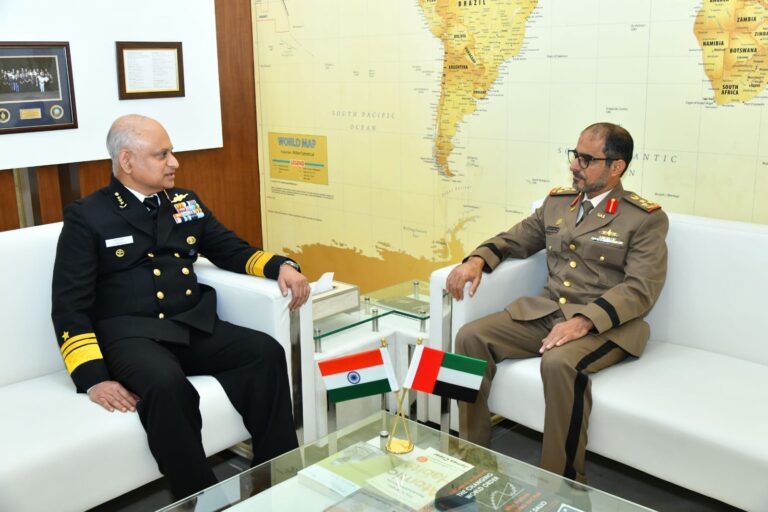
NEW DELHI, Jan 28: A high-level delegation of the United Arab Emirates National Guard Command (UAE NGC) is on an official visit to India from January 26 to 31, 2026, with the objective of strengthening training cooperation and capacity-building initiatives with the Indian Coast Guard (ICG).

The delegation is led by Brigadier Staff Khalid Obaid Thani Al Shamsi, Acting Commander, Coast Guard Group, UAE. According to the Public Relations Officer (PRO) of the Indian Coast Guard, Commandant Amit Uniyal, the visit reflects the growing strategic partnership between India and the UAE in the maritime security domain and aims to translate existing agreements into tangible outcomes.

During the visit, Brigadier Al Shamsi paid a courtesy call on the Director General, Indian Coast Guard, at New Delhi. This was followed by a bilateral meeting co-chaired by the Deputy Director General (Operations & Coastal Security), ICG, and the Acting Commander of the UAE National Guard Command.

“As per the Indian Coast Guard PRO, the discussions focused on modalities for enhancing mutual cooperation and further strengthening professional ties between the two maritime agencies,” the statement said.
The deliberations placed special emphasis on training collaboration, professional exchanges, and capacity-building initiatives across core Coast Guard functions, including maritime safety, coastal security, pollution response, and search and rescue operations.

As part of the programme, the UAE delegation is scheduled to visit key Indian Coast Guard training establishments in Chennai, notably the Regional Marine Pollution Response Centre (RMPRC) and the Maritime Rescue Coordination Centre (MRCC).

According to the PRO, these visits are intended to familiarise the delegation with the training infrastructure, operational procedures, and curriculum offered by the Indian Coast Guard. The ICG regularly conducts specialised courses for personnel from Friendly Foreign Countries, covering critical areas such as Oil Pollution Preparedness, Response and Cooperation (OPRC), MRCC operations, and Maritime Search and Rescue (SAR).

Officials noted that the exposure will help identify new avenues for structured training engagement and institutional collaboration between the two forces, particularly in addressing shared maritime challenges in the region.

“The visit underscores the shared commitment of India and the UAE to operationalise the Memorandum of Understanding through structured training engagement and institutional cooperation,” the PRO said, adding that such engagements would further strengthen bilateral maritime cooperation, while contributing to maritime safety and security in the wider region.

The Indian Coast Guard reiterated that the growing cooperation with the UAE National Guard Command reflects India’s role as a reliable partner in regional maritime capacity building and security cooperation.