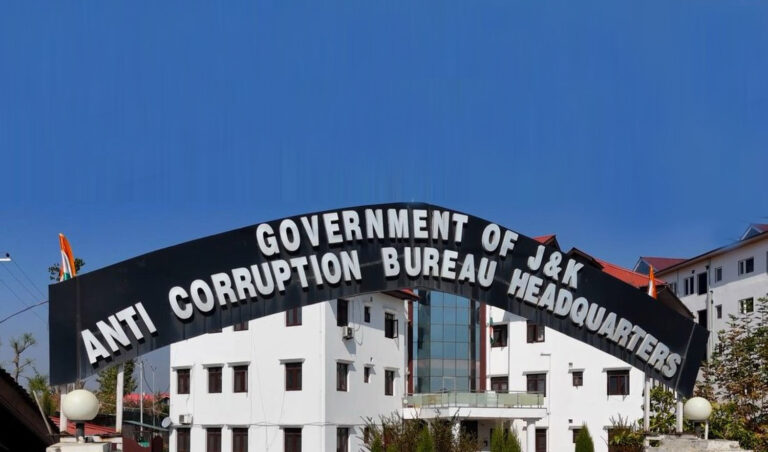
Jammu, Jan 29 : The Anti-Corruption Bureau (ACB) Jammu has registered a formal case, FIR No. 01/2026, under Section 5(1)(d) read with Section 5(2) of the J&K Prevention of Corruption Act, Svt. 2006, and Section 120-B of the RPC at Police Station ACB Jammu, against R.K. Razdan, then Managing Director of SICOP Jammu (now retired), Kunal Choudhary, presently Deputy General Manager, SICOP Jammu, and others.
The case pertains to allegations of illegal appointment, regularization, and subsequent promotion of Kunal Choudhary, who is currently working as Deputy General Manager in SICOP.
ACB in a statement to news agency Kashmir Dot Com said that during the course of verification, it surfaced that R.K. Razdan, while functioning as Managing Director of SICOP, abused his official position and, in criminal conspiracy with others, engaged Kunal Choudhary as Technical Assistant on a temporary basis for a period of six months without issuing any advertisement in newspapers or inviting applications from eligible candidates. The engagement was made solely on the discretion of R.K. Razdan and in a pick-and-choose manner.
Further verification revealed that after merely six months of temporary service, Kunal Choudhary was regularized despite not meeting the prescribed eligibility criteria and without any government-sanctioned policy for regularization. As such, the regularization was found to be arbitrary and illegal.
Subsequently, Kunal Choudhary was promoted to the post of Manager without issuing any advertisement and without considering the seniority of other eligible candidates.
The verification further established that R.K. Razdan, by sheer abuse of his official position and under a well-knit criminal conspiracy with others, including the beneficiary, illegally appointed Kunal Choudhary as Technical Assistant, who thereafter rose to the post of Deputy General Manager, SICOP Jammu, through manipulation and in contravention of established service rules. This allegedly resulted in undue benefits being conferred upon the beneficiary in the form of financial gains, including salary, allowances, and seniority.
*FIR Registered Over Alleged Abuse of Official Position, Criminal Conspiracy and Arbitrary Regularisation*
Jammu, Jan 29: The Anti-Corruption Bureau (ACB) Jammu has registered a formal case against senior officials of the Jammu unit of the State Industrial Development Corporation (SICOP) in connection with alleged illegal appointment, regularisation and subsequent promotions made in gross violation of rules and established procedures.
In a statement issued reads, ACB Jammu registered a formal case FIR No. 01/2026 u/s 5(1)(d) r/w section 5(2) of J&K PC Act, Svt. 2006 & section 120-B RPC at P/S ACB Jammu against R.K. Razdan, then MD SICOP Jammu (now retired), Kunal Choudhary (now Deputy General Manager SICOP, Jammu) and others, into the allegations regarding illegal appointment, regularization and promotion of one Kunal Choudhary, now working as Dy. General Manager, SICOP, it reads.
During the course of verification, it surfaced that R.K. Razdan, then MD SICOP, by abuse of his official position and in criminal conspiracy with others, engaged Kunal Choudhary as Technical Assistant on temporary basis for the period of 06 months without any advertisement in the newspapers/inviting applications from the eligible candidates. This temporary engagement was made on the basis of sole discretion as well as mere pick and choose manner by R.K Razdan, then M.D SICOP, it reads.
The Verification conducted further revealed that after merely 06 months of temporary services, the said Kunal Choudhary (Technical Assistant) was regularized without meeting any existing eligibility criteria and without any policy of Government sanction of regularization, as such, the appointment of Kunal Choudhary was arbitrary, illegal. Thereafter, he was promoted to the post of Manager without issuing any advertisement/without considering seniority of other eligible candidates.
By acting in this manner, R.K Razdan, then MD SICOP Jammu (now retired), by sheer abuse of his official position and under a well knit criminal conspiracy with others as well as Kunal Choudhary, illegally appointed him on the post of Technical Assistant who has subsequently risen to the post of Deputy General Manager SICOP Jammu, arbitrarily as well as through manipulation/contrary to service rules, thereby conferred undue benefit upon the beneficiary in the form of financial gain in salary, allowances and seniority. Further investigation is going on, reads the statement.
Says Govt committed to upgrade infrastructure in Schools
JAMMU, JANUARY 29: The J&K Government today announced 15% syllabus relaxation for class 10th, 11th, and 12th students of summer zone in annual regular exams of Jammu Division, keeping in view the disruptions caused due to long spells of inclement weather and war-like situation last year.
Announcing the decision, the Minister for Education, Sakeena Itoo said that the department was well aware of all these factors and the feedback from students and parents was also taken into consideration before arriving at the decision. She added that the feedback from other stakeholders was also received and necessary measures were taken to address the concerns of the students.
The Education Minister said that the floods of August hugely disrupted the normal functioning of the schools, which had an adverse impact on the completion of the syllabus.
“Such a step will help maintain educational balance and prevent Summer Zone students from being placed at any unfair or disadvantageous position”, the Minister maintained.
Sakeena Itoo said that the Government remains committed to the upgradation of infrastructure and academic environment in public institutions and the recent results of 10th and 12th class of Kashmir and winter zone areas of Jammu reflects a marked improvement in academic ecosystem in Government Schools.
The Minister said Government is focused on providing enabling environment to students to help them in chasing their academic dreams, adding that every effort is being made to transform the government schools in the centers of academic excellence.
The long term plan, she said is to transform the Jammu and Kashmir into a knowledge economy and develop students into potential human resources fully equipped with modern knowledge and vocational skills.
This, she said will entail constantly enhancing teaching skills of our teachers and augmentation of requisite level of infrastructure.
The Minister wished best of luck to the students while advising them to work harder for the Annual exams beginning on Feb 17 for class 10, Feb 23 for class 12 and Feb 28 for class 11.
VINOD BHAT
Delhi,Jan 29:
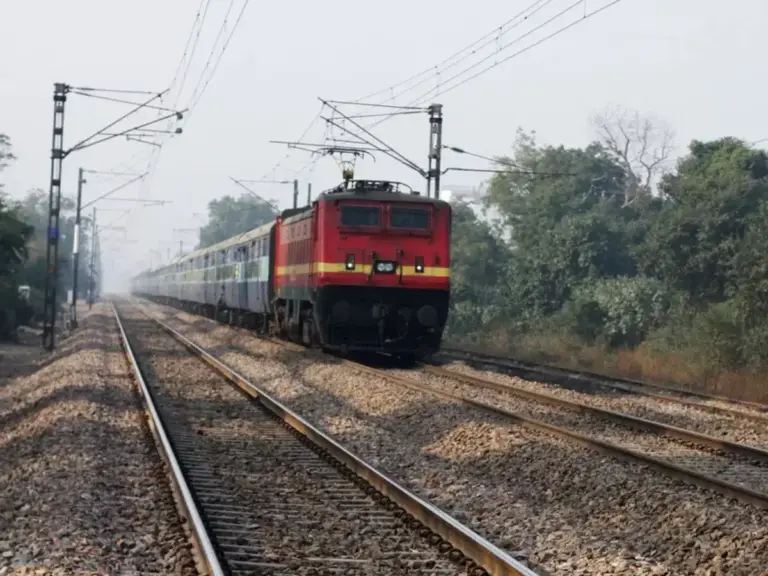
The Ministry of Railways has sanctioned the construction of a fourth railway line between Baikunth and Urkura, covering a length of 26.40 kilometres, at an estimated cost of ₹426.01 crore, under the South East Central Railway.
The Baikunth–Urkura section is a vital part of the Bilaspur–Raipur–Nagpur main line, which also falls on the Mumbai–Howrah high-density railway network, one of the busiest rail corridors in the country. At present, this section is operating with saturated capacity, underscoring the urgent need for capacity expansion.
The sanctioned fourth line will significantly ease congestion and enhance the smooth movement of trains. The project will create capacity for additional passenger and coaching services, reduce delays, and improve punctuality on this heavily utilised section.
In addition to passenger benefits, the project is expected to facilitate additional freight traffic of approximately 14.25 million tonnes per annum (MTPA). This increase in freight handling capacity is projected to generate additional annual earnings of about ₹61.70 crore for Indian Railways, starting from the first year of commissioning.
The region has witnessed rapid expansion of power plants, coal mines, steel and cement units, along with the development of new and allied industries. The new line will ensure faster and more reliable transportation of bulk commodities, supporting industrial growth and strengthening supply chains.
The work has been identified under the Energy, Cement and Mineral Corridor, reflecting Indian Railways’ continued focus on strengthening infrastructure in high-traffic and economically critical regions.
Once completed, the fourth line between Baikunth and Urkura will not only transform travel for passengers by making journeys faster, smoother, and more reliable, but also bolster freight operations, supporting the region’s industries and economic growth.
If one searches online for “State fish of Jammu and Kashmir,” the result confidently reads: Golden Mahseer (Tor putitora) – a majestic, famed, long-distance migratory game fish also revered as the “Tiger of Indian Rivers.” Shimmering in gold and bronze, it’s celebrated in Himalayan folklore, angling tales, and even postage stamps. However, there exists a strange irony hidden beneath that golden name. The golden mahseer, though once common in the lower stretches of the Jhelum and Chenab rivers, no longer exists in the freshwater ecosystems of the Kashmir Valley. Its migration route was effectively blocked off after the construction of the Mangla Dam in the 1960s, preventing connectivity between the warm foothill rivers of Pakistan-occupied Jhelum basin and the cold, high-altitude tributaries of Kashmir. There are currently no confirmed reports of Tor putitora from the rivers or lakes of Kashmir. Yet, it continues to be designated (at least on the internet) as our state fish.
Golden Mahseer (Tor putitora).
Photo by S. Kalyan, CC BY-SA 4.0 (via Wikimedia Commons).
Unlike other Indian states that have officially notified their state species through gazette or policy acts; for instance, Arunachal Pradesh (Golden Mahseer), Kerala (Pearl Spot), Lakshadweep (Butterfly fish), Andhra Pradesh (Striped murrel) or Sikkim (Copper Mahseer), Jammu and Kashmir has never issued any formal government notification designating a state fish. The term “golden mahseer” seems to be an internet-generated tidbit that has been used so frequently that it now seems official. Actually, none of our wildlife action plans, fisheries manuals, or biodiversity policy documents mention it. This brings up a difficult but important question: Can a fish that no longer lives in our waters continue to represent our aquatic identity?
In contrast to the glacially fed systems of the Kashmir Valley, the golden mahseer flourishes in warm, torrential, mid-altitude rivers (500–1,200 m asl) in the Himalayan foothills. Our valley waters, which frequently have temperatures mostly below 15°C, are not environmentally suited for mahseer development or reproduction. On the other hand, species like snow trout (Schizothorax spp.), which are cold-water cyprinids suited to mountain streams and high-altitude lakes, represent Kashmir’s native aquatic identity. These fishes support the valley’s traditional and sustenance fisheries, especially in the Jhelum and Wular systems. If any fish truly symbolizes Kashmir’s natural heritage, it is the snow trout, not the mahseer. Symbols matter – especially in a time when biodiversity is vanishing faster than we can name it. If we wish to celebrate a “state fish,” it should be one that truly represents our ecology, our people, and our waters. By continuing to claim the golden mahseer, we aren’t honoring nature -we’re clinging to an illusion. The government of Jammu and Kashmir should formally review and notify an official state fish through the Faculty of Fisheries, SKUAST-K and Department of Fisheries, Jammu and Kashmir, and base the selection on ecological and cultural relevance. It should also integrate the chosen species into school curricula, eco-awareness programs, and conservation campaigns, to build a sense of aquatic responsibility among citizens.
The golden mahseer will always remain one of the Himalaya’s most iconic fishes – powerful, beautiful, and worthy of conservation in its native southern rivers. But it does not belong to the glacial valleys of Kashmir anymore.We are only more removed from biological reality when we cling to a species that is no longer able to swim in our waters. Being truthful about our freshwater history is the first step towards protecting it. It’s time to give our waterways and people a symbol that accurately reflects them by substituting scientific accuracy for symbolic nostalgia.
Dr Syed Talia Mushtaq, Assistant Professor, Division of FRM, Faculty of Fisheries, SKUAST-K
Prof. Tasaduq Hussain Shah, Head, Division of FRM, Faculty of Fisheries, SKUAST-K
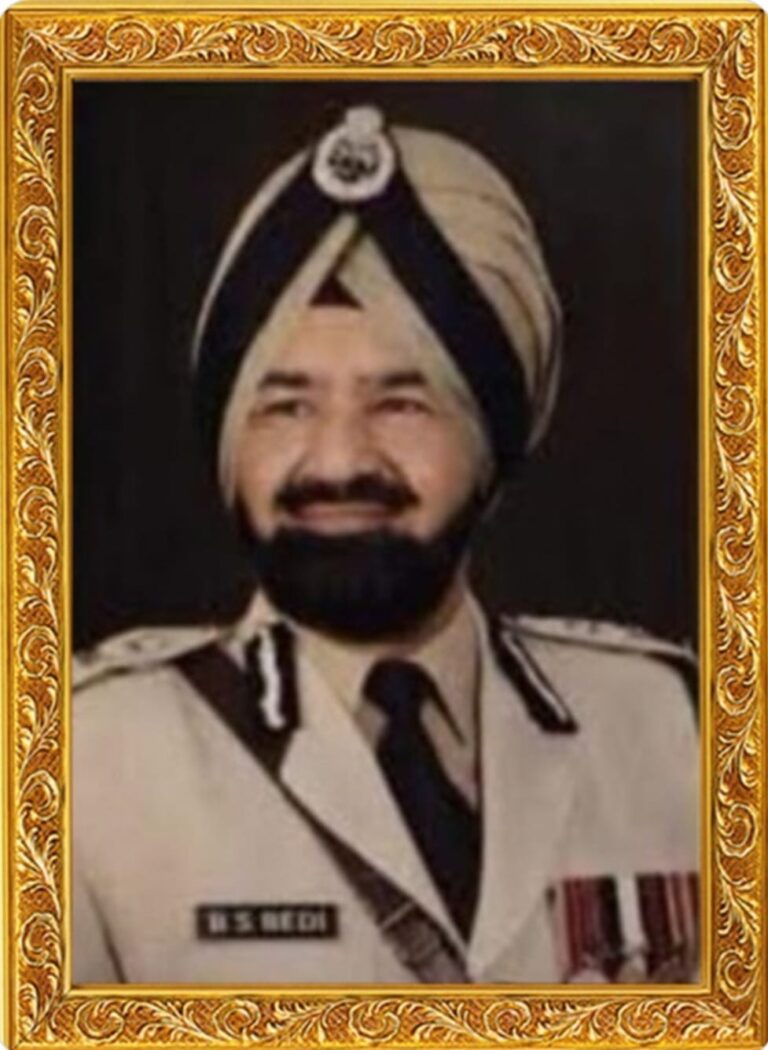
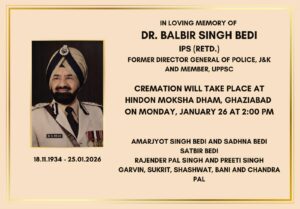
The history of policing in Jammu and Kashmir is witnessed to courage, sacrifice, and moral resolve. Among the rare officers who stood firm when institutions themselves were under attack, Dr. Balbir Singh Bedi, IPS, former Director General of Police, Jammu and Kashmir, occupies a place of lasting reverence.
A fearless police officer, a scholar of exceptional depth, and a humane leader, Dr. Bedi’s life symbolised integrity, intellectual strength, and unwavering commitment to duty. He lived an uncommon life so that others could live in peace.
24 January 1992: When Terror Struck Police Leadership, 24 January 1992 remains one of the most painful and defining days in the history of the Jammu and Kashmir Police.
On that day, a high-level meeting of security forces was underway at the office of Shri Jitendra Narain Saksena, IPS, the then Director General of Police, Jammu and Kashmir. The meeting was attended by senior officers including Ashok Patel (IG, BSF), M.K. Singh (IG, CRPF), Rajan Bakshi (DIG, Kashmir), and Veerana Aivalli (IGP, Kashmir).
During the meeting, a devastating terrorist blast ripped through the DGP’s office. Shri J.N. Saksena was critically injured, and all attending officers sustained grievous injuries. The attack was not merely an act of violence it was a direct assault on the top leadership of the security apparatus during one of the most turbulent phases of terrorism in the region.
First Hand Account from the Blast Site former SSP Sardar Khan then SHO Ram Munshi Bagh Remembers
At the time of the blast, Sardar Khan was present with then SP city Shri S.M. Sahai in the nearby SP city office.
“On hearing the explosion, we immediately rushed towards the DGP’s office,” Sardar Khan recalled.
What he witnessed was devastation. Without hesitation, he lifted the gravely injured DGP, Shri J.N. Saksena Sahib, onto his shoulders, carried him downstairs, and rushed him to the 92 Base Army Hospital Badami Bagh where emergency treatment began. Other injured senior officers were also admitted there.
The blast shook the police force to its core and posed a grave challenge to morale command, and continuity of leadership.
25 January 1992, Dr. B.S. Bedi Takes Charge
In the immediate aftermath of the attack, on 25 January 1992 leadership was entrusted to Dr. Balbir Singh Bedi, a 1961-batch IPS officer of the Uttar Pradesh cadre.
He assumed charge at a time when terror sought not only to kill individuals but to paralyse institutions.
In his very first address to ground officers particularly SHOs and DySPs Dr. Bedi delivered a clear and resolute message:
“Work as if nothing has happened. Do not let fear come in the way of your duty.”
According to SSP Sardar Khan, then serving as an SHO (Ram Munshi Bagh) and was present in meeting, these words instantly restored confidence across the ranks and made it clear that the Jammu and Kashmir Police would not retreat in the face of terror.
Dr. Bedi was not a leader confined to files and offices. He led from all the fronts .
As recalled by SSP Sardar Khan, “Dr. B.S. Bedi Sahib was not only great in rank, but unmatched in courage, fearlessness, and field leadership.”
He moved freely across Srinagar, Karan Nagar, Nishat, Downtown, Raj bagh and across districts such as Anantnag, Pulwama, Doda, and Kishtwar, often without elaborate security. His presence reassured personnel and sent an clear and Loud message that the state would not surrender its authority.
Dr Balbir singh Bedi was
Born in Daska, Sialkot (now in Pakistan), Dr. Bedi’s family migrated to Sirhind, Punjab after Partition. A brilliant student, he won multiple academic honours and developed a lifelong love for English literature.
Before joining the Indian Police Service, he taught at a postgraduate college for nearly three years an uncommon distinction that shaped his intellectual and ethical approach to policing.
He was later handpicked for some of the most challenging assignments in Punjab, including serving as DIG, Jalandhar Range (1985) during peak militancy, where his balanced yet firm style earned universal respect.
As DGP, Jammu and Kashmir, his tenure was marked by calm, decisive leadership during intense Pakistan-sponsored terrorism, including:
Strengthening the CID and intelligence apparatus
Emphasis on pure professionalism, discipline, and integrity,
Advanced training of officers, including outside the state, people-centric approach rooted in ethics and restraint he firmly believed that policing must always pass the tests of transparency, ethics, and probity.
Tribute from Former officers who served under the leadership of Dr Bedi.
S.S. Bijral Retd IGP Jammu and Kashmir police.
A First-Person Account
Among those who served closely under Dr. Bedi, former IGP S.S. Bijral offers one of the most insightful and heartfelt tributes:
“Dr. B.S. Bedi Sahib was an officer who combined a gentle heart with exceptional courage and an unwavering commitment to integrity. He was absolutely transparent, straightforward, and fearless in expressing his views.”
“From 1991 to 1994, when militancy in the Kashmir Valley was at its peak, I was posted as District SSP, Pulwama. The Valley was shaken by violence following events such as the Zia-ul-Haq plane crash and volatile situations around Lal Chowk during the Chaddi mubarakh – Amarnath Yatra.”
“Communication facilities were extremely limited, making policing even more challenging. At one point, due to compulsion, I sought a recommendation for transfer but the matter reached DGP Dr. Bedi Sahib.”
“In 1992, during a surprise visit to Pulwama, Dr. Bedi Sahib smiled and said in Punjabi: “Bijral teri transfer ta hou, lekin hou Bedi di transfer to Baad. (‘Your transfer will happen but only after Bedi’s transfer.)
“That was his style light humour, yet a message of deep trust and shared responsibility.”
“During meetings, when officers sought peace postings, he would remind us: ‘You are my trusted and capable officers. The ability to face district challenges lies with you.’”
“On another occasion, after his reappointment, he used a kabaddi analogy: ‘I said my breath has broken, but they kept saying No, you still have strength left.’ The message was clear the fight was not over.”
“Dr. Bedi Sahib constantly prepared his juniors to face adversity with resilience. Working under such an officer is a matter of pride. He was not just a senior officer, but a symbol of honest and fearless policing.”
“DGP B.S. Bedi’s Integrity, Vision and Policing Reforms Will Always Be Remembered”
Former IGP Jammu and Kashmir Police, J.P. Singh
Former IGP JP singh who served during the formative years of militancy in the state, remembers Dr. B.S. Bedi with deep respect and admiration.
“I hold DGP B.S. Bedi Sahib in very high regard. He was not only a senior police officer but a truly noble, honest, and principled human being. His integrity was absolute, and his commitment to professional policing never wavered,” J.P. Singh recalled.
Sharing a personal interaction, he said that during one of his meetings with Dr. Bedi Sahib, the latter narrated how he had successfully handled large-scale communal riots in Uttar Pradesh through firm control, intelligent deployment, and a deep understanding of crowd psychology. “That conversation revealed his exceptional policing acumen and his belief that law enforcement must always be firm, fair, and humane,” he said.
Recalling the early phase of militancy in Jammu and Kashmir, J.P. Singh noted, “When Bedi Sahib was posted in the state, I was serving as a Deputy Superintendent of Police. Militancy was beginning to spread its roots, and the challenges before the police were unprecedented. At that critical juncture, Bedi Sahib provided clarity of direction and strength of leadership.”
He emphasized that Dr. Bedi played a pivotal role in strengthening the CID and intelligence framework, recognizing early on that the fight against terrorism required precise information, professional investigation, and strategic foresight. “He introduced several structural and functional reforms, ensured discipline within the force, and focused strongly on upgrading the professional capabilities of officers,” he said. Singh further highlighted Dr. Bedi’s emphasis on training:
“He ensured that many officers were sent outside the state for advanced training so that they could return better equipped to handle the complex security situation in Jammu and Kashmir. This investment in human capital had long-term benefits for the force.”
Singh concluded,
“Dr. B.S. Bedi Sahib will always be remembered for his honesty, his vision, and his reforms. He led by example and left behind a legacy of ethical, courageous, and professional policing. Officers like him are rare, and their influence endures long after their tenure ends.”
Dr. Balbir Singh Bedi, A Fearless Police Officer, Scholar, and Natural Leader
From the memories of former DIG Manmohan Singh
Dr. Balbir Singh Bedi was not merely a high-calibre police officer; he was also a scholar, a sensitive human being, and a fearless leader. The memories associated with him continue to inspire us with lessons of service, integrity, and courage.
At that time, I was posted in the CID as a Deputy Superintendent of Police. Later, I was transferred to the Police Academy, Udhampur. My first meeting with Bedi Sahib took place during a passing-out parade. With great simplicity, he asked me how long I had been posted there. When I replied that it had been a year, shortly thereafter he transferred me to Kishtwar and entrusted me with the responsibility of SDPO Kishtwar.
Those days were extremely challenging for Kishtwar, as militancy was at its peak in the region. In such circumstances, the guidance of an officer with leadership qualities like Bedi Sahib was a great source of strength for us. During my tenure, he visited Kishtwar once or twice. I saw him as a dynamic, dashing, and decisive officer who took prompt decisions and genuinely appreciated hardworking officers.
Bedi Sahib was not only an able administrator but also a professor of literature. He delivered lectures in several colleges and influenced countless students through his scholarship. In Uttar Pradesh as well, he had a distinct reputation as a capable and honest officer. As a human being, he was extremely noble, simple, and sensitive.
The then Governor, Grish chander Saxena Sahib who had earlier served as the DGP of Uttar Pradesh had complete faith in Bedi Sahib. Bedi Sahib had served under him in several districts of Uttar Pradesh, and this trust was a clear testimony to his competence and integrity.
One unforgettable incident from 1993 remains vivid in memory, when RSS leader Mr. Bhandari was assassinated by terrorists. Following this incident, the law-and-order situation in Kishtwar became extremely serious. There was firing and loss of life. In that difficult time, Bedi Sahib stood firmly with us. With his unwavering guidance and full support, we collectively managed to bring the situation under control.
Bedi Sahib possessed all the qualities that every junior wishes to see in a senior clear vision, fearlessness, justice, and humanity. He was truly a natural-born leader.
The memory of Dr. Balbir Singh Bedi will always remain a source of inspiration for us. The legacy of his service, scholarship, and human values will live on forever.
Former DIG Manmohan Singh J&K Police
Manmohan Singh
Scholar, Mentor, and Thinker
After retirement, Dr. Bedi served as Member, Uttar Pradesh Public Service Commission, shaping future administrators. He fulfilled his academic dream by earning a Ph.D. and D.Litt. in English Literature, returning to teaching with the same discipline he brought to policing.
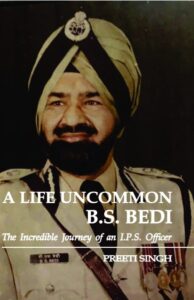
His life is chronicled in A Life Uncommon: B.S. Bedi The Incredible Journey of an I.P.S. Officer, authored by his daughter Preeti Singh Enduring Legacy
Dr. Balbir Singh Bedi passed away on 25 January 2026 the very date on which he had assumed charge as DGP of Jammu and Kashmir in 1992.
Two minutes of silence was observed by Sh Nalin Prabhat DGP And All Ranks at Police Headquarters in the memory of fallen General.
As Former Sr, Superintendent of Police Sardar Khan poignantly observed:
“Officers like Dr. B.S. Bedi Sahib never truly die. They live on through their courage, their deeds, and the confidence they instilled in generations of police officers.”
Dr. B.S. Bedi remains a symbol of fearless leadership, a clean hearth , and honest policing a man who chose duty over fear and principles over convenience. He truly lived an uncommon life so that others could live in peace.
“Now Mothers do not fear their sons will be killed, Kashmiri people are peace loving”
Tauseef Ahmad
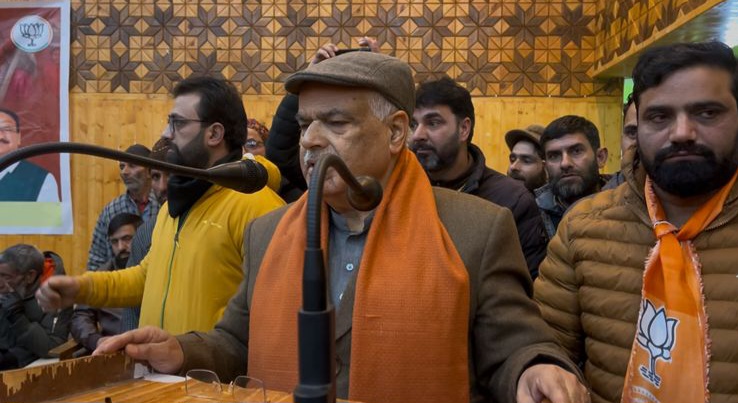
Bandipora, Jan 29: Bharatiya Janata Party General Secretary Ashok Koul on Thursday slammed Chief Minister Omar Abdullah, accusing the NC-led government of failing to reach people in the aftermath of heavy snowfall and alleging that the CM was busy skiing in Gulmarg instead of supervising relief operations on the ground.
Koul said large parts of Kashmir remained affected by blocked roads, power outages and disrupted essential services, leaving residents struggling during the harsh winter conditions.
Speaking with the reporters on the sidelines of a workers convention in Bamdipora Koul accused political parties in Jammu and Kashmir of being responsible for decades of violence that left thousands dead and many women widowed across the Valley.
He said ordinary families suffered the most while politicians kept their own households and children safe in foreign countries.
Addressing party workers, Koul said the situation in J&K has changed in recent years. “Today there is peace. Now mothers do not fear that their sons will be killed if they step outside. This has happened because of firm action against those working against the country,” he said.
He alleged that earlier regimes pushed poor youth into conflict for political gain. “No family member of big politicians was killed. Only the poor suffered because they were instigated,” Koul said.
Referring to the killing of BJP leader Waseem Bari, his father and brother in Bandipora in 2020, Koul said they were victims of a failed system. “What was the mistake of Waseem Bari’s father and son? They were innocent people who paid the price of serving people,” he said.
Koul said the BJP has tightened the screws on political parties, government employees and organisations acting against national interest.
Targeting MLAs from Bandipora, Sonawari and Gurez, Koul accused them of not visiting people during harsh winter conditions. “When snowfall cuts off villages, representatives should be on the ground with the public,” he said.
He also expressed disappointment over the budget, saying they have no expectations fulfilled. “There will be no relief for common citizens as usual,” he said.
Koul further hit out at Chief Minister Omar Abdullah, alleging he was busy skiing in Gulmarg while people faced power cuts, blocked roads and shortages after snowfall. “Leadership means solving public problems, not enjoying leisure when citizens are suffering,” he said.
New Delhi, Jan 29: Silver prices on Thursday breached the record Rs 4 lakh per kilogram mark in futures trade, while gold touched a lifetime high of Rs 1.8 lakh per 10 grams, riding on strong investor demand and record gains in the international markets.
On the Multi Commodity Exchange (MCX), silver futures for March delivery zoomed Rs 22,090, or 5.73 per cent, to hit an all-time high of Rs 4,07,456 per kilogram.
Gold futures also witnessed robust buying by investors. The yellow metal for February delivery soared Rs 14,586, or 8.8 per cent, to touch a new peak of Rs 1,80,501 per 10 grams on the MCX.
In the international market, gold futures on the Comex surpassed the crucial USD 5,600 per ounce-mark for the first time. The yellow metal for April delivery gained USD 286.6, or 5.4 per cent, to scale a fresh peak of USD 5,626.8 per ounce.
Comex silver futures also rose sharply to touch a fresh record of USD 119.51 per ounce in the overseas markets.
Analysts said that upbeat industrial demand in silver and a weak US dollar lent further support to the white metal, which has been outperforming gold in recent sessions.
They added that persistent safe-haven buying by traders amid economic uncertainties and rising geopolitical tensions continued to fuel the rally in bullion prices
NEW DELHI, Jan 29: In a significant move aimed at modernising Haj management and empowering pilgrims with greater choice, the Haj Committee of India (HCoI) has introduced a self-booking facility for flight tickets for Haj 2026. The initiative marks a clear shift from the traditionally centralised travel allotment system to a more passenger-driven, digital approach.
Under the new arrangement, intending pilgrims can now independently book their Haj flight tickets through a dedicated online portal available on the official Haj Committee website, as well as via the ‘Haj Suvidha’ mobile application. The facility has been activated through a formal circular, and a strictly time-bound window of four days has been opened starting today for availing the option.
Officials said the move is part of a broader push to streamline Haj-related services using technology, reduce administrative bottlenecks, and enhance transparency. By allowing pilgrims to directly select and confirm their flights, the Committee aims to offer flexibility in travel planning, including the choice of preferred dates and schedules, subject to seat availability and airline operations.
The self-booking option, however, is not mandatory. Authorities clarified that pilgrims who do not book their flights within the four-day window will automatically be assigned flights by the Haj Committee of India. In such cases, no individual preferences regarding travel date or airline will be entertained, reinforcing the importance of timely participation for those seeking personalised travel arrangements.
To ensure smooth implementation, all State Haj Committees have been instructed to widely publicise the new facility and provide necessary assistance to pilgrims, particularly those who may not be digitally proficient. Help desks and guidance mechanisms are expected to be strengthened at the state level to prevent any exclusion due to technological barriers.
Officials also urged pilgrims to stay updated through official communication channels, including the Haj Committee’s verified WhatsApp channel, which will provide real-time alerts, instructions, and clarifications related to Haj 2026.
The introduction of self-booking is being seen as a pilot step towards greater autonomy for pilgrims and could pave the way for further reforms in Haj logistics in the coming years, aligning the pilgrimage process with global best practices in travel management.
Authorities implement emergency measures, advise commuters to travel only during daylight and confirm road status before journey.
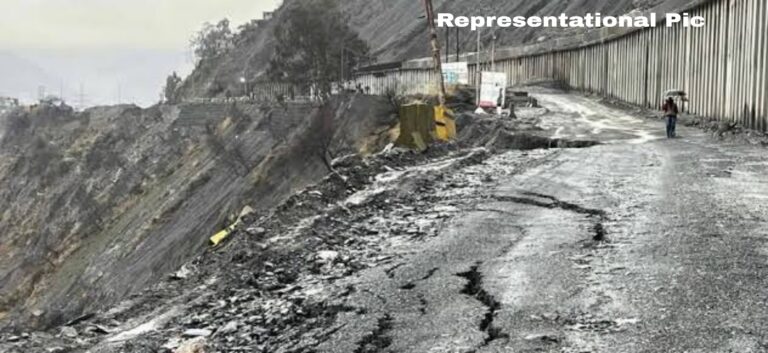
SRINAGAR, Jan 29: Traffic authorities on Wednesday announced a restrictive movement plan for the Jammu-Srinagar National Highway (NH-44) after a 40-50 metre section of the road sank at Kishtwari Pather, severely disrupting the vital surface link to the Kashmir Valley.
Officials told news agency Kashmir News Service (KNS) the damage has reduced the stretch to a single lane, creating a major bottleneck. To manage the congestion, an alternate-day plan for Heavy Motor Vehicles (HMVs) has been enforced.
Key regulations for Thursday, January 29, are as follows: Light Motor Vehicles (LMVs), including private cars, will be allowed to ply from both Jammu and Srinagar, subject to fair weather and road conditions.
Heavy Motor Vehicles will only be permitted to travel from Jakheni (Udhampur) towards Srinagar, following a road assessment. A strict cut-off of 2:00 PM (1400 hrs) will be imposed for such vehicles.
Security force convoys have been specifically advised to coordinate with the Traffic Control Unit (TCU) in Ramban and avoid movement against the traffic plan to prevent gridlock. If necessary, they may move from Jammu towards Srinagar only after confirming the highway status.
A senior traffic department official urged commuters to avoid night travel on the highway, particularly between Ramban and Banihal, due to risks of shooting stones, landslides, and ongoing construction work. The advisory also warned of slippery conditions from frost formation near the Navyug Tunnel.
“Commuters, especially LMV operators, are advised to travel during daylight hours only and adhere strictly to lane discipline. Overtaking or wrong-side driving will exacerbate congestion on the narrow carriageway,” the official stated.
The situation is compounded by the closure of all major alternate routes into the valley due to heavy snowfall. The Kishtwar-Sinthan-Anantnag road (NH-244), the Srinagar-Sonamarg-Gumri road, and the Mughal Road remain blocked for vehicular traffic.
The public is advised to confirm the latest road status from official Traffic Control Units before undertaking any journey. (KNS)