spot_imgspot_img
spot_img
Home Blog Page 150

Man Injured After Contact with Live Wire Amid Gusty Winds in Budgam

0

Budgam, Jan 22 : A man, sustained serious injuries after coming into contact with a live electric wire during stormy weather and strong gusty winds on Thursday evening.

CLICK HERE TO JOIN OUR OFFICIAL WHATSAPP GROUP

Reports reaching news agency Kashmir News Corner — KNC, that the man identified as Bashir Ah a resident of Choon in Budgam came in contact with live wire and was seriously injured.

The incident occurred when an electric wire snapped and fell amid the severe weather conditions. The injured was immediately shifted to a nearby medical facility for treatment, they said.

Further details regarding his condition are awaited, as authorities continue to monitor the situation. —(KNC)

SKIMS Hosts AI Health Pre-Summit, Puts Kashmir on National Innovation Map

0

FIRDOUS AHMAD

SRINAGAR, Jan 22:

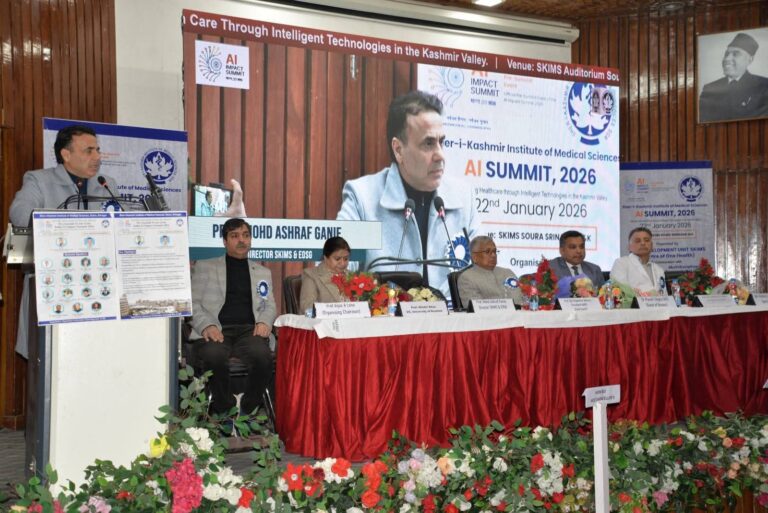
In a significant stride towards integrating cutting-edge technology with public health, the Sher-i-Kashmir Institute of Medical Sciences (SKIMS) on Thursday hosted a day-long Official Pre-Summit Event of the India AI Impact Summit 2026, firmly positioning Jammu and Kashmir on India’s emerging Artificial Intelligence-driven healthcare landscape.

Organised under the theme “Transforming Healthcare through Intelligent Technologies in the Kashmir Valley,” the high-profile pre-summit brought together an impressive congregation of global experts, senior policymakers, academicians, technologists and healthcare leaders. The deliberations focused on harnessing Artificial Intelligence (AI) to strengthen healthcare delivery, research ecosystems, governance mechanisms and public health outcomes, with a strong emphasis on ethics, data integrity and patient-centric care.

The inaugural session witnessed keynote addresses by renowned experts from prestigious global and national institutions, including Harvard University, Johns Hopkins Bloomberg School of Public Health / Centre for Global Digital Health Innovation (USA), AIIMS, IITs and other leading international technology and medical institutions. Speakers explored the immense potential of AI in healthcare while also examining operational challenges, ethical concerns, regulatory frameworks and the practical realities of deploying AI solutions in real-world clinical settings.

Addressing the gathering virtually, Prof. V. K. Paul, Member of NITI Aayog, provided a comprehensive overview of India’s ongoing efforts to integrate Artificial Intelligence into national health systems. Highlighting AI’s transformative role, he underscored its relevance in diagnostics, telemedicine, service delivery optimisation, capacity building and flagship initiatives such as Ayushman Bharat.

“Given the complexity and vast scale of India’s public health landscape, Artificial Intelligence can significantly enhance evidence-based decision-making — from precision interventions and disease forecasting to actionable insights at the local level,” Prof. Paul said. He also lauded SKIMS for its consistent contributions to healthcare excellence and commended the leadership of its Director, Prof. Mohd Ashraf Ganie, for steering the institution towards innovation-led growth.

The Chief Guest on the occasion, Padma Shri awardee Prof. Digambar Behera, President of the National Academy of Medical Sciences (NAMS), spoke extensively on how AI is reshaping disease diagnosis and treatment paradigms through precision medicine and enhanced clinical decision support systems.

“Artificial Intelligence can optimise clinical workflows, strengthen chronic disease management and significantly improve public health systems. However, AI can never replace human empathy — it can only augment and reinforce healthcare delivery,” he remarked.

Addressing the participants, Director SKIMS and EOSG, Prof. Mohd Ashraf Ganie, announced that SKIMS is steadily moving towards becoming a regional hub for Artificial Intelligence in Healthcare, with the broader objective of transforming health systems across Jammu & Kashmir and Ladakh.

He revealed that on the eve of the Pre-Summit, SKIMS formally launched a new Department of Clinical Repository Information & Technology, aimed at strengthening institutional data readiness, enhancing research capabilities and ensuring ethical, secure and efficient deployment of AI-driven healthcare solutions.

“Artificial Intelligence is already bypassing many traditional pathways in drug discovery, diagnostics and patient data utilisation. It has revolutionised patient care in areas such as diabetes management by enabling faster, more precise and clinically efficient interventions,” Prof. Ganie said.

Reaffirming the centrality of ethics and compassion in medical practice, he added, “AI ultimately stems from the human brain. The human interface will always remain indispensable to ensure healthcare remains compassionate, ethical and humane.”

Prof. Ganie further highlighted the national importance of the event, noting that SKIMS is among a select group of institutions across the country chosen to host Official Pre-Summit Events ahead of the India AI Impact Summit 2026, which is scheduled to be inaugurated in New Delhi by the Prime Minister of India, Shri Narendra Modi.

The Guest of Honour, Dr. Piyush Singla (IAS), Secretary, Department of Information Technology, Government of Jammu & Kashmir, lauded SKIMS for hosting what he described as a landmark and forward-looking event. Drawing upon global best practices, he emphasised the critical importance of data preparedness, outcome-driven frameworks and robust implementation strategies.

“SKIMS possesses immense clinical depth and institutional expertise. If leveraged effectively, Jammu & Kashmir has the potential to emerge as a national reference point in AI-driven healthcare,” he said, stressing that capacity building must extend beyond mere tool-based training to encompass systems thinking, governance and policy alignment.

Deputy Commissioner Srinagar, Shri Akshay Labroo, assured full administrative support to such initiatives and informed that district-level databases are already functional, opening avenues for deeper collaboration between district administration and SKIMS in data-driven healthcare planning.

The event also featured addresses by Prof. Nilofer Khan, Vice Chancellor, University of Kashmir, and Prof. Shaukat A. Gurcoo, Dean, Medical Faculty, who underscored the importance of interdisciplinary collaboration in digital health, medical education and translational research.

The Pre-Summit included multiple plenary sessions and panel discussions focusing on key themes such as Artificial Intelligence in Healthcare, Research Priorities in Digital Health, AI-Driven Healthcare Transformation in India, and the application of AI in Cancer Research and Genetics.

The Official Pre-Summit Event was organised by the Skill Development Unit (Centre of One Health), SKIMS, in collaboration with DataLEADS and the Multidisciplinary Research Unit (MRU), SKIMS, with support from the Department of Information Technology, Government of Jammu & Kashmir.

With this landmark initiative, SKIMS has reinforced its role as a leading institution driving innovation, research and ethical adoption of Artificial Intelligence in healthcare, while paving the way for Jammu & Kashmir to play a meaningful role in shaping India’s digital health future ahead of the India AI Impact Summit 2026 in New Delhi.

Driven by Deep Structural Reforms, India’s Reform Momentum is Strongly on Track: Ashwini Vaishnaw

0

India’s Growth Story Continues to Unfold in Davos on Day 2

VINOD BHAT
Delhi, Jan 22:
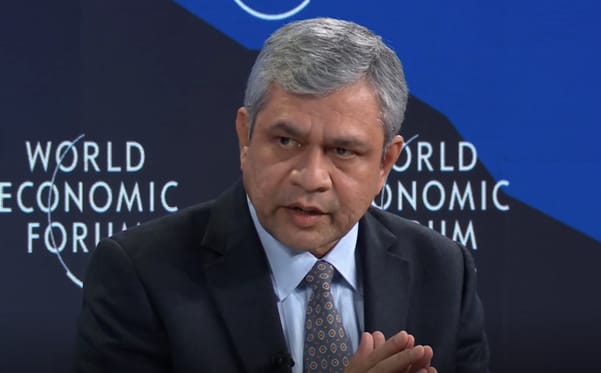
Union Minister for Railways, Communications, Electronics & Information Technology, Shri Ashwini Vaishnaw today stated that India’s reform momentum is firmly on track, driven by deep structural reforms personally steered by Prime Minister Shri Narendra Modi, which have transformed the Indian economy into a high-growth, resilient and globally trusted destination.

Speaking on the sidelines of the World Economic Forum Annual Meeting at Davos, the Minister stated that landmark reforms undertaken in recent years including labour code reforms, simplification of the Goods and Services Tax, reforms in the energy sector and opening up of nuclear energy to the private sector, are generating strong investor confidence across sectors.

The Minister stated that a continuous reform process is underway across all sectors of the economy, adding that investors are extremely encouraged by the policy environment in India and are increasingly expanding their commitments. He cited several instances, including IKEA announcing plans to double its investment and Qualcomm significantly expanding its workforce in India. He noted that companies across sectors are increasingly viewing the present period as an opportune time to invest in India.

Highlighting India’s macroeconomic fundamentals, Shri Vaishnaw stated that India is today the fastest-growing major economy in the world, with a consistent growth trajectory of 6–8 per cent projected over the next five years. He underlined that the combination of moderate inflation and high growth reflects the economic transformation achieved under the leadership of the Prime Minister over the past decade, which is drawing global attention.

Referring to prevailing global uncertainties, the Minister emphasised the need to strengthen internal capabilities to enhance resilience amid geopolitical, geoeconomic and geotechnical turbulence. He stated that the Government is focused on ensuring that all foundational building blocks of the economy are firmly in place to enable India to weather global disruptions.

Shri Vaishnaw further stated that India is systematically building its own semiconductor ecosystem, developing a comprehensive artificial intelligence stack, rapidly scaling up defence production, and enabling Indian IT firms to transition from traditional software services to AI-driven solutions. He stated that these efforts collectively contribute to strengthening India’s economic resilience.

The Minister stated that global perception of India at Davos has been overwhelmingly positive, with India being widely regarded as a trusted country demonstrating consistent economic growth. He noted that deliberations across panels reflected a broad consensus that India’s emergence as the world’s third-largest economy is now a matter of timing rather than possibility.

Highlighting India’s inclusive growth model, Shri Vaishnaw stated that initiatives such as the opening of over 54 crore Jan Dhan bank accounts and the provision of food security to more than 80 crore beneficiaries on a sustained basis have ensured that economic growth reaches the last mile. He stated that the scale and impact of this inclusive growth model are being widely recognised and appreciated globally.

Energy Transition Can Drive Industrialisation, Jobs and Competitiveness in Emerging Economies: Union Minister Pralhad Joshi

0

Vinod Bhat
Delhi, Jan 22:
Union Minister for New and Renewable Energy Pralhad Joshi has said that India’s energy transition has been deliberately designed as a tool for industrial growth, job creation and global competitiveness, particularly for emerging economies.

Addressing a high-level session on “Energy: The Great Funding Gap” at the World Economic Forum Annual Meeting 2026 in Davos, the Union Minister underlined that under the leadership of Prime Minister Shri Narendra Modi, India has transformed its clean energy transition into a people-centric development movement, while simultaneously strengthening energy security and lowering costs for industry.

Renewable Energy at the Core of India’s Growth Strategy

The Union Minister stated that India has already achieved 267 GW of installed non-fossil energy capacity, with renewables now accounting for around 52% of the country’s total installed power capacity, well ahead of earlier timelines. He emphasised that India views the energy transition not merely as an environmental imperative, but as a growth enabler, supporting rapid industrialisation and making electricity more affordable for businesses and households alike.

People-Centric Schemes Powering Socio-Economic Transformation

Highlighting flagship decentralised renewable energy programmes, the Minister said that PM Surya Ghar: Muft Bijli Yojana has enabled the installation of rooftop solar systems in 2.7 million households in the last two years alone, with a target of 10 million households, which is expected to generate around 30 GW of power.

Under PM-KUSUM, more than 2.1 million farmers across the country have had their irrigation pumps solarised, significantly reducing dependence on subsidised grid power while enabling farmers to earn additional income by selling surplus electricity.

“These initiatives are not only providing affordable energy but are also turning consumers into ‘prosumers’, improving household incomes and rural livelihoods,” the Minister said.

Lower Power Costs, Stronger Industry

Explaining how renewables have helped reduce electricity tariffs, the Union Minister cited the example of agricultural power supply reforms through solarisation of pumps, which have significantly reduced subsidy burdens on distribution companies.

By replacing high-cost subsidised electricity with low-cost solar power, the savings have translated into lower tariffs for industry and households, marking a historic shift in India’s power sector. Electricity tariffs are coming down because of the renewable energy revolution, he noted.

Building a Complete Clean Energy Manufacturing Ecosystem

The Union Minister highlighted that India has built a strong domestic manufacturing base across the renewable energy value chain. He noted that the country has already established 144 GW of solar module manufacturing capacity, while solar cell manufacturing capacity has reached 27 GW and is expected to expand to around 50 GW in the near future. He further stated that India is moving towards completing the entire manufacturing cycle, with planned manufacturing of wafers and ingots set to commence shortly.

Alongside solar manufacturing, the Union Minister underlined the rapid scale-up of wind energy, battery storage and pumped storage solutions, which are critical for ensuring reliability and grid stability. These efforts, he said, are not only strengthening India’s clean energy supply chains but are also generating large-scale employment and enhancing the country’s industrial competitiveness.

Integrated Approach to Energy Security and Reliability

Addressing concerns about grid reliability, the Union Minister said India is pursuing an integrated strategy combining renewables with energy storage, pumped storage hydro and nuclear power. He added that India has undertaken legal and policy reforms to expand nuclear energy, to strengthen base-load capacity.

The Union Minister stated that India’s experience demonstrates that energy security, affordability and sustainability are not competing priorities, but can be pursued together through coherent policy design, scale, and domestic manufacturing. India’s clean energy journey, he said, offers practical lessons for other emerging economies seeking to drive growth, jobs and competitiveness through the energy transition.

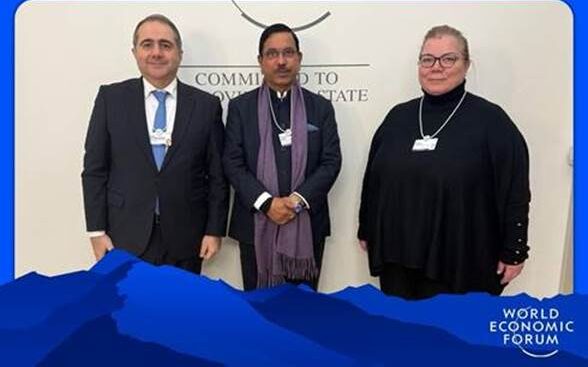
On the sidelines of WEF, Union Minister Joshi held a series of high-level bilateral interactions with global industry leaders and foreign ministers to advance clean energy investments, technology collaboration and international partnerships aligned with India’s energy transition goals.

In bilateral diplomatic engagements, Shri Joshi met Dr. Tareq Abu Ghazaleh, Minister of Investment, and Ms. Zeina Toukan, Minister of Planning and International Cooperation of Jordan, and discussed avenues for enhanced cooperation and investment partnerships.

The Union Minister also met H.E. Amon Murwira, Minister of Foreign Affairs and International Trade of Zimbabwe, and discussed deepening India–Zimbabwe cooperation in renewable energy. He noted Zimbabwe’s appreciation for India’s support, including through the International Solar Alliance, towards the establishment of the STAR-C Centre in Zimbabwe. Discussions covered decentralised solar solutions for rural and remote areas, as well as emerging areas such as green hydrogen, bioenergy and decentralised energy systems.

Shri Pralhad Joshi met Dr. Fatih Birol, Executive Director of the International Energy Agency. The discussions covered strengthening the IEA’s focus on India-specific data, analysis and policy recommendations, as well as exploring innovative financing approaches to help lower the cost of capital.

Engagements with Global Industry Leaders

The Union Minister held a forward-looking discussion with José Entrecanales Carrión, Chief Financial and Sustainability Officer of Acconia SA, on expanding renewable energy and sustainable infrastructure opportunities in India. The discussions focused on utility-scale solar, onshore wind, hybrid wind–solar storage solutions, and round-the-clock renewable power aligned with India’s target of 500 GW non-fossil capacity by 2030.

In another meeting, Shri Joshi interacted with Catherine MacGregor, Chief Executive Officer of ENGIE, and encouraged deeper and sustained investments in India’s fast-expanding clean energy ecosystem. Highlighting India as one of the world’s most attractive destinations for long-term clean energy investments, the Union Minister noted that renewables in India are now cleaner, cheaper and driven by transparent, market-based mechanisms.

Financial and Market Frameworks for Clean Energy

The Union Minister also held discussions with Dave Ernsberger, President of S&P Global, on building robust global frameworks for credit assessment, ESG standards and price discovery in the renewable energy sector.The discussions focused on the need for integrated frameworks that reflect the scale, policy stability and operating realities of India’s renewable energy market, including dedicated credit rating approaches for renewable projects.

Shri Joshi also met Aman Joshi, Executive Vice President and Chief Commercial Officer of Bloom Energy, and discussed clean, reliable and distributed power solutions, particularly fuel cell technologies for industrial clusters and data centres.

‘Chemical Poisoning’ of Trout Fish Continues in Nallah Sindh, Ganderbal; Authorities Promise Stern Action

0

TOUSEEF WANI

KANGAN-GANDERBAL, Jan 22: Serious environmental concerns have resurfaced in central Kashmir’s Ganderbal district following fresh allegations of rampant chemical poisoning of trout fish in Nallah Sindh, particularly in the Kangan area. Locals have accused miscreants of repeatedly using bleaching powder to illegally kill and harvest trout fish, a practice that they claim has continued unchecked despite existing laws and monitoring mechanisms.


According to residents living along the banks of Nallah Sindh, especially in the Prang–Wussan stretch, bleaching powder is being deliberately dumped into the stream to stun and kill large trout fish. The chemical rapidly depletes oxygen levels in the water, causing instant death of bigger fish that are then illegally collected by those involved. However, smaller fish, fingerlings, and other aquatic organisms are left to die slowly, resulting in large-scale destruction of aquatic life and long-term damage to the river’s delicate ecosystem.

Locals pointed out that the practice becomes particularly devastating during the winter months when the water level and flow in the stream are significantly reduced. “At this time of the year, even a small quantity of bleaching powder can wipe out the entire fish population in a confined stretch of the nallah,” said a resident, adding that the chemical spreads rapidly in low-flow conditions, leaving little chance for aquatic life to survive.

Residents have further alleged that the bleaching powder used for this illegal activity is being sourced from government departments where it is legitimately meant for chlorination, sanitation, and public health purposes. They expressed strong resentment over what they described as the complete absence of effective ground-level monitoring by the Fisheries Department. According to locals, fisheries guards posted in the area are rarely seen conducting patrols or inspections, allowing such environmentally destructive practices to continue unabated.

“The department entrusted with the protection of aquatic resources appears to be either in deep slumber or deliberately turning a blind eye to these crimes,” locals alleged. They warned that if immediate and decisive action is not taken, the prized trout population of Nallah Sindh—known for its ecological and economic importance—could face complete annihilation.

Civil society members, environmental activists, and social workers have also joined residents in raising alarm over the issue. They have appealed to the District Administration Ganderbal, Senior Superintendent of Police (SSP) Ganderbal, and the Director of Fisheries to intervene urgently. The protesters demanded strict legal action against those involved in chemical fishing and called for exemplary punishment to serve as a deterrent for others who may be tempted to indulge in such practices.

Responding to the growing concerns, Deputy Commissioner Ganderbal, Jatin Kishore, acknowledged that the matter had been brought to his attention. Speaking to Kashmir Despatch, he said, “The issue has come to my notice this morning, and we are ascertaining the facts. If anyone is found involved in this illegal activity, they will be dealt with strictly under the law.”

Meanwhile, residents have urged the administration to move beyond assurances and ensure sustained monitoring, regular patrolling, and strict regulation of bleaching powder usage, warning that delay could result in irreversible ecological damage to one of the region’s most vital water bodies.


JKPSC Rejects Bias Allegations, Assures Full Transparency in Judicial Mains Exam

0

KD NEWS SERVICE

SRINAGAR, Jan 22: The Jammu and Kashmir Public Service Commission (JKPSC) has categorically rejected reports circulating in certain sections of the media and on social media questioning the fairness of the J&K Civil Services Judicial (Main) Examination–2025, asserting that the entire examination process is conducted in a completely transparent, impartial and fool-proof manner.

Responding to the claims, the Commission clarified that there is absolutely no scope for bias, manipulation or any form of external influence at any stage of the examination or evaluation process. It emphasised that recruitment and selection of candidates are carried out strictly on the basis of merit and in full compliance with the prescribed rules and regulations, without discrimination on grounds of religion, region, language or any other consideration.

In its detailed clarification, JKPSC stated that all examinations are conducted with the highest standards of fairness and transparency, following well-established procedures that are uniformly applied to every candidate. The Commission underlined that each aspirant is treated equally and that the system in place is fortified with multiple safeguards to ensure complete objectivity throughout the process.

Elaborating on the evaluation mechanism, the Commission highlighted that the assessment of answer scripts is carried out under stringent confidentiality and security protocols. The evaluation framework is designed in such a way that examiners remain completely unaware of the identity of the candidates whose answer sheets they are marking. This strict anonymity, the Commission said, makes the process impenetrable and eliminates even the remotest possibility of bias, interference or favouritism.

JKPSC further asserted that its functioning is guided by the principles of integrity, fairness and moral responsibility, both in letter and spirit. The Commission reiterated its commitment to upholding public trust and ensuring that the selection process remains credible, transparent and beyond reproach.

The Commission also informed that the J&K Civil Services Judicial (Main) Examination–2025 was conducted from November 16 to November 26, 2025, at designated centres in Jammu and Srinagar, in accordance with the notified schedule and established norms.


Ganderbal Police Busts Illegal Timber Smuggling

0

Touseef Wani

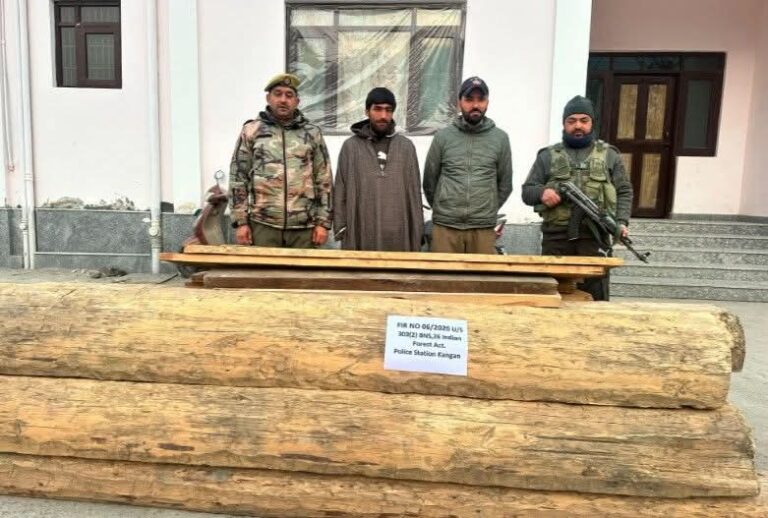
Ganderbal,Jan 22 : Acting swiftly on specific and credible inputs received from reliable sources, Ganderbal Police has successfully unearthed a case of illegal timber smuggling at Poshkar Kangan.

The information revealed that one individual, namely Imtiaz Ahmad Banya, S/o Husain Banya, R/o Poshkar, Kangan, had illegally smuggled forest timber from a nearby forest area and clandestinely dumped the same in the courtyard of his residential premises at Poshkar, Kangan.

Taking cognizance of the matter, Police Station Kangan registered FIR No. 06/2026 under relevant sections 303(2) of the Bharatiya Nyaya Sanhita (BNS) and Section 26 of the Indian Forest Act, and investigation was taken up, it reads.

Further, on the directions of SSP Ganderbal Shri Khalil Ahmad Poswal-JKPS a special police team conducted a search operation which led to the recovery of a huge quantity of illegally acquired forest timber from the courtyard of the accused. The recovered timber has been seized as per legal procedure and the accused was apprehended and taken into the police custody.

Further investigation in the case is underway to ascertain the source, involvement of other persons, and to identify the entire nexus behind the illegal timber smuggling.

Ganderbal Police reiterates its firm commitment to protect forest resources and take strict legal action against those involved in environmental crimes. Public cooperation is solicited to report any such illegal activities for ensuring the protection of natural resources and maintaining the rule of law, reads the statement.

Govt Must Bet Big on Agricultural Startups in Kashmir

0

Agriculture has long been the economic and cultural backbone of Kashmir, sustaining generations of families and shaping the Valley’s social fabric. From apple orchards spread across north and south Kashmir to saffron fields in Pampore and vast stretches of rice cultivation, the region possesses a rich agrarian heritage and immense natural potential. Yet, despite this abundance, agriculture in Kashmir remains largely traditional, vulnerable and insufficient to meet the employment needs of a rapidly growing and increasingly educated population. At a time when government jobs are shrinking and industrial growth remains limited, the Government of Jammu and Kashmir must look towards agricultural startups as a transformative pathway for sustainable employment generation.

For decades, agriculture in the Valley has been treated as a subsistence activity rather than a modern economic enterprise. Farmers continue to depend on outdated practices, fragmented landholdings and exploitative middlemen, resulting in low returns and high uncertainty. This is precisely where agricultural startups can play a decisive role. By introducing innovation, technology and entrepreneurship into farming and allied sectors, startups can convert agriculture into a profitable, future-ready industry. Ventures in agri-tech, food processing, cold-chain logistics, seed development, precision farming and organic cultivation have the potential to modernise the sector while creating dignified employment opportunities.

Kashmir’s rising unemployment, particularly among educated youth, presents both a challenge and an opportunity. Every year, thousands of graduates from agriculture, horticulture and allied disciplines pass out from educational institutions, only to find limited avenues for meaningful work. Agricultural startups can bridge this gap by absorbing skilled youth and encouraging them to become job creators instead of job seekers. When young minds apply scientific knowledge and innovation to agriculture, productivity improves, wastage declines and incomes rise. More importantly, such enterprises generate employment that is locally rooted, reducing the compulsion for migration and preserving the Valley’s rural economy.

Unlike large industries that demand heavy capital and concentrated infrastructure, agricultural startups are decentralised by nature. They flourish in villages and semi-urban areas, where employment is most urgently needed. A small processing unit, a grading and packaging facility, a dairy or poultry venture or a saffron value-addition enterprise can provide livelihoods to dozens of families while indirectly supporting hundreds more. Such ventures ensure year-round economic activity, breaking the cycle of seasonal unemployment that has long plagued Kashmir’s rural workforce.

The Valley’s unique agro-climatic conditions give it a natural edge in producing high-value crops such as apples, cherries, walnuts, almonds, saffron and medicinal herbs. Unfortunately, the absence of local processing, branding and marketing forces farmers to sell their produce in raw form at minimal prices. Agricultural startups can reverse this trend by focusing on value addition and diversification. Apples need not be limited to fresh fruit sales; they can be processed into juices, dehydrated products, vinegar and health foods. Saffron, often referred to as Kashmir’s red gold, can be developed into pharmaceutical, cosmetic and wellness products. Such innovation not only enhances farmers’ incomes but also strengthens Kashmir’s identity in national and global markets.

Climate change has further underscored the urgency of reforming Kashmir’s agricultural sector. Erratic weather patterns, declining snowfall, frequent hailstorms and water stress have made traditional farming increasingly risky. Startups working on climate-resilient technologies, smart irrigation, protected cultivation and soil health management can help farmers adapt to these challenges. Promoting organic and natural farming ventures can also open new markets while protecting the environment and public health. With global demand rising for chemical-free produce, Kashmir is well-positioned to emerge as a hub for organic agriculture, provided the government creates a supportive ecosystem.

However, for agricultural startups to flourish, policy support must move beyond rhetoric. The government needs to create an enabling environment through accessible finance, reliable infrastructure and simplified regulatory processes. Young entrepreneurs often struggle with high input costs, limited credit access and inadequate market linkages. Without addressing these structural barriers, the promise of agricultural entrepreneurship will remain unfulfilled. Strong incubation support, collaboration with research institutions and assured market access are essential to nurture startups from idea to impact.

Promoting agricultural startups is not merely an economic necessity; it is a social investment in Kashmir’s future. Sustainable employment reduces frustration among youth, strengthens rural communities and fosters long-term stability. When agriculture becomes profitable and innovative, it restores dignity to farming and instils confidence in the next generation. The Government of Jammu and Kashmir must recognise that the path to lasting economic resilience lies not in short-term relief measures, but in empowering agriculture through entrepreneurship.

Kashmir’s soil has sustained its people for centuries. With visionary policies and determined implementation, it can once again become the foundation for prosperity, self-reliance and sustainable employment. The time to cultivate this future is now.

Altaf Bukhari voices serious concerns over the disproportionate shortlisting of candidates in judicial exams

0

Seeks suspension of the announced results and a transparent inquiry into the matter

Apni Party president said that the BJP and the NC resorted to religious polarisation of the Jammu and Valley populations to secure electoral gains in the 2024 polls

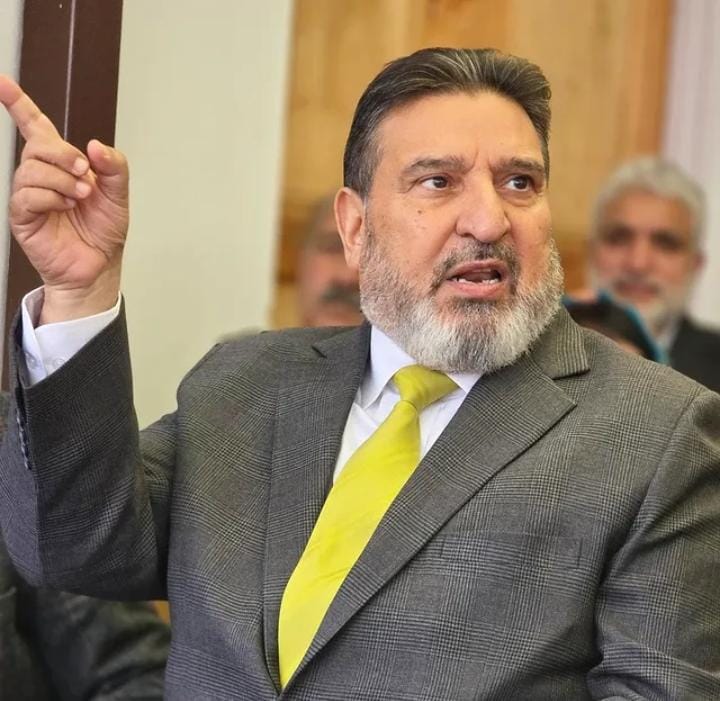
Srinagar, January 22: Apni Party President Syed Mohammad Altaf Bukhari expressed his grave concern over the disproportionate shortlisting of candidates in the Civil Services (Judicial) Mains Examination.

In his statement Syed Mohammad Altaf Bukhari said, “It is a matter of serious concern that only 13 out of 124 candidates from the Kashmir Valley have been shortlisted for the viva voce stage of the Civil Services (Judicial) Mains Examination, while the remaining 111 candidates belong to the Jammu division.”

Urging a fair probe into the matter, he said, “The candidates from the Valley who have been dropped have rightly alleged serious irregularities and a lack of transparency in the examination results. Given the stark regional imbalance reflected in the results, these concerns cannot be dismissed and deserve fair and impartial investigation.”

Apni Party president blamed political parties for communalising and polarising the Jammu and Valley and said, “Unfortunately, during the 2024 Assembly elections, two political parties played an active role in polarising the two divisions—Jammu and the Valley—along religious lines. The BJP communalised the political discourse in Jammu, while the NC responded in a similar manner in the Valley. Both parties reaped electoral benefits from this polarisation; however, the ultimate cost was borne by the secular fabric and social harmony of Jammu and Kashmir as a whole.”

He went on to say, “The situation has now worsened. A recent example was seen when the merit-based selection of MBBS students at Shri Mata Vaishno Devi Institute of Medical Excellence (SMVDIME), Katra, was communalised on religious lines. Since the BJP used its power and influence to revoke permission for the MBBS course at this institution—thereby ensuring that Muslim students do not study here—this action damaged the larger cause and public interest of Jammu and Kashmir. It now appears that the Civil Services (Judicial) Mains Examination is also being subjected to communal considerations, as the disproportionate ratio of shortlisted candidates raises serious doubts.”

Syed Mohammad Altaf Bukhari appealed LG and CM to intervene into the matter ensuring the declared results are kept in abeyance and a probe into the matter is initiated. “At a time when mistrust prevails in both regions, the only responsible course is to keep the results in abeyance and initiate a transparent, independent inquiry. The Lieutenant Governor Shri Manojsinha and Chief Minister Shri Omar Abdullah must ensure that the results of the Civil Services (Judicial) Mains Examination remain on hold until a fair and thorough inquiry is conducted,” he said.

Bullet train project is progressing very well: Ashwini Vaishnaw

0

Vinod Bhat

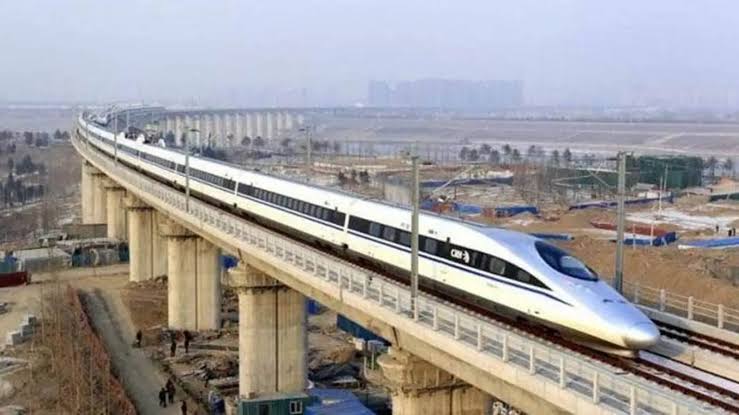
Delhi, Jan 22: Construction for the first section will be ready by December of 2026 itself, with the first section being Surat to Bilimora.


The second section, from Vapi to Ahmedabad, will be ready in the first half of 2027, and then up to Thane and then up to Mumbai.


The Union Minister added that progress is absolutely good and that the first section, Surat to Bilimora, should be opened in August 2027.