spot_imgspot_img
spot_img
Home Blog Page 41

Haj 2026 Pilgrims Asked to Deposit Additional Airfare

0

Srinagar, April 30: The Haj Committee of India has directed all pilgrims registered for Haj 2026 to deposit an additional amount of USD 100 (approximately ₹10,000) towards differential airfare by May 15, 2026.

According to an official circular issued by the Committee, the decision has been taken in view of extraordinary circumstances arising from the ongoing crisis in the Middle East and the sharp increase in Aviation Turbine Fuel (ATF) prices. The rising fuel costs have significantly impacted air charter operations for the pilgrimage.

Officials stated that the Ministry of Minority Affairs approved a one-time revision in airfare for Haj 2026 pilgrims following requests from airlines, which cited increased operational expenses due to prevailing global conditions.

Pilgrims have been advised to deposit the additional amount through online payment options available on the Haj Committee’s official website or via the Haj Suvidha App using debit/credit cards or net banking. Alternatively, payments can also be made through designated branches of State Bank of India and Union Bank of India using specified pay-in slips.

All State and Union Territory Haj Committees have been instructed to inform pilgrims promptly and ensure timely compliance with the payment deadline.

The move is aimed at ensuring smooth conduct of Haj 2026 travel arrangements despite global challenges affecting aviation costs.

Senior JKAS Officers accorded warm send off on superannuation

0

JAMMU, APRIL 30: A grand send off ceremony was organised
today to accord an affectionate adieu to two senior JKAS officers; Naresh Kumar, Joint Director, Hospitality and Protocol Jammu and Kartar Singh, Additional Secretary, Rural Development Department on their superannuation.

Senior officers from the Civil, Police and Accounts services of the 2004 batch attended the event, including the Director Industries Jammu, Director Education Jammu and Director Hospitality and Protocol.

The speakers highlighted the contribution of both the officers during their postings as DSWO, BDO, SDM and Joint Directors. Their work for the welfare and development of people in Jammu in particular, and Jammu and Kashmir in general, was highly appreciated. Their roles in the Revenue Department, Shri Mata Vaishno Devi Shrine Board and other developmental departments also drew praise.

The speakers said that their illustrious careers spanning over 20 years will remain a guiding force for the young officers.

On the occasion, the retiring officers were felicitated with mementos as a mark of respect.

BJP Welcomes Direct Jammu–Srinagar Vande Bharat, Calls It a New Era of Connectivity in J&K

0

Srinagar, April 30: The Bharatiya Janata Party, Jammu & Kashmir, has welcomed the inauguration of the direct Vande Bharat Express connecting Jammu and Srinagar. Party State Spokesperson Danish Bhat termed it a landmark development that significantly strengthens connectivity and economic integration within the Union Territory.

Bhat said that the direct rail link between Jammu and Srinagar fulfils a long-standing aspiration of the people of both regions. He noted that earlier, passengers traveling between Jammu and Srinagar had to change trains at Katra, as services operated in segments. The introduction of a direct service between Jammu and Srinagar now marks a decisive step forward in seamless rail connectivity.

Expressing gratitude to the Union Government under the leadership of Narendra Modi, Bhat stated that this initiative reflects a clear commitment to inclusive development and infrastructure expansion in Jammu and Kashmir. He added that such transformative projects had remained confined to announcements under previous governments, whereas the present dispensation has ensured timely execution on the ground.

He emphasized that the direct Vande Bharat service will provide a major boost to trade, tourism, and local industries by facilitating faster and more reliable movement of people and goods. “This development will open new avenues for investment, enhance business prospects, and generate opportunities for the youth of Jammu and Kashmir,” Bhat said.

Highlighting public sentiment, Bhat remarked that people across the region have widely welcomed this initiative, describing it as a historic step towards mainstream economic integration with the rest of the country.

He further urged the authorities to consider increasing the frequency of daily services in view of the anticipated demand, so that maximum benefit reaches the common people.

Bhat reiterated that the direct Jammu–Srinagar Vande Bharat Express stands as a symbol of progress, connectivity, and the government’s resolve to transform Jammu and Kashmir into a hub of growth and opportunity.

Srinagar Emerging as Lung Cancer Hotspot; SKIMS Plans Preventive Oncology Wing

0

KD NEWS SERVICE

SRINAGAR, April 30: Raising serious public health concerns, Director of the Sher-i-Kashmir Institute of Medical Sciences (SKIMS), Prof. M. Ashraf Ganie, on Thursday revealed that Srinagar district is witnessing one of the highest burdens of lung cancer cases at the national level, with smoking identified as a major contributing factor. He made these remarks while addressing the media during an interaction held alongside the inauguration of newly upgraded medical infrastructure at the institute.

Highlighting the growing severity of the issue, Prof. Ganie noted that the trend is deeply concerning and requires both medical intervention and public awareness. He pointed out that lifestyle factors, particularly tobacco consumption, continue to play a critical role in the rising incidence of lung cancer in the region. The Director emphasized that while treatment facilities are being strengthened, prevention and early detection must now become an equally important focus.

In response to the increasing cancer burden, SKIMS has undertaken a series of measures to upgrade its oncology services. According to Prof. Ganie, the institute has been steadily enhancing its diagnostic and treatment capabilities, ensuring that patients have access to advanced care within the region. These efforts are part of a broader strategy to improve outcomes for cancer patients and reduce the need for referrals outside Jammu and Kashmir.

Looking ahead, the institute is preparing to establish a dedicated preventive oncology department—an initiative that marks a significant shift toward proactive healthcare.

This upcoming facility will focus on large-scale screening programs aimed at identifying cancers at an early stage, when they are more treatable and outcomes are significantly better. The department will also play a key role in spreading awareness about risk factors, including smoking, and promoting healthier lifestyle choices among the population.
Prof. Ganie stressed that early detection remains one of the most effective tools in combating cancer. By introducing systematic screening and preventive strategies, SKIMS aims not only to treat cancer but also to reduce its incidence over time. He added that the new department will help bridge the gap between diagnosis and prevention, ensuring that individuals at risk are identified before the disease progresses to advanced stages.

The announcement comes at a time when healthcare institutions across the country are increasingly focusing on preventive models to tackle non-communicable diseases. For Srinagar, where the burden of lung cancer is reportedly rising, the move is expected to have far-reaching implications in improving public health outcomes.

With its dual approach of strengthening treatment infrastructure and investing in prevention, SKIMS is positioning itself to address one of the region’s most pressing health challenges. The proposed preventive oncology department, once operational, is likely to become a cornerstone in the fight against cancer—shifting the focus from late-stage treatment to early intervention and long-term disease control.

J&K Sports Council Launches Mega Anti-Drug Sports Campaign

0

Pulwama Kabaddi League Flags Off; Football, Volleyball & Women-Centric Leagues to Follow Across Districts


Srinagar, April 29: In a bold and far-reaching initiative to reinforce the vision of a Nasha-Mukt Jammu & Kashmir, the Jammu & Kashmir Sports Council has rolled out a mega sports engagement campaign aimed at transforming youth energy into discipline, purpose, and excellence through structured sporting platforms.

Marking the beginning of this campaign, the Council today announced the launch of the inaugural Pulwama Kabaddi League, a high-intensity, three-day open-category tournament scheduled from May 1 to May 3, 2026, featuring 8 teams and 96 athletes from across the Kashmir Division.

The participating teams, Pulwama Panthers, Midline J&K, Harmokh Warriors (Bandipora), AR Warriors (Bandipora), United Kashmir (Baramulla), AKC Budgam, Kulgam Tigers, and other district contenders, reflect the rising competitive spirit and deepening grassroots footprint of kabaddi across the valley.

Designed as more than just a tournament, the League represents a strategic social intervention, leveraging the power of sport to counter substance abuse, promote healthy lifestyles, and instill discipline and teamwork among youth. The open-age format ensures participation of seasoned as well as emerging players, strengthening the competitive ecosystem at the district level.

Highlighting the growing success of grassroots initiatives, Aamir Hamid Wani of Dadoora, Pulwama, recently earned selection in the Pro Kabaddi League Season 11 at a base price of ₹9 lakh, an achievement that stands as a testament to the untapped potential of the region.

Building on this momentum, the Sports Council is set to expand the campaign footprint with a volleyball tournament in Shopian, a football league in Anantnag, and a series of women-orientated leagues, ensuring inclusive participation and empowering young women through sport-led engagement.

Commissioner/Secretary, Youth Services & Sports, Dr Shahid Iqbal Choudhary, emphasised the larger vision behind the initiative, stating:

“Sport is not merely competition; it is a powerful instrument of social transformation. Through these structured engagements, we aim to channel the energies of our youth into constructive pursuits, fostering discipline, resilience, and a drug-free lifestyle. This campaign is a movement towards building a healthier, stronger, and more empowered Jammu & Kashmir.”

He further urged the youth to actively participate in sports and become ambassadors of a drug-free society, contributing collectively to the success of the Nasha Mukt Jammu & Kashmir Abhiyaan.

With a clear focus on youth engagement, grassroots development, and social reform, the Jammu & Kashmir Sports Council continues to lead from the front, ushering in a new era where sports becomes both a shield against social challenges and a pathway to excellence

Railway Minister Ashwini Vaishnaw to Flag Off Extended Srinagar-Jammu Vande Bharat Tomorrow

0

Vinod Bhat

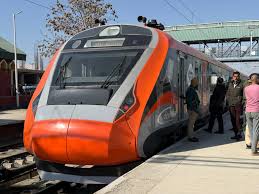
New Delhi: Union Minister for Railways Shri Ashwini Vaishnaw will flag off the extended Srinagar-Katra Vande Bharat Express service from Jammu Tawi Railway Station tomorrow, i.e. on 30th April 2026. The train, which previously operated from Srinagar up to Shri Mata Vaishno Devi Katra, will now run all the way to Jammu Tawi, bringing the country’s most modern train directly to J&K’s largest city and railway hub.

Following the flag-off, the Union Minister will subsequently inspect two of the most remarkable engineering structures on the Udhampur-Srinagar-Baramulla Rail Link (USBRL), the Anji Bridge and the Chenab Bridge.

When Prime Minister Narendra Modi flagged off the Katra–Srinagar Vande Bharat Express on 6th June 2025, the train ran with 8 coaches. Since then, the train has consistently been running at full capacity, with an overwhelming response from passengers. The decision to augment the rake to 20 coaches is a direct response to that demand, more than doubling the train’s seating capacity at a stroke, and significantly easing the pressure on reservations and waitlists, particularly during peak pilgrimage and tourist seasons.

For pilgrims who have watched seats sell out days in advance, for tourists planning a trip to the Valley, and for locals who rely on this service for everyday travel, the expanded rake means the train is now far less likely to turn them away. With the extension to Jammu Tawi happening simultaneously, the 20-coach Vande Bharat arrives at its largest catchment city with the capacity to match it, a train finally built to the scale of the demand it has always inspired.

While tomorrow’s flag-off marks the inaugural run, the extended Jammu Tawi–Srinagar Vande Bharat Express will enter regular service from 2nd May 2026. Two pairs of services will operate across the corridor, covering a distance of around 266 km.

The first service (Train No. 26401) departs Jammu Tawi at 6:20 AM, halts at Shri Mata Vaishno Devi Katra, Reasi, and Banihal, arriving at Srinagar at 11:10 AM, a journey of four hours and fifty minutes. Its return (Train No. 26402) leaves Srinagar at 2:00 PM and reaches Jammu Tawi by 6:50 PM. This pair runs six days a week, except Tuesday.

The second service (Train No. 26404) departs Srinagar at 8:00 AM, halts at Banihal and Katra, and arrives at Jammu Tawi by 12:40 PM. Its return (Train No. 26403) departs Jammu Tawi at 1:20 PM and reaches Srinagar by 6:00 PM. This pair runs six days a week, except Wednesday.

Together, the two pairs ensure that passengers have a morning and an afternoon Vande Bharat option from both ends of the corridor on most days of the week, giving travellers meaningful flexibility in planning their journeys.

Extending the Vande Bharat’s run from Katra all the way to Jammu Tawi is a straightforward but consequential change for ordinary travellers across the entire J&K region. Until now, pilgrims and passengers arriving at Jammu Tawi Railway Station, which is one of the busiest railheads in northern India, connecting trains from Delhi, Mumbai, and beyond had to change trains or arrange separate road transport to reach Katra. With the extension, they will be able to board the Vande Bharat directly at Jammu Tawi and reach the Vaishno Devi base camp at Katra, and travel onwards all the way to Srinagar, without a single interchange.

The same seamless journey works in the other direction too. A traveller boarding at Srinagar will now be able to reach Jammu Tawi in a single, unbroken ride, connecting directly to the national rail network.

The Pilgrim: A Blessed Journey Made Easier

For the millions of devotees who travel each year to seek the blessings of Shri Mata Vaishno Devi, this extension removes a persistent inconvenience, the mandatory interchange at Katra. Until now, a pilgrim had to alight at Katra and board a separate Vande Bharat to continue onward, or vice versa. That break in journey is now eliminated. More significantly, for the growing number of pilgrims who combine the Vaishno Devi darshan at Katra with the Amarnath Yatra, whose base camps at Pahalgam and Baltal are accessed from Srinagar, the entire pilgrim circuit of J&K is now achievable on a single, unbroken rail journey, without a change of train, a second reservation, or the anxiety of a missed connection.

For the Indian and international tourist, this extension opens an entirely new way to experience Jammu & Kashmir. A visitor flying into Jammu can now board the Vande Bharat at Jammu Tawi and ride through some of the most breathtaking terrain on the subcontinent, past the Shivalik foothills, across the engineering marvel of the Chenab and Anji bridges, through tunnels carved into the Himalayan rock and arrive in Srinagar, ready to experience the Dal Lake, the Mughal Gardens, and the legendary hospitality of the Valley. No highway delays, no mountain road anxiety, no weather-dependent road closures.

The extension is expected to give a significant boost to tourism across the entire J&K corridor, making the region accessible to a far broader segment of travellers who may have been deterred by the logistics of the journey.

The Local Commuter: Years of Interchanges, Now Gone

For residents of Jammu, Katra, Reasi, and the Kashmir Valley, the extension addresses a long-standing inconvenience. A student from Srinagar travelling to Jammu for college, a government official commuting between the two capitals of J&K, a patient travelling to a hospital in Jammu, all of them previously had to break their journey at Katra and arrange onward transport. That interchange is now eliminated.

Crucially, this matters most in winter. When heavy snowfall blocks the Jammu-Srinagar National Highway, sometimes for days at a stretch, the railway corridor becomes a lifeline. The Vande Bharat, designed to operate in temperatures as low as minus 20 degrees Celsius with heated windshields, advanced heating systems, and all-weather components, will provide a reliable, weather-proof link between the Valley and the rest of the country at precisely those moments when road travel becomes impossible or dangerous.

The Trader, the Artisan, the Businessperson: Commerce at High Speed

Kashmir’s economy runs on its crafts, the pashmina shawls, walnut wood carvings, hand-knotted carpets, and saffron that find buyers across India and the world. Artisans and traders from the Valley have long grappled with the cost and uncertainty of moving goods and themselves between Srinagar and Jammu. A faster, more reliable, and more affordable rail connection directly cuts the time and cost of doing business.

A Kashmiri artisan heading to a trade fair in Jammu, a fruit exporter from the Valley coordinating a consignment, a textile businessman from Jammu sourcing handicrafts in Srinagar, each of them will find the extended Vande Bharat service a meaningful improvement in the economics of their work. The connectivity also opens up possibilities for smaller traders and entrepreneurs who previously found the journey too cumbersome to make frequently.

Key intermediate stations on the route will also see enhanced connectivity, giving businesses and communities in these towns direct access to both Jammu and Srinagar without changing trains.

Anji and Chenab: Where Engineering Meets the Himalayas

During his visit, the Union Minister will inspect the Anji Khad Bridge, India’s first cable-stayed railway bridge, rising 331 metres above the Anji River valley and anchored by 96 high-tensile cables. He will also inspect the Chenab Rail Bridge, the world’s highest railway arch bridge at 359 metres above the riverbed, taller than the Eiffel Tower. Both structures are the backbone of the USBRL, the 272-km project through the Himalayas that now makes this extended Vande Bharat service possible.

A Decade of Rail Transformation in J&K

The extension of the Vande Bharat to Jammu Tawi is the latest milestone in a decade-long effort to transform railway connectivity in Jammu & Kashmir. The Udhampur-Katra section was commissioned in 2014. The Kashmir Valley saw its first electric train in February 2024. A dedicated Jammu Railway Division was created in January 2025. Stations at Jammu Tawi, Katra, Udhampur, and Budgam are being redeveloped under the Amrit Bharat Station Scheme. The USBRL, built at a total cost of ₹43,780 crore with 36 tunnels spanning 119 km and 943 bridges, is the connective tissue that makes all of it possible.

When Prime Minister Narendra Modi flagged off the first Vande Bharat on this corridor last year, it was a historic moment. Tomorrow’s extension to Jammu Tawi takes that history forward and brings its benefits to millions more.

IGP Kashmir promotes 1785 officials to their next ranks

0

KD News Desk

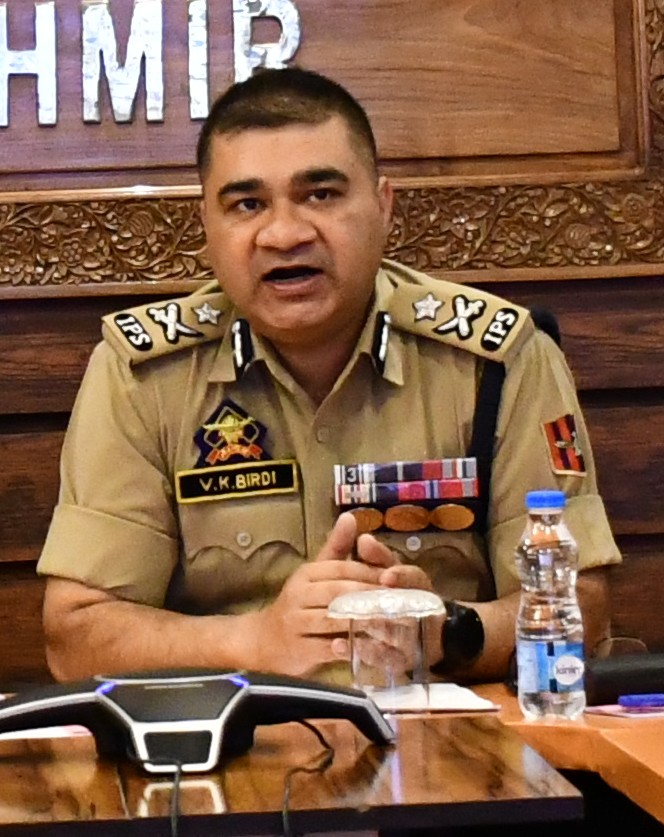
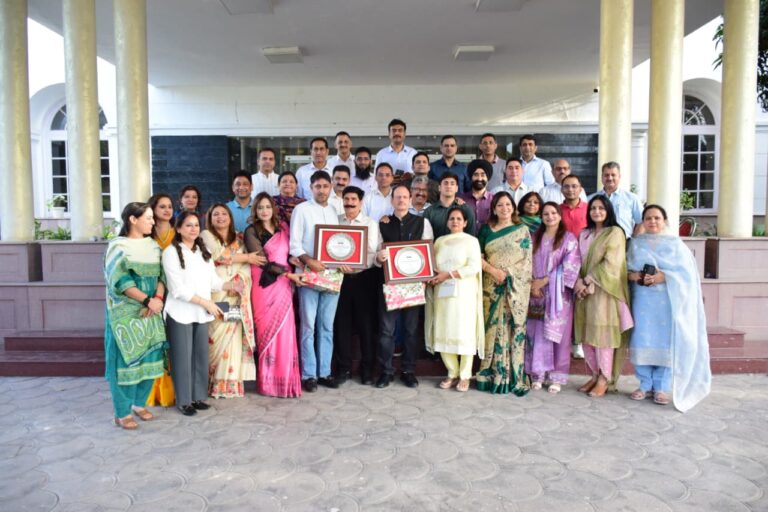
April 29: Departmental promotion committee constituted under the chairmanship of IGP Kashmir Shri V.K. Birdi for assessing the suitability of eligible HCs, SgCts and Constables for their elevation to the next ranks has approved promotion of 1785 officials including 300-HCs, 1020-SgCts & 465-Cts to the rank of ASI, HC and SgCts respectively.

IGP Kashmir has felicitated the promoted officials/their families and expressed the hope that they will strive to work hard for maintaining of public peace, tranquillity and law & order in the Union territory of J&K.

CERT-In Hosts ‘SAMVAAD 2026’ to Strengthen India’s Cybersecurity Audit Ecosystem

0

Vinod Bhat

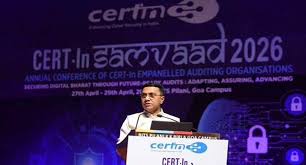
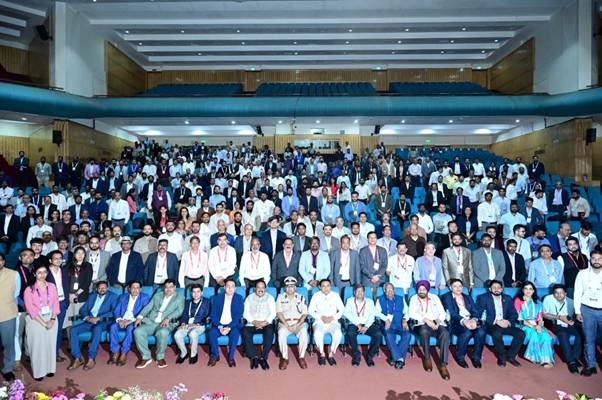
New Delhi: To advance India’s cybersecurity audit ecosystem and bolster the nation’s overall cyber resilience, CERT-In successfully hosted a three-day National Annual Conference — “CERT-In SAMVAAD 2026” — bringing together over 500 delegates, including policymakers, Chief Information Security Officers (CISOs) from industry and regulatory bodies, representatives from CERT-In Empanelled Auditing Organisations and cybersecurity professionals from across the country.

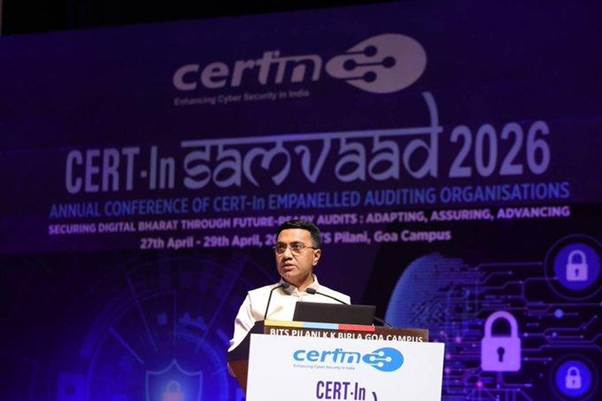
The conference was organised in association with BITS Pilani, Goa and held from April 27 to April 29, 2026, at the BITS Pilani K. K. Birla Goa Campus. The theme of the conference was “Securing Digital Bharat through Future-Ready Audits: Adapting, Assuring, Advancing”.

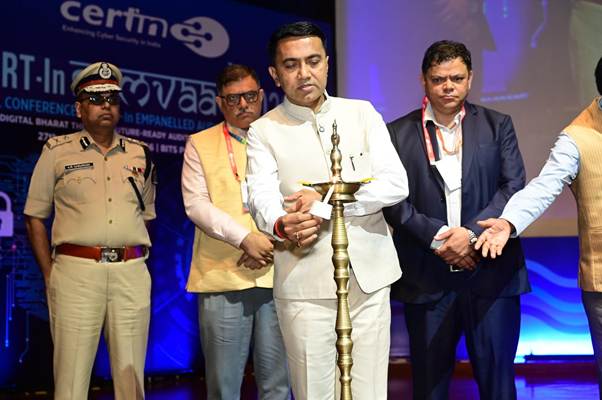
The inaugural ceremony was graced by Dr. Pramod Sawant, Chief Minister of Goa. The conference was conceived and executed under Dr. Sanjay Bahl, Director General, CERT-In and had in attendance Shri K. R. Chaurasia, IPS, Inspector General of Police, Goa; Shri S. S. Sarma, Senior Director, CERT-In; Prof. Suman Kundu, Director, BITS Pilani, K. K. Birla Goa Campus; Dr. Nirupam Mehrotra, Director, Bankers Institute of Rural Development (BIRD), Lucknow; Shri Ashutosh Bahuguna, Scientist ‘E’ and Team Lead Assurance, CERT-In; Shri Shashi Dharan, Managing Director, Bharat Exhibitions; and Shri Abhishek Solanki, Scientist ‘D’, CERT-In.

In his inaugural address, Dr. Pramod Sawant, Chief Minister of Goa, noted that while Goa has traditionally been celebrated for its “Sun, Sand and Sea,” the state is now emerging as a hub for cybersecurity as well. He observed that delegates from across the country and beyond had gathered not only to experience Goa’s scenic beauty, but also to engage in meaningful deliberations on securing India’s digital future. He highlighted the critical role played by CERT-In as India’s nodal cybersecurity agency in guiding national cybersecurity preparedness.

In his keynote address, Shri Sarma, Senior Director, CERT-In underscored the significance of the event and emphasised the importance of collaboration in addressing evolving cyber threats. He noted that SAMVAAD 2026 offers a vital platform for auditing organisations to upgrade their practices, exchange knowledge and collectively contribute to building a more cyber-resilient India.

Prof. Suman Kundu, Director, BITS Pilani, K. K. Birla Goa Campus, spoke about the evolving cyber threat landscape facing Indian organisations and stressed the urgent need to strengthen cybersecurity audits to protect digital infrastructure, vital systems and sensitive data. Expressing appreciation for CERT-In’s initiative, he conveyed confidence that the conference would empower Information Security Auditing Organisations to enhance their capabilities and elevate audit standards.

Ms. Revati Kumar, Chief Executive Officer and Executive Director, Goa Electronics Limited delivered a special address highlighting the initiatives undertaken by the Government of Goa and outlining a forward-looking roadmap for collaboration with CERT-In to strengthen the state’s cyber resilience.

The event witnessed several landmark developments in the cybersecurity domain. These included the launch of AMBAK (Audit Monitoring, Benchmarking, Analysis and Kinetic Interventions) and launch of progress reports by the Working Groups on emerging domains. Additionally, CERT-In, in collaboration with BIRD and NABARD, introduced an advanced cybersecurity certification course for Rural Financial Institutions (RFIs), reflecting a strong commitment to skill development, institutional capacity building and the enablement at grassroot level.

A highlight of the event was a panel discussion on “Auditing the Future: Securing Emerging Technologies through Next-Generation Cybersecurity Audits,” moderated by Shri S. S. Sarma. The panel featured distinguished representatives from the Reserve Bank of India (RBI), the Satcom Industry Association of India, CRIS, BSE Limited and Airtel Payments Bank. Senior government officials and leading industry experts also delivered a series of insightful sessions throughout the conference.

The three-day programme featured parallel management and technical tracks, with over 87 presentations selected from more than 200 submissions, representing cutting-edge cybersecurity audit practices. Topics covered included the cybersecurity of space assets such as UAVs and satellites; emerging tools for automated audits; securing next-generation technologies including IoT, AI driven cyber risks such as emerging frontier AI models with advanced cyber capabilities, blockchain and quantum communication & Post Quantum Cryptography (PQC); SBOM, CBOM, QBOM and HBOM implementation; AI driven red teaming methodologies; supply chain audits; and innovative approaches to auditing complex environments such as cloud systems, APIs and operational technology.

Participants gained deep insights into the latest trends, tools and methodologies shaping the future of cybersecurity audits. Key learnings spanned emerging automation tools, strategic risk management, audit frameworks and adaptive approaches for assessing complex digital environments. Delegates left with actionable strategies for strengthening cybersecurity audit readiness with a particular emphasis on proactive risk assessment, resilience testing, process automation, compliance strengthening and continuous improvement in audit quality.

Rising Theft in Srinagar: A Call for Heightened Police Vigilance

0

The recent surge in theft cases across Srinagar has become a matter of grave concern for residents, demanding immediate and decisive intervention from law enforcement authorities. Over the past few days, multiple neighborhoods have reported a sharp increase in burglaries, with a particularly alarming concentration in the locality of Yayil Rawalpora. The nature, frequency, and pattern of these incidents suggest a troubling trend that cannot be ignored.

What distinguishes these thefts is not merely their frequency, but the profile of those allegedly involved. In many reported cases, drug addicts have been identified as the primary culprits. This points toward a deeper, systemic issue—one that intertwines crime with the growing menace of substance abuse. Individuals struggling with addiction often resort to theft as a means to sustain their dependency, creating a cycle that harms both themselves and society at large.
The items being targeted further underline the vulnerability of certain properties. Under-construction houses have emerged as easy targets for these thieves, who have looted electricity wires, bathroom sanitary fittings, and other essential accessories. Such materials, though seemingly mundane, carry significant value in local scrap markets, making them attractive for quick resale. The financial loss to property owners is substantial, often setting back construction timelines and increasing costs.
Yayil Rawalpora, in particular, has witnessed repeated incidents in a short span of time, leaving residents anxious and frustrated. The sense of insecurity is palpable, as people fear that their investments and properties are no longer safe, even in developing residential areas. This situation calls for urgent and sustained action from the police and other concerned agencies.
It is imperative that the police increase patrolling, especially during night hours, in vulnerable and under-construction zones. Establishing regular checkpoints, deploying plainclothes officers, and utilizing surveillance technologies such as CCTV monitoring can significantly deter criminal activity. Moreover, swift investigation and strict action against those involved will send a strong message that such acts will not be tolerated.
However, enforcement alone is not enough. There is a pressing need for a coordinated approach that also addresses the root cause—drug addiction. Rehabilitation programs, awareness campaigns, and stricter control over the supply of narcotics must go hand in hand with policing efforts. Without tackling the underlying issue, thefts driven by addiction are likely to persist.
Community involvement can also play a vital role. Residents must remain vigilant, report suspicious activities promptly, and consider securing construction sites with basic protective measures such as boundary fencing and lighting. A collaborative effort between citizens and law enforcement can create a stronger, more resilient defense against such crimes.
The rising wave of theft in Srinagar, particularly in Yayil Rawalpora, is a wake-up call. It highlights not only gaps in security but also deeper societal challenges that require immediate attention. The police must act decisively to restore public confidence and ensure the safety of property and lives. At the same time, a broader strategy addressing drug abuse will be essential in curbing this disturbing trend for the long term.
The time to act is now—before the situation escalates further and erodes the sense of security that every citizen rightfully deserves.

J&K Govt Approves 18% Fare Hike for Public Transport; Fresh Rates Notified Across All Vehicle Categories

0

Fixed Rates for E-Rickshaws & E-Autos Notified Separately; ₹15/km for E-Rickshaws, Slab-Based Fare for E-Autos at ₹25/km

Srinagar, Apr 29: The Jammu and Kashmir Government has approved a significant revision in public transport fares, announcing an 18 percent hike across multiple categories of commercial passenger vehicles in the Union Territory.

According to a notification issued by the Transport Department, the Transport Commissioner, J&K has been directed to fix the revised maximum chargeable fares in accordance with the approved hike, which will be applicable over and above the rates notified earlier under SRO-97 dated March 19, 2021.

The revised fare structure will cover a wide range of commercial passenger vehicles, including big buses, medium and mini buses operating as stage carriages, as well as various categories of taxis and maxi cabs. These include base model contract carriage vehicles such as Sumo, Bolero, Tata Indica, Swift, Tata Winger and Tempo Traveller, along with medium segment tourist vehicles like Scorpio and Xylo, and premium class vehicles including Innova and Fortuner.

In addition, the 18 percent fare hike will also apply to petrol-driven auto-rickshaws and Tata Magic vehicles operating as stage carriages, thereby impacting daily commuters across both urban and rural areas.

Meanwhile, the government has separately notified fare rates for electric vehicles operating in the Union Territory. As per the order, e-rickshaws will charge ₹15 per kilometre, while e-autos will charge ₹25 for the first kilometre and ₹20 for each subsequent kilometre.

The notification has been issued under the provisions of Section 67 of the Motor Vehicles Act, 1988, partially modifying the earlier fare notification. Officials said the move is aimed at rationalising transport fares in view of prevailing operational costs and ensuring sustainability of public transport services.

The order has been issued by Secretary to Government, Transport Department, Dr. Piyush Singla (IAS), and necessary directions have been passed to ensure its implementation across the Union Territory.

Authorities have advised commuters and transport operators to adhere to the revised fare structure once formally implemented by the Transport Commissioner.