spot_imgspot_img
spot_img
Home Blog Page 56

No pre-set limit for J&K Assembly seats!

0

*Delimitation Commission to decide Assembly strength; Commission to allocate Lok Sabha seats to J&K from Union Territories’ share; UTs can be allocated maximum 35 LS seats ; 33 % women’s reservation to become applicable after delimitation; Nominated quota in J&K Assembly to increase to 7 from existing 5 post- readjustment of seats; No affect on current Assembly*


Srinagar, Apr 14: The legislations proposed to be tabled in Parliament by the Union Government empower a delimitation commission, to be constituted by the Union Government, to determine the number and boundaries of Assembly segments in the Union Territory. The Commission will also decide Jammu & Kashmir’s share in Lok Sabha seats among the Union Territories, which have been allocated a maximum of 35 seats.

*Assembly seats*

According to the proposed amendments to the Jammu & Kashmir Reorganisation Act, 2019, the Legislative Assembly of the Union Territory of Jammu and Kashmir shall consist of such number of members, to be chosen by direct election from territorial constituencies in the Union Territory, as may be determined by the Delimitation Commission.

The proposed amendments, however, provide that the number of directly elected seats cannot be less than 114. This figure of 114 also includes 24 seats reserved for Pakistan-occupied Jammu & Kashmir.

It implies that the number of directly elected seats cannot be less than the existing 90, since the total of 114 includes the 24 seats reserved for Pakistan-occupied Jammu & Kashmir Assembly.

Unlike the post-2019 delimitation, when the number of seats was already fixed in the Jammu & Kashmir Reorganisation Act, no such restriction has been placed on the proposed Delimitation Commission.

*Nominated quota*

The proposed legislations provide that the number of women members nominated by the Lieutenant Governor shall be increased to three, but only after the readjustment of constituencies takes effect.

They also provide that the number of seats for Kashmiri migrants shall be increased to three from the existing two but this too will become applicable only after delimitation.

It means that post- delimitation LG would have powers to nominate seven members from existing five. Currently, LG is empowered to nominate five MLAs- two women, two migrants and one refugee from Pakistan Occupied Jammu & Kashmir.

This provision will become applicable only after the Delimitation Commission’s report comes into effect.

*No impact on current Assembly*

According to the proposed amendments, the readjustment shall not affect representation in the Legislative Assembly until the dissolution of the existing Assembly. It further provides that until such readjustment takes effect, any election to the Legislative Assembly may be held on the basis of the territorial constituencies existing before such readjustment.

*33 % Women Reservation*

The amendments also specify that Jammu & Kashmir will have 33 percent women’s reservation in its Assembly, but only after constituencies are redrawn through delimitation. The reservation for women will last for 15 years from the date the 106th Constitutional Amendment (2023) began, unless Parliament decides to extend it further. The reserved seats for women will not be fixed permanently; they will be rotated among different constituencies in J&K (and other States/UTs) over time.

*Lok Sabha*

The proposed laws provide that delimitation Commission will decide about Jammu & Kashmir’s share in Lok Sabha among the Union Territories and fix their boundaries.

However, the number of seats to all Union Territories cannot be more than 35, the proposed bills state. Currently, Union Territories have 19 Lok Sabha seats—(KNO)

External Affairs Minister discusses West Asia situation with counterparts from Kuwait, Israel, Singapore and Australia

0

Vinod Bhat

New Delhi: Amid the evolving West Asia situation, the Government of India remains actively  engaged in ensuring  and seamless functioning across key sectors. The following update details measures being undertaken in the areas of energy supply, maritime operations, and support for Indian nationals in the region.

Energy Supply and Fuel Availability

The Ministry of Petroleum and Natural Gas shared an update on the current fuel supply situation, outlining measures being undertaken to ensure uninterrupted availability of petroleum products and LPG amid the ongoing developments affecting the Strait of Hormuz. It was noted that:

Public Advisory and Citizen Awareness

  • Citizens are advised to avoid panic purchase of petrol, diesel and LPG, as the Government is taking all efforts to ensure availability of Petrol, Diesel and LPG.
  • Beware of rumours and rely on official sources for correct information.
  • LPG consumers are requested to use digital booking platforms and avoid visiting distributors.
  • Citizens are encouraged to use alternate fuels such as PNG and electric or induction cooktops.
  • All citizens are urged to conserve energy during their daily usage in the current; situation.

Government Preparedness and Supply Management Measures

  • Despite the ongoing geopolitical situation, the Government has ensured that 100% supply is being made to Domestic LPG, Domestic PNG and CNG (Transport).
  • For commercial LPG, priority has been given to hospitals, educational institutions. Besides this, priority has also been given to pharma, steel, automobile, seed, agriculture, etc. In addition to this, supply of 5 Kg FTL to migrant labor is also doubled based on avg. daily supply on 2nd and 3rd March 2026.
  • The Government has already implemented several rationalization measures on both the supply and demand side, including enhancing refinery production, increasing the booking interval from 21 to 25 days in urban areas and up to 45 days in rural areas and prioritizing sectors for supply.
  • Alternate fuels such as kerosene and coal have been made available to ease pressure on LPG demand.
  • The Ministry of Coal has directed Coal India and Singareni Collieries to supply additional coal to States for distribution to small and medium consumers.
  • States have been advised to facilitate new PNG connections for domestic and commercial consumers.

Coordinated Efforts with States/UTs and Institutional Mechanisms

  • State Governments are empowered under the Essential Commodities Act, 1955 and LPG Control Order, 2000 to monitor supply and act against hoarding and black marketing. Govt. of States/UTs have to play a primary role in monitoring and regulating supply situation of essential commodities including Petrol, Diesel and LPG. Govt. of India has reiterated the same via multiple letters and VCs to all States/UTs.
  • The Government of India vide letters dated 27.03.2026 and 02.04.2026 have stressed the need for proactive public communication to reassure citizens regarding adequate fuel availability. Regular review meetings are being held with States/UTs. In this context, meetings were convened on 02.04.2026 (Chaired by Secretary, MoPNG) and on 06.04.2026 (Chaired by Secretary, MoPNG along with Secretaries of I&B and Consumer Affairs), wherein the following was emphasized:
    • To issue daily press briefings and issue regular public advisories.
    • To actively monitor and counter fake news / misinformation on social media.
    • To intensify daily enforcement drives by District admin and to continue raids and inspections in coordination with OMCs
    • To issue Commercial LPG allocation orders within their States/UTs
    • To issue SKO allocation orders for additional SKO allotted to the States/UTs.
    • To promote PNG adoptions and alternate fuels.
    • To prioritise LPG supply, especially for domestic needs, and adopt targeted distribution of 5 kg FTL cylinders to ensure supply stability.
  • All States/UTs have established control rooms and district monitoring committees to curb hoarding and black marketing.
  • Many States/UTs are issuing/carrying out press briefs.

Enforcement and Monitoring Actions

  • Enforcement actions continue across the country to curb hoarding and black marketing of LPG. On 13.04.2026, more than 2,950 raids were conducted across the country.
  • Recently on 11th April 2026, Civil Supplies officials in Kerala seized approximately 500 illegally stored gas cylinders from a private gas agency premises in Attingal, Thiruvananthapuram. This raid was part of special enforcement to curb LPG black-marketing during the current LPG shortage. State departments are currently investigating the case.
  • PSU OMCs have strengthened and continued surprise inspections and imposed penalties on 232 LPG distributorships, and 56 LPG distributorships have been suspended till yesterday.

LPG Supply

Domestic LPG Supply Status:

  • LPG supply continues to be affected by the prevailing geopolitical situation.
  • No dry-outs have been reported at LPG distributorships.
  • Online LPG bookings have increased to 98% across the industry basis yesterday.
  • Delivery Authentication Code (DAC) based deliveries have increased to around 92% to prevent diversion. DAC is received on the registered mobile number of the consumer.
  • Domestic LPG cylinder deliveries remain normal against bookings.

Commercial LPG Supply and Allocation Measures:

  • Total commercial LPG allocation has been increased to about 70% of pre-crisis levels, including 10% reform-linked allocation.
  • The Government of India vide letter dated 06.04.2026 has conveyed that daily quantity of 5 Kg FTL cylinders in each State available for disbursal to migrant labourers is being doubled based on the average daily supply (Number of cylinders) to migrant labourers during 2nd-3rd March 2026 beyond the limit of 20% mentioned in letter dated 21.03.2026. These 5 Kg FTL cylinders will be at disposal of the State Government for supplying only to migrant labourers in their State with assistance of Oil Marketing Companies (OMCs).
  • Since 3rd April 2026, PSU OMCs have organised more than 4450 awareness camps for 5 Kg FTL Cylinders, wherein more than 49,300 – 5Kg FTL cylinders were also sold.
  • Recently, at one of the 5 kg FTL awareness camps organised by IOCL at Boisar Industrial Area, Palghar, Maharashtra on 12th April 2026, a good response was observed and about 800 cylinders were sold during the day.
  • Since 23rd March 2026, more than 14.3 Lakh – 5 Kg FTL cylinders have been sold.
  • On 13.04.2026, about 1.1 Lakh – 5 Kg FTL Cylinders were sold across the country against a daily average of 77000 in the month of Feb-26
  • A three-member committee of Executive Directors from IOCL, HPCL and BPCL is coordinating with State authorities and industry bodies to plan commercial LPG distribution.
  • A total of 1,31,645 MT (Equivalent to more than 69.28 Lakh of 19 Kg LPG Cylinders) of Commercial LPG has been sold since 14th March 2026.
  • On 13.04.2026, 8661 MT of Commercial LPG (Equivalent to more than 4.5 Lakh – 19 Kg cylinders) was sold.


Natural Gas Supply and PNG Expansion Initiatives

  • Consumers have been prioritized with 100% supplies to D-PNG and CNG (transport).
  • Based on available inventory and scheduled LNG cargo arrivals, the overall gas allocation to fertilizer plants has been enhanced by 5% to reach approximately 95% of their six-month average consumption, effective 09.04.2026.
  • CGD entities have been advised to prioritise PNG connections for commercial establishments such as hotels, restaurants and canteens, to address concerns regarding the availability of commercial LPG.
  • CGD companies including IGL, MGL, GAIL Gas and BPCL have offered incentives for domestic and commercial PNG connections.
  • States/UTs and Central Ministries have been requested to expedite approvals required for expansion of CGD networks.
  • The Government of India vide letter dated 18.03.2026 has offered all States/UTs additional 10% allocation of commercial LPG to States provided they can help in long term transition from LPG to PNG.
  • 21 States/UTs are already receiving additional commercial LPG allocation linked to PNG expansion reforms.
  • The Ministry of Road Transport & Highways has adopted an Accelerated Approval Framework for CGD infrastructure for 3 months to process applications on priority.
  • The Government of India vide Gazette dated 24.03.2026 has notified the Natural Gas and Petroleum Products Distribution (Through Laying, Building, Operation and Expansion of Pipelines and Other Facilities) Order, 2026 under the Essential Commodities Act, 1955. The Order provides a streamlined and time-bound framework for laying and expanding pipelines across the country, addressing delays in approvals and access to land, and enabling faster development of natural gas infrastructure, including in residential areas. It is expected to accelerate PNG network growth, enhance last-mile connectivity, and support the transition to cleaner fuels, thereby strengthening energy security and advancing India’s gas-based economy.
  • PNGRB has directed CGD entities to expedite D-PNG connections. Also, the National PNG Drive 2.0  has now been extended till 30.06.2026 to sustain momentum in PNG expansion.
  • To encourage a cleaner, more secure and self-reliant energy future, the Government of India has developed a model draft State CBG Policy. The model policy is intended to serve as a comprehensive flexible guiding framework to enable States to create their own investor-friendly and implementation-oriented ecosystem for CBG development. Those States which opt for this, will be prioritized for the next tranche of additional allocation of commercial LPG.
  • Since March 2026, about 4.40 lakh PNG connections have been gasified and about 4.88 lakh additional customers have registered for new connections.
  • Till 13.04.2026, more than 33,000 PNG consumers have surrendered their LPG connections via MYPNGD.in website

Crude Position and Refinery Operations

  • All refineries are operating at high capacity with adequate crude inventories, while sufficient stocks of petrol and diesel are being maintained.
  • Domestic LPG production from refineries has been increased to support domestic consumption.
  • The Government of India vide order dated 01.04.2026 has permitted Refining companies including Petrochemical Complexes in India to make available certain minimum quantities of C3 & C4 streams for critical sectors like Department of Pharmaceuticals, Department of Food & Public Distribution, Department of Chemicals & Petro Chemicals etc.. Provision for 800 MT/day has been made for companies related to above departments.

Retail Fuel Availability and pricing Measures

  • Retail outlets across the country are operating normally.
  • The Middle East crisis has led to an abnormal increase in crude prices; however, to protect consumers, the Government of India has reduced excise duty on petrol and diesel by ₹10 per litre.
  • The Government of India vide Gazette notification dated 11.04.2026 has increased the export levy on diesel to Rs. 55.50 per litre and on ATF to Rs. 42 per litre to ensure availability of these products in the domestic market.
  • Retail prices of petrol and diesel remain unchanged with no increase at retail outlets.

Kerosene Availability and Distribution Measures

  • An additional allocation of 48,000 KL of kerosene has been provided to States/UTs over and above regular allocation.
  • 18 States/UTs have issued SKO allocation orders, while Himachal Pradesh and Ladakh have indicated no requirement.

Maritime Safety and Shipping Operations

Necessary measures have been put in place to safeguard Indian vessels and seafarers operating in the region, by the Ministry of Ports, Shipping and Waterways. The Ministry stated that:

  • All Indian seafarers in the region are safe and no incident involving Indian-flagged vessels has been reported in the past 24 hours.
  • The DG Shipping Control Room has handled 6,292 calls and more than 13,228 emails since activation, including 219 calls and 361 emails in the past 24 hours.
  • DG Shipping has facilitated the safe repatriation of over 2,262 Indian seafarers so far, including 85 in the past 24 hours from various locations across the Gulf region.
  • Port operations across India continue normally with no congestion reported.
  • The Ministry continues to coordinate closely with the Ministry of External Affairs, Indian Missions and maritime stakeholders to ensure the welfare of Indian seafarers and uninterrupted maritime operations.

Safety of Indian Nationals in the Region

Across the region, Indian Missions and Posts remain in close contact with the Indian community, while continuing to provide assistance and issue necessary advisories for their safety and well-being. As informed by Ministry of External Affairs:

  • The Ministry of External Affairs continued its outreach to countries in West Asia.
  • External Affaits Minister spoke to the Foreign Minister of Kuwait. He discussed the regional situation and the well-being of the Indian community.
  • The Minister of External Affairs also spoke with the Foreign Minister of Israel and discussed various aspects of the conflict in West Asia.
  • Further, External Affairs Minister also spoke with the Foreign Ministers of Singapore and Australia where in they shared views on the conflict in West Asia.
  • The Government continues to closely monitor developments in the Gulf and West Asia region.
  • Ministry of External Affairs is in regular contact with State Governments and Union Territories for better sharing of information and coordination.
  • Efforts remain focused on ensuring the safety, security and welfare of the Indian community in the region.
  • Indian Missions and Posts continue to operate round-the-clock helplines and are proactively assisting Indian nationals. They remain in close contact with the local Governments.
  • Updated advisories are being issued regularly, including information on local government guidelines, flight and travel situations and consular services and various welfare measures being undertaken to support our community.
  • Our Missions remain actively engaged with Indian community associations, professional groups, Indian companies and other stakeholders in the region.
  • Our Missions are extending all assistance to the Indian crew members on vessels in the region including coordination with the local authorities and agencies, extending consular assistance, and facilitating requests to return to India.
  • Flights continue to operate from countries where airspace remains open. Since 28 February, around 9,55,000 passengers have travelled from the region to India.
  • In the UAE, airlines continue to operate limited non-scheduled commercial flights between the UAE and India based on operational and safety considerations, with around 100 flights expected today.
  • Flights continue to operate from various airports in Saudi Arabia and Oman to destinations in India.
  • With Qatar airspace partially open, Qatar Airways is expected to operate around 10 flights to India today.
  • Kuwait airspace remains closed. Jazeera Airways of Kuwait and Kuwait Airways are operating non-scheduled commercial flights from Dammam Airport in Saudi Arabia to India. Travel of Indian nationals to India from Kuwait continues to be facilitated through Saudi Arabia.
  • Bahrain airspace is open. Gulf Air is expected to begin limited flight operations from Bahrain to India soon and is currently operating non-scheduled flights from Dammam Airport in Saudi Arabia to India. Travel of Indian nationals from Bahrain continues to be facilitated through Saudi Arabia to India.
  • Embassy in Tehran has so far facilitated movement of 2,313 Indian nationals from Iran to Armenia and Azerbaijan for onward travel to India. This includes 1028 Indian students and 657 Indian fishermen.
  • Israel airspace is partially open with restricted flight operations. Travel of Indian nationals is being facilitated from Israel, through Jordan and Egypt to India.
  • Iraq airspace is open. Iraqi Airways has resumed flights to India.  Travel of Indian nationals continues to be facilitated from Iraq, through Jordan and Saudi Arabia to India.
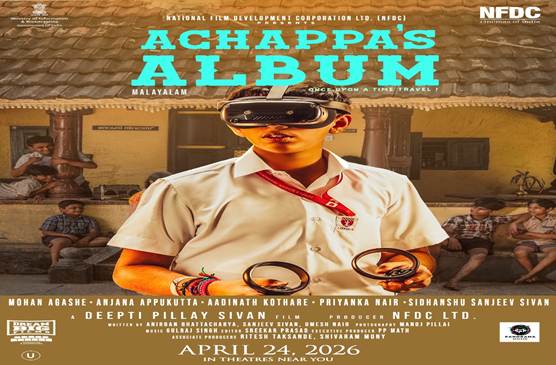
NFDC Announces Nationwide Release of its Malayalam Feature Film Achappa’s Album on 24th April 2026

0

Vinod Bhat

New Delhi: The National Film Development Corporation Ltd. (NFDC), under the Ministry of Information & Broadcasting, is set to release its latest Malayalam feature film, Achappa’s Album (Grampa’s Album). A unique combination of family fantasy, comedy, and emotion, the film explores a time-travel narrative and is scheduled to hit screens on 24 April 2026.

Directed by Deepti Pillay Sivan and written by Sanjeev Sivan, Anirban Bhattacharya, and Umesh Nair, the film explores the universal fascination with revisiting the past. The plot follows a father and son who, through an unforeseen twist of fate, begin living each other’s lives. This transformation serves as the backdrop for a poignant and humorous exploration of generational perspectives and life choices.

The film features a notable ensemble cast, including veteran actor Mohan Agashe, alongside Anjana Appukuttan, Aadinath Kothare, Priyanka Nair, and Sidhanshu Sanjeev Sivan. The technical crew boasts renowned professionals such as cinematographer Manoj Pillai, National Award-winning editor Sreekar Prasad, and music composer Gulraj Singh.

Speaking about the film, Director Deepti Pillay Sivan said, “The film explores deep human relationships through a simple yet engaging time-travel narrative. We are grateful for NFDC’s pivotal support in bringing this story to the silver screen.”

Highlighting NFDC’s role in promoting diverse cinema, Shri Prakash Magdum, Managing Director, NFDC, stated, “This film reflects our commitment to nurturing unique voices in Indian cinema. By combining an imaginative concept with emotional depth, Achappa’s Album has the potential to resonate with audiences across all generations.”

The first glimpse teaser is currently available on NFDC’s social media platforms, with the official trailer expected to be released shortly. The teaser may be viewed [https://www.youtube.com/watch?v=G6WDgZNA5u8].

J&K: US-based KCF shuts down operations citing lack of approvals from ‘competent authorities’ Srinagar,

0

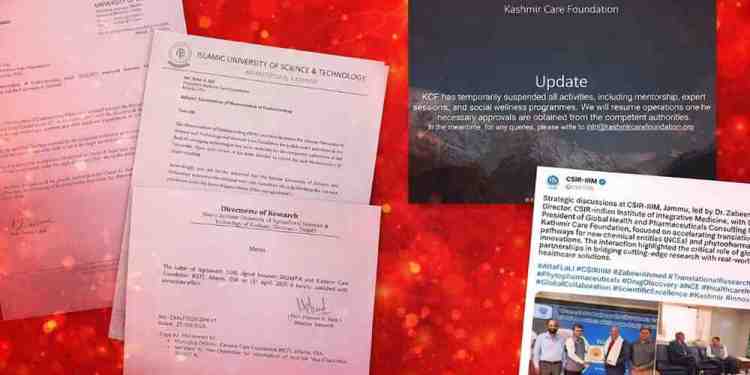
Srinagar, April 14: The US-based Kashmir Care Foundation (KCF) has announced a total suspension of its activities in Jammu and Kashmir, citing the need for mandatory clearances from “competent authorities” before resuming operations. This move follows a wave of disassociations by multiple universities in the Union Territory, even as a social media post highlighting the organization’s recent interaction with the CSIR-Indian Institute of Integrative Medicine (CSIR-IIIM), Jammu, remains online.


The announcement comes close on the heels of decisions by four prominent institutions in Kashmir—the University of Kashmir, Islamic University of Science and Technology, Sher-e-Kashmir University of Agricultural Sciences and Technology Kashmir, and Sher-i-Kashmir Institute of Medical Sciences—to terminate Memoranda of Understanding (MoUs) signed with the US-based NGO.

Official sources indicate the crackdown was triggered by intelligence agencies flagging KCF’s activities. The UT administration has reportedly taken a “serious view” of the fact that these academic agreements were finalized without the mandatory security and intelligence clearances required for foreign entities.

Security officials expressed concerns that the platforms created for STEM workshops and seminars could potentially be utilized as “soft channels” to disseminate specific ideological narratives. A detailed probe is currently underway to determine how multiple state institutions entered into these formal partnerships without exhaustive vetting of the NGO’s credentials.

The Kashmir Care Foundation, founded in 2025 and headquartered in Atlanta, describes itself as a non-profit, non-religious, and apolitical organization. Within a short span, it had secured institutional tie-ups across key sectors of higher education and healthcare in Kashmir, positioning itself as a platform for knowledge exchange and global academic linkages.

Despite the widespread cancellations and the KCF’s own suspension, a digital footprint of the organization’s high-level engagement remains active. As of April 14, a social media post dated April 11 from the CSIR-Indian Institute of Integrative Medicine (CSIR-IIIM), Jammu, remains online. The post details “strategic discussions” between CSIR-IIIM Director Zabeer Ahmed and KCF representative Altaf Lal regarding pharmaceutical innovation.

https://x.com/csiriiim/status/2042957545468498155?s=20

Notably, the post has been further amplified through reposts by senior functionaries and scientists of the institute and remains in circulation even as the organization at the center of the engagement has suspended its activities and faces official scrutiny. (KDC)

When Words Became Light: A Literary Confluence at Kreeri Rekindles Kashmir’s Cultural Soul

0

KD NEWS SERVICE

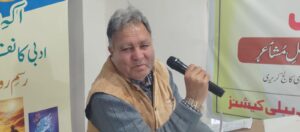
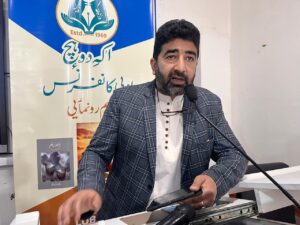
KREERI-BARAMULLA, April 13: Beneath the soft spring sky of Kreeri, where memory often lingers in whispers of verse and fragments of forgotten prose, a rare and stirring literary awakening took shape within the serene environs of Degree College Kreeri. What unfolded was not merely a formal gathering, but an evocative return to Kashmir’s timeless companionship with literature—a celebration where words were not spoken alone, but felt, remembered, and revived.

Orchestrated by the Kruhan Cultural Forum under the stewardship of its president Syed Shameem Ahmad Shameem, the event brought together an assembly of poets, writers, scholars, and lovers of literature, all bound by a shared reverence for the written word. In a Valley where literary traditions once flourished in every gathering and courtyard, the occasion felt like the rekindling of a long-dormant flame—fragile, yet luminous with possibility.

Presiding over the congregation was the eminent writer Dr. Ghulam Nabi Haleem, whose address rose beyond speech into reflection. He spoke of literature as the conscience of society, as a quiet yet enduring force that preserves identity even in times of upheaval. His words carried both concern and conviction—that the erosion of literary culture is not merely a loss of language, but a fading of collective consciousness itself. In his voice was an appeal—not loud, yet deeply urgent—for the revival of a culture that once defined the intellectual rhythm of Kashmir.

The gathering reached a deeply poignant moment with the remembrance of Manzoor Hashmi, whose legacy was honoured posthumously with the prestigious Khillat-e-Karohan Award. In that solemn tribute, grief and gratitude coexisted, as the audience reflected on a life devoted to the service of literature—one that continues to breathe through every word he left behind.

In a seamless continuation of this homage, several distinguished literary figures were conferred with the Sharaf-e-Karohan Award. Fayaz Tilgami, Syed Nazir Hussain, Shad Dardpuri, Nooruddin Hosh, Syed Saaduddin Saadi, and Tanha Nizami were each honoured for their enduring contributions. Their felicitation was not a mere formality; it was a recognition of years spent in quiet dedication—of ink that flowed not for acclaim, but for the preservation of thought, language, and identity.

If the honours evoked memory, the release of books breathed life into the present. The unveiling of Sehrai Safar by Syed Nazir Hussain opened a window into journeys that traverse both landscape and emotion, while Xchur Halam by Rafiq Tahir Kaw Chaki carried within it the subtle rhythms of lived experience. Equally significant was the edited volume on Mir Syed Hussain Wasif (RA), compiled by Syed Saaduddin Saadi—a work that stands as an act of preservation, safeguarding spiritual and intellectual heritage from the erosion of time.

As the pages were unveiled and gently turned, it became evident that this was more than a ceremonial release. Each book was a continuation of a narrative that refuses to be silenced—a reminder that literature in Kashmir has never merely existed; it has endured.
Throughout the gathering, a shared concern found expression in different voices—the gradual fading of organized literary engagement and the urgent need to revive it. The Kruhan Cultural Forum, through this initiative, emerged not just as a sponsor, but as a custodian of cultural memory, striving to create spaces where words can once again find community, and where young voices can rise to meet the echoes of the past.

The proceedings, gracefully conducted by Jahangir Bukhari, unfolded with quiet elegance, allowing each moment its rightful pause and reflection. Yet, what lingered beyond the formal conclusion was something intangible—a sense that literature, long subdued, had begun to breathe again.

As dusk descended upon Kreeri, the gathering did not dissolve into silence. Conversations lingered like unfinished verses, books were held close as if they carried more than ink, and somewhere in that quiet dispersal, new stories had already begun to take shape.
For on this day, in this modest corner of Kashmir, literature was not merely celebrated—it was remembered, reclaimed, and gently returned to the people who have always belonged to it.

Director Info felicitates Winners of ‘Talent Vista-Poster Making, Slogan Writing Competition on Nasha Mukt Abhiyaan’

0

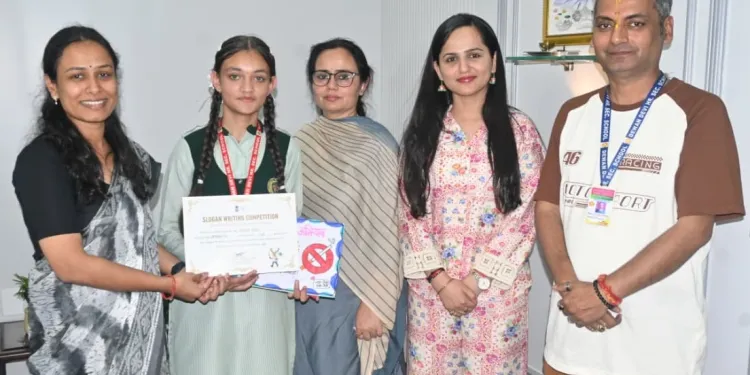
JAMMU, APRIL 13: Director Information, Shreya Singhal  today felicitated the winners of the ‘Talent Vista-Poster Making and Slogan Writing Competition on  Nasha Mukt Abhiyaan’ at Media Complex here.

Speaking on the occasion, the Director Information congratulated the winners and applauded all participants for their exceptional creativity and commitment towards the social cause. She emphasized that such awareness campaigns play a crucial role in sensitizing society, especially the younger generation, about the harmful effects of drug addiction and the need for collective efforts to eradicate this menace.

The Director further reiterated the Administration’s commitment to strengthening public outreach initiatives under the Nasha Mukt Abhiyaan. She encouraged the participants and young minds to continue participating in awareness-driven activities that contribute positively to society.

The Director presented certificates and mementos to the winners for their creative efforts and meaningful contributions towards spreading awareness against drug abuse.

Pertinently, the competition  witnessed more than 3600 entries across Jammu and Kashmir. Sneha Devi from Dewan Devi Public School won in Slogan Writing while as  Priya Rathore from Udhampur  achieved first rank in poster making competition.

Information Officers Maheer Thakur and Alka Mishra were also present during the felicitation ceremony.

Seasonal rainfall over the country is likely to be 92% of LPA with a model error of ± 5%

0
Vinod Bhat

New Delhi: Since 2003, India Meteorological Department (IMD) has been issuing the operational long-range forecast (LRF) for the southwest monsoon seasonal (June-September) rainfall averaged over the country in two stages. The first stage forecast is issued in April and the second stage or update forecast is issued bythe end of May. In 2021, IMD has implemented a new strategy for issuing monthly and seasonal operational forecasts for the southwest monsoon rainfall over the country by modifying the existing two stage forecasting strategy. The new strategy uses both dynamical and statistical forecasting system. Multi-Model Ensemble (MME) forecasting system based on coupled global climate models (CGCMs) from different global climate prediction centres, including IMD’s Monsoon Mission Climate Forecast System (MMCFS) are used in dynamical forecast system.

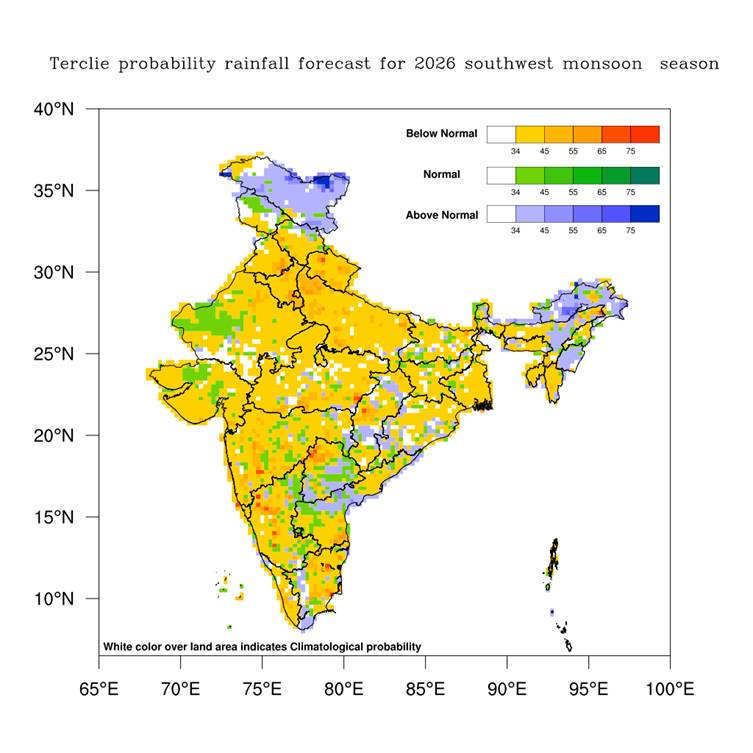
As per the new LRF strategy, the first stage forecast issued in middle of April consists of quantitative and probabilistic forecasts for the country as a whole, and the spatial distribution of probabilistic forecasts for the tercile categories (above normal, normal, and below normal) of the seasonal (June-September) rainfall over the country.

In the second stage forecast issued around end of May consist of update for the seasonal rainfall forecast issued in April along with the probabilistic forecasts for the seasonal rainfall over the four homogenous regions of India (northwest India, central India, south Peninsula, and northeast India) and monsoon core zone (MCZ).  In addition, quantitative and probabilistic forecasts for the country, and the spatial distribution of probabilistic forecasts for the tercile categories (above normal, normal, and below normal) of the June rainfall over the country are also issued during the second stage forecast.

In continuation to the above forecasts, monthly rainfall forecast is issued around end of June, July, and August respectively for the subsequent one month. In addition, quantitative and probabilistic forecasts for the country, and the spatial distribution of probabilistic forecasts for the tercile categories for the second half of the season rainfall is issued around end of July along with the forecast for August.


1.Forecast for the 2026 Southwest monsoon Season (June–September) rainfall over the country.

The forecast based on both dynamical and statistical models suggests that quantitatively, the monsoon seasonal rainfall is likely to be 92% of the Long Period Average (LPA) with a model error of ± 5%.  The LPA of the seasonal rainfall over the country for the period 1971-2020 is 87 cm.

The five-category probability forecast for the Seasonal (June to September) rainfall over the country is given below. The forecast indicates that the probabilities for both below normal and deficient rainfall categories are higher than their respective climatological probabilities. The forecast probabilities for the “Above Normal” and “Excess” rainfall categories are lower than their respective climatological probabilities. Overall, the Southwest Monsoon seasonal rainfall over the country is most likely to be below normal (90–95% of LPA).


Category Rainfall Range

(% of LPA)

Forecast Probability (%) Climatological

Probability (%)

Deficient < 90 35 16
Below Normal 90 – 95 31 17
Normal 96 -104 27 33
Above Normal 105-110 6 16
Excess > 110 1 17


The MME forecast for the 2026 southwest monsoon seasonal rainfall was prepared based on the April initial conditions and using a group of coupled climate models that having highest prediction skill over the Indian monsoon region.

The spatial distribution of probabilistic forecasts for tercile categories (above normal, normal, and below normal) for the seasonal rainfall (June to September) is shown in Fig.1. The spatial distribution suggests that the below-normal seasonal rainfall is most likely over many parts of the country except some areas over Northeast, Northwest, and South Peninsular India, where normal to above-normal rainfall is likely. The white-shaded areas within the land area represent no signal from the model.


2.Sea Surface Temperature (SST) Conditions in the equatorial Pacific & Indian Oceans

At present, Weak La Niña–like conditions are transitioning to ENSO-neutral conditions over the equatorial Pacific. However, some atmospheric circulation features across the tropical Pacific remain consistent with weak La Niña–like conditions. The latest forecasts from the Monsoon Mission Climate Forecast System (MMCFS) suggest that ENSO-neutral conditions are most likely to continue during the April to June 2026 season. The Monsoon Mission Climate Forecast System (MMCFS) suggests the development of El Niño conditions during the SW Monsoon season.

Currently, neutral Indian Ocean Dipole (IOD) conditions are present over the Indian Ocean and the latest Climate models forecast indicates that the positive IOD conditions are likely to develop towards the end of the southwest monsoon season.

As sea surface temperature (SST) conditions over the Pacific and the Indian Oceans are known to have a strong influence on the Indian monsoon, IMD is carefully monitoring the evolution of sea surface conditions over these Ocean basins.


3.Snow Cover over the Northern Hemisphere

The northern hemisphere snow cover extent during the last three months (January to March 2026) was slightly below normal. Winter and spring snow cover extent over Northern Hemisphere as well as Eurasia has a general inverse relationship with the subsequent southwest monsoon seasonal rainfall over the country.

Fig.1.Probability forecast of tercile categories* (below normal, normal, and above normal) of the seasonal rainfall over India during the 2026 southwest monsoon season (June -September).  The figure illustrates the most likely categories as well as their probabilities.  The white shaded areas represent no signal from the model. (*Tercile categories have equal climatological probabilities, of 33.33% each).

Centre extends PM E-DRIVE scheme to sustain EV adoption and manufacturing momentum

0

Vinod Bhat

New Delhi: As part of its ongoing outreach to keep the media informed on the evolving situation in West Asia, the Government of India convened a briefing at the National Media Centre today. Officials from the Ministries of Petroleum and Natural Gas, Ports, Shipping and Waterways, and External Affairs provided updates on fuel availability, maritime operations, assistance to Indian nationals in the region, and measures being undertaken to maintain stability across key sectors. The Ministry of Heavy Industries also shared updates regarding the heavy industries sector.

Heavy Industries Sector

Ministry of Heavy Industries accelerates electric mobility and critical mineral manufacturing amid global uncertainties. It was informed that:

  • In light of geopolitical developments in West Asia, global energy markets have witnessed heightened volatility, raising concerns over fuel price stability and potential supply chain disruptions.
  • These developments have underscored the need to reduce dependence on fossil fuels and strengthen domestic capabilities in critical minerals for clean energy technologies.
  • Since the onset of the crisis, the Ministry has undertaken coordinated measures to sustain electric mobility growth and address supply chain vulnerabilities in EV components.
  • The Ministry has approved extension of the ₹10,900 crore PM E-DRIVE Scheme to sustain EV adoption and manufacturing momentum.
  • The e-2W segment has been extended by three months up to 31 July 2026.
  • The e-3W segment, including e-rickshaws and e-carts, has been extended by two years up to 31 March 2028.
  • Policy support under the PM E-DRIVE Scheme has been streamlined to ensure continuity of incentives, boost EV adoption and promote domestic manufacturing.
  • The Union Cabinet approved on 26 November 2025 the Scheme to Promote Manufacturing of Sintered Rare Earth Permanent Magnets (REPM) with an outlay of ₹7,280 crore.
  • The scheme targets establishment of 6,000 MTPA integrated REPM manufacturing capacity in India and aims to promote domestic manufacturing of sintered REPM, strengthen supply chains for EV, defence and aerospace sectors, and as well support the Aatmanirbhar Bharat and Net Zero 2070 goals.
  • Steps are being taken to operationalise the REPM scheme to progressively enhance localisation of EV components.
  • Continuous engagement is being maintained with OEMs, component manufacturers and industry stakeholders to strengthen supply chain resilience.
  • As part of implementation, a Pre-Bid Conference was held on 7 April 2026 with participation from 25 leading companies and the Request for Proposal (RFP) was issued on 20 March 2026.
  • The bidding process is being conducted through a transparent two-cover Least Cost Selection (LCS) system on the CPP Portal.
  • These measures are supported by the ongoing Phased Manufacturing Programme (PMP) to increase domestic value addition in EV manufacturing.
  • The combined implementation of PM E-DRIVE, REPM and PMP schemes is expected to strengthen the entire EV value chain.
  • PM E-DRIVE provides demand-side support and policy certainty to OEMs for scaling production and EV adoption.
  • The REPM scheme addresses supply-side constraints by promoting domestic manufacturing of critical rare earth-based components.
  • The PMP enables phased localisation and reduces import dependence across EV sub-systems.
  • These initiatives will benefit manufacturers, MSMEs and component suppliers through increased domestic value addition, supply chain stability and investment opportunities.
  • For citizens, these measures will enhance affordability, accessibility and reliability of electric vehicles where as reduced dependence on imported fuels and components will help shield consumers from global price volatility.
  • The initiatives will contribute to cleaner air, improved public health and enhanced energy security and will support livelihood generation, particularly in e-rickshaw and last-mile delivery segments.
  • The measures are expected to accelerate EV adoption and strengthen India’s position as a global leader in clean mobility and advanced manufacturing.

Energy Supply and Fuel Availability

The Ministry of Petroleum and Natural Gas shared an update on the current fuel supply situation, outlining measures being undertaken to ensure uninterrupted availability of petroleum products and LPG amid the ongoing developments affecting the Strait of Hormuz. It was noted that:

Public Advisory and Citizen Awareness

· Citizens are advised to avoid panic purchase of petrol, diesel and LPG and rely only on official sources for information.

· Beware of rumours and rely on official sources for correct information.

· LPG consumers are requested to use digital booking platforms and avoid visiting distributors.

· Citizens are encouraged to use alternate fuels such as PNG and electric or induction cooktops.

· All citizens are urged to conserve energy during their daily usage in the current situation.

Government Preparedness and Supply Management Measures

· Despite the ongoing geopolitical situation, the Government has ensured that 100% supply is being made to Domestic LPG, Domestic PNG and CNG (Transport).

· For commercial LPG, priority has been given to hospitals, educational institutions. Besides this, priority has also been given to pharma, steel, automobile, seed, agriculture, etc. In addition to this, supply of 5 Kg FTL to migrant labor is also doubled based on avg. daily supply on 2nd and 3rd March 2026.

· The Government has already implemented several rationalization measures on both the supply and demand side, including enhancing refinery production, increasing the booking interval from 21 to 25 days in urban areas and up to 45 days in rural areas and prioritizing sectors for supply.

· Alternate fuels such as kerosene and coal have been made available to ease pressure on LPG demand.

· The Ministry of Coal has directed Coal India and Singareni Collieries to supply additional coal to States for distribution to small and medium consumers.

· States have been advised to facilitate new PNG connections for domestic and commercial consumers.

Coordinated Efforts with States/UTs and Institutional Mechanisms

· State Governments are empowered under the Essential Commodities Act, 1955 and LPG Control Order, 2000 to monitor supply and act against hoarding and black marketing of petroleum products.

· The Government of India vide letters dated 27.03.2026 and 02.04.2026 have stressed the need for proactive public communication to reassure citizens regarding adequate fuel availability. Regular review meetings are being held with States/UTs. In this context, meetings were convened on 02.04.2026 (Chaired by Secretary, MoPNG) and on 06.04.2026 (Chaired by Secretary, MoPNG along with Secretaries of I&B and Consumer Affairs), wherein the following was emphasized:

o To issue daily press briefings and issue regular public advisories.

o To actively monitor and counter fake news / misinformation on social media.

o To intensify daily enforcement drives by District admin and to continue raids and inspections in coordination with OMCs

o To issue Commercial LPG allocation orders within their States/UTs

o To issue SKO allocation orders for additional SKO allotted to the States/UTs.

o To promote PNG adoptions and alternate fuels.

o To prioritise LPG supply, especially for domestic needs, and adopt targeted distribution of 5 kg FTL cylinders to ensure supply stability.

· All States/UTs have established control rooms and district monitoring committees to curb hoarding and black marketing.

· Currently, 24 States/UTs are issuing regular press briefings.

Enforcement and Monitoring Actions

· Enforcement actions continue across the country to curb hoarding and black marketing of LPG. On 12.04.2026, more than 2250 raids were conducted across the country.

· Till yesterday, more than 1.28 lakh raids have been conducted, over 59,000 cylinders have been seized, more than 1000 FIRs have been registered, and 238 persons have been arrested.

· PSU OMCs have strengthened and continued surprise inspections and imposed penalties on 219 LPG distributorships, and 56 LPG distributorships have been suspended till now.

LPG Supply

Domestic LPG Supply Status:

· LPG supply continues to be affected by the prevailing geopolitical situation.

· No dry-outs have been reported at LPG distributorships.

· Online LPG bookings have increased to about 99% across the industry.

· Delivery Authentication Code (DAC) based deliveries have increased to around 92% to prevent diversion. DAC is received on the registered mobile number of the consumer.

· Domestic LPG cylinder deliveries remain normal.

· Most of the LPG distributorships were operating on Sunday to ensure delivery of domestic LPG cylinders to households.

Commercial LPG Supply and Allocation Measures:

· Total commercial LPG allocation has been increased to about 70% of pre-crisis levels, including 10% reform-linked allocation.

· The Government of India vide letter dated 06.04.2026 has conveyed that daily quantity of 5 Kg FTL cylinders in each State available for disbursal to migrant labourers is being doubled based on the average daily supply (Number of cylinders) to migrant labourers during 2nd-3rd March 2026 beyond the limit of 20% mentioned in letter dated 21.03.2026. These 5 Kg FTL cylinders will be at disposal of the State Government for supplying only to migrant labourers in their State with assistance of Oil Marketing Companies (OMCs).

· Since 3rd April 2026, PSU OMCs have organised more than 3450 awareness camps for 5 Kg FTL Cylinders, wherein more than 40,800 – 5Kg FTL cylinders were also sold.

· Since 23rd March 2026, more than 13.3 Lakh – 5 Kg FTL cylinders have been sold.

· A three-member committee of Executive Directors from IOCL, HPCL and BPCL is coordinating with State authorities and industry bodies to plan commercial LPG distribution.

· A total of 1,22,984 MT of commercial LPG (equivalent to over 64.72 lakh 19-kg cylinders) has been sold since 14 March 2026.

Natural Gas Supply and PNG Expansion Initiatives

· Consumers have been prioritized with 100% supplies to D-PNG and CNG (transport).

· Based on available inventory and scheduled LNG cargo arrivals, the overall gas allocation to fertilizer plants is being further enhanced by 5% to reach approximately 95% of their six-month average consumption, effective 09.04.2026.

· CGD entities have been advised to prioritise PNG connections for commercial establishments such as hotels, restaurants and canteens, to address concerns regarding the availability of commercial LPG.

· CGD companies including IGL, MGL, GAIL Gas and BPCL are offering incentives for domestic and commercial PNG connections.

· States/UTs and Central Ministries have been requested to expedite approvals required for expansion of CGD networks.

· The Government of India vide letter dated 18.03.2026 has offered all States/UTs additional 10% allocation of commercial LPG to States provided they can help in long term transition from LPG to PNG.

· 21 States/UTs are already receiving additional commercial LPG allocation linked to PNG expansion reforms.

· The Ministry of Road Transport & Highways has adopted an Accelerated Approval Framework for CGD infrastructure for 3 months to process applications on priority.

· The Government of India vide Gazette dated 24.03.2026 has notified the Natural Gas and Petroleum Products Distribution (Through Laying, Building, Operation and Expansion of Pipelines and Other Facilities) Order, 2026 under the Essential Commodities Act, 1955.

· The Order provides a streamlined and time-bound framework for laying and expanding pipelines across the country, addressing delays in approvals and access to land, and enabling faster development of natural gas infrastructure, including in residential areas. It is expected to accelerate PNG network growth, enhance last-mile connectivity, and support the transition to cleaner fuels, thereby strengthening energy security and advancing India’s gas-based economy.

· PNGRB has directed CGD entities to expedite D-PNG connections. Also, the National PNG Drive 2.0  has now been extended till 30.06.2026 to sustain momentum in PNG expansion.

· To encourage cleaner, more secure and self-reliant energy future, the Government of India has developed a model draft State CBG Policy. The model policy is intended to serve as a comprehensive flexible guiding framework to enable States to create their own investor-friendly and implementation-oriented ecosystem for CBG development. Those States which opt for this, will be prioritized for the next tranche of additional allocation of commercial LPG.

· Since March 2026, about 4.32 lakh PNG connections have been gasified and about 4.75 lakh additional customers have registered for new connections.

· Till 12.04.2026, more than 31,700 PNG consumers have surrendered their LPG connections via MYPNGD.in website

Crude Position and Refinery Operations

· All refineries are operating at high capacity with adequate crude inventories, while sufficient stocks of petrol and diesel are being maintained.

· Domestic LPG production from refineries has been increased to support domestic consumption.

· The Government of India vide order dated 01.04.2026 has permitted Refining companies including Petrochemical Complexes in India to make available certain minimum quantities of C3 & C4 streams for critical sectors like Department of Pharmaceuticals, Department of Food & Public Distribution, Department of Chemicals & Petro Chemicals etc.. Provision for 800 MT/day has been made for companies related to above departments.

Retail Fuel Availability and pricing Measures

· Retail outlets across the country are operating normally.

· The Middle East crisis has led to an abnormal increase in crude prices; however, to protect consumers, the Government of India has reduced excise duty on petrol and diesel by ₹10 per litre.

· The Government of India vide Gazette notification dated 11.04.2026 has increased the export levy on diesel to Rs. 55.50 per litre and on ATF to Rs. 42 per litre to ensure availability of these products in the domestic market.

· Retail prices of petrol and diesel remain unchanged with no increase at retail outlets.

Kerosene Availability and Distribution Measures

· An additional allocation of 48,000 KL of kerosene has been provided to States/UTs over and above regular allocation.

· 18 States/UTs have issued SKO allocation orders, while Himachal Pradesh and Ladakh have indicated no requirement.

Maritime Safety and Shipping Operations

The current maritime situation in the Persian Gulf, along with measures being undertaken to safeguard Indian vessels and crew, was also briefed. It was stated that:

· The Ministry of Ports, Shipping and Waterways, in coordination with the Ministry of External Affairs and Indian Missions, continues to actively monitor the evolving situation in the Persian Gulf region.

· All Indian seafarers in the region are safe and no incident involving Indian-flagged vessels has been reported in the past 24 hours.

· The India-flagged LPG vessel Jag Vikram has safely crossed the Strait of Hormuz on 11th April 2026.

· The vessel is carrying approximately 20,400 MT of LPG cargo with 24 seafarers onboard. It is expected to arrive at Kandla port on 14 April 2026.

· The DG Shipping Control Room has handled 6,073 calls and 12,867 emails since activation, including 20 calls and 80 emails in the past 24 hours.

· DG Shipping has facilitated the safe repatriation of over 2,177 Indian seafarers so far, including 93 in the past 24 hours from various locations across the Gulf region.

· Port operations across India continue normally with no congestion reported.

· Ports on the western coast of India have ensured that a total of 3,383 TEUs of West Asia-bound (back-to-town) containers have been received, of which 3,228 TEUs have been facilitated for return.

· The balance of only 155 TEUs is on account of shipping line operational factors, with no congestion at any port.

· The Ministry continues to coordinate closely with the Ministry of External Affairs, Indian Missions and maritime stakeholders to ensure the welfare of Indian seafarers and uninterrupted maritime operations.

Safety of Indian Nationals in the Region

Across the region, Indian Missions and Posts remain in close contact with the Indian community, while continuing to provide assistance and issue necessary advisories for their safety and well-being. As informed by Ministry of External Affairs:

· On the directions of Hon’ble Prime Minister, Ministry of External Affairs is strengthening outreach to Gulf countries.

· External Affairs Minister visited the United Arab Emirates from 11 to 12 April 2026.

· Yesterday, External Affairs Minister called-on President of United Arab Emirates, HH Mohamed Bin Zayed in Abu Dhabi and conveyed warm greetings of Prime Minister   and India’s gratitude for ensuring the well-being of the Indian community during the West Asia conflict. The minister thanked him for his guidance on further strengthening the India-UAE Comprehensive Strategic Partnership.

· External Affairs Minister also met Crown Prince of Dubai, Deputy Prime Minister and Minister of Defence of the UAE, HH Hamdan bin Mohammed during the call. He conveyed the appreciation of Government of India for ensuring the welfare of the Indian community in Dubai.

· On April 11, 2026, External Affairs Minister met DPM & FM of UAE, Abdullah Bin Zayed in Abu Dhabi. The conversation focused on the evolving regional situation and its implications. The minister conveyed deep appreciation for ensuring the well-being of the Indian community in the UAE and expressed confidence that India-UAE Comprehensive Strategic Partnership will advance further.

· External Affairs Minister started his visit to the UAE interacting with the members of the Indian Community and spoke about GOI’s efforts towards their well-being and security amidst the West Asia conflict. He appreciated their contributions to the local society during these difficult times.

· Minister for Petroleum and Natural Gas visited Qatar last week and Minister for Commerce has also interacted over phone with several of his counterparts in the Gulf.

· The Government continues to closely monitor developments in the Gulf and West Asia region.

· Ministry of External Affairs is in regular contact with State Governments and Union Territories for better sharing of information and coordination.

· Efforts remain focused on ensuring the safety, security and welfare of the Indian community in the region.

· Indian Missions and Posts continue to operate round-the-clock helplines and are proactively assisting Indian nationals.

· Updated advisories are being issued regularly, including information on local government guidelines, flight and travel situations and consular services.

· Our Missions remain actively engaged with Indian community associations, professional groups, Indian companies and other stakeholders in the region.

· Our Missions are extending all assistance to the Indian crew members on vessels in the region including coordination with the local authorities and agencies, extending consular assistance, and facilitating requests to return to India.

· Flights continue to operate from countries where airspace remains open. Since 28 February, around 9,27,000 passengers have travelled from the region to India.

· In the UAE, airlines continue to operate limited non-scheduled commercial flights between the UAE and India based on operational and safety considerations, with around 100 flights expected today.

· Flights continue to operate from various airports in Saudi Arabia and Oman to destinations in India.

· With Qatar airspace partially open, Qatar Airways is expected to operate around 8–10 flights to India today.

· Kuwait airspace remains closed. Jazeera Airways of Kuwait and Kuwait Airways are operating non-scheduled commercial flights from Dammam Airport in Saudi Arabia to India. Travel of Indian nationals from Kuwait continues to be facilitated through Saudi Arabia.

· Bahrain airspace is open. Gulf Air is expected to begin limited flight operations from Bahrain to India soon and is currently operating non-scheduled flights from Dammam Airport in Saudi Arabia to India. Travel of Indian nationals from Bahrain continues to be facilitated through Saudi Arabia to India.

· Embassy in Tehran has so far facilitated movement of 2,230 Indian nationals from Iran to Armenia and Azerbaijan for onward travel to India. This includes 987 Indian students and 657 Indian fishermen.

· Israel airspace is partially open with restricted flight operations. Travel of Indian nationals is being facilitated from Israel, through Jordan and Egypt to India.

· Iraq airspace is open. Iraqi Airways has started flights to India yesterday.  Travel of Indian nationals continues to be facilitated from Iraq, through Jordan and Saudi Arabia to India.
Sopore Student Protest Over Harassment Allegation; Teacher Suspended, FIR Filed

0

Tauseef Ahmad

Sopore, Apr 13: Tension gripped north Kashmir’s Sopore town on Monday after an alleged harassment incident involving a girl student triggered protests by students, prompting authorities to suspend classes in several institutions and initiate action against the accused lecturer.

Officials said students, particularly girls, staged protests demanding strict action against the accused, raising slogans and calling for justice. The demonstrations, however, later subsided peacefully after assurances from authorities.

Additional Deputy Commissioner (ADC) Sopore, S A Raina, said that classes at Government Higher Secondary School (GHSS) Sopore, Boys Higher Secondary School (BHSS) Sopore, and Government Degree College (GDC) Sopore will remain suspended from April 15 to April 18 as a precautionary measure in view of the situation.

Meanwhile, the Directorate of School Education Kashmir (DSEK) suspended senior Urdu lecturer of GHSS Sopore and attached him to BHSS Badugam in Gurez, Bandipora, pending inquiry. The Joint Director (North) has been appointed as inquiry officer and asked to submit a report within 15 days.

Official sources said the action followed intervention by Sopore MLA Irshad Rasool Kar, who brought the matter to the notice of Education Minister Sakina Itoo. The exact nature of the allegations could not be immediately confirmed.

Senior Superintendent of Police (SSP) Sopore, Iftikhar Tallib told media that the legal action has been initiated in the matter and an FIR has been registered against the accused teacher. “We have taken cognisance of the allegations and acted promptly. The teacher has been suspended and further investigation is underway,” he said.

He added that police teams were on the ground engaging with protesting students. “The girls were protesting, and we are in touch with them, explaining that legal action has already been taken. We hope they will understand and maintain calm,” the SSP said.

Students during protests raised slogans asserting their rights and demanding justice, with some chanting, “We will never give up… this is our women’s right.”

Former patwari convicted in 2007 bribery case, gets one-year Jail

0

Srinagar, Apr 13: A Special Anti-Corruption Court in Srinagar on Monday convicted former Patwari in a 2007 bribery case, sentencing him to one year of imprisonment and imposing a fine of Rs 10,000 for accepting a Rs 3,000 bribe to process a land mutation.

In a statement issued, a spokesperson said the special Judge, Anti-Corruption Court Srinagar, Tasleem Arif, today pronounced the judgment in case FIR No. 20/2007 of P/S VOK (now ACB). In the said case, the accused, Ghulam Qadir Bhat (then Patwari Halqa Khushipora Zainkot), son of Mohammad Ismail Bhat, resident of Narparistan Fateh Kadal, Srinagar, has been sentenced to one year of imprisonment along with a fine of Rs 10,000.

He said, the case, FIR No. 20/2007 under Section 5(2) of the Prevention of Corruption Act, 2006 read with Section 161 RPC, was registered on 01-04-2007 at Police Station VOK (now ACB), Srinagar, on allegations that the said public servant had demanded and accepted a bribe of Rs 3,000 for implementing a mutation in favour of the complainant.

The spokesperson said, during the course of the investigation conducted by Police Station VOK (now ACB), Srinagar, the charges against the accused public servant, namely Ghulam Qadir Bhat, were proved beyond doubt through oral and documentary evidence on record.

“The charge sheet was presented by PS VOK on 29-02-2008 before the Hon’ble Anti-Corruption Court, Srinagar, for judicial determination.”“The accused has been sentenced under Section 5(2) of the Prevention of Corruption Act to one year of imprisonment along with a fine of Rs 10,000. On behalf of ACB Srinagar, the case was argued by Senior Prosecuting Officer Wajahat Jameel,” he said.—(KNO)