spot_imgspot_img
spot_img
Home Blog Page 57

PM Modi addresses ‘Nari Shakti Vandan Sammelan’

0
Vinod Bhat

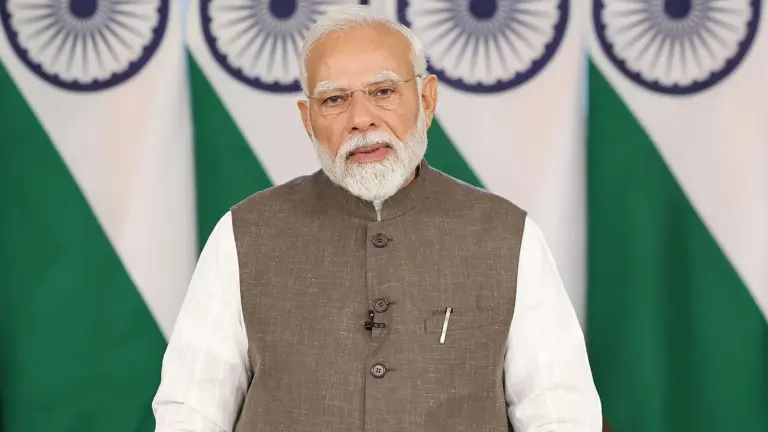
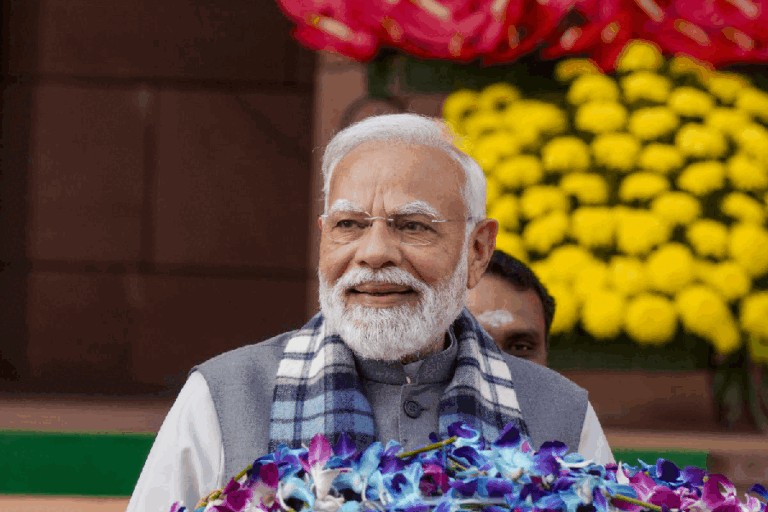
New Delhi: Prime Minister Shri Narendra Modi addressed the Nari Shakti Vandan programme at Vigyan Bhawan today. Speaking on the auspicious occasion of Baisakhi and ahead of New Year celebrations in various parts of the country, the Prime Minister also paid tribute to the martyrs of the Jallianwala Bagh massacre. “India is about to take one of the biggest decisions of the 21st century, a decision dedicated to Nari Shakti,” asserted Shri Modi.

Describing the moment as historic, the Prime Minister said the nation’s Parliament is close to creating a new history that will fulfill the visions of the past and the resolutions of the future. Emphasizing the importance of social justice, he stressed that the country envisions an egalitarian India where social justice is not merely a slogan but an integral part of the work culture. “The wait of decades, from state assemblies to the nation’s Parliament, is coming to an end,” remarked the Prime Minister.

Recalling the passage of the Nari Shakti Vandan Act in the new Parliament building in 2023, the Prime Minister noted that it was passed unanimously with all parties agreeing that it should be implemented by 2029 in any case. PM Modi remarked that the Nari Shakti Vandan Act must be implemented on time so that women’s participation strengthens our democracy, for which a special session of Parliament’s Budget Session will begin from April 16. “Our effort and priority is that this work should be accomplished through dialogue, cooperation and participation, which will enhance the dignity of Parliament,” said Shri Modi.

Acknowledging the nationwide enthusiasm among women on this issue, the Prime Minister observed that women across the country are voicing their aspirations about reaching assemblies and the Lok Sabha. Their dreams have received new wings and a positive atmosphere has been created in the country. “I appeal to all women to maintain their active participation in this entire process and meet their MPs to share their perspectives and expectations,” urged the Prime Minister.

Tracing the contribution of women from the freedom struggle to the Constituent Assembly, the Prime Minister highlighted the immense role of Nari Shakti in laying the foundation of independent India. Women who received opportunities for representation have done outstanding work for the nation. He observed that even today, in our country, from the President to the Finance Minister, Women are holding such important positions. “From President to Prime Minister, wherever women have been, they have created their own legacy,” stated Shri Modi.

Citing panchayati raj institutions as an excellent example of women’s leadership, the Prime Minister shared that over 14 lakh women are successfully working in local government bodies today. In approximately 21 states, their participation in panchayats has reached nearly 50 percent. “This active participation of lakhs of women in politics and social life surprises even the world’s leading leaders and political experts, enhancing India’s pride,” remarked the Prime Minister.

Referring to various studies, the Prime Minister pointed out that when women’s participation in decision-making processes increased, it brought sensitivity to systems. This has led to more dedicated work on issues like water, education, health and nutrition. “The success of Jal Jeevan Mission is an example where women’s participation at the panchayat level has played a major role,” said Shri Modi.

Emphasizing that lakhs of women working in local bodies and institutions for years now possess extensive experience, the Prime Minister said they are ready and eager for bigger roles. Implementing the Nari Shakti Vandan Act will become a great opportunity in the lives of all such women. “The journey from panchayat to Parliament is going to become easier,” affirmed the Prime Minister.

Highlighting the critical role of women in the Viksit Bharat journey, the Prime Minister expressed satisfaction that his government has created schemes for every stage of women’s life cycle since 2014. From the first breath to the last, the government stands ready to serve sisters and daughters with various schemes. “We launched Beti Bachao-Beti Padhao campaign to prevent female foeticide, provided Rs 5,000 financial assistance under Matru Vandan Yojana for proper nutrition during pregnancy, and started the high-interest Sukanya Samriddhi Yojana to support daughters’ education,” elaborated Shri Modi.

Detailing the comprehensive support system, the Prime Minister mentioned Mission Indradhanush for timely vaccination, toilets under Swachh Bharat Abhiyan, nearly free sanitary napkins, financial support under Khel India scheme, and opening the doors to Sainik Schools and National Defence Academy. For later stages of life, Ujjwala Yojana provided crore gas connections, Har Ghar Nal Se Jal campaign brought water to homes, free ration scheme ensured food security, and Ayushman Yojana offered health insurance up to Rs 5 lakh. “All these initiatives, including Jan Aushadhi Kendras offering up to 80 percent discount on medicines, have primarily benefited our sisters and daughters,” said the Prime Minister.

Stressing the necessity of increasing women’s economic participation for their empowerment, the Prime Minister said every decision and scheme prioritized this aspect. Previously, family property was mainly registered in men’s names, but under PM Awas Yojana, homes were registered in women’s names on a priority basis. “In the past 11 years, over 3 crore women have benefited from this decision and become owners of their homes, making them economically empowered,” remarked Shri Modi.

Addressing financial inclusion, the Prime Minister recalled that in 2014, crores of women had never seen a bank’s door. The Jan Dhan Yojana opened bank accounts for over 32 crore women. “Today our daughters are creating their identity in new businesses, with over 60 percent of Mudra Yojana loans taken by women,” stated the Prime Minister.

Highlighting women’s leadership in the startup revolution, the Prime Minister shared that over 45 percent of registered startups have at least one woman working as a director. To ensure careers are not affected, maternity leave has been extended to 26 weeks. “The results of Skill India Mission launched years ago are now visible through thousands of Drone Didis revolutionizing agriculture by teaching modern farming through technology,” said Shri Modi.

Sharing remarkable achievements, the Prime Minister informed that in the past 11 years, nearly 10 crore women have joined self-help groups. The government has set a target of making 6 crore sisters associated with rural economy into Lakhpati Didis, of which over 3 crore have already achieved this status. “These women are becoming brand ambassadors of Vocal for Local,” remarked PM Modi.

Emphasizing that the women-led development vision has challenged old mindsets, the Prime Minister said women today are touching heights in sectors once considered male bastions. Indian daughters are becoming fighter pilots and touching the skies. “India has the highest percentage of women pilots compared to any country in the world,” stated Shri Modi.

Celebrating educational achievements, the Prime Minister noted that PhD enrollment of daughters has doubled compared to 2014, with nearly half the participation in higher education and research being women. In mathematics and science education, daughters’ numbers have reached approximately 43 percent. “These achievements reflect the changing landscape of opportunities for our daughters,” affirmed the Prime Minister.

Addressing women’s safety, a major societal challenge, the Prime Minister said the government has taken strong steps in this direction. Legal reforms have been made and fast-track special courts established to make the justice system more sensitive and speed up decision-making. “The Bharatiya Nyaya Sanhita prioritizes women’s safety, simplifies FIR filing procedures allowing e-FIR or Zero-FIR from any location, and provisions for recording victim statements through audio-video,” elaborated Shri Modi.

The Prime Minister assured every mother, sister and daughter of the country that the nation understands their aspirations and is taking every necessary step to realize their dreams. The country’s Nari Shakti has touched new heights through hard work, courage and self-confidence. “We must collectively give new energy to this power and expand opportunities for them,” said the Prime Minister.

Making a special appeal, the Prime Minister urged women to take the discussions from the Nari Shakti Vandan programme to every village in the country through personal meetings and social media. The country needs to make every woman aware of this major decision so they can understand its strength, comprehend their role, and openly dream that in the coming times, they can register their presence from states to the nation’s Parliament. “Let us all together resolve that Nari Shakti will have their rights and they will become full participants in the decision-making process – this is the biggest guarantee of our bright future,” concluded Prime Minister Shri Narendra Modi.
MCA Nod Clears the Path: NSE Secures Name Reservation for National Coal Exchange of India

0

KD NEWS SERVICE

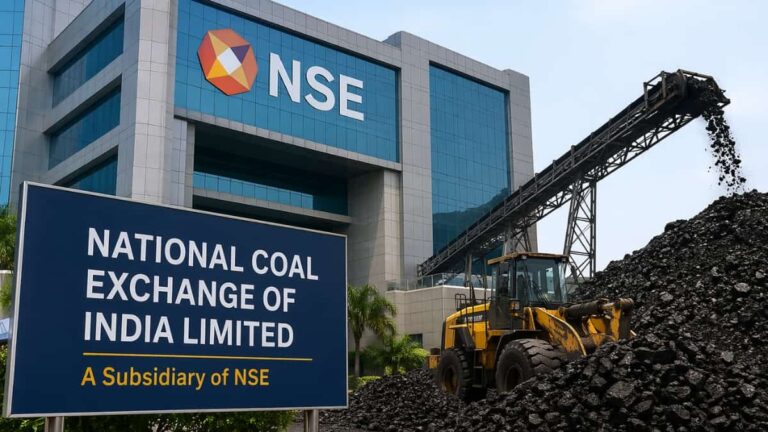
MUMBAI, April 13: In a development that promises to infuse transparency and market discipline into one of India’s most opaque commodity sectors, the National Stock Exchange of India Ltd. (NSE) has secured a crucial initial approval from the Ministry of Corporate Affairs (MCA) for the reservation of the name “National Coal Exchange of India Limited.” The green light from the central ministry, confirmed late last evening, is the first formal regulatory step toward the establishment of a dedicated, screen-based trading platform for the fuel that powers the nation’s industrial engine, even as the exchange cautioned that the approval is limited solely to the reservation of the proposed company name and does not yet constitute any form of operational or regulatory license to commence trading.

The move traces its origins to a board approval obtained by NSE in February 2026, when the exchange decided to set up a wholly owned subsidiary for the initiative, shortlisting three potential identities for the venture: “National Coal Exchange,” “Bharat Coal Exchange,” and “India Coal Exchange.” With the MCA’s decision to clear “National Coal Exchange of India Limited,” the exchange has now signaled its intent to move to the next and far more demanding phase of the regulatory journey. NSE has committed an initial capital infusion of up to ₹100 crore to back the venture, and under the proposed ownership structure, the exchange will hold a 60% stake, with the remaining 40% to be offered to other strategic shareholders, likely including coal miners, large industrial consumers, and financial institutions.

Commenting on the development, Shri Ashishkumar Chauhan, Managing Director and Chief Executive Officer of NSE, struck a tone of measured optimism, emphasizing that the name reservation, while a significant milestone, is merely the opening chapter of a longer journey. “We acknowledge and appreciate the approval received from the Ministry of Corporate Affairs for reservation of the name ‘National Coal Exchange of India Limited.’ This is a key milestone achieved, and in due course we will be taking the necessary actions for applying for the requisite license with the Coal Controller Organization in accordance with applicable regulatory requirements,” Chauhan said. His careful emphasis on “in due course” and the need for further approvals from the Coal Controller’s Organization (CCO) underscores the reality that the exchange still faces a rigorous examination of its operational framework, governance standards, and market design before it can host its first trade.

The rationale behind the proposed coal exchange is rooted in decades of inefficiency in India’s coal trading ecosystem. Despite being the world’s second-largest producer, consumer, and importer of coal, India has largely relied on a mix of long-term fuel supply agreements, discretionary e-auctions by state-controlled miners like Coal India Limited, and unregulated bilateral merchant sales. The result has been a market plagued by wide price disparities, lack of standardized quality benchmarks, poor price signals, and an almost complete absence of risk management tools for consumers such as power plants, steel mills, and cement manufacturers. The proposed National Coal Exchange of India Limited seeks to dismantle these inefficiencies by creating a transparent, market-driven, electronic platform for coal trading, potentially improving price discovery, allocation efficiency, and logistical coordination across the entire value chain. For an economy where electricity demand is growing at nearly ten percent annually, a functional coal exchange could reduce the information asymmetry that often forces state distribution companies to pay unplanned premiums for spot coal purchases.

NSE is no stranger to disruptive market infrastructure. The exchange began operations in 1994 as India’s first to implement electronic screen-based trading, effectively ending the centuries-old open-outcry system. Since 1995, it has been ranked as the largest stock exchange in India in terms of total and average daily turnover for equity shares every single year, according to Securities and Exchange Board of India (SEBI) data. NSE operates a fully integrated business model that spans exchange listings, trading services, clearing and settlement, indices, market data feeds, technology solutions, and financial services, while also overseeing compliance by trading members, clearing members, and listed companies. The exchange’s technological pedigree is globally recognized: it was the world’s largest derivatives exchange by trading volume (contracts) for the calendar year 2025, according to statistics maintained by the Futures Industry Association (FIA), and it ranked third globally in the equity segment by number of trades on the electronic order book in 2025, as per data from the World Federation of Exchanges (WFE). This deep experience in running high-throughput, reliable, and regulated electronic markets gives NSE a structural advantage in attempting to replicate that success in the physically settled world of industrial coal.

The road ahead, however, remains long and uncertain. The MCA’s name reservation is a necessary administrative formality, but the true test will come when NSE applies for the operational license from the Coal Controller’s Organization, a body that operates under the Ministry of Coal and has historically overseen a very different market structure. Key challenges include ensuring that state-owned mining companies offer sufficient volumes on the exchange to generate liquidity, building a robust warehousing and logistics framework for physical delivery of a heavy and heterogeneous commodity, and designing quality standards for grading and calorific value that can be verified through sampling and analysis. There are also open questions about whether the exchange will include a separate window for imported coal, which could help Indian buyers negotiate better global prices but would introduce foreign exchange and customs complexities. For now, the NSE has done what it does best: placed a large, well-capitalized bet on transparency and technology. The name “National Coal Exchange of India Limited” is reserved. The far more difficult work of building a market from scratch for the black fuel that moves the nation has only just begun.

TB Cases Under Watch in Pattan Block; 38 Registered in One Year

0

Bhat Lateef

Pattan, April 12:Medical Block Pattan has reported a total of 38 Tuberculosis (TB) cases between March 2025 and March 2026, reflecting continued surveillance and intervention efforts under the National TB Elimination Programme. According to official data, 16 patients have successfully completed treatment, while 22 are currently undergoing therapy with regular monitoring by health authorities.

Health officials stated that all active cases are being closely tracked, with patients receiving uninterrupted medication, follow-up care, and necessary support to ensure treatment adherence and recovery. The department has intensified measures for early detection and community-level awareness to curb the spread of TB.

Authorities have urged the public to remain vigilant and seek immediate medical attention in case of symptoms such as persistent cough, fever, weight loss, or night sweats. Community support, officials emphasized, remains crucial in helping patients complete treatment and in achieving the broader goal of TB elimination.

1,222 out of 2,262 posts lying vacant at SKIMS Soura

0

393 posts unfilled at SKIMS Bemina

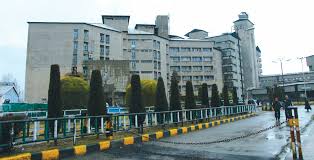
Srinagar, Apr 11 : Jammu and Kashmir’s premier tertiary care hospital, Sher-i-Kashmir Institute of Medical Sciences (SKIMS), Soura, is grappling with an acute manpower crisis, with more than half of its sanctioned posts lying vacant, raising serious concerns over patient care and healthcare delivery in the Valley.

According to details, out of a total sanctioned strength of 2,262 posts at SKIMS Soura, only 1,040 employees are currently in position, while a staggering 1,222 posts remain vacant, reflecting a shortage exceeding 50 per cent.

A further breakdown of the figures reveals that out of 250 sanctioned faculty positions, only 152 are filled, leaving 98 posts vacant. Similarly, in the paramedical category, only 518 staff members are in position against 1,303 sanctioned posts, with 785 vacancies reported.

The nursing segment is also severely affected, with just 370 staff in place out of 709 sanctioned posts, leaving 339 posts unfilled.

The alarming shortage has sparked concern among the general public, who view SKIMS Soura as the Valley’s most critical referral and tertiary care hospital.

“SKIMS is considered the last hope for patients after Allah. If such a vital institution is facing this level of staff shortage, one can only imagine the condition of hospitals in peripheral areas,” said several attendants and patients.

They added that despite the severe manpower deficit, doctors and paramedical staff continue to work tirelessly to provide treatment.

However, they noted that with such a high vacancy rate, the burden on existing staff is immense, especially as the hospital caters to thousands of patients daily. “There is tremendous pressure on the available workforce. While they are doing their best, the shortage inevitably affects efficiency and patient care. The government must take immediate steps to fill these vacancies,” they said.

Meanwhile, a similar situation persists at SKIMS Medical College Hospital, Bemina, where a significant number of posts are also lying vacant.

Out of 1,167 sanctioned posts at SKIMS Bemina, only 774 are filled, while 393 posts remain vacant.

The vacant positions at SKIMS Bemina include 70 faculty posts, 12 registrars, 6 junior residents, 23 other gazetted posts, 76 paramedical posts, 67 additional paramedical staff positions, 53 nursing posts, and 86 Class-IV posts.

The persistent vacancies in both institutions have raised questions about healthcare management and staffing policies, with stakeholders urging authorities to address the issue on a priority basis to ensure better patient care across Jammu and Kashmir—(KNO)

DPS Srinagar Promotes Fitness and Sustainability with ‘Sustainable Tomorrow’ Cross Country Run  

0

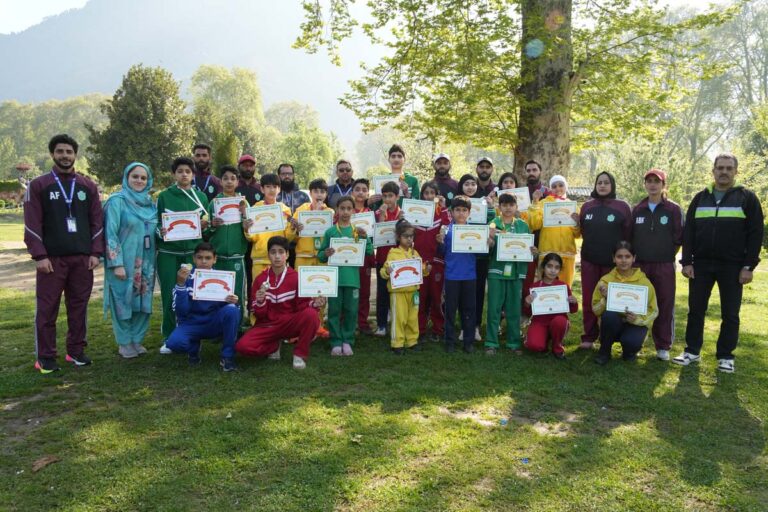
Srinagar: Delhi Public School (DPS) Srinagar successfully hosted a vibrant Cross Country Run for students of Grades 5 and 6 on Friday, April 10. Themed “Sustainable Tomorrow – Go Green,” the initiative was designed to foster physical fitness, teamwork, and environmental stewardship among the youth.

The run flagged off at the scenic Duck Park and followed the picturesque foreshore road before concluding at Nishat. Guided by dedicated teachers and sports instructors, the young participants displayed immense enthusiasm and determination. The event culminated at Nishat Garden with a celebratory ceremony where students were awarded medals and certificates for their successful completion, followed by a well-deserved refreshment spread.

In a parallel and equally inspiring event held the same morning, the school’s Learning Resource Centre (LRC) conducted a special morning run from Duck Park to Eco Park. The LRC students showcased exceptional sportsmanship and grit throughout the activity, with the winners being specially felicitated in a departmental ceremony. These dual events reflect the school’s unwavering commitment to holistic growth, inclusivity, and environmental consciousness.

“At Delhi Public School Srinagar, we believe that education extends far beyond the classroom,” stated Principal Ms. Shafaq Afshan. “Initiatives like the ‘Sustainable Tomorrow’ run are vital; they not only build physical endurance and discipline but also instil a profound sense of responsibility towards our environment in these young minds.”

Commending the successful execution of the event, Chairman Mr. Vijay Dhar remarked, “Sports and outdoor activities are foundational to shaping a child’s character. I am immensely proud of the students for their enthusiastic participation. Such events are crucial for developing the confidence, resilience, and overall development that we strive to nurture in every student.”

Kashmir Bar Associations Pledge Full Support to 100-Day Anti-Drug Campaign

0

KD NEWS SERVICE

SRINAGAR, Apr 12: The Jammu & Kashmir High Court Bar Association, Srinagar Kashmir, and the Kashmir Advocates Association have formally endorsed the 100-day “Nasha Muqt Jammu Kashmir Abhiyaan,” a mass movement launched by Lieutenant Governor Manoj Sinha on April 11, 2026, to eradicate drug addiction and trafficking from the Union Territory.

In a press release issued from the High Court Complex in Jehangir Chowk, the two legal bodies described the initiative as a timely and decisive intervention that would protect the future of the region’s youth and restore its social fabric. The associations stated that they firmly believe the campaign will prove to be a game-changer for Jammu & Kashmir.

The release, signed by Waseem Gul, President of both the High Court Bar Association and the Kashmir Advocates Association, extended full and unconditional support to the Lieutenant Governor’s leadership. The legal fraternity of Kashmir, the statement said, stands shoulder to shoulder with the administration in what it called a noble cause. The associations committed to actively participating and contributing in every possible manner to ensure the drug menace is completely eradicated from Jammu & Kashmir, adding that the campaign should also serve as a model for the rest of the country.

The press release further appealed to all members of the Bar, civil society, youth, parents, teachers, religious leaders, and concerned citizens to actively join the campaign and make the Nasha Muqt JK Abhiyaan a grand success. No specific operational details of the legal community’s participation were disclosed in the release, but the endorsement signals a unified front from the region’s lawyers behind the government’s anti-narcotics drive.

The 100-day campaign, launched just one day prior to the bar association’s statement, represents one of the most intensive anti-drug efforts undertaken by the J&K administration in recent years. With the legal community now openly backing the movement, authorities are expected to move forward with enhanced institutional support from the judiciary’s local leadership.

Three Kashmir Universities End Tie-Up with US-Based Kashmir Care Foundation After Adverse Inputs

0

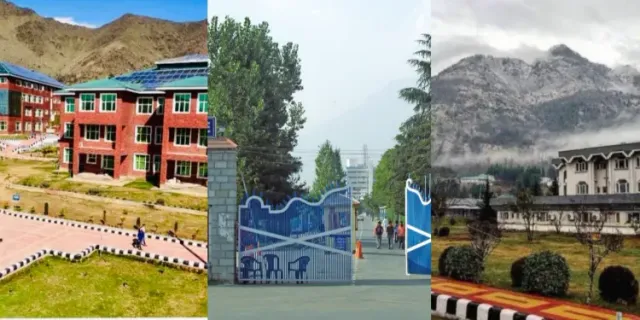
Srinagar, Apr 12: Three prominent Kashmir-based universities have terminated their academic agreements with a US-based non-profit, Kashmir Care Foundation (KCF), Atlanta, following what officials describe as “adverse inputs” flagged during internal reviews.

The institutions, University of Kashmir, Islamic University of Science and Technology, and Sher-e-Kashmir University of Agricultural Sciences and Technology of Kashmir, have all issued formal orders over the past weeks cancelling Memorandums of Understanding (MoUs) and related agreements with immediate effect.

Official documents accessed by news agency Kashmir Dot Com reveal that the University of Kashmir terminated its MoU after a review by competent authorities concluded that continuation of the arrangement was not in the institution’s larger interest, while also clarifying that no financial or academic liabilities had arisen during the period of the agreement.

Similarly, the Islamic University of Science and Technology invoked provisions of its agreement to cancel the MoU, stating that no contractual or financial obligations had accrued between the two sides.

At SKUAST-K, a Letter of Agreement signed in April 2025 was scrapped through an official memorandum issued by its Directorate of Research, marking a complete disengagement from the foundation.

The development has triggered a ripple effect within academic circles, with faculty members associated with the collaboration formally distancing themselves from KCF.

Emails accessed by this news agency show that academicians from IUST have written to the foundation declaring that their association was purely in compliance with university directions, and that they had no prior knowledge of the organisation before the collaboration. They have also sought removal of their profiles and cessation of all communication channels.

While official orders do not elaborate on the specifics, sources indicate that the agreements came under scrutiny following adverse inputs and sensitive observations flagged during review processes, prompting universities to disengage as a precautionary measure.

Importantly, all three universities have underlined that no funds were exchanged and no liabilities created, suggesting that the collaborations remained largely limited to academic outreach and proposed initiatives.

The simultaneous withdrawal by multiple institutions highlights growing caution around foreign academic collaborations, particularly in areas involving technology, research, and data exchange.

A Kashmir born Dr Altaf A. Lal, is the founder and president of the Kashmir Care Foundation (KCF).  The Foundation is a non-profit, non-religious organization founded in 2024, designed to connect students in Kashmir with global academic opportunities, mentorship, and mental health support. Headquartered in Atlanta, USA, with initiatives in Jammu & Kashmir, it focuses on education, health, and social science empowerment through initiatives like the KCF-MenToR program.

Meanwhile, sources told KDC that Dr Altaf A. Lal was in Jammu yesterday, where he held meetings at the CSIR-Indian Institute of Integrative Medicine led by Director Dr Zabeer Ahmed. (KDC)

PM to address ‘Nari Shakti Vandan Sammelan’ on 13th April

0
Vinod Bhat

New Delhi: Prime Minister Shri Narendra Modi will attend a national level ‘Nari Shakti Vandan Sammelan’ on 13th April 2026 at Vigyan Bhawan, New Delhi at around 11 AM. He will also address the gathering on the occasion.

The programme will witness participation of eminent personalities and women achievers from diverse fields. It will bring together representatives from different sectors such as government, academia, science, sports, entrepreneurship, media, social work and culture.

In September 2023, Parliament passed the ‘Nari Shakti Vandan Adhiniyam’ marking a significant step towards enhancing women’s representation in legislative bodies. The Act provided for reservation of one-third of seats for women in Lok Sabha and State Legislative Assemblies. Now, with a focus on implementation of women’s reservation across the country, a Parliament session is being convened on 16th April.

The Sammelan is being organised to reinforce the commitment towards greater participation of women in shaping India’s development trajectory. It will also highlight the increasing role of women in governance and leadership across all levels, from Panchayats to Parliament. The programme will underscore the importance of enhanced representation of women in decision-making processes.

The Sammelan will highlight the role of women in the journey towards Viksit Bharat 2047. It will reflect the government’s continued commitment towards women-led development as a central pillar of the vision for Viksit Bharat 2047.

No LPG dry-outs reported; over 52.3 lakh domestic cylinders delivered in 24 hours

0
Vinod Bhat

New Delhi: In view of the evolving situation in West Asia, the Government of India is closely monitoring developments and undertaking coordinated measures to ensure preparedness across critical sectors. The following update outlines the measures being undertaken in the areas of energy supply, maritime operations, and assistance to Indian nationals in the region:

Energy Supply and Fuel Availability

The Ministry of Petroleum and Natural Gas shared an update on the current fuel supply situation, outlining measures being undertaken to ensure uninterrupted availability of petroleum products and LPG amid the ongoing developments affecting the Strait of Hormuz. It was noted that:

Public Advisory and Citizen Awareness

  • Citizens are advised to avoid panic purchase of petrol, diesel and LPG and rely only on official sources for information.
  • LPG consumers are requested to use digital booking platforms and avoid visiting distributors.
  • Citizens are encouraged to use alternate fuels such as PNG and electric or induction cooktops.
  • All citizens are urged to conserve energy in their daily use during the current situation.

Government Preparedness and Supply Management Measures

  • Despite the ongoing geopolitical situation, the Government has prioritised domestic LPG and PNG supply, along with high priority for hospitals and educational institutions.
  • The Government has already implemented several rationalisation measures on both the supply and demand side, including enhancing refinery production, increasing the booking interval from 21 to 25 days in urban areas and up to 45 days in rural areas and prioritising sectors for supply.
  • Alternate fuels such as kerosene and coal have been made available to ease pressure on LPG demand.
  • The Ministry of Coal has directed Coal India and Singareni Collieries to supply additional coal to States for distribution to small and medium consumers.
  • States have been advised to facilitate new PNG connections for domestic and commercial consumers.

Coordinated Efforts with States/UTs and Institutional Mechanisms

  • State Governments are empowered under the Essential Commodities Act, 1955 and LPG Control Order, 2000 to monitor supply and act against hoarding and black marketing of petroleum products.
  • The Government of India vide letters dated 27.03.2026 and 02.04.2026 have stressed the need for proactive public communication to reassure citizens regarding adequate fuel availability. Regular review meetings are being held with States/UTs. In this context, meetings were convened on 02.04.2026 (Chaired by Secretary, MoPNG) and on 06.04.2026 (Chaired by Secretary, MoPNG along with Secretaries of I&B and Consumer Affairs), wherein the following was emphasized:
    • To issue daily press briefings and issue regular public advisories.
    • To actively monitor and counter fake news / misinformation on social media.
    • To intensify daily enforcement drives by District admin and to continue raids and inspections in coordination with OMCs
    • To issue Commercial LPG allocation orders within their States/UTs
    • To issue SKO allocation orders for additional SKO allotted to the States/UTs.
    • To promote PNG adoptions and alternate fuels.
    • To prioritise LPG supply, especially for domestic needs, and adopt targeted distribution of 5 kg FTL cylinders to ensure supply stability.
  • All States/UTs have established control rooms and district monitoring committees to curb hoarding and black marketing.
  • Currently, 24 States/UTs are issuing regular press briefings.

Enforcement and Monitoring Actions

  • Enforcement actions continue across the country to curb hoarding and black marketing of LPG. On 11.04.2026, more than 2700 raids were conducted across the country.
  • PSU Oil Marketing Companies have strengthened and continued surprise inspections and imposed penalties on 219 LPG distributorships and suspended 56 distributorships till now.

LPG Supply

Domestic LPG Supply Status:

  • LPG supply continues to be affected by the prevailing geopolitical situation.
  • No dry-outs have been reported at LPG distributorships.
  • Online LPG bookings have increased to about 98% across the industry.
  • Delivery Authentication Code (DAC) based deliveries have increased to around 93% to prevent diversion.
  • Domestic LPG cylinder deliveries remain normal.
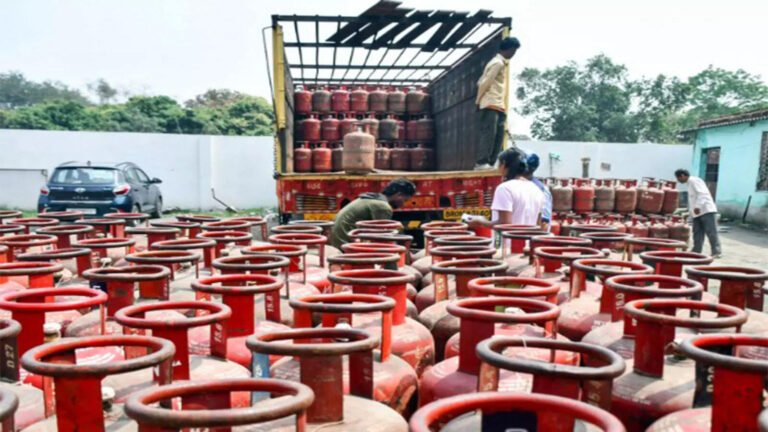
  • On 11.04.2026, more than 52.3 Lakh domestic LPG cylinders were delivered.

Commercial LPG Supply and Allocation Measures:

  • Total commercial LPG allocation has been increased to about 70% of pre-crisis levels, including 10% reform-linked allocation.
  • The Government of India vide letter dated 06.04.2026 has conveyed that daily quantity of 5 Kg FTL cylinders in each State available for disbursal to migrant labourers is being doubled based on the average daily supply (Number of cylinders) to migrant labourers during 2nd-3rd March 2026 beyond the limit of 20% mentioned in letter dated 21.03.2026. These 5 Kg FTL cylinders will be at disposal of the State Government for supplying only to migrant labourers in their State with assistance of Oil Marketing Companies (OMCs).
  • PSU OMCs have organised around 3300 awareness camps for 5 Kg FTL Cylinders during last 8 days, wherein more than 35,800 – 5Kg FTL cylinders were also sold.
  • On 11.04.2026, more than 1 lakh Kg FTL Cylinders were sold across the country against a daily average of 77000 in the month of Feb-26.
  • Since 23 March 2026, more than 13 lakh 5-kg Free Trade LPG cylinders have been sold
  • A three-member committee of Executive Directors from IOCL, HPCL and BPCL is coordinating with State authorities and industry bodies to plan commercial LPG distribution.
  • A total of 1,20,898 MT (Equivalent to more than 63.6 Lakh of 19 Kg LPG Cylinders) of Commercial LPG has been sold since 14th March 2026.
  • On 11.04.2026, 7665 MT of Commercial LPG (Equivalent to more than 4 lakh- 19 Kg LPG cylinders) was sold.


Natural Gas Supply and PNG Expansion Initiatives

  • Consumers have been prioritised with 100% supply to domestic PNG and CNG transport.
  • Based on available inventory and scheduled LNG cargo arrivals, the overall gas allocation to fertilizer plants is being further enhanced by 5% to reach approximately 95% of their six-month average consumption, effective 09.04.2026.
  • CGD entities have been advised to prioritise PNG connections for commercial establishments such as hotels, restaurants and canteens, to address concerns regarding the availability of commercial LPG.
  • CGD companies including IGL, MGL, GAIL Gas and BPCL are offering incentives for domestic and commercial PNG connections.
  • States/UTs and Central Ministries have been requested to expedite approvals required for expansion of CGD networks.
  • The Government of India vide letter dated 18.03.2026 has offered all States/UTs additional 10% allocation of commercial LPG to States provided they can help in long term transition from LPG to PNG.
  • 21 States/UTs are already receiving additional commercial LPG allocation linked to PNG expansion reforms.
  • The Ministry of Road Transport & Highways has adopted an Accelerated Approval Framework for CGD infrastructure for three months to process applications on priority.
  • The Government of India vide Gazette dated 24.03.2026 has notified the Natural Gas and Petroleum Products Distribution (Through Laying, Building, Operation and Expansion of Pipelines and Other Facilities) Order, 2026 under the Essential Commodities Act, 1955. The Order provides a streamlined and time-bound framework for laying and expanding pipelines across the country, addressing delays in approvals and access to land, and enabling faster development of natural gas infrastructure, including in residential areas. It is expected to accelerate PNG network growth, enhance last-mile connectivity, and support the transition to cleaner fuels, thereby strengthening energy security and advancing India’s gas-based economy.
  • PNGRB has extended the National PNG Drive 2.0 till 30 June 2026 to sustain momentum in PNG expansion.
  • To encourage a cleaner, more secure and self-reliant energy future, the Government of India has developed a model draft State CBG Policy. The model policy is intended to serve as a comprehensive flexible guiding framework to enable States to create their own investor-friendly and implementation-oriented ecosystem for CBG development. Those States which opt for this, will be prioritized for the next tranche of additional allocation of commercial LPG.
  • Since March 2026, more than 4.24 lakh PNG connections have been gasified. Further, more than 4.66 lakh customers have registered for new connections.
  • Till 11.04.26, more than 30,000 PNG consumers have surrendered their LPG connections via MYPNGD.in website.

Crude Position and Refinery Operations

  • All refineries are operating at high capacity with adequate crude inventories, while sufficient stocks of petrol and diesel are being maintained.
  • Domestic LPG production from refineries has been increased to support domestic consumption.
  • The Government of India vide order dated 01.04.2026 has permitted Refining companies including Petrochemical Complexes in India to make available certain minimum quantities of C3 & C4 streams for critical sectors like Department of Pharmaceuticals, Department of Food & Public Distribution, Department of Chemicals & Petro Chemicals etc. Provision for 800 MT/day has been made for companies related to above departments.

Retail Fuel Availability and pricing Measures

  • Retail outlets across the country are operating normally.
  • The Middle East crisis has led to an abnormal increase in crude prices; however, to protect consumers, the Government of India has reduced excise duty on petrol and diesel by ₹10 per litre.
  • Govt. of India vide Gazette notification dated 11.04.2026 has increased the export levy on diesel to Rs. 55.50 per litre and on ATF to Rs. 42 per litre, to ensure availability of these products in the domestic market.


  • Retail prices of petrol and diesel remain unchanged with no increase at retail outlets.

Kerosene Availability and Distribution Measures

  • An additional allocation of 48,000 KL of kerosene has been provided to States/UTs over and above regular allocation.
  • 18 States/UTs have issued SKO allocation orders, while Himachal Pradesh and Ladakh have indicated no requirement.

Maritime Safety and Shipping Operations

Necessary measures have been put in place to safeguard Indian vessels and seafarers operating in the region, by the Ministry of Ports, Shipping and Waterways. The Ministry stated that:

  • All Indian seafarers in the region are safe and no incident involving Indian-flagged vessels has been reported in the past 24 hours.
  • The Shipping Control Room remains operational 24×7 and has handled 6,053 calls and more than 12,787 emails since activation. In the past 24 hours, 80 calls and 112 emails have been received.
  • The Ministry, through the Directorate General of Shipping (DG Shipping), has facilitated the safe repatriation of more than 2,084 Indian seafarers so far, including 75 in the last 24 hours from various locations across the Gulf region.
  • Port operations across India remain normal, with no congestion reported.
  • The Ministry continues to coordinate with the Ministry of External Affairs, Indian Missions, and maritime stakeholders to ensure seafarer welfare and uninterrupted maritime operations.

Safety of Indian Nationals in the Region

Across the region, Indian Missions and Posts remain in close contact with the Indian community, while continuing to provide assistance and issue necessary advisories for their safety and well-being. As informed by Ministry of External Affairs:

  • The Government continues to closely monitor developments in the Gulf and West Asia region.
  • Ministry of External Affairs is in regular contact with State Governments and Union Territories for better sharing of information and coordination.
  • Efforts remain focused on ensuring the safety, security and welfare of the Indian community in the region.
  • Indian Missions and Posts continue to operate round-the-clock helplines and are proactively assisting Indian nationals.
  • Updated advisories are being issued regularly, including information on local government guidelines, flight and travel situations and consular services.
  • Our Missions remain actively engaged with Indian community associations, professional groups, Indian companies and other stakeholders in the region.
  • Flights continue to operate from countries where airspace remains open. Since 28 February, around 8,97,000 passengers have travelled from the region to India.
  • In the UAE, airlines continue to operate limited non-scheduled commercial flights between the UAE and India based on operational and safety considerations, with around 95 flights expected today.
  • Flights continue to operate from various airports in Saudi Arabia and Oman to destinations in India.
  • With Qatar airspace partially open, Qatar Airways is expected to operate around 8–10 flights to India today.
  • Kuwait airspace remains closed. Jazeera Airways of Kuwait and Kuwait Airways are operating non-scheduled commercial flights from Dammam Airport in Saudi Arabia to India. Travel of Indian nationals from Kuwait continues to be facilitated through Saudi Arabia.
  • Bahrain airspace is open. Gulf Air is expected to begin limited flight operations from Bahrain to India soon and is currently operating non-scheduled flights from Dammam Airport in Saudi Arabia to India. Travel of Indian nationals from Bahrain continues to be facilitated through Saudi Arabia to India.
  • Iran airspace remains closed. We continue to facilitate the travel of Indian nationals from Iran, through Armenia and Azerbaijan to India.

Israeli airspace remains closed. Travel of Indian nationals continue to be facilitated through Jordan and Egypt to India.

  • Iraq airspace is open with restricted flight operations. Travel of Indian nationals continue to be facilitated through Jordan and Saudi Arabia to India.

57-Day Amarnath Yatra from July 3, Pratham Puja on June 29: LG Sinha

0

Tauseef Ahmad

Srinagar, April 12: Jammu and Kashmir Lieutenant Governor Manoj Sinha on Sunday said that the annual Shri Amarnath Ji Yatra will commence on July 3, 2026, and conclude on August 28, coinciding with Raksha Bandhan, spanning a total of 57 days.

Sharing details on social media platform X, the Lieutenant Governor said the ceremonial Pratham Puja, marking the invocation of Lord Shiva’s blessings, will be held on June 29, 2026, on the auspicious occasion of Jyeshtha Purnima.

He further announced that advance registration for the pilgrimage will begin from April 15, 2026, through both online and offline modes. Pilgrims can register at 554 designated bank branches across the country, including Jammu & Kashmir Bank, Punjab National Bank, State Bank of India, and Yes Bank.