spot_imgspot_img
spot_img
Home Blog Page 58

57-Day Amarnath Yatra from July 3, Pratham Puja on June 29: LG Sinha

0

Tauseef Ahmad

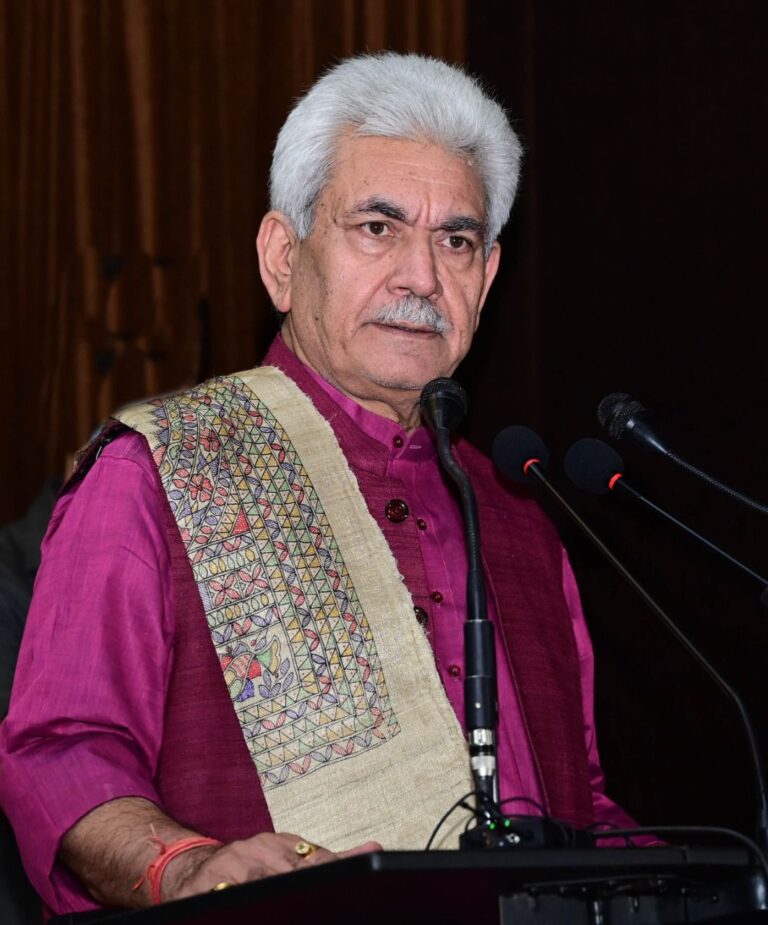
Srinagar, April 12: Jammu and Kashmir Lieutenant Governor Manoj Sinha on Sunday said that the annual Shri Amarnath Ji Yatra will commence on July 3, 2026, and conclude on August 28, coinciding with Raksha Bandhan, spanning a total of 57 days.

Sharing details on social media platform X, the Lieutenant Governor said the ceremonial Pratham Puja, marking the invocation of Lord Shiva’s blessings, will be held on June 29, 2026, on the auspicious occasion of Jyeshtha Purnima.

He further announced that advance registration for the pilgrimage will begin from April 15, 2026, through both online and offline modes. Pilgrims can register at 554 designated bank branches across the country, including Jammu & Kashmir Bank, Punjab National Bank, State Bank of India, and Yes Bank.

Shri Manohar Lal Holds Key Engagements on Infrastructure and Development Cooperation; Visits Cultural Sites

0

Vinod Bhat

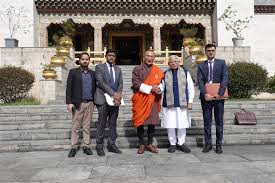
New Delhi: On the third day of his visit to Bhutan, Shri Manohar Lal,  Minister for Power and Housing & Urban Affairs, visited Khuruthang Town, gaining insights into local development initiatives and urban infrastructure planning in the region. He also visited the Punakha Dzong, one of Bhutan’s most significant historical, cultural and administrative landmarks.

Subsequently, Shri Manohar Lal visited Simtokha Dzong, believed to be the oldest fort built by the founder of Bhutan in the 17th century, where he participated in the lighting of butter lamps.

Later, he met Lyonpo Chandra Bahadur Gurung, Minister for Infrastructure and Transport, Royal Government of Bhutan. The discussions focused on bilateral cooperation opportunities in infrastructure development, urban amenities, connectivity, and transport systems.

During the engagement, he also attended a presentation on Bhutan’s development philosophy of Gross National Happiness (GNH) and the Gelephu Mindfulness City (GMC) initiative, which highlighted Bhutan’s unique approach to sustainable and holistic development.

In the evening, Shri Manohar Lal visited the Buddha Dordenma Statue and Kuensel Phodrang Nature Park in Thimphu, reflecting Bhutan’s rich cultural and nature.

He will also interact with the Indian diaspora community in Bhutan. The diaspora has made a significant contribution in further strengthening the close and friendly ties between India and Bhutan.

India and Bhutan continue to enjoy exemplary bilateral relations, rooted in mutual trust, shared values, and close cooperation across sectors. The visit further reinforces the commitment of both countries to deepen engagement across developmental, urban affairs and people-to-people dimensions.

Private School Association Holds Elections in Pulwama, New Team Elected

0

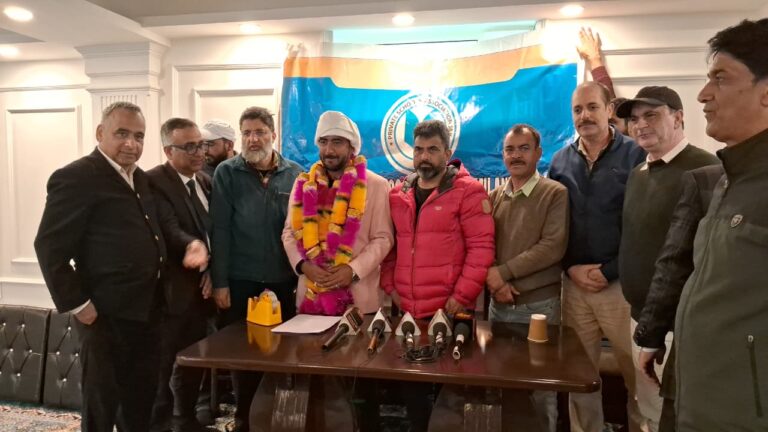
Pulwama, Apr 11: The Private School Association Jammu and Kashmir (PSAJK) on Saturday elected a new district leadership for Pulwama, with Wasim Hanif, Chairman of Solace International School, chosen as the District President during a meeting marked by strong participation from members.

The election was conducted under the supervision of Election Committee Convenor Farooq Ahmad Ashaii and member Majid Bhatt. Observers from multiple districts, including Srinagar District President Tahir Wagay, State Coordinator Tariq Balli, and District Coordinator Shabir Ahmad Malik, were present to oversee the process and ensure transparency.

The exercise comes at a time when private schools in the region continue to face operational and financial pressures. Participants raised concerns over key challenges confronting the sector and stressed the need for a coordinated approach to address them.

Outgoing District President Khalid Reshi expressed confidence in the new leadership, pledging continued support, particularly for low- and budget private schools. He also underscored the need for capacity-building initiatives, including teacher training and inter-school collaboration.

PSAJK State President Dr. Baba Nazrul Islam congratulated the newly elected team, expressing hope that it would work with “dedication and integrity” to strengthen the association’s role in the district.

The election proceedings were also observed by academician Prof. Abdul Hamid Sheikh, former Registrar of Cluster University, who voiced optimism about improved coordination and development in the local education sector.

The meeting concluded with members reaffirming their commitment to collective action for the advancement of private education in Pulwama.

India-flagged LPG vessel Jag Vikram carrying approximately 20,400 MT of LPG safely crossed the Strait of Hormuz

0

Vinod Bhat

New Delhi: In light of the evolving situation in West Asia, the Government of India remains actively engaged in ensuring preparedness and seamless functioning across key sectors. The following update outlines the measures being undertaken in the areas of energy supply, maritime operations, and assistance to Indian nationals in the region:

Energy Supply and Fuel Availability

The Ministry of Petroleum and Natural Gas shared an update on the current fuel supply situation, outlining measures being undertaken to ensure uninterrupted availability of petroleum products and LPG amid the ongoing developments affecting the Strait of Hormuz. It was noted that:

Public Advisory and Citizen Awareness

  • Citizens are advised to avoid panic purchase of petrol, diesel and LPG and rely only on official sources for information.
  • LPG consumers are requested to use digital booking platforms and avoid visiting distributors.
  • Citizens are encouraged to use alternate fuels such as PNG and electric or induction cooktops.
  • All citizens are urged to conserve energy in their daily use during the current situation.

Government Preparedness and Supply Management Measures

  • Despite the ongoing geopolitical situation, the Government has prioritised domestic LPG and PNG supply, along with high priority for hospitals and educational institutions.
  • The Government has already implemented several rationalisation measures on both the supply and demand side, including enhancing refinery production, increasing the booking interval from 21 to 25 days in urban areas and up to 45 days in rural areas and prioritising sectors for supply.
  • Alternate fuels such as kerosene and coal have been made available to ease pressure on LPG demand.
  • The Ministry of Coal has directed Coal India and Singareni Collieries to supply additional coal to States for distribution to small and medium consumers.
  • States have been advised to facilitate new PNG connections for domestic and commercial consumers.

Coordinated Efforts with States/UTs and Institutional Mechanisms

  • State Governments are empowered under the Essential Commodities Act, 1955 and LPG Control Order, 2000 to monitor supply and act against hoarding and black marketing of petroleum products.
  • The Government of India vide letters dated 27.03.2026 and 02.04.2026 have stressed the need for proactive public communication to reassure citizens regarding adequate fuel availability. Regular review meetings are being held with States/UTs. In this context, meetings were convened on 02.04.2026 (Chaired by Secretary, MoPNG) and on 06.04.2026 (Chaired by Secretary, MoPNG along with Secretaries of I&B and Consumer Affairs), wherein the following was emphasized:
    • To issue daily press briefings and issue regular public advisories.
    • To actively monitor and counter fake news / misinformation on social media.
    • To intensify daily enforcement drives by District admin and to continue raids and inspections in coordination with OMCs
    • To issue Commercial LPG allocation orders within their States/UTs
    • To issue SKO allocation orders for additional SKO allotted to the States/UTs.
    • To promote PNG adoptions and alternate fuels.
    • To prioritise LPG supply, especially for domestic needs, and adopt targeted distribution of 5 kg FTL cylinders to ensure supply stability.
  • All States/UTs have established control rooms and district monitoring committees to curb hoarding and black marketing.
  • Currently, 24 States/UTs are issuing regular press briefings.

Enforcement and Monitoring Actions

  • Enforcement actions continue across the country to curb hoarding and black marketing of LPG. On 10.04.2026, more than 3400 raids were conducted across the country.
  • PSU Oil Marketing Companies have strengthened surprise inspections and imposed penalties on 214 LPG distributorships and suspended 55 distributorships.

LPG Supply

Domestic LPG Supply Status:

  • LPG supply continues to be affected by the prevailing geopolitical situation.
  • No dry-outs have been reported at LPG distributorships.
  • Online LPG bookings have increased to about 98% across the industry.
  • Delivery Authentication Code (DAC) based deliveries have increased to around 93% to prevent diversion.
  • Domestic LPG cylinder deliveries remain normal.
  • On 10.04.2026, more than 51.5 Lakh domestic LPG cylinders were delivered.

Commercial LPG Supply and Allocation Measures:

  • Total commercial LPG allocation has been increased to about 70% of pre-crisis levels, including 10% reform-linked allocation.
  • The Government of India vide letter dated 08.04.2026 has now conveyed that–
    • Industrial units in the sectors of Pharma, Food, Polymer, Agriculture, Packaging, Paint, Uranium, Heavy Water, Steel, Seed, Metal, Ceramic, Foundry, Forging, Glass, Aerosol etc. shall also receive 70% of the units’ pre-March 2026 Bulk non-domestic LPG consumption level subject to an overall sectoral limit of 0.2 TMT/day.
    • Conditions stipulated in Para (b) of letter dated 21.03.2026 regarding registration with OMCs and Para (c) regarding application for PNG to CGD entities must also be fulfilled by the respective industries to avail Bulk LPG under this allocation. However, if the industries mentioned above use LPG as an integral input in the manufacturing process or for specialised purposes that cannot be substituted by Natural gas, the requirement relating to application for PNG shall stand waived.
    • These measures are expected to prevent supply-chain disruptions, avoid shortages of essential goods and ensure continuity of industrial operations despite the ongoing global crises.
  • The Government of India vide letter dated 06.04.2026 has conveyed that daily quantity of 5 Kg FTL cylinders in each State available for disbursal to migrant labourers is being doubled based on the average daily supply (Number of cylinders) to migrant labourers during 2nd-3rd March 2026 beyond the limit of 20% mentioned in letter dated 21.03.2026. These 5 Kg FTL cylinders will be at disposal of the State Government for supplying only to migrant labourers in their State with assistance of Oil Marketing Companies (OMCs).
  • PSU OMCs have organised around 2900 awareness camps for 5 Kg FTL Cylinders during last 8 days, wherein more than 29,000 – 5Kg FTL cylinders were also sold.
  • On 10.04.2026, about 1 Lakh 5 Kg FTL Cylinders were sold across the country against a daily average of 77000 in the month of Feb-26.
  • Since 23 March 2026, more than 12 lakh 5-kg Free Trade LPG cylinders have been sold to students and vulnerable communities including migrant labourers.
  • A three-member committee of Executive Directors from IOCL, HPCL and BPCL is coordinating with State authorities and industry bodies to plan commercial LPG distribution.
  • About 1,13,233 MT of commercial LPG (equivalent to over 60 lakh of 19-kg LPG cylinders) has been sold since 14 March 2026. On 10.04.2026, 7140 MT of Commercial LPG (Equivalent to more than 3.76 Lakh – 19 Kg LPG cylinders) was sold.

Natural Gas Supply and PNG Expansion Initiatives

  • Conusmers have been prioritised with 100% supply to domestic PNG and CNG transport.
  • Based on available inventory and scheduled LNG cargo arrivals, the overall gas allocation to fertilizer plants is being further enhanced by 5% to reach approximately 95% of their six-month average consumption, effective 09.04.2026.
  • CGD entities have been advised to prioritise PNG connections for commercial establishments such as hotels, restaurants and canteens, to address concerns regarding the availability of commercial LPG.
  • CGD companies including IGL, MGL, GAIL Gas and BPCL are offering incentives for domestic and commercial PNG connections.
  • States/UTs and Central Ministries have been requested to expedite approvals required for expansion of CGD networks.
  • The Government of India vide letter dated 18.03.2026 has offered all States/UTs additional 10% allocation of commercial LPG to States provided they can help in long term transition from LPG to PNG.
  • 18 States/UTs are already receiving additional commercial LPG allocation linked to PNG expansion reforms.
  • The Ministry of Road Transport & Highways has adopted an Accelerated Approval Framework for CGD infrastructure for three months to process applications on priority.
  • The Government of India vide Gazette dated 24.03.2026 has notified the Natural Gas and Petroleum Products Distribution (Through Laying, Building, Operation and Expansion of Pipelines and Other Facilities) Order, 2026 under the Essential Commodities Act, 1955. The Order provides a streamlined and time-bound framework for laying and expanding pipelines across the country, addressing delays in approvals and access to land, and enabling faster development of natural gas infrastructure, including in residential areas. It is expected to accelerate PNG network growth, enhance last-mile connectivity, and support the transition to cleaner fuels, thereby strengthening energy security and advancing India’s gas-based economy.
  • PNGRB has extended the National PNG Drive 2.0 till 30 June 2026 to sustain momentum in PNG expansion.
  • To encourage cleaner, more secure and self-reliant energy future, the Government of India has developed a model draft State CBG Policy. The model policy is intended to serve as a comprehensive flexible guiding framework to enable States to create their own investor-friendly and implementation-oriented ecosystem for CBG development. Those States which opt for this, will be prioritized for the next tranche of additional allocation of commercial LPG.
  • In order to promote cleaner fuel and encourage piped gas usage, Govt. of Andhra Pradesh vide letter dated 10.04.2026 has extended subsidy support to Domestic PNG consumers under “Andhra Pradesh PNG Subvention Scheme”.
  • Since March 2026, about 4.15 lakh PNG connections have been gasified and about 4.55 lakh additional customers have registered for new connections.
  • Till date, more than 26,000 PNG consumers have surrendered their LPG connections via MYPNGD.in website.

Crude Position and Refinery Operations

  • All refineries are operating at high capacity with adequate crude inventories, while sufficient stocks of petrol and diesel are being maintained.
  • Domestic LPG production from refineries has been increased to support domestic consumption.
  • The Government of India vide order dated 01.04.2026 has permitted Refining companies including Petrochemical Complexes in India to make available certain minimum quantities of C3 & C4 streams for critical sectors like Department of Pharmaceuticals, Department of Food & Public Distribution, Department of Chemicals & Petro Chemicals etc. based on specific quantity and refinery source as determined by the Centre for High Technology (CHT).
  • Provision for 800 MT/day has been made for companies related to above departments.

Retail Fuel Availability and pricing Measures

  • Retail outlets across the country are operating normally.
  • The Middle East crisis has led to an abnormal increase in crude prices; however, to protect consumers, the Government of India has reduced excise duty on petrol and diesel by ₹10 per litre.
  • Export levy has been imposed at ₹21.5 per litre on diesel and ₹29.5 per litre on Aviation Turbine Fuel (ATF) to ensure adequate domestic availability.
  • Retail prices of petrol and diesel remain unchanged with no increase at retail outlets.
  • The Government has advised citizens not to believe rumours and requested State Governments to disseminate accurate information through press briefings.

Kerosene Availability and Distribution Measures

  • An additional allocation of 48,000 KL of kerosene has been provided to States/UTs over and above regular allocation.
  • The Government of India vide Gazette notification dated 29.03.2026 has facilitated distribution of PDS Superior Kerosene Oil (SKO) in PDS SKO Free States/UTs for cooking and lighting purpose only –
    • A maximum of two PSU OMC service stations per district (preferably Company Owned Company Operated) are permitted to store up to 5,000 litres of PDS SKO.
    • These PSU OMC service stations shall be designated by the State Government or UT administration in each district.
  • 18 States/UTs have issued SKO allocation orders, while Himachal Pradesh and Ladakh have indicated no requirement.

Maritime Safety and Shipping Operations

Necessary measures have been put in place to safeguard Indian vessels and seafarers operating in the region, by the Ministry of Ports, Shipping and Waterways. The Ministry stated that:

  • All Indian seafarers in the region are safe and no incident involving Indian-flagged vessels has been reported in the past 24 hours.
  • The India-flagged LPG vessel Jag Vikram has safely crossed the Strait of Hormuz today.
  • The vessel is carrying approximately 20,400 MT of LPG cargo with 24 seafarers onboard. It is expected to arrive at Mumbai on 15 April 2026
  • The Shipping Control Room remains operational 24×7 and has handled 5,973 calls and more than 12,675 emails since activation. In the past 24 hours, 128 calls and 319 emails have been received.
  • The Ministry, through the Directorate General of Shipping (DG Shipping), has facilitated the safe repatriation of more than 2,009 Indian seafarers so far, including 81 in the last 24 hours from various locations across the Gulf region.
  • Port operations across India remain normal, with no congestion reported.
  • The Ministry continues to coordinate with the Ministry of External Affairs, Indian Missions, and maritime stakeholders to ensure seafarer welfare and uninterrupted maritime operations.

Safety of Indian Nationals in the Region

Across the region, Indian Missions and Posts remain in close contact with the Indian community, while continuing to provide assistance and issue necessary advisories for their safety and well-being. As informed by Ministry of External Affairs:

  • The Government continues to closely monitor developments in the Gulf and West Asia region.
  • Ministry of External Affairs is in regular contact with State Governments and Union Territories for better sharing of information and coordination.
  • Efforts remain focused on ensuring the safety, security and welfare of the Indian community in the region.
  • Indian Missions and Posts continue to operate round-the-clock helplines and are proactively assisting Indian nationals.
  • Updated advisories are being issued regularly, including information on local government guidelines, flight and travel situations and consular services.
  • Our Missions remain actively engaged with Indian community associations, professional groups, Indian companies and other stakeholders in the region.
  • Flights continue to operate from countries where airspace remains open. Since 28 February, around 8,71,000 passengers have travelled from the region to India.
  • In the UAE, airlines continue to operate limited non-scheduled commercial flights between the UAE and India based on operational and safety considerations, with around 95 flights expected today.
  • Flights continue to operate from various airports in Saudi Arabia and Oman to destinations in India.
  • With Qatar airspace partially open, Qatar Airways is expected to operate around 8–10 flights to India today.
  • Kuwait airspace remains closed. Jazeera Airways of Kuwait and Kuwait Airways are operating non-scheduled commercial flights from Dammam Airport in Saudi Arabia to India. Travel of Indian nationals from Kuwait continues to be facilitated through Saudi Arabia.
  • Bahrain airspace is open. Gulf Air is expected to begin limited flight operations from Bahrain to India soon and is currently operating non-scheduled flights from Dammam Airport in Saudi Arabia to India. Travel of Indian nationals from Bahrain continues to be facilitated through Saudi Arabia to India.
  • The Embassy of India in Tehran has so far facilitated movement of 2,225 Indian nationals from Iran to Armenia and Azerbaijan for onward travel to India, including 981 Indian students and 662 Indian fishermen.
  • Israeli airspace remains closed. Travel of Indian nationals continue to be facilitated through Jordan and Egypt to India.
  • Iraq airspace is open with restricted flight operations. Travel of Indian nationals continue to be facilitated through Jordan and Saudi Arabia to India.

100-Day Anti-Narcotics Campaign Rolled Out; LG Manoj Sinha Warns of Strict Action

0

Tauseef Ahmad

Jammu, April 11: Jammu and Kashmir Lieutenant Governor Manoj Sinha on Saturday launched a 100-day anti-narcotics campaign and said strict punitive measures will be taken against drug smugglers, including cancellation of passports, driving licences and Aadhaar-linked services.

Addressing a public gathering after launching the Nasha Mukt Jammu and Kashmir Abhiyaan, Sinha emphasized that the administration has adopted a zero-tolerance policy against the drug menace and warned that those involved in trafficking will face severe legal and financial consequences. Under a newly prepared Standard Operating Procedure (SOP), authorities will initiate action under the NDPS Act, attach properties, freeze bank accounts and launch financial investigations against offenders.
“The law will act with full force. Those destroying lives through drugs will not be spared,” he said, adding that the administration is committed to ensuring strict accountability.

He described drug abuse as one of the biggest challenges confronting Jammu and Kashmir, noting that it is weakening youth potential and destabilising families. He also flagged cross-border smuggling, saying narcotics trafficking is being used to fund terrorism and disrupt peace in the region.

Highlighting the 100-day campaign, Sinha said the next three months will be crucial, with a multi-pronged strategy focusing on intensive awareness drives at the grassroots level, pad yatras across districts, counselling support in schools, colleges and universities, and targeted outreach to vulnerable sections. He said coordination with panchayats, community groups and civil society will be strengthened to ensure wider participation.

The administration has also notified the Jammu and Kashmir Substance Use Disorder Treatment, Counselling and Rehabilitation Centre Rules, 2026 to regulate de-addiction centres and ensure proper infrastructure and staffing. Action will be taken against unauthorised facilities operating without approval.

He urged citizens to report drug-related activities through official helplines, assuring that those battling addiction will receive full support for treatment and rehabilitation.

Calling for collective responsibility, Sinha said the fight against drugs requires active participation from all sections of society to safeguard the future of Jammu and Kashmir’s youth.

Director A&T Kashmir reviews functioning of Saddar Treasury Srinagar

0

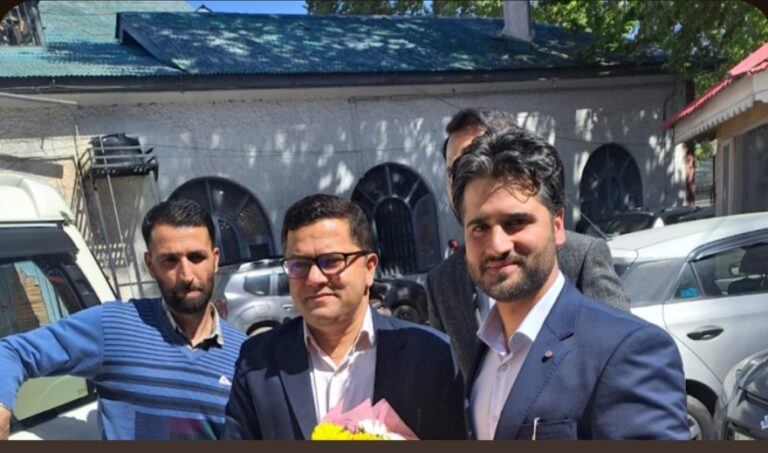
SRINAGAR, APRIL 10: Director, Accounts and Treasuries (A&T) Kashmir, Imtiyaz Ahmad Wani, today paid a maiden visit to Saddar Treasury Srinagar to review its functioning and assess service delivery mechanisms.

During the visit, the Director laid special emphasis on ensuring smooth, efficient, and citizen-friendly services for pensioners. He took a detailed review of the pension section, focusing on ease of access, availability of ramps, and adequate seating arrangements for visiting pensioners. He also interacted with several pensioners on the spot to gauge their satisfaction levels and receive direct feedback.

The Director further reviewed the overall functioning of the treasury with respect to financial governance. He assessed the status of IT interventions, the level of computerisation, and inspected the attendance of employees to ensure discipline and efficiency in service delivery.

Reiterating the importance of responsive and transparent governance, the Director stressed the need for continuous improvement in public service delivery and effective utilisation of technology in treasury operations.

Over 9.1 Crore Passengers Served by these High Speed Trains in About 1 Lakh Trips Since Inception

0

Vinod Bhat

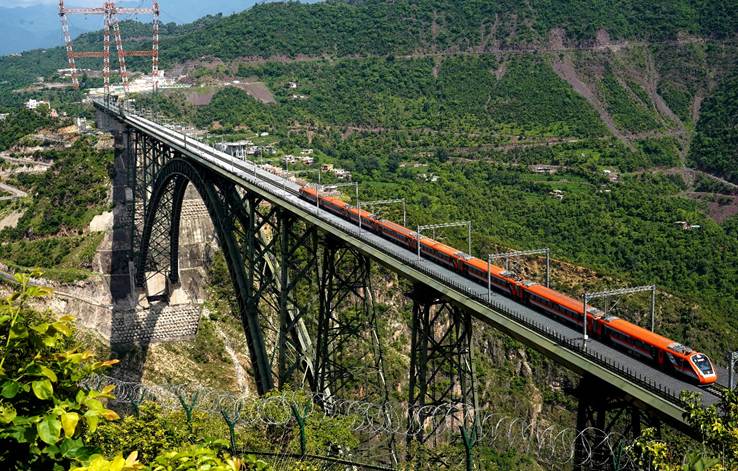
New Delhi: Indian Railways has witnessed a remarkable surge in passenger patronage on the Vande Bharat Express network, with approximately 3.98 crore passengers travelling in FY 2025–26 alone, marking a robust year-on-year growth of nearly 34 percent from 2.97 crore passengers in FY 2024–25. This sharp rise highlights the growing preference for fast, comfortable, and modern rail travel among passengers across the country. Since its inception, the Vande Bharat Express has served over 9.1 crore passengers through 1 lakh trips, reflecting widespread public trust and sustained demand.

Indian Railways continues to redefine passenger travel with the Vande Bharat Express, India’s first indigenously designed and manufactured semi-high-speed train. Launched on the New Delhi–Varanasi route in February 2019, the service has evolved into a nationwide network symbolising speed, comfort, and self-reliance under the Make in India initiative.

The New Delhi–Varanasi route remains the busiest, having recorded over 73 lakh passengers so far. The New Delhi–Shri Mata Vaishno Devi Katra route has served approximately 56 lakh passengers, underlining its importance for pilgrimage travel. In southern India, the Secunderabad–Visakhapatnam route has served more than 48 lakh passengers, while the Puratchi Thalaivar Dr. MGR Central (Chennai)–Mysuru route has catered to over 36 lakh passengers, reflecting strong regional demand. These services have also emerged as vital enablers of tourism, improving access to key religious, cultural, and coastal destinations while boosting local economies and visitor footfall.

Further strengthening long-distance connectivity, Indian Railways introduced the Vande Bharat Sleeper service in January 2026. In just the first three months of operation, the service carried 1.21 lakh passengers across 119 trips, achieving an occupancy rate of over 100 percent, indicating strong demand and increasing passenger confidence in premium overnight rail travel.

The Vande Bharat Express stands as a testament to Indian Railways’ commitment to innovation, passenger-centric service, and indigenous manufacturing. With continued expansion connecting metros, pilgrimage destinations, heritage cities, and emerging economic hubs, along with the addition of the Sleeper variant, Indian Railways is steadily advancing towards providing faster, safer, and more comfortable journeys, with the Vande Bharat Express leading the transformation of modern rail travel in India.

Army avoided strike during Namaz in Operation Sindoor: General Dwivedi

0

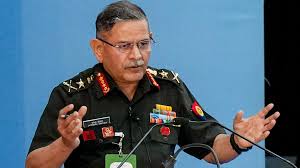
New Delhi, Apr: Chief of Army Staff General Upendra Dwivedi on Thursday said the timing of India’s cross-border strikes under Operation Sindoor was carefully chosen to avoid hitting targets when prayers were being offered, underlining a calibrated approach during the operation.

Speaking at the ‘Ran Samvad 2026’ forum in Bengaluru, the Army chief said the armed forces had the operational flexibility to strike at any hour but consciously avoided specific timings.

“We could have struck at 2 am or 4 am, at any given time. But we ensured we did not act when people might be offering Namaz at the terrorist camps,” he said, adding that the decision reflected both operational planning and broader considerations.

Dwivedi remarked that the forces chose a window when such religious activity was not taking place, noting that “there is one God for all,” while explaining the rationale behind the timing.

Operation Sindoor was launched in May last year following the April 22 terror attack in Jammu and Kashmir’s Pahalgam, in which 26 people, mostly tourists, were killed. Indian forces carried out precision strikes on terror launchpads across the border and in Pakistan-occupied Kashmir.

The Army chief said the operation marked a significant step in enhancing jointness among the armed forces, describing it as a “case study” in evolving military coordination. However, he added that the next objective is to achieve deeper integration and fusion across domains.

He also highlighted the growing importance of non-kinetic aspects of warfare, stating that a portion of the effort during the operation was focused on countering misinformation.
“Nearly 15 per cent of the effort went into managing disinformation,” he said, adding that the military has since taken steps to strengthen capabilities in this area.

According to him, new structures have been initiated to deal with information warfare and psychological aspects of conflict, reflecting the changing nature of modern warfare.

Dwivedi further said that challenges remain in synchronising responses across strategic, operational and tactical levels, particularly in dealing with what he described as “grey-zone” threats.

Such tactics, he said, often operate below the threshold of conventional warfare and are aimed at exploiting vulnerabilities without triggering a full-scale conflict.

The remarks come amid continued focus on evolving military doctrines in response to hybrid and multi-domain threats.(KNS).

India’s electricity system remains robust, well-diversified, and adequately positioned to meet both short-term and long-term demand requirements

0

Vinod Bhat

New Delhi: As part of its ongoing outreach to keep the media informed on the evolving situation in West Asia, the Government of India convened a briefing at the National Media Centre today. Officials from the Ministries of Petroleum and Natural Gas, Ports, Shipping and Waterways and External Affairs provided updates on fuel availability, maritime operations, assistance to Indian nationals in the region, and measures being undertaken to maintain stability across key sectors. The Ministry of Power also shared updates pertaining to the pharmaceutical sector.

Power Sector Updates

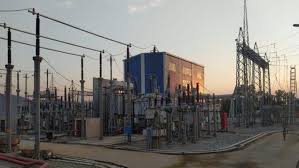
The Ministry of Power has highlighted that despite global uncertainties, India’s electricity system remains robust, well-diversified, and adequately positioned to meet both short-term and long-term demand requirements. 

  • India’s current installed capacity of over 531 GW reflects a well-diversified portfolio, with significant contributions from coal, renewables, hydro, and nuclear sources, with non-fossil sources exceeding 50%.

  • This capacity is supported by a strong transmission backbone of approximately 5 lakh circuit kilometres (ckm) and over 120 GW inter-regional transfer capability, ensuring reliable power flow across regions.

Short-Term Preparedness: Ensuring Supply Adequacy 

  • Adequate coal stock is being ensured at thermal power plants to address near-term supply challenges.

  • Imported Coal Based (ICB) plants are being fully operationalised to maximise existing capacity.

  • Thermal plant maintenance is being deferred to ensure ~10,000 MW additional capacity during summer.

  • Commissioning of under-construction thermal, hydro, renewable, BESS and PSP projects is being accelerated during April–June 2026.

Long-Term Strategy: Transition Towards Energy Independence 

  • Focused on reducing import dependence and enhancing energy security.

  • Over the past decade, no new gas-based or imported coal-based power plants have been planned, while existing assets are being aligned with domestic fuel sources.

As per the National Electricity Plan, total installed capacity is projected to reach ~874 GW by 2031–32, with a significant shift toward non-fossil sources:

  • Non-fossil share projected to exceed 67%

  • Energy storage expansion: up to 300 GWh

  • Transmission network expansion: ~6.5 lakh ckm with 167 GW inter-regional capacity

Key Policy Interventions Driving Resilience: The Government has undertaken a series of policy initiatives to strengthen the sector:

  • States are implementing rolling 10-year Resource Adequacy Plans

  • Development of matching transmission network at national/regional levels.

  • ISTS charge waivers, development of Green Energy Corridors, and flagship schemes such as PM-KUSUM, PM Surya Ghar, and the National Green Hydrogen Mission.

Energy Supply and Fuel Availability

The Ministry of Petroleum and Natural Gas shared an update on the current fuel supply situation, outlining measures being undertaken to ensure uninterrupted availability of petroleum products and LPG amid the ongoing developments affecting the Strait of Hormuz. It was noted that:

Public Advisory and Citizen Awareness

  • Citizens are advised to avoid panic purchase of petrol, diesel and LPG and rely only on official sources for information.

  • LPG consumers are requested to use digital booking platforms and avoid visiting distributors.

  • Citizens are encouraged to use alternate fuels such as PNG and electric or induction cooktops.

  • All citizens are urged to conserve energy during the current situation.

Government Preparedness and Supply Management Measures

  • Despite the ongoing geopolitical situation, the Government has prioritised domestic LPG and PNG supply, particularly for hospitals and educational institutions.

  • The Government has already implemented several rationalisation measures on both the supply and demand side, including enhancing refinery production, increasing the booking interval from 21 to 25 days in urban areas and up to 45 days in rural areas and prioritising sectors for supply.

  • Alternate fuels such as kerosene and coal have been made available to ease pressure on LPG demand.

  • The Ministry of Coal has directed Coal India and Singareni Collieries to supply additional coal to States for distribution to small and medium consumers.

  • States have been advised to facilitate new PNG connections for domestic and commercial consumers.

Coordinated Efforts with States/UTs and Institutional Mechanisms

  • State Governments are empowered under the Essential Commodities Act, 1955 and LPG Control Order, 2000 to monitor supply and act against hoarding and black marketing of petroleum products.

  • The Government of India vide letters dated 27.03.2026 and 02.04.2026 have stressed the need for proactive public communication to reassure citizens regarding adequate fuel availability. Regular review meetings are being held with States/UTs. In this context, meetings were convened on 02.04.2026 (Chaired by Secretary, MoPNG) and on 06.04.2026 (Chaired by Secretary, MoPNG along with Secretaries of I&B and Consumer Affairs), wherein the following was emphasized:

  • To issue daily press briefings and issue regular public advisories.

  • To actively monitor and counter fake news / misinformation on social media.

  • To intensify daily enforcement drives by District admin and to continue raids and inspections in coordination with OMCs

  • To issue Commercial LPG allocation orders within their States/UTs

  • To issue SKO allocation orders for additional SKO allotted to the States/UTs.

  • To promote PNG adoptions and alternate fuels.

  • To prioritize LPG supply, especially for domestic needs, and adopt targeted distribution of 5 kg FTL cylinders to ensure supply stability.

  • All States/UTs have established control rooms and district monitoring committees to curb hoarding and black marketing.

  • Currently, 24 States/UTs are issuing regular press briefings.

Enforcement and Monitoring Actions

  • Enforcement actions continue across the country to curb hoarding and black marketing of LPG. On 09.04.2026, more than 3800 raids were conducted, and about 450 cylinders were seized across the country.

  • Till date, around 1.2 lakh raids have been conducted, over 57,000 cylinders have been seized, more than 950 FIRs have been registered, and 229 persons have been arrested.

  • PSU Oil Marketing Companies have strengthened surprise inspections and issued over 2100 show-cause notices, imposed penalties on 204 LPG distributorships and suspended 53 distributorships.

LPG Supply

Domestic LPG Supply Status:

  • LPG supply continues to be affected by the prevailing geopolitical situation.

  • No dry-outs have been reported at LPG distributorships.

  • Online LPG bookings have increased to about 98% across the industry.

  • Delivery Authentication Code (DAC) based deliveries have increased to around 92% to prevent diversion.

  • Domestic LPG cylinder deliveries remain normal.

Commercial LPG Supply and Allocation Measures:

  • Total commercial LPG allocation has been increased to about 70% of pre-crisis levels, including 10% reform-linked allocation.

  • The Government of India vide letter dated 08.04.2026 has conveyed that industrial units in the sectors of Pharma, Food, Polymer, Agriculture, Packaging, Paint, Uranium, Heavy Water, Steel, Seed, Metal, Ceramic, Foundry, Forging, Glass, Aerosol etc. shall also receive 70% of the units’ pre-March 2026 Bulk non-domestic LPG consumption level subject to an overall sectoral limit of 0.2 TMT/day.

  • Conditions stipulated in Para (b) of letter dated 21.03.2026 regarding registration with OMCs and Para (c) regarding application for PNG to CGD entities must also be fulfilled by the respective industries to avail Bulk LPG under this allocation. However, if the industries mentioned above use LPG as an integral input in the manufacturing process or for specialized purposes that cannot be substituted by Natural gas, the requirement relating to application for PNG shall stand waived.

  • These measures are expected to prevent supply-chain disruptions, avoid shortages of essential goods and ensure continuity of industrial operations despite the ongoing global crises.

  • The Government of India vide letter dated 06.04.2026 has conveyed that daily quantity of 5 Kg FTL cylinders in each State available for disbursal to migrant labourers is being doubled based on the average daily supply (Number of cylinders) to migrant labourers during 2nd-3rd March 2026 beyond the limit of 20% mentioned in letter dated 21.03.2026. These 5 Kg FTL cylinders will be at disposal of the State Government for supplying only to migrant labourers in their State with assistance of Oil Marketing Companies (OMCs).

  • PSU OMCs have organized around 2400 awareness camps for 5 Kg FTL Cylinders during last 7 days, wherein More than 25,000 – 5Kg FTL cylinders were also sold.

  • On 09.04.2026, more than 1.1 Lakh 5 Kg FTL Cylinders were sold across the country against a daily average of 77000 in the month of Feb-26.

  • Since 23 March 2026, about 11 lakh 5-kg Free Trade LPG cylinders have been sold to students and vulnerable communities including migrant labourers.

  • A three-member committee of Executive Directors from IOCL, HPCL and BPCL is coordinating with State authorities and industry bodies to plan commercial LPG distribution.

  • About 1,06,093 MT of commercial LPG (equivalent to over 55.8 lakh 19-kg cylinders) has been sold since 14th March 2026.

  • 6297 MT of Commercial LPG (Equivalent to more than 3.3 Lakh – 19 Kg cylinders) was sold yesterday.

Natural Gas Supply and PNG Expansion Initiatives

  • Priority sectors continue to receive protected supplies, including 100% supply to domestic PNG and CNG transport.

  • Based on available inventory and scheduled LNG cargo arrivals, the overall gas allocation to fertilizer plants is being further enhanced by 5% to reach approximately 95% of their six-month average consumption, effective 09.04.2026.

  • Gas supply to other industrial and commercial sectors, including City Gas Distribution (CGD) networks, has also been enhanced by a further 10%, effective 06.04.2026.

  • CGD entities have been advised to prioritize PNG connections for commercial establishments such as hotels, restaurants and canteens, to address concerns regarding the availability of commercial LPG.

  • CGD companies including IGL, MGL, GAIL Gas and BPCL are offering incentives for domestic and commercial PNG connections.

  • States/UTs and Central Ministries have been requested to expedite approvals required for expansion of CGD networks.

  • The Government of India vide letter dated 18.03.2026 has offered all States/UTs additional 10% allocation of commercial LPG to States provided they can help in long term transition from LPG to PNG.

  • 18 States/UTs are receiving additional commercial LPG allocation linked to PNG expansion reforms.

  • PNGRB has directed CGD entities to connect institutions such as schools, hostels, community kitchens and anganwadi kitchens through PNG within 5 days where pipelines are available.

  • The Ministry of Road Transport & Highways has adopted an Accelerated Approval Framework for CGD infrastructure for 3 months to process applications on priority.

  • The Government of India vide Gazette dated 24.03.2026 has notified the Natural Gas and Petroleum Products Distribution (Through Laying, Building, Operation and Expansion of Pipelines and Other Facilities) Order, 2026 under the Essential Commodities Act, 1955. The Order provides a streamlined and time-bound framework for laying and expanding pipelines across the country, addressing delays in approvals and access to land, and enabling faster development of natural gas infrastructure, including in residential areas. It is expected to accelerate PNG network growth, enhance last-mile connectivity, and support the transition to cleaner fuels, thereby strengthening energy security and advancing India’s gas-based economy.

  • PNGRB has extended the National PNG Drive 2.0 till 30 June 2026 to sustain momentum in PNG expansion.

  • To encourage cleaner, more secure and self-reliant energy future, the Government of India has developed a model draft State CBG Policy. The model policy is intended to serve as a comprehensive flexible guiding framework to enable States to create their own investor-friendly and implementation-oriented ecosystem for CBG development. Those States which opt for this, will be prioritized for the next tranche of additional allocation of commercial LPG.

  • Since March 2026, about 4.05 lakh PNG connections have been gasified and about 4.41 lakh additional customers have registered for new connections.

Crude Position and Refinery Operations

  • All refineries are operating at high capacity with adequate crude inventories, while sufficient stocks of petrol and diesel are being maintained.

  • Domestic LPG production from refineries has been increased to support domestic consumption.

  • The Government of India vide order dated 01.04.2026 has permitted Refining companies including Petrochemical Complexes in India to make available certain minimum quantities of C3 & C4 streams for critical sectors like Department of Pharmaceuticals, Department of Food & Public Distribution, Department of Chemicals & Petro Chemicals etc. based on specific quantity and refinery source as determined by the Centre for High Technology (CHT).

  • Provision for 800 MT/day has been made for companies related to above departments. Department of Pharmaceuticals have been allocated 400 MT/day from BPCL Kochi and Mumbai refineries and sale has already started.

Retail Fuel Availability and pricing Measures

  • Retail outlets across the country are operating normally.

  • The Middle East crisis has led to an abnormal increase in crude prices; however, to protect consumers, the Government of India has reduced excise duty on petrol and diesel by ₹10 per litre.

  • Export levy has been imposed at ₹21.5 per litre on diesel and ₹29.5 per litre on Aviation Turbine Fuel (ATF) to ensure adequate domestic availability.

  • Retail prices of petrol and diesel remain unchanged with no increase at retail outlets.

  • The Government has advised citizens not to believe rumours and requested State Governments to disseminate accurate information through press briefings.

Kerosene Availability and Distribution Measures

  • An additional allocation of 48,000 KL of kerosene has been provided to States/UTs over and above regular allocation.

  • The Government of India vide Gazette notification dated 29.03.2026 has facilitated distribution of PDS Superior Kerosene Oil (SKO) in PDS SKO Free States/UTs for cooking and lighting purpose only –

  • A maximum of two PSU OMC service stations per district (preferably Company Owned Company Operated) are permitted to store up to 5,000 litres of PDS SKO.

  • These PSU OMC service stations shall be designated by the State Government or UT administration in each district.

  • 18 States/UTs have issued SKO allocation orders, while Himachal Pradesh and Ladakh have indicated no requirement.

Maritime Safety and Shipping Operations

The current maritime situation in the Persian Gulf, along with measures being undertaken to safeguard Indian vessels and crew, was also briefed. It was stated that:

  • The Ministry of Ports, Shipping & Waterways, along with the Department of Commerce, CBIC and DGFT, held a meeting yesterday to assess the current issues being faced by stakeholders including FIEO, CSLA, EEPC, SEPC, APEDA and others.

  • Exporters and their associations were requested to share specific issues, along with details of the ports where such issues are being faced.

  • Shipping lines have been directed to extend relief measures provided by ports to exporters upfront, instead of on a reimbursement basis.

  • Ports have been instructed to publish details of all concessions and waivers extended to cargo and vessels on their respective websites to ensure transparency and wider visibility.

  • Adequate bunker facilities are available at all ports in coordination with oil companies and the Ministry of Petroleum and Natural Gas, and there is no shortage.

  • There is no congestion or crowding of containers at ports, and port operations continue smoothly.

  • The details of reduction of accumulation of Containers due to Shipping line operations at Kandla and JNPT from 8th March to 10th April, 2026 are as under:-

  • Kandla-   reduced from 1575 to 44 (97% reduction)

  • JNPT –     reduced from 4500 to 394 (92 % reduction)

  • Reefer Containers – reduced from 1200 to 8 (99 % reduction)

  • The Hon’ble Minister for Ports, Shipping & Waterways has reviewed the current situation with all ports, DG Shipping and other stakeholders, and has directed immediate measures to resolve issues brought to their notice.

  • All Indian seafarers in the region are safe and no incident involving Indian-flagged vessels has been reported in the past 24 hours.

  • The DG Shipping Control Room has handled 198 calls and 319 emails in the past 24 hours.

  • DG Shipping has facilitated the safe repatriation of over 1,927 Indian seafarers so far, including 124 in the past 24 hours from various locations across the Gulf region.

  • The Ministry continues to coordinate closely with the Ministry of External Affairs, Indian Missions and maritime stakeholders to ensure the welfare of Indian seafarers and uninterrupted maritime operations.

Safety of Indian Nationals in the Region

Recent developments in the region, including assistance through Indian Missions, were shared during the briefing. It was informed that:

  • The Government continues to closely monitor developments in the Gulf and West Asia region.

  • On the directions of Hon’ble Prime Minister Shri Narendra Modi, Union Ministers are undertaking visits to Gulf countries to strengthen India’s energy security.

  • External Affairs Minister Sh S. Jaishankar is currently on an official visit to Mauritius. He will travel to the United Arab Emirates on 11–12 April 2026. During the visit, he will hold discussions with UAE leadership to foster stronger bilateral ties between India and the UAE.

  • India is also providing support to neighbouring countries as per their request, to meet their energy needs, even as India works to strengthen its energy security.

  • India supplied 38 MT of petroleum products to Sri Lanka two weeks ago.

  • A Government to Government agreement for the supply of oil and gas, which will play an important role in reinforcing energy security of Mauritius is being finalised.

  • Leaders of both countries have expressed appreciation for Hon’ble Prime Minister, Shri Narendra Modi’s support during the on going West Asia crisis.

  • Hon’ble Minister of Petroleum and Natural Gas is visiting Qatar from 9-10 April 2026, an important supplier of energy to India.

  • He conveyed greetings and message of solidarity and support on behalf of Prime Minister of India Shri Narendra Modi to His Highness The Amir of Qatar Sheikh Tamim bin Hamad Al Thani as well as Prime Minister and Foreign Minister of Qatar HE Sheikh Mohammed bin Abdulrahman Al Thani.

  • Energy Minister of Qatar conveyed his country’s commitment to remain a reliable energy supplier and looked forward to continuing and strengthening energy relations and cooperation with India.

  • A dedicated Special Control Room in the Ministry remains operational and is working in tandem with Indian Missions, while maintaining regular contact with State Governments and Union Territories.

  • Efforts remain focused on ensuring the safety, security and welfare of the Indian community in the region.

  • Indian Missions and Posts continue to operate 24×7 helplines and are proactively assisting Indian nationals.

  • Updated advisories are being issued regularly, including information on local government guidelines, flight and travel situations and consular services.

  • Indian Missions remain actively engaged with Indian community associations, professional groups, Indian companies and other stakeholders in the region.

  • Flights continue to operate from countries where airspace remains open. Since 28 February, around 8,43,000 passengers have travelled from the region to India.

  • In the UAE, airlines continue to operate limited non-scheduled commercial flights between the UAE and India based on operational and safety considerations, with around 95 flights expected today.

  • Flights continue to operate from various airports in Saudi Arabia and Oman to destinations in India.

  • With Qatar airspace partially open, Qatar Airways is expected to operate around 8–10 flights to India today.

  • Kuwait airspace remains closed. Jazeera Airways and Kuwait Airways are operating non-scheduled commercial flights from Dammam Airport in Saudi Arabia to India. Due to airspace closure, we continue to facilitate travel of Indian nationals from Kuwait, through Saudi Arabia to India.

  • Bahrain airspace is open. Gulf Air is planning limited flight operations from Bahrain to India and is currently operating non-scheduled flights from Dammam Airport in Saudi Arabia to India. Travel of Indian nationals from Bahrain continues to be facilitated through Saudi Arabia.

  • The Embassy of India in Tehran has so far facilitated movement of 2,180 Indian nationals from Iran to Armenia and Azerbaijan for onward travel to India, including 981 Indian students and 657 Indian fishermen.

  • Israel airspace is partially open with restricted flight operations. Travel of Indian nationals continues to be facilitated through Jordan and Egypt to India.

  • Iraq airspace is open with restricted flight operations. Travel of Indian nationals continues to be facilitated through Jordan and Saudi Arabia to India.

Statement on Lebanon:  

We are deeply concerned by reports of a large number of civilian casualties in Lebanon.

As a troop contributing country to the UNIFIL that is invested in Lebanon’s peace and security, the direction of events is very disturbing.

India has always emphasised the protection of civilians as the foremost priority. Observing international law, and respecting sovereignty and territorial integrity of states is essential.

Our Embassy in Lebanon remains in close touch with the Indian community for its safety and security.
Fireman injured as Massive Fire Enfulfs Darul Uloom in Hyderpora, Sgr; F&ES On Job

0

Srinagar, Apr 10 : A fireman was injured after massive fire broke out at Jamia Arabia Ashraful Uloom in Hyderpora area of Srinagar on Friday.

An official told, that fire tenders were immediately rushed to the spot soon after the incident was reported and firefighting operations were launched to bring the blaze under control.

He said that during the operation, one fireman sustained injuries while battling the flames and was shifted for medical attention. His condition is being ascertained.

“The operation is underway to douse the fire completely. The cause of the fire is not known at this stage,” the official said.

No further details regarding the extent of damage were immediately available.