spot_imgspot_img
spot_img
Home Blog Page 59

Girl dies after stray dog attack in Sopore

0

Sopore, Apr 10: An 8-year-old girl died after being attacked by a stray dog in the Seloo area of Sopore in north Kashmir on Friday, officials said.

An official told that the incident occurred when the minor had gone to her family land, where she was suddenly attacked by a stray dog.

He said the girl sustained critical injuries in the attack. The deceased has been identified as Aiman Adnan Sheikh (08), daughter of Adnan Ahmad Sheikh, a resident of Seloo, Sopore.

He added that she was rushed for medical treatment but succumbed to her injuries.

Meanwhile, investigation has been taken up.—(KNO)

DIG Haseeb Ur Rehman Unveils AI-Driven Traffic Reform Plan for Kashmir

0

KD NEWS SERVICE

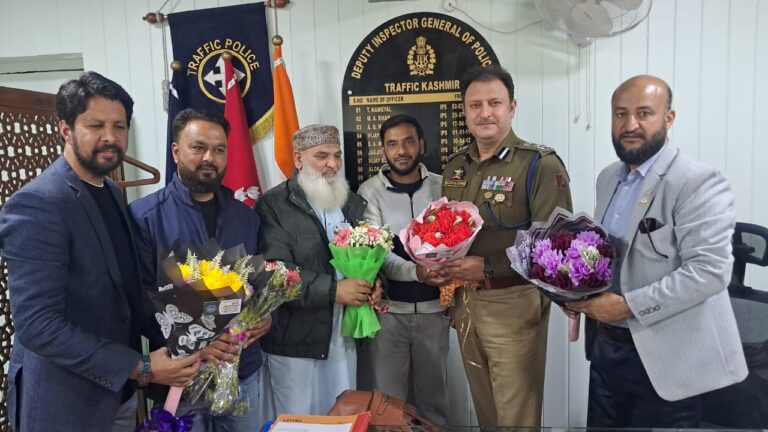
SRINAGAR, Apr 10: Signalling a transformative shift in traffic management across the Valley, newly appointed Deputy Inspector General (DIG) Traffic Kashmir, Haseeb Ur Rehman, has unveiled a comprehensive and forward-looking strategy that blends cutting-edge technology with grassroots public participation to create a safer and more efficient road network.

Having earlier played a pivotal role in laying the foundational traffic systems of Srinagar in 2010, Rehman returns to the region with a renewed vision tailored to contemporary challenges. At a high-level consultative meeting in Srinagar attended by representatives of the Jammu and Kashmir All Motor Transport Congress (AIMTC), BARS, and members of civil society, the DIG outlined a roadmap that moves beyond conventional enforcement towards what he described as “collective digital action” supported by societal reform.

Central to this vision is the integration of Artificial Intelligence into traffic management. Rehman emphasized that AI-based tools will be deployed to analyze traffic patterns, predict congestion, and enable dynamic regulation of vehicular movement in real time. This will be complemented by the rollout of an Integrated Traffic Management System (ITMS), designed to provide round-the-clock monitoring, automated detection of violations, and data-driven enforcement. Officials believe that such systems will significantly improve efficiency, reduce human intervention, and ensure consistency in the application of traffic laws.

The DIG made it clear that the overarching goal of these interventions is to move towards a zero-fatality traffic environment. By harnessing technology to identify risk factors and enforce compliance proactively, authorities aim to curb the rising incidence of road accidents that has become a matter of serious concern in recent years. Rehman stressed that smart enforcement will not only penalize violations but also act as a deterrent, thereby preventing accidents before they occur.

However, he was equally emphatic that technology alone cannot bring about lasting change. Underscoring the importance of behavioural transformation, Rehman called for an extensive Information, Education, and Communication (IEC) campaign to promote road safety awareness across all sections of society. He highlighted the need for active collaboration with educational institutions, non-governmental organizations, and community leaders to ensure that the message of responsible driving reaches every household in the region.

Particular concern was expressed over the growing trend of underage and reckless driving, which the DIG described as a major threat to public safety. He indicated that strict enforcement measures, combined with targeted awareness initiatives, would be undertaken to address this issue decisively. According to officials, intensified checking and stricter penalties are likely to be introduced in areas identified as high-risk zones.

Rehman reiterated that ensuring road safety is a shared responsibility and urged citizens to actively contribute to the transformation by adhering to traffic norms and encouraging others to do the same.

“Technology supports us, but collective effort sustains us. It is the duty of every individual to ensure our roads are safe. Through unified action, we will deliver a world-class system,” said Haseeb Ur Rehman.

With a dual focus on technological innovation and public engagement, the Traffic Police Kashmir appears set to embark on a new chapter in mobility governance. The proposed reforms, if implemented effectively, are expected to not only ease congestion and reduce accidents but also foster a long-term culture of discipline and accountability on the roads of Kashmir.

Misri, Rubio Discuss Trade, Quad; US Diplomat Set To Visit India In May

0
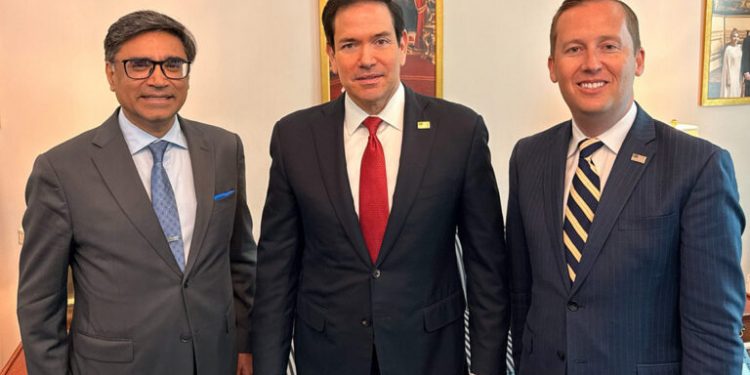
WASHINGTON, Apr 10: US Secretary of State Marco Rubio is set to visit New Delhi next month, it was announced here after his “productive meeting” with India’s Foreign Secretary Vikram Misri on a range of issues, including trade and the Quad.

Misri, who is on a three-day visit here, met Rubio at the White House. The two leaders reviewed bilateral relationships, especially trade, critical minerals, defence and the Quad.

“Welcome to the White House @VikramMisri! Productive meeting with @SecRubio that focused on our bilateral relationship, especially trade, critical minerals, defence and the Quad,” US Ambassador to India, Sergio Gor, who was also present at the meeting, posted on X.

Secretary Rubio looks forward to visiting India next month, Gor said.

Earlier, Misri held separate meetings with US Deputy Secretary Christopher Landau and US Under Secretary of State for Political Affairs, Allison Hooker.

“Deputy Secretary of State Christopher Landau met with Indian Foreign Secretary Vikram Misri today in Washington. The leaders reaffirmed the close partnership between the two countries and shared news about the situation in the Persian Gulf and other global and regional priorities,” Tommy Pigott, Principal Deputy Spokesman for the Department of State, said in a statement.

Hooker said she and Misri discussed how India and the US can work closer together on security, defence, and the economy.

“We are finding practical ways to make both Americans and Indians safer and more prosperous, including through the Quad,” she said.

The Indian embassy in the US said Hooker and Misri took stock of the India-US bilateral agenda since the Foreign Office Consultations held last December.

The two diplomats also shared assessments on recent developments in West Asia, as well as regional issues of mutual interest.

US Vice President J D Vance is leading a delegation to Islamabad for talks with Iranian leaders after the warring sides agreed to a two-week Pakistan-brokered ceasefire.

Government adopts coordinated approach to ensure uninterrupted availability of essential inputs for pharmaceutical manufacturing

0

Vinod Bhat

New Delhi: As part of its ongoing outreach to keep the media informed on the evolving situation in West Asia, the Government of India convened a briefing at the National Media Centre today. Officials from the Ministries of Petroleum and Natural Gas, Ports, Shipping and Waterways, External Affairs, and Information and Broadcasting provided updates on fuel availability, maritime operations, assistance to Indian nationals in the region, and measures being undertaken to maintain stability across key sectors. The Department of Pharmaceuticals, Ministry of Chemical & Fertilizers also shared updates pertaining to the pharmaceutical sector.

Pharmaceutical Sector Updates

The Department of Pharmaceuticals, Ministry of Chemicals and Fertilizers provided an update on the current status:

· The Government of India has noted disruptions in global supply chains of pharmaceutical inputs due to the West Asia crisis, particularly affecting solvents and Active Pharmaceutical Ingredients (APIs).

· Despite these challenges, there has been no major increase in the sale prices of drugs and pharmaceuticals in the country.

· To support the pharmaceutical industry and ensure continued availability of essential and life-saving medicines, the Department of Revenue has reduced customs duty to zero on 40 petrochemical products through a notification dated 1 April 2026.

· The pharmaceutical sector has strong value-chain linkages with the petroleum and petrochemicals sector, particularly for critical feedstocks and solvents required in the manufacture of drugs and syrups.

· The Department of Pharmaceuiticals is working in close coordination with the Ministry of Petroleum and Natural Gas and the Department of Chemicals and Petrochemicals to ensure uninterrupted availability of essential inputs for pharmaceutical manufacturing. Pro-rata of these solvents, particularly significant amount of Propylene, is made to chemicals and solvent manufacturers as per availability.

· Key solvents required by the pharmaceutical industry include propylene, ammonia and methanol, while butanol is required in smaller quantities for certain antibiotics.

· Propylene remains the most critical input as it is used in the production of Isopropyl Alcohol (IPA) and Isobutyl Benzene, which are used in medicines such as Ibuprofen.

· A significant share of propylene supply is currently being met through Bharat Petroleum Corporation Limited’s Kochi and Mumbai refineries and supplied to major manufacturers of Isopropyl Alcohol.

· With support from the concerned department, the fertilizer industry has ensured adequate supply of ammonia and related inputs to pharmaceutical units.

· Methanol supply had emerged as a concern; however, Assam Petrochemicals and Gujarat Narmada Valley Fertilizers & Chemicals (GNFC) have agreed to supply adequate quantities, and logistics arrangements are underway with supplies already commenced.

· Availability of methylated ammonium products, used as intermediates for medicines such as Metformin and Aspirin, is being closely monitored.

· The Department of Chemicals and Petrochemicals has suspended the Quality Control Order for Morpholine, an important input used in the manufacture of several life-saving drugs.

· Supply of aluminum used in pharmaceutical packaging had faced constraints, but restoration of supply is underway and the situation is expected to normalise within a week.

· Supplies of LPG and High-Speed Deisel (HSD) oil used for ampoule and vial sealing are being closely monitored, and pharmaceutical units are currently not facing shortages.

· The Government continues to facilitate supply of critical inputs on a case-by-case basis, in coordination with the Ministry of Petroleum and Natural Gas, to ensure uninterrupted production of essential medicines.

Energy Supply and Fuel Availability

The Ministry of Petroleum and Natural Gas shared an update on the current fuel supply situation, outlining measures being undertaken to ensure uninterrupted availability of petroleum products and LPG amid the ongoing developments affecting the Strait of Hormuz. It was noted that:

Public Advisory and Citizen Awareness

· Citizens are advised to avoid panic purchase of petrol, diesel and LPG and rely only on official sources for information.

· LPG consumers are requested to use digital booking platforms and avoid visiting distributors.

· Citizens are encouraged to use alternate fuels such as PNG and electric or induction cooktops.

· All citizens are urged to conserve energy during the current situation.

Government Preparedness and Supply Management Measures

· Despite the ongoing geopolitical situation, the Government has prioritised domestic LPG and PNG supply, particularly for hospitals and educational institutions.

· The Government has already implemented several rationalisation measures on both the supply and demand side, including enhancing refinery production, increasing the booking interval from 21 to 25 days in urban areas and up to 45 days in rural areas and prioritising sectors for supply.

· Alternate fuels such as kerosene and coal have been made available to ease pressure on LPG demand.

· The Ministry of Coal has directed Coal India and Singareni Collieries to supply additional coal to States for distribution to small and medium consumers.

· States have been advised to facilitate new PNG connections for domestic and commercial consumers.

Coordinated Efforts with States/UTs and Institutional Mechanisms

· State Governments are empowered under the Essential Commodities Act, 1955 and LPG Control Order, 2000 to monitor supply and act against hoarding and black marketing of petroleum products.

· The Government of India vide letters dated 27.03.2026 and 02.04.2026 have stressed the need for proactive public communication to reassure citizens regarding adequate fuel availability. Regular review meetings are being held with States/UTs. In this context, meetings were convened on 02.04.2026 (Chaired by Secretary, MoPNG) and on 06.04.2026 (Chaired by Secretary, MoPNG along with Secretaries of I&B and Consumer Affairs), wherein the following was emphasized:

o To issue daily press briefings and issue regular public advisories.

o To actively monitor and counter fake news / misinformation on social media.

o To intensify daily enforcement drives by District admin and to continue raids and inspections in coordination with OMCs

o To issue Commercial LPG allocation orders within their States/UTs

o To issue SKO allocation orders for additional SKO allotted to the States/UTs.

o To promote PNG adoptions and alternate fuels.

o To prioritise LPG supply, especially for domestic needs, and adopt targeted distribution of 5 kg FTL cylinders to ensure supply stability.

· All States/UTs have established control rooms and district monitoring committees to curb hoarding and black marketing.

· Currently, 24 States/UTs are issuing regular press briefings.

Enforcement and Monitoring Actions

· Enforcement actions continue across the country to curb hoarding and black marketing of LPG. Yesterday, more than 3300 raids were conducted, and about 600 cylinders were seized across the country.

· Till date, more than 1.16 Lakh raids have been conducted across the country.

· PSU Oil Marketing Companies have strengthened surprise inspections and issued over 1870 show-cause notices, imposed penalties on 189 LPG distributorships and suspended 53 distributorships.

LPG Supply

Domestic LPG Supply Status:

· LPG supply continues to be affected by the prevailing geopolitical situation.

· No dry-outs have been reported at LPG distributorships.

· Online LPG bookings have increased to about 98% across the industry.

· Delivery Authentication Code (DAC) based deliveries have increased to around 92% to prevent diversion.

· Domestic LPG cylinder deliveries remain normal.

· On 08.04.2026, more than 51.5 Lakh domestic LPG cylinders were delivered.

Commercial LPG Supply and Allocation Measures:

· Total commercial LPG allocation has been increased to about 70% of pre-crisis levels, including 10% reform-linked allocation.

· The Government of India vide letter dated 08.04.2026 has conveyed that industrial units in the sectors of Pharma, Food, Polymer, Agriculture, Packaging, Paint, Uranium, Heavy Water, Steel, Seed, Metal, Ceramic, Foundry, Forging, Glass, Aerosol etc. shall also receive 70% of the units’ pre-March 2026 Bulk non-domestic LPG consumption level subject to an overall sectoral limit of 0.2 TMT/day.

· Conditions stipulated in Para (b) of letter dated 21.03.2026 regarding registration with OMCs and Para (c) regarding application for PNG to CGD entities must also be fulfilled by the respective industries to avail Bulk LPG under this allocation. However, if the industries mentioned above use LPG as an integral input in the manufacturing process or for specialised purposes that cannot be substituted by Natural gas, the requirement relating to application for PNG shall stand waived.

· These measures are expected to prevent supply-chain disruptions, avoid shortages of essential goods and ensure continuity of industrial operations despite the ongoing global crises.

· The Government of India vide letter dated 06.04.2026 has conveyed that daily quantity of 5 Kg FTL cylinders in each State available for disbursal to migrant labourers is being doubled based on the average daily supply (Number of cylinders) to migrant labourers during 2nd-3rd March 2026 beyond the limit of 20% mentioned in letter dated 21.03.2026. These 5 Kg FTL cylinders will be at disposal of the State Government for supplying only to migrant labourers in their State with assistance of Oil Marketing Companies (OMCs).

· PSU OMCs have organised around 2000 awareness camps for 5 Kg FTL Cylinders during last 6 days, wherein More than 20,000 – 5Kg FTL cylinders were also sold.

· On 08.04.2026, more than 1.06 Lakh 5 Kg FTL Cylinders were sold across the country against a daily average of 77000 in the month of Feb-26.

· Since 23 March 2026, about 10 lakh 5-kg Free Trade LPG cylinders have been sold to students and vulnerable communities including migrant labourers.

· A three-member committee of Executive Directors from IOCL, HPCL and BPCL is coordinating with State authorities and industry bodies to plan commercial LPG distribution.

· About 99,796 MT of commercial LPG (equivalent to over 52.5 lakh 19-kg cylinders) has been sold since 14 March 2026. Yesterday, 6711 MT of Commercial LPG (Equivalent to more than 3.5 Lakh – 19 Kg cylinders) was sold.

Natural Gas Supply and PNG Expansion Initiatives

· Priority sectors continue to receive protected supplies, including 100% supply to domestic PNG and CNG transport.

· Based on available inventory and scheduled LNG cargo arrivals, the overall gas allocation to fertilizer plants is being further enhanced by 5% to reach approximately 95% of their six-month average consumption, effective 09.04.2026.

· Gas supply to other industrial and commercial sectors, including City Gas Distribution (CGD) networks, has also been enhanced by a further 10%, effective 06.04.2026.

· CGD entities have been advised to prioritise PNG connections for commercial establishments such as hotels, restaurants and canteens, to address concerns regarding the availability of commercial LPG.

· CGD companies including IGL, MGL, GAIL Gas and BPCL are offering incentives for domestic and commercial PNG connections.

· States/UTs and Central Ministries have been requested to expedite approvals required for expansion of CGD networks.

· The Government of India vide letter dated 18.03.2026 has offered all States/UTs additional 10% allocation of commercial LPG to States provided they can help in long term transition from LPG to PNG.

· 18 States/UTs like Gujarat, Karnataka, Andhra Pradesh, Keralam etc. are already receiving additional commercial LPG allocation linked to PNG expansion reforms.

· PNGRB has directed CGD entities to connect institutions such as schools, hostels, community kitchens and anganwadi kitchens through PNG within five days where pipelines are available.

· The Ministry of Road Transport & Highways has adopted an Accelerated Approval Framework for CGD infrastructure for three months to process applications on priority.

· The Government of India vide Gazette dated 24.03.2026 has notified the Natural Gas and Petroleum Products Distribution (Through Laying, Building, Operation and Expansion of Pipelines and Other Facilities) Order, 2026 under the Essential Commodities Act, 1955. The Order provides a streamlined and time-bound framework for laying and expanding pipelines across the country, addressing delays in approvals and access to land, and enabling faster development of natural gas infrastructure, including in residential areas. It is expected to accelerate PNG network growth, enhance last-mile connectivity, and support the transition to cleaner fuels, thereby strengthening energy security and advancing India’s gas-based economy.

· PNGRB has extended the National PNG Drive 2.0 till 30 June 2026 to sustain momentum in PNG expansion.

· To encourage cleaner, more secure and self-reliant energy future, the Government of India has developed a model draft State CBG Policy. The model policy is intended to serve as a comprehensive flexible guiding framework to enable States to create their own investor-friendly and implementation-oriented ecosystem for CBG development. Those States which opt for this, will be prioritized for the next tranche of additional allocation of commercial LPG.

· Since March 2026, about 3.97 lakh PNG connections have been gasified and about 4.30 lakh additional customers have registered for new connections.

· More than 18,000 PNG consumers have surrendered their LPG connections via MYPNGD.in website.

Crude Position and Refinery Operations

· All refineries are operating at high capacity with adequate crude inventories, while sufficient stocks of petrol and diesel are being maintained.

· Domestic LPG production from refineries has been increased to support domestic consumption.

· The Government of India vide order dated 01.04.2026 has permitted Refining companies including Petrochemical Complexes in India to make available certain minimum quantities of C3 & C4 streams for critical sectors like Department of Pharmaceuticals, Department of Food & Public Distribution, Department of Chemicals & Petro Chemicals etc. based on specific quantity and refinery source as determined by the Centre for High Technology (CHT).

· Provision for 800 MT/day has been made for companies related to above departments.

Retail Fuel Availability and pricing Measures

· Retail outlets across the country are operating normally.

· The Middle East crisis has led to an abnormal increase in crude prices; however, to protect consumers, the Government of India has reduced excise duty on petrol and diesel by ₹10 per litre.

· Export levy has been imposed at ₹21.5 per litre on diesel and ₹29.5 per litre on Aviation Turbine Fuel (ATF) to ensure adequate domestic availability.

· Retail prices of petrol and diesel remain unchanged with no increase at retail outlets.

· The Government has advised citizens not to believe rumours and requested State Governments to disseminate accurate information through press briefings.

Kerosene Availability and Distribution Measures

· An additional allocation of 48,000 KL of kerosene has been provided to States/UTs over and above regular allocation.

· The Government of India vide Gazette notification dated 29.03.2026 has facilitated distribution of PDS Superior Kerosene Oil (SKO) in PDS SKO Free States/UTs for cooking and lighting purpose only –

o A maximum of two PSU OMC service stations per district (preferably Company Owned Company Operated) are permitted to store up to 5,000 litres of PDS SKO.

o These PSU OMC service stations shall be designated by the State Government or UT administration in each district.

· 18 States/UTs have issued SKO allocation orders, while Himachal Pradesh and Ladakh have indicated no requirement.

Maritime Safety and Shipping Operations

The current maritime situation in the Persian Gulf, along with measures being undertaken to safeguard Indian vessels and crew, was also briefed. It was stated that:

· The Ministry of Ports, Shipping and Waterways, in coordination with the Ministry of External Affairs and Indian Missions, continues to actively monitor the evolving situation in the Persian Gulf region.

· All Indian seafarers in the region are safe and no incident involving Indian-flagged vessels has been reported in the past 24 hours.

· The India-flagged LPG vessel Green Asha, which crossed the Strait of Hormuz on 5 April 2026, has safely reached Jawaharlal Nehru Port Authority (JNPA) earlier today.

· The Directorate General of Shipping (DG Shipping), in coordination with ship owners, Recruitment and Placement Service License (RPSL) agencies and Indian Missions, continues to closely monitor developments.

· The DG Shipping Control Room has handled 5,647 calls and 12,043 emails since activation, including 166 calls and 317 emails in the past 24 hours.

· DG Shipping has facilitated the safe repatriation of over 1,803 Indian seafarers so far, including 49 in the past 24 hours from various locations across the Gulf region.

· Port operations across India continue normally with no congestion reported. State Maritime Boards of Gujarat, Maharashtra, Goa, Keralam, Andhra Pradesh and Puducherry have confirmed smooth functioning.

· The Ministry continues to coordinate closely with the Ministry of External Affairs, Indian Missions and maritime stakeholders to ensure the welfare of Indian seafarers and uninterrupted maritime operations.

Safety of Indian Nationals in the Region

Recent developments in the region, including assistance through Indian Missions, were shared during the briefing. It was informed that:

· India continues to closely monitor developments in West Asia and remains engaged with countries in the region.

· The External Affairs Minister will pay an official visit to the United Arab Emirates from 11–12 April 2026. During the visit, he will meet the leadership of the UAE to review bilateral cooperation and further strengthen the India–UAE Comprehensive Strategic Partnership.

· India is also reaching out to other countries in the region through high-level engagements.

· The Minister of Petroleum and Natural Gas is undertaking an official visit to Qatar on 9–10 April 2026.

· The Government continues to closely monitor developments in the Gulf and West Asia region. A dedicated Special Control Room in the Ministry remains operational and is in regular contact with State Governments and Union Territories.

· Efforts remain focused on ensuring the safety, security and welfare of the Indian community in the region.

· Indian Missions and Posts continue to operate round-the-clock helplines and are proactively assisting Indian nationals.

· Updated advisories are being issued regularly, including information on local government guidelines, flight and travel situations and consular services.

· Our Missions remain actively engaged with Indian community associations, professional groups, Indian companies and other stakeholders in the region.

· Flights continue to operate from countries where airspace remains open. Since 28 February, around 8,15,000 passengers have travelled from the region to India.

· In the UAE, airlines continue to operate limited non-scheduled commercial flights between the UAE and India based on operational and safety considerations, with around 85 flights expected today.

· Flights continue to operate from various airports in Saudi Arabia and Oman to destinations in India.

· With Qatar airspace partially open, Qatar Airways is expected to operate around 8–10 flights to India today.

· Kuwait airspace remains closed. Jazeera Airways and Kuwait Airways are operating non-scheduled commercial flights from Dammam Airport in Saudi Arabia to India. Travel of Indian nationals from Kuwait continues to be facilitated through Saudi Arabia to India.

· Bahrain airspace has now opened. Gulf Air is expected to begin limited flight operations from Bahrain to India soon and is currently operating non-scheduled flights from Dammam Airport in Saudi Arabia to India. Travel of Indian nationals to India from Bahrain continues to be facilitated through Saudi Arabia.

· The Embassy of India in Tehran has so far facilitated movement of 2,170 Indian nationals from Iran to Armenia and Azerbaijan for onward travel to India, including 971 Indian students and 657 Indian fishermen.

· Israeli airspace remains closed. Travel of Indian nationals continue to be facilitated through Jordan and Egypt to India.

· Iraq airspace is now open, though flight operations have not yet resumed. Travel of Indian nationals continue to be facilitated through Jordan and Saudi Arabia to India.

Doordarshan (Prasar Bharati) Signs MoU with ICCR to Expand Global Reach of Indian Cultural Content

0

Vinod Bhat

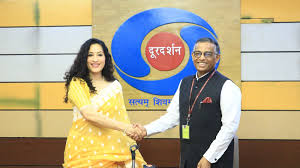
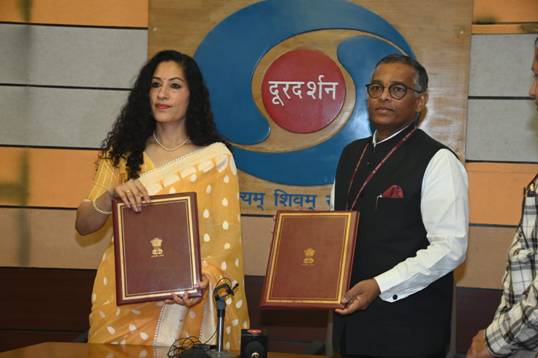
New Delhi: In a significant step towards strengthening India’s cultural diplomacy and global outreach, Doordarshan (Prasar Bharati) signed a Memorandum of Understanding (MoU) with the Indian Council for Cultural Relations (ICCR) on April 7, 2026, at Doordarshan Bhawan, New Delhi.

The MoU was signed by Director General, Doordarshan, Shri K. Satish Nambudiripad, and Director General, ICCR, Smt. K. Nandini Singla, in the presence of senior officials from both organisations, and was attended by officials from Doordarshan (Prasar Bharati) and ICCR.

The partnership seeks to leverage Doordarshan (Prasar Bharati)’s extensive television, radio, and digital ecosystem to amplify the reach of cultural content provided by ICCR. These include cultural events organised by Indian Missions abroad, such as Embassies, Consulates, and Indian Cultural Centres, as well as programmes conducted by ICCR Headquarters and its Zonal and Regional Offices across India.

Under the MoU, ICCR will provide cultural content and performances, while Doordarshan (Prasar Bharati) will undertake their coverage and dissemination across multiple platforms, including television channels, radio networks, OTT platforms, and social media. The arrangement also facilitates the broadcast of recorded cultural content received from Indian Missions overseas, thereby ensuring wider access to India’s cultural expressions across geographies.

A key feature of the agreement is the provision for joint ownership of content rights in perpetuity, including digital rights, enabling both organisations to archive and disseminate content for long-term use. Doordarshan (Prasar Bharati) will also undertake pre-event publicity and cross-platform promotion, as feasible, to enhance audience engagement.

The MoU further enables Doordarshan (Prasar Bharati) to explore monetisation opportunities arising from the content generated under this collaboration, contributing to the sustainability of cultural broadcasting initiatives.

The agreement will remain in force for a period of three years, with provisions for extension through mutual consent. This collaboration is expected to significantly enhance the visibility and accessibility of India’s rich and diverse cultural heritage, while aligning cultural promotion efforts with contemporary media platforms and global audiences.

Historic Democratic Milestone: PSAJK Holds First-Ever Elections in Bandipora

0

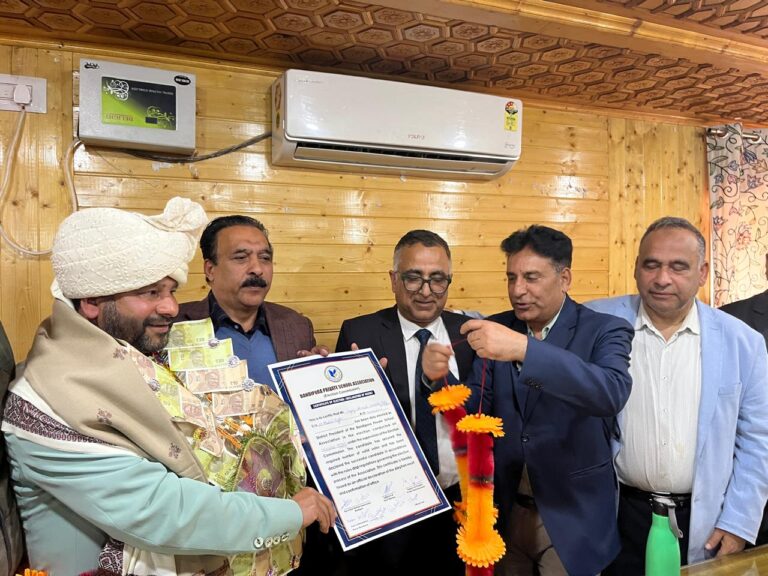
Bandipora: In a landmark development and a defining moment in the history of the Private Schools Association of Jammu and Kashmir (PSAJK), the first-ever district elections were successfully conducted at the Municipal Committee Bandipora, marking a new and progressive chapter in the association’s democratic journey.

The elections were held under the supervision of the Dy Chief Education Officer Bandipora, G M Pajoo ensuring transparency and credibility in the entire process.

The occasion witnessed the presence of prominent dignitaries and key office bearers, including Mr. Farooq Ashai, Convenor Election Commission PSAJK; Advocate Nadeem Qadiri, Legal Advisor PSAJK; Mr. Nazir Ahmad Malik, Member Election Commission; and Mr. Majid Bhat, Incharge Head Office Srinagar and Member Election Commission.

Adding further significance to the event, several district presidents and senior leaders attended, including Mr. Bashir Ahmad Shah (DP Ganderbal), Dr. Abrar Ahmad (DPBaramulla), Mr. Tahir Wagay (DPSrinagar), State Advisor Mr. Mohammad Ashraf Baba, and State Coordinator Mr. Tariq Balli.

The participation of member schools was overwhelming, with a large number of institutions actively taking part in the electoral process. Demonstrating rare unity and consensus, the majority of member schools submitted a written declaration—duly sealed and signed—in unanimous support of Mr. Fayaz Ahmad, Chairman IDPS Bandipora, for the post of President, PSAJK Bandipora chapter.

Speakers on the occasion expressed strong confidence in the leadership abilities of Mr. Fayaz Ahmad, highlighting his vision, commitment, and capacity to lead the district towards growth and reform. They termed the election as a “new beginning” that would bring positive transformation in the private education sector of Bandipora.

The event was also attended by former PSAJK President Mr. Saleem Akhtar and Central Executive Member Mr. Saidullah Bhat, whose presence added experience and encouragement to the proceedings.

The successful conduct of these elections reflects PSAJK’s commitment to democratic values, transparency, and collective decision-making, setting a strong precedent for other districts to follow.

Indian Institute of Creative Technologies Launches “AI Skills House”, a Free National Level AI Foundation Programme to Empower India’s Next Generation of Innovators

0

Vinod Bhat

New Delhi: The Indian Institute of Creative Technologies (IICT) has announced the launch of its flagship national level initiative, the AI Foundation Programme “AI Skills House”, a free learning opportunity designed to equip students, creators, developers, and working professionals with practical, future ready artificial intelligence skills.

At a time when AI is transforming industries and reshaping career pathways, the programme aims to democratize access to foundational AI education across India. With a strong emphasis on experiential learning, participants will gain a clear understanding of core AI concepts while applying them through hands on projects, real world problem solving, and creative experimentation.

The “AI Skills House” programme has been structured to go beyond theory, enabling participants to learn by building, testing, and creating. From understanding key AI principles to exploring practical applications, the initiative bridges the gap between academic knowledge and industry needs, making it relevant for a wide spectrum of learners.

Open to a diverse audience, the programme welcomes individuals at different stages of their journey, including students exploring career opportunities, professionals looking to upskill, developers seeking to deepen their capabilities, and creators aiming to integrate AI into their work.

While the programme is offered free of cost, seats are limited and registrations are expected to close soon due to high demand. With “AI Skills House,” IICT continues to strengthen its role in advancing India’s digital and creative technology ecosystem, enabling individuals to not just learn AI, but actively build with it.

Yojana, Kurukshetra & Employment News Now Freely Available on WAVES OTT

0
Vinod Bhat

New Delhi: In a major push towards digital knowledge access, the Publications Division has made its flagship journals Yojana, Kurukshetra, Aajkal and Bal Bharati along with the weekly Employment News, available free of cost on Prasar Bharati’s WAVES OTT platform, bringing its rich repository directly to readers nationwide.

This initiative is aimed at democratizing access to credible, informative, and culturally enriching content for readers across the country. The monthly journals are widely recognized for their in-depth analysis of socio-economic issues, rural development, literature, and children’s education, while Employment News serves as a vital resource for job seekers by providing reliable and timely information on employment opportunities, recruitment notifications, career guidance, and skill development.

In addition to journals, a comprehensive collection of e-books across a wide range of genres has also been made available free of cost on the WAVES platform. This includes the prestigious Bharat Year Book , a flagship publication known for its authoritative and detailed account of India’s governance, economy, and development initiatives. At present, a total of 227 e-books are accessible free of charge to readers.

Further expanding its digital offerings, the Publications Division plans to make approximately 300 additional e-books available on the WAVES platform by the end of April. These publications will be offered at a nominal cost, ensuring affordability while continuing the Division’s mission of promoting knowledge dissemination.

To further enhance accessibility and reader convenience, printed books published by the Publications Division can also be purchased through the WAVES platform. This facility is being enabled through CSC Grameen eStore under the ONDC (Open Network for Digital Commerce) framework, ensuring seamless availability of physical copies to readers across the country, including in rural and remote areas. A total of 524 printed books are available to purchase at present.

This initiative underscores the Publications Division’s commitment to leveraging digital platforms to broaden the reach of its publications and cater to the evolving preferences of readers. By integrating free digital access with affordable paid content and physical book availability, the Division aims to create a comprehensive and inclusive reading ecosystem.

The public is encouraged to explore the extensive range of journals and e-books now available on the WAVES OTT platform and benefit from this initiative.

Government adopts coordinated approach to ensure uninterrupted availability of essential inputs for pharmaceutical manufacturing

0
VINOD BHAT

New Delhi: As part of its ongoing outreach to keep the media informed on the evolving situation in West Asia, the Government of India convened a briefing at the National Media Centre today. Officials from the Ministries of Petroleum and Natural Gas, Ports, Shipping and Waterways, External Affairs, and Information and Broadcasting provided updates on fuel availability, maritime operations, assistance to Indian nationals in the region, and measures being undertaken to maintain stability across key sectors. The Department of Pharmaceuticals, Ministry of Chemical & Fertilizers also shared updates pertaining to the pharmaceutical sector.

Pharmaceutical Sector Updates

The Department of Pharmaceuticals, Ministry of Chemicals and Fertilizers provided an update on the current status:

· The Government of India has noted disruptions in global supply chains of pharmaceutical inputs due to the West Asia crisis, particularly affecting solvents and Active Pharmaceutical Ingredients (APIs).

· Despite these challenges, there has been no major increase in the sale prices of drugs and pharmaceuticals in the country.

· To support the pharmaceutical industry and ensure continued availability of essential and life-saving medicines, the Department of Revenue has reduced customs duty to zero on 40 petrochemical products through a notification dated 1 April 2026.

· The pharmaceutical sector has strong value-chain linkages with the petroleum and petrochemicals sector, particularly for critical feedstocks and solvents required in the manufacture of drugs and syrups.

· The Department of Pharmaceuiticals is working in close coordination with the Ministry of Petroleum and Natural Gas and the Department of Chemicals and Petrochemicals to ensure uninterrupted availability of essential inputs for pharmaceutical manufacturing. Pro-rata of these solvents, particularly significant amount of Propylene, is made to chemicals and solvent manufacturers as per availability.

· Key solvents required by the pharmaceutical industry include propylene, ammonia and methanol, while butanol is required in smaller quantities for certain antibiotics.

· Propylene remains the most critical input as it is used in the production of Isopropyl Alcohol (IPA) and Isobutyl Benzene, which are used in medicines such as Ibuprofen.

· A significant share of propylene supply is currently being met through Bharat Petroleum Corporation Limited’s Kochi and Mumbai refineries and supplied to major manufacturers of Isopropyl Alcohol.

· With support from the concerned department, the fertilizer industry has ensured adequate supply of ammonia and related inputs to pharmaceutical units.

· Methanol supply had emerged as a concern; however, Assam Petrochemicals and Gujarat Narmada Valley Fertilizers & Chemicals (GNFC) have agreed to supply adequate quantities, and logistics arrangements are underway with supplies already commenced.

· Availability of methylated ammonium products, used as intermediates for medicines such as Metformin and Aspirin, is being closely monitored.

· The Department of Chemicals and Petrochemicals has suspended the Quality Control Order for Morpholine, an important input used in the manufacture of several life-saving drugs.

· Supply of aluminum used in pharmaceutical packaging had faced constraints, but restoration of supply is underway and the situation is expected to normalise within a week.

· Supplies of LPG and High-Speed Deisel (HSD) oil used for ampoule and vial sealing are being closely monitored, and pharmaceutical units are currently not facing shortages.

· The Government continues to facilitate supply of critical inputs on a case-by-case basis, in coordination with the Ministry of Petroleum and Natural Gas, to ensure uninterrupted production of essential medicines.

Energy Supply and Fuel Availability

The Ministry of Petroleum and Natural Gas shared an update on the current fuel supply situation, outlining measures being undertaken to ensure uninterrupted availability of petroleum products and LPG amid the ongoing developments affecting the Strait of Hormuz. It was noted that:

Public Advisory and Citizen Awareness

· Citizens are advised to avoid panic purchase of petrol, diesel and LPG and rely only on official sources for information.

· LPG consumers are requested to use digital booking platforms and avoid visiting distributors.

· Citizens are encouraged to use alternate fuels such as PNG and electric or induction cooktops.

· All citizens are urged to conserve energy during the current situation.

Government Preparedness and Supply Management Measures

· Despite the ongoing geopolitical situation, the Government has prioritised domestic LPG and PNG supply, particularly for hospitals and educational institutions.

· The Government has already implemented several rationalisation measures on both the supply and demand side, including enhancing refinery production, increasing the booking interval from 21 to 25 days in urban areas and up to 45 days in rural areas and prioritising sectors for supply.

· Alternate fuels such as kerosene and coal have been made available to ease pressure on LPG demand.

· The Ministry of Coal has directed Coal India and Singareni Collieries to supply additional coal to States for distribution to small and medium consumers.

· States have been advised to facilitate new PNG connections for domestic and commercial consumers.

Coordinated Efforts with States/UTs and Institutional Mechanisms

· State Governments are empowered under the Essential Commodities Act, 1955 and LPG Control Order, 2000 to monitor supply and act against hoarding and black marketing of petroleum products.

· The Government of India vide letters dated 27.03.2026 and 02.04.2026 have stressed the need for proactive public communication to reassure citizens regarding adequate fuel availability. Regular review meetings are being held with States/UTs. In this context, meetings were convened on 02.04.2026 (Chaired by Secretary, MoPNG) and on 06.04.2026 (Chaired by Secretary, MoPNG along with Secretaries of I&B and Consumer Affairs), wherein the following was emphasized:

o To issue daily press briefings and issue regular public advisories.

o To actively monitor and counter fake news / misinformation on social media.

o To intensify daily enforcement drives by District admin and to continue raids and inspections in coordination with OMCs

o To issue Commercial LPG allocation orders within their States/UTs

o To issue SKO allocation orders for additional SKO allotted to the States/UTs.

o To promote PNG adoptions and alternate fuels.

o To prioritise LPG supply, especially for domestic needs, and adopt targeted distribution of 5 kg FTL cylinders to ensure supply stability.

· All States/UTs have established control rooms and district monitoring committees to curb hoarding and black marketing.

· Currently, 24 States/UTs are issuing regular press briefings.

Enforcement and Monitoring Actions

· Enforcement actions continue across the country to curb hoarding and black marketing of LPG. Yesterday, more than 3300 raids were conducted, and about 600 cylinders were seized across the country.

· Till date, more than 1.16 Lakh raids have been conducted across the country.

· PSU Oil Marketing Companies have strengthened surprise inspections and issued over 1870 show-cause notices, imposed penalties on 189 LPG distributorships and suspended 53 distributorships.

LPG Supply

Domestic LPG Supply Status:

· LPG supply continues to be affected by the prevailing geopolitical situation.

· No dry-outs have been reported at LPG distributorships.

· Online LPG bookings have increased to about 98% across the industry.

· Delivery Authentication Code (DAC) based deliveries have increased to around 92% to prevent diversion.

· Domestic LPG cylinder deliveries remain normal.

· On 08.04.2026, more than 51.5 Lakh domestic LPG cylinders were delivered.

Commercial LPG Supply and Allocation Measures:

· Total commercial LPG allocation has been increased to about 70% of pre-crisis levels, including 10% reform-linked allocation.

· The Government of India vide letter dated 08.04.2026 has conveyed that industrial units in the sectors of Pharma, Food, Polymer, Agriculture, Packaging, Paint, Uranium, Heavy Water, Steel, Seed, Metal, Ceramic, Foundry, Forging, Glass, Aerosol etc. shall also receive 70% of the units’ pre-March 2026 Bulk non-domestic LPG consumption level subject to an overall sectoral limit of 0.2 TMT/day.

· Conditions stipulated in Para (b) of letter dated 21.03.2026 regarding registration with OMCs and Para (c) regarding application for PNG to CGD entities must also be fulfilled by the respective industries to avail Bulk LPG under this allocation. However, if the industries mentioned above use LPG as an integral input in the manufacturing process or for specialised purposes that cannot be substituted by Natural gas, the requirement relating to application for PNG shall stand waived.

· These measures are expected to prevent supply-chain disruptions, avoid shortages of essential goods and ensure continuity of industrial operations despite the ongoing global crises.

· The Government of India vide letter dated 06.04.2026 has conveyed that daily quantity of 5 Kg FTL cylinders in each State available for disbursal to migrant labourers is being doubled based on the average daily supply (Number of cylinders) to migrant labourers during 2nd-3rd March 2026 beyond the limit of 20% mentioned in letter dated 21.03.2026. These 5 Kg FTL cylinders will be at disposal of the State Government for supplying only to migrant labourers in their State with assistance of Oil Marketing Companies (OMCs).

· PSU OMCs have organised around 2000 awareness camps for 5 Kg FTL Cylinders during last 6 days, wherein More than 20,000 – 5Kg FTL cylinders were also sold.

· On 08.04.2026, more than 1.06 Lakh 5 Kg FTL Cylinders were sold across the country against a daily average of 77000 in the month of Feb-26.

· Since 23 March 2026, about 10 lakh 5-kg Free Trade LPG cylinders have been sold to students and vulnerable communities including migrant labourers.

· A three-member committee of Executive Directors from IOCL, HPCL and BPCL is coordinating with State authorities and industry bodies to plan commercial LPG distribution.

· About 99,796 MT of commercial LPG (equivalent to over 52.5 lakh 19-kg cylinders) has been sold since 14 March 2026. Yesterday, 6711 MT of Commercial LPG (Equivalent to more than 3.5 Lakh – 19 Kg cylinders) was sold.

Natural Gas Supply and PNG Expansion Initiatives

· Priority sectors continue to receive protected supplies, including 100% supply to domestic PNG and CNG transport.

· Based on available inventory and scheduled LNG cargo arrivals, the overall gas allocation to fertilizer plants is being further enhanced by 5% to reach approximately 95% of their six-month average consumption, effective 09.04.2026.

· Gas supply to other industrial and commercial sectors, including City Gas Distribution (CGD) networks, has also been enhanced by a further 10%, effective 06.04.2026.

· CGD entities have been advised to prioritise PNG connections for commercial establishments such as hotels, restaurants and canteens, to address concerns regarding the availability of commercial LPG.

· CGD companies including IGL, MGL, GAIL Gas and BPCL are offering incentives for domestic and commercial PNG connections.

· States/UTs and Central Ministries have been requested to expedite approvals required for expansion of CGD networks.

· The Government of India vide letter dated 18.03.2026 has offered all States/UTs additional 10% allocation of commercial LPG to States provided they can help in long term transition from LPG to PNG.

· 18 States/UTs like Gujarat, Karnataka, Andhra Pradesh, Keralam etc. are already receiving additional commercial LPG allocation linked to PNG expansion reforms.

· PNGRB has directed CGD entities to connect institutions such as schools, hostels, community kitchens and anganwadi kitchens through PNG within five days where pipelines are available.

· The Ministry of Road Transport & Highways has adopted an Accelerated Approval Framework for CGD infrastructure for three months to process applications on priority.

· The Government of India vide Gazette dated 24.03.2026 has notified the Natural Gas and Petroleum Products Distribution (Through Laying, Building, Operation and Expansion of Pipelines and Other Facilities) Order, 2026 under the Essential Commodities Act, 1955. The Order provides a streamlined and time-bound framework for laying and expanding pipelines across the country, addressing delays in approvals and access to land, and enabling faster development of natural gas infrastructure, including in residential areas. It is expected to accelerate PNG network growth, enhance last-mile connectivity, and support the transition to cleaner fuels, thereby strengthening energy security and advancing India’s gas-based economy.

· PNGRB has extended the National PNG Drive 2.0 till 30 June 2026 to sustain momentum in PNG expansion.

· To encourage cleaner, more secure and self-reliant energy future, the Government of India has developed a model draft State CBG Policy. The model policy is intended to serve as a comprehensive flexible guiding framework to enable States to create their own investor-friendly and implementation-oriented ecosystem for CBG development. Those States which opt for this, will be prioritized for the next tranche of additional allocation of commercial LPG.

· Since March 2026, about 3.97 lakh PNG connections have been gasified and about 4.30 lakh additional customers have registered for new connections.

· More than 18,000 PNG consumers have surrendered their LPG connections via MYPNGD.in website.

Crude Position and Refinery Operations

· All refineries are operating at high capacity with adequate crude inventories, while sufficient stocks of petrol and diesel are being maintained.

· Domestic LPG production from refineries has been increased to support domestic consumption.

· The Government of India vide order dated 01.04.2026 has permitted Refining companies including Petrochemical Complexes in India to make available certain minimum quantities of C3 & C4 streams for critical sectors like Department of Pharmaceuticals, Department of Food & Public Distribution, Department of Chemicals & Petro Chemicals etc. based on specific quantity and refinery source as determined by the Centre for High Technology (CHT).

· Provision for 800 MT/day has been made for companies related to above departments.

Retail Fuel Availability and pricing Measures

· Retail outlets across the country are operating normally.

· The Middle East crisis has led to an abnormal increase in crude prices; however, to protect consumers, the Government of India has reduced excise duty on petrol and diesel by ₹10 per litre.

· Export levy has been imposed at ₹21.5 per litre on diesel and ₹29.5 per litre on Aviation Turbine Fuel (ATF) to ensure adequate domestic availability.

· Retail prices of petrol and diesel remain unchanged with no increase at retail outlets.

· The Government has advised citizens not to believe rumours and requested State Governments to disseminate accurate information through press briefings.

Kerosene Availability and Distribution Measures

· An additional allocation of 48,000 KL of kerosene has been provided to States/UTs over and above regular allocation.

· The Government of India vide Gazette notification dated 29.03.2026 has facilitated distribution of PDS Superior Kerosene Oil (SKO) in PDS SKO Free States/UTs for cooking and lighting purpose only –

o A maximum of two PSU OMC service stations per district (preferably Company Owned Company Operated) are permitted to store up to 5,000 litres of PDS SKO.

o These PSU OMC service stations shall be designated by the State Government or UT administration in each district.

· 18 States/UTs have issued SKO allocation orders, while Himachal Pradesh and Ladakh have indicated no requirement.

Maritime Safety and Shipping Operations

The current maritime situation in the Persian Gulf, along with measures being undertaken to safeguard Indian vessels and crew, was also briefed. It was stated that:

· The Ministry of Ports, Shipping and Waterways, in coordination with the Ministry of External Affairs and Indian Missions, continues to actively monitor the evolving situation in the Persian Gulf region.

· All Indian seafarers in the region are safe and no incident involving Indian-flagged vessels has been reported in the past 24 hours.

· The India-flagged LPG vessel Green Asha, which crossed the Strait of Hormuz on 5 April 2026, has safely reached Jawaharlal Nehru Port Authority (JNPA) earlier today.

· The Directorate General of Shipping (DG Shipping), in coordination with ship owners, Recruitment and Placement Service License (RPSL) agencies and Indian Missions, continues to closely monitor developments.

· The DG Shipping Control Room has handled 5,647 calls and 12,043 emails since activation, including 166 calls and 317 emails in the past 24 hours.

· DG Shipping has facilitated the safe repatriation of over 1,803 Indian seafarers so far, including 49 in the past 24 hours from various locations across the Gulf region.

· Port operations across India continue normally with no congestion reported. State Maritime Boards of Gujarat, Maharashtra, Goa, Keralam, Andhra Pradesh and Puducherry have confirmed smooth functioning.

· The Ministry continues to coordinate closely with the Ministry of External Affairs, Indian Missions and maritime stakeholders to ensure the welfare of Indian seafarers and uninterrupted maritime operations.

Safety of Indian Nationals in the Region

Recent developments in the region, including assistance through Indian Missions, were shared during the briefing. It was informed that:

· India continues to closely monitor developments in West Asia and remains engaged with countries in the region.

· The External Affairs Minister will pay an official visit to the United Arab Emirates from 11–12 April 2026. During the visit, he will meet the leadership of the UAE to review bilateral cooperation and further strengthen the India–UAE Comprehensive Strategic Partnership.

· India is also reaching out to other countries in the region through high-level engagements.

· The Minister of Petroleum and Natural Gas is undertaking an official visit to Qatar on 9–10 April 2026.

· The Government continues to closely monitor developments in the Gulf and West Asia region. A dedicated Special Control Room in the Ministry remains operational and is in regular contact with State Governments and Union Territories.

· Efforts remain focused on ensuring the safety, security and welfare of the Indian community in the region.

· Indian Missions and Posts continue to operate round-the-clock helplines and are proactively assisting Indian nationals.

· Updated advisories are being issued regularly, including information on local government guidelines, flight and travel situations and consular services.

· Our Missions remain actively engaged with Indian community associations, professional groups, Indian companies and other stakeholders in the region.

· Flights continue to operate from countries where airspace remains open. Since 28 February, around 8,15,000 passengers have travelled from the region to India.

· In the UAE, airlines continue to operate limited non-scheduled commercial flights between the UAE and India based on operational and safety considerations, with around 85 flights expected today.

· Flights continue to operate from various airports in Saudi Arabia and Oman to destinations in India.

· With Qatar airspace partially open, Qatar Airways is expected to operate around 8–10 flights to India today.

· Kuwait airspace remains closed. Jazeera Airways and Kuwait Airways are operating non-scheduled commercial flights from Dammam Airport in Saudi Arabia to India. Travel of Indian nationals from Kuwait continues to be facilitated through Saudi Arabia to India.

· Bahrain airspace has now opened. Gulf Air is expected to begin limited flight operations from Bahrain to India soon and is currently operating non-scheduled flights from Dammam Airport in Saudi Arabia to India. Travel of Indian nationals to India from Bahrain continues to be facilitated through Saudi Arabia.

· The Embassy of India in Tehran has so far facilitated movement of 2,170 Indian nationals from Iran to Armenia and Azerbaijan for onward travel to India, including 971 Indian students and 657 Indian fishermen.

· Israeli airspace remains closed. Travel of Indian nationals continue to be facilitated through Jordan and Egypt to India.

· Iraq airspace is now open, though flight operations have not yet resumed. Travel of Indian nationals continue to be facilitated through Jordan and Saudi Arabia to India.
Six buses damaged in Kupwara midnight blaze, no injuries

0

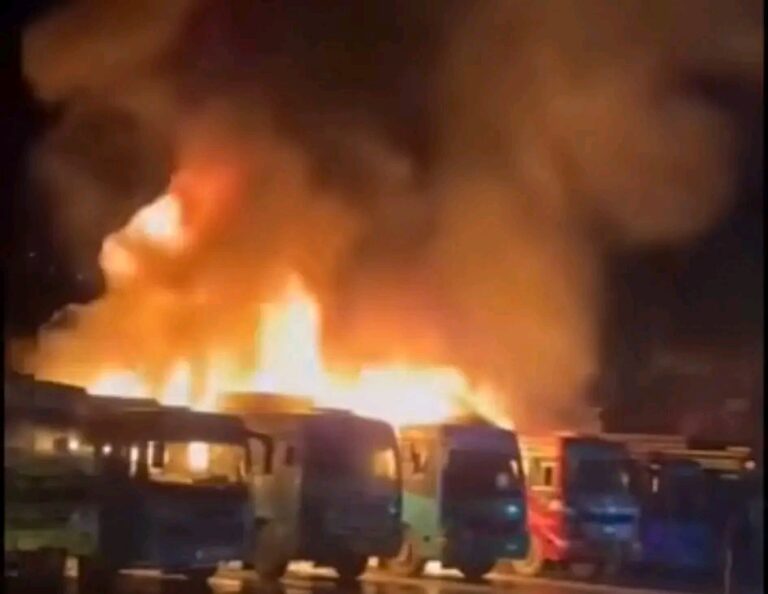
Kupwara, Apr 09 : At least six passenger buses were damaged after a fire broke out at the Kupwara bus stand in north Kashmir late last night, officials said on Thursday.

An official told that six buses were damaged in the incident, while the fire and emergency services rushed to the spot and brought the flames under control.

He said three buses were completely gutted in the blaze, while three others were partially damaged.

“The cause of the fire remains unknown. Police have taken cognizance of the incident,” he said, adding that no loss of life or injuries were reported.—(KNO)