spot_imgspot_img
spot_img
Home Blog Page 6

GMC Anantnag Principal Removed; Prof Junaid Wani Given Additional Charge

0

Srinagar, June 1: The Jammu and Kashmir Government on Monday ordered a reshuffle in Government Medical College (GMC) Anantnag, assigning the additional charge of Principal to Prof. (Dr.) Junaid Salam Wani with immediate effect.

According to Government Order No. 439-JK (HME) of 2026 dated June 1, 2026, Prof. (Dr.) Junaid Salam Wani, Professor and Head of the Department of Ophthalmology at Government Medical College Srinagar, has been entrusted with the responsibility of Principal, Government Medical College Anantnag, in addition to his existing duties.

The order, according to news agency Kashmir Dot Com, states that the arrangement has been made in the interest of better administration and patient care and will remain in force until further orders from the government.

Consequently, Prof. (Dr.) Rukhsana Najeeb, Professor of Anaesthesiology and Principal, GMC Anantnag, has been relieved of the charge and directed to report to Government Medical College Srinagar forthwith.

Jammu and Kashmir Pensioners and Senior Citizens United Front Meets Ahead of Crucial Eighth Pay Commission Talks Tomorrow

0


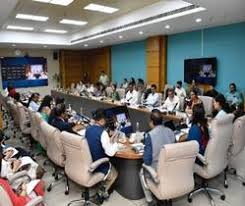
SRINAGAR, JUNE 1, 2026: The J&K UT Pensioners & Senior Citizens United Front convened an urgent, high-level meeting today at its office headquarters at PDD Complex, Bemina, Srinagar. Presided over by the front’s Chairman, Rafiq Ahmad Khanyari, the session witnessed threadbare discussions and detailed internal deliberations regarding the ongoing official visit of the 8th Central Pay Commission (CPC) to the valley.

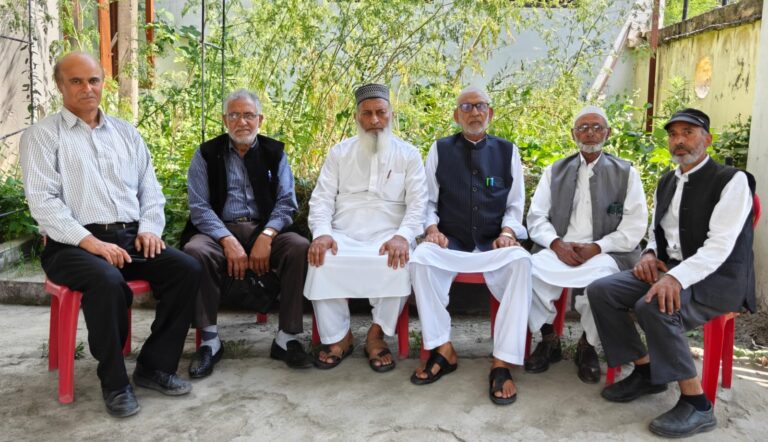
​The crucial meeting was called after the concerned commission extended a formal invitation to the association for a consultative dialogue. The leadership utilized the platform to finalize their core proposals, pension expectations, and key grievances. The association is scheduled to interact with the pay panel tomorrow, June 2, 2026, at the SKICC, Srinagar, to present their comprehensive memorandum directly to the delegation.

‘I Stand Before You as a Member of Your Family’: LG Sinha Gives Emotional Push to Anti-Drug Campaign in J&K

0

*Says administration standing shoulder to shoulder with people to build ‘Nasha Mukt J&K’; 923 FIRs filed, 1,000+ peddlers arrested in 50 days; addicts are victims, not criminals*

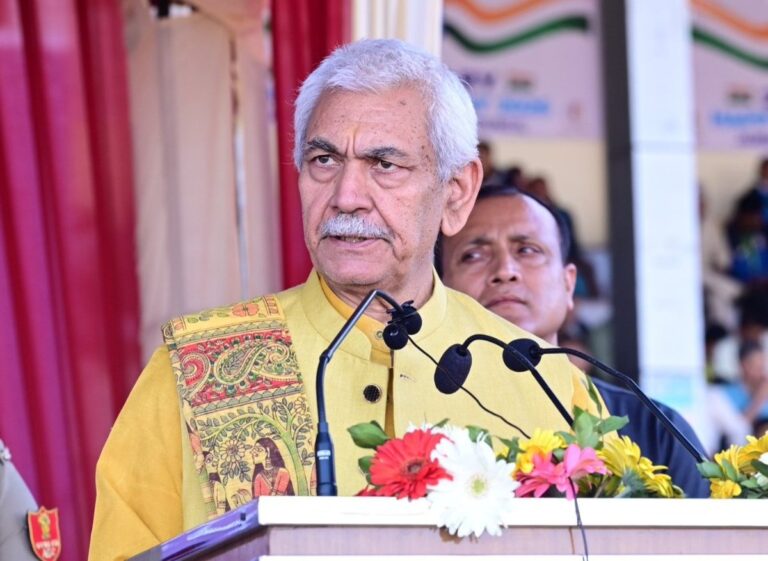
Kulgam, June 01: Lieutenant Governor Manoj Sinha on Monday gave an emotional and people-centric push to the ongoing Nasha Mukt Jammu Kashmir Abhiyaan, describing himself as “a member of your family” while assuring full support of the administration in the fight against drug addiction and narcotics abuse in Jammu and Kashmir.

Addressing a public gathering at Laroo Bus Stand in south Kashmir’s Kulgam district, the Lieutenant Governor said the anti-drug campaign launched 51 days ago has evolved into a mass public movement across Jammu and Kashmir, with active participation from families, youth, educational institutions, religious leaders and civil society groups.

“I stand before you as a member of your family to support your struggle and your dream of a safe, secure and Nasha Mukt Jammu and Kashmir,” Sinha said while addressing the gathering.

The Lieutenant Governor said the campaign was no longer confined to government departments or law enforcement agencies, but had transformed into a collective social mission involving every section of society.

“With the support of the citizens of Jammu and Kashmir, a movement has taken shape that has united every street, every family and every heart with one common intention—to make our villages and cities free from drugs,” he said.

Referring to the beginning of the campaign, Sinha said what started as “a small spark of change” has now transformed into a larger social movement capable of changing the future of Jammu and Kashmir if people continue to remain united.

“Today I can confidently say that the spark of hope, courage and determination has been ignited across Jammu and Kashmir,” he said.

The LG said Jammu and Kashmir has suffered for decades due to terrorism and violence, while drug addiction emerged as another serious threat affecting the younger generation.

“Jammu and Kashmir has endured unimaginable attacks of terrorism for many years. We also saw how drugs were slowly trapping our youth and weakening society,” he said.

Sinha recalled that Prime Minister Narendra Modi launched the Nasha Mukt Bharat Abhiyaan in 2020, following which Jammu and Kashmir intensified anti-drug efforts from 2021 onwards to protect the youth from the combined threats of terrorism and narcotics.

“We tried to remove the shadows of terrorism and drugs that were dividing our youth. Today, the chains that trapped our youth in the darkness of addiction are being broken one by one,” he said.

The Lieutenant Governor said the Jammu and Kashmir Police, security agencies and civil administration jointly intensified anti-drug operations during the last 50 days under what he described as a “whole-of-government and whole-of-society approach.”

“With the support of the people, we have been able to identify and dismantle several drug networks. Strong action is being taken against those involved in the narcotics trade,” he said.

Sinha said he had observed a growing sense of confidence among the youth during the anti-drug campaign, asserting that many young people were now openly resisting narcotics abuse.

“In the last 51 days, I have seen confidence in the eyes of our youth. Society is standing up against this menace,” he said.

The Lieutenant Governor appreciated the role of district administrations, schools, women’s groups, youth clubs, social organisations, religious leaders and political representatives in strengthening awareness against drugs at the grassroots level.

“Many families, schools, social and religious leaders and public representatives are united against drugs. The committees formed by district administrations, especially women’s committees and youth clubs, are playing a major role in this movement,” he said.

Stressing the humanitarian aspect of the issue, Sinha said drug-addicted youth should not be treated as criminals but as victims who deserve dignity, compassion and rehabilitation.

“The youth addicted to drugs have the right to live their lives with dignity. They should not be viewed as criminals. They are real victims and must be treated with respect, compassion and care,” he said.

The Lieutenant Governor said rehabilitation infrastructure across Jammu and Kashmir would be expanded and assured that modern de-addiction and rehabilitation centres would be established in every district at the earliest.

“The rehabilitation centres have to be expanded and the best facilities must be made available in every district as soon as possible,” he said.

Sinha said the administration had also framed a rehabilitation policy after consultations with experts from across the country to ensure proper treatment, emotional support and social reintegration for recovering addicts.

“In order to save the lives of those affected by addiction, both emotional and material support are necessary and every possible effort has to be made,” he said.

Highlighting the achievements of the anti-drug campaign so far, the Lieutenant Governor said that during the last 50 days, 923 FIRs had been registered under anti-narcotics operations across Jammu and Kashmir, while more than 1,000 drug peddlers had been arrested.

He said authorities had also detained over 56 major drug peddlers under preventive measures, while administrative action had been initiated against several others involved in the narcotics trade.

According to the LG, more than 600 driving licences linked to narcotics offenders have been suspended under the Standard Operating Procedure (SOP), while 124 passport revocation cases have also been processed.

“The police are continuously acting against drug peddlers. This is a difficult and ongoing process,” he said.

Sinha acknowledged that the drug menace could not be completely eradicated within a short period but said the 100-day campaign was launched to create awareness and strengthen public participation against addiction.

“We know Jammu and Kashmir cannot become addiction-free in just 100 days. But this campaign was started to build awareness and strengthen the collective resolve of society so that people, police and administration work together against drugs,” he said.

The Lieutenant Governor asserted that the anti-drug campaign would continue with full force until narcotics networks are completely uprooted from Jammu and Kashmir.

“As long as even one group involved in drugs exists in Jammu and Kashmir, this campaign will continue,” he added. —(KNO)
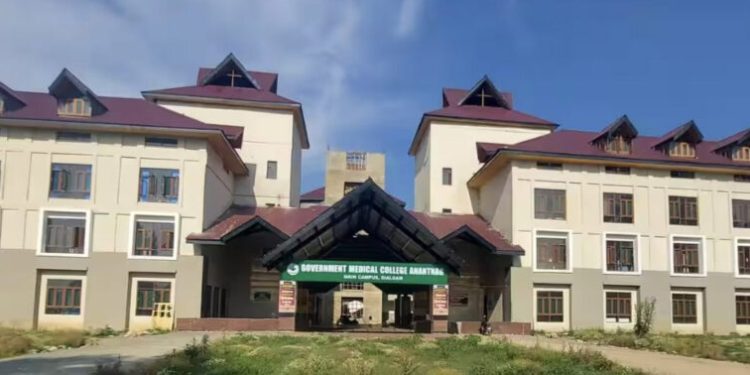
Union Minister Shri Manohar Lal reviews Power Sector and Urban Development Schemes with Tripura Government

0

Vinod Bhat

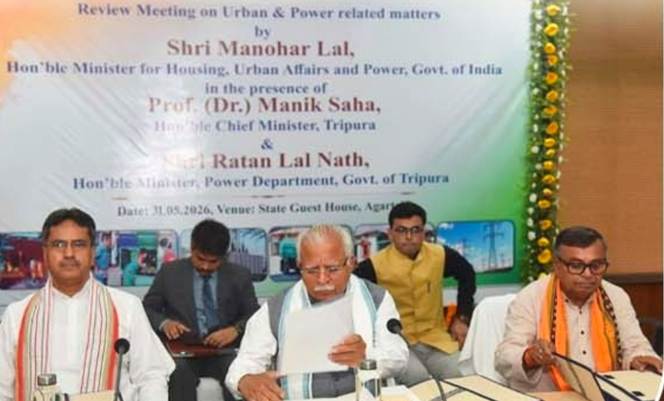
New Delhi: Union Minister for Power and Housing & Urban Affairs, Shri Manohar Lal, reviewed the matters relating to power sector and urban development schemes for the State of Tripura in Agartala today.

The meeting was attended by  Chief Minister of Tripura Sh.Manik Saha, and Minister for Power, Government of Tripura, along with senior officials from the State Government, Ministry of Power, Ministry of Housing & Urban Affairs, Government of India, and Power Sector CPSEs.

The meeting started with the Union Minister highlighting the key areas where the State Power department and the State Power sector PSUs could work on with a detailed action plan. Matters relating to the Revamped Distribution Sector Scheme (RDSS) and operational and financial parameters of the DISCOM were discussed. He emphasised the need for reducing Aggregate Technical and Commercial (AT&C) losses and improving the financial performance of the DISCOMs. He highlighted the need for improving the revenue collections with particular focus on prepaid conversion of meters installed with Government consumers / establishments. He reviewed the progress of smart metering in the State and advised expeditious implementation. The State committed to conversion of Government consumers to prepaid metering by August, 2026 and completion of pending smart meter works July 2027.


He further reviewed the status of resource adequacy and intra-State Transmission planning of the State so as to meet the growing demand and advised the State to ensure that transmission capacity addition keeps pace with demand growth. The State committed to expeditious augmentation of intra-State transmission infrastructure and adoption as per the  resource adequacy plan. Progress under PM-KUSUM and PM Surya Ghar Muft Bijli Yojana was also reviewed; the State was advised to leverage these schemes to expand access to clean energy, including in remote and underserved areas. The State Committed to install Rooftop Solar for 2 lakh consumers by March, 2027. This would also help in reducing the cost of electricity for these consumers.

He mentioned that sincere efforts will go a long way in making the State DISCOM financially viable and the State power sector self-sufficient.

Union Minister of Power assured of continued support and cooperation of the Government of India in the overall development of the State.

The Chief Minister assured that the State would  take all necessary measures for expeditious implementation of the works sanctioned for the State and for improving the overall performance of the power sector.

SEC Reviews Poll Readiness as J&K Moves Closer to Panchayat, DDC Elections

0

JAMMU, May 31: Preparations for the long-awaited Panchayat and District Development Council (DDC) elections in Jammu and Kashmir have gathered momentum, with the State Election Commission (SEC) scheduling high-level review meetings on June 3 and 4 to assess poll preparedness across the Union Territory.

Official sources said State Election Commissioner Shantmanu will chair separate meetings with election authorities from Jammu and Kashmir divisions. The Jammu division review will be held physically on June 3, while officials from the Kashmir division will join a virtual meeting on June 4.

The meetings will be attended by District Election Officers (DEOs) and other senior officials to evaluate logistical, administrative and electoral arrangements required for the smooth conduct of Panchayat and DDC polls.

Sources said elections to all tiers of Panchayati Raj Institutions (PRIs) cannot be conducted simultaneously due to legal provisions governing Block Development Councils (BDCs). Since BDC members are elected indirectly by elected Panchs and Sarpanchs, Panchayat elections must be completed before BDC elections can take place.

Meanwhile, the Jammu and Kashmir Government is expected to take a decision soon on the recommendations submitted by the Other Backward Classes (OBC) Commission, a key requirement for conducting local body elections. The report is likely to be placed before the Cabinet for consideration and approval.

The OBC Commission, headed by Justice (Retd.) Janak Raj Kotwal, had submitted its report in February 2025 regarding reservation for OBCs in Panchayats, Municipalities, BDCs and DDCs. Finalisation of the reservation framework is considered essential before election notifications are issued.

Jammu and Kashmir has been without elected Panchayats since January 2024, while municipal bodies completed their tenure in late 2023. The term of DDCs ended in February 2026, leaving all tiers of grassroots local governance without elected representatives.

In a significant development, the SEC has recently completed the revision of Panchayat electoral rolls. The updated voter list comprises more than 72.24 lakh electors, including over 3.39 lakh newly enrolled voters. The final electorate consists of 36.62 lakh male voters, 35.61 lakh female voters and 141 third-gender voters.

The upcoming review meetings are being seen as a crucial step towards holding grassroots democratic elections in Jammu and Kashmir after a prolonged gap.

Revenue Clerical Fraternity Submits Long-Pending Demands to LG Sinha

0

KD NEWS SERVICE

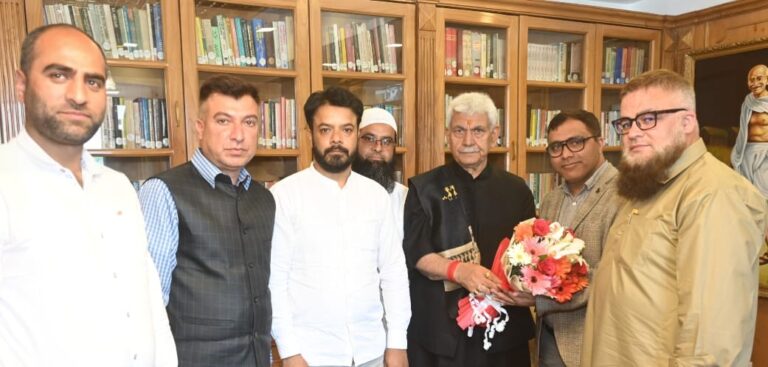
SRINAGAR, May 31: A delegation representing the Revenue Department Clerical Fraternity today met the Hon’ble Lieutenant Governor to highlight several long-pending issues concerning clerical employees, including the demand for redesignation of clerical staff, removal of stagnation, and other service-related matters.

The meeting was facilitated through the efforts and initiative of Syed Arif Bukhari, Member, Revenue Department Budgam, who coordinated the delegation’s engagement with the administration on matters affecting the clerical fraternity.

The delegation comprised Muzaffar Ahmad, President Revenue Srinagar; Javid Ahmad, President Revenue Baramulla; Ghulam Jeelani; Syed Arif Bukhari; and other representatives. During the interaction, a detailed written representation outlining the grievances and aspirations of clerical employees was formally submitted to the Hon’ble Lieutenant Governor.

The memorandum focused primarily on the long-pending demand for redesignation of clerical staff, measures to address career stagnation, and various service-related issues affecting employees across the Revenue Department. The representatives emphasized the need for timely consideration of these matters to improve career progression and service conditions for clerical staff.

The Hon’ble Lieutenant Governor gave a patient hearing to the delegation and assured them that the issues raised would receive due consideration. He further informed the representatives that he would take up the matter with Financial Commissioner Revenue, Shalin Kabra, to explore an appropriate course of action.

Members of the delegation described the meeting as a constructive opportunity to place their concerns before the administration. They expressed hope that the issues highlighted in the representation would receive positive attention in the coming months.

The meeting also underscored the importance of collective representation in pursuing employee welfare issues. Representatives noted that the coordinated efforts of clerical employees from different districts helped bring the fraternity’s concerns before the highest levels of the administration.

The Revenue Department Clerical Fraternity expressed gratitude to the Hon’ble Lieutenant Governor for granting them an audience and for assuring consideration of their demands. The fraternity remains hopeful that the long-pending issues relating to redesignation, career advancement, and service matters will be addressed through constructive dialogue and administrative intervention.

Govt to File Review Petition in Supreme Court on J&K TET Issue Next Week: Sakina Itoo

0

Srinagar, May 30: Jammu and Kashmir Education Minister Sakina Itoo on Saturday said that the government has acted responsibly and proactively on the issue concerning the Teacher Eligibility Test (TET) and remains fully committed to safeguarding the interests of teachers across the Union Territory.

In a post on X formerly twitter, the minister according to news agency Kashmir Dot Com said the government has consistently pursued the matter and backed its efforts with concrete action. She said that the administration has previously taken steps to protect the interests of teachers and continues to do so.

Sakina Itoo said the government has already accorded sanction for filing a review petition before the Supreme Court of India regarding the TET issue.

She further stated that the Department of Law, Justice and Parliamentary Affairs, through a communication dated May 26, 2026, has directed its Standing Counsel to initiate the necessary legal proceedings in the matter.

“The review petition has been prepared and will be filed before the Hon’ble Supreme Court in the coming week,” the minister said.

Reiterating the government’s stand, Sakina Itoo said the administration remains fully committed to protecting the interests of teachers and ensuring that all available legal measures are pursued in the matter.

The minister’s remarks come amid growing concern among teachers over the TET issue, with the government asserting that it is actively pursuing legal remedies before the apex court.

LG Sinha Calls for Reclaiming India’s True History at Kashmir Literature Festival

0

KD NEWS SERVICE

SRINAGAR, May 30: Lieutenant Governor Manoj Sinha on Saturday said that writers, poets, historians and scholars play a far greater role in shaping civilisations than institutions, urging the country to break free from the colonial mindset and reclaim what he described as India’s true historical narrative.
Speaking at the inauguration of the two-day Kashmir Literature Festival-2026 at the Sher-i-Kashmir International Conference Centre (SKICC) in Srinagar, Sinha highlighted the transformative power of literature and creative thought, saying that a single literary work can often leave a deeper and more lasting impact on society than vast amounts of money spent through institutional efforts.

Addressing an audience comprising renowned writers, researchers, historians, academicians, intellectuals and literary enthusiasts, the Lieutenant Governor said that great poets, authors and creative minds achieve immortality through their contributions to knowledge and culture. He remarked that while the human body is temporary, meaningful creations endure across generations and become lasting symbols of human achievement.

Welcoming participants and guests from different parts of the country, Sinha expressed confidence that those visiting Jammu and Kashmir for the festival would experience firsthand the region’s rich cultural heritage, intellectual legacy and vibrant literary traditions. He said Kashmir has historically been a centre of learning, scholarship and creativity, and the festival provides an important platform to showcase this legacy.
Drawing a parallel from Indian mythology, the Lieutenant Governor said that India’s literary and intellectual community resembles Hanuman before he realised his immense strength and capabilities. He stressed that the country possesses a vast reservoir of civilisational knowledge and wisdom, but there is a need to fully recognise and appreciate its depth and significance.

Referring to Prime Minister Narendra Modi’s call from the Red Fort to shed the remnants of colonial influence, Sinha said the time had come to completely eliminate the colonial mindset that continues to shape perceptions about India’s past. He emphasised that history must be presented accurately and authentically, without distortions or omissions.
The Lieutenant Governor said one of the major shortcomings of modern India was its failure to adequately document, preserve and present its own historical achievements. According to him, this created space for narratives that overlooked or diminished India’s contributions to global knowledge and instead credited other civilisations for advancements that had roots in the Indian subcontinent.

He asserted that India made foundational contributions to fields such as mathematics, science and astronomy, which later influenced several other civilisations around the world.

Sinha said historical references found in Persian and Arab texts dating back to the eighth century acknowledged India’s intellectual achievements and the influence of its knowledge systems on global learning.
Speaking about contemporary literary trends, the Lieutenant Governor rejected the belief that reading habits are declining in the modern era. Citing research conducted in 2025, he noted that more than 40 lakh books were published globally, demonstrating that interest in reading, writing and knowledge creation remains strong despite the rise of digital platforms.

He said modern technology and expanding communication platforms have opened new avenues for writers, scholars and creators to reach wider audiences. Emphasising the importance of storytelling and intellectual engagement, Sinha urged the literary community to utilise these opportunities to build strong, positive and fact-based narratives that contribute to society and strengthen cultural understanding.
The Kashmir Literature Festival-2026, being held on May 30 and 31 at SKICC, brings together writers, historians, researchers, poets and academicians from across the country.

The festival features a wide range of literary discussions, poetry sessions, historical debates, book-related engagements and interactive sessions aimed at promoting dialogue, scholarship and cultural exchange.
The event is expected to serve as an important platform for intellectual discourse while celebrating Kashmir’s longstanding literary and cultural traditions.

INDIA ADVANCES BRICS MSME COOPERATION UNDER ITS 2026 CHAIRSHIP

0

Vinod Bhat

New Delhi: The SME Working Group under the BRICS Partnership on the New Industrial Revolution (PartNIR) is being led by the Ministry of MSME, Government of India. Under India’s BRICS Chairship 2026, the Ministry will convene three SME Working Group Meetings and the inaugural BRICS MSME Forum, focusing on three priority areas: access to finance, technology access, and sustainability-oriented growth for MSMEs.

Following the 1st SME Working Group Meeting held on 24 April 2026, the Ministry of MSME successfully convened the 2nd SME Working Group Meeting on 26 May 2026 under the BRICS PartNIR track on the theme “Enhancing Access to Technology for MSMEs”. Discussions among BRICS Member Countries focused on “Harnessing Innovations and Technology Commercialization for MSMEs” and “Skilling and Development of Industry-Ready Manpower for MSME Tech Adoption”.

The Meeting saw active participation from BRICS Member Countries and provided a platform for sharing experiences and best practices, while underscoring the role of MSMEs in economic growth, employment generation, innovation, and inclusive development. Discussions highlighted the need for a multi-pronged approach to bridge the technology divide through greater digital inclusion, stronger innovation capabilities, and improved technology readiness of MSMEs to support their integration into regional and global value chains.

The Meeting also reiterated the importance of deeper collaboration among BRICS economies in technology access, innovation ecosystems, and skills development for MSMEs. The deliberations enabled valuable policy exchange among countries facing similar developmental challenges and reinforced the shared commitment to building resilient, inclusive, and globally competitive MSME sectors across BRICS economies.

The Meeting was highly successful and productive, facilitating meaningful exchanges, strengthening cooperation among BRICS Member Countries, and generating valuable insights to advance technology access and capacity-building for MSMEs across BRICS economies.

IIMC launches AI academy in Media & Entertainment to build future-ready AI capabilities in Indian Media

0

Vinod Bhat

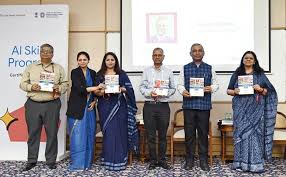
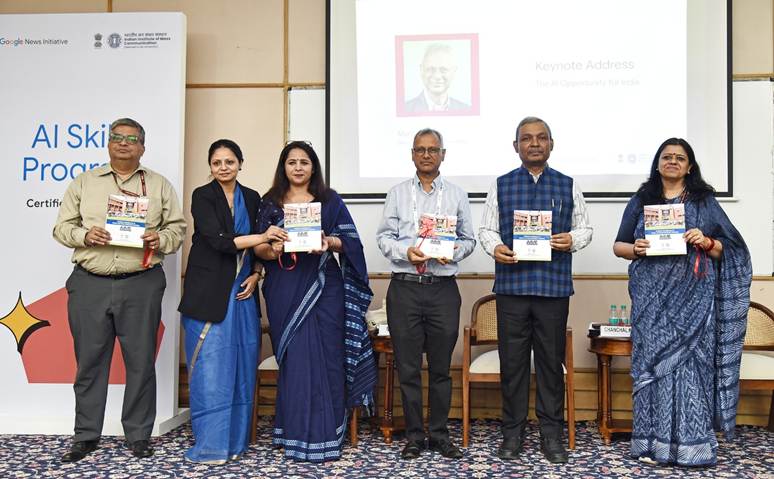
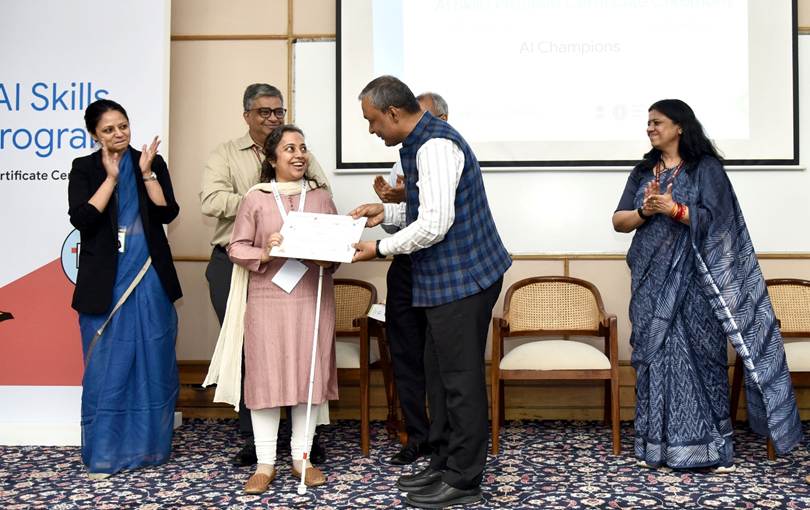
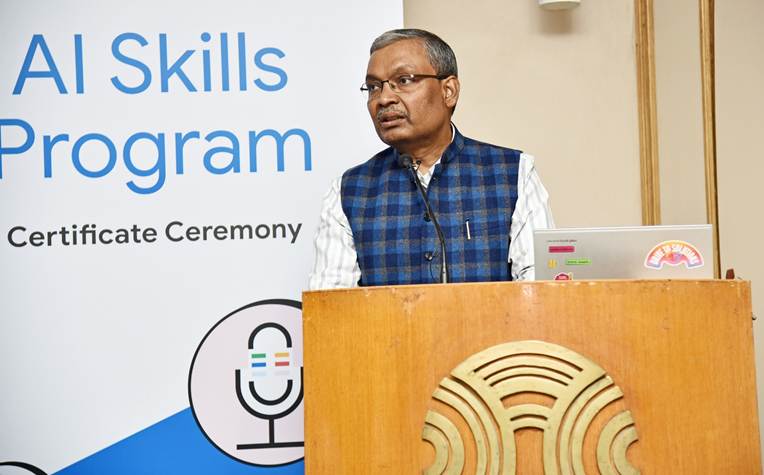
New Delhi: The Indian Institute of Mass Communication (IIMC), New Delhi, today launched the AIME Academy (AI Academy for Media and Entertainment), a major initiative aimed at strengthening AI-driven media education and capacity building in the country. The Academy was inaugurated by Sh. Chanchal Kumar, Secretary, Ministry of Information and Broadcasting, in the presence of Dr. Pragya Paliwal Gaur, Vice Chancellor, IIMC, and Dr. Manish Gupta, Sr Director, Google DeepMind India, at the IIMC campus in New Delhi. The event also celebrated the successful completion of the 10-week hybrid AI Skills Training Programme, which trained over 110 newsroom professionals, media educators and students representing more than 100 newsrooms and media colleges across 23 cities and over 10 Indian languages.

AIME Academy: An Institutional Milestone

AIME Academy is envisioned as a national centre of excellence for AI in media and entertainment. Built on a five-pillar framework capacity building, research, innovation and incubation, responsible AI policy development and strategic collaboration the Academy aims to move IIMC from traditional media training towards future-facing media capability. The Academy aims to develop India-specific training modules, support applied research on AI in journalism, document newsroom AI adoption practices, and promote responsible use of AI across the Indian media ecosystem.


IIMC, with its six centres in New Delhi, Dhenkanal, Jammu, Aizawl, Amravati and Kottayam, is uniquely positioned to build language-specific AI capacity across India. The Academy is also expected to bring Indian realities including multilingual communication, public service broadcasting, rural audiences, and democratic diversity into the global conversation on AI and media.

Certificate Ceremony: Recognising AI Skills Achievers

At the heart of the Graduation Day was the Certificate Ceremony, where participants from Doordarshan, Akashvani (All India Radio), Press Information Bureau (PIB), Publications Division and IIMC were formally recognised for completing the AI Skills Training Programme.

The programme equipped participants drawn from both government public service institutions and private newsrooms with foundational AI literacy and hands-on proficiency in Google’s AI tools, including NotebookLM, Gemini, AI Studio and Pinpoint.

Secretary’s Address: AI as an Enabler, Not a Substitute

Addressing the gathering, Secretary Sh. Chanchal Kumar congratulated all participants and underscored the transformative significance of the initiative for Indian media.

He said “Today’s occasion is not merely a certificate ceremony. It marks a larger transition in the way Indian media institutions are preparing themselves for the future. The real question before us is not whether AI will influence media; that process has already begun. The more important question is whether our journalists, editors, media educators and public communication professionals will shape AI with confidence, responsibility and an India-centric perspective.”

The Secretary emphasised that India’s public service media institutions Doordarshan, Akashvani, PIB and Publications Division carry a unique responsibility for communication at scale, across languages and geographies, making their AI readiness especially vital. He stressed that:

“AI may be used as an assistant, but not as a substitute for editorial responsibility. It may improve speed, but not at the cost of accuracy. It may support creativity, but not at the cost of authenticity. The role of human judgement will become even more important in the AI age.”

The Secretary also outlined the Government’s broad approach to AI as “positive, enabling and responsible”, anchored in Prime Minister’s national direction of ‘Make AI in India’ and ‘Make AI Work for India’.