spot_imgspot_img
spot_img
Home Blog Page 7

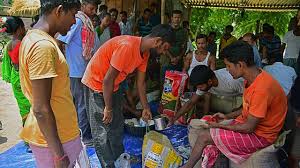
About 1.80 Crore LPG cylinders delivered against bookings of around 1.78 Crore LPG cylinders during last 4 days

0

Vinod Bhat

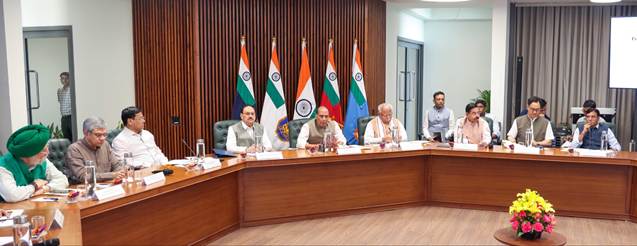
New Delhi: Amid the evolving situation in West Asia, the Government of India continues its efforts to keep citizens informed through regular updates. In this regard, a media briefing was held today at the National Media Centre, where officers from the Ministries of Petroleum and Natural Gas, Ports, Water ways and Shipping, External Affairs provided updates on fuel availability and measures being undertaken to maintain stability across key sectors.

Energy Supply and Fuel Availability

The Ministry of Petroleum and Natural Gas provided an update on the current fuel supply situation, outlining measures being taken to ensure uninterrupted availability of petroleum products and LPG in the context of the evolving situation in West Asia. It was noted that:

Public Advisory and Citizen Awareness

  • Citizens are advised to avoid panic purchase of petrol, diesel and LPG as the Govt is making all efforts to ensure availability of petrol, diesel and LPG.
  •  Beware of rumours and rely on official sources for correct information.
  • LPG consumers are requested to use digital booking platforms and avoid visiting distributors.
  •  Citizens are encouraged to use alternate fuels such as PNG and electric or induction cooktops.
  • Bulk and industrial consumers are requested to procure diesel from authorized procurement channel.
  •  All citizens are requested to make necessary efforts to conserve energy in their daily use during the current situation.

Government Preparedness and Supply Management Measures

  • Despite the ongoing geopolitical situation, the Government has ensured that 100% supply is being made to Domestic LPG, Domestic PNG and CNG (Transport).
  • For commercial LPG, priority has been given to hospitals, educational institutions. Besides this, priority has also been given to pharma, steel, automobile, seed, agriculture, etc. In addition to this, supply of 5 Kg FTL to migrant labour is also doubled based on avg. daily supply on 2nd and 3rd March 2026.
  • The Government has already implemented several rationalisation measures on both the supply and demand side, including enhancing refinery production, increasing the booking interval from 21 to 25 days in urban areas and up to 45 days in rural areas and prioritising sectors for supply.

Coordinated Efforts with States/UTs and Institutional Mechanisms

  • State Governments are empowered under the Essential Commodities Act, 1955 and LPG Control Order, 2000 to monitor supply and act against hoarding and black marketing.
  • Govt. of States/UTs have to play a primary role in monitoring and regulating supply situation of essential commodities including Petrol, Diesel and LPG. Govt. of India has reiterated the same via multiple letters and VCs to all States/UTs.
  • Government of India vide multiple letters and VCs have stressed the need for proactive public communication to reassure citizens regarding adequate fuel availability.
  • Again, Govt. of India vide letter dated 26.05.2026 has requested Chief Secretaries of all States/UTs to issue appropriate direction to State/district authorities to monitor and review district wise HSD/MS offtake pattern, intensify inspections and enforcement activities in vulnerable areas and along major transportation/industrial corridors to prevent unauthorized procurement of HSD through retail outlets by industrial and commercial consumers and initiate prompt penal action against violators.

Enforcement and Monitoring Actions

  • Enforcement actions by States / UTs continue across the country to curb hoarding and black marketing of Petrol, Diesel and LPG.
  • LPG related enforcement – During last 4 days, more than 6500 raids were conducted, more than 380 cylinders were seized, 5 FIRs were registered and 2 persons were arrested across the country.
  • Petrol, Diesel related enforcement – During last 2 days, about 900 raids were conducted wherein 417 litres of Petrol and 75715 litres of Diesel was seized, 12 FIRs were registered and 15 persons were arrested across the country.
  • Similarly, the surprise inspections by the PSU OMCs officials are also continuing-
  • LPG distributorships – During last 4 days, inspections at more than 800 LPG distributorships have been conducted. Penalties have been imposed on 45 LPG distributorships.
  • Retail Outlets – During last 4 days, inspections at more than 4660 retail outlets have been conducted. . Penalties have also been imposed on 73 Retail Outlets, and 562 Retail outlets have been put under suspension.

LPG Supply

Domestic LPG Supply Status:

  • LPG supply continues to be affected by the prevailing geopolitical situation.
  • Supply of LPG to domestic households has been prioritized.
  • No dry-outs have been reported at LPG distributorships.
  • Online LPG cylinder bookings increased to about 99% on an industry basis yesterday.
  • Delivery Authentication Code (DAC) based deliveries have increased to about 96% to prevent diversion. DAC is received on the registered mobile number of the consumer.
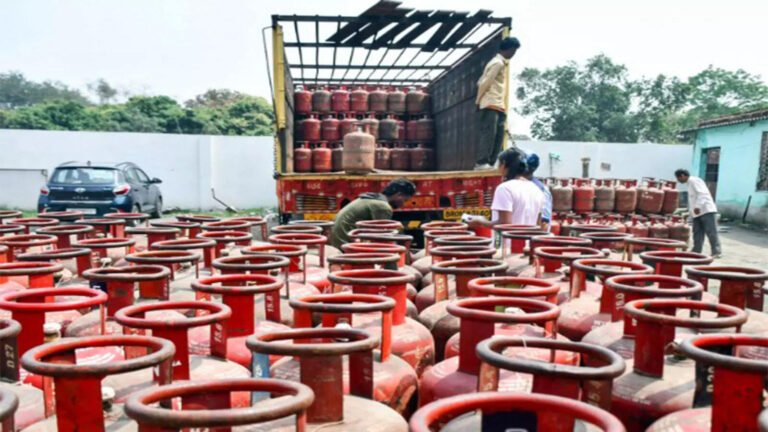
  • During last 4 days, about 1.80 Crore LPG cylinders were delivered against bookings of around 1.78 Crore LPG cylinders.

Commercial LPG Supply and Allocation Measures:

  • Govt. of India has decided to allocate total commercial allocation to 70% of the pre-crises level incl. 10% reform based.
  • During last 4 days, about 2.42 Lakh – 5 Kg FTL cylinders were sold.
  • Yesterday, around 2537 – 5kg FTL cylinders were sold through about 176 camps.
  • During last 4 days, total of 29,814 MT of Commercial LPG has been sold.
  • During last 4 days, about 954 MT of Auto LPG has been sold by PSU OMCs.

Natural Gas Supply and PNG Expansion Initiatives

  • Consumers have been prioritised with 100% supplies to D-PNG and CNG-Transport.
  • Supply to operating Urea Plants is currently at around 99% of their average consumption over the preceding six months.
  • Gas supply to other industrial and commercial sectors, including supplies through CGD networks, is enhanced up to 80%.
  • CGD entities have been advised to prioritize PNG connections for commercial establishments such as hotels, restaurants and canteens across all their GAs, to address concerns regarding the availability of commercial LPG.
  • States/UTs and Central Ministries have been requested to expedite approvals required for expansion of CGD networks.
  • The Government of India vide letter dated 18.03.2026 has offered all States/UTs additional 10% allocation of commercial LPG to States provided they can help in long term transition from LPG to PNG.
  • 22 States/UTs are receiving additional commercial LPG allocation linked to PNG expansion reforms.
  • The Government of India vide Gazette dated 24.03.2026 has notified the Natural Gas and Petroleum Products Distribution (Through Laying, Building, Operation and Expansion of Pipelines and Other Facilities) Order, 2026 under the Essential Commodities Act, 1955. The Order provides a streamlined and time-bound framework for laying and expanding pipelines across the country, addressing delays in approvals and access to land, and enabling faster development of natural gas infrastructure, including in residential areas. It is expected to accelerate PNG network growth, enhance last-mile connectivity, and support the transition to cleaner fuels, thereby strengthening energy security and advancing India’s gas-based economy.
  • PNGRB has directed CGD entities to expedite D-PNG connections. Also, the National PNG Drive 2.0 has been extended till 30.06.2026 to sustain momentum in PNG expansion.
  • To encourage a cleaner, more secure and self-reliant energy future, the Government of India has developed a model draft State CBG Policy. The model policy is intended to serve as a comprehensive flexible guiding framework to enable States to create their own investor-friendly and implementation-oriented ecosystem for CBG development. Those States which opt for this, will be prioritized for the next tranche of additional allocation of commercial LPG.
  • As per the Govt. of India gazette notification dated 25.05.2026, LPG consumers who also have PNG connections shall have the following options:
  • Consumers may apply for termination of the LPG connection within 30 days of obtaining PNG connection; or
  • Consumers may obtain a transfer voucher for future restoration of LPG connection in a non-PNG area.

· Since March 2026, about 8.3 Lakh PNG connections have been gasified and infrastructure has been created for additional 2.91 Lakh connections, taking the total to 11.21 lakh connections. Further, about 8.53 Lakh customers have been registered for new connections.

  • Till 28.05.2026, about 60,400 PNG consumers have surrendered their LPG connections via MYPNGD.in website.

Crude Position and Refinery Operations

  • All refineries are operating at high capacity with adequate crude inventories, while sufficient stocks of petrol and diesel are being maintained.
  • Domestic LPG production from refineries has been increased to  about 52 TMT/day to support domestic consumption.
  • An inter-ministerial Joint Working Group (JWG) has been set up to ensure availability of petrochemical feedstock supply for the domestic market. Subsequently, Govt. of India vide order dated 01.04.2026 has permitted Oil Refinery companies including Petrochemical Complexes to make certain minimum quantities of C3 & C4 streams available for critical sectors as determined by Centre for High Technology (CHT).
  • Based on the requests received from the Department of Pharmaceuticals, Department of Chemicals & Petro Chemicals (DCPC), Dept. for Promotion of Industry and internal trade (DPIIT), the provision for C3-C4 molecules of 1120 MT/day, from LPG pool, has been made for Pharma, Chemical and Paint sector companies.
  • Since 1st May 2026, more than 13870 MT of C3-C4 Molecules (comprising Propylene and Butylene) and more than 5380 MT of Butyl Acrylate has been sold by Mumbai, Kochi, Vizag, Chennai, Mathura and Gujarat refineries to Chemical, Pharma and Paint Industry.


Retail Fuel Availability and pricing Measures

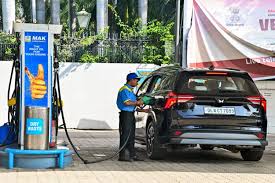
  • All Retail outlets are operating normally across the country.
  • Middle East crisis has resulted in abnormal increase in the crude prices. In order to protect consumers from this impact, the Government of India has decided to absorb a part of this burden through a reduction in excise duties on petrol and diesel by Rs. 10/litre.
  • Unusually high sales and heavy crowding is observed at Retail outlets in certain areas. However, it is informed that there are adequate stocks of petrol and diesel available at all Petrol Pumps in the country.
  • In more than 150 districts, the sale of petrol and diesel has increased by more than 30%.
  • There is decline in the sale of private oil marketing companies (-38%) and bulk sale of PSU OMCs (-29%). This volume has shifted to retail outlets of PSU OMCs.
  • States/UTs have been requested to form special squads and take action on  malpractice of bulk consumers and hoarders taking supplies meant for retail consumers, black marketing, unauthorised stocking and diversion of petroleum products under relevant provisions of EC Act and Control orders issued thereunder.
  • Industry associations have been requested to advice their members to purchase diesel from authorised procurement channels.

Maritime Safety and Shipping Operations

The Ministry of Ports, Shipping and Waterways provided an update on the prevailing maritime situation in the Persian Gulf, detailing the measures being undertaken to ensure the safety and security of Indian vessels and crew in the region. It was stated that:

  • Vessel Update: NISSOS KEROS, a Marshall Islands-flagged crude oil tanker, carrying approximately 270,000 MT of crude oil cargo for India under charter to HPCL, with 25 foreign crew members onboard and no Indian seafarers, safely crossed the Strait of Hormuz on 25/26 May 2026 and is expected to arrive at Visakhapatnam on 03 June 2026.
  • The Ministry of Ports, Shipping and Waterways continues to coordinate with the Ministry of External Affairs, Indian Missions, and maritime stakeholders to ensure seafarer welfare and uninterrupted maritime operations.
  • All Indian seafarers in the region are safe, and no incident involving Indian-flagged vessels or foreign vessels with Indian crew has been reported in the past 96 hours.
  • DG Shipping Control Room has handled 10,841 calls and more than 24,098 emails since activation. In the last 96 hours, a total of 509 calls and 1,332 emails have been received from seafarers, their families, and maritime stakeholders.
  • The Ministry, through the Directorate General of Shipping (DG Shipping), has facilitated the safe repatriation of more than 3,422 Indian seafarers so far, including 47 in the last 96 hours from various locations across the Gulf region.
  • Port operations across India remain normal, with no congestion reported.

Safety of Indian Nationals in the Region

The Ministry of External Affairs continues to monitor developments in the Gulf and West Asia region, with focused efforts on ensuring safety, security and welfare of the Indian community in the region. It was informed that:

  • The Ministry of External Affairs is in regular contact with State Governments and Union Territories for sharing of information and better alignment of efforts.
  • Indian embassies and consulates continue to operate round-the-clock helplines to provide timely assistance and are proactively assisting our citizens. They are also in close contact with the local Governments.
  • Advisories are being issued including information related to local government guidelines, flight and travel situations, consular services and various welfare measures being undertaken for the community.
  • Indian Missions are actively engaged with the resident Indian community. They are regularly interacting with the Indian community associations, organizations, professional groups, and Indian companies to address their concerns.
  • Government is according high priority to the welfare of Indian seafarers in the region. Indian Missions are extending all assistance to them including coordination with the local authorities and agencies, extending consular assistance, and assisting for requests to return to India.
  • The overall flight situation continues to improve with additional flights operating from the region to various destinations in India.
  • UAE airspace is open. Indian and UAE carriers are operating flights from UAE to various destinations in India.
  • Flights continue to operate from various airports in Saudi Arabia and Oman to various destinations in India.
  • Qatar airspace is partially open. Air India, Air India Express, Indigo and Qatar Airways are operating flights from Qatar to various destinations in India.
  • Kuwait airspace is open. Jazeera Airways and Kuwait Airways are operating flights from Kuwait to India. Indian carriers are also expected to resume operations from Kuwait to India soon.
  • Bahrain airspace is open. Air India Express, Indigo and Gulf Air are operating flights from Bahrain to various destinations in India.
  • Iraq airspace is open with limited flight operations to destinations in the region, which can be used for onward travel to India.
  • Iran airspace is partially open. Ministry has advised Indian nationals to avoid travelling to Iran and urged those already there to leave with Indian embassy’s support. So far, Indian Embassy in Tehran has facilitated movement of 2,557 Indian nationals out of Iran through land border routes.
  • Israel airspace is open and limited flight operations have resumed to destinations in the region, which can be used for onward travel to India.
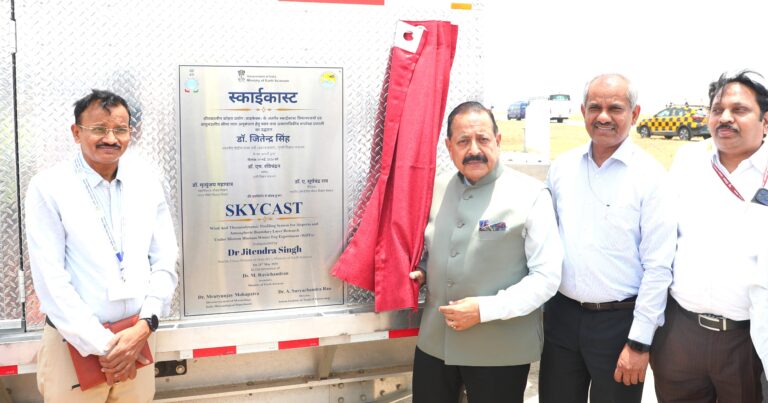

Union Minister Dr. Jitendra Singh inaugurates India’s first ‘SkyCast’ System at IGI Airport New Delhi; says India enters a new era of fog-free, weather-smart aviation

0

Vinod Bhat

New Delhi: Union Minister of State (Independent Charge) for Science & Technology, Earth Sciences, MoS PMO, Personnel, Public Grievances, Pensions, Atomic Energy and Space, Dr. Jitendra Singh today inaugurated India’s first “SkyCast System” at Indira Gandhi International Airport, New Delhi, calling it the beginning of a new era in Indian aviation.

The Minister informed that only 18 such advanced systems exist across the world so far and India has now become the 19th in the world to install this integrated atmospheric remote sensing system for aviation weather monitoring. After IGI Airport Delhi, the second such facility will come up at Jewar Airport, followed by expansion to other airports across India, he said.

The inauguration ceremony was held at IGI Airport, New Delhi, in the presence of Secretary, Ministry of Earth Sciences, Dr. M. Ravichandran; senior officials from MoES, India Meteorological Department (IMD), Indian Institute of Tropical Meteorology (IITM), GMR and representatives from the aviation sector. Dr. Jitendra Singh inaugurated the SkyCast System and Fog Observatory facility at Glide Path 10, followed by a technical briefing and demonstration by IITM scientists.

Dr. Jitendra Singh credited Prime Minister Shri Narendra Modi’s vision behind “Mission Mausam” for making such futuristic weather infrastructure possible. He said SkyCast will bring a major transformation in aviation safety by providing real-time information to pilots and aviation operators during critical weather situations.

The Minister said passengers can look forward to a future where flight disruptions caused by fog and turbulence will significantly reduce. He said the system will provide advance alerts to aircrew and pilots even within short time windows of around three hours, enabling them to decide the safest time for landing and avoiding unnecessary diversions, cancellations and delays.

Dr. Jitendra Singh said SkyCast is one of the biggest landmarks in India’s aviation history as it combines multiple atmospheric observation technologies for fog monitoring, turbulence detection and high-impact weather forecasting. The system integrates state-of-the-art atmospheric remote sensing technologies, including Radar Wind Profiler, SODAR, Microwave Radiometer, Ground-based Fog Aerosol Spectrometer (GFAS) and CL61 Lidar-based Ceilometer to provide comprehensive real-time atmospheric intelligence. He said the facility will strengthen monitoring and warning capabilities across runways, making take-offs and landings safer.

The Minister said the core of SkyCast is an advanced boundary layer Radar Wind Profiler, which continuously measures wind speed, wind direction, turbulence, vertical velocity and boundary-layer dynamics up to nearly 3 kilometres above the airport. These parameters are crucial during aircraft descent and landing operations, where precise atmospheric information helps improve safety.

The SkyCast facility also includes advanced fog monitoring instruments such as the Ground-based Fog Aerosol Spectrometer (GFAS), which provides detailed information on fog droplets, aerosols and aerosol-fog interactions. Dr. Jitendra Singh said this is particularly important for cities like Delhi, where pollution particles interact with fog and affect visibility conditions.

The system also integrates the CL61 Lidar-based Ceilometer, which continuously monitors the vertical structure of fog. This helps understand fog formation, visibility reduction and atmospheric conditions affecting aviation operations.

SkyCast brings together real-time measurements of fog, aerosols, turbulence, moisture, visibility and atmospheric conditions into a single advanced aviation weather intelligence framework. The system will support pilots, airlines, airport operators and air traffic management agencies with accurate nowcasting and early warning services.

The scientific foundation of SkyCast comes from the Winter Fog Experiment (WiFEX), jointly initiated by IITM and IMD under the Ministry of Earth Sciences at IGI Airport in 2015. WiFEX generated critical understanding of fog formation, aerosol-cloud interaction, visibility reduction and urban boundary-layer processes, which contributed to the development of this next-generation operational system.

Dr. Jitendra Singh said India is moving towards an era of “fog-free flights” through scientific innovation and advanced weather technologies. Referring to Prime Minister Shri Narendra Modi’s vision of taking aviation from “Hawai Chappal to Hawai Jahaz”, the Minister said India is now also moving towards democratisation of weather services for the benefit of aviation and citizens.

Secretary, Ministry of Earth Sciences, Dr. M. Ravichandran said the SkyCast facility will not only support aviation operations but will also strengthen India’s overall weather forecasting capabilities. He said vertical profiles of wind, humidity and temperature generated through such advanced instruments will improve future weather predictions. He added that under Mission Mausam, advanced observational networks including Doppler Weather Radars and similar systems are being expanded across India to ensure better monitoring of weather systems.

Dr. Ravichandran said such facilities will generate more high-quality atmospheric data, which will significantly improve forecast accuracy in the coming years. He said these technologies will be increasingly deployed across airports and other parts of India, while aircraft-based observations will also be integrated to further enhance forecasting capabilities.

Beyond aviation, SkyCast observations will support advanced forecasting models, artificial intelligence-enabled decision support systems, urban weather forecasting, pollution management, transport advisories and disaster preparedness initiatives.

The SkyCast System under Mission Mausam reflects India’s commitment towards building weather-smart infrastructure, strengthening aviation resilience and ensuring safer and more reliable services through scientific innovation.

Man Injured Amid Severe Windstorm in Sonamarg Area

0

Touseef Wani

Ganderbal, May 28: A man sustained injuries after strong winds battered the Fish Pond area of Sonamarg in Central Kashmir’s Ganderbal district on Thursday.

The injured person has been identified as Mohammad Sultan, a resident of Safapora. According to reports, he was hurt after being struck amid severe gusty winds that swept through the area.

Soon after the incident, he was taken to Primary Health Centre (PHC) Sonamarg where doctors provided initial treatment.

However, considering the seriousness of his condition, medical officials referred him to Sher-i-Kashmir Institute of Medical Sciences (SKIMS) for specialised treatment.

The incident has sparked concern among residents and visitors as strong winds and unstable weather conditions continue to affect several parts of Kashmir.

Teach Sons Respect, Not Daughters Fear

0

Nighat Ara

The recent incident in Galwanpora, where a 12-year-old girl was allegedly raped and murdered while on her way to darzka, has shaken the conscience of society. A child lost her life in the most horrifying way possible. But beyond the grief and outrage, this tragedy forces us to confront an uncomfortable truth: our society still teaches women how to survive violence more than it teaches men not to commit it.A little girl should not have to grow up learning fear before freedom. She should not need survival techniques simply to exist safely. The responsibility of preventing such crimes cannot continue to rest on women and girls alone.

For years, society has focused on controlling women’s behavior – how they dress, where they go, how they speak— yet crimes against women continue. This proves that women were never the problem. The real issue lies in the failure to educate boys about respect, consent, empathy, and accountability.When a child is raped and murdered, the conversation should not begin with what girls must do differently. It should begin with asking what kind of mindset allows a man to destroy a child. Why are we more comfortable teaching daughters fear than teaching sons responsibility?Awareness should not only be for daughters. Awareness is equally needed for sons.

Parents, schools, communities, and religious institutions must begin speaking openly about male behavior and responsibility. Boys must be taught from a young age that strength is not dominance, masculinity is not aggression, and women are human beings deserving of dignity and safety.

When society only teaches girls how to protect themselves, it silently accepts violence as unavoidable. But violence is not unavoidable. It is learned, tolerated, and ignored – and therefore it can also be prevented through education, accountability, and social change.

The question is no longer how many more girls must be told to stay careful. The question is: when will society finally start teaching men not to become the reason women are afraid?A society that prepares girls for violence instead of preventing boys from becoming violent has already failed its daughters.A little girl left her home and never returned alive.

Somewhere, her books remain untouched, her clothes still carry her presence, and her family is left with a silence so heavy that no words can comfort it. And yet tomorrow, society will once again teach daughters how to be careful, while failing to teach sons how not to destroy lives. How many more girls must lose their childhoods, their safety, or their lives before we understand that the problem was never women existing freely, but men growing up without accountability? A society that cannot protect its daughters from the hands of its own men is not wounded — it is morally failing.

Union Minister Shri Ashwini Vaishnaw holds a high-level meeting with the industry on Revamp of the AI Curriculum

0

Vinod Bhat

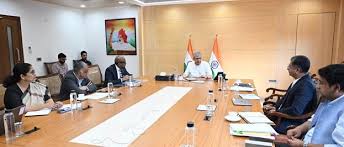
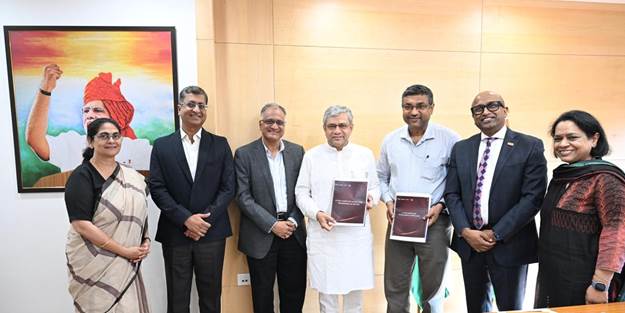
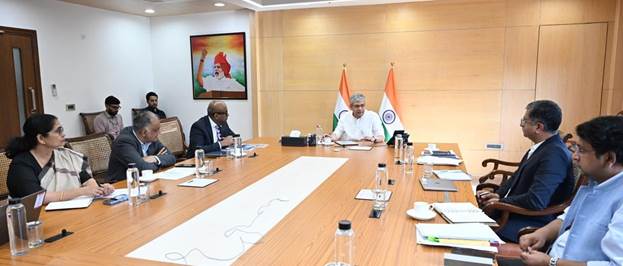
New Delhi: Government of India is collaborating with the industry for a comprehensive overhaul of the AI curriculum to better equip learners for emerging technological trends. Union Minister for Electronics & IT, Shri Ashwini Vaishnaw, held a high-level meeting with the AI Curriculum Taskforce, in New Delhi in this regard.

The Taskforce conducted a baseline study of the existing Bachelor of Technology (B.Tech) Computer Science and allied curricula in Indian educational institutions. The exercise was undertaken in partnership with industry experts and the National Association of Software and Service Companies (NASSCOM).

While the study acknowledged that AI coverage in Indian curriculum has expanded, it identified significant gaps. These were in pedagogy, infrastructure, and practical exposure in fields such as Generative AI, Machine Learning Operations (MLOps) and foundational model development.

Focus areas of the Taskforce:

  • Application-Oriented Pedagogy: Shift from lecture-based teaching to a learning anchored in real industry use cases from the first semester.
  • Credit-Linked Curriculum Integration: AI courses embedded within the formal academic credit system with a structured semester-wise rollout.
  • Enhanced Practical Exposure: A shift from the current 25–30 per cent practical exposure to 40–75 per cent, depending on the nature of the degree and the chosen specialisation.
  • Industry-Integrated Pedagogy: Industry exposure distributed across the programme through capstone projects, end-to-end AI solution engineering, and use of low-code and no-code tools.
  • Responsible AI as a Continuous Thread: Responsible AI and AI Governance integrated across all semesters instead of standalone modules.
  • Multiple Entry-Exit Options: A flexible pathway providing a Certificate after Year 1, a Diploma after Year 2, and an Advanced Diploma after Year 3.

Emphasis on faculty development

Recognising that curriculum reform must be matched by faculty readiness, the consultation placed faculty capacity building at the centre of the proposed roadmap. The recommendations include:

  • Structured Train-the-Trainer programmes,
  • Curated course content,
  • Standardised assessment frameworks, and
  • Modernised labs in-sync with current industry tools and platforms

Focused intervention was also recommended for engaging seasoned industry professionals as adjunct faculty. This draws on the proven model of premier business schools, to bring deep practitioner expertise into the classroom.

Shared Infrastructure at the core

The participants further proposed the creation of a national-level shared AI infrastructure. The triple helix model would be jointly supported by industry, the Government and academic institutions. This would ensure equitable access to Graphics Processing Unit (GPU) compute, edge devices, software stacks and subscription-based platforms across colleges and universities.

Future roadmap

The consultation concluded with consensus on four immediate next steps:

  • Estimation of Requirements for compute, infrastructure, faculty and learner volumes at a national scale.
  • Engagement with the All India Council for Technical Education (AICTE) for formal adoption of the revamped curriculum in semesters five through eight of ongoing batches, alongside full integration for incoming batches.
  • Faculty Development Roadmap, including industry-led training, experience sharing and a structured pathway for corporate practitioners to serve as educators.
  • Parallel Track for Non-STEM Disciplines, to be taken up as a separate workstream covering AI awareness, foundational AI literacy and the applied use of AI in non-technical roles.

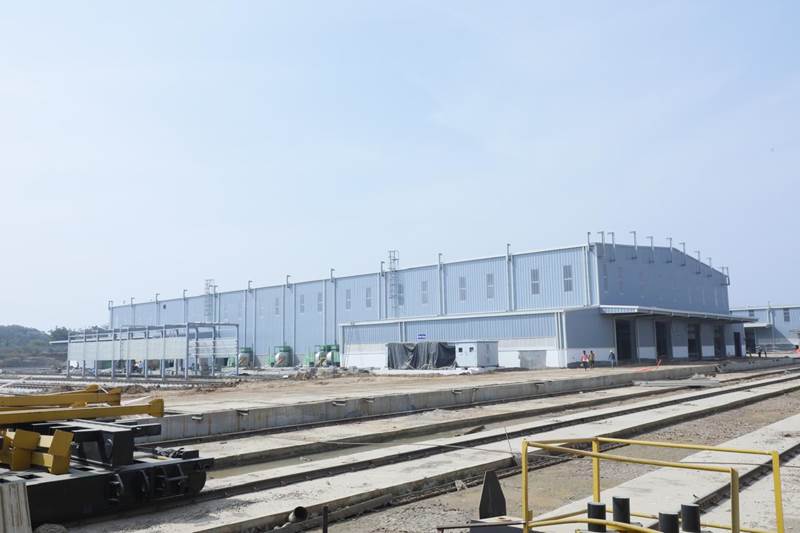
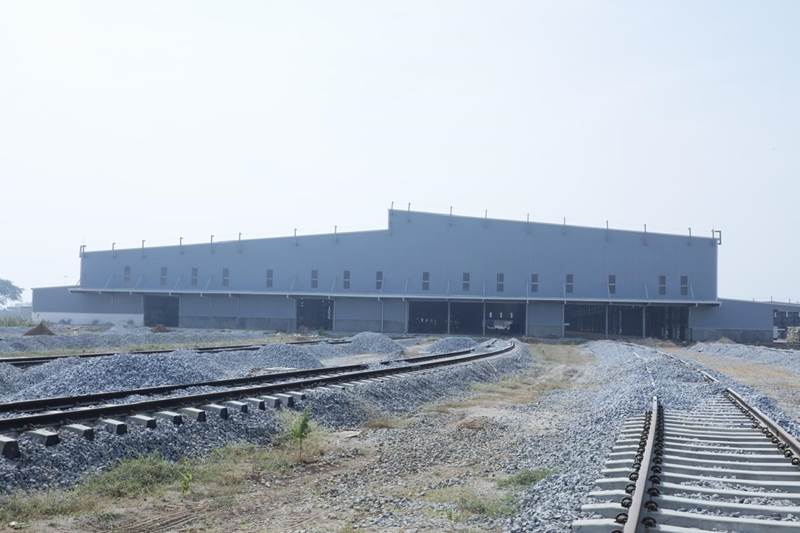
Kazipet Rail Manufacturing Unit is on the Verge of Completion and Will Begin Manufacturing Intercity Trains: Shri Ashwini Vaishnaw

0

Vinod Bhat

New Delhi: Kazipet rail manufacturing unit of Indian Railways is on the verge of completion.  This is a versatile railway rolling stock manufacturing unit.  To begin with, Kazipet will manufacture 200 intercity trains in the next 5 years. The Union Minister of Railways, Ashwini Vaishnaw, and Union Minister of State for Railways, Ravneet Singh Bittu, reviewed the plans to operationalise the Kazipet Rail Manufacturing Unit today along with senior officials.

These trains will be deployed throughout the country for short distance travel. They will have frequent stops. These trains will typically run for about 300 km. Each trip will have many stops so that the citizens can commute between towns and cities. Be it students going for higher education in their adjacent towns, or common people commuting for their health and work needs.

These trains will give the people a new affordable option for intercity travel. These intercity trains will be like shuttle services connecting adjacent towns across India. With the production of these trains, a large amount of local traffic is likely to move to railways from roads.

The intercity trains will be equipped with modern features like automatic door closing, superior ventilation and a safe coach design with a 20-coach configuration. There will be two toilets in every coach, one at each end.

In addition, these intercity trains will have modern jerk free couplers and bogies.  These trains will be designed to run at 130 kmph.

The trains will also have regenerative braking. It means that when the train applies brakes, it will become a generator of electricity & feed the regenerated electricity back into the grid. It is, therefore, energy efficient. This is a greener mode of transport and will have significantly less carbon emissions vis-à-vis road transport.

The introduction of such a large fleet by Railways will increase the green and clean transport capacity across the country.

NSE and Sequel Logistics Ring in India’s Digital Gold Era with Landmark EGR Partnership

0

KD NEWS SERVICE

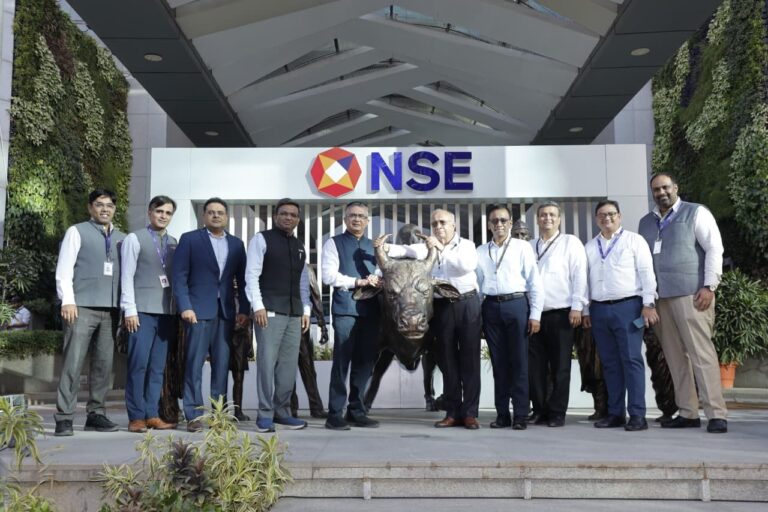
MUMBAI, May 28: In a defining moment for India’s evolving commodity and financial markets, the National Stock Exchange of India (NSE) and Sequel Logistics have entered into a strategic partnership to enable the creation and vaulting of Electronic Gold Receipts (EGRs), marking a major leap toward the formalisation and financialisation of gold in the country.

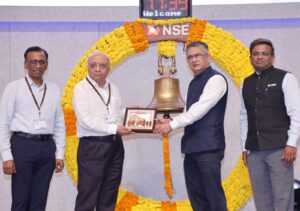
The collaboration was formally unveiled through a ceremonial bell-ringing event at the NSE, symbolising not merely the launch of a business partnership, but the beginning of what market participants believe could become a transformative chapter in India’s centuries-old relationship with gold.

As India accelerates its journey toward digitised financial assets and transparent commodity markets, the NSE-Sequel alliance aims to establish a secure, scalable and institutionally trusted ecosystem for EGR trading — an innovation expected to reshape how gold is owned, traded and stored in the world’s second-largest consumer of the precious metal.

At the heart of the partnership lies Sequel Logistics’ extensive vaulting infrastructure spanning 23 secure vaults across India. These facilities will support the creation and extinguishment of Electronic Gold Receipts, ensuring that every digital receipt traded on the exchange is backed by physical gold held under tightly regulated custody systems.
Industry experts say the initiative could significantly modernise India’s fragmented gold ecosystem, bringing greater transparency, liquidity and investor confidence into a market historically dominated by informal transactions and physical holdings.

Electronic Gold Receipts are designed to function as exchange-traded instruments backed by physical gold. Investors can buy, sell and hold these receipts in dematerialised form, much like equities, without the logistical and security challenges associated with physical ownership. The framework is expected to reduce inefficiencies in pricing, improve purity standardisation and create seamless market access for both retail and institutional participants.

Speaking on the occasion, Sriram Krishnan, Chief Business Development Officer at NSE, described the partnership as a foundational step in building a credible and scalable EGR ecosystem in India.

“We are delighted to partner with Sequel Logistics on the Electronic Gold Receipts segment,” Krishnan said. “A trusted, secure and well-distributed vaulting network is foundational to the integrity of the EGR ecosystem, and Sequel’s established footprint across the country positions it well to support the creation and extinguishment of EGRs at scale.”

He added that Electronic Gold Receipts represent “a meaningful step in the financialisation of gold in India,” offering investors a transparent, exchange-traded and standardised instrument backed by physical gold.

The financialisation of gold has long remained a strategic priority for policymakers and market regulators seeking to channel India’s massive household gold holdings into the formal economy. Analysts believe the EGR mechanism could eventually deepen market participation, improve price discovery and integrate India’s gold trade more closely with global commodity markets.

For Sequel Logistics, one of India’s leading integrated logistics and vaulting service providers, the partnership represents a strategic expansion into the future architecture of precious metals trading.

Rajkumar S, Managing Director and Founder of Sequel Logistics, said the company was honoured to collaborate with the NSE on what he called a “landmark initiative for the Indian capital markets.”

“Sequel has built its vaulting infrastructure over the years with a clear focus on security, transparency and operational rigour,” he said. “We are pleased to bring this network of 23 vaults in support of EGR creation and extinguishment.”

He further noted that the company sees Electronic Gold Receipts playing “a defining role in the financialisation of gold in India,” while reaffirming Sequel’s commitment to supporting the broader ecosystem in building investor trust and operational scale.

The partnership arrives at a time when India’s commodity markets are witnessing rapid structural transformation through technology-led reforms, tighter regulation and increasing investor sophistication. Market observers note that while India has traditionally been one of the world’s largest gold-consuming nations, the absence of a unified and exchange-driven ecosystem has often limited efficiency, transparency and institutional participation.
By linking physical vaulting infrastructure with exchange-based digital trading, the NSE-Sequel model could bridge that gap and create an ecosystem comparable to mature international bullion markets.

Beyond trading convenience, the EGR framework is also expected to strengthen traceability and standardisation within the gold value chain — an increasingly important factor in global precious metals markets where provenance, compliance and quality assurance are gaining prominence.

Financial sector participants believe the initiative may also encourage younger investors to view gold not merely as a cultural asset or store of wealth, but as a modern financial instrument integrated with broader investment portfolios.

The ceremonial bell-ringing at NSE therefore carried symbolism beyond tradition. It reflected the convergence of India’s deep-rooted affinity for gold with the institutional credibility of modern capital markets — a convergence that could redefine how the metal is traded, stored and monetised in the years ahead.

As India positions itself for the next phase of capital market evolution, the NSE-Sequel Logistics partnership may well be remembered as one of the early milestones in building a transparent, technology-enabled and globally competitive digital gold ecosystem.

Cabinet Clears ₹25,530 Crore SARTHAK-PDS Scheme for Smart Food Security Delivery

0

Vinod Bhat

New Delhi: The Cabinet Committee on Economic Affairs (CCEA) chaired by the Prime Minister Shri Narendra Modi has approved the continuation of the “Scheme for Assistance in Ration Transport and Handling-Income with Automation in PDS” (SARTHAK PDS) as an umbrella scheme, in the 16th  Finance Commission cycle award period, with an outlay of Rs. 25,530 crore as Central share.

The CCEA has also decided to revise the norms of Central assistance for meeting expenditure incurred by States/UTs intra-state movement & handling of foodgrains and FPS dealers’ margin and continuation of the existing funding pattern of Central Assistance.

The Scheme is conceived as an umbrella scheme integrating the ongoing schemes: (i) “Assistance to State Agencies for intra-State movement of foodgrains and FPS dealers’ margin under NFSA” and (ii) “Scheme for Modernization and Reforms through Technology in Public Distribution System (SMART PDS)” to comprehensively strengthen implementation of the National Food Security Act, 2013 (NFSA).

SARTHAK-PDS Scheme aims to provide (a) assured financial support for intra-State movement, handling and FPS dealer’s margin, and (b) a unified, citizen-centric, intelligent and interoperable PDS architecture that ensures last-mile service delivery, minimizes leakages and strengthens the nation’s commitment to food security under NFSA, with the merged scheme to operate up to 31.03.2031.

SARTHAK-PDS Scheme seeks to modernize, integrate and intelligently optimize PDS operations through advanced technologies such as Artificial Intelligence (AI), Machine Learning (ML), Natural Language Processing (NLP) and Blockchain, by creating standardized architectures and unified databases for real-time monitoring, AI-driven grievance and analytics systems, State Command Control Centres for data-driven oversight, and ISO-certified process frameworks to ensure transparency, security and sustainability in PDS operations.

Government of India has a social & legal commitment to the people of the nation – a dignified life by ensuring them access to food and nutritional security through the availability of adequate quantities of quality food grains. The Scheme will work towards fulfilling the Government of India’s commitment to 81.35 crore persons covered under NFSA. Building on the statutory and policy framework, SARTHAK-PDS retains and streamlines the financial assistance component while simultaneously embedding it within a modern, technology-driven PDS ecosystem.

Over the past decade, the Government has implemented multiple digitization initiatives such as End-to-End Computerization of TPDS, Integrated Management of PDS (IM-PDS) and SMART PDS, along with citizen-facing applications like Mera Ration, Anna Mitra, Rightful Targeting Dashboard and Anna Sahayata, and since 1st April 2023, the SMART PDS scheme has acted as the cornerstone of technology-led reforms by enabling complete digitization of ration cards, Aadhaar seeding, FPS automation through e-PoS, online allocation and computerized supply-chain management across 36 States/UTs.

India’s refining surplus capacity ensures full domestic supply of Petrol and Diesel; Government calls for discipline in the use of retail fuel channels

0

Vinod Bhat

New Delhi: The Government of India wishes to place on record, in unambiguous terms, that the country has more than adequate supplies of petrol and diesel to meet every domestic need, retail and industrial alike. India is the world’s fourth largest refiner, with an installed capacity of 258.1 million tonnes per annum across 22 operational refineries. Domestic consumption was 243.2 million tonnes in FY 2025-26; petroleum product exports were 61.5 million tonnes in the same year, making India one of the largest exporters of refined products globally. There is no supply issue of any kind.

Union Minister of Petroleum and Natural Gas, Shri Hardeep Singh Puri, has been in continuous coordination with the Public Sector Oil Marketing Companies, State Governments and industry bodies to ensure uninterrupted supply of Petrol & Diesel to all. The Govt. is constantly reviewing the situation. Secretary (P&NG) reviewed the situation with the Chief Secretaries of the States/UTs, FICCI and CII today. The picture that emerges from the field is consistent. There is no scarcity of any petroleum product. There is, in pockets, a pattern of arbitrage that is creating the appearance of one.

The mechanism is straightforward. Under the direction of the Government, and as a deliberate act of consumer protection during the ongoing West Asia disruption, the Oil Marketing Companies have refrained from passing through the full international price into domestic retail sales. PSU OMCs are currently absorbing losses of around ₹550 crore per day on sale of Petrol, diesel and domestic LPG. This cushion is intended for the retail consumers: the households, the two-wheeler commuters, the farmers at the pump. It is not extended to industrial procurement, where pricing tracks international actuals as a matter of standing policy.

Industrial consumers who divert their purchases from the industrial channel to the retail pump capture this cushion at the cost of the ordinary citizen. They also concentrate demand at the pump in a way that produces local shortages where none would otherwise exist.

It has been observed that Private Oil Marketing Companies are experiencing a decline of approximately 38% in HSD offtake during the current month, across both retail outlets and bulk customers due to higher rates fixed by them. This volume is shifting entirely to PSU oil marketing retail outlets. Coupled with this, PSU bulk customer volumes have also recorded a decline of approximately 29%, which is also migrating to retail outlets.

The Government, taking a serious view of above, has asked the industry associations to make their members aware of both the principle and the consequence of violations.

The Government has requested States/UTs to form special squads and take strict action against malpractice of bulk consumers and hoarders taking supplies meant for retail consumers, black marketing, unauthorised stocking and diversion of petroleum products under relevant provisions of EC Act and Control orders issued thereunder.

The Government remains fully seized of the international situation. India’s refining strength, the disciplined operation of the Public Sector OMCs and the active coordination across Centre, States and industry constitute the working architecture of energy security during this period. Citizens are requested to rely on official communication and to disregard rumours that mistake an arbitrage problem for a supply problem.

RM-led IGoM on West Asia reviews availability of essential commodities & supply chain resilience in India amid the ongoing crisis

0

Vinod Bhat

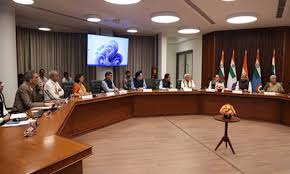
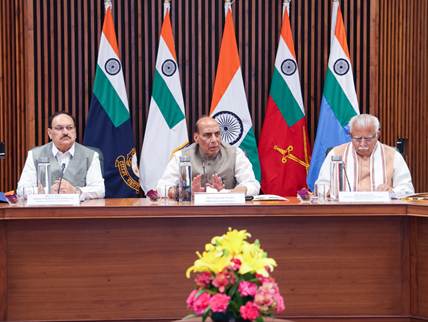
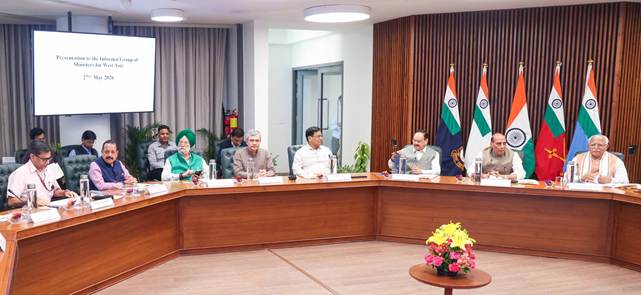
New Delhi: The Informal Group of Ministers (IGoM) on West Asia, headed by Raksha Mantri Shri Rajnath Singh, reviewed the evolving situation in the conflict and assessed India’s preparedness & response measures during its sixth meeting at Kartavya Bhawan-2, New Delhi on May 27, 2026. Minister of Chemicals & Fertilizers Shri Jagat Prakash Nadda; Minister of Power Shri Manohar Lal; Minister of Petroleum and Natural Gas Shri Hardeep Singh Puri; Minister of Consumer Affairs, Food & Public Distribution Shri Prahlad Joshi; Minister of Railways, Information & Broadcasting, Electronics & Information Technology Shri Ashwini Vaishnaw; Minister of Parliamentary Affairs Shri Kiren Rijiju; Minister of Ports, Shipping and Waterways Shri Sarbananda Sonowal; Minister of Labour and Employment, Youth Affairs & Sports Dr Mansukh Mandaviya; and Minister of State (Independent Charge) of the Ministry of Science & Technology Dr Jitendra Singh attended the meeting.

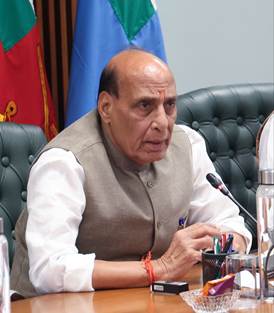
The IGoM took stock of the availability of essential commodities and the resilience of the supply chains of the country. In a post on X, Raksha Mantri stated that the supply situation in the country today is normal, adding that the citizens should avoid panic purchases of petrol, diesel and LPG as the Government is leaving no stone unturned to ensure the availability of all essential items. The IGoM expressed gratitude to Prime Minister Shri Narendra Modi for his farsighted vision and providing outstanding leadership during difficult times, ensuring that the impact of global disruptions remains minimal on the people.

Shri Rajnath Singh directed the officials to make continuous efforts to enhance the nation’s preparedness in light of the evolving situation.

The IGoM was apprised that supplies of petrol and diesel across the country remain fully adequate. India is the world’s fourth largest refiner, with installed capacity of 258.1 MTPA against domestic consumption of 243.2 MT in the last completed financial year, and exports approximately 61.5 MT of petroleum products annually. There is no supply gap.

During the present disruption, the Public Sector Oil Marketing Companies have refrained from passing the full international price into retail, absorbing approximately Rs 550 crore per day as losses. This cushion is intended for retail consumption alone; industrial and commercial diesel tracks international prices as a matter of standing policy. A pattern has emerged of industrial users substituting their entitled industrial procurement with retail purchases to capture the protected price, alongside instances of black marketing by certain dealers. The Ministry, the OMCs and the State Governments have intensified field enforcement, and the industry associations are being engaged to remind members of the conduct expected.

The IGoM was informed that the overall stock position of fertilizers in the country is comfortable. For Kharif 2026, the fertiliser requirement has been assessed by the Department of Agriculture & Farmers Welfare at 390.54 LMT, and as on today, it is around 200.47 LMT (more than 51%), significantly higher than the usual level of about 33%. This reflects improved planning, advance stocking, and efficient logistics management by the Government.

Product Domestic production after  crisis Import reached on Indian Ports after crisis
Urea 59.51 13.60
DAP 8.26 0.88
NPKs 19.38 5.65
SSF 11.24 0
MOP 0 3.83
Total 98.39 23.96


Approximately 122.4 LMT fertilizers through imports and domestic production have been added in the availability after the crisis situation. India has secured approx. 15 LMT DAP (Including TSP) and 10 LMT NPKs including AS from out of SOH to be arrived on Indian ports in May and June. These will help to ensure adequate availability during the peak season. Availability of inputs for production of fertilizers i.e. Urea and P&K fertilizers are being regularly reviewed by the Department of Fertilizers. It is regularly paying all the subsidy bills raised by the companies on a weekly basis.

Ten (10) meetings of the Empowered Group of Secretaries (EGoS) have been held till date to ensure the adequate availability of the fertilizers. Most of the challenges in the availability have been addressed by EGoS. India’s fertiliser security remains strong, stable, and well-managed, with availability consistently exceeding requirement across all major fertilisers. Raksha Mantri stressed that fertilisers and other essential agricultural inputs should remain adequately available to farmers to ensure that food prices in the country continue to remain stable.

The IGoM was also apprised that the industry, particularly MSMEs have expressed appreciation to the Government for the Emergency Credit Line Guarantee Scheme 5.0 which is helping alleviate working capital stress among MSMEs.