spot_imgspot_img
spot_img
Home Blog Page 75

Domestic LPG Production from refineries increases from pre-crises levels

0
Vinod Bhat

New Delhi: As part of the Government of India’s ongoing efforts to keep the citizens regularly informed about developments in West Asia, inter-ministerial briefings are being held for the media at the National Media Centre. In this context, a briefing was held today, where senior officials from the Ministries of Petroleum and Natural Gas, Ports, Shipping and Waterways and External Affairs, shared updates on fuel supply, maritime operations, assistance to Indian nationals in the region, and measures to ensure stability across these sectors.

Energy Supply and Fuel Availability

The Ministry of Petroleum and Natural Gas shared an update on the fuel supply situation, outlining measures to ensure uninterrupted availability of petroleum products and LPG in view of the Strait of Hormuz closure, and noted:

Crude and Refineries

· All refineries are operating at high capacity with adequate crude inventories, and sufficient stocks of petrol and diesel are being maintained.

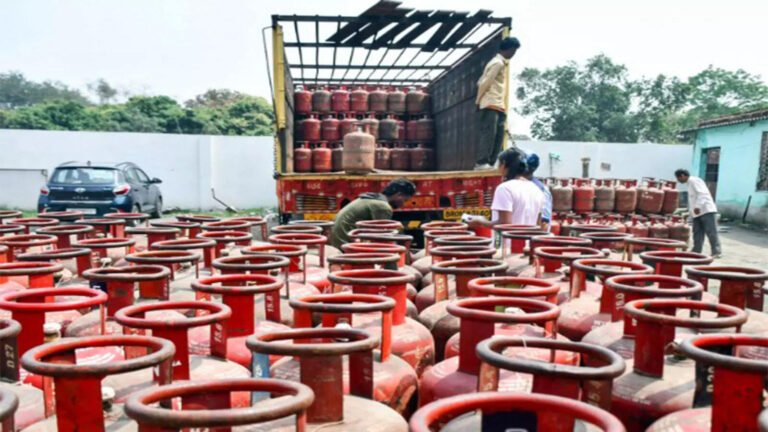
· Domestic LPG production from refineries has been increased compared to pre-crisis levels.

Retail Outlets

· All retail outlets are operating normally across country.

· Panic buying was reported in some areas due to some rumours, resulting in unusually high sales and crowding at retail outlets.

· The Government has advised the public not to believe rumours and reiterated that adequate stocks of petrol and diesel are available across the country.

Natural Gas

· Priority sectors continue to receive protected supplies, including 100 percent supply to domestic PNG and CNG transport, while supplies to industrial and commercial consumers connected to the grid are being maintained at around 80 percent of their average consumption.

· City Gas Distribution (CGD) entities have been advised to prioritise PNG connections for commercial establishments such as hotels, restaurants and canteens.

· CGD companies including IGL, MGL, GAIL Gas and BPCL are offering incentives to promote domestic and commercial PNG connections.

· The Government of India vide letter date 16.03.2026 has requested Government of States/UTs to expedite approval of applications required for expansion of CGD network.

· The Government of India vide letter dated 18.03.2026 has offered all States/UTs additional 10% allocation of commercial LPG to States provided they can help in long term transition from LPG to PNG.

· The Government of India have requested all concerned Central Government Ministries for fast tracking and disposal of all pending and new permissions related to CGD infrastructure.

· The Government of India vide letter dated 20.03.2026 has requested all Central Government Ministries to undertake a comprehensive assessment of potential demand for PNG connections in establishments under various Ministries/Departments of the Government of India and to designate a nodal officer from each Ministry/Department to coordinate this exercise.

· Petroleum and Explosive Safety Organisation (PESO) has advised its offices to dispose of CGD applications on priority within 10 days.

· Commercial LPG consumers in the major cities and urban area have been requested to switch to PNG.

· Petroleum and Natural gas Regulatory Board (PNGRB) vide its order dated 23.03.2026 has directed CGD entities to prioritise PNG connections for residential schools, colleges, hostels, community kitchens and anganwadi kitchens, through PNG within five days where pipelines are available.

· Over 7,500 domestic and commercial PNG connections were issued or activated yesterday in the top 110 geographical areas.

LPG

· LPG supply continues to be affected due to the prevailing geopolitical situation.

· No dry-outs have been reported at distributorships.

· Panic bookings showed a marginal increase yesterday, while delivery of domestic LPG cylinders continues as normal.

· The Government had already restored Partial Commercial LPG supply (20%) to consumers. Further, Government of India vide letter dated 18.03.2026 had proposed to allocate additional 10% of Commercial LPG to States/UTs based on ease of doing business reforms for PNG expansion.

· The Government. of India vide letter dated 21.03.2026 has allowed another 20% allocation of commercial LPG to States, which would take overall allocation to 50% (incl. 10% allocation based on ease of doing reforms for PNG expansion). This additional 20% allocation shall be given on priority to sectors like restaurants, dhabas, hotels, industrial canteens, food processing/dairy, subsidised canteens/outlets run by State Government or local bodies for food, community kitchens, 5 Kg FTL for migrant labourers.

· 24 States/UTs have issued orders to allocate the Non-domestic LPG in line with the guidelines issued by the Government of India. For rest of the States/UTs, PSU Oil Marketing companies are releasing Commercial LPG cylinders. A total of around 18,784 MT has been uplifted during since 14th March 2026 by commercial entities in the States/UTs.

Kerosene

· An additional allocation of 48,000 KL of kerosene has been provided to States and UTs, which have been requested to identify district-level distribution points.

· 15 States and UTs have issued SKO allocation orders, while Himachal Pradesh and Ladakh has communicated that there is no SKO requirement in the State/UT. As on date, 17 States/UTs are yet to issue SKO allocation orders.

Role of State Governments / UTs

· Under Essential Commodities Act, 1955 and LPG Control Order, 2000, State Government are empowered to act against any hoarding and black marketing. The Government of States/UTs have to play a primary role in monitoring and regulating supply situation of essential commodities including Petrol, Diesel and LPG.

· The Government of India vide letter dated 13.03.2026 and 18.03.2026 has requested all States/UTs:

Ø To maintain strict vigilance so as to curb hoarding, black marketing, diversion of domestic LPG and other malpractices.

Ø To take stringent action against violators under the provisions of Essential Commodities Act, 1955, Petroleum Act, 1934, Petroleum Rules 2002, Motor Spirit and HSD order 2005 and other applicable laws.

Ø To evolve appropriate distribution methodologies for commercial LPG, keeping in view local priorities and requirements.

Ø To issue public advisories to prevent panic buying, encourage judicious use of LPG and dissemination of accurate information.

· All District Collectors and Food and Civil Supplies (FC&S) officials are requested to conduct regular enforcement actions on daily basis.

· 32 States/UTs have setup control rooms. Many of the States/UTs are doing daily press briefs also.

· 33 States/UTs have setup District Level Monitoring Committee.

· All those States/UTs who have not setup Control rooms and District Monitoring committees are requested to do so on urgent basis.

Enforcement action

· Enforcement actions continue across States to curb hoarding and black marketing, with about 3,400 raids conducted and around 1,000 cylinders seized in the past 24 hours.

· Major actions were reported in Andhra Pradesh, Haryana, Madhya Pradesh, Rajasthan and Telangana.

· PSU Oil Marketing Companies conducted more than 1,500 surprise inspections at retail outlets and LPG distributorships yesterday.

· So far, about 642 FIRs have been registered and around 155 people arrested.

Other Government Measures

· The Government continues to prioritise uninterrupted LPG supply and PNG expansion, particularly for households and priority sectors such as hospitals and educational institutions.

· Measures include enhanced refinery production, revised booking intervals from 21 to 25 days in urban areas and up to 45 days in rural areas and prioritised supply allocation.

· Alternate fuel options like Kerosene and coal have been offered to ease pressure on LPG demand.

· Ministry of Coal has already issued order to Coal India and Singareni Coallieries to allot higher quantities to States for distributing coal to small, medium and other consumers.

· States have been advised to facilitate PNG connections for both domestic and commercial consumers.

Public Advisory

· Citizens are advised to avoid panic purchase of Petrol, Diesel and LPG and rely only on official information sources.

· Consumers are requested to use digital booking platforms for LPG and avoid visiting distributors.

· Citizens are encouraged to use alternate fuels such as PNG and electric or induction cooktops.

· All citizens are requested to conserve energy during the current situation.

Maritime Safety and Shipping Operations

An update on the prevailing maritime situation in the Persian Gulf and the measures being taken to ensure the safety and security of Indian vessels and crew was shared by the Ministry of Ports, Shipping and Waterways. The Ministry stated that:

· All Indian seafarers currently present in the region are safe and no shipping incident involving Indian-flagged vessels has been reported in the past 24 hours.

· Two Indian LPG vessels, Pine Gas and Jag Vasant, crossed the Strait of Hormuz last night and are heading towards India carrying LPG cargo. Pine Gas (about 45,000 MT LPG) is bound for New Mangalore with ETA on 27 March morning, while Jag Vasant (about 47,612.59 MT LPG) is bound for Kandla with ETA on 26 March morning.

· Following their safe transit, 20 Indian-flagged vessels with around 540 Indian seafarers remain in the western Persian Gulf region. The Directorate General of Shipping (DG Shipping) continues close monitoring in coordination with ship owners, RPSL agencies and Indian Missions.

· The DG Shipping Control Room remains operational 24×7 and has handled 3,921 calls and 7,447 emails since activation, including 146 calls and 226 emails in the past 24 hours.

· DG Shipping has facilitated the safe repatriation of more than 585 Indian seafarers so far, including 26 in the past 24 hours and 39 over the last 48 hours, from airports and regional locations.

· India’s maritime sector continues to operate smoothly with no congestion reported across ports, as confirmed by State Maritime Boards including Gujarat, Maharashtra, Goa, Kerala, Andhra Pradesh and Puducherry.

· Ports are closely monitoring vessel movements and cargo operations, with additional space already created at key ports such as Jawaharlal Nehru Port Authority (JNPA), V.O. Chidambaranar Port Authority (VOCPA), Visakhapatnam Port, Mundra, Deendayal Port Authority, New Mangalore Port Authority (NMPA) Cochin Port Authority, and Chennai Port Authority to ensure smooth cargo handling.

· At Kamarajar Port Limited (KPL), an additional 20 days of free storage period (total 40 days) has been granted for cars bound for the Gulf, along with provision of about 10 acres of additional storage space to facilitate efficient cargo management.

· The Ministry of Ports, Shipping and Waterways continues to monitor shipping movements, port operations, safety of seafarers and continuity of maritime trade in view of the evolving situation in West Asia.

Safety of Indian Nationals in the Region

Recent developments in the region, including assistance through Indian Missions, were shared during the briefing. It was informed that:

· The External Affairs Minister spoke with U.S. Secretary of State Marco Rubio and discussed the evolving situation in West Asia and its impact on the international economy, with particular focus on energy security concerns.

· The External Affairs Minister also spoke with Foreign Minister Vijitha Herath of Sri Lanka, where both sides discussed the repercussions of the West Asia conflict. The Minister reaffirmed India’s commitment to the Neighbourhood First policy and Vision MAHASAGAR.

· The External Affairs Minister met the Ambassadors of Gulf Cooperation Council countries in New Delhi and exchanged views on the ongoing conflict in West Asia. He thanked them for their continued support to the Indian community in the region.

· The Ministry of External Affairs continues to closely monitor developments in West Asia and the Gulf region, with the safety, security and well-being of the Indian community remaining the highest priority.

· A dedicated MEA control room remains operational, with coordination ongoing with State Governments and Union Territories.

· Indian Missions and Posts across the region are functioning round the clock, maintaining 24×7 helplines, engaging with Indian community organisations and issuing updated advisories.

· Missions remain in close contact with local authorities and continue to assist seafarers, students, stranded Indian nationals and short-term visitors with visa facilitation, consular services and logistical support.

· Since 28 February, around 4,02,000 passengers have returned from the region to India, with flight operations continuing to improve.

· In the UAE, limited non-scheduled flights continue, with around 85 flights expected today to India.

· Flights continue to operate from Saudi Arabia and Oman to India.

· Qatar airspace remains partially open, with Qatar Airways expected to operate around 9 non-scheduled flights to India today.

· Kuwait and Bahrain airspaces remain closed. Jazeera Airways of Kuwait is operating flights to various destinations in India from the Al Qaisumah Airport (AQI) in Saudi Arabia. Gulf Air of Bahrain also continues to operate special non-scheduled commercial flights from Dammam Airport of Saudi Arabia to India. This is facilitating travel of Indian nationals from Kuwait and Bahrain to India.

· Transit of Indian nationals continue to be facilitated via Saudi Arabia for those in Kuwait, Bahrain and Iraq.

· Indian nationals in Iran continue to be assisted for travel to India via Armenia and Azerbaijan.

· Indian nationals in Israel are being facilitated to travel to India via Jordan.
Baramulla Joins The Nationwide Launch Of ‘TB Mukt Bharat Abhiyaan – 100 Days Campaign 2.0’

0

DC Calls For Intensified Awareness And Community Participation To Eradicate TB From The District

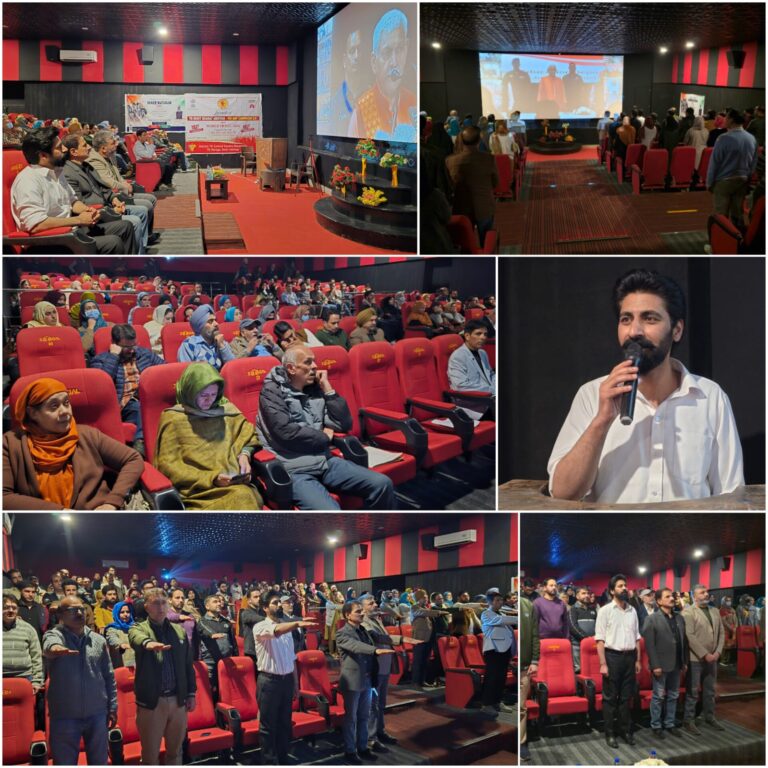
Baramulla, March 24: Deputy Commissioner Baramulla, S.F. Hamid, along with the Chief Medical Officer and other senior officers, today virtually participated from Sherwani Hall, Baramulla, in the launch of the “TB Mukt Bharat Abhiyaan – 100 Days Campaign 2.0” by Hon’ble Lieutenant Governor Shri Manoj Sinha Ji from Jammu.

The campaign launched on the occasion of the TB Day under the theme “Yes We Can End TB”, aims to intensify efforts across the country towards elimination of tuberculosis through enhanced awareness, early detection, and timely treatment.

On the occasion, the DC directed the CMO to organize intensive awareness camps across the district to ensure that people are well-informed about the causes, symptoms, prevention, and treatment of tuberculosis.

He emphasized the need for mass awareness to eliminate stigma and promote early testing and strict adherence to treatment protocols.

The DC further instructed all Block Medical Officers (BMOs) to focus on vulnerable and high-risk sections of society during the period for the effectiveness of the campaign.

Highlighting the importance of collective responsibility, the DC stated that eradication of tuberculosis is not only the duty of the administration and urged people to come forward, get tested, and support efforts to make the district TB-free.

The virtual launch event was also attended by the Chief Medical Officer Baramulla, District Tuberculosis Officer, BMOs, Nikshay Mitras, and other health officers from Baramulla.

Indian Railways Announces Five New Reforms Under ‘Reform Express’; Cargo, Construction, and Passenger Convenience in Focus

0
Vinod Bhat

New Delhi: Union Minister for Railways, Information & Broadcasting and Electronics & Information Technology, Shri Ashwini Vaishnaw, today announced that in line with Indian Railways’ resolve to undertake reforms during 2026, five new reforms have been approved. With the approval of these new reforms, the total number of reforms for the year 2026 has reached nine.

Shri Ashwini Vaishnaw said that under the ongoing “Reform Express” initiative, four reforms had already been announced and five new reforms are being introduced. Out of the five new reforms, two are related to cargo, one to construction, and two to passenger convenience.

Reform in Salt Transportation

Speaking on reform number five, which focuses on salt transportation, Shri Vaishnaw said India is one of the largest producers and exporters of salt in the world. The three major producing states are Tamil Nadu, Gujarat, and Rajasthan. Out of nearly 35 million tonnes of salt produced annually in India, about 9.2 million tonnes per annum are transported by railways, reflecting a significant untapped opportunity.

The Union Minister noted that the modal share of railways in salt transportation varies by use – approximately 25 per cent for industrial salt and around 65 per cent for salt meant for human consumption. He added that 62 per cent of all rail-based salt traffic covers distances of 1,000 to 2,500 kilometres, making it a segment well-suited for rail movement.

He said detailed consultations were held with salt producers and transporters to understand the challenges. The study identified key issues, including unsuitable wagon design, corrosion of wagons caused by salt, water seepage in open wagons despite tarpaulin covers, and multiple handling stages leading to higher costs and losses.

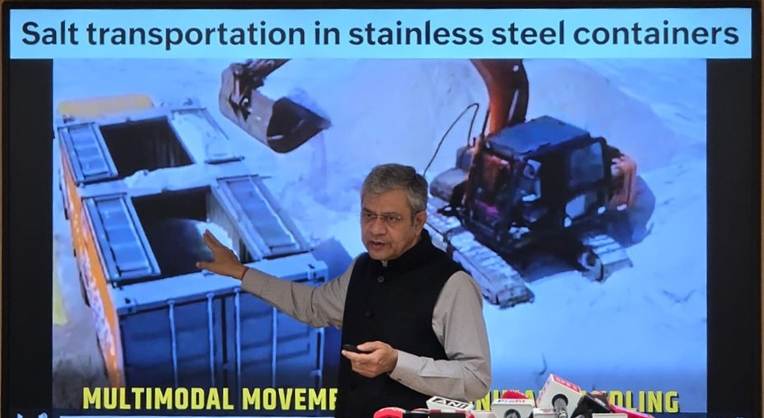
To address these issues, a stainless steel, top-loading and side-discharge container system has now been successfully developed. The container is made of stainless steel to prevent corrosion, and is equipped with top-loading flaps and a hydraulic side-discharge mechanism, allowing easy unloading into trucks at the destination.

The Union Minister explained that containers can be placed at salt production sites for direct loading. These containers can then be lifted and loaded onto container trains. At the destination, containers can be unloaded and placed at warehouses or godowns, with unloading done as per requirement. He said this system provides greater flexibility, supports seamless multimodal movement, reduces handling losses, and has been well received by the industry.

Reform in Automobile Transportation

The Indian automobile market produces approximately 31 million units annually, of which passenger vehicles account for around 5 million units. The rail co-efficient in passenger vehicle transport stands at about 24 per cent, indicating that a large share of automobile movement still happens by road.

He said feedback from the industry highlighted key design and operational constraints. The major automobile production hubs served by railways include Mahesana in Gujarat; Chinchwad and Bidadi in Maharashtra and Karnataka; Penukonda in Andhra Pradesh; Melpakkam and Walajabad in Tamil Nadu; and Farakhanagar in Gurugram, Haryana. He stated that earlier initiatives included converting existing passenger coaches into automobile carrier wagons and introducing new solutions. However, further consultations revealed that the primary issue lay in the design of automobile carrier wagons.

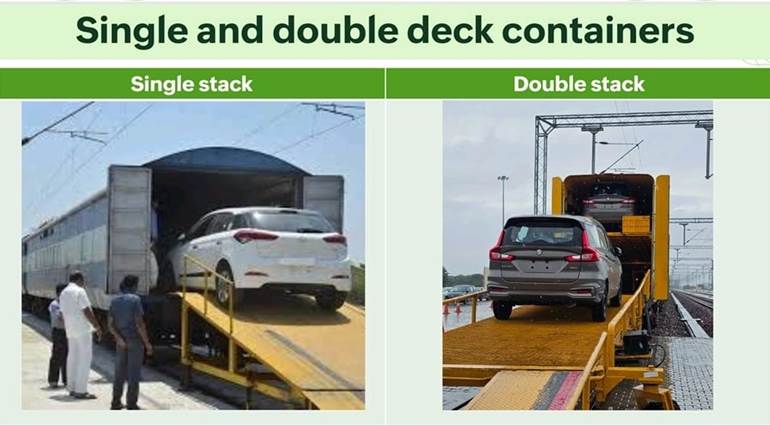
The Union Minister said that the existing wagon designs were either suited for single-stack or double-stack configurations, limiting flexibility. He added that many routes face restrictions due to tunnels and bridges, where the Schedule of Dimensions (SOD) constraints prevent movement of certain wagon types.

To address this, Shri Vaishnaw said the Railways has introduced a reform allowing special wagon designs while giving flexibility to the industry. Manufacturers can now design wagons based on specific origin-destination routes with  high-capacity.

Referring to the impact of the earlier bulk cement policy reform, he said that changes implemented led to an immediate increase in loading — bulk cement tonnage transported by rail rose sharply from approximately 37,000 tonnes in September 2025 to nearly 95,000 tonnes by January 2026. He expressed similar expectations that the reforms in salt and automobile transportation will significantly improve rail freight share in those sectors.

Improving Quality of Construction

Shri Ashwini Vaishnaw said the next reform focuses on improving construction quality in railway projects, introducing seven major changes.

The Union Minister said the first change relates to eligibility criteria. The threshold for assessing contractor capability through a single project has been increased from 35 per cent to 50 per cent of the project value. This ensures that only firms with proven capacity to execute large projects can bid for similar works. Additionally, at least 20 per cent of prior experience must be in railway-related work, recognising that different sectors such as highways, ports, and airports have distinct complexities. Within railway works, complexity levels have been defined, signalling being the most complex, followed by overhead electrical and track works and relevant experience will be required accordingly.

The second change fixes bid security at 2 per cent of the project value. This is aimed at discouraging frivolous bids and ensuring only serious participants enter the tendering process.

The third change introduces mandatory assessment of bid capacity for all projects above ₹10 crore, while the fourth enforces strict punitive provisions banning corrupt, fraudulent, and anti-competitive practices.

The fifth change mandates a detailed work plan before the start of any project, enabling improved monitoring and ensuring timely execution.

The sixth change reduces the permissible subcontracting limit from 70 per cent to 40 per cent. Contractors will now have to directly execute at least 60 per cent of the work under their own supervision, which will ensure accountability and reduce the practice of passing on contracts after securing bids.

The seventh change addresses predatory bidding. He said that if a bid is more than 5 per cent below the estimated project cost, the bidder will be required to provide an additional 5 per cent performance guarantee. This is aimed at discouraging unrealistic bids that later lead to disputes, arbitration, and project delays.

These changes collectively strengthen the railway project execution framework by enhancing transparency and integrity through strict ethical and punitive measures, ensuring quality assurance via stricter eligibility norms and reduced subcontracting, and promoting timely delivery with mechanisms like fixed bid security, bid capacity assessment, and additional performance guarantees. Together, these steps aim to build a more accountable, efficient, and robust infrastructure development system.

Ticket cancellation and refund

The Union Minister said reform number eight focuses on passenger convenience, with measures to curb misuse of ticketing systems and improve access for genuine travellers.

He said ticket black marketing and misuse of the Tatkal system had been a major concern. To address this, the Railways introduced technology to detect bots and fraudulent software. Further technological interventions curtailed the ability of agents and touts to book tickets immediately after the Tatkal window opens, alongside the introduction of Aadhaar-based OTP verification. A detailed data analysis led to the identification and removal of nearly 3 crore fake accounts from the IRCTC system, resulting in a significant improvement in ticket availability.

To address this, the earlier cancellation time windows of 48, 12, and 4 hours before departure have been revised to 72, 24, and 8 hours, aligned with the advance preparation of reservation charts which now happens 9-18 hours before departure instead of 4 hours. This will be done at no extra cost from passengers. Advance reservation charts improves passenger convenience by reducing uncertainty, enabling better planning for waitlisted travelers, and supporting passengers from remote locations. Early charting allows alternative travel arrangements, optimizes vacant berth utilization, and boosts transparency. These changes are aimed at removing incentives for last-minute speculative bookings and ensuring tickets are available to genuine passengers.

The Union Minister also announced that soon counter tickets can now be cancelled from any railway station across the country, removing the earlier restriction of cancellation only at the originating station. He said the requirement of filing a Ticket Deposit Receipt (TDR) for e-tickets has been removed, and refunds will now be processed automatically upon cancellation. In another passenger measure, passengers can now upgrade their travel class up to 30 minutes before departure, whereas earlier changes were restricted to before chart preparation.

He said these reforms are expected to further improve transparency, reduce misuse, and enhance passenger experience in railway ticketing.

Change of Train Boarding Point

The Union Minister said reform number nine enables passengers to change their boarding station digitally up to 30 minutes before departure of the train from its origin station. He explained that earlier, passengers could change the boarding point only before chart preparation. Under the new provision, if a passenger is unable to board from the original station, they can select the next convenient station and board the train without losing their confirmed seat.

Update on Previous Reforms

Previous reforms have included Reforms for Better On-Board Services, expansion of Gati Shakti Cargo Terminals with better facilities to meet freight targets, the RailTech Policy and Portal, and digitisation of the Railway Claims Tribunal (e-RCT) for faster, paperless claims disposal.

The Union Minister said on-board cleaning services for general and unreserved coaches have been taken up as a mission. A total of 86 trains have been identified across zonal railways. Expression of Interest for empanelment has already been floated by 5 Zonal Railways. On cargo reforms, he said changes in the Gati Shakti Cargo Terminal policy have been notified and new applications are being processed under the revised framework.

Referring to the recently launched Rail Tech policy, he said 123 proposals were received within a month, of which 94 have been shortlisted for the next stage.

These reforms are aimed at improving operational efficiency, enhancing passenger convenience, and encouraging innovation in the railway sector, the Union Minister concluded.

Indian Railways Approves Kosamba Rail Over Rail Flyover in Gujarat and Bhagalpur Bypass in Bihar to Strengthen Rail Connectivity and Capacity

0
Vinod Bhat

New Delhi: The Ministry of Railways has approved two important rail infrastructure projects in Western Railway and Eastern Railway aimed at enhancing connectivity, easing congestion and improving operational efficiency. The projects include construction of a Rail Over Rail (RoR) flyover at Kosamba for connectivity to the Kosamba–Umrapada Gauge Conversion section in Gujarat and development of a new rail bypass at Bhagalpur in Bihar. The total sanctioned cost of the two projects is ₹647.58 crore.

Sanction of Rail-over-Rail Flyover at Kosamba – Umrapada GC Section (9.20 km), Western Railway

Indian Railways has approved the construction of a Rail-over-Rail (RoR) Flyover to provide seamless connectivity to the Kosamba – Umrapada Gauge Conversion (GC) section (9.20 km) at a total estimated completion cost of ₹344.38 crore. The Kosamba–Umrapada section lies on the eastern side of the Mumbai–Vadodara main line and its gauge conversion is currently underway.

Due to the presence of the Dedicated Freight Corridor alignment, direct connectivity of the gauge converted line with the main line is not feasible through a surface crossing. The approved Rail Over Rail flyover will eliminate surface crossings and enable seamless integration of the Gauge Conversion section with the Mumbai–Vadodara main line. This will ensure uninterrupted and safe movement of trains on these critical routes and help fully realize the benefits of the gauge conversion project.

Sanction of Bhagalpur Bypass (13.38 km), Eastern Railway

The Ministry has also approved the construction of the Bhagalpur Bypass (13.38 km) in Eastern Railway at an estimated cost of ₹303.20 crore. The bypass will connect Gonudham Halt on the Barahat-Bhagalpur section with Sabour on the Bhagalpur-Sahibganj section, thereby easing congestion at Bhagalpur junction.

At present, the Barahat–Bhagalpur section is operating at more than 125 percent capacity utilisation, leading to severe congestion. Trains moving between the Barahat–Bhagalpur and Bhagalpur–Sahibganj sections require engine reversal at Bhagalpur, resulting in detention and operational inefficiencies. The approved bypass will significantly improve operational fluidity and punctuality.

These infrastructure works will strengthen rail connectivity in Gujarat and Bihar, enhance safety, reduce congestion, and improve overall efficiency of train operations. The Ministry of Railways continues to prioritise capacity augmentation and network decongestion to meet the growing passenger and freight transportation demands of the country.

Panchayat polls on cards in J&K, formalities underway: Javid Dar

0

Srinagar, Mar 24: Jammu and Kashmir Minister for Elections Javid Ahmad Dar on Tuesday said the government is prepared to conduct panchayat elections in the Union Territory, adding that procedural requirements are being completed.

Speaking to the media, Dar said necessary arrangements are being put in place for the polls.

“We are ready for the panchayat elections. Some formalities are needed and certain things have to be kept in place. We are doing that,” he said.

He said the elections would be held once these processes are completed. “After that, the local government elections will be held,” he added.

In a separate response, the minister said the issue of reservation for Other Backward Classes (OBCs) is under examination by the government.

“That reservation has an issue. The government is evaluating it. There are discussions on it,” he said. Dar said a decision would be taken after the process is completed.

“When it is completely compiled and presented, then it will be implemented,” he added.(KNS).

Military plane with 121 aboard crashes in Colombia, dozens killed

0

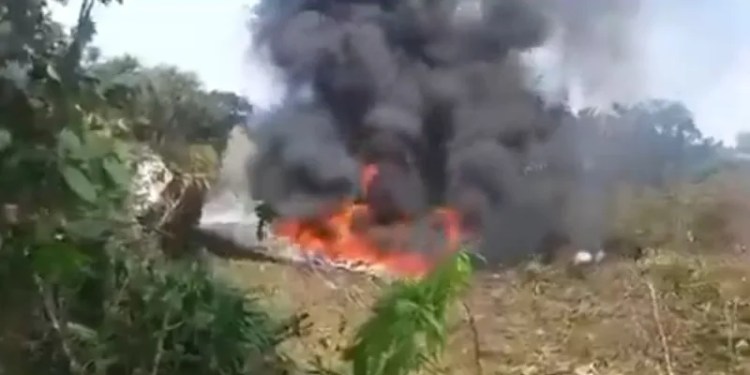
Bogota, Mar 24: A military transport plane with 121 people on board, mostly soldiers, crashed shortly after taking off Monday in Puerto Leguizamo, Colombia, killing at least 33 people and leaving at least 81 injured, according to the town’s deputy mayor.

In a video posted on social media, Deputy Mayor Carlos Claros said that the bodies of the victims were taken to the small town’s morgue, and that the only two clinics in town treated the injured before they were flown to larger cities. Puerto Leguizamo is located in Putumayo, an Amazonian province that borders Ecuador and Peru.

“I want to thank the people of Puerto Leguizamo who came out to help the victims of this accident,” Claros told Colombian television station RCN.

Defence Minister Pedro Sánchez said on X that the plane that crashed Monday was transporting troops to another city in Putumayo.

Images shared online by Colombian media outlets showed a black cloud of smoke rising from a field where the plane crashed and a truck with soldiers rushing to the site.

The air force said in a statement that at least 77 people were rescued from the crash site with injuries. A spokesman from the Defense Ministry said that officials are still investigating the final number of fatalities.

A statement from the military command posted online by Colombian President Gustavo Petro had previously confirmed one dead.

The air force said that 121 people were on board the Hercules C-130 plane, including 110 soldiers and 11 crew members.

Media outlets shared videos of soldiers being rushed from the site on motorcycles driven by local residents, while another group of residents tried to put out the fire that the plane crash had created in a field surrounded by dense foliage.

Carlos Fernando Silva, the commander of Colombia’s air force, said details of the crash were not yet known, “except that the plane had a problem and went down about two kilometers from the airport”.

The air force commander added that two planes, with 74 beds, were sent to the area to fly the injured back to hospitals in the capital, Bogota, and elsewhere.

Petro seized on the accident to promote what he called his longtime campaign to modernize planes and other equipment used by his country’s military, saying those efforts have been blocked by “bureaucratic difficulties” and suggesting that some officials should be held accountable. “If civilian or military administrative officials are not up to the challenge, they must be removed,” Petro said.

Critics of the president pointed out that military aircraft have been given less flight hours under the Petro administration due to budget cuts, which leads to less experienced crews.

Erich Saumeth, a Colombian aviation expert and military analyst, said that the Hercules C-130 that crashed on Monday had been donated by the United States to Colombia in 2020. Three years later, it went through a detailed revision known as an overhaul, in which its engine was inspected and key components were replaced.

“I don’t think this plane crashed because of a lack of good parts,” Saumeth said. He said that investigations will have to determine why the engines of the Hercules, which has four propellers, failed so quickly after take off.

In a message on X Monday, Defence Minister Sánchez said that so far there were no signs indicating that the plane was attacked by rebel groups that operate near Puerto Leguizamo.

Sánchez wrote that the accident was “profoundly painful for the country,” adding that: “We hope that our prayers can help to relieve some of the pain”.

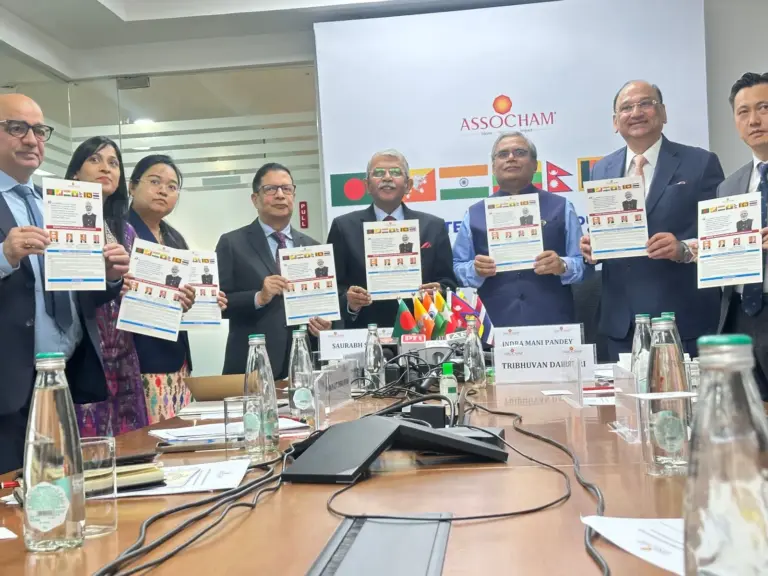
ASSOCHAM Unveils India Leadership of BIMSTEC Business Council; Sets Agenda on Trade, Connectivity & MSME Cooperation Ahead of BIMSTEC@30

0

Vinod Bhat

New Delhi, 23rd March 26: The Associated Chambers of Commerce and Industry of India (ASSOCHAM) has reinforced India’s commitment to BIMSTEC reflecting its strategic vision of strengthening regional cooperation in the Bay of Bengal region as part of its “Neighbourhood First” and “Act East” policies.

India as a founding member, has consistently played a proactive role in advancing connectivity, trade facilitation, energy cooperation, and capacity building among member states. India’s support for institutional strengthening, including the BIMSTEC Secretariat, and its emphasis on inclusive growth, resilient supply chains, and sustainable development underscore its long-term commitment to making BIMSTEC a vibrant and effective regional grouping.

ASSOCHAM, as a founding member and India Secretariat of the BIMSTEC Business Council, under the aegis of the Ministry of External Affairs, Government of India, has revitalised the BIMSTEC Business Council India secretariat by launching the leadership of India for the BIMSTEC Business Council. ASSOCHAM’s commitment to BIMSTEC lies in institutional leadership, industry mobilization, and policy advocacy, making it a key driver in transforming BIMSTEC from a regional grouping into a vibrant economic partnership platform.

Tribhuvan Darbari, India Chair, BIMSTEC Business Council, said in his opening address, “BIMSTEC represents a USD 5 trillion opportunity. The time is ripe to unlock this potential through deeper trade integration, stronger supply chains, and seamless connectivity. The real opportunity within BIMSTEC lies in converting policy alignment into business outcomes. From trade facilitation and logistics integration to MSME collaboration and digital innovation, there is strong potential to deepen regional value chains. ASSOCHAM will focus on creating a robust platform for industry-government engagement, enabling businesses to scale across borders and leverage emerging opportunities in manufacturing, services, and sustainable sectors.”

Nirmal K. Minda, President, ASSOCHAM, who joined the launch and in his address he put impetus on ASSOCHAM’s vision for BIMSTEC and emphasised its commitment to strengthening connectivity, empowering MSMEs, and unlocking new avenues for investment and innovation across member nations.

Furthermore, Indra Mani Pandey, Secretary General, BIMSTEC, emphasised, “We need to create dependency regionally rather than depending on the global supply chains, whether in energy security, health security etc. We can deal with such challenges working together”

Saurabh Sanyal, Secretary General, ASSOCHAM, added, “This marks not just an institutional milestone, but a lasting commitment to businesses across seven nations. Our focus is on turning intent into action through robust industry–government collaboration.”

H.E. Dr. Shankar Prasad Sharma, Ambassador of Nepal to India, Mr. Penday Dorji, Counsellor (Economic), Royal Bhutanese Embassy, New Delhi, Mrs. Thin Pyant Thida Kyaw, Deputy Chief of Mission/Minister Counsellor, Embassy of the Republic of the Union of Myanmar, New Delhi, Mr. Geshan Dissanayake, Minister Counsellor (Commercial), The High Commission of Sri Lanka to India and Ms. Charoenporn Raksapolmuang (Counsellor), Royal Thai Embassy in New Delhi, participated in the deliberations and shared their support to ASSOCHAM in BIMSTEC initiatives.

ASSOCHAM remains committed to supporting the formation of the BIMSTEC Chamber of Commerce and Industry and will work closely with counterpart chambers across member countries to chart a forward-looking roadmap for regional cooperation. The roadmap unveiled under this initiative focuses on enhancing intra-regional trade and investment, accelerating multimodal connectivity, promoting MSME internationalisation, and advancing collaboration in key sectors such as fintech, agritech, renewable energy, and the blue economy—laying a strong foundation for deeper economic integration in the BIMSTEC region ahead of its 30-year milestone in 2027.

Priority sectors continue to receive protected supplies of Natural Gas: Govt

0
Vinod Bhat

New Delhi: Senior officials from the Ministries of Petroleum and Natural Gas, Ports, Shipping and Waterways and Ministry of External Affairs addressed the media today at the National Media Centre, as part of the ongoing inter-ministerial briefings on developments in West Asia. These briefings are being held regularly to provide timely updates on the evolving situation. During today’s interaction, comprehensive inputs were shared on the status of fuel supply, maritime operations, and efforts being undertaken to support Indian nationals in the region, along with the measures in place to ensure continued stability across these sectors.

Energy Supply and Fuel Availability

An update on the fuel supply situation, along with measures being undertaken to maintain uninterrupted availability of petroleum products and LPG in light of the closure of the Strait of Hormuz, was provided during the briefing by the Ministry of Petroleum and Natural Gas. The Ministry noted:

Crude and Refineries

· All refineries are operating at high capacity with adequate crude inventories, and sufficient stocks of petrol and diesel are being maintained.

· Domestic LPG production from refineries has been increased compared to pre-crisis levels.

Retail Outlets

· No cases of fuel dry-outs have been reported at retail outlets by Oil Marketing Companies, and supplies of petrol and diesel continue to be maintained regularly.

· Citizens are advised not to resort to panic buying as adequate stocks are available.

Natural Gas

· Priority sectors continue to receive protected supplies, including 100% supply to domestic PNG and CNG transport, while supplies to industrial and commercial consumers are being regulated at around 80%.

· City Gas Distribution (CGD) entities have been advised to prioritise PNG connections for commercial establishments, with incentives offered by companies such as IGL, MGL, GAIL Gas and BPCL.

· The Government of India vide letter date 16.03.2026 has requested Government of States/UTs to expedite approval of applications required for expansion of CGD network.

· The Government of India vide letter dated 18.03.2026 has offered all States/UTs additional 10% allocation of commercial LPG to States provided they can help in long term transition from LPG to PNG.

· Ministry has received application from Government of Rajasthan vide letter 19.03.2026 and Government of MP vide letter dated 20.03.2026 has stated that the State Government has taken significant steps w.r.t reforms for promoting CGD and transition to PNG and their proposals are under examination.

· The Government of India have requested all concerned Central Government Ministries for fast tracking and disposal of all pending and new permissions related to CGD infrastructure.

· The Government of India vide letter dated 20.03.2026 has requested all Central Government Ministries to undertake a comprehensive assessment of potential demand for PNG connections in establishments under various Ministries/Departments of the Government of India and to designate a nodal officer from each Ministry/Department to coordinate this exercise.

· In response to above Government of India letter, Petroleum and Explosive Safety Organisation (PESO) has advised all its offices to dispose off CGD applications on priority i.e., within 10 days of receipt.

· Commercial LPG consumers in the major cities and urban area have been requested to switch to PNG.

· More than 3.5 Lakh Domestic and Commercial PNG connections have been issued/activated during first 3 weeks of March 2026 by CGD entities.

LPG

· LPG supply continues to be monitored in view of the prevailing geopolitical situation.

· No dry-outs have been reported at distributorships.

· Panic bookings have reduced significantly, and domestic LPG cylinder deliveries continue as normal.

· The Government of India had already restored Partial Commercial LPG supply (20%) to consumers. Further, Government of India vide letter dated 18.03.2026 had proposed to allocate additional 10% of Commercial LPG to States/UTs based on ease of doing business reforms for PNG expansion.

· The Government of India vide letter dated 21.03.2026 has allowed another 20% allocation of commercial LPG to States, which would take overall allocation to 50% (incl. 10% allocation based on ease of doing reforms for PNG expansion). This additional 20% allocation shall be given on priority to sectors like restaurants, dhabas, hotels, industrial canteens, food processing/dairy, subsidised canteens/outlets run by State Government or local bodies for food, community kitchens, 5 Kg FTL for migrant labourers.

· 20 States/UTs have issued orders to allocate the Non-domestic LPG in line with the guidelines issued by the Government of India. For rest of the States/UTs, PSU Oil Marketing companies are releasing Commercial LPG cylinders. A total of around 15,842 MT has been uplifted during since 14th March 2026 by commercial entities in the States/UTs.

Kerosene

· An additional allocation of 48,000 KL of kerosene has been provided to States and UTs, which have been requested to identify distribution points.

· 15 States and UTs have issued SKO allocation orders, while Himachal Pradesh and Ladakh have indicated no requirement. As on date, 17 States/UTs are yet to issue SKO allocation orders.

Role of State Governments / UTs

· State Governments and UTs are responsible for monitoring supply under the Essential Commodities Act and LPG Control Order and have been advised to maintain vigilance against hoarding and black marketing.

· The Government of India vide letter dated 13.03.2026 and 18.03.2026 has requested all States/UTs

Ø To maintain strict vigilance so as to curb hoarding, black marketing, diversion of domestic LPG and other malpractices.

Ø To take stringent action against violators under the provisions of Essential Commodities Act, 1955, Petroleum Act, 1934, Petroleum Rules 2002, Motor Spirit and HSD order 2005 and other applicable laws.

Ø To evolve appropriate distribution methodologies for commercial LPG, keeping in view local priorities and requirements.

Ø To issue public advisories to prevent panic buying, encourage judicious use of LPG and dissemination of accurate information.

· All District Collectors and Food and Civil Supplies (FC&S officials) are requested to conduct regular enforcement actions on daily basis.

· 32 States/UTs have setup control rooms. Many of the States/UTs are doing daily press briefs also.

· 33 States/UTs have setup District Level Monitoring Committee.

· All those States/UTs who have not setup Control rooms and District Monitoring committees are requested to do so on urgent basis.

Enforcement action

· Enforcement actions continue across States to curb hoarding and black marketing, with about 2,400 raids conducted and over 800 cylinders seized in the past 24 hours.

· Major actions have been reported in Andhra Pradesh, Uttar Pradesh and Delhi, including seizures, FIRs and arrests.

· PSU Oil Marketing Companies have conducted over 2,600 surprise inspections at Retail Outlets and LPG distributorships, across the country over the weekend.

· So far, around 550 FIRs have been registered and about 150 people arrested.

Other Government Measures

· The Government continues to prioritise uninterrupted LPG supply and PNG expansion, particularly for households and priority sectors such as hospitals and educational institutions.

· Measures include enhanced refinery production, revised booking intervals from 21 to 25 days in urban areas and up to 45 days in rural areas and prioritised allocation.

· Alternate fuel options like Kerosene and coal have been offered to ease pressure on LPG demand.

· Ministry of Coal has already issued order to Coal India and Singareni Coallieries to allot higher quantities to States for distributing coal to small, medium and other consumers.

· States have been advised to facilitate PNG connections for both domestic and commercial consumers.

Public Advisory

· Citizens are advised to rely on official sources and avoid rumours.

· Consumers are requested to avoid panic bookings, use digital booking platforms and avoid visiting LPG distributors.

· Citizens are encouraged to use alternate fuels such as PNG and electric or induction cooktops and to conserve energy.

Maritime Safety and Shipping Operations

The Ministry of Ports, Shipping and Waterways shared an update on the current maritime situation in the Persian Gulf, along with measures being taken to ensure the safety and security of Indian vessels and crew. The Ministry stated that:

  • All Indian seafarers in the region are safe and no shipping incident involving Indian-flagged vessels has been reported in the past 24 hours.
  • There has been no change in vessel deployment over the past 48 hours, with 22 Indian-flagged vessels and around 600 Indian seafarers currently in the western Persian Gulf region. 11 seafarers have signed off and are being repatriated as per standard procedures.
  • The Directorate General of Shipping (DG Shipping) continues to closely monitor the situation in coordination with ship owners, RPSL agencies and Indian Missions.
  • The DG Shipping Control Room remains operational 24×7 and has handled 3,730 calls and 7,058 emails since activation, including 60 calls and 129 emails in the past 24 hours and 180 calls and 310 emails over the last 48 hours.
  • DG Shipping has facilitated the safe repatriation of more than 547 Indian seafarers so far, including 13 in the past 24 hours and 34 over the last 48 hours.
  • India’s maritime sector continues to operate smoothly with no congestion reported across ports, as confirmed by State Maritime Boards including Gujarat, Maharashtra, Goa, Keralam, Andhra Pradesh and Puducherry.
  • Ports are closely monitoring vessel movements and cargo operations, with additional capacity already created at key ports such as Jawaharlal Nehru Port Authority (JNPA), V.O. Chidambaranar Port Authority (VOCPA), Visakhapatnam Port, Mundra, Deendayal Port Authority and New Mangalore Port Authority (NMPA).
  • Additional storage and handling capacity has been created, including around 40,000 sq. m. backup storage at Chennai Port Authority and capacity for about 2,500 Twenty-foot Equivalent Unit (TEUs) at Cochin Port Authority to manage cargo flow and reduce congestion.

· The Ministry of Ports, Shipping and Waterways continues to monitor shipping movements, port operations, safety of seafarers and continuity of maritime trade in view of the evolving situation in West Asia.

Safety of Indian Nationals in the Region

Updates on recent developments in the region, including ongoing assistance and outreach being extended through Indian Missions, were shared during the briefing. It was informed that:

  • Prime Minister has been speaking to world leaders on the ongoing conflict in the West Asia region.
  • On Saturday, he spoke with President of Iran, H.E. Dr. Masoud Pezeshkian and conveyed Eid and Nowruz greetings. He expressed hope that this festive season brings peace, stability and prosperity to West Asia.
  • Prime Minister condemned the attacks on critical infrastructure in the region, which threaten regional stability and disrupt global supply chains.
  • PM reiterated the importance of safeguarding freedom of navigation and ensuring that shipping lanes remain open and secure.
  • He appreciated Iran’s continued support for the safety and security of Indian nationals in Iran.
  • The Ministry of External Affairs continues to closely monitor developments in West Asia and the Gulf region, with the safety, security and welfare of the Indian community remaining the highest priority.
  • A dedicated MEA control room remains operational, with continuous coordination with State Governments and Union Territories.
  • Indian Missions and Posts across the region are functioning round the clock, maintaining helplines, engaging with the wide array of Indian community organisations and issuing updated advisories.
  • Missions remain in close contact with host Governments and continue to assist seafarers, students, stranded Indian nationals and short-term visitors with visa facilitation, consular services and logistical support.
  • Since 28 February, around 3,75,000 passengers have returned from the region to India, with overall flight operations continuing to improve.
  • In the UAE, limited non-scheduled flights continue, with around 95 flights expected today to India.
  • Flights continue to operate from Saudi Arabia and Oman to India.
  • Qatar airspace remains partially open, with Qatar Airways expected to operate around 8–10 non-scheduled flights to India today.
  • Kuwait and Bahrain airspaces remain closed. Jazeera Airways of Kuwait is operating flights to various destinations in India from the Al Qaisumah Airport (AQI) in Saudi Arabia. Gulf Air of Bahrain also continues to operate special non-scheduled commercial flights from Dammam Airport of Saudi Arabia to India.
  • Transit of Indian nationals continues to be facilitated via Saudi Arabia for those in Kuwait, Bahrain and Iraq.
  • Indian nationals in Iran continue to be assisted for travel to India via Armenia and Azerbaijan, with 1,031 Indians including 707 students and 324 Indian citizens having crossed over so far.
  • Indian students in Tehran, Isfahan and Shiraz have been relocated to safer locations within Iran.
  • Indian nationals in Israel are being facilitated to travel to India via Jordan.
Tulip Garden attracts over 57,000 visitors in first week: Officials

0

‘Despite rain disruptions, authorities expect surge; foreign tourists begin to trickle in; figure based on offline ticket sales’

Srinagar, Mar 23: The Tulip Garden in Srinagar, Asia’s largest, recorded a footfall of around 57,000 visitors in its first week of opening, officials said on Monday.

Assistant Floriculture Officer In-charge Tulip Garden Srinagar, Imran Ahmad, informed the  that the figure pertains to offline ticket sales recorded during the initial week.

“The footfall in the first week is around 57,000, and this is based on offline ticketing,” he said, adding that the online ticketing data is currently not accessible.

The officer said the online figures will be compiled and made available after the garden closes for the season. “The online ticketing data can be accessed later and will be available once the garden is closed,” he added.

Ahmad said the visitors include a mix of locals, domestic tourists and foreigners. “There has been a good mix of locals and tourists. Around 200 to 300 foreign tourists have also visited the garden in the first week,” he said.

He, however, noted that intermittent rainfall during the opening week slightly impacted visitor turnout. Despite this, officials are hopeful of an increase in footfall in the coming days. “We are expecting more visitors in the coming days,” he said.

Spread over the foothills of the Zabarwan range overlooking Dal Lake, the garden this year showcases around 70–75 varieties of tulips, along with other ornamental flowers. Opened annually during the spring season, it remains a key highlight of Jammu and Kashmir’s tourism calendar and attracts thousands of visitors from across India and abroad—(KNO)

3-month ration likely in J&K from April, FCS&CA awaits final nod

0

Centre reviews PDS reforms, procurement targets; UT working on GoI directions, modalities yet to be finalised

Srinagar, Mar 23: The Jammu & Kashmir is likely to roll out a three-month ration supply scheme from the month of April, with the Department of Food, Civil Supplies & Consumer Affairs (FCS&CA) working on modalities following directions from the Government of India, officials said here on Monday.

A CAPD official told that the department has received instructions to ensure availability of ration for three months, but the proposal is still under process.

“We have received directions from the Government of India (GoI) to provide three months’ ration. The department is working on it, but things have not been finalised yet,” the official said, adding that the directions have been issued to all States and Union Territories and not only to Jammu and Kashmir.

He said the scheme is anticipated to be launched at the earliest from April. “It is expected that from next month the ration scheme can start, but final-stage meetings are yet to take place and modalities are still being worked out,” he said.

The official said the move is aimed at ensuring smoother and more efficient distribution of foodgrains to beneficiaries across the Union Territory.

Regarding the quantity, he said the monthly ration entitlement will be multiplied by three and provided at once.

Meanwhile, the development comes as the Centre recently reviewed key aspects of foodgrain procurement, storage and Public Distribution System (PDS) reforms with States and Union Territories.

As per details of the meeting, chaired by the Secretary, Department of Food & Public Distribution (DFPD) in New Delhi, the wheat procurement target for the upcoming Rabi Marketing Season (RMS) 2026–27 has been fixed at 303 lakh metric tonnes (LMT), while paddy procurement for Kharif Marketing Season (KMS) 2025–26 (Rabi crop) has been estimated at 76 LMT (in terms of rice).

The Centre also projected procurement of around 7.79 LMT of coarse grains, including millets (Shri Anna) and ensured availability of packaging material with allocation of 7.83 lakh jute bales and 9.22 lakh HDPE bags.

Key PDS reforms discussed in the meeting included pilot distribution of improved rice with up to 10 percent broken grains, QR code tagging of foodgrain bags and expansion of digital tools like “Anna Chakra” for supply chain optimisation along with Vehicle Location Tracking System (VLTS).

Other initiatives such as Subsidy Claim Application for NFSA (SCAN), Central Bank Digital Currency (CBDC), Smart PDS, Sarthak PDS and AI-led system “ASHA” were also reviewed.

Officials said these reforms are aimed at improving transparency, efficiency and last-mile delivery of foodgrains under the PDS.

It is important to mention, further clarity on the three-month ration scheme in J&K is expected once CAPD finalises the modalities in the coming days—(KNO)