spot_imgspot_img
spot_img
Home Blog Page 84

Dr Minu Mahajan Reappointed as Chairperson JKBOPEE for Two Years

0

Srinagar, Mar 16: The Jammu and Kashmir Government has reappointed Dr. Minu Mahajan as Chairperson of the Jammu and Kashmir Board of Professional Entrance Examination for a further period of two years.

According to a notification issued by the General Administration Department Jammu and Kashmir, a copy of which lies with Kashmir Despatch, reads that the reappointment has been made under the provisions of the Jammu and Kashmir Board of Professional Entrance Examination Act, 2002.

Notification reads, In exercise of the powers conferred by sub-section (1) of Section 4 read with Section 6 of the Jammu and Kashmir Board of Professional Entrance Examination Act, 2002, the Government hereby re-appoint Dr. Minu Mahajan (Rtd. Principal), as Chairperson, Jammu and Kashmir Board of Professional Entrance Examination for a further period of two years w.e.f. earlier.

IGP Kashmir Extends Greetings on Shab-e-Qadr

0

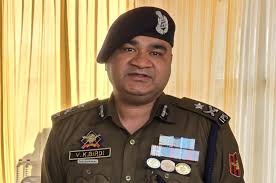
Srinagar, Mar 16: Inspector General of Police Vidhi Kumar Birdi Kashmir on Monday extended greetings to the people on the auspicious occasion of Shab-e-Qadr, wishing peace and harmony for all.

In a post on X, Kashmir Zone Police, as per news agency JKNS, said “IGP Kashmir extends greetings to the people on the auspicious occasion of Shab-e-Qadr.”

IGP hoped that the blessed occasion would usher in peace, unity and brotherhood among people across the region.

BJP Media Incharge Kashmir Sajid Yousuf Shah Extends Shab-e-Qadr Greetings

0

Srinagar, Mar 16: Senior BJP leader and State Co-Media Incharge for Jammu & Kashmir, Advocate Sajid Yousuf Shah, extended heartfelt greetings to the people of Jammu & Kashmir on the auspicious occasion of Shab-e-Qadr.

In his message, Sajid Yousuf Shah conveyed warm wishes for peace, prosperity, and spiritual fulfillment for all, emphasizing the significance of this blessed night in fostering unity, compassion, and devotion. He urged people to use⁷ this sacred occasion as an opportunity for reflection, prayer, and strengthening communal harmony.

IUST Hosts Health Seminar to Promote Women’s Health Awareness

0

KD NEWS SERVICE

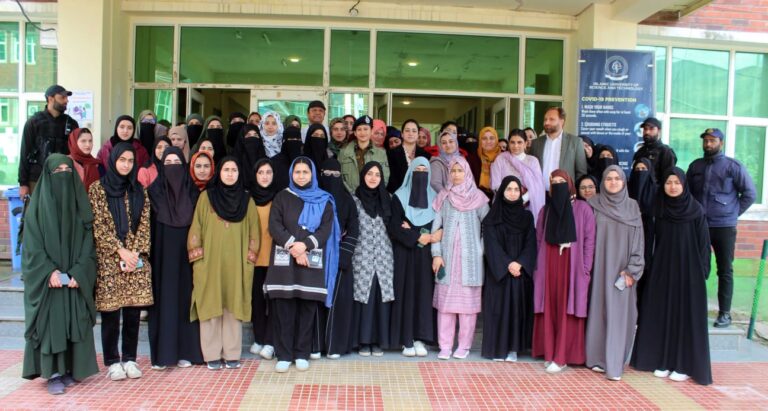
AWANTIPORA, March 16: The Islamic University of Science and Technology (IUST) today organised a health seminar titled “Prerna: For Her Health Challenges” at the campus. The programme was organised by the Centre for Career Counselling and Placements under the aegis of the Office of the Dean Outreach in collaboration with Ujala Cygnus Hospitals to raise awareness about key health issues affecting young women.

Ms. Tanushree (IPS), SSP Pulwama, who was the chief guest on the occasion, encouraged female students to pursue their goals with determination while also prioritising their health and wellbeing. She urged students to remain mindful of both their physical and mental health, noting that personal wellbeing is essential for sustaining success in demanding careers.

The seminar brought together medical experts and students to discuss preventive healthcare, nutrition, and mental wellbeing. The health talks were delivered by Dr. Nazeefa Manzoor, Dr. Munaza, and Dr. Zahida Rasool, Medical Officer at IUST, who spoke about common health concerns among young women, including anaemia and the importance of early diagnosis and timely care.

Welcoming the guests and participants, Dean Outreach, Dr. Ruheela Hassan, said that IUST is committed to promoting a holistic environment for its students and initiatives like this seminar reflect that commitment. Dr. Parvez Ahmed Sofi, MD Ujala Cygnus Hospitals, appreciated the university’s proactive approach towards student wellbeing and expressed hope for stronger collaborations in promoting health awareness and preventive care among young people. The event concluded with an open dialogue and interaction session, allowing students to engage with the speakers and seek guidance on various health-related concerns, followed by a vote of thanks by Dr. Asifa Baba, Dean of Students, IUST.

Advanced Entrepreneurship Skill Development Programme concludes at CIED IUST

0

KD NEWS SERVICE

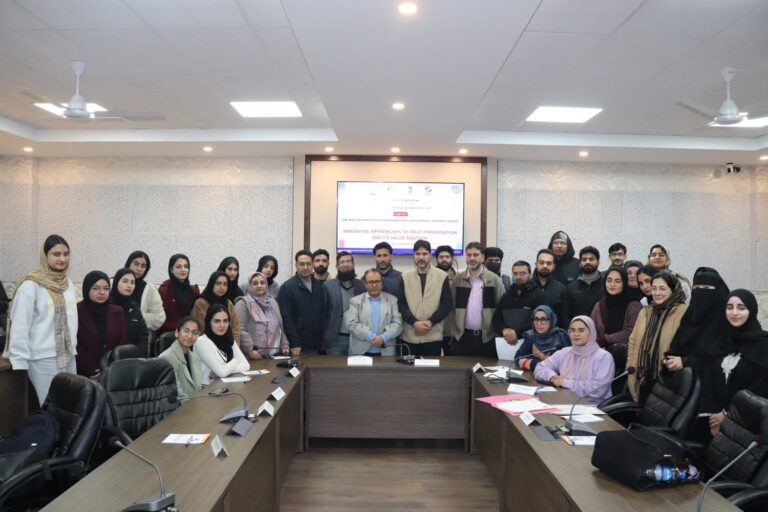
AWANTIPORA, March 16: The Centre for Innovation and Entrepreneurship Development (CIED), Islamic University of Science and Technology (IUST), today concluded the week-long Advanced Entrepreneurship Skill Development Programme (AESDP) on “Innovative Approaches to Fruit Preservation and its Value Addition.” The programme, held from March 9 – 16, 2026, was organised in collaboration with the Department of Food Technology, IUST.

The valedictory session was chaired by Dr. Kaiser Javed Giri, Dean, School of Engineering who emphasised the importance of integrating scientific knowledge with entrepreneurship in the agri-food sector. He noted that programmes of this nature provide students and young entrepreneurs with practical skills and innovative perspectives needed to create value-added products and contribute to local economic development.

In his remarks, Prof. Parvez A. Mir, Director, CIED IUST, highlighted the university’s commitment to promoting innovation and entrepreneurship through structured training initiatives. He said that such skill development programmes enable youth to explore viable entrepreneurial opportunities in sectors like food processing while also addressing challenges related to food preservation and value addition.

Over the week, the programme featured expert sessions and hands-on training on modern techniques of fruit preservation, value addition, and entrepreneurship opportunities in the food processing sector. Experts from MSME Srinagar, IUST, and SKUAST, industry representatives served as resource persons and interacted with trainees during the week-long training.

The programme was coordinated by Dr. Basharat Nabi Dar, Coordinator, EDC/CPMSB, who highlighted various government initiatives supporting youth entrepreneurship and encouraged participants to translate their learning into sustainable entrepreneurial ventures in the agri-food sector. About 30 students participated in the training and Technology. The valedictory session attended by Dr. Tehmeed Aijaz, Head, Department of Food Technology; and Coordinators of different CIED verticals was moderated by Dr. Sajjad Ahmed Lone and Dr. Ruheela Hassan presented a vote of thanks.

INTEGRATION OF NON-FOSSIL FUEL POWER GENERATING INTO NATIONAL GRID

0

Vinod Bhat

New Delhi: Grid-readiness and stability for integrating large shares of renewable energy are continuously assessed through system studies, including load flow studies, dynamic stability studies, and contingency analysis. These studies evaluate the impact of renewable energy variability, intermittency and peak-load requirements on the grid.

The following measures are in place to ensure the smooth integration of RE into the national grid, maintain grid stability, manage intermittency, variability and peak-load balancing without risk of outages: –

  1. Transmission system has been planned for integration of over 500 GW RE capacity by the year 2030. The transmission schemes associated with RE generation projects are being taken up for implementation in a phased manner commensurate with the RE Capacity addition.
  2. Development of intra-state transmission network is being planned to keep pace with RE capacity addition. Strong inter connection of ISTS RE schemes with the intra-state network to ensure better reliability in terms of anchoring voltage stability, angular stability, losses reduction etc. is being done.
  3. Central Financial Assistance (CFA) is being provided to the States for setting up Transmission infrastructure for RE integration within their State under the Green Energy Corridor Scheme. Intra State Green Energy Corridor (GEC) scheme is being implemented by the Ministry of New and Renewable Energy (MNRE) in 10 States. The intra state transmission system for evacuation of 24 GW RE under Green Energy Corridor Phase-I (GEC-I) is already commissioned. The transmission system under GEC-II for evacuation of around 20 GW RE is under implementation.
  4. Setting up of Regional Energy Management Centers (REMCs) for better forecasting of renewable power and to assist grid operators to manage variability and intermittency of renewable power.
  5. Innovative products like Solar-Wind Hybrid Projects, RE projects with energy storage systems and supply of RE power balanced with power from non-RE sources launched to reduce intermittency.
  6. Implementation of Green Term Ahead Market (GTAM) and Green Day Ahead Market (GDAM) for sale of renewable energy.
  7. Flexibility in generation and Scheduling of Thermal/Hydro Power Stations to address the variability of RE generation.
  8. CEA (Technical Standards for Connectivity to the Grid) Regulations lay down the minimum technical requirements for the RE generating plants to ensure the safe, secure and reliable operation of the grid. The compliances to the said regulations by RE plants are verified jointly by Central Transmission Utility (CTUIL) and Grid-India / Regional Load Despatch Centres (RLDCs) before granting connectivity/interconnection to the national grid. Robust compliances verification is done before interconnection of any new plant to the grid.
  9. Indian Electricity Grid Code mandates that RE plants participate in the primary and secondary frequency control in case of contingencies. Hybrid RE power plants, Energy Storage Systems such as BESS (Battery Energy Storage System) and PSP (Pump Storage Project) are being promoted for mitigating variability in RE generation and provide adequate frequency support to the grid. Considering the requirement of ‘Energy Storage’ to facilitate integration of renewable energy in the country, Ministry of Power (MOP) is providing Viability Gap funding (VGF) for installation of Battery Energy Storage System (BESS). Through this scheme, development of 43 GWh BESS is envisaged.
  10. Static Synchronous Compensators (STATCOM) and Static VAR Compensator (SVC) are being deployed to dynamically adjust the reactive power flow in the grid for maintaining stable voltage levels. Further, Several Dynamic Compensation devices such as Static Var Compensators (SVCs) Static Compensators (STATCOMs) and Synchronous Condensers (Syn Cons) in ISTS system are under various stages of Planning and implementation.
  11. Automatic Generation Control (AGC) is being utilized to maintain frequency stability by sending Secondary Reserve Ancillary Services (SRAS) Up or Down signals every four (04) seconds to AGC-enabled power plants.
  12.  Market-based Tertiary Reserve Ancillary Services (TRAS) for addressing real-time demand–supply imbalances.
  13. The generators with high ramp rate (e.g. hydro or gas) are also scheduled optimally to maintain load generation balance.
  14. Switching of Reactors is effected to maintain voltage in RE complex within the desired range for secure & reliable grid operation.
  15. Ministry of Heavy Industries (MHI), has a Production Linked Incentive (PLI) scheme, ‘National Programme on Advanced Chemistry Cell (ACC) Battery Storage’ for implementation of giga-scale ACC manufacturing facilities in India, with an aim to establish a competitive domestic manufacturing ecosystem for 50 GWh with a total budgetary outlay of ₹18,100 crore. Out of 50 GWh capacity, 10 GWh has been earmarked for grid scale stationary storage applications to MNRE.
  16. CEA has issued guidelines dated 07.07.2025 for installation of Automatic Weather Stations (AWS) for Solar and Wind Power Plants to measure critical meteorological parameters for accurate, real-time measurement of weather to enable optimization of RE generation. This would improve overall generation predictability, efficiency, enhance grid reliability and ensure regulatory compliance.

To strengthen the transmission infrastructure in line with the growing electricity demand, the Government of India notified the National Electricity Plan (Volume-II Transmission) in 2024. The plan outlines the transmission system requirements for the period 2023 to 2032, commensurate with projected generation capacity additions to meet the projected electricity demand.

The peak electricity demand and electrical energy requirement are expected to reach 446 GW and 3215 BU respectively in 2034-35. To meet the projected electricity demand, adequate generation capacity has been planned in the country. In this regard, the Government of India has initiated the following capacity addition programme:

(A) The projected thermal (coal and lignite) capacity requirement by the year 2034–35 is estimated at approximately 3,07,000 MW as against the 2,11,855 MW installed capacity as on 31.03.2023. To meet this requirement, Ministry of Power has envisaged to set up an additional minimum 97,000 MW coal and lignite based thermal capacity.

To meet this requirement, several initiatives have already been undertaken. Thermal capacities of around 18,160 MW have already been commissioned since April 2023 till 31.01.2026. In addition, 38,745 MW of thermal capacity (including 4,845 MW of stressed thermal power projects) is currently under construction. The contracts of 22,920 MW have been awarded and are due for construction. Further, 24,020 MW of coal and lignite-based candidate capacity has been identified which is at various stages of planning in the country.

(B) 12,723.50 MW of Hydro Electric Projects are under construction. Further, 4,274 MW of Hydro Electric Projects are under various stage of planning and targeted to be completed by 2031-32.

(C) 6,600 MW of Nuclear Capacity is under construction and targeted to be completed by 2029-30. 7,000 MW of Nuclear Capacity is under various stages of planning and approval.

(D) 1,57,800 MW Renewable Capacity including 67,280 MW of Solar, 6,500 MW of Wind and 60,040 MW Hybrid power is under construction while 48,720 MW of Renewable Capacity including 35,440 MW of Solar and 11,480 MW Hybrid Power is at various stages of planning and targeted to be completed by 2029-30.

(E) In energy storage systems, 11,620 MW/69,720 MWh Pumped Storage Projects (PSPs) are under construction. Further, a total of 6,580 MW/39,480 MWh capacity of Pumped Storage Projects (PSPs) are concurred and yet to be taken up for construction. Currently, 9,653.94 MW/ 26,729.32 MWh Battery Energy Storage System (BESS) capacity are under construction and 19,797.65 MW/ 61,013.40 MWh BESS capacity are under tendering stage.

LPG supply continues to be monitored in view of prevailing geopolitical situation

0
Vinod Bhat

New Delhi: Inter-Ministerial Media Briefings on developments in West Asia are being organised regularly at the National Media Centre. In today’s briefing (16 March 2026), the Ministries of Petroleum and Natural Gas, Ports, Shipping and Waterways, and External Affairs shared updates on energy supplies, maritime operations, the welfare of Indian nationals in the region and related public information efforts. Earlier briefings were held on 11th, 12th, 13th and 14th March.

Energy Supply and Fuel Availability

In the context of the situation arising from the closure of the Strait of Hormuz, the Ministry of Petroleum and Natural Gas briefed the media on the status of fuel supplies and the measures being taken to ensure continued availability of petroleum products and LPG. As per the Ministry:

Crude and Refineries

  • All refineries are operating at high capacity and maintaining adequate crude oil inventories. India remains self-sufficient in petrol and diesel production and no imports of these fuels are required to meet domestic demand.


Retail Outlets

  • No cases of fuel dry-outs have been reported at retail outlets by Oil Marketing Companies, and supplies of petrol and diesel continue to be maintained regularly.
  • Citizens are advised not to resort to panic buying as adequate stocks of petrol and diesel are available.


Natural Gas

  • Priority sectors continue to receive protected gas supplies, including 100 percent supply to PNG and CNG, while supplies to industrial and commercial consumers are being regulated at around 80 percent.
  • Commercial LPG consumers in major cities and urban areas are encouraged to switch to PNG, and establishments such as hotels, restaurants, hospitals and hostels can obtain PNG connections through authorised City Gas Distribution (CGD) entities.
  • Consumers can apply for PNG connections through email, customer portals, letters or call centres of CGD companies, and connections can be provided quickly where pipeline networks already exist.
  • Several CGD companies are offering incentives to promote PNG connections, including free gas worth ₹500 for domestic consumers by Indraprastha Gas Ltd. and GAIL Gas Ltd., waiver off registration charges of ₹500 for domestic PNG consumers and security deposits for commercial consumers by Mahanagar Gas Ltd., and waiver of security deposits for all commercial connections by BPCL.
  • The Government is expanding the CGD network and PNGRB has advised CGD entities to accelerate deployment of resources, encourage utilisation of existing connections and reduce timelines for supply commencement.


LPG

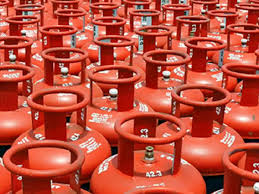
  • LPG supply continues to be monitored in view of the prevailing geopolitical situation.
  • No dry-outs have been reported at LPG distributorships.
  • Online LPG cylinder bookings have increased from about 84% to around 90% across the industry.
  • Delivery Authentication Code (DAC) coverage has been expanded from 53% before the crisis to about 72% to prevent diversion of cylinders at the distributor level.
  • Several States and UTs including Bihar, Delhi, Haryana, Rajasthan, Manipur and Maharashtra have issued orders to allocate Non-domestic LPG in line with Government of India guidelines.


Meetings conducted by State Governments

  • State Governments and UTs continue to play a key role in monitoring supply of essential commodities including Petrol, Diesel and LPG.
  • Most States and UTs have established control rooms to monitor the situation and are conducting media briefings to keep citizens informed.


Enforcement action

  • State Governments are undertaking enforcement measures to prevent hoarding and black marketing of petrol, diesel and LPG.
  • Raids are being conducted in several States including Uttar Pradesh, Haryana, Andhra Pradesh, Madhya Pradesh, Assam and Mizoram, to check the hoardings and black marketing of LPG.
  • Officials of PSU Oil Marketing Companies have conducted surprise inspections at more than 1,100 retail outlets and LPG distributorships to ensure smooth supply and prevent irregularities.


Other Government Measures

  • The Government’s highest priority remains ensuring uninterrupted domestic LPG supplies, particularly for households and priority sectors such as hospitals and educational institutions.
  • Domestic LPG production from refineries has been increased by about 36 percent.
  • Under the LPG Control Order amendment dated 14 March 2026, consumers with PNG connections are required to surrender their domestic LPG connections and cannot obtain new LPG connections.
  • Booking intervals have been revised to 25 days in urban areas and up to 45 days in rural areas to ensure equitable distribution.
  • An additional allocation of 48,000 KL of kerosene has been provided to States and UTs, and alternate fuels such as kerosene and coal have been made available to reduce pressure on LPG demand.
  • PSU Oil Marketing Companies are promoting digital LPG refill bookings and discouraging panic bookings, while the State and UT Governments have been requested to conduct coordinated inspections to curb malpractices.


Public Advisory

  • Citizens are advised not to panic as the Government remains committed to maintaining adequate LPG availability for households and essential sectors.
  • Sale of commercial LPG cylinders, which had been curtailed earlier, has been partially restored and made available to State and UT Governments for priority distribution.
  • LPG cylinders can be booked through digital platforms such as IVRS, SMS, WhatsApp, mobile applications of Oil Marketing Companies and popular e-commerce platforms.
  • Citizens are requested to avoid panic bookings, use digital booking platforms and avoid unnecessary visits to LPG distributors.
  • Consumers are encouraged to use alternate fuels such as PNG and induction or electric cooktops wherever possible and to conserve energy.
  • The Government and PSU Oil Marketing Companies continue to spread awareness about uninterrupted LPG refill deliveries, and media organizations are requested to rely on official sources to avoid misinformation and unnecessary panic.


Maritime Safety and Shipping Operations

The Ministry of Ports, Shipping and Waterways provided an update on the maritime situation in the Persian Gulf region and the steps being taken to safeguard Indian vessels and seafarers. As per the Ministry:

  • All Indian seafarers in the region are safe and no shipping incident involving Indian seafarers has been reported in the past 24 hours.
  • At present, 22 Indian-flagged vessels with 611 seafarers remain in the west of the Persian Gulf region. The Directorate General of Shipping continues to monitor the situation in coordination with ship owners, RPSL agencies and Indian Missions.
  • Of the two Indian-flag LPG carriers that crossed the Strait of Hormuz on 14 March carrying about 92,712 MT of LPG, vessel Shivalik is scheduled to berth at Mundra Port around 1700 hrs today with documentation completed to ensure priority discharge, while vessel Nanda Devi is expected to reach early tomorrow morning.
  • The Indian-flag vessel Jag Laadki, carrying about 80,800 MT of Murban crude oil, sailed from the UAE on 14 March 2026 and is safely enroute to India. The vessel and all Indian seafarers onboard are safe.
  • Since activation of the DG Shipping Control Room, 3,030 phone calls and about 5,497 emails have been handled from seafarers, their families and maritime stakeholders seeking assistance, including over 310 calls and 597 emails in the past 48 hours.
  • DG Shipping has facilitated the safe repatriation of 286 Indian seafarers from the Gulf region so far, including 33 repatriations in the past 48 hours.
  • Major ports across the country are closely monitoring vessel movements and cargo operations and providing support to shipping lines and cargo stakeholders, including concessions in anchorage, berth hire and storage charges.
  • Ports are coordinating with Customs and other stakeholders to facilitate cargo operations.
  • JNPA has provided temporary transshipment storage for containers bound for the Middle East and granted 100 percent rebate on ground rent and dwell time charges and around 80 percent rebate on reefer container plug-in charges for up to 15 days for containers originating at JNPA.
  • There is currently no congestion at any major port, and export-bound containers at JNPA have reduced from about 5,600 to around 3,900.
  • Ports are also providing safe anchorage for loaded vessels bound for the Gulf that are currently unable to transit.
  • An inter-ministerial group has been formed under the Directorate General of Shipping with members from Customs, ports and other stakeholders to address operational issues.
  • The Ministry continues to coordinate with the Ministry of External Affairs, Indian Missions, shipping companies and maritime stakeholders to ensure the safety and welfare of Indian seafarers while maintaining continuity of maritime trade and port operations.


Safety of Indian Nationals in the Region

The Ministry of External Affairs provided an update on the status of Indian nationals in the region and informed that Indian Missions remain in close contact with the Indian community. It said:

  • The Government of India continues to closely monitor the situation concerning Indian nationals in Iran, with their safety and well-being remaining the highest priority. Over 550 Indian nationals in Iran have crossed into Armenia through the land border with facilitation from the Embassy of India in Tehran, while over 90 nationals have also crossed into Azerbaijan.
  • The Embassy of India in Tehran remains fully operational.
  • Over the last few days, they have relocated Indian students from locations outside Tehran to safer places within Iran.
  • The Government remains in contact with companies employing Indian seafarers and members of the fishing community in Iran to ensure their safety, and all Indian nationals have been advised to follow Embassy advisories.
  • The Ministry of External Affairs continues to closely monitor the evolving situation in West Asia and the Gulf region. The safety, well-being and security of the Indian community remain the Government’s highest priority.
  • A special MEA control room remains operational to address queries from Indian nationals and their families, while coordination continues with State Governments and Union Territories.
  • Indian Missions and Posts across the region continue to operate 24×7 helplines, maintain contact with Indian community organisations and issue updated advisories.
  • Missions remain in close touch with local authorities and are extending assistance to stranded Indians and short-term visitors, including visa support, logistical assistance and transit facilitation. Coordination is also underway with the Ministry of Ports, Shipping and Waterways to assist Indian seafarers in the region.
  • Since 28 February 2026, around 2,20,000 passengers have returned from the West Asia and Gulf region to India.
  • In the UAE, flight operations from Dubai International Airport are gradually resuming after temporary suspension earlier today.
  • Limited flights by Indian and UAE carriers are also operating from Abu Dhabi, Ras Al Khaimah and Fujairah. As per available information, more than 45 flights are planned for various destinations in India today.
  • Passengers are advised to check with airlines for updated schedules and may contact the Indian Embassy in Abu Dhabi or the Consulate in Dubai through 24×7 helplines for assistance.
  • Flights are operating from various airports in Saudi Arabia and Oman to destinations in India.
  • Qatar airspace remains partially open, with Qatar Airways expected to operate 3 flights to India, today and tomorrow.
  • Kuwait airspace has remained closed since 28 February 2026. Special non-scheduled commercial flights by Jazeera Airways are expected to operate to India from Al Qaisumah International Airport in Saudi Arabia.
  • For Indian nationals in Bahrain and Iraq, where airspace remains closed, transit through Saudi Arabia continues to be facilitated.
  • Following the attack in Sohar city in Oman on 13 March 2026 in which two Indian nationals lost their lives, the Embassy of India in Muscat remains in contact with the families and concerned Omani authorities. Repatriation of the mortal remains is expected shortly. The Embassy is also monitoring the condition of the injured Indian nationals, none of whom are critically injured.
  • The Mission team in Basra continues to assist the 15 Indian crew members of Safesea Vishnu who were safely evacuated and are currently staying in a hotel in Basra. The Mission is coordinating with Iraqi authorities for their early return to India and for the repatriation of the mortal remains of the deceased Indian national.

Extension of Additional Coach Facility on Jammu Rajdhani Express on the Auspicious Occasion of Navratri

0

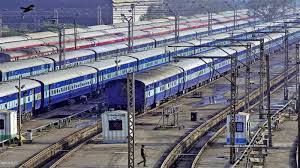
Jammu, 16 March: In view of the heavy volume of passengers—particularly devotees traveling to seek *Darshan* (holy sight) of Mata Vaishno Devi during Navratri—the Jammu Division has decided to extend the facility of an additional Third AC (3AC) coach on Train No. 12426, the Jammu-New Delhi Rajdhani Express, from March 16 to March 20, 2026. This decision, taken under the guidance of the Divisional Railway Manager, Shri Vivek Kumar, aims to provide a more convenient travel experience for passengers during the Navratri festival. This initiative is expected to reduce the Waiting List during the Navratri celebrations and increase the availability of confirmed tickets for passengers. Prior to this, an additional 3AC coach was also added to Train No. 12426 on March 13, 14, and 15. Continuing this facility further, an additional 3AC coach is once again being added to the New Delhi Rajdhani Express for the period from March 16 to March 20.
Approximately 72 additional berths will be available on each trip.

Shri Uchit Singhal, Senior Divisional Commercial Manager, stated, “Our primary objective is to ensure that passengers are able to secure confirmed tickets on the auspicious occasion of Navratri and that their journey remains safe and comfortable. This additional coach is equipped with modern amenities and safety standards. We are continuously monitoring the situation to manage the additional rush at stations during the festive season. Such measures will continue to be implemented in the future as well, in accordance with passenger demand. Devotees and passengers are requested to check for seat availability and the current status of the train via the IRCTC website or the Railway Helpline 139.”

Smart Mobility & Tourism Symposium Sets New Safety Benchmark in Bandipora

0

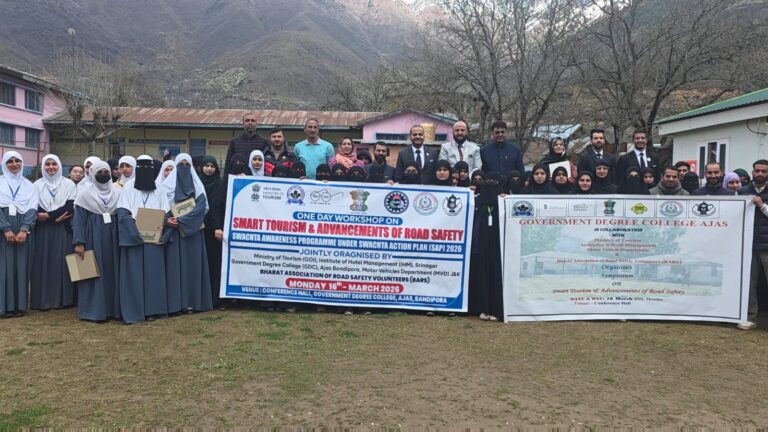
BANDIPORA | March 16: A high-profile symposium on “Smart Tourism & advancements of Road Safety” was held today at Government Degree College (GDC) Ajas, marking a significant leap in the integration of technology and traveler security. The event was a collaborative initiative by GDC Ajas, the Motor Vehicles Department J&K, Ministry of Tourism GOI, IHM Srinagar, and Bharat Association of Road Safety Volunteers (BARS).

The symposium was headed by Chief Guest Er. Mukhtar Ahmad Sofi (ARTO Bandipora) and Guest of Honour Dr. Tariq Ahmad Mir, Nodal Officer for Swachhata Mission 2026 at IHM Srinagar. Speakers, including Principal Prof. Dr. Rukhsana Jabeen and renowned mobility expert S. Umar Bhat, emphasized the 2026 vision where AI-driven “thinking networks” and V2X (Vehicle-to-Everything) communication are redefining road safety.

Expert discussions highlighted the shift toward proactive prevention through Predictive Accident Analytics and ThinnAI fatigue monitors, ensuring that the thrill of tourism is backed by the silent guardianship of modern tech. The program, meticulously organized by Dr. Mohammad Ashraf Wagi, Convenor of the College Road Safety Club, and hosted with sophisticated orientation by Dr. Ashiq Hussain Parray (HOD English), culminated in a formal Felicitation Ceremony honoring the active participation of students and volunteers.

​A highlights of the event was the Solemn Pledge Oath, where attendees committed to acting as responsible citizens and road users, dedicated to the vision of zero-harm mobility. During the interactive session, participants raised insightful observations regarding local infrastructure and put forward strategic suggestions for future efforts, urging a continued focus on integrating technological advancements with grassroots social awareness. This collective commitment ensures that every journey in the region remains as safe as it is spectacular.

CM Omar Abdullah Inaugurates Asia’s Largest Tulip Garden in Srinagar

0

Garden set to welcome thousands as valley officially enters tourism season

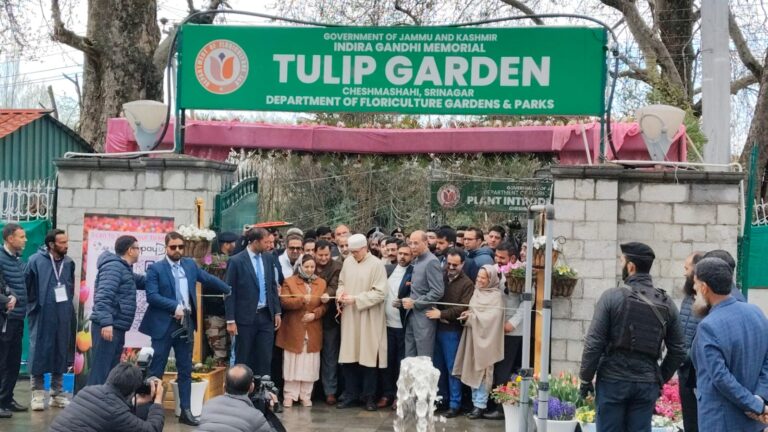
Srinagar, Mar 16: Jammu and Kashmir Chief Minister Omar Abdullah on Monday inaugurated the annual tulip season at the Indira Gandhi Memorial Tulip Garden, Asia’s largest, overlooking the Dal Lake.

Chief Minister, accompanied by senior officials and horticulture experts, walked through the sprawling terraced lawns. He inspected the blooming varieties and interacted with the gardeners who have nurtured the landscape over the past months.

Addressing visitors at the garden, CM Omar Abdullah, as per KNS, described the bloom as a “symbol of resilience” for Kashmir. “This garden is not just about flowers; it is about the spirit of Kashmir. As the tulips bloom, they bring with them a message of peace, prosperity, and a warm welcome to every guest who visits our valley,” he said.

The Chief Minister highlighted the government’s commitment to boosting the tourism sector, which he termed the “backbone” of the local economy. “My presence here today is to send a clear message that tourism is our priority. We are ready for the season, and we want the world to know that Kashmir is open and ready to host everyone with open arms,” he added.

Meanwhile, tourism officials briefed the Chief Minister on the arrangements made for the season, stating that over 1.5 lakh tulip bulbs, comprising more than 70 varieties, have been planted. They also showcased the addition of other spring florals like hyacinths and daffodils, a move that CM Omar praised as a welcome step to increase the garden’s aesthetic appeal.

Notably, the garden is now open to the public, heralding the start of the Kashmir Tulip Festival, which is expected to draw lakhs of visitors over the next month. (KNS)