spot_imgspot_img
spot_img
Home Blog Page 83

NCB Marks 41st Raising Day with Nationwide Drive for Drug-Free India

0

Vinod Bhat

New Delhi: The Narcotics Control Bureau today observed its 41st Raising Day, marking over four decades of dedicated service in combating drug trafficking and substance abuse in the country. To commemorate the day, nationwide youth mobilisation programmes for a Drug-Free India were organised at around 40 places including Delhi, Lucknow, Jodhpur, Raipur, Chandigarh, Ahmedabad, Mumbai, Ranchi, Bangalore, Chennai and Agartala.

Anti-drug pledges, awareness addresses, rallies and heritage walks were organised focused on preventing substance abuse, promoting a drug-free lifestyle, strengthening institutional partnerships, and directly engaging with youth. The day-long events covered the health, psychological, social and legal consequences of drug abuse, along with preventive strategies, early warning signs, recovery pathways and available support systems. During the events, youth were sensitized about the ill effects of drug abuse, its social and legal implications, and the importance of making informed healthy life choices. Students and teachers were urged to remain vigilant and actively promote the NCB MANAS Helpline -1933 for sharing information and seeking assistance related to drug abuse and trafficking.
At a programme at Sri Venkateswara College in Delhi a large number of students took a pledge against drug abuse. Fitness icon Sh. Ankit Bayanpuriya spoke in detail about the benefits of health and fitness, inspiring students to stay away from drugs.

In Jodhpur, under the aegis of the ‘Nasha Mukt Bharat Abhiyan’, a grand heritage walk, joined by around 400 participants, was organised at the iconic Ghanta Ghar to raise public awareness against the menace of drug abuse and promote a healthier lifestyle. In Chandigarh, an awareness programme was organised at the Chandigarh Institute of Hotel Management, with the participation of around 250 students and representatives from the Art of Living Foundation. A pledge against drug abuse was also administered. A meditation session, in collaboration with Sri Ramchandra Mission, was also organised at Sher-e-Kashmir University of Agricultural Sciences and Technology, Jammu to mark the occasion.

Around 5000 students participated in a walkathon and awareness programme at Rajarajeswari Medical College and Hospital in Bangalore. The programme featured a walkathon against drug abuse, followed by an awareness session on the ill effects of drug consumption.Two such events were organised in Tiruvallur and Kanchipuram districts of Tamil Nadu, with the participation of around 2,500 students.

MANAS Helpline – 1933 was promoted among students at an event organised at NSHM Durgapur, West Bengal. A three-day special training session for NCB officers also commenced in collaboration with Rashtriya Raksha University to mark the day. In Patna, NCB highlighted the message “Say No to Drugs, Say Yes to Life” during an event at B. S. College, with the participation of around 150 students, reinforcing a strong call for a drug-free society. Awareness programmes at St. Xavier’s School, Doranda and Gossner College, Ranchi were organised engaging nearly 800 students under “Nasha Mukt Bharat Abhiyaan” to promote a drug-free future.

During an event in Ahmedabad, the importance of community participation in tackling the drug menace was emphasised. An e-pledge against drug abuse was also administered to all participants, reaffirming their commitment to a drug-free lifestyle and society, while also promoting the MANAS Helpline -1933. Around 1,000 students in Kharghar, Mumbai were sensitised to the effects of drug abuse.

At an event in Agartala, International Gymnast Ms Dipa Karmakar participated and spoke about the importance of fitness and the ill effects of drugs. Around 400 students were sensitised to the effects of drug abuse at Manipur University, with participation from noted bodybuilder Arambam Boby.

Similar programmes reaffirming NCB’s commitment to a Drug-Free India were organised in other cities also.
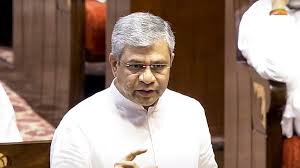
With more Non-AC Coaches, Indian Railways Prioritizes Needs of Common Citizens: Ashwini Vaishnaw

0

Vinod Bhat

New Delhi: Indian Railways is witnessing unprecedented expansion and modernisation, supported by a record budgetary allocation of around ₹2.78 lakh crore in the Union Budget 2026–27. Responding to the discussion in Parliament on the Demands for Grants (2026–27) of the Ministry of Railways, Shri Ashwini Vaishnaw today highlighted that a key structural reform in the Railways was the merger of the Railway Budget with the General Budget, which has led to three major benefits. He described the ongoing transformation of Indian Railways as a shift from “slow growth” to “super-fast transformation”, marking the beginning of a new era for the national transporter.

Firstly, it enabled substantial enhancement in budgetary support, increasing from about ₹25,000–30,000 crore earlier to around ₹2.78 lakh crore in the current financial year. Secondly, it facilitated continuous decision-making and approvals throughout the year, including sanctioning of projects, introduction of new services, and technology adoption. Thirdly, it brought in greater transparency and institutional monitoring, with projects being reviewed through systems involving the Ministry of Finance and NITI Aayog.

Record Budget Allocation and Financial Position

The Union Minister stated that the Union Budget 2026–27 provides a record allocation for Indian Railways, benefiting all states across the country and supporting accelerated infrastructure development.

Shri Vaishnaw explained that the major expenditure components of Railways include staff costs of about ₹1.19 lakh crore, pension expenditure of around ₹64,000 crore, energy costs of approximately ₹32,000 crore, and finance costs of about ₹23,000 crore. Despite these substantial expenditures, Railways continues to maintain a modest surplus.

He further noted that electrification has resulted in savings of approximately ₹6,000 crore, with diesel consumption steadily declining due to increased electrification.

Infrastructure Expansion and Capacity Enhancement

Shri Vaishnaw highlighted the significant expansion in railway infrastructure over the past decade. Freight loading has increased from about 1,055 million tonnes in 2013–14 to around 1,650 million tonnes, making Indian Railways the second-largest freight carrier globally.

Track construction has accelerated substantially, with approximately 35,000 km of new tracks laid, compared to about 15,000 km in the earlier period. Electrification has also seen rapid progress, increasing from about 5,200 km to nearly 47,000 km, achieving over 99% network electrification.

In terms of safety infrastructure, the number of Road Over Bridges (ROBs) and Road Under Bridges (RUBs) has increased from around 4,000 to about 14,000. Automatic signalling has expanded from about 1,500 km to over 4,000 km.

The Minister also stated that LHB coaches, which are safer and more modern, have increased significantly, with about 48,000 coaches added in recent years. Locomotive production has also risen to around 12,000 units, while wagon induction has crossed 2 lakh units.

Tunnels, Freight Corridors and Strategic Connectivity

Shri Vaishnaw underlined that a major milestone has been achieved in tunnel construction. While about 125 km of tunnels were constructed till 2014, an additional 486 km of tunnels have been constructed thereafter, significantly improving connectivity in difficult terrains such as the Northeast and Jammu & Kashmir.

He further noted that the Dedicated Freight Corridors (DFCs) have seen substantial progress, with around 2,800 km completed and about 480 freight trains operating daily on these corridors.

Operational Performance and Network Growth

Shri Vaishnaw stated that Indian Railways currently operates about 25,571 trains daily, ensuring smoother travel during peak seasons such as Holi, Diwali, and Chhath.

The total railway network has expanded to approximately 1,37,522 route kilometres, with continuous annual growth. Additionally, the Railways now has about 3.86 lakh wagons and around 98,000 coaches, both at record levels.

Safety Improvements

The Minister emphasised that safety remains a core priority, with focused interventions in track maintenance, rolling stock maintenance, technology adoption, and training practices.

He stated that railway accidents have reduced by about 90%, supported by systematic root cause analysis and corrective measures. Investment in safety has also increased significantly, with about ₹1.2 lakh crore being allocated towards safety-related works.

On safety technology, he highlighted the progress of Kavach, the indigenously developed Automatic Train Protection system. Approximately 3,000 km of network has already been covered, with work underway on about 20,000 km and installation planned on around 8,000 locomotives.

He emphasised that Kavach is a comprehensive safety system, involving optical fibre networks, telecom towers, data centres, and onboard equipment, comparable in complexity to a full telecom infrastructure.

Passenger Services and Affordable Travel

Shri Vaishnaw stated that Railways continues to prioritise affordable travel for common citizens. Around 70% of coaches are general and sleeper class, ensuring accessibility for the majority of passengers.

He informed that additional general coaches have been introduced, including about 1,250 coaches in 2024–25 and around 860 in 2025–26.

Railways is currently providing a passenger subsidy of approximately ₹60,000 crore annually, translating to an average concession of about 45% per passenger. In suburban sections like Mumbai, an additional subsidy of around ₹3,000 crore is provided.

Introduction of New Train Services

The Union Minister highlighted the introduction and expansion of modern train services. Currently, more than 160 Vande Bharat services are operational, along with 60 Amrit Bharat train services catering to affordable long-distance travel.

He also informed that the manufacturing of 133 Amrit Bharat trains is underway. In addition, Vande Bharat Sleeper trains have been introduced, and their performance has received positive feedback.

Railways is also undertaking production of 238 new suburban trains for Mumbai with automatic door-closing systems and around 200 new MEMU (to be branded as Intercity) trains for short-distance travel.

Special Trains and Passenger Convenience

Shri Vaishnaw stated that special train operations have expanded significantly to meet seasonal demand. While earlier around 2,000–2,500 special trains were operated annually, this time a record number of special trains are operated for the convenience of people.

During major festivals, such as Diwali and Chhath, about 12,383 special trains were operated, while over 1,500 trains have already been run during Holi.

He further noted that holding areas are being developed at 75 major stations, and over 1,200 new EMU/MEMU services have been introduced to improve passenger convenience.

Employment and Recruitment Reforms

On employment, Shri Vaishnaw stated that approximately 5 lakh jobs have been provided in Railways over the past decade, with 1.43 lakh recruitments currently underway.

He highlighted the introduction of a structured annual recruitment calendar, ensuring predictability and transparency. Railway recruitment examinations are being conducted across 150 cities in 15 languages, with participation of around 3.6 crore candidates.

He also informed that a centralised monitoring system (war room) has been established to address grievances promptly and ensure smooth conduct of examinations.

Technology, Innovation and Make in India in Railways

Continuing his response, Shri Ashwini Vaishnaw highlighted the growing role of technology and Make in India across all domains of Indian Railways, including operations, maintenance, infrastructure, and passenger services.

He informed that the RailOne App, launched in July 2025, has gained significant traction, with over 2.5 crore downloads and facilitating approximately 9.5 lakh ticket transactions daily. The app integrates multiple passenger services including reserved and unreserved ticketing, platform tickets, train enquiries, PNR status, and grievance redressal on a single platform.

The Minister further stated that the Passenger Reservation System (PRS) has been comprehensively modernised after several decades. The upgraded system is being rolled out in phases and is expected to significantly improve booking efficiency and transparency. Improvements in the Tatkal booking system have also been implemented to curb misuse through automated bots and unauthorized software, resulting in better availability for genuine users.

Shri Vaishnaw also noted the deployment of AI-based systems, including cameras for wildlife protection and advanced technologies such as IoT, Artificial Intelligence, and Machine Learning for predictive maintenance across the network.

Under the Make in India initiative, Indian Railways has emerged as a significant exporter, with railway exports crossing ₹24,000 crore, reaching countries such as Germany, USA, France, UK, Australia, and others.

Station Redevelopment and Capacity Augmentation

Shri Vaishnaw stated that Indian Railways has undertaken one of the largest station redevelopment programmes globally, covering approximately 1,300 stations. Out of these, about 180 stations have been completed, while nearly 500 stations are at advanced stages of completion.

He emphasised that, unlike global practices where stations are often shut down during reconstruction, Indian Railways is executing redevelopment works while maintaining continuous train operations, ensuring safety and minimal inconvenience to passengers.

In addition, capacity augmentation works have been taken up in 48 high-demand cities, including construction of additional platforms, stabling lines, pit lines, and coaching terminals, which will significantly enhance operational efficiency in the coming years.

Integrated Planning through PM Gati Shakti

The Union Minister highlighted that railway expansion is now being planned through the PM Gati Shakti National Master Plan, which uses geospatial mapping for integrated infrastructure planning.

Through scientific assessment of demand from industries, urban centres, and logistics nodes, new railway projects have been identified systematically. Since 2014, approximately 27,000 km of new railway projects have been sanctioned, with a total investment of about ₹4.27 lakh crore.

Expansion in North Eastern Region

Shri Vaishnaw noted that significant progress has been made in improving rail connectivity in the North Eastern region. States such as Mizoram have been connected to the railway network, while connectivity projects in Manipur, Nagaland, and Sikkim are progressing rapidly.

He stated that improved rail connectivity has contributed to reduced transportation costs, improved logistics, and better accessibility in the region.

Railways and Cultural Connectivity

The Minister highlighted efforts to strengthen rail connectivity to major cultural and religious centres across the country.

Comprehensive infrastructure development plans have been prepared for major events such as Kumbh gatherings in cities like Nashik, Ujjain, Haridwar, Rajahmundry, and Kumbakonam. These include station upgrades, additional bridges, underpasses, track doubling, and signalling improvements to handle large passenger volumes efficiently.

Project Execution and Land Acquisition Challenges

Shri Vaishnaw stated that timely execution of railway projects requires active cooperation from State Governments, particularly in land acquisition.

He noted that delays in land acquisition in certain regions have impacted project progress. He emphasised that railway development is a collaborative effort under the federal structure, and faster land acquisition would help accelerate project implementation across states.

High-Speed Rail and Bullet Train Progress

Shri Vaishnaw provided an update on the Mumbai–Ahmedabad High-Speed Rail (Bullet Train) Project, stating that construction is progressing rapidly.

Key milestones include:

  • Over 300 km of viaduct construction completed
  • Significant progress in pier construction, track laying, and station development
  • Bridges completed across multiple rivers
  • Work underway on India’s first undersea rail tunnel, with progress already achieved

He stated that the project is targeted for phased commissioning starting 2027, with trains expected to operate at speeds of up to 350 km/h, reducing travel time between Mumbai and Ahmedabad to under 2 hours.

The Minister also informed that seven additional high-speed rail corridors have been announced, which will expand India’s high-speed network to approximately 4,000 km in the future.

Reforms in Passenger Experience and Cleanliness

Shri Vaishnaw highlighted ongoing reforms aimed at improving passenger experience, particularly cleanliness. A new initiative has been launched on a pilot basis in long-distance trains, where continuous cleaning is ensured from origin to destination across all classes, including general coaches. This initiative is being implemented in selected trains across zones and is expected to enhance overall passenger satisfaction.

Border Infrastructure and Strategic Connectivity

Concluding his response, Shri Ashwini Vaishnaw highlighted the significant emphasis being placed on rail connectivity in border and strategic areas.

He stated that multiple projects have been undertaken to strengthen connectivity in border regions, enhancing both strategic mobility and regional development. In Jammu & Kashmir, works such as Baramulla–Uri extension (DPR stage), Qazigund–Budgam doubling, and surveys for Jammu–Rajouri–Poonch connectivity are being progressed.

In the North Eastern region, several projects are advancing, including preparation and completion of DPRs for new lines such as Lanka–Silchar, Dekargaon–Silghat, and other strategic routes. Surveys and construction activities are also underway for capacity enhancement, including additional lines between New Jalpaiguri and Kamakhya.

Shri Vaishnaw further stated that international connectivity projects, including links with neighbouring countries such as Bhutan, have also been taken up.

In northern and western border areas, projects such as Anupgarh–Khajuwala, Jaisalmer–Barmer–Bhildi, and other routes along the India–Pakistan border are being developed to improve accessibility and logistics.

In Himachal Pradesh and adjoining regions, works such as the Beri–Manali–Leh (DPR stage) and Ghanauli –Baddi line are progressing. Similarly, in Punjab and other northern states, new lines and capacity enhancement projects are underway.

He also highlighted a strategically important project in the Siliguri corridor, where plans are being developed for a 30 km underground double-line corridor to ensure uninterrupted connectivity in critical situations.

Additionally, along the India–Nepal border, multiple doubling and capacity enhancement projects are being undertaken, including sections such as Narkatiaganj–Raxaul–Sitamarhi–Darbhanga–Muzaffarpur, to strengthen cross-border connectivity and regional development.

Sonowal felicitates crew of LPG ships Shivalik and Nanda Devi

0

Vinod Bhat

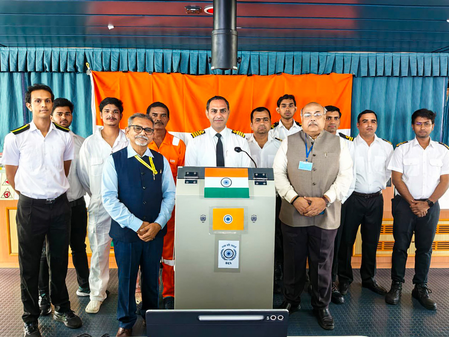
New Delhi: The Union Minister for Ports, Shipping and Waterways (MoPSW), Sarbananda Sonowal, along with senior officials of the Ministry, interacted with the brave crew members of Indian-flagged LPG carriers Shivalik and Nanda Devi, expressing the nation’s gratitude for their courage and unwavering sense of duty in ensuring the safe transit of critical LPG cargo here today.

The interaction, held via video conference, was attended by Vijay Kumar, secretary, Ministry of Ports, Shipping and Waterways; Shyam Jagannathan, director general of shipping; Capt. B.K. Tyagi, chairman and managing director, Shipping Corporation of India; Capt. Sukhmeet Singh and crew of Shivalik; and Capt. Dhiraj Kumar Agrawal along with the crew of Nanda Devi.

Addressing the seafarers, Sarbananda Sonowal said the interaction was a “heartfelt expression of the nation’s gratitude” to the crew, who ensured the safe delivery of vital LPG supplies despite operating in a high-risk maritime environment.

“It is a matter of immense pride to recognise the courage, dedication and professionalism of the crew of Shivalik and Nanda Devi. Your efforts ensured the safe passage of critical LPG cargo, strengthening India’s energy security,” Sarbananda Sonowal said.

The minister noted that both vessels remained stationed in a high-risk zone for nearly two weeks amid heightened security concerns before continuing their voyage to India. Sonowal said the crew demonstrated exceptional calmness, vigilance and professionalism under challenging conditions.

Earlier, the two Indian-flagged LPG carriers safely crossed the Strait of Hormuz before arriving India on March 16 and 17, as the government continues to closely monitor maritime operations in the Persian Gulf region amid the evolving geopolitical situation in West Asia. MT Shivalik and MT Nanda Devi — carrying approximately 92,712 metric tonnes of LPG, crossed the Strait of Hormuz early Friday (13 March, 2026).

“Seafarers are the unsung heroes of global trade. Far away from your homes and families, you ensure that essential cargo reaches its destination safely,” Sonowal said, highlighting the critical role played by maritime personnel in sustaining global supply chains.

The Union Minister further emphasised that the successful voyage of the two Indian-flagged vessels, fully manned by Indian seafarers, reflects the strength and resilience of India’s maritime workforce.

“Under the leadership of Prime Minister Narendra Modi, we are committed to strengthening the maritime sector and ensuring the safety, dignity and global recognition of our seafarers,” Sarbananda Sonowal said.

Sonowal also acknowledged the support of seafarers’ families, calling them a vital pillar behind their dedication and service. Congratulating the masters, officers and crew of both vessels, the minister said their achievement stands as an example of professionalism and commitment, and wished them safe voyages ahead.

The Directorate General of Shipping (DG Shipping) is closely monitoring the situation in coordination with ship owners, Recruitment and Placement Service License (RPSL) agencies and Indian diplomatic missions in the region. The Union Minister Sarbananda Sonowal is actively and directly monitoring the situation.

To ensure smooth maritime operations, the government is working closely with ports, shipping lines and logistics stakeholders to minimise any operational disruptions to maritime trade. Ports have been advised to extend relief measures where required, including concessions in anchorage, berth hire and storage charges.

Major ports are prioritising berthing for LPG vessels to ensure timely discharge of cargo and continuity in energy supply. Over the past few days, six LPG vessels have been received at major Indian ports. Additionally, ports are providing safe anchorage areas for vessels loaded with cargo bound for the Gulf region that are currently unable to transit due to prevailing conditions.

The ministry said it continues to monitor the maritime situation in close coordination with the Ministry of External Affairs, Indian missions abroad, shipping companies and other maritime stakeholders, with a focus on safeguarding the welfare of Indian seafarers and ensuring the resilience of India’s maritime logistics network.

Railways to Add Extra Sleeper Coach in Kolkata–Jammu Tawi Express During Navratri

0

Jammu, Mar 17: The Northern Railway’s Jammu Division has decided to attach an additional sleeper coach to the Kolkata–Jammu Tawi Express in view of the expected surge in passengers during the Navratri festival, officials said on Tuesday.

The additional coach will be attached to Train No. 13151/13152 (Kolkata–Jammu Tawi–Kolkata Express) from March 20 to April 2 to accommodate the heavy rush of devotees travelling to the Mata Vaishno Devi shrine.

Officials said the move was taken as a large number of pilgrims travel to Jammu during Navratri to visit the shrine and the demand for berths increases significantly during the period.

“With the addition of the extra sleeper coach, the chances of ticket confirmation for passengers on the waiting list will improve considerably,” an official statement issued by the Jammu Division of Northern Railway said.

The railway authorities said the step would also help reduce overcrowding in the existing coaches and provide a safer and more comfortable journey to passengers.

According to officials, the additional coach will enable around 72 to 80 passengers on the waiting list to get confirmed berths each day during the period.

Senior Divisional Commercial Manager Uchit Singhal said the decision was taken keeping in view the heavy passenger rush and long waiting lists during the festival.

“Keeping in mind the surge in passenger numbers and the long waiting lists during the Navratri festival, we have decided to attach an additional sleeper coach to this train,” Singhal said.

He said the railways were closely monitoring the waiting list status and would take further measures if required to facilitate passengers.

Navratri, which witnesses a large influx of devotees to the Mata Vaishno Devi shrine in Jammu and Kashmir’s Reasi district, is one of the peak travel periods on the route.

Railway officials advised passengers to check the latest status of their tickets through the official railway website or by contacting the railway helpline number 139.(KNS).

Over 12,000 raids conducted; 15,000+ LPG cylinders seized in crackdown on hoarding and black marketing

0
Vinod Bhat

New Delhi: The inter-ministerial media briefing on developments in West Asia was held today at the National Media Centre. Such briefings are being conducted regularly to provide updates on the evolving situation. In today’s briefing, the Ministries of Petroleum and Natural Gas, Ports, Shipping and Waterways, and External Affairs, shared updates on fuel supplies, maritime operations, the status of Indian nationals in the region and public information efforts.

Energy Supply and Fuel Availability

The Ministry of Petroleum and Natural Gas briefed on the current fuel supply position and measures to ensure continued availability of petroleum products and LPG, in view of the situation relating to the Strait of Hormuz. The Ministry stated:

Crude and Refineries

  • All refineries are operating at high capacity and maintaining adequate crude oil inventories. India remains self-sufficient in petrol and diesel production and no imports are required to meet domestic demand.

Retail Outlets

  • No cases of fuel dry-outs have been reported at retail outlets by Oil Marketing Companies, and supplies of petrol and diesel continue to be maintained regularly.
  • Citizens are advised not to resort to panic buying as adequate stocks are available.

Natural Gas

  • Priority sectors continue to receive protected gas supplies, including 100 percent supply to PNG and CNG, while supplies to industrial and commercial consumers are being regulated at around 80 percent.
  • Commercial LPG consumers in urban areas are encouraged to switch to PNG, and establishments such as hotels, restaurants, hospitals and hostels can obtain PNG connections from authorised City Gas Distribution (CGD) entities.
  • CGD companies including IGL, MGL, GAIL Gas and BPCL are offering incentives for domestic and commercial PNG connections.
  • The Government is expanding the CGD network and has requested States and UTs to expedite approvals and issue deemed permission for pending application for laying CGD pipelines, waive off road restoration and permission charges, relax working conditions and appoint nodal officers to support faster rollout.

LPG

  • LPG supply continues to be monitored in view of the prevailing geopolitical situation.
  • No dry-outs have been reported at LPG distributorships.
  • Domestic LPG production from refineries has been increased by about 38%.
  • Online LPG bookings have increased to about 94%, while Delivery Authentication Code coverage has expanded from 53% before the crisis to about 76% to prevent diversion.
  • Domestic LPG cylinder deliveries continue as normal.
  • Several States and UTs such as Bihar, Delhi, Gujarat, Haryana, Himachal Pradesh, Karnataka, Manipur, Rajasthan and Uttarakhand have issued orders for allocation of non-domestic LPG in line with Government guidelines, and commercial LPG supply is being made available across States and UTs.

Kerosene

  • An additional allocation of 48,000 KL of kerosene has been provided to States and UTs, which have been requested to identify distribution points.
  • Several States including Bihar, Chhattisgarh, Manipur, Kerala, Tamil Nadu, Uttar Pradesh, Gujarat and Karnataka have issued SKO allocation orders.

Meetings conducted by State Governments

  • Under the Essential Commodities Act, 1955 and LPG Control Order, 2000, States/UTs are empowered to take action against hoarding and black marketing.
  • States/UTs are primarily responsible for monitoring and regulating the supply of Petrol, Diesel and LPG.
  • Government of India, vide letter dated 13.03.2026, has asked Chief Secretaries to direct DMs/Collectors and enforcement agencies to conduct inspections and surprise checks.
  • 27 States/UTs have set up control rooms and are also conducting press briefings.
  • Several States/UTs, including Rajasthan, Telangana, Goa, Himachal Pradesh, J&K, Maharashtra, Odisha and Tamil Nadu, have set up District Level Monitoring Committees; others are requested to do so urgently.

Enforcement action

  • Enforcement actions are being intensified to curb hoarding and black marketing of LPG across the country.
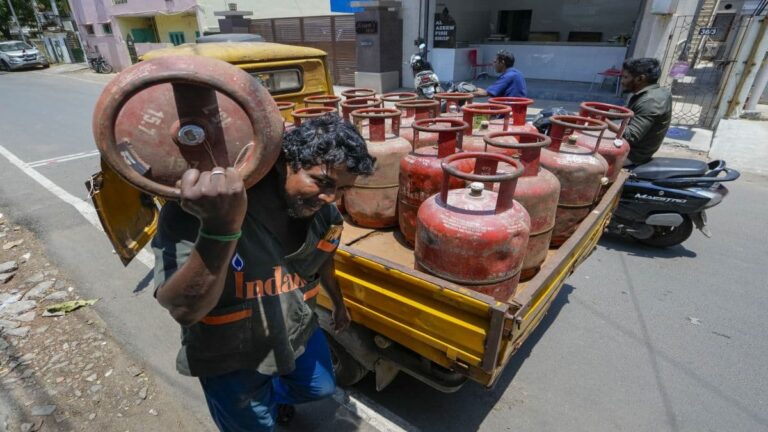
  • More than 12,000 raids have been conducted and over 15,000 cylinders seized, with major actions reported in Delhi, Goa, Uttar Pradesh, Jammu & Kashmir, Kerala and Madhya Pradesh.
  • PSU Oil Marketing Companies have conducted over 2,500 surprise inspections at retail outlets and LPG distributorships to ensure smooth supply and prevent irregularities.

Other Government Measures

  • The Government’s highest priority remains ensuring uninterrupted LPG supply, particularly for households and priority sectors such as hospitals and educational institutions.
  • PNG consumers have been advised to surrender LPG connections under the LPG Control Order amendment dated 14 March 2026 to ease pressure on LPG supplies.
  • Booking intervals have been revised to 25 days in urban areas and up to 45 days in rural areas to ensure equitable distribution.
  • Alternate fuels such as kerosene and coal have been made available to reduce pressure on LPG demand.
  • PSU Oil Companies are promoting digital bookings and discouraging panic bookings, with improved adoption of online booking systems.
  • Commercial LPG supply has been initiated in several States with support from State Governments.

Public Advisory

  • Citizens are advised not to panic as adequate LPG supplies are being maintained for households and essential sectors.
  • LPG cylinders can be booked through digital platforms such as IVRS, SMS, WhatsApp, mobile applications and e-commerce platforms.
  • Citizens are appealed to avoid panic bookings, use digital modes and avoid unnecessary visits to LPG distributors.
  • Consumers are encouraged to use alternate fuels such as PNG and electric or induction cooktops and to conserve energy.
  • Citizens are advised to rely on official sources for accurate information and avoid rumours.

Maritime Safety and Shipping Operations

The Ministry of Ports, Shipping and Waterways shared the latest position on maritime activities in the Persian Gulf and the measures taken for the safety of Indian vessels and crew. The Ministry noted that:

  • All Indian seafarers in the region are safe and no shipping incident involving Indian seafarers has been reported in the past 24 hours.
  • At present, 22 Indian-flagged vessels with 611 Indian seafarers remain in the western Persian Gulf region. The Directorate General of Shipping continues to monitor the situation in coordination with ship owners, RPSL agencies and Indian Missions.
  • Since activation of the DG Shipping Control Room, 3,180 calls and 5,875 emails have been handled, including 150 calls and 378 emails in the past 24 hours from seafarers, their families and maritime stakeholders.
  • DG Shipping has facilitated the safe repatriation of more than 447 Indian seafarers, including 161 in the past 24 hours, from airports and regional locations across the Gulf.
  • LPG carrier vessel Shivalik reached Mundra Port and discharge of cargo is underway, while vessel Nanda Devi arrived at Kandla early morning today and has commenced discharge for onward transfer to the East Coast, including Ennore and Haldia.
  • All documentation and pre-arrival formalities were completed in advance to ensure priority berthing and expeditious discharge.
  • Major ports are closely monitoring vessel movements and cargo operations and providing necessary support, including additional storage space such as about 90,000 Sq meter provided by V.O. Chidambaranar Port Authority (VOCPA) for transshipment containers.
  • Reports regarding containers lying on roads outside Jawaharlal Nehru Port Authority (JNPA) are incorrect. Containers are currently located at container freight stations, warehouses or factory premises as part of normal logistics operations.
  • Congestion at JNPA is easing, with perishable containers reduced from about 2,000 to around 1,000.
  • Vessels have sailed to ports such as Salalah and Khor Fakkan, with one more vessel scheduled to depart today carrying about 200 containers. The number of stranded containers is expected to further decline to around 600 within the next 24–48 hours.
  • The Ministry of Ports, Shipping and Waterways continues to closely monitor shipping movements, port operations, safety of Indian seafarers and continuity of maritime trade in view of the evolving situation in West Asia.

Safety of Indian Nationals in the Region

An update on developments concerning the region was shared, including ongoing assistance and outreach through Missions, the Ministry of External Affairs informed that:

  • The Ministry of External Affairs continues to closely monitor the evolving situation in West Asia and the Gulf region. The safety, well-being and security of the Indian community remain the highest priority. A dedicated MEA control room remains operational, and coordination continues with State Governments and Union Territories.
  • External Affairs Minister visited Belgium at the invitation of the EU High Representative and Vice President Ms. Kaja Kallas to attend the EU Foreign Affairs Council.
  • During the meeting, discussions covered India-EU relations and pressing global challenges, particularly the situation in West Asia and its implications for energy security, with emphasis on dialogue and diplomacy.
  • On the margins of the Council, External Affairs Minister held bilateral meetings with the EU High Representative and Vice President and Foreign Ministers of Belgium, Cyprus, Germany, the Netherlands and Slovakia, where views were exchanged on recent international developments.
  • Over 700 Indian nationals have crossed over from Iran into Armenia (around 600) and Azerbaijan, including about 50 additional crossings to Armenia yesterday.
  • Of the 284 Indian pilgrims who had crossed into Armenia, around 130 are expected to arrive in Delhi today.
  • The MEA control room remains operational to assist Indian nationals. However, the number of calls or emails to the Control Room have come down significantly. Yesterday, 22 calls and 6 emails were received and attended to.
  • Indian Missions and Posts across the region are functioning round the clock, operating 24×7 helplines, maintaining contact with Indian community organisations and issuing regular advisories. Missions remain in touch with local authorities and are extending assistance to stranded Indians, students, seafarers and short-term visitors, including visa support, logistical assistance and transit facilitation.
  • Since 28 February, around 2,44,000 passengers have returned from the region to India.
  • In the UAE, airspace was temporarily closed earlier today and later reopened. Limited non-scheduled flights continue to operate, with about 55 flights on 16 March 2026 and around 70 flights expected today from various UAE airports to India. Passengers are advised to check updated schedules with airlines and may contact Indian Missions for assistance.
  • Flights continue to operate from Saudi Arabia and Oman to various destinations in India.
  • Qatar airspace remains partially open, with three flights operated to India on 16 March 2026 and three flights expected today.
  • Kuwait airspace remains closed since 28 February 2026. Special non-scheduled flights by Jazeera Airways are expected to operate from Al Qaisumah Airport in Saudi Arabia to India.
  • For Indian nationals in Bahrain and Iraq, where airspace remains closed, transit through Saudi Arabia continues to be facilitated.
  • The mortal remains of the two Indian nationals who lost their lives in the Sohar incident of 13 March 2026 have been received by their families in Jaipur. The Government of India conveys its deepest condolences.
  • The Embassy remains in contact with hospital authorities and the company concerned to monitor the condition of the injured Indian nationals, none of whom are critically injured.
  • The Mission team in Basra continues to assist the 15 Indian crew members who were safely evacuated and are currently staying in a hotel. Efforts are underway for their early return to India.
  • The Mission is also coordinating with Iraqi authorities for early repatriation of the mortal remains of the deceased Indian national.
  • Five Indian nationals have lost their lives in recent incidents and one remains missing. The mortal remains of two Indian nationals from Oman have been repatriated to India today.
  • Indian Missions in Oman, Iraq and the UAE remain in contact with concerned authorities regarding the missing individual and for early repatriation of the remaining mortal remains after completion of requisite formalities.

The Government reiterated that it remains vigilant and continues close coordination among concerned Ministries and agencies, with necessary steps being taken to safeguard key sectors and national interests.

Spiritual Gathering in Ganderbal as Mufti Umer Qasim Honoured with Dastar Bandi

0

Large gathering of devotees witnesses the honour bestowed upon Mufti Umer Qasim after completing the recitation of the Holy Qur’an

Touseef Wani

Ganderbal, Mar 17: A spiritually uplifting gathering was witnessed at Jamia Masjid Wayil in Ganderbal during the blessed month of Ramadan as a Dastar Bandi ceremony was held in honour of Mufti Umer Qasim after he successfully completed the recitation of the entire Holy Qur’an.

The Dastarbandi was performed by Hazrat Mufti Ajaz-ul-Haq in the presence of members of the Intizamia Committee of Masjid Sharif Wayil and a large gathering of devotees.

The ceremony marked a moment of pride, joy and devotion as prayers and blessings were offered for the young scholar on this remarkable religious achievement.

Dastar Bandi is a revered Islamic tradition in which a turban is ceremonially tied as a mark of honour and recognition for religious accomplishment, particularly the completion or memorisation of the Holy Qur’an. The tradition symbolises respect, responsibility and the continuation of Islamic scholarship.

On the occasion, the gathering prayed that Allah bless Mufti Umer Qasim with knowledge, wisdom, and steadfastness in serving the Ummah and inspire many more youth to strengthen their bond with the Holy Qur’an.

Government Takes Steps to Promote Domestic Recycling Capacity and Circular Economy in Solar Sector

0

Vinod Bhat

New Delhi: With the support of the Ministry of New and Renewable Energy (MNRE), the Council on Energy, Environment and Water, a think tank, has estimated that cumulative waste from existing and projected solar capacity installations in India could reach around 600 kilo-tonnes by 2030.

The Ministry of Environment, Forest and Climate Change, Government of India has notified the E-Waste (Management) Rules, 2022. These rules also cover environmentally sound management of e-waste generated from electrical and electronic equipment, including solar photo-voltaic panels. An online Extended Producer Responsibility (EPR) Portal for E-Waste management has also been made operational by the Central Pollution Control Board.

The Government has taken following steps to promote domestic recycling capacity and circular economy practices in the country:

The Government of India constituted committees to prepare action plans to expedite transition from linear to circular economy in 11 focus areas including Solar Panels. The MNRE had constituted a Committee on Circular Economy in Solar Panels.

The MNRE had launched an “Innovation Challenge for Circularity in Renewable Energy Technologies – Batteries and Solar Photovoltaic” to support research and innovation in recycling, second-life applications, and circular design of solar modules and batteries under the Renewable Energy Research and Technology Development (RE-RTD) programme.

The Department of Science and Technology (DST), issued a Call for proposal on “Recovery and Recycling of End-of-Life Solar PV Panels/Modules” to develop economically viable recycling processes and equipment through academia–industry partnerships.

Ministry of Mines (MoM) launched a recycling incentive scheme with an outlay of Rs. 1500 crore under the National Critical Mineral Mission (NCMM) to develop domestic capabilities for recovering critical minerals from e-waste, lithium-ion battery waste, and components of end-of-life vehicles, supporting circular economy practices in clean-energy supply chains.

Justice Delivered After 14 Long Years: MACT Orders United India Insurance to Pay ₹1.13 Cr to Bus Accident Victims

0

Tribunal raps insurer for hiding key document, fines for delay

SYED BASHARAT

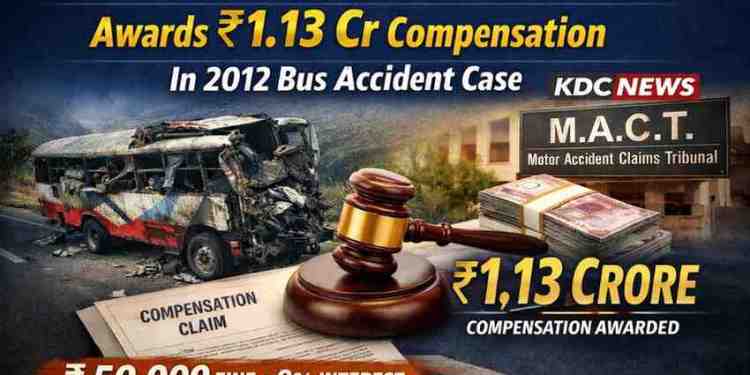
SRINAGAR, Mar 17: More than fourteen years after a devastating bus accident near Sumbal left several passengers seriously injured, the Motor Accident Claims Tribunal (MACT) in Srinagar has directed United India Insurance Company Ltd. to pay over ₹1.13 crore in compensation to four victims, while also reprimanding the insurer’s counsel for filing lengthy legal pleadings instead of presenting clear and concise facts before the court.

In a detailed judgment spanning over 130 pages, the tribunal presided over by District and Sessions Judge Fayaz Ahmad Qureshi held the insurer liable to compensate the injured passengers of a Tata bus that plunged into a deep gorge on January 10, 2012 near Wayil in Sumbal area of Bandipora district. The tribunal concluded that the accident occurred due to the rash and negligent driving of the bus driver, resulting in grievous injuries to multiple passengers, some of whom suffered permanent disabilities.

The claim petitions had been filed by Mushtaq Ahmad Dar, Raja Begum, Rafiqa Begum and Parvaiz Ahmad Ganai, who were among the passengers travelling in the ill-fated bus when it lost control and fell nearly 50 feet down a gorge. Evidence placed before the tribunal revealed that many passengers sustained serious injuries in the crash and were immediately shifted to hospital for treatment, with some requiring long-term medical care due to the severity of their injuries.

During the proceedings, the tribunal examined witness testimonies, police investigation records and medical documents to determine the circumstances surrounding the accident. The police investigation had already resulted in the filing of a charge-sheet against the driver for rash and negligent driving, and the tribunal observed that the material placed on record clearly established that the accident occurred because the driver failed to control the vehicle while negotiating the road stretch.

One of the most contentious aspects of the case was the attempt by United India Insurance Company Ltd. to avoid liability for the accident. The insurer argued that the offending vehicle was not insured at the time the accident occurred and claimed that the insurance policy had been issued only later on the same day.

According to the insurance company, the accident had taken place around 10 a.m. on January 10, 2012, while the insurance cover note and policy were issued later in the afternoon at about 3:14 p.m. The insurer alleged that the vehicle owner had concealed the occurrence of the accident and approached the company afterwards to obtain insurance coverage. On this basis, the insurer contended that the risk under the policy commenced only from the time mentioned in the cover note and that it could therefore not be saddled with liability for an accident that had already taken place earlier that day.

However, the tribunal carefully evaluated the evidence relating to the insurance transaction, including testimonies regarding the inspection of the vehicle and the payment of the premium. The tribunal noted that the owner had approached the insurance office for renewal of the policy after the earlier cover had expired and that the vehicle had been inspected by an agent of the company in connection with the insurance process.

The tribunal also took into account the practical circumstances surrounding the accident, noting that the bus had been severely damaged in the crash and remained in police custody after being pulled out of the gorge. In view of these circumstances, the tribunal found the insurer’s claim that the vehicle had been insured only after the accident to be unconvincing and unsupported by credible evidence.

Rejecting the defence raised by the insurer, the tribunal held that the vehicle stood insured and that United India Insurance Company Ltd., as the indemnifier under the policy, was legally bound to satisfy the compensation claims of the victims.

While dealing with the written statement filed by the insurance company, the tribunal also expressed strong displeasure over the manner in which the pleadings had been drafted by the insurer’s counsel. The court observed that instead of presenting a clear and factual defence, the written statement resembled an “academic book,” containing lengthy excerpts from judicial precedents and elaborate legal discussions that were not directly relevant to the facts of the case.

The tribunal emphasized that pleadings before a court must focus on material facts and concise assertions rather than reproducing long passages from legal judgments. Such an approach, the court noted, unnecessarily complicates proceedings and fails to assist the tribunal in adjudicating the dispute efficiently.

After examining the injuries, medical expenses, treatment records and the long-term impact of the accident on the lives of the victims, the tribunal determined the compensation payable in each of the four petitions.
Mushtaq Ahmad Dar was awarded ₹1 lakh, Raja Begum ₹15.04 lakh, Rafiqa Begum ₹92.83 lakh and Parvaiz Ahmad Ganai ₹4.34 lakh. The total compensation awarded by the tribunal thus amounted to ₹1,13,21,400.

The tribunal further directed United India Insurance Company Ltd. to deposit the entire compensation amount within 30 days. The court also ordered that the awarded amount would carry interest at the rate of eight percent per annum from the date of filing of the claim petitions until realization.

The tribunal cautioned that if the insurer fails to deposit the compensation within the stipulated period of 30 days, the outstanding amount will attract a higher interest rate of 10 percent per annum from the date of default.
The tribunal also imposed litigation costs amounting to ₹50,000 on the insurance company.

Reiterating the fundamental objective of the Motor Vehicles Act, the tribunal observed that its duty is to ensure that victims of road accidents receive “just compensation.” The law, the tribunal noted, mandates that courts must assess compensation in a manner that fairly reflects the suffering, medical expenses and financial losses endured by accident victims.

With this award, the tribunal brought to a close a prolonged legal battle arising out of the 2012 accident, providing long-awaited financial relief to the injured passengers who had been pursuing their claims for more than a decade.

Fuel, LPG Supplies Normal Across J&K; Public Asked to Avoid Panic Buying: J&K Govt

0

Control room assistance numbers issued for Jammu and Kashmir division

Srinagar, Mar 16: The Department of Information and Public Relations of Jammu and Kashmir Government on Monday said that fuel and LPG supplies across Jammu and Kashmir remain normal with adequate stocks of petrol, diesel and LPG available.

In a post on X, the department, said, “Fuel and LPG supplies across Jammu & Kashmir are normal with adequate stocks of Petrol, Diesel and LPG available.”

The department also advised people to contact divisional level control rooms of the Food Civil Supplies and Consumer Affairs Department Jammu and Kashmir in Jammu and Kashmir divisions for any assistance or information regarding fuel and LPG supplies.

For assistance or information, the public can contact divisional control rooms of the Food Civil Supplies and Consumer Affairs Department Jammu and Kashmir. In Jammu Division, Deputy Director (Supplies) can be reached at 94192 03030 and Assistant Director at 99062 41592.

In Kashmir Division, Deputy Director (Supplies) can be contacted at 96227 28755 and Assistant Director at 99066 06336, the department said.

AIP’s Prince Parveez rejects allegations of MP funds misuse in Bandipora

0

Says those involved in damaging Gundpora pathway must face action, party does not support damage to public property

Srinagar, Mar 16: The Awami Itehad Party (AIP) on Monday rejected allegations by some political leaders that MP funds were being misused in Bandipora district, terming the claims baseless and politically motivated.

AIP general secretary Prince Parveez said the party was utilising funds to improve basic infrastructure and address developmental gaps in several underdeveloped and long-neglected areas of the constituency.

He said the party’s focus was on providing facilities in sectors such as sports, education, health and public infrastructure across the district.

“Across the Bandipora constituency, MP funds are being used to uplift underdeveloped and ignored areas that remained neglected for years,” Parveez said.

He was responding to allegations levelled by former ministers Usman Majid and Nayeem Akhtar and Bandipora MLA Nizamuddin Bhat, who had raised questions over the utilisation of funds in the district.

Parveez said the party was carrying out development works “on a priority basis” and accused political opponents of attempting to create controversy over initiatives aimed at improving public facilities.

He said several projects, including the construction of pedestrian pathways, development of playgrounds and sports infrastructure, and improvements in educational and healthcare facilities, were being taken up in different parts of the district.

“These initiatives are meant to ensure that areas which remained ignored in the past receive the attention they deserve,” he said.

Referring to the reported damage to a tiled pedestrian pathway in Gundpora village, Parveez said the incident was unfortunate and called for a proper investigation into the matter.

“If the pathway has been damaged or tiles stolen, the authorities should conduct a probe and those found responsible must be taken to task,” he said, adding that the party does not support any act that damages public property.

He also urged residents to cooperate in safeguarding public infrastructure and said development works were meant for the benefit of the people of the district.