spot_imgspot_img
spot_img
Home Blog Page 82

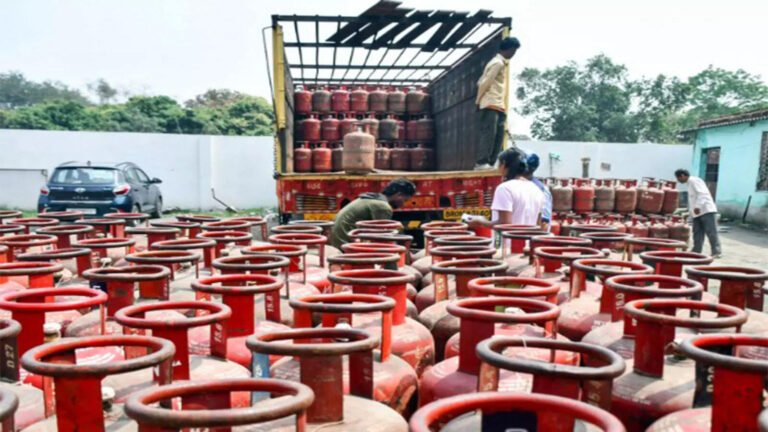
Centre offers additional 10% Commercial LPG allocation to States/UTs linked to reforms supporting transition towards PNG

0
Vinod Bhat

New Delhi: Senior officials from the Ministries of Petroleum and Natural Gas, Ports, Shipping and Waterways, External Affairs briefed the media on the latest developments in West Asia today at the National Media Centre. Such interactions are being held on a regular basis to keep the citizens informed through media about the evolving situation. During today’s briefing, updates were shared on fuel availability, maritime operations, and assistance to Indian nationals in the region.

Energy Supply and Fuel Availability

The Ministry of Petroleum and Natural Gas provided an update on the fuel supply scenario and steps being taken to maintain steady availability of petroleum products and LPG, amid the closure of the Strait of Hormuz. The Ministry stated:

Crude and Refineries

  • All refineries are operating at high capacity with adequate crude inventories. India has sufficient production of petrol and diesel and no imports are required to meet domestic demand.
  • Domestic LPG production from refineries has been increased by about 40 percent.

Retail Outlets

  • No cases of fuel dry-outs have been reported at retail outlets by Oil Marketing Companies, and supplies of petrol and diesel continue to be maintained regularly.
  • Citizens are advised not to resort to panic buying as adequate stocks are available.

Natural Gas

  • Priority sectors continue to receive protected gas suppliesincluding 100 percent supply to domestic PNG and CNG transport, while supplies to industrial and commercial consumers are being regulated at around 80 percent.
  • Commercial LPG consumers are encouraged to switch to PNG, and establishments such as hotels, restaurants, hospitals and hostels can obtain PNG connections from authorized City Gas Distribution (CGD) entities.
  • CGD companies including IGL, MGL, GAIL Gas and BPCL are offering incentives to promote domestic and commercial PNG connections.
  • The Government is expanding the CGD network to promote clean and efficient PNG usage, and businesses are encouraged to approach authorised CGD entities for connections.
  • CGD entities have been advised to ensure maximum gas supply to critical sectors such as seed drying units and cold storages.
  • Petroleum and Natural Gas Regulatory Board (PNGRB) has directed CGD entities to reduce timelines between application and commencement of gas supply, while clearly communicating timelines to consumers to encourage adoption.
  • CGD entities have also been advised to undertake mass awareness initiatives under the PNG drive, including campaigns through print, radio, social media and public outreach activities involving stakeholders and influencers.
  • The Government of India, vide letter dated 16 March 2026, has requested States and UTs to facilitate CGD expansion by issuing deemed permissions for pending applications, approving new permissions within 24 hours, waiving road restoration and permission charges, relaxing working hours and seasons, and appointing State nodal officers for coordination and faster implementation.
  • The Government of India, vide letter dated 18 March 2026, has offered States and UTs an additional 10 percent allocation of commercial LPG linked to reforms supporting transition from LPG to PNG, including
    • 1% additional allocation for formation of State and district committees for approval of CGD applications and resolving grievances,
    • 2% additional allocation for issuing orders to granting deemed CGD permissions,
    • 3% additional allocation for introducing “Dig and restore scheme” for CGD entities and
    •  4% additional allocation for reducing the annual rental/ lease charges.
  • States and UTs have been encouraged to take forward these reforms to accelerate CGD network expansion and expedite PNG connections for domestic, commercial and industrial consumers.
  • These measures are expected to reduce pressure on LPG demand and facilitate transition of commercial consumers to PNG.

LPG

  • LPG supply continues to be monitored in view of the prevailing geopolitical situation.
  • No dry-outs have been reported at distributorships.
  • Online LPG bookings have increased from 83% to 93%.
  • Delivery Authentication Code coverage has expanded from 53% (February 2026) to about 81% to prevent diversion.
  • Domestic LPG cylinder deliveries continue as normal.
  • About 15 States/UTs like Bihar, Chhattisgarh Delhi, Gujarat, Haryana, Himachal Pradesh, Jharkhand, Karnataka, Kerala, Manipur, Rajasthan, Uttarakhand and others, have issued orders for allocation of non-domestic LPG, and commercial LPG supply is being made available across the country.

Kerosene

  • An additional allocation of 48,000 KL of kerosene has been provided to States and UTs, which have been requested to identify distribution points.
  • Around 12 States like Bihar, Chhattisgarh, Gujarat, Karnataka, Keralam, Manipur, Tamil Nadu, Uttar Pradesh and others, have issued SKO allocation orders, while some States have indicated no requirement.

Meetings conducted by State Governments

  • State Governments and UTs are monitoring supply of essential commodities under the Essential Commodities Act and LPG Control Order to take action against any hoarding and black marketing.
  • The Government of India has advised States and UTs to conduct coordinated inspections and surprise checks to curb malpractices.
  • 30 States and UTs have established control rooms and 22 have set up district-level monitoring committees, with others advised to do so on priority.
  • 22 States/UTs like Rajasthan, Telangana, Goa, Himachal Pradesh, J&K, Maharashtra, Odisha, Tamil Nadu etc. have setup District Level Monitoring Committee.
  • All those States/UTs who have not setup Control rooms and District Monitoring committees are requested to do so on urgent basis.

Enforcement action

  • Enforcement actions continue across States to curb hoarding and black marketing of LPG.
  • Recent cases include seizures of LPG cylinders in Jharkhand and Madhya Pradesh, with joint operations conducted by enforcement agencies.
  • PSU Oil Marketing Companies conducted over 2,300 surprise inspections at retail outlets and LPG distributorships to ensure smooth supply and prevent irregularities.

Other Government Measures

  • The Government continues to prioritize uninterrupted LPG supply and PNG expansion, particularly for households and priority sectors such as hospitals and educational institutions.
  • Supply and demand-side measures include enhanced refinery production, revised booking intervals of 25 days in urban areas and up to 45 days in rural areas, and prioritized allocation.
  • Alternate fuels such as kerosene and coal have been made available to reduce pressure on LPG demand.
  • PSU Oil Companies are promoting digital bookings and discouraging panic bookings, with improved adoption of online booking systems.
  • Commercial LPG supply has been initiated in several States with support from State Governments.

Public Advisory

  • Citizens are advised to rely on official sources and avoid rumours.
  • Consumers are appealed to avoid panic bookings, use digital booking platforms and avoid unnecessary visits to LPG distributors.
  • Citizens are encouraged to use alternate fuels such as PNG and electric or induction cooktops and to conserve energy.

Maritime Safety and Shipping Operations

During the briefing, information was shared on the current maritime situation in the Persian Gulf and the measures in place to ensure the safety of Indian vessels and crew by the Ministry of Ports, Shipping and Waterways. The Ministry noted that:

· All Indian seafarers in the region are safe and no shipping incident involving Indian-flagged vessels has been reported in the past 24 hours.

· At present, 22 Indian-flagged vessels with 611 Indian seafarers remain in the western Persian Gulf region, with the Directorate General of Shipping continuing close monitoring in coordination with ship owners, RPSL agencies and Indian Missions.

· LPG carrier vessels Shivalik and Nanda Devi are currently discharging cargo as per schedule of oil handling companies.

· The DG Shipping Control Room continues to operate 24×7 and has handled 3,305 calls and 6,324 emails since activation, including 125 calls and 449 emails in the past 24 hours.

· DG Shipping has facilitated the safe repatriation of more than 472 Indian seafarers so far, including 25 in the past 24 hours, from airports and regional locations.

· India’s maritime sector continues to operate smoothly with no congestion reported at ports, including confirmation from State Maritime Boards such as Gujarat and Maharashtra.

· Ports are closely monitoring vessel movements and cargo operations and have adequate spare capacity, with additional storage space created, including around 2,260 sq. meter at Visakhapatnam Port Authority.

· At JNPA, the situation remains normal with the number of stranded containers reducing further from about 1,000 to around 770.

· The Ministry of Ports, Shipping and Waterways continues to monitor shipping movements, port operations, safety of seafarers and continuity of maritime trade in view of the evolving situation in West Asia.

Safety of Indian Nationals in the Region

The Ministry of External Affairs shared updates on recent developments in the region, including ongoing assistance and outreach through Indian Missions. The Ministry informed that:

· The Ministry of External Affairs continues to closely monitor developments in West Asia and the Gulf region, with the safety, security and welfare of the Indian community remaining the highest priority.

· The Prime Minister spoke with the President of the UAE, HH Sheikh Mohamed bin Zayed Al Nahyan, and conveyed advance Eid greetings.

· The two leaders discussed the current situation in West Asia. The Prime Minister reiterated India’s strong condemnation of attacks on the UAE resulting in loss of lives and damage to civilian infrastructure.

· Both leaders emphasized the importance of ensuring safe and free navigation through the Strait of Hormuz and agreed to continue working towards early restoration of peace, security and stability in the region.

· The Embassy of India in Tehran continues to assist Indian students in Iran, including those seeking to cross land borders into Azerbaijan.

· Indian nationals are advised to follow Embassy advisories to facilitate smooth land-border crossings into Armenia and Azerbaijan.

· A dedicated MEA control room remains operational to assist Indian nationals and their families, and coordination continues with State Governments and Union Territories.

· Indian Missions and Posts across the region are functioning round the clock, maintaining contact with community associations and organizations and issuing updated advisories. A decline in helpline queries indicates that many urgent issues of stranded nationals have been addressed.

· Missions remain in close contact with local authorities and continue to assist seafarers, stranded Indians and short-term visitors with visas, consular services and logistical support.

· Special efforts are being made for Indian students in the region, with Missions coordinating with schools and education boards.

· The CBSE X Standard exams were cancelled and, now the XII Standard boards also stand cancelled. ICSE and Kerala Board exams are also cancelled.

· The respective Boards would announce a formulation for the determination of marks in these cases in due course.

· In Iran, Indian students from Tehran, Isfahan and Shiraz have been relocated to safer locations, with all necessary assistance being provided by the Embassy.

· Since 28 February 2026, around 2,60,000 passengers have returned from the region to India.

· Flight operations are gradually improving with additional services being introduced across the region.

· In the UAE, around 70 flights operated on 17 March 2026 and about 75 flights are expected today to various destinations in India. Over 50 flights have been operating daily since 5 March 2026, indicating improving connectivity.

· Flights continue to operate from Saudi Arabia and Oman to India.

· Qatar airspace remains partially open, with 5 flights operated yesterday and services to 9 Indian destinations announced from today.

· Kuwait airspace remains closed since 28 February 2026. Special non-scheduled flights by Jazeera Airways are expected from Al Qaisumah Airport in Saudi Arabia.

· For Indian nationals in Kuwait, Bahrain and Iraq, where airspace remains restricted, transit through Saudi Arabia continues to be facilitated.

The Government emphasised that it remains alert and is maintaining close coordination among concerned Ministries, agencies, and State/UT Governments, with necessary measures being taken to safeguard key sectors and national interests.
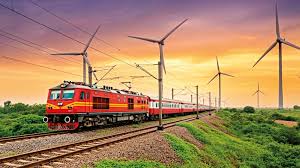
Indian Railways Attracts US$ 942 Million FDI Equity Inflows Over Last 11 Years, Including Under the Automatic Route, to Boost its Infrastructure

0
Vinod Bhat

New Delhi: As per the Government’s FDI Policy Circular dated 15.10.2020, as amended from time to time, 100% FDI is permitted under the automatic route under the Railway Infrastructure sector. The permitted areas include construction, operation and maintenance of the following:-

•           Suburban corridor projects through PPP,

•           High speed train projects;

•           Dedicated freight lines;

•           Rolling stock including trainsets and locomotives/coaches manufacturing and maintenance facilities;

•           Railway Electrification;

•           Signalling systems;

•           Freight Terminals;

•           Passenger terminals;

•           Infrastructure in industrial part pertaining to railway line/sidings including electrified railway lines and connectivity to main railway line; and

•           Mass Rapid Transport Systems.

A total Foreign Direct Investment (FDI) equity inflow from 2014-15 to 2025-26 (upto December 2025) in Railway Sector is US$ 942 Million.

The Gross Budgetary Support (GBS) for capital investment in Railways was ₹29,055 Crore in 2013-14. In order to provide adequate support for network expansion, rolling stock augmentation, safety improvement, passenger amentities, road safety works and technology upgradation, Government of India consistently augmented the Gross Budgetary Support (GBS) every year and for 2026-27, ₹2.78 lakh crore has been allocated. Adequate domestic funding has helped the Indian Railway sector to invest more in infrastructure and technology in order to compete with the global market.

Further, as an ongoing process of International technical collaboration, Ministry of Railways has signed Memorandums of Understanding (MoUs) with Switzerland, Germany, Russia, Spain etc. The MoU has been signed for technical cooperation in the areas of Freight and Passengers operations (Multimodal transport), High-Speed rail development, and IT solutions for railway operations and for administrative purposes, Predictive Maintenance of Assets etc.

Export to other countries

Over the past decade, India has developed a strong and diversified railway manufacturing eco-system comprising of Indian Railways’ Production Units and Industry base.

Presently, Industry manufactures almost the entire range of railway rolling stocks such as locomotives, passenger coaches, wagons and critical components such as Traction motors, Gear Boxes, Motorized Bogies, Traction transformers, Metro cars, Propulsion system, Traction and Auxillary converters, Cable harness, Electronic cards, Magnetics etc. in India.

These items are exported to both developed as well as developing countries such as Australia, Canada, United Kingdom, USA, France, Germany, Mozambique, Mexico, Bangladesh, Sri Lanka, Romania, Spain and Italy etc.

With this supportive eco-system in place, during 2016-17 to 2025-26 (upto January 2026), total value of exports in Railway sector from India has reached US$ 3355 Million (~₹26,000 cr.).

RailOne App Becoming Popular Among Passengers with Total 2.57 crore Downloads and 7.64 lakh Average Daily Ticket Bookings

0
Vinod Bhat

New Delhi: With a view to facilitating passengers in booking both reserved and unreserved tickets, Indian Railways has introduced various technological solutions, such as the RailOne App, which is in addition to the conventional modes of booking through counters of Indian Railways. Through this app., passengers can book reserved as well as unreserved tickets on mobile phone.  This, in effect, brings the Passenger Reservation System (PRS) facility as well as Unreserved Ticketing System (UTS) to passengers’ palm. The RailOne App has advanced security and privacy measures.

The total number of downloads of RailOne App and number of daily average tickets booked (both reserved and unreserved) through it (till 15-03-2026) are tabulated below:

Total number of downloads 2.57 Cr.
Average daily number of tickets booked 7.64 Lakh

The App combines all the public facing services of Indian Railways like reserved ticketing, unreserved ticketing and platform ticketing, train enquiry, PNR enquiry, Railmadad, etc. into a single platform. The users can avail all these services in integrated manner through single login.  The RailOne App can be downloaded from Android Play Store and Apple App Store and registration is user friendly. In addition, passengers also have the facility to book reserved tickets through the app/website of Indian Railway Catering and Tourism Corporation. At present approximately 88% of reserved tickets are being booked online.

Further, Indian Railways also engages various types of agents which are as follows:

Unreserved tickets

i. Halt agents

ii. Jan Sadharan Ticket Booking Sevak (JTBS)

iii.Station Ticket Booking Agents (STBA)

iv. M-UTS Sahayaks

Reserved as well as unreserved tickets

i. Yatri Tickets Suvidha Kendra Licensee (YTSKL)

In addition, Indian Railway Catering & Tourism Corporation (IRCTC) engages E-ticketing agents for issuing reserved e-tickets.

There is no condition for having experience in issuing railway tickets for getting engaged as Halt agent, JTBS, STBA and M-UTS Sahayak. As such, these schemes are open to eligible individuals including educated unemployed youth and hence promote self-employment and improve access to railway ticketing facilities especially in rural and semi-urban area. Since in addition to unreserved tickets, YTSKLs also issue reserved tickets, which require a basic understanding of Railway Ticketing, for YTSKLs, a minimum of 02 years’ experience in Railway Ticketing is required.

Agents are appointed for a fixed tenure in accordance with the scheme’s terms and conditions and may be terminated for any breach of those terms. Renewal of appointments and the invitation of fresh applications upon expiry of tenure is a continuous and ongoing process.

WAVES OTT Enhances Prasar Bharati’s Diverse Content Offering; Platform Records Over 84 Lakh Registered Users

0
Vinod Bhat

New Delhi: The WAVES OTT platform has been launched by Prasar Bharati in November, 2024 as a digital streaming platform for dissemination of diverse content including Radio and TV Channels, TV shows, web series, films, live events, radio services, cultural content, educational programmes and archival material of Prasar Bharati. The platform has over 84 lakh registered users, including users from Chhindwara district of Madhya Pradesh.

Prasar Bharati – Shared Audio-Visuals for Broadcast and Dissemination (PB-SHABD) was launched in March 2024. It facilitates dissemination of news across the country in 15 Indian languages namely Assamese, Bengali, English, Gujarati, Hindi, Kannada, Kashmiri, Malayalam, Marathi, Odia, Punjabi, Tamil, Telugu, Dogri & Urdu. Initially, it was made available to users free of charges for one year, which has been further extended till March 2027.

A large repository of archival content from Prasar Bharati, including television shows, documentary films and other programmes, has been made available on the WAVES OTT platform. The publishing of archival programmes is being undertaken in a phased manner to enhance discoverability and strengthen audience engagement.

The WAVES OTT and PB-SHABD platforms provide access to a wide range of Prasar Bharati content, including programmes and news in Hindi and various regional languages, which are accessible across the country, including the Surguja region of Chhattisgarh.

Weather to improve from march 20 afternoon in Kashmir Valley: MeT

0

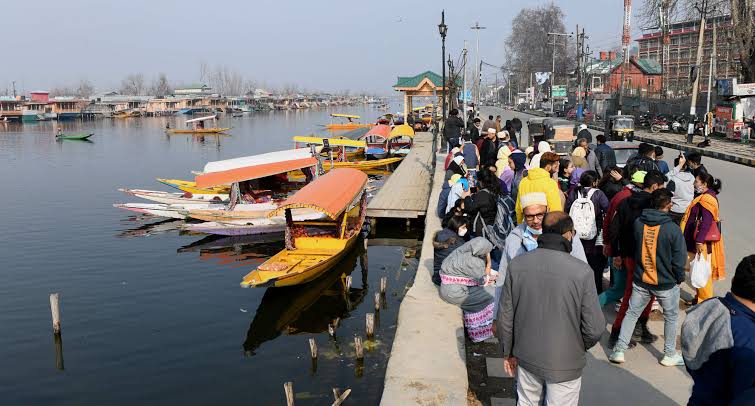
Srinagar, Mar 18: Weather conditions across Kashmir Valley are expected to stay unsettled over the next two days due to the influence of successive western disturbances, with improvement likely from March 20th, official said.

The Meteorological Department said light to moderate rain will continue in plains, while higher areas may receive snowfall. Some parts of Chenab Valley and South Kashmir may see moderate to heavy precipitation, official said.

Thunderstorms, gusty winds up to 50 km per hour, and isolated hailstorms are also possible, mainly in Jammu region.

Weather is expected to improve from March 20 afternoon. Dry conditions are likely from March 21 to 24, though skies may stay partly cloudy, he said.

He also said that another spell of rain and snow is likely between March 26 and 28.

For Eid, expected on March 20 or 21, weather will remain mostly dry, with a small chance of light rain in the late afternoon, he added.(KNS)

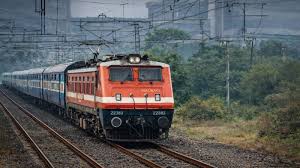
AI, High-Resolution Cameras Help Nab Stone-Pelters Targeting Vande Bharat Train: Railways

0

Vinod Bhat

The minister said that Vande Bharat trains are fitted with many safety features, including an anti-climbing feature that prevents one coach from climbing onto another.

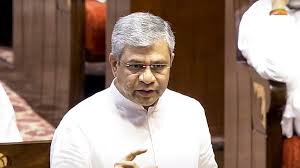
While mentioning the safety features in response to queries during Question Hour, Vaishnaw referred to the high-resolution cameras in the trains and the incident in Muzaffarnagar. “(Vande Bharat) trains are fitted with high-resolution cameras. In a recent incident in the Muzaffarnagar area, we could catch the culprits who were throwing stones on a Vande Bharat train just with a very small picture of a person captured on the camera, and by using some AI technologies, which helped us reach exactly the house where the person was residing,” the minister said

Government Extends ALMM Framework to Solar Ingots and Wafers; To Come into Effect from 1 June 2028

0
Vinod Bhat

New Delhi: MNRE has expanded the ALMM Order to introduce ALMM List-III for Ingots and Wafers, which will take effect from 1 June 2028. Suitable grandfathering provisions have been built in to protect projects already in the pipeline. The current order of MNRE, extends mandatory sourcing requirements from ALMM lists, already in place for modules and cells, one step further up the solar supply chain to include the ingots and wafers, which currently remains heavily import-dependent

Union Minister for New and Renewable Energy, Shri Pralhad Joshi, said that it is a decisive step towards strengthening India’s solar manufacturing ecosystem. The Minister said that the move will boost domestic production, enhance supply chain resilience, reduce import dependence, and ensure higher quality standards across the solar value chain.


Key Provisions

  • Effective Date: 1st June 2028 – the date from which ALL projects must use ALMM-listed wafers including Net metering/ open access projects.
  • Cut-Off Date: 7 days after the initial list of ALMM List-III for wafers, is published. Bids submitted under Sec 63 route, after this date must mandatorily specify use of ALMM List III compliant wafers.
  • Threshold for issuing the initial list: At least 3 independent manufacturing units (not under common ownership or control) with a combined capacity of 15 GW, ensuring the list is issued only when this minimum domestic supply is available.
  • Mandatory ingot capacity: Manufacturers seeking enlistment in ALMM List-III for wafers, must also have equivalent ingot manufacturing capacity, promoting upstream integration for ingots.
  • Module list integrity: Effective Date onwards, ALMM List-I (Solar PV modules) will include only such modules which are manufactured using ALMM-listed cells and wafers. Separate lists will be maintained for grandfathered projects to avoid disruption.
  • DCR provisions: This Order does not dilute or override any Domestic Content Requirement (DCR) provisions under the existing MNRE schemes.

Expected Benefits

Wafers are the critical intermediate stage between polysilicon and solar cells. India currently has limited domestic wafer manufacturing capacity and relies substantially on imports.

The introduction of ALMM List-III is expected to:

  • Drive investment into ingot and wafer manufacturing facilities in India;
  • Improve supply chain security and reduce vulnerability to import disruptions;
  • Ensure quality and traceability of solar components all the way from wafer to module;
  • Create skilled employment in upstream solar manufacturing;

This expansion of ALMM represents an important step towards Atmanirbhar Bharat and the country’s commitment to achieving 500 GW of non-fossil fuel capacity by 2030.

Background

India’s Approved List of Models and Manufacturers (ALMM) Order, 2019 is a quality-and-reliability framework that ensures solar equipment used in the country’s solar projects meet the domestic manufacturing standards. It applies for projects awarded through competitive bidding under Sec 63,Electricity Act,2003 and for net-metering or open-access projects.

Since ALMM was introduced, domestic solar manufacturing has expanded significantly. ALMM List-I (solar PV modules) has grown from 8.2 GW in 2021 to around 172 GW currently. ALMM List-II (solar PV cells), introduced more recently, has already reached 27 GW within seven months, demonstrating the framework’s effectiveness in stimulating domestic investment.

Grand Iftaar Gathering by Indian Army Strengthens Bonds of Unity and Brotherhood in Bandipora

0

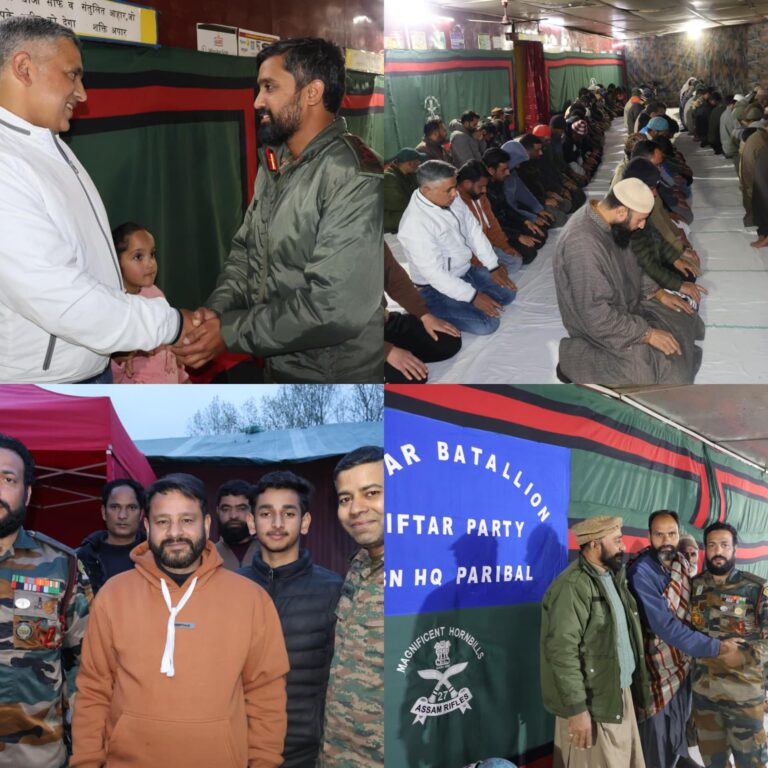
Bandipora, March 18: The Wular Battalion of the Indian Army organized a grand Iftaar gathering at Paribal Battalion Headquarters, bringing together over 300 participants, including media personnel and prominent civilians from across its Area of Responsibility. The event was held in the true spirit of Ramadan, reflecting unity, harmony, and mutual respect.

The evening commenced with the traditional breaking of the fast (Iftaar), followed by a well-organized and graceful ceremony. The atmosphere was exceptionally warm and welcoming, as attendees sat together and shared food plates, symbolizing brotherhood, equality, and a deep sense of togetherness.

Informal interactions during the gathering created a platform for open dialogue, allowing participants to exchange views, share experiences, and strengthen interpersonal connections. The diverse and enthusiastic participation highlighted the strong and enduring relationship between the security forces and the local community.

The initiative was widely appreciated by all present, who lauded the Indian Army’s continued efforts in promoting communal harmony, goodwill, and people-centric engagement. The event played a significant role in fostering trust, cooperation, and camaraderie among all stakeholders.

Such initiatives reaffirm the Indian Army’s unwavering commitment to peace, stability, and meaningful community engagement in the region.

Mughal Road Closed Following Fresh Snowfall at Pir Ki Gali

0

Traffic Halted on Srinagar-Poonch Highway Amid Weather Worsening

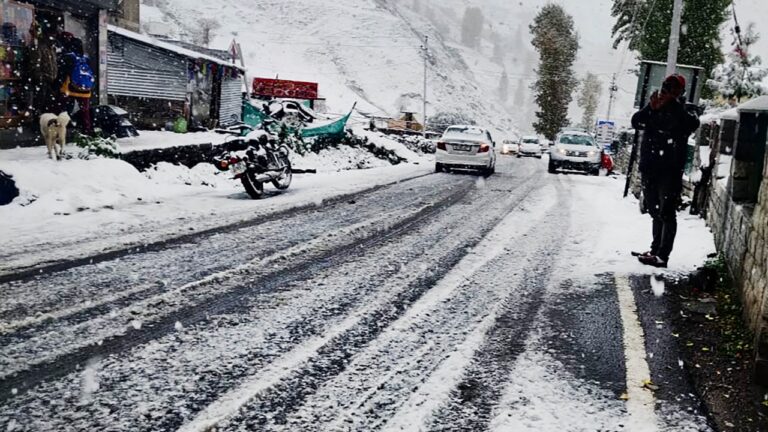
Srinagar, Mar 18 : Traffic on the Mughal Road was suspended on Wednesday after a fresh spell of snowfall and rainfall occurred at the Pir Ki Gali pass, officials said.

The decision to close the vital artery, which connects the Kashmir Valley with the twin districts of Poonch and Rajouri, was taken keeping in view the safety of commuters.

SSP Traffic Rural, Farooq Qasier, informed  that the route has been closed for all kinds of vehicles due to the inclement weather conditions prevailing in the area.

“Keeping in view the safety of passengers, we have decided to suspend traffic on the Mughal Road. No vehicle will be allowed to ply till further notice. Commuters are requested to avoid the route and follow official updates,” the SSP said.

Authorities have advised people to postpone their journey until the road is cleared and declared safe for movement. Officials added that a review of the weather and road conditions would be conducted before any decision is taken to resume traffic. (KNS)

Digital Darkness in Hayihama Kupwara: Residents Slam Telecom Failure, Demand Immediate Action

0

Kupwara, 18 March: Anger and frustration are mounting among residents of Bungam Hayihama village in Kupwara as they continue to suffer due to extremely poor mobile network and internet connectivity, with locals accusing telecom operators of complete negligence.

Despite tall claims of digital growth, villagers say ground reality in Hayihama remains bleak. Services provided by Reliance Jio and Bharti Airtel have turned into a daily struggle, often failing to provide even basic connectivity.

“In this modern era, when the entire world is connected digitally, our children are forced to wander from one place to another just to catch a signal. This is nothing less than a failure of the system,” a local resident said, expressing deep resentment.

The crisis has severely impacted students, who are unable to access online education, download study material, or stay connected with academic platforms. Many families claim they are left with no choice but to send their children to Srinagar for further studies due to the complete absence of reliable internet facilities in the village.

Residents also highlighted that poor connectivity is affecting essential services such as online banking, government schemes, and even emergency communication. “Both Jio and Airtel have become a headache for us. We are paying for services we barely receive,” another villager remarked.

In a strong appeal, the people of Bungam Hayihama stated that they are ready to fully cooperate with authorities and telecom companies, even offering land for the installation of mobile towers to resolve the issue permanently. “We are ready to give land, but we need action, not empty promises,” they added.

The residents have urged the administration to take strict notice of the situation and hold telecom providers accountable, ensuring immediate steps are taken to improve network coverage.

With patience wearing thin, the people of Hayihama Kupwara are now demanding answers and action before the situation worsens further.