spot_imgspot_img
spot_img
Home Blog Page 81

India Builds Dedicated Infrastructure for Smart Protein and Bio-Based Products, says Union Minister Dr Jitendra Singh

0

Vinod Bhat

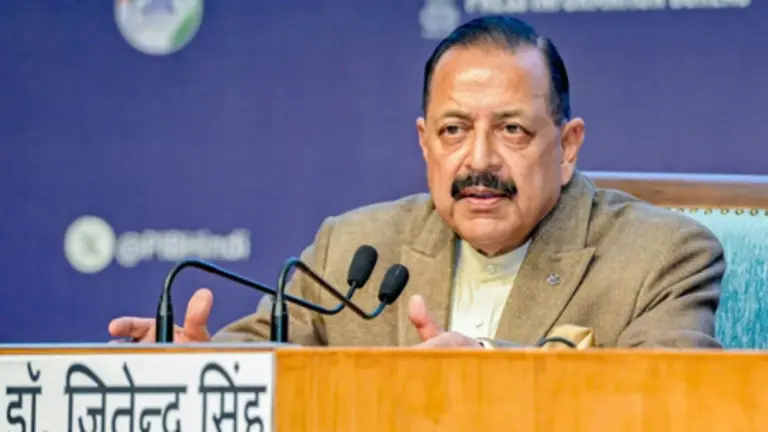
New Delhi: Union Minister of State (Independent Charge) for Science & Technology, Dr Jitendra Singh today laid the foundation stone of the first-ever dedicated BioFoundry Centre under the Department of Biotechnology at Chandigarh, with an outlay of about ₹42 crore over the next two years.

The facility is being established as a national platform for developing and scaling advanced biomanufacturing processes, particularly in agri-food biotechnology, including smart proteins, bio-inputs, and bio-based products. The Minister said this centre will help bridge laboratory research with industrial-scale applications and strengthen India’s bioeconomy.

Dr Jitendra Singh said that National Agri-Food and Biomanufacturing Institute (NABI) has emerged as a key institution in India’s biotechnology landscape, particularly in translating scientific research into solutions for agriculture, food, and nutrition. He said the institute’s work across genomics, microbial biotechnology, food science, and bioinformatics is directly contributing to nutritional security, sustainable agriculture, and value addition in agri-food systems.

The Union Minister was addressing a gathering at the BRIC–National Agri-Food and Biomanufacturing Institute (NABI), Mohali, where he participated in multiple key events including the Biomanufacturing Workshop 4.0, “Smart Protein Forum 2026”, the foundation stone laying ceremony of the BioFoundry, and the BRIC-NABI Foundation Day celebrations. The event was attended by Prof. Rajesh S. Gokhale, Secretary, Department of Biotechnology and Director General, BRIC, along with leading scientists, researchers, industry representatives, and innovators from across the country.

Highlighting the importance of smart protein research, the Minister said that rising global protein demand and environmental concerns require alternative and sustainable solutions. He said smart proteins, developed through microbial fermentation, plant biotechnology and synthetic biology, offer a scalable and sustainable pathway for the future of food. He added that platforms like the Smart Protein Forum bring together science and industry to accelerate innovation in this emerging sector.

Dr Jitendra Singh said that India’s fast-growing bioeconomy is being supported by forward-looking policies such as BioE3- Biotechnology for Economy, Environment and Employment, which aim to promote sustainable growth, generate employment and boost innovation. He said technologies like synthetic biology and biomanufacturing are central to achieving these national objectives.

Referring to the BioFoundry being established at NABI, the Minister said it will house advanced infrastructure including large-scale fermenters, upstream and downstream processing systems, and high-throughput experimental platforms. He said the facility will support startups and industry through scale-up, pre-commercialisation and technology transfer, while also serving as a skill development hub for young professionals in biotechnology.

The Minister said NABI is building capabilities in areas such as de novo smart protein design, microbial platforms, and scalable production systems, creating a complete pipeline from research to real-world application. He added that such integrated efforts are essential for making India a global leader in biotechnology and biomanufacturing.

Dr Jitendra Singh emphasised that collaboration between academia, industry, startups, and policymakers will be key to achieving breakthroughs in biotechnology. He said institutions like NABI, along with enabling infrastructure like the BioFoundry, are helping create a strong innovation ecosystem in the country.

The Minister expressed confidence that these initiatives will accelerate innovation in food, nutrition, and agriculture, and contribute significantly to India’s vision of a Viksit Bharat driven by science and technology.

Bharat Pavilion Highlights India’s Growing Influence in Media & Entertainment Ecosystem at Hong Kong FILMART 2026

0

Vinod Bhat

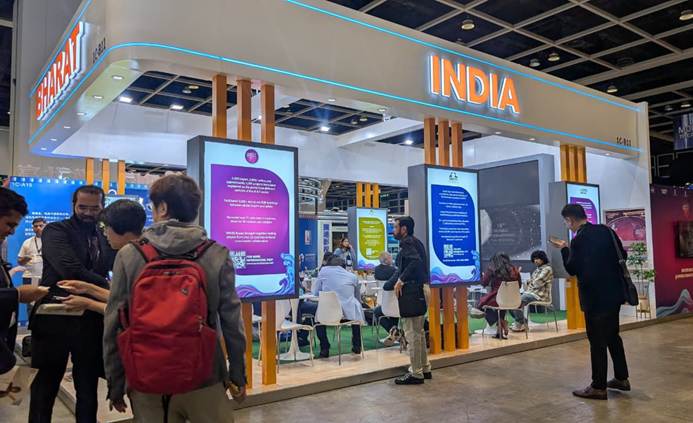
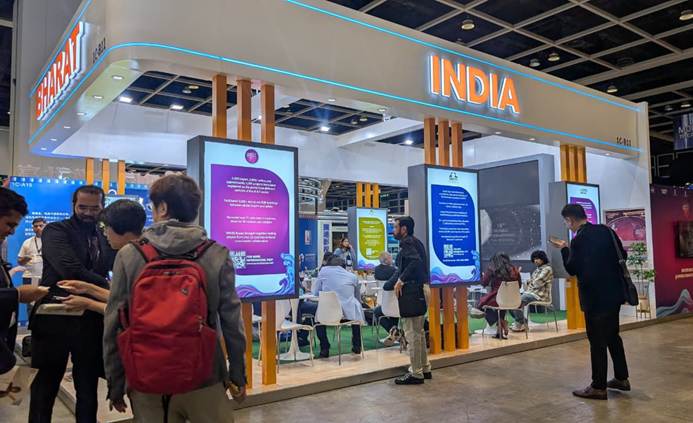
New Delhi: The Bharat Pavilion at the Hong Kong International Film & TV Market (FILMART) 2026 reinforces India’s growing presence in the global media and entertainment landscape, serving as a strategic platform for international engagement, business exchange, and industry collaboration.

The Pavilion was inaugurated by Shri Rajesh Naik, Consul General, Consulate General of India, Hong Kong & Macau SARs, who highlighted India’s commitment to strengthening global partnerships across film, television, and emerging media sectors. He also appreciated the strong participation of the Indian delegation, reflecting increasing global interest in India’s Media & Entertainment ecosystem.

The Bharat Pavilion is jointly organised by the Services Export Promotion Council (SEPC) under the Ministry of Commerce & Industry and the National Film Development Corporation (NFDC) under the aegis of the Ministry of Information & Broadcasting, with support from the Consulate General of India in Hong Kong & Macau SARs. The inauguration was attended by senior representatives from SEPC, NFDC, and the Hong Kong Trade Development Council (HKTDC).

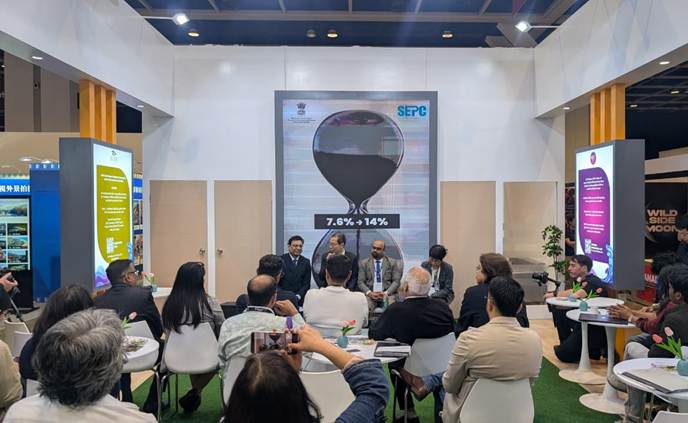
The Pavilion showcased the diversity of India’s content and production ecosystem across films, television, animation, and emerging media, while facilitating B2B meetings, co-production discussions, and networking engagements with international stakeholders. A panel discussion on the impact of films and emerging opportunities in the global content landscape was also held, bringing together industry experts to exchange insights on evolving market dynamics and cross-border collaborations.

The National Film Development Corporation (NFDC) continues to play a central role in positioning India at leading global film markets by enabling co-productions, market access, and distribution opportunities for Indian creators.

The Pavilion also promoted key upcoming NFDC-led initiatives, including the Mumbai International Film Festival (MIFF) and the WAVES Doc Bazaar, scheduled from 15 June 2026 at the NFDC campus at Pedder Road in Mumbai, focusing on documentary, animation, and short films. It further highlighted India’s flagship platforms, including the International Film Festival of India (IFFI) and the WAVES Film Bazaar, to be held in November 2026 in Goa.

The Bharat Pavilion reflects a coordinated effort by the Government of India to integrate policy, industry, and global outreach, positioning India as a key partner in the global media and entertainment ecosystem.

India must become global hub of drone manufacturing in next few years amid current geopolitical instability: Raksha Mantri at National Defence Industries Conclave 2026

0

Vinod Bhat

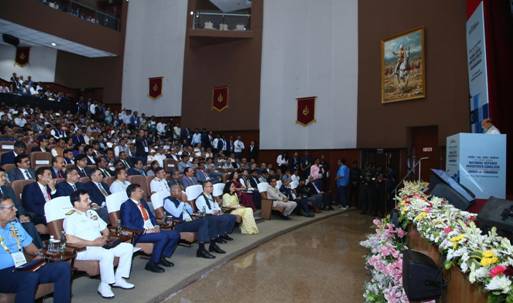
New Delhi: “India must work in a mission mode to emerge as a global hub of indigenous drone manufacturing in the next few years,” said Raksha Mantri Shri Rajnath Singh as he stressed on the urgent need to build a drone production ecosystem to ensure strategic autonomy, enhance defence preparedness and make the country Aatmanirbhar in view of the present geopolitical uncertainties. He was addressing MSMEs, start-ups, winners of Innovations for Defence Excellence (iDEX), Defence Public Sector Undertakings (DPSUs), private defence companies, innovators, policymakers, and academia during the inaugural session of the two-day National Defence Industries Conclave, organised by the Department of Defence Production on the theme ‘Advanced Manufacturing Technologies’ at Manekshaw Centre, New Delhi on March 19, 2026.
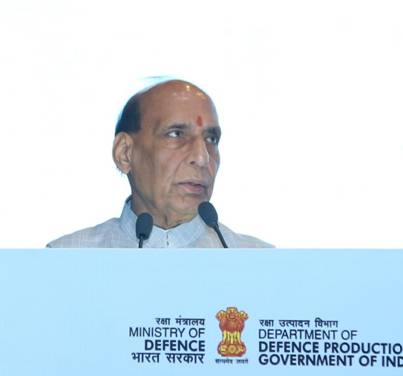
 

Raksha Mantri asserted that the ongoing conflicts, ranging from the Russia-Ukraine war to the tensions between Iran & Israel, are proof that drones and counter-drone technologies are destined to play a pivotal role in future warfare, and self-reliance in drone manufacturing is essential not merely at the product level, but at the component level as well. “From the drone’s molds to its software, engines, and batteries, everything must be manufactured in India. This is no easy task. In most countries where drones are manufactured, a significant number of critical components are currently imported from China,” he said.

Shri Rajnath Singh added that while the creation of any nation’s defence industrial ecosystem relies on the contributions of large industries, MSMEs, start-ups, and innovators, it is equally driven by a clear policy push from the government, tailored to meet the country’s specific defence requirements. While he called for active contribution of the private sector, he extended Prime Minister Shri Narendra Modi-led Government’s full support to transform India into a global hub for indigenous drone manufacturing.

As part of the inaugural session, Raksha Mantri launched the 14th edition of Defence India Start-up Challenge (DISC-14) and the 4th edition of ADITI challenges under the iDEX framework. A total of 107 problem statements, including 82 under DISC-14 & 25 under ADITI Challenges 4.0, from the Defence Forces, Indian Coast Guard and Defence Space Agency were launched to promote breakthrough innovations in various domains.
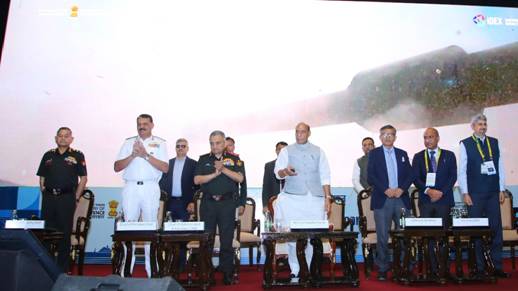
 

A new initiative featuring 101 innovation challenges from DPSUs was also launched by Raksha Mantri to encourage design-led innovation by MSMEs and start-ups. These challenges are funded by DPSUs, which will also provide mentorship, testing facilities and opportunities for potential integration into their supply chains to the winning start-ups.

Shri Rajnath Singh described iDEX and ADITI (Acing Development of Innovative Technologies with iDEX as game-changer initiatives, through which start-ups, innovators, and MSMEs are provided with the opportunity to develop novel solutions to meet the specific requirements of the Defence Forces. “As of February 2026, approximately 676 start-ups, MSMEs, and individual innovators have joined the defence innovation ecosystem since the inception of iDEX in 2018. 548 contracts have been signed; and 566 challenges launched. Of these, 58 prototypes have received clearance for procurement, valued at around Rs 3,853 crore. Furthermore, 45 procurement contracts have already been signed, worth nearly Rs 2,326 crore. These figures demonstrate that innovation is gradually materialising into tangible products & technologies, and the role played by our start-ups & MSMEs in this transformation is steadily gaining strength,” he said.

Raksha Mantri emphasised that MSMEs are today actively engaged in fields such as Artificial Intelligence, Robotics, Automation, and Advanced Manufacturing, representing a monumental and positive transformation. He termed it as imperative for the MSMEs and start-ups to embrace and integrate these technologies to ensure the optimal utilisation of their resources and capabilities. “In the contemporary landscape, innovations such as Automation, Artificial Intelligence, Robotics, and Additive Manufacturing are reshaping the global manufacturing sector. Furthermore, technologies like ‘Digital Twins’ and advanced simulation tools are unlocking a host of new possibilities. A ‘Digital Twin’ essentially involves creating a virtual model of a real-world system. Such technologies empower us to better comprehend complex systems and facilitate more informed decision-making,” he said.

Shri Rajnath Singh added that ‘integration’ is another crucial concept for the enhancement of MSME capabilities. “This integration can be achieved in two distinct ways: Horizontally and Vertically. Horizontal integration implies that MSMEs from diverse sectors connect with one another, learn from each other’s experiences, and collaborate. Vertical integration signifies that MSMEs partner with large-scale industries, engage with emerging technological domains, and cultivate expertise in fields such as Artificial Intelligence, Automation, Robotics, and Additive Manufacturing. Our MSMEs must advance towards the adoption of Industry 4.0. It is when both horizontal and vertical integration occur simultaneously that a robust innovation ecosystem is established,” he said.
 

Highlighting the numerous initiatives undertaken by the Government to strengthen the MSMEs, Raksha Mantri stated that a three-pronged approach has been introduced in this year’s Union Budget to provide MSMEs with Equity, Liquidity, and Professional support, thereby enabling them to emerge as ‘Champion MSMEs’. The objective is to accelerate the growth of MSMEs, and enhance their competitiveness in both domestic and international markets, he said.

Shri Rajnath Singh pointed out that since 2014, the Government has consistently prioritised and focused on the expansion of this “vital” sector. To simplify the registration and identification of MSMEs, digital platforms such as the Udyam Portal and the Udyam Assist Portal have been launched. The objective is to integrate small industries into the formal economy, thereby ensuring that they receive the benefits of government schemes.” he said. He added that the number of MSMEs in the country stood at approximately 4.67 crore in 2012-13, and the figure has reached nearly 08 crore, according to recent data. This growth, he said, demonstrates the continuous rise in the spirit of entrepreneurship within the country, and small industries are now playing a significant role in driving economic growth.

“We see start-ups serving as catalysts for social change through their truly unique ideas, while others attain the coveted status of a ‘Unicorn’ within an incredibly short span of time. In the near future, many more will emerge as the next generation of ‘Unicorns’. All that is required is consistent effort, perseverance, and unwavering dedication,” said Raksha Mantri, urging the MSMEs and start-ups to march forward with zeal & enthusiasm to innovate, embrace new technologies, and realise the vision of Aatmanirbhar Bharat and Viksit Bharat.

Speaking on the occasion, Secretary (Defence Production) Shri Sanjeev Kumar highlighted that the conclave aims to promote advanced manufacturing technologies, and integration of MSMEs in the production ecosystem and entire value chain starting from design, development and manufacturing. He added that the 200 Problem Statements will give an opportunity to MSMEs, industries, start-ups, young innovators in designing state-of-the-art products and enhance their skills.

The Secretary (DP) enumerated the series of steps taken by the Ministry to promote and strengthen the domestic defence industry during 2025 – Year of Reforms. “DDP implemented significant reforms including rationalisation and simplification of various approvals and permissions; strengthening of quality process and bringing testing laboratories belonging to DPSUs and DRDO. A digital database of industries working in the defence sector, named Srijan Deep, has also been created, wherein over 40,000 industries have been listed to increase the resource for R&D,” he said.

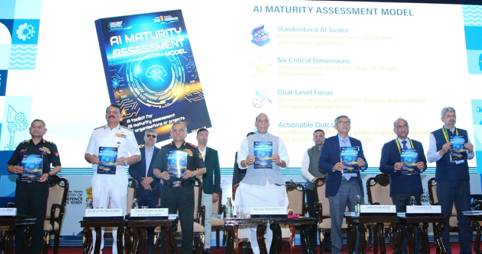
During the event, Raksha Mantri also released 05 publications of Department of Defence Production, which aim to strengthen awareness of policy initiatives, promote defence exports and facilitate ease of doing business for industry stakeholders. These are:

  • SAMARTHYA 2026 – A Journey Towards Self-Reliance in Defence Production: A document outlining the roadmap and key initiatives to strengthen self-reliance in defence manufacturing.
  • Indian Defence Industry – Going Global: A report highlighting India’s growing defence exports and opportunities for Indian companies in the global market.
  • SANKLAN: A handy guide providing answers to common queries of defence companies and MSMEs.
  • Enabling Provisions to integrate MSMEs in Defence PSU ecosystem: A booklet outlining new measures to integrate MSMEs into the DPSU ecosystem.
  • AI Maturity Assessment Model: A framework to help defence organisations assess and improve their adoption of Artificial Intelligence technologies.
 

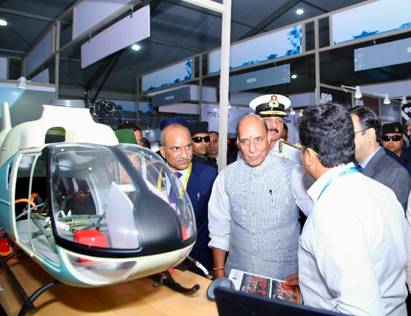
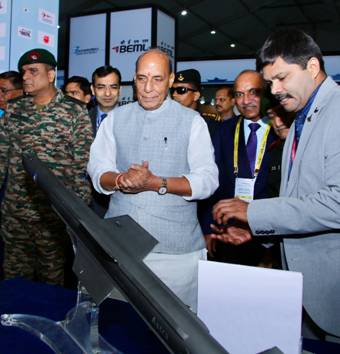
Shri Rajnath Singh also inaugurated an exhibition, wherein 20 large defence companies have set up their stalls to showcase their initiatives and programmes for co-opting MSMEs as partners, suppliers and innovators. In addition, 24 Indian and foreign companies are participating in the exhibition to display advanced manufacturing technologies such as automation, artificial intelligence, robotics, additive manufacturing and smart materials.


Chief of Defence Staff General Anil Chauhan, Chief of the Naval Staff Admiral Dinesh K Tripathi, Chief of the Army Staff General Upendra Dwivedi, Defence Secretary Shri Rajesh Kumar Singh, Secretary, Department of Defence R&D and Chairman, DRDO Dr Samir V Kamat and other senior officials were present on the occasion.
QR Code-Enabled Identity Cards and Digitally Traceable Food Packets in Indian Railways to Eliminate Unauthorised Vending and Ensure Verified Onboard Catering Services for Rail

0
Vinod Bhat

New Delhi: Unauthorized hawking and vending in the passenger area on Indian Railways is prohibited. It is an offence punishable under Section – 144 of Railways Act, 1989. Regular inspections are conducted by designated officials and RPF to check and prevent entry of unauthorised vendors in trains. Special drives are also conducted by Railways and IRCTC officials to curb unauthorised vending in railway premises from time to time.

To establish identity of the authorised vendors in trains, issuance of QR code enabled Identity Cards in the name of individual vendors/helpers/staff deployed for managing onboard catering services has been made mandatory. This QR code is linked to establish authenticity of the staff by displaying the Vendor’s name, Aadhaar No., Medical Fitness, Police verification details, etc. Other measures taken to curb unauthorised vending include QR code on food packets which displays name of kitchen and date of manufacturing etc.

The following measures have been taken to improve quality, hygiene, and food safety:

●   Supply of meals from designated Base Kitchens.

●   Commissioning of modern Base Kitchens at identified locations.

●  Installation of CCTV Cameras in Base Kitchens for better monitoring  of food preparation.

●  Shortlisting and use of popular and branded raw materials, like  cooking oil, atta, rice, pulses, masala items, paneer, dairy products etc. for food production.

●   Deployment of Food Safety Supervisors at Base Kitchens to monitor food safety and hygienic practices.

●  Deployment of on-board IRCTC supervisors on trains.

●  Regular deep cleaning and periodical pest control in Base Kitchens and Pantry Cars.

● In order to ensure compliance with Food Safety Norms, Food Safety and Standards Authority of India (FSSAI) certification from  designated Food Safety Officers of each catering unit has been made mandatory.

●   Regular food sampling as a part of the inspection and monitoring mechanism to ensure quality of food on trains.

●  Third Party Audit is done to examine hygiene and quality of food in Pantry Cars and Base Kitchens. Customer satisfaction survey is also conducted.

●  Surprise inspections by Food Safety Officers.

● Regular training is conducted by IRCTC to enhance the skills of catering staff, focusing on customer service areas i.e., communication, courteous behaviour, service standards, personal grooming, and hygiene.

Snowfall continues in Gulmarg, boosting late-season tourism prospects

0

Baramulla, March 19: Fresh snowfall of around 5 to 6 inches has accumulated in the ski resort of Gulmarg in north Kashmir since Wednesday, officials said on Thursday.

Snowfall continued intermittently in the area through Thursday, adding to the fresh accumulation and covering slopes, roads and rooftops with a new layer of snow.

The fresh spell comes at a time when winter was receding in the region, offering a late-season boost to tourism and winter sports activity in Gulmarg, one of India’s premier ski destinations.

Officials said the snowfall was part of an active western disturbance affecting the Kashmir Valley, bringing precipitation in the form of rain in plains and snow in higher reaches.

“The area has received fresh snowfall since yesterday, and it is still continuing,” a local official said, adding that weather conditions are being closely monitored.

Tourism stakeholders said the snowfall is likely to attract more visitors, especially skiers and tourists seeking snow experience late in the season.

Hoteliers and tour operators expressed optimism that the fresh snowfall would extend the tourist season in Gulmarg, which typically begins to taper off by mid-March.

Locals said the fresh snowfall has significantly improved the scenic beauty of the area, drawing tourists to the slopes and the Gulmarg Gondola.

“It feels like peak winter again. Tourists are enjoying the snowfall,” said a local resident.

The current weather pattern is expected to persist for the next couple of days, with intermittent precipitation forecast across higher reaches, according to officials. [KNT]

CIK busts cyber fraud racket in Srinagar, seven arrested

0

Srinagar, Mar 19: Counter Intelligence Kashmir (CIK) has busted a sophisticated international cyber fraud racket and arrested seven suspects from Srinagar, officials said on Thursday.

An official said CIK-CID received technical inputs about covert call centres engaged in fraudulent online activities targeting foreign and local nationals.

Specialised teams comprising technical experts and field operatives were constituted, which carried out surveillance and digital intelligence gathering across multiple locations. The teams identified a key operational hub at the Industrial Area in Rangreth here, he said.

Subsequently, coordinated raids were conducted at different locations in the city, leading to the arrest of seven suspects. A large quantity of digital and communication equipment, including 13 mobile phones, nine laptops, VoIP systems, SIM cards, networking devices and digital storage media, was seized.

The seized devices include multiple smartphones, laptops and an iPad, the official said.

He said the accused had set up an unregistered call centre using VoIP-based systems to generate international virtual numbers and mask their location through server routing and spoofing techniques.

“They posed as legitimate service providers and targeted victims through online phishing advertisements and fake websites. Once a user clicked on the advertisement, a toll-free number appeared, which was operated by the suspects,” he said.

The victims were allegedly duped into sharing banking and personal details, following which funds were transferred into various accounts, including mule accounts and cryptocurrency wallets.

No cash transactions were involved and the financial trail indicates transactions running into crores, the official said.

The seized material contains incriminating evidence indicating an organised and technologically advanced network, he added.

A case has been registered under relevant sections of law and further investigation is underway.(KNS)

SKIMS Unveils Major Patient Care Reforms, Expands Advanced Diagnostics

0

Director dedicates cutting-edge facilities, announces sweeping reforms to ease patient burden

SYED BASHARAT

SRINAGAR, Mar 18: In a major push aimed at redefining tertiary healthcare delivery in Jammu and Kashmir, Director of Sher-i-Kashmir Institute of Medical Sciences (SKIMS), Dr Mohammad Ashraf Ganaie, on Wednesday announced a series of far-reaching reforms and infrastructure expansions designed to bring what he described as a “sea change” in patient care, accessibility and hospital management.
Addressing members of the media fraternity during an Iftaar interaction at SKIMS Soura, Dr Ganaie laid out a comprehensive vision to modernize both the clinical and administrative architecture of the premier tertiary care institute. At the heart of this transformation is a proposed collaboration with Jammu and Kashmir Bank, with a Memorandum of Understanding (MoU) in its final stages. Once formalized, the agreement will enable SKIMS to deliver a range of its online healthcare services through the bank’s widespread network of Khidmat Centres, effectively decentralizing access and bringing hospital services closer to people in far-flung areas of Kashmir.
The Director underscored that accessibility and efficiency remain key pillars of the reform process. In line with this, SKIMS is preparing to roll out a single-window system through the installation of kiosks near all Out Patient Departments (OPDs), a move expected to streamline patient registration, reduce waiting times and eliminate procedural bottlenecks that often burden patients and attendants alike.
In a significant boost to the institute’s diagnostic and treatment capabilities, Dr Ganaie revealed that SKIMS is set to procure an additional cyclotron facility at an estimated cost exceeding Rs 85 crore. This high-end equipment is crucial for advanced imaging and cancer care, and its addition is expected to strengthen the institute’s position as a leading centre for oncology services in the region.
The expansion blueprint also includes a major infrastructural overhaul of emergency services. Dr Ganaie announced that a seven-storey, high-capacity emergency services building will soon come up adjacent to the existing emergency department. The project envisages converting the current parking space into a dedicated ward utility area, significantly enhancing the hospital’s ability to manage critical cases and patient inflow.
While detailing these ambitious plans, the Director also raised concerns over operational challenges that continue to strain the institution. He appealed to the public to avoid bringing large numbers of attendants with patients, noting that overcrowding compromises the quality of care and hampers the functioning of hospital services. Equally important, he emphasized the urgent need to rationalize patient referrals from peripheral healthcare institutions across Kashmir. According to him, SKIMS, being a tertiary care centre, is increasingly burdened with cases that could be effectively managed at district and sub-district hospitals, thereby diverting critical resources away from patients requiring specialized care.
Dr Ganaie stressed that strengthening peripheral healthcare systems and ensuring judicious referral practices are essential for maintaining the efficiency and effectiveness of tertiary institutions like SKIMS.
The announcements coincided with the formal commissioning of a wide array of advanced diagnostic facilities and infrastructure upgrades at SKIMS, marking a significant milestone in the institute’s ongoing efforts to deliver precision-driven and patient-centric healthcare.
On this occasion, the Director SKIMS, commissioned a series of high-end medical equipment and advanced diagnostic facilities aimed at enhancing precision diagnostics, improving clinical decision-making and enabling timely and optimal treatment of patients.
A key highlight of the initiative is the installation of high-resolution ultrasound (USG) machines within individual wards, a step that effectively brings diagnostic services to the patient’s bedside. This advancement allows clinicians to carry out immediate evaluations and make quicker clinical decisions, thereby significantly improving patient management and treatment outcomes.
In a major leap for cancer care, the Department of Pathology has operationalized an advanced Immunohistochemistry (IHC) panel comprising 174 markers. This sophisticated diagnostic tool will enable more accurate tumour classification and facilitate personalized treatment strategies, marking a substantial enhancement in the institute’s precision oncology capabilities.
Further strengthening diagnostic services, the Department of Microbiology has been equipped with state-of-the-art automated systems for mycobacterial detection. These systems are designed to ensure rapid and precise identification of infectious diseases as well as antimicrobial resistance patterns, thereby improving both diagnosis and patient care outcomes.
The institute has also upgraded its radiology services with the installation of digital X-ray systems that promise faster imaging and improved diagnostic accuracy. In addition, the emergency operation theatre has undergone modernization with the incorporation of advanced surgical equipment, aimed at strengthening emergency surgical care.
Patient handling and comfort have also been prioritized through the introduction of new bed-cum-trolleys in the emergency department, enhancing mobility and efficiency during critical care situations. Complementing these clinical upgrades, SKIMS has installed state-of-the-art hospital furniture to improve overall patient comfort and infrastructure quality.
To streamline communication and administrative processes, the institute has put in place an advanced public address system for better coordination across departments, along with modern photocopiers and document management systems to enhance record-keeping and administrative efficiency.
Speaking on the occasion, Dr Ganaie stated that the commissioning of these advanced facilities reflects SKIMS’ continued commitment to upgrading healthcare infrastructure and delivering cutting-edge medical services to the people of Jammu and Kashmir and beyond.
The latest initiatives, both in terms of infrastructure expansion and technological upgradation, underscore SKIMS’ evolving role as a premier healthcare institution, striving to balance growing patient demands with the need for quality, efficiency and innovation in medical care.

National Highways Fee Rules, 2026 Amended to Strengthen Toll Compliance and Digital Enforcement

0

Vinod Bhat

New Delhi: Introducing a comprehensive and technology-driven framework to strengthen toll compliance on National Highways, the Government of India has notified the National Highways Fee (Determination of Rates and Collection) (Second Amendment) Rules, 2026.

The amendment provides a structured recovery mechanism in cases of unpaid user fee and has been introduced to strengthen digital enforcement of toll collection, particularly in the context of evolving barrier-free tolling systems, and to ensure efficient and transparent realisation of user fee on National Highways. The rules have come into effect from 17th March 2026.

The amendment also modifies the rules to introduce the definition of “unpaid user fee” as the toll applicable to a vehicle whose passage has been recorded by Electronic Toll Collection (ETC) infrastructure but where the applicable user fee has not been received.

The structured recovery mechanism for unpaid user fee, notified under Rule 14, includes a technology-driven Electronic Notice (e-notice) system, wherein electronic notices will be issued to registered vehicle owners specifying vehicle details, date and location of passage, and the amount payable. These notices may be served through SMS, email, mobile-based applications, or other electronic means, and will also be made available on a designated online portal.

The rules further provide for integration of the National Electronic Toll Collection system with the VAHAN database to enable seamless identification of vehicles and enforcement of unpaid dues.

As per the amendment, the unpaid user fee payable in response to an e-notice shall be twice the applicable toll amount. However, to encourage timely compliance, if the amount is paid within 72 hours of issuance of the e-notice, only the original user fee will be payable without any additional charge.

A provision has also been made for grievance redressal. Any aggrieved vehicle owner or driver may submit a representation through the designated portal within 72 hours of issuance of the e-notice. Such representation is required to be examined and disposed of within five days, failing which the claim for unpaid user fee shall lapse.

In cases where the unpaid user fee remains unpaid beyond 15 days and no representation is pending, the amount will be recorded in the VAHAN system, and appropriate restrictions may be imposed on vehicle-related services until the dues are cleared.

The amendment will further enhance transparency in toll operations, boost investor confidence, and provide legal and financial safeguards. This amendment marks an important step towards strengthening compliance mechanisms and supporting the transition to a modern, efficient, and barrier-free tolling ecosystem in the country.

Indian Railways Provides Safety Fencing Along Railway Tracks Across Zones for 16,398 km to Prevent Trespassing and Ensure Safe Train Operations

0
Vinod Bhat

New Delhi: Safety of train operations is accorded top priority on Indian Railways (IR). As one of the important safety measures, provision of safety fencing has been taken up on routes where the permitted speed of train operations exceeds 110 kmph, as well as at other vulnerable locations, to prevent trespassing and ensure safe train operation. Pedestrian subways are also being provided with safety fencing in order to facilitate crossing of railway alignment by cattle, pedestrians and smaller vehicles.

A work has been sanctioned costing ₹209.38 Cr for providing safety fencing in entire Lonavala-Pune-Daund route. Work includes construction of approximately 290 Km fencing with pedestrian subways. Tender has been awarded for entire length of the section and about 150 Km of fencing has been completed till date.

Cabinet approves scheme on ‘Small Hydro Power (SHP) Development Scheme for the period FY 2026-27 to FY 2030-31’

0
Vinod Bhat

New Delhi: The Union Cabinet chaired by the Prime Minister Shri Narendra Modi has approved the ‘Small Hydro Power (SHP) Development Scheme for the period FY 2026-27 to FY 2030-31’ with an outlay of Rs.2584.60 crore for installation of Small Hydro Power (SHP) Projects of an approximate capacity of 1500 MW.

The scheme will support small hydro projects (between 1-25 MW capacity) to come up in different states and will especially benefit hilly and North Eastern states with high potential for such projects.  In North Eastern States and in districts with international border, central financial assistance to the tune of Rs.3.6 crore per MW or 30%of the project cost, whichever is lower with an upper limit of Rs.30 crore per project will be available.  In other states Rs.2.4 crore per MW or 20% of project cost, whichever is lower with a cap of Rs.20 crore per project would be available.  This will help in tapping the small hydro potential in remote and difficult to reach locations.  An amount of Rs. 2,532 crore has been earmarked for such projects.  This is likely to bring in Rs. 15,000 crore of investment in the small hydro sector giving a boost to the clean energy initiative, investment in remote and rural areas and creating significant employment opportunities.  The investment will also leverage 100% of the plant and machinery from indigenous sources fulfilling the objective of Atmanirbhar Bharat.

The scheme will also incentivise the states to prepare the detailed project report for about 200 projects to create a pipeline of small hydro projects in future.  An amount of Rs.30 crore has been kept to support state and central government agencies to prepare such DPR.

The scheme will support 51 lakh person days of employment during the project construction and will also enable employment in maintenance and operation of these SHPs which will come up in largely rural and remote locations. SHP projects being decentralized in nature, the requirement of long transmission line is minimal, which also reduces the transmission losses.

Launching of this Scheme will rejuvenate the Small Hydro Power sector and will help in exploiting the available potential at a much faster pace. SHP projects are environmentally sustainable, as they avoid large-scale land acquisition, deforestation, and displacement of communities.  It will also promote socio-economic development of remote areas by boosting local investment, apart from creating long-term employment with project lifespans typically ranging from 40 to over 60 years.