spot_imgspot_img
spot_img
Home Blog Page 80

CEO Roundtable on Power Distribution under the draft National Electricity Policy

0
Vinod Bhat

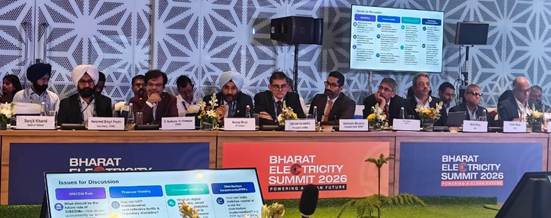
New Delhi: A CEO Roundtable on Power Distribution was convened under the draft National Electricity Policy, 2026 (NEP 2026) at the Bharat Electricity Summit 2026, focusing on reforms required to strengthen the distribution segment and ensure financial sustainability of DISCOMs in line with India’s long-term development goals.

IMAGE PR.jpeg

CEOs and senior leadership of leading power sector organizations participated in the meeting chaired by Shri Pankaj Agarwal, Secretary, Ministry of Power. The participants welcomed the draft National Electricity Policy, 2026, and appreciated its comprehensive and forward-looking approach to addressing emerging challenges in the sector.They noted that the Policy provides a clear strategic direction for strengthening the power sector in the context of India’s transition towards sustained high economic growth. The industry leaders also emphasized that the proposed measures, particularly in the distribution segment, would play a critical role in enhancing financial viability, improving service quality, and enabling the integration of new and evolving technologies.

Deliberations highlighted that electricity supply must keep pace with the aspirations of Viksit Bharat @ 2047, which envisages a USD 30 trillion economy and energy independence. The draft NEP 2026 targets increasing per capita electricity consumption to 2,000 kWh by 2030 and over 4,000 kWh by 2047. These goals align with India’s climate commitments to reduce emissions intensity by 45% from 2005 levels by 2030 and achieve net-zero emissions by 2070, necessitating a decisive shift towards low-carbon energy sources.

The Policy outlines a comprehensive framework to address sectoral challenges while promoting competition, enhancing grid resilience for integrating higher shares of variable renewable energy, and enabling consumer-centric service delivery through demand-side interventions.

A key focus of NEP 2026 is the financial sustainability of the distribution sector. Strategies include optimization of power procurement through advance planning, reduction of Aggregate Technical & Commercial (AT&C) losses, and strengthening of corporate governance mechanisms. The Policy envisages achieving single-digit AT&C losses through phased rollout of smart meters with prepayment functionality, beginning with government, commercial, and industrial consumers, alongside regular energy audits and improved accounting practices.

To enhance efficiency and accountability, the draft Policy proposes the introduction of shared distribution networks, eliminating duplication of infrastructure. It further emphasizes GIS-based asset mapping, consumer indexing, and system automation to improve operational efficiency and service delivery.

Recognizing the growing role of distributed energy resources, the Policy recommends the establishment of a Distribution System Operator (DSO) to facilitate integration of distributed renewables, energy storage systems, and Vehicle-to-Grid (V2G) technologies. This would enable optimal utilization of resources through local energy markets, improve consumer participation, and ensure secure grid operations.

The draft Policy also prioritizes strengthening quality and reliability of supply through measures such as optimal network redundancy at specified voltage levels and stricter enforcement of service standards. redundancy at the distribution transformer level is proposed for all cities with a population exceeding 10 lakh by 2032. Additionally, underground cabling in congested urban areas is recommended. Ensuring universal access to electricity, with particular emphasis on border areas, remains a key objective.

The Roundtable underscored the urgency of sustained reforms in the distribution sector to ensure financial viability of DISCOMs and to support India’s broader economic and energy transition goals under the vision of Viksit Bharat @ 2047

Adequate security, traffic plans in place for Eid: IGP Kashmir

0

Greets people on Eid, Navroz, Navratri, Ram Navmi

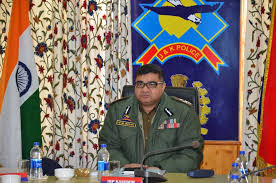
Srinagar, Mar 19: Inspector General of Police (IGP) Kashmir V K Birdi said that security and traffic arrangements have been put in place across Jammu and Kashmir during Ramzan and ahead of upcoming festivals.

He said police have made arrangements in markets to manage traffic and ensure movement of people. He added that all districts in the Kashmir Valley have been directed to maintain security and regulate markets in view of Eid and the day of Arafah.

The IGP said security arrangements will be in place at Eid prayer venues, while traffic plans have also been prepared to avoid congestion. He said police stations have been instructed to assist the public to ensure movement.

He further said that several festivals, including Eid, Arafah, Navroz, Navratri and Ram Navmi, are approaching, and measures have been taken to ensure celebrations.

The IGP extended greetings to the people on Eid and also conveyed his wishes for Navroz, Navratri and Ram Navmi.(KNS)

PM emphasizes dialogue and diplomacy for de-escalation and restoration of peace and stability

0
Vinod Bhat

New Delhi: Today’s inter-ministerial briefing on developments in West Asia was held today at the National Media Centre. Such briefings are being conducted regularly to keep the media updated on the evolving situation, with senior officials from the Ministries of Petroleum and Natural Gas, Ports, Shipping and Waterways, and External Affairs, sharing updates on fuel supply, maritime operations, and assistance to Indian nationals in the region. During today’s briefing, the latest situation and ongoing measures across these areas were shared with the media.

Energy Supply and Fuel Availability

Fuel supply and steps to ensure continued availability of petroleum products and LPG, in view of the Strait of Hormuz closure, were shared during the briefing by the Ministry of Petroleum and Natural Gas. The Ministry stated:

Crude and Refineries

· All refineries are operating at high capacity with adequate crude inventories, and sufficient stocks of petrol and diesel are being maintained.

· Domestic LPG production from refineries has been increased by about 40 percent compared to pre-crisis production levels.

Retail Outlets

· No cases of fuel dry-outs have been reported at retail outlets by Oil Marketing Companies, and supplies of petrol and diesel continue to be maintained regularly.

· Citizens are advised not to resort to panic buying as adequate stocks are available.

Natural Gas

· Priority sectors continue to receive protected supplies, including 100 percent supply to domestic PNG and CNG transport, while supplies to industrial and commercial consumers are being regulated at around 80 percent.

· City Gas Distribution (CGD) entities have been advised to prioritize PNG connections for commercial establishments such as hotels, restaurants and canteens.

· The Secretary, Ministries of Petroleum and Natural Gas (MoP&NG) chaired a review meeting with CGD entities to expedite PNG expansion and emphasized transition from LPG to PNG.

· CGD companies including IGL, MGL, GAIL Gas and BPCL are offering incentives.

· CGD entities have been directed by PNGRB to shorten the timeline between the submission of applications and the commencement of gas supply to consumer households and pursue mass awareness initiatives.

· The Government of India vide letter date 16.03.2026 has requested States and UTs have been requested to expedite approvals for CGD expansion.

· The Government of India vide letter dated 18.03.2026 has offered all States/UTs additional 10% allocation of commercial LPG to States provided they can help in long term transition from LPG to PNG.

· It is now on the States/UTs to take this reform forward and ensure expansion of CGD network and expedite issuance of connections to domestic and commercial/industrial PNG consumers in their areas.

· Ministry has received application from Govt. of Rajasthan vide letter 19.03.2026 has stated that the state Govt has taken significant steps w.r.t reforms for promoting CGD and transition to PNG and the proposal is under examination.

  • Over 13,700 new PNG connections have been issued in recent days and more than 7,300 consumers have shifted from LPG to PNG, helping reduce pressure on LPG demand.

LPG

· Supply of LPG is still a concern in view of prevailing geopolitical situation and is being monitored.

· No dry-outs have been reported at distributorships.

· Panic bookings have declined significantly from 89 lakh on 13 March to around 55 lakh yesterday, while domestic LPG deliveries continue as normal.

· 18 States and UTs have issued orders for allocation of non-domestic LPG, with supply being made available across all States and UTs.

· Educational institutions and hospitals are being prioritized, receiving around 50% of commercial LPG allocation.

· Around 11,360 MT of commercial LPG has been uplifted in the past week.

Kerosene

· An additional allocation of 48,000 KL of kerosene has been provided to States and UTs, which have been requested to identify distribution points.

  • 15 States and UTs have issued SKO allocation orders, while Himachal Pradesh and Ladakh have indicated no requirement and as on date, 17 States/UTs are yet to issue SKO allocation orders.

Meetings conducted by State Governments

· State Governments and UTs are monitoring supply under the Essential Commodities Act and LPG Control Order and have been advised to maintain vigilance, conduct inspections and ensure smooth LPG movement.

· Govt. of States/UTs have to play a primary role in monitoring and regulating supply situation of essential commodities including Petrol, Diesel and LPG.

· Govt. of India vide Letter dated 13.03.2026 has requested the Chief Secretaries of all States/UTs to direct DMs/Collectors and other enforcement agencies to conduct coordinated inspections and surprise checks at Petrol Pumps, LPG distributorships, storage points etc. to curb any malpractices.

· Govt. of India vide letter dated 18.03.2026 has requested all States/UTs –

Ø To maintain strict vigilance so as to curb hoarding, black marketing, diversion of domestic LPG and other malpractices.

Ø To take stringent action against violators under the provisions of Essential Commodities Act, 1955, Petroleum Act, 1934, Petroleum Rules 2002, Motor Spirit and HSD order 2005 and other applicable laws.

Ø To take adequate administrative and logistical measures incl. smooth and uninterrupted movement of LPG tankers and cylinders etc.

Ø To evolve appropriate distribution methodologies for commercial LPG, keeping in view local priorities and requirements.

Ø To issue public advisories to prevent panic buying, encourage judicious use of LPG and dissemination of accurate information.

· All District Collectors and FC&S officials are requested to conduct regular enforcement actions on daily basis.

· Further, all States/UTs are requested to conduct daily press briefings to help disseminate the correct information.

· All States/UTs are requested to establish helpline numbers and ensure their wide publicity at regular intervals.

· 32 States/UTs have setup control rooms. Many of the States/UTs are doing daily press briefs also.

· 31 States/UTs have setup District Level Monitoring Committee.

· All those States/UTs who have not setup Control rooms and District Monitoring committees are requested to do so on urgent basis.

Enforcement action

· Enforcement actions continue across States to curb hoarding and black marketing, with over 4,500 raids conducted and around 4,000 cylinders seized in the past 24 hours.

· Significant actions have been reported in States including Uttar Pradesh, Tamil Nadu, Keralam, Jammu & Kashmir, Punjab, Madhya Pradesh, Himachal Pradesh, Rajasthan and Delhi.

· PSU Oil Marketing Companies have conducted over 1,800 surprise inspections at retail outlets and LPG distributorships to ensure smooth supply and prevent irregularities.

Other Government Measures

· The Government continues to prioritize uninterrupted LPG supply and PNG expansion, particularly for households and priority sectors such as hospitals and educational institutions.

· Measures include enhanced refinery production, revised booking intervals of 25 days in urban areas and up to 45 days in rural areas, and prioritized allocation.

· Alternate fuels such as kerosene and coal have been made available, with support from the Ministry of Coal for increased supply to States.

· States have been advised to facilitate PNG connections, supported by incentives linked to additional LPG allocation.

Public Advisory

· Citizens are advised to rely on official sources and avoid rumours.

· Consumers are requested to avoid panic bookings, use digital booking platforms and avoid visiting LPG distributors, as home delivery continues.

· Citizens are encouraged to use alternate fuels such as PNG and electric or induction cooktops and to conserve energy.

Maritime Safety and Shipping Operations

Information on the prevailing maritime situation in the Persian Gulf and the steps being taken to ensure the safety of Indian vessels and crew was shared during the briefing by the Ministry of Ports, Shipping and Waterways. The Ministry noted that:

· All Indian seafarers in the region are safe and no shipping incident involving Indian-flagged vessels has been reported in the past 24 hours.

· At present, 22 Indian-flagged vessels with 611 Indian seafarers remain in the western Persian Gulf region, with DG Shipping continuing close monitoring in coordination with ship owners, RPSL agencies and Indian Missions.

· The DG Shipping Control Room continues to operate 24×7 and has handled 3,550 calls and 6,748 emails since activation, including 125 calls and 209 emails in the past 24 hours.

· DG Shipping has facilitated the safe repatriation of more than 513 Indian seafarers so far, including 25 in the past 24 hours, from airports and regional locations.

· India’s maritime sector continues to operate smoothly with no congestion reported across ports, as confirmed by State Maritime Boards including Gujarat, Maharashtra, Goa, Kerala, Andhra Pradesh and Puducherry.

· Ports are closely monitoring vessel movements and cargo operations, with additional capacity created at key ports such as Jawaharlal Nehru Port Authority (JNPA), V.O. Chidambaranar Port Authority (VOCPA), Visakhapatnam Port, Mundra and Deendayal Port Authority to ensure smooth handling and ease congestion.

· At New Mangalore Port Authority (NMPA), measures have been undertaken to support stakeholders, including waiver of cargo-related charges for crude and LPG vessels from 14 March to 31 March 2026, waiver of ground rent and reefer charges for stranded export containers, and creation of additional storage capacity of about 3,500 sq. m. covered shed and 76,000 sq. m. open yard.

· The Ministry of Ports, Shipping and Waterways continues to monitor shipping movements, port operations, safety of seafarers and continuity of maritime trade in view of the evolving situation in West Asia.

Safety of Indian Nationals in the Region

The Ministry of External Affairs shared updates on recent developments in the region, including ongoing assistance and outreach through Indian Missions. The Ministry informed that:

· The Prime Minister spoke with leaders of Oman, Malaysia, France, Jordan and Qatar, conveying India’s position on the ongoing situation in West Asia and emphasizing dialogue and diplomacy for de-escalation and restoration of peace and stability.

· The Prime Minister strongly condemned attacks on energy infrastructure and reiterated the importance of ensuring safe and free navigation through the Strait of Hormuz.

· Oman: The Prime Minister spoke with Sultan Haitham bin Tariq, conveyed Eid greetings and reiterated India’s condemnation of violations of Oman’s sovereignty. He appreciated Oman’s role in facilitating safe return of people, including Indian nationals.

· Malaysia: The Prime Minister spoke with Prime Minister Anwar Ibrahim and exchanged views on the evolving situation in West Asia, conveying greetings on the occasion of Hari Raya Aidilfitri.

· France: The Prime Minister spoke with President Emmanuel Macron, and both leaders agreed to continue close coordination to promote peace and stability in the region and beyond.

· Jordan: The Prime Minister spoke with His Majesty King Abdullah II, conveyed Eid greetings and appreciated Jordan’s efforts in facilitating the safe return of Indians. Both sides condemned attacks on energy infrastructure and supported unhindered transit of goods and energy.

· Qatar: The Prime Minister spoke with H.H. Sheikh Tamim bin Hamad Al Thani, Amir of Qatar, conveyed Eid greetings and expressed solidarity with Qatar. Both sides condemned attacks on energy infrastructure and reaffirmed support for safe navigation through the Strait of Hormuz.

· The Ministry of External Affairs continues to closely monitor developments in West Asia and the Gulf region, with the safety, security and welfare of the Indian community remaining the highest priority.

· The Indian Embassy in Iran has facilitated the movement of 913 Indian nationals from Iran to neighbouring countries, including 793 to Armenia and 120 to Azerbaijan.

· All 284 Indian pilgrims from Iran have returned to India safely.

· The MEA control room continues to assist Indian nationals, receiving 10 calls and 6 emails yesterday, mostly related to Indian nationals stranded on merchant vessels.

· A dedicated MEA control room remains operational, with coordination ongoing with State Governments and Union Territories.

· Indian Missions and Posts across the region are functioning round the clock, maintaining contact with local authorities and issuing regular advisories. Assistance continues for seafarers, students, stranded Indian nationals and short-term visitors, including visa, consular and logistical support.

· Since 28 February, around 3,00,000 passengers have returned from the region to India, with overall flight operations showing steady improvement.

· In the UAE, limited non-scheduled flights continue, with around 90 flights expected today to India.

· Flights continue to operate from Saudi Arabia and Oman to India.

· Qatar airspace remains partially open, with Qatar Airways expected to operate 10 non-scheduled flights to India today.

· Kuwait airspace remains closed, with Jazeera Airways commencing special flights from Al Qaisumah Airport in Saudi Arabia, including the first flight to Kochi today.

· Bahrain airspace remains closed, with Gulf Air operating special flights from Dammam in Saudi Arabia to India.

· Transit of Indian nationals continues to be facilitated via Saudi Arabia for those in Kuwait, Bahrain and Iraq.

· Indian nationals in Iran continue to be assisted for travel to India via Armenia and Azerbaijan.

· Indian nationals in Israel are being facilitated to travel to India via Jordan.

· An Indian national tragically lost his life in an attack in Riyadh on 18 March. The Government expresses condolences and the Mission is coordinating with local authorities for early repatriation of mortal remains.

· In total, six Indian nationals have lost their lives and one remains missing in recent incidents. Mortal remains of two Indian nationals have already been repatriated to India.

· Indian Missions in Saudi Arabia, Oman, Iraq and the UAE remain in contact with authorities for the missing individual and for repatriation of remaining mortal remains.

· 15 Indian crew members of MT Safesea Vishnu who were rescued have departed Iraq and are expected to return to India via Saudi Arabia.

· 24 rescued Indian seafarers, including 16 from MV MKD Vyom and 8 from MT Skylight, have already returned to India from Oman.
Power Minister Chairs Ministerial Meet with States and UTs at the Bharat Electricity Summit 2026

0
Vinod Bhat

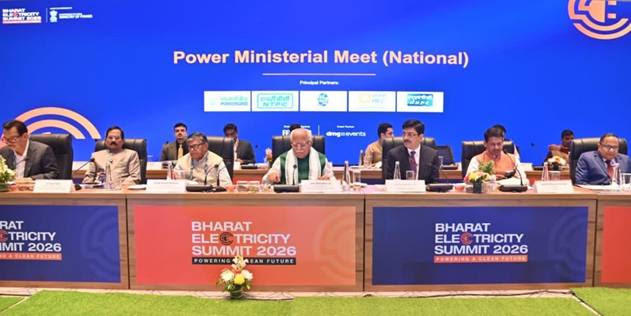
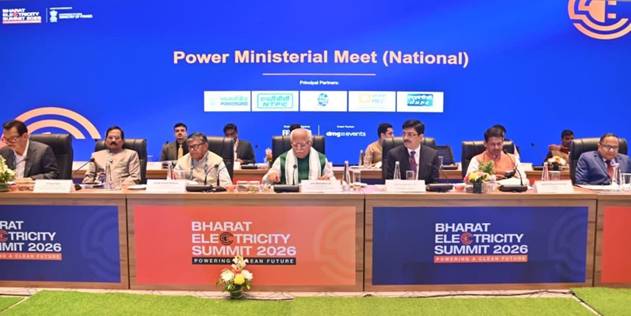
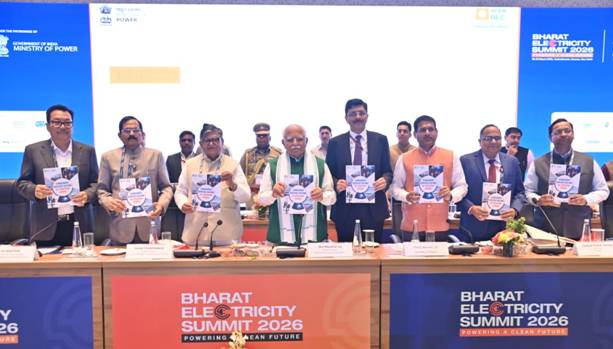
New Delhi: A National Power Ministerial Meet was convened on the second day (20.3.2026) of the Bharat Electricity Summit 2026 under the chairmanship of Union Minister for Power, Shri Manohar Lal.

The meeting was co-chaired by Shri Shripad Naik Minister of State for Power and New & Renewable Energy, and attended by Shri Gulab Chand Kataria Administrator of Chandigarh and Punjab, Shri Pankaj Agarwal, Secretary Power, Shri Santosh Kumar Sarangi Secretary (MNRE), and Energy Ministers and senior officials from various States/UTs.

Addressing the gathering, Shri Manohar Lal stated that the BES 2026 will play a crucial role in achieving the vision of Viksit Bharat 2047. Emphasizing that power is fundamental to economic growth and infrastructure, he highlighted India’s achievements of over 520 GW installed capacity, improved DISCOM performance, large-scale smart meter deployment, and reduced power shortages.

He called for coordinated efforts between Centre and States to ensure affordable and efficient power generation, transmission, and distribution. Stressing the importance of energy security amid global uncertainties, he underlined the need to enhance per capita energy consumption and accelerate the transition towards renewable energy. He also noted the potential of nuclear energy as a clean energy source and termed the SHANTI Act a significant step forward.

Shri Manohar Lal assured States of full support from the Centre in implementing necessary reforms, including legal and administrative measures.

Shri Shripad Naik highlighted the role of technology and Artificial Intelligence in transforming the power sector, citing smart metering as a key example. He noted that half of India’s installed capacity is – non-fossil fuel sources and emphasized the importance of the new draft National Electricity Policy that outlines strategies to achieve the vision of  Viksit Bharat @ 2047.

The meeting focused on ensuring energy security and enhancing power generation, particularly through on-fossil energy sources. Secretaries of Power and MNRE also stressed the need for collective and coordinated action to meet the country’s growing energy demands.

KEY REPORTS RELEASED

During this meeting two reports for FY 2024-25 were released by Ministry of Power – Consumer Service Ratings of DISCOMS (CSRD) and the Distributing Utilities Ranking (DUR) Report for FY 2024-25.

Consumer Service Ratings of DISCOMS (CSRD) Report

The CSRD evaluates DISCOMs’ performance in consumer service by setting baseline standards and expectations, including prompt and accurate metering and billing, timely and effective grievance redressal and fair, transparent tariff-setting .The CSRD report aims to craft a comprehensive strategy to elevate consumer satisfaction and foster cross-disciplinary learning. It examines a range of consumer centric services, using the Electricity Rules’ service standards for assessing DISCOMs across key areas, and it monitors and evaluates their compliance with

and implementation of these rules.

Based on the submitted data and resulting scores, DISCOMs receive one of seven grades: A+, A,B+, B, C+, C, or D. This tiered grading is intended to stimulate healthy competition and encourage continuous improvements in service quality. Of the 66 DISCOMs evaluated – 6 DISCOMs were rated as A+, 21 were rated A and 27 were rated B+.
DISCOMs’ performance has strengthened, reflected by a higher proportion receiving top grades and more consumers benefiting from improved services, signaling a positive national trajectory. Simultaneously, fewer DISCOMs and consumers fall into the lower bands (C and D), indicating progress at the bottom end of the scale


Distributing Utilities Ranking (DUR) Report

The DUR offers a comprehensive and objective assessment of the performance of power distribution utilities across the country. Building on insights from previous editions, the report goes beyond traditional performance indicators to adopt a multi-dimensional evaluation framework encompassing institutional capability, financial sustainability, operational efficiency, and service delivery outcomes. The DUR initiative aims to contribute to the creation of a financially sustainable, operationally efficient, and consumer-centric power distribution ecosystem, supporting India’s long-term energy transition and development goals. This year total 66 utilities have participated in DUR assessment exercise.

J&K to Host Mega Travel Mart in April to Boost Tourism

0

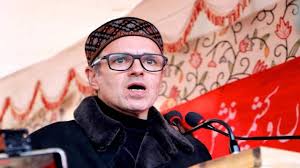
Srinagar, Mar 20: In a major push to showcase the region’s tourism potential, the Jammu and Kashmir Tourism Department is set to organize the Kashmir Travel Mart (KTM) next month.

Chief Minister Omar Abdullah announced on Friday that the two-day event will be held on April 14 and 15. The mart aims to bring together approximately 250 stakeholders from over 20 states across the country.

“The event will highlight the region’s immense tourism potential through craft safaris, curated destination tours, and B2B engagements, offering stakeholders a rich and immersive experience of Kashmir’s culture, heritage, and warm hospitality,” office of the chief minister Omar Abdullah posted on X.

Describing it as a significant initiative, the office of Chief Minister said the travel mart is aimed at strengthening tourism linkages and further positioning Kashmir as a premier global travel destination. (KNS)

Century of Faith and Service, St. Joseph’s Church Baramulla Celebrates 100 Glorious Years

0


By Amanjeet Singh ​

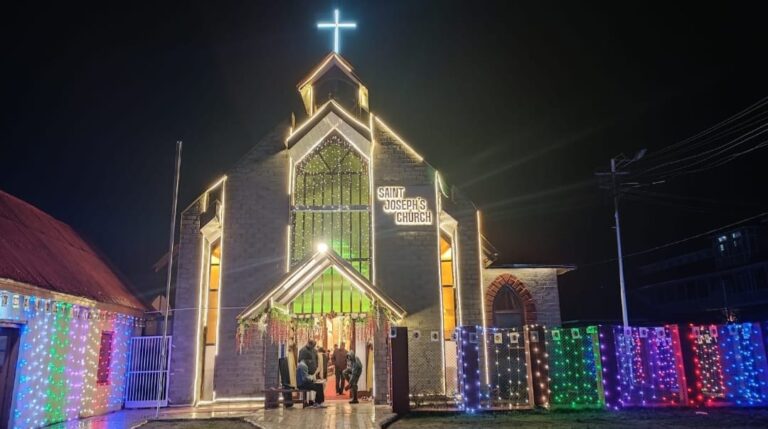
​In a profound moment of reflection and celebration, St. Joseph’s Church, Baramulla marked its centenary today, commemorating 100 remarkable years of faith, compassion, and dedicated missionary service. The grand event brought together an esteemed gathering of senior cabinet minister, civil and Military leaders, religious dignitaries, and the local community, all united in honoring a legacy that has shaped the region for a century.
​From Humble Beginnings to a Regional Pillar
​The celebration took place at the St. Joseph’s Campus, honoring the visionary missionaries who established the church exactly one hundred years ago. What began as a modest initiative to serve a small minority community has evolved into a cornerstone of society. Today, the institution boasts a prominent educational wing with over 70 classrooms educating more than 4,000 students, complemented by a hospital that continues to provide vital care and healing to thousands in the valley.

​A Solemn Eucharistic Celebration
​The centenary began at 10:30 a.m. with a Solemn Eucharistic Celebration, marking a century of spiritual legacy. The service was presided over by Archbishop Anil Couto, Archbishop of Delhi, who led the faithful in a moving thanksgiving for the Church’s enduring mission.

​The Archbishop was accompanied by a distinguished circle of clergy, including,
​Bishop Ivan Albert Perreira (BishopofJammu-Srinagar)
​Bishop Jose (Auxiliary Bishop of Faridabad)
​Bishop Ignatius (Emeritus Bishop of Simla-Chandigarh)
​Bishop Deepak (Auxiliary Bishop of Delhi)
​Unity, Devotion, and Cultural Tribute
​The atmosphere was marked by deep devotion as clergy and the community traveled from across the State and another parts of country to participate. Following the religious service, the program opened with a reverent rendition of the National Anthem and a warm welcome address by Rev. Fr. Soosai Rajan, Parish Priest and Vice Principal of St Joseph School Baramulla.
​The highlights of the afternoon included a captivating dance-drama performed by students. The performance vividly depicted the missionaries’ inspiring journey from their humble, challenging beginnings to a century of unwavering humanitarian commitment.

​Distinguished Presence and Inspiring Words
​The event was graced by high-ranking officials who spoke on the impact of the institution, ​Chief Guest, Javid Ahmad Dar, Cabinet Minister for Agriculture Production, Rural Development & Panchayati Raj, Cooperative, and Election Departments.
​Guest of Honour, Major General Manoj Joshi, General Officer Commanding, 19 Infantry Division, Chinar Corps, Indian Army.

​The gathering also saw attendance from key local leaders, including Mr. Javed Hassan Beigh (MLA Baramulla), Mr. Irfan Hafiz Lone (MLA Wagoora-Kreeri), and senior security officials including Mr. Maqsood-ul-Zaman (DIG Police North Kashmir) and Mr. Gurvinderpal Singh (SSP Baramulla), alongside Deputy Commissioner Mr. Syed Fakhrudin Hamid.
​Looking Ahead with Hope
​The celebration concluded with a Vote of Thanks proposed by Rt. Rev. Bishop Ivan Albert Perreira.

The event ended on a heartfelt note of optimism, affirming that the core values of faith, compassion, and excellence instilled over the last 100 years will continue to guide and inspire future generations of Baramulla.

Build strong, lasting connection with timeless traditions: LG Sinha to youth

0

Says generation next will reshape India’s legacy, propel it towards developed, sustainable tomorrow

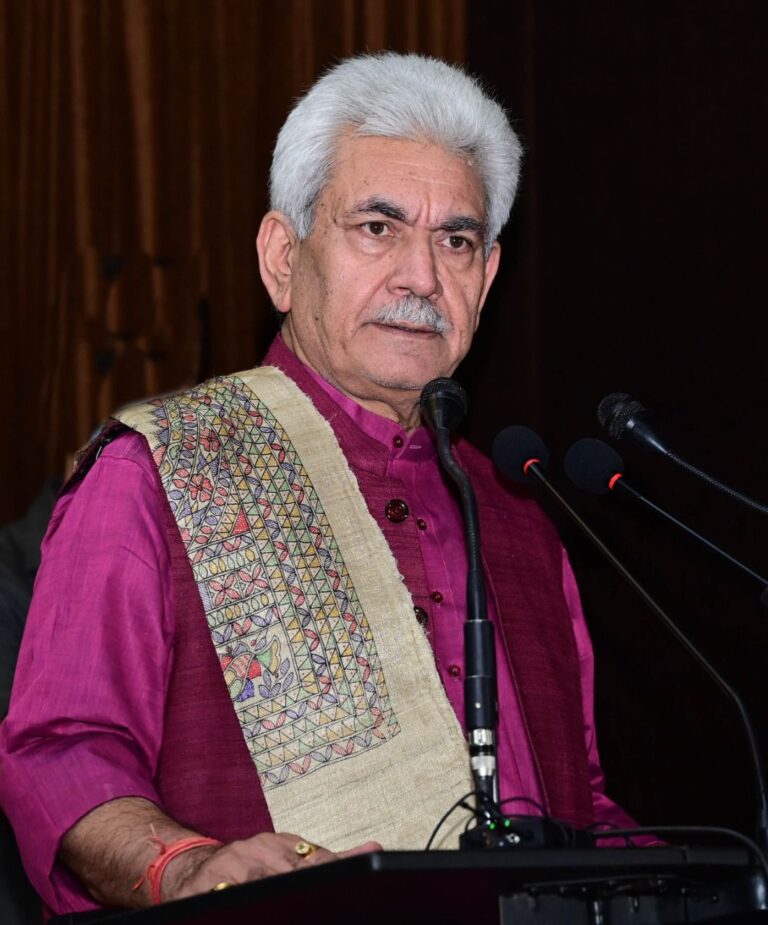
Jammu, Mar 19: Urging youth to build a strong and lasting connection with the timeless traditions, Lieutenant Governor Manoj Sinha on Thursday said that rich spiritual heritage and wisdom would always remain our greatest treasures.

Speaking at the Navreh celebrations, organised by Kashmiri Pandit Sabha, here, LG Sinha,  said, “Youth will not merely inherit India’s legacy but reshape it and propel it toward a developed, sustainable tomorrow.”

He said that Jammu Kashmir holds the potential for a dynamic and flourishing future, growing into a vibrant center of culture and advancing into a prosperous Union Territory through steady progress. “Achieving this vision ultimately depends on the younger generation. I sincerely hope that our youth will draw strength from the wisdom passed down by our ancestors and work with determination to elevate Jammu Kashmir to a place among the country’s developed regions,” he said.

The Lieutenant Governor invoked the blessings of Maa Sharika for the health, prosperity, and well-being of all.

Interacting with the devotees, the Lieutenant Governor wished that the New Year usher in a radiant dawn for everyone, illuminating paths to renewed hope and a thriving future. “Worship of Maa Durga and Maa Sharika is a profound bow to the primal source of power from which universe spring. As Rigveda says, the Mother’s strength is infinite. The true seeker who worships her with sincerity attains the essence of reality, from which all life’s insights flow effortlessly,” he added.

“I personally hold that Navreh and Navratri mark an inner journey. Over nine days of fasting, prayer, and discipline, Navratri transforms the devotee from within,” the Lieutenant Governor said.

LG Sinha highlighted that our traditions outline four stages of devotion- attentively hearing the prayer, deeply contemplating it, internalizing it fully, and reaching samadhi, where the knower and the known merge as one. “I pray that all devotees experience these stages in life,” he said.

On the occasion, the Lieutenant Governor also felicitated Padma Shri Brij Lal Bhat.

K.K Khosa, President, Kashmiri Pandit Sabha, Jammu; Deepak Dhar, senior Vice President and other office-bearers of Kashmiri Pandit Sabha and people from different walks of life joined the Navreh celebrations.

Padma Shri Dr SP Varma; Dr Ashok Bhan, Member, Shri Mata Vaishno Devi Shrine Board; Brij Mohan Sharma, Principal Secretary Culture; Ashok Koul, BJP General Secretary (Organisation), J&K and Ladakh; senior officials and prominent citizens were also present—(KNO)

Union Power Minister inaugurates the maiden edition of the Biggest Electricity Show of India – Bharat Electricity Summit 2026

0

New Delhi, March 19: Union Minister of Power and Housing & Urban Affairs Sh. Manohar Lal inaugurated ‘Bharat Electricity Summit 2026’, a four-day global Conference-cum-Exhibition for the power sector, being held under the patronage of Ministry of Power from 19-22 March 2026 at Yashobhoomi, New Delhi. Shri Pralhad Joshi, Minister of New and Renewable Energy and  Consumer Affairs, Food and Public Distribution, Government of India;  Shri Shripad Naik, Minister of State for Power and New & Renewable Energy, Government of India; Shri Pankaj Agarwal, Secretary, Ministry of Power, Government of India; Shri Ghanshyam Prasad, Chairperson, Central Electricity Authority (CEA) were also present during inauguration.

While hailing achievements such as achieving its Nationally Determined Contribution (NDC) target of 50% cumulative non-fossil electric capacity nearly five years ahead of schedule,  the SHANTI Act 2025, PM Surya Ghar Muft Bijli Yojana, transition from power deficit to a power surplus nation, exponential growth in solar energy capacity from 2.8 GW solar capacity to over 143 GW today, Shri Manohar Lal, Union Minister of Power and Housing & Urban Affairs underscored the unprecedented investment opportunities of approx. INR 200 lakh crore over the next two decades in India’s power sector. In his keynote address, the Minister also highlighted India’s remarkable progress with a 72% expansion in transmission infrastructure to over 5 lakh circuit kilometers, meeting 250 GW peak demand in 2024-25 and being fully prepared to meet peak demand of 270 GW and beyond, while positioning itself as a future global exporter of affordable energy as the backbone of India’s vision to become a developed nation by 2047, he also outlined initiatives such as cross-border energy connectivity, undersea transmission networks.


He further added, “Today is not just another day, it is a day of resolve for India’s energy transformation. From relying on conventional resources to now returning to the power of the sun, we are completing a full circle. Energy is at the heart of development, and as India moves towards becoming a developed nation by 2047, our focus is on innovation, affordability, and global collaboration. This ‘Conference of Light’ is not just an event, but a movement to take India’s energy leadership to the world.”

Shri Pralhad Joshi, Minister of New & Renewable Energy, Government of India, emphasized that while thermal power will continue to serve as the backbone of the energy system, renewable energy represents the only sustainable long-term pathway, underscoring the need for a balanced transition driven by scale, speed, and skill.

Complementing this vision, Shri. Shripad Naik, Minister of State for Power and New & Renewable Energy, Government of India highlighted that India’s installed power capacity has more than doubled since 2014, with renewable energy witnessing exponential growth, from 2.8 GW solar capacity to over 143 GW today. He emphasized that over 32 lakh households and 23 lakh farmers are already contributing to clean energy generation, reflecting a shift towards a participative energy economy.

Adding to this, Shri Pankaj Agarwal, Secretary, Ministry of Power, stated that India now operates one of the world’s largest synchronised grids, supported by advanced balancing systems, large-scale smart meter deployment and strong policy frameworks.

He further added, “India’s power sector transformation over the past decade offers a strong global model, driven by policy clarity, scale, and innovation. From near-zero peak deficits to one of the world’s largest synchronized grids, and from falling solar tariffs to smart infrastructure rollout, we are building a system that is efficient, reliable, and investment-ready. The next phase will be defined by technology, data, and global partnerships.”


During the inaugural session, the Ministry of Power released key strategic reports including the National Resource Adequacy Plan, outlining a comprehensive roadmap to meet India’s growing electricity demand through a balanced energy mix, and the Transmission Plan for Integration of over 900 GW Non-Fossil Fuel Capacity by 2035-36. The transmission blueprint envisages the development of 1,37,500 circuit kilometers of transmission lines and 8,27,600 MVA substation capacity, with an estimated investment of ₹7.93 lakh crore, ensuring seamless evacuation of renewable energy and strengthening grid resilience.

The Bharat Electricity Summit 2026 is a Ministry of Power and industry-led initiative. The summit will host more than 100 high-level conference sessions featuring over 300 speakers, representatives from more than 80 countries, over 500 exhibitors including over 100 startups and more than 25,000 visitors, making it one of the largest electricity-focused platforms globally.


Shawwal Moon Not Sighted, India to Mark Eid-ul-Fitr on Saturday

0

KD News Desk

Srinagar, Mar 19: Eid-ul-Fitr will be celebrated across India on Saturday, marking the end of the holy month of Ramadan, religious authorities and moon-sighting committees announced on Thursday.

The announcement came after the Shawwal crescent moon was not sighted on Thursday evening, extending the fasting month of Ramadan to a full 30 days. As a result, Muslims across the country will observe Eid-ul-Fitr on Saturday.

Eid-ul-Fitr, one of the most significant festivals in Islam, marks the conclusion of a month of fasting, prayer, and reflection observed during Ramadan. The festival is traditionally celebrated with special congregational prayers, acts of charity, and gatherings with family and friends.

In the days leading up to the festival, markets in several cities and towns have witnessed a surge in activity, with people shopping for new clothes, sweets, and gifts as part of the celebrations.

Authorities in different states have also issued advisories and made arrangements to ensure the smooth conduct of Eid prayers and public gatherings. Security personnel, traffic management teams, and municipal services have been put in place to facilitate large congregations at mosques and designated Eidgah grounds.

Manohar Lal Inaugurates Bharat Electricity Summit 2026 in New Delhi

0

Vinod Bhat

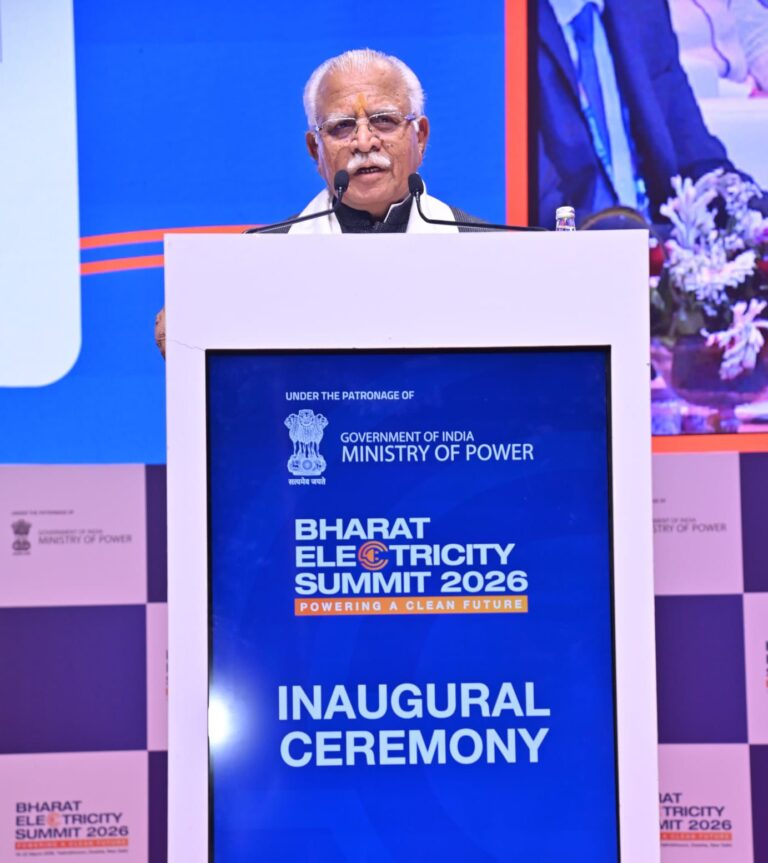
New Delhi: ‘Bharat Electricity Summit 2026’, a four-day global Conference-cum-Exhibition for the power sector, was inaugurated by Union Minister of Power and Housing & Urban Affairs Sh. Manohar Lal today at Yashobhoomi, New Delhi. Shri Pralhad Joshi, Minister of New and Renewable Energy and  Consumer Affairs, Food and Public Distribution, Government of India;  Shri Shripad Naik, Minister of State for Power and New & Renewable Energy, Government of India; Shri Pankaj Agarwal, Secretary, Ministry of Power, Government of India; Shri Ghanshyam Prasad, Chairperson, Central Electricity Authority (CEA) were also present during inauguration.

While hailing achievements such as achieving its Nationally Determined Contribution (NDC) target of 50% cumulative non-fossil electric capacity nearly five years ahead of schedule,  the SHANTI Act 2025, PM Surya Ghar Muft Bijli Yojana, transition from power deficit to a power surplus nation, exponential growth in solar energy capacity from 2.8 GW solar capacity to over 143 GW today, Shri Manohar Lal underscored the unprecedented investment opportunities of approx. INR 200 lakh crore over the next two decades in India’s power sector. In his keynote address, the Minister also highlighted India’s remarkable progress with a 72% expansion in transmission infrastructure to over 5 lakh circuit kilometers, meeting 250 GW peak demand in 2024-25 and being fully prepared to meet peak demand of 270 GW and beyond, while positioning itself as a future global exporter of affordable energy as the backbone of India’s vision to become a developed nation by 2047, he also outlined initiatives such as cross-border energy connectivity, undersea transmission networks.

He further added, “Today is not just another day, it is a day of resolve for India’s energy transformation. From relying on conventional resources to now returning to the power of the sun, we are completing a full circle. Energy is at the heart of development, and as India moves towards becoming a developed nation by 2047, our focus is on innovation, affordability, and global collaboration. This ‘Conference of Light’ is not just an event, but a movement to take India’s energy leadership to the world.”

Shri Pralhad Joshi emphasized that while thermal power will continue to serve as the backbone of the energy system, renewable energy represents the only sustainable long-term pathway, underscoring the need for a balanced transition driven by scale, speed, and skill.

Complementing this vision, Shri. Shripad Naik highlighted that India’s installed power capacity has more than doubled since 2014, with renewable energy witnessing exponential growth, from 2.8 GW solar capacity to over 143 GW today. He emphasized that over 32 lakh households and 23 lakh farmers are already contributing to clean energy generation, reflecting a shift towards a participative energy economy.

Adding to this, Shri Pankaj Agarwal, Secretary, Ministry of Power, stated that India now operates one of the world’s largest synchronised grids, supported by advanced balancing systems, large-scale smart meter deployment and strong policy frameworks.

He further added, “India’s power sector transformation over the past decade offers a strong global model, driven by policy clarity, scale, and innovation. From near-zero peak deficits to one of the world’s largest synchronized grids, and from falling solar tariffs to smart infrastructure rollout, we are building a system that is efficient, reliable, and investment-ready. The next phase will be defined by technology, data, and global partnerships.”

During the inaugural session, the Ministry of Power released key strategic reports including the National Resource Adequacy Plan, outlining a comprehensive roadmap to meet India’s growing electricity demand through a balanced energy mix, and the Transmission Plan for Integration of over 900 GW Non-Fossil Fuel Capacity by 2035-36. The transmission blueprint envisages the development of 1,37,500 circuit kilometers of transmission lines and 8,27,600 MVA substation capacity, with an estimated investment of ₹7.93 lakh crore, ensuring seamless evacuation of renewable energy and strengthening grid resilience.

The Bharat Electricity Summit 2026 is a Ministry of Power and industry-led initiative. The summit will host more than 100 high-level conference sessions featuring over 300 speakers, representatives from more than 80 countries, over 500 exhibitors including over 100 startups and more than 25,000 visitors, making it one of the largest electricity-focused platforms globally.