spot_imgspot_img
spot_img
Home Blog Page 97

Uttarakhand Moving Fast on Development Path: Amit Shah at Haridwar Event

0

Vinod Bhat

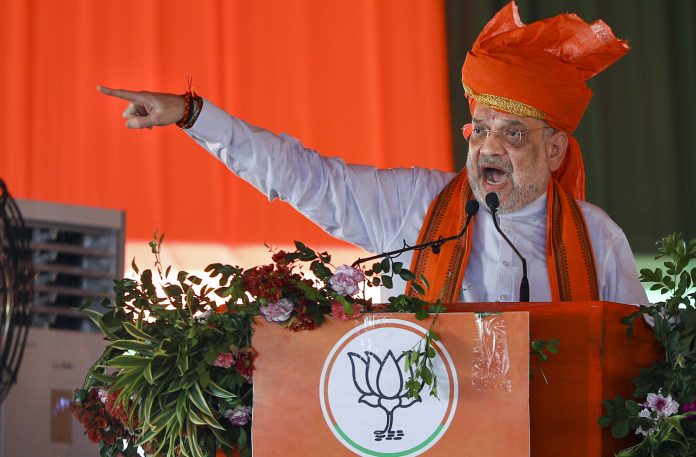
New Delhi: Union Home Minister and Minister of Cooperation Shri Amit Shah inaugurated and laid the foundation stones of various public welfare projects worth more than ₹1,132 crore in Haridwar on the completion of four years of the Uttarakhand Government.  On this occasion, the Chief Minister of Uttarakhand Shri Pushkar Singh Dhami, Union Minister Shri Ajay Tamta and several other dignitaries were present.

Union Home Minister and Minister of Cooperation Shri Amit Shah said that today marks not only the completion of four years of the government led by Chief Minister Shri Pushkar Singh Dhami but also nine years of our party’s government in the state. He said that there was a time when Devbhoomi Uttarakhand was struggling for its rights. The youth of Uttarakhand had come out to the forefront to secure a separate state, give Uttarakhand its own identity, and preserve its culture. Shri Shah said that at that time the parties that are now in the opposition had unleashed unbearable repression on the youth of Uttarakhand. Many young people were shot and several made the ultimate sacrifice. The people of Uttarakhand still have not forgotten the Rampur Tiraha firing incident. The Home Minister said that our leader and former Prime Minister Atal Bihari Vajpayee carried out the work of creating Uttarakhand as a separate state.

Shri Amit Shah said that when Uttarakhand was created as a separate state, leaders of the opposition used to question how small states would survive and how their economies would function. He said that Atal Ji created three small states—Uttarakhand, Chhattisgarh and Jharkhand— and today all three states have progressed on the path of development. Shri Shah said that Uttarakhand was created during Atal Ji’s time and Prime Minister Shri Narendra Modi is now shaping and strengthening it. He said that the past nine years have been nine golden years of development for Uttarakhand.

Union Home Minister Shri Amit Shah said that in the past four years, Chief Minister Shri Pushkar Singh Dhami has made constructive efforts to systematically resolve each and every problem of the state. As a result, today Uttarakhand is moving ahead on the path of development at a rapidly accelerating pace.

Shri Amit Shah said that today various public welfare projects worth more than ₹1,130 crore have been inaugurated and foundation stones laid. An exhibition on the New Nyaya Sanhita has also been organized. He said that under the leadership of Prime Minister Shri Narendra Modi, the 150-year-old laws made by the British have been abolished and the New Nayaya Sanhita have been enacted. The Union Home Minister said that the new laws will be fully implemented by 2028. After this, the entire judicial process—from the registration of an FIR to proceedings in the Supreme Court of India—will be completed within three years, ensuring timely justice. He said that these are the most modern and most scientific criminal codes in the world.

Union Home Minister Amit Shah said that today 1,900 youths in Uttarakhand have received jobs as police constables. He asked these youths whether they would have been able to get these jobs if the opposition party had been in power. Shri Shah said that if the opposition party’s government had been in power, one would have needed both “parchi” (recommendation) and “kharchi” (money) to secure a job. But now, neither of these is required. Shri Shah said that today the son of an elderly mother living in the hills is able to return home with a job and without any recommendation. This, he said, is what good governance truly means. The Home Minister also said that the anti-cheating law enacted by the state government has helped bring transparency to the employment process.

Union Home Minister Shri Amit Shah said that today 162 people who came from Pakistan and Afghanistan have been granted Indian citizenship. He said that when the government introduced the Citizenship Amendment Act (CAA), leaders of opposition parties had created a lot of uproar in Parliament. Shri Shah said that he would like to reiterate today that Hindu, Sikh, Buddhist and Jain refugees who came from Bangladesh, Pakistan and Afghanistan have as much right over this country as the citizens of this country have. He said that due to the politics of appeasement, these refugees were deprived of citizenship from the time of Independence until now. He said that after enduring numerous hardships, they came to India as refugees seeking shelter. The Home Minister asked whether India should not grant citizenship to those who have come here to protect their religion and the honour of the women in their families. He said that opposition leaders may oppose it as much as they want, but the government will certainly grant citizenship to these refugees.

Union Home Minister Shri Amit Shah said that in the 2024 Indian general election, Shri Narendra Modi became the Prime Minister of the country for the third consecutive time—something that happened after six decades. He said that in 2024 itself, the party formed its government in Odisha for the first time. In Haryana, the party achieved a hat-trick, and in Maharashtra as well it secured a third consecutive victory. He said that in 2025, the ruling party was completely wiped out in Delhi. In Bihar, the party formed the government with a two-thirds majority. For the first time, the party also won in Thiruvananthapuram in Kerala, and it also achieved victory again in Maharashtra. Shri Shah said that in 2026, the party is set to form governments in West Bengal and Tamil Nadu. He added that in 2027, the people of Devbhoomi Uttarakhand should begin the journey of victory by once again forming the party’s government in the state. He also said that the Kumbh Mela will be held in Haridwar in 2027, for which the Central Government has provided a substantial amount of funds to the state government. Shri Shah said that the Kumbh of Haridwar is the pride of the entire country.

Shri Amit Shah said that the government led by Prime Minister Shri Narendra Modi has completed several long-pending tasks related to India’s culture. He said that Article 370 of the Constitution of India has been abrogated and the Citizenship Amendment Act was brought in for Hindu refugees. He added that the construction of the temple of Ram Lalla—which the Hindu community had been waiting for 550 years—has also been completed. He further said that the entire towns of Kedarnath Dham and Badrinath Dham have been redeveloped. The Mahakal Lok Corridor has been created, and the Kashi Vishwanath Corridor—associated with the Kashi Vishwanath Temple, which had been destroyed by Aurangzeb—has also been constructed under the leadership of Prime Minister Shri Narendra Modi.

Union Home Minister Shri Amit Shah said that Prime Minister Shri Narendra Modi has given the border villages the recognition of being the first villages of India. He said that through the Vibrant Villages Programme, a scientific plan has been formulated to develop border villages and prevent migration from these areas. He added that in the coming days, Devbhoomi Uttarakhand will benefit the most from this programme. Shri Shah said that opposition parties are devoting all their energy to protecting infiltrators. In Uttarakhand, under the leadership of Chief Minister Shri Pushkar Singh Dhami, more than 10,000 encroachments have been demolished. He said that wherever infiltrators are present across the country, from Kedarnath to Kanyakumari, we will identify and remove each and every infiltrator from India. Opposition leaders may oppose it as much as they want. Shri Shah also said that opposition leaders are opposing the Special Intensive Revision of Electoral Rolls as well. According to him, they see negativity in everything. Shri Shah said that his party strongly supports the Election Commission of India’s Special Intensive Revision (SIR) programme, because if the voter list—the fundamental unit that sustains democracy in a country—is not pure and accurate, then the country’s democracy can never remain secure.

Shri Amit Shah said that during the tenure of the opposition party’s government, numerous allegations of corruption had surfaced. These included the sting operation controversy, the Dalit scholarship scam, a secretariat allegedly filled with commission agents, the liquor policy sting scandal, and the Kumaon foodgrain scam. He said that his party has been in power in Uttarakhand for the past nine years, yet even their political opponents have not been able to level allegations of corruption against the government. Shri Shah said that the government has functioned in a transparent manner.

Union Home Minister Shri Amit Shah said that, as a step towards ending the policy of appeasement in the country, the Chief Minister of Uttarakhand, Shri Pushkar Singh Dhami, has introduced the Uniform Civil Code in the state. He said that under this, regardless of a citizen’s religion, everyone will have to live under the same set of laws in the country. He added that Uttarakhand has become the first state in the country to implement the Uniform Civil Code. Shri Shah said that the Uniform Civil Code will help curb unnatural growth in demographics. He added that Prime Minister Shri Narendra Modi has decided to constitute a high-power committee to address demographic changes. He said that the committee will begin its work in the coming days.

Shri Amit Shah said that when the opposition party was in power at the Centre from 2004 to 2014, Uttarakhand received only ₹54,000 crore in grants. In contrast, Prime Minister Shri Narendra Modi provided ₹1.87 lakh crore to the state between 2014 and 2024. He further said that ₹12,000 crore has been allocated for the approximately 900-kilometre Char Dham Mahamarg Project connecting Kedarnath, Badrinath, Yamunotri and Gangotri. Additionally, ₹8,000 crore has been allocated for the Delhi–Dehradun Economic Corridor. He said that ₹5,000 crore has been spent on the construction of 30 national highways in Uttarakhand, while ₹2,200 crore has been allocated for the construction of eight roads in Tanakpur. Funds have also been provided for the development of bypasses and the renovation of roads in Najibabad, Afzalgarh, Purqazi, Laksar and Haridwar.

Union Home Minister Shri Amit Shah said that a state’s budget reflects its development. He said, from 2009 to 2014, the average railway budget for Uttarakhand was ₹187 crore, whereas over the past nine years it has increased to about ₹4,770 crore. This, he said, shows how much the state has progressed. He said that three new railway projects worth ₹26,000 crore have been approved. About 303 kilometres of railway lines have been electrified, and Eleven Amrit Bharat Station Scheme stations are being developed at a cost of ₹147 crore. Around 100 flyovers and underbridges have been constructed. Work is also underway on the country’s largest railway tunnel between Rishikesh and Karnaprayag. Several helipads have been built, and the Jolly Grant Airport in Dehradun has been modernized. He added that extensive work has been done in the fields of agriculture and fisheries. Under the Parvatmala Pariyojana ropeway development programme, ₹2,400 crore has been allocated. Shri Shah said that in 2014 the per capita income of Uttarakhand was ₹1,80,000, which has now increased to ₹2,74,000. The state’s GSDP has risen from ₹2,22,000 crore to ₹3,82,000 crore. He added that more than 10 lakh farmers have benefited from the Pradhan Mantri Kisan Samman Nidhi scheme. Over 14 lakh households have benefited from the Jal Jeevan Mission. Around 62 lakh people have received free medical treatment of up to ₹5 lakh under Ayushman Bharat. Toilets have been constructed in about 5,80,000 homes under the Swachh Bharat Mission.

He further said that around 60 lakh people receive 5 kilograms of free food grains per person every month under the Pradhan Mantri Garib Kalyan Anna Yojana, and 5,33,000 mothers and sisters have been provided LPG cylinders under the Pradhan Mantri Ujjwala Yojana.

Shri Shah said that in 2014, Uttarakhand’s per capita income was ₹1,25,000, which has now increased to ₹2,60,000. The state’s GSDP has risen from ₹1,50,000 crore to ₹3,50,000 crore. He further said that nearly 10,000 farmers have benefited from the Pradhan Mantri Kisan Samman Nidhi scheme. About 14 lakh households have benefited from the Jal Jeevan Mission. Around 62 lakh people have received free medical treatment worth up to ₹5 lakh under the Ayushman Bharat scheme. Toilets have been constructed in about 5.8 lakh homes under the Swachh Bharat Mission. He added that around 60 lakh people receive 5 kilograms of free food grains per person every month under the Pradhan Mantri Garib Kalyan Anna Yojana, and about 5.3 lakh women have received LPG cylinders under the Pradhan Mantri Ujjwala Yojana.

Shri Amit Shah said that on one side there is the opposition party which was accused of corruption, creating disorder, and opposing the formation of Uttarakhand, while on the other side there is a government that has deep reverence for the Char Dham Yatra and has worked to increase the number of pilgrims threefold. He said that this government has made efforts to connect every town in Uttarakhand with roads, provide jobs to youth without “kharchi” (money) or “parchi” (recommendation), implement the Uniform Civil Code, grant citizenship through the Citizenship Amendment Act, and has resolved to identify and remove infiltrators from the country. He said that the people of Uttarakhand have to choose between these two parties on the basis of these issues. Shri Shah added that the opposition party has become completely fragmented under the leadership of its leader. Instead of engaging in discussions in the Parliament, it has adopted a policy of creating disruptions and not allowing Parliament to function. He said that such a party cannot ensure the development of Devbhoomi Uttarakhand.
Jammu Sultans edge past Rajouri Leopards in YSS-JKSC Cricket League

0


J&K’s Ranji Trophy win historic, victory demonstrates J&K has immense sporting talent: Satish Sharma

Jammu, March 7: In the first match of YSS-JKSC Cricket Premier League on Saturday at M A Stadium in Jammu, Jammu Sultans defeated Rajouri Leopards by 7 runs.

Batting first, Jammu Sultans scored 125 runs all out in the allotted 18 overs with wicketkeeper batsman Anshul top scoring with 45 runs.

For Rajouri Leopards Piyush Sharma and Ishtiyak Rasool took 3 wickets apiece in their quota of 4 overs.

In return Rajouri Leopards scored 118 for 9, falling short of the target by 8 runs.

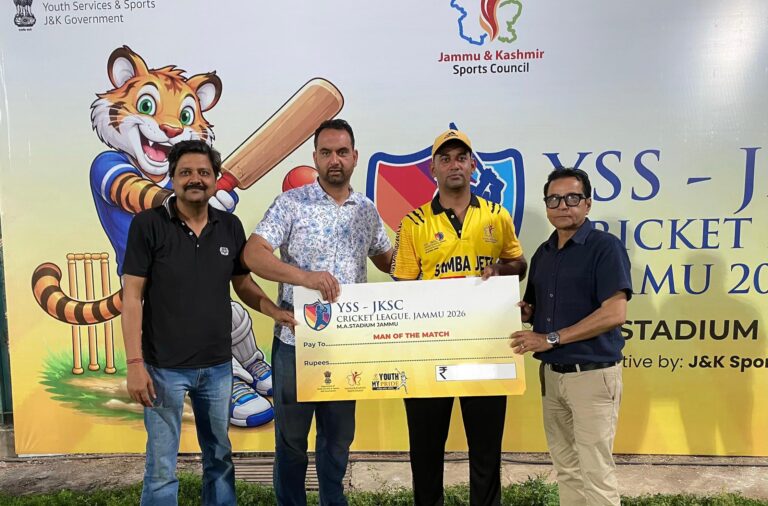
For Rajouri Leopards, skipper Bilal Ahmed scored 62 runs while ‘Player of the Match’ Akash took 4 wickets and Gourav Koul took 3 wickets in their quota of 4 overs.

The second match of the day was played between Jammu Wolves and Samba Jets.

The third match of the day was played between Jammu Tigers and Samba Jets.

In the inaugural match of the tournament on Friday, Jammu Tigers defeated Jammu Wolves by 6 wickets.

Batting first Jammu Wolves scored 136/9 in the 20 overs with Ankush Bandral top scoring with 35 runs while Anchal Singh, Paras Sharma, and Jaddu took 2 wickets apiece. In return, Jammu Tigers scored 137/4 winning the match by 6 wickets. For Jammu Tigers, Akash Choudhary top scored with 71 runs while Kulwinder Singh took 2 wickets for Jammu Wolves.

The YSS-JKSC Cricket Premier League, organised by the Jammu and Kashmir Sports Council under the aegis of the Department of Youth Services and Sports, J&K, got underway at the M A Stadium in Jammu.

The tournament was formally inaugurated on Friday by J&K Minister for Youth Services and Sports Satish Sharma, who unveiled the trophy along with India cricketer and former J&K captain Parvez Rasool and distributed jerseys among the participating teams.

Secretary J&K Sports Council Nuzhat Gul and other senior officials were also present on the occasion.

Eighteen teams are competing in the league, which carries a prize purse of Rs 3 lakh for the winners and Rs 1.5 lakh for the runners-up.

Individual honours, including the ‘Man of the Series’ award carrying a cash prize of Rs 20,000, have also been announced.

The matches are being played under floodlights at M A Stadium, enhancing the spectator experience, while the games are also being live-streamed for cricket fans across Jammu and Kashmir and beyond.

Speaking at the inaugural ceremony, Sports Minister Satish Sharma described J&K’s recent Ranji Trophy triumph as a historic milestone for the region.

He said the victory had demonstrated the immense sporting talent present in J&K and highlighted how young athletes could excel at the national level when provided with the right opportunities and platforms.

The minister also outlined the department’s upcoming sports calendar for Jammu, announcing plans for a Football Premier League at the Mini Stadium, a national-level cyclothon, and a volleyball league aimed at expanding sporting opportunities for youth in the region.

Meanwhile, competitive matches in the league continued on Saturday, drawing enthusiastic participation from teams and spectators as the tournament seeks to provide a major platform for budding cricketers from across the region.

DC Anantnag holds interactive meet with Media Fraternity

0

Emphasizes role of Ethical Journalism in development, public welfare

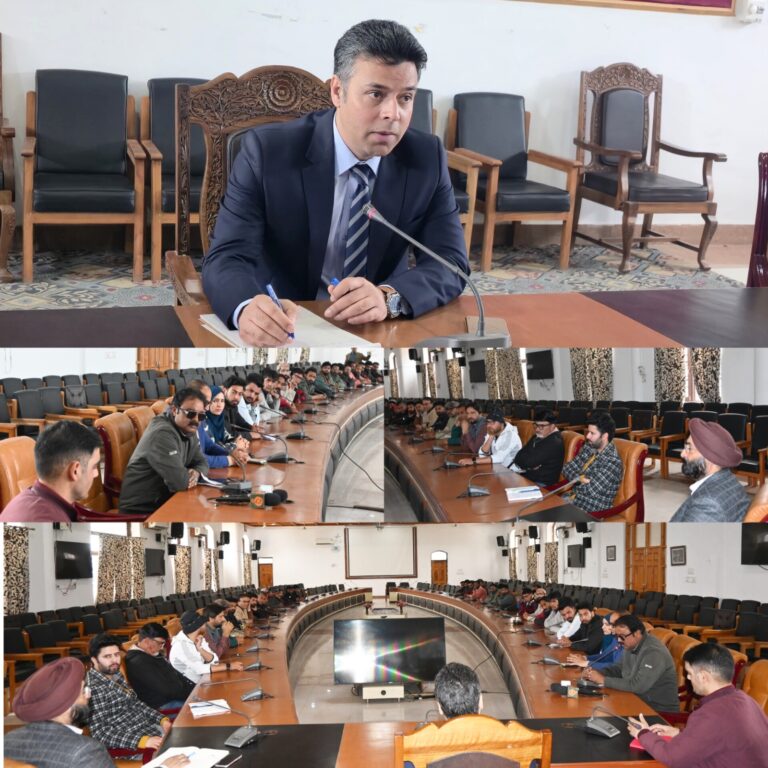
ANANTNAG, MARCH 07: Deputy Commissioner (DC) Anantnag, Dr. Bilal Mohi-ud-Din Bhat, today held an interactive meeting with members of the local media fraternity at Dak Bungalow, Khanabal.
ADCs, DIO, and the media persons of the district attended the meeting.

The session aimed to enhance coordination between the district administration and the press so the objectives of public-centric governance and effective grievance redressal are realized.

Addressing the meeting, the DC described the media as a vital link between the public and the administration, which helps to provide feedback from people and identify areas requiring urgent attention. He emphasized the role of ethical journalism in development and public welfare and urged the media persons to adhere to its principles and standards.

Dr. Bhat called upon the media to highlight the benefits of various Centrally Sponsored Schemes and government initiatives and to constructively point out lacunae or gaps in implementation so the administration can take corrective measures. He also sought the media’s cooperation in promoting tourism and eco-protection and noted that environmental preservation and sustainable development of the district are our collective goals.
On the occasion, the media persons shared their insights and put forth issues and concerns regarding their work in the district.

Assuring them of full cooperation from administration, the DC said their genuine concerns will be addressed for responsible journalism to thrive in the district.
The meeting concluded with a mutual commitment to work toward the holistic development with positive contributions from the administration, media, and other stakeholders of the district.

Man Accused of Killing Daughter in Jammu Arrested in Delhi After 9 Years

0

The accused, Ramesh Kumar, a native of Madhya Pradesh’s Chhatarpur district, was wanted in a 2016 murder case registered at Gandhi Nagar Police Station in Jammu, they said.

Following his detention, the accused was handed over to the investigating officer from the Jammu and Kashmir Police, who formally arrested him in the case.

According to the police, Kumar was working as a construction labourer in Jammu when he allegedly hit her daughter on the head with a stick, suspecting that she was not his biological child, a senior police officer said.

The girl later succumbed to her injuries during treatment, the officer said.

According to the police, after committing the crime, the accused fled Jammu and remained absconding for several years. He later started living under the false name “Rajveer” in Delhi.

Illegal Mining Razed J&K’s Sukhnag River, Confirms Govt Report; NGT Forms Panel for Probe

0

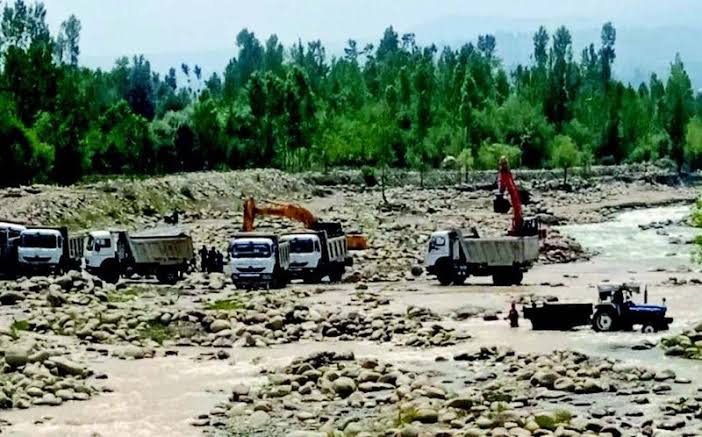
New Delhi, Mar 7 : A government-constituted fact-finding committee has confirmed that illegal riverbed mining has caused massive destruction to the Sukhnag River in the Beerwah area of Jammu and Kashmir’s Budgam district, officials said on Saturday.

The seven-member panel, formed by the Deputy Commissioner of Budgam in August last year following a directive from the National Green Tribunal (NGT), has submitted its report to the Tribunal through the J&K Pollution Control Committee (JKPCC).

According to the report, the river—recognized as a designated trout fish stream—has suffered severe ecological degradation due to extensive and illegal mining operations.

To restore the water body, the committee, led by the Sub-Divisional Magistrate (SDM) Beerwah and the Divisional Forest Officer (DFO) Pir Panjal, has recommended filling the deep trenches created by mining, levelling the riverbed, and constructing gabion structures and check-dams. The panel has also suggested the creation of artificial pools to facilitate trout breeding.

The NGT, which is hearing a petition filed by Dr. Raja Muzaffar Bhat, had previously constituted a supervisory committee to oversee the investigation. This panel includes the Member Secretary of the JKPCC, the Regional Officer (Chandigarh) of the Ministry of Environment, Forest and Climate Change (MoEF&CC), and a nominee from the GB Pant National Institute of Himalayan Environment (NIHE).

In a virtual meeting held on February 24, members of the supervisory committee noted that the report is largely qualitative. Dr. Sandipan Mukherjee, a Scientist with the NIHE, stressed the need for a physical spot visit to assess the damage accurately. Dr. Khurshid Alam Khan from the MoEF&CC pointed out that additional quantitative data is required to determine the exact extent of the damage and fix responsibility.

During the recent hearing on February 26, the NGT directed the expert panel to visit the site within weeks. The tribunal specifically ordered the committee to assess the losses suffered by Peerzada Rayees, a local trout fish farmer from Sail Beerwah, whose farm was reportedly damaged. The directive references a communication from the J&K Director of Fisheries confirming the loss.

“The expert committee is expected to visit the site shortly as the case is listed for the next hearing on March 27, 2026,” said the petitioner, Dr. Raja Muzaffar Bhat. He added that the report must be submitted to the tribunal a week prior to the hearing.

The NGT had previously imposed a complete ban on mining in the Sukhnag river in January 2025 after a joint fact-finding team reported extensive devastation during a site visit in December 2024.

Light rain, snowfall likely in J&K from March 10–12: MeT

0

Srinagar, Mar 7: The Meteorological Department on Saturday forecast generally cloudy weather with light rain and snowfall in higher reaches at several places in Jammu and Kashmir over the next few days.

According to the MeT office here, the weather is expected to remain generally cloudy between March 7 and 9, with light rain and snowfall in higher reaches at isolated places.

From March 10 to 12, the region is likely to witness generally cloudy conditions with light rain and snowfall in higher reaches at many places, it said.

The MeT department said a few higher reaches of Kupwara, Bandipora, Ganderbal and Anantnag districts may receive moderate snowfall during this period.

Between March 13 and 15, the weather is expected to remain generally cloudy with light rain and snowfall in higher reaches at isolated places, the department said.

Similar weather conditions are likely to continue from March 16 to 17, with generally cloudy skies and light rain or snowfall in higher reaches at isolated places, it added.

The MeT office has advised farmers to suspend farm operations between March 10 and 12 in view of the expected weather activity.

It also said that day temperatures are likely to fall by 4 to 6 degrees Celsius at many places across the region after March 9 and may remain below normal till March 12.(KNS).

PM to Address Post-Budget Webinar on 9th March on the subject “Sabka Saath, Sabka Vikas – Fulfilling Aspirations of People: Education, Skills and University Townships”

0
Vinod Bhat

New Delhi: The Ministry of Information & Broadcasting (MIB), in collaboration with the Department of Higher Education, will participate in a Post-Budget Webinar on “Sabka Saath, Sabka Vikas – Fulfilling Aspirations of People: Education, Skills and University Townships”, to deliberate on key initiatives announced in the Union Budget 2026–27. The webinar will bring together policymakers, industry leaders, academia, startups, and students to discuss implementation pathways for strengthening India’s education, skills, and creative economy ecosystem.

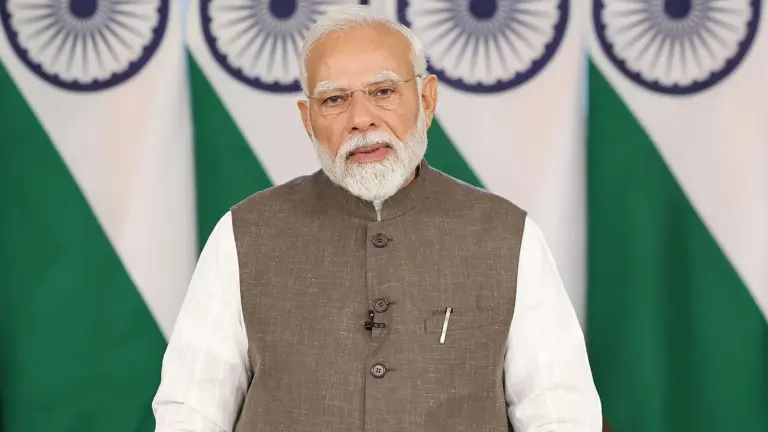
The inaugural session will be graced by the Hon’ble Prime Minister on 9th March at 10:15 AM, who will deliver a special address outlining the vision behind the budgetary initiative for the AVGC–creator economy, where, creativity, culture and technology converge to drive growth, jobs and soft power.

Ministry of I&B Breakout Session on AVGC Content Creator Labs from 11:10 AM to 12:40 PM

As part of the webinar, the Ministry of Information & Broadcasting will host Breakout Session at on “AVGC Content Creator Labs in Schools and Colleges.” The session will focus on the implementation of the Union Budget announcement to establish AVGC Content Creator Labs (CCLs) across 15000 schools and 500 higher educational institutions, aimed at nurturing creative talent, strengthening India’s Animation, Visual Effects, Gaming and Comics (AVGC) ecosystem, and building a robust pipeline of skilled creators for the country’s rapidly expanding Orange Economy.

The breakout session on “AVGC Content Creator Labs in Schools & Colleges”, scheduled from 11:10 AM to 12:40 PM, will be moderated by Shri Chaitanya Chinchlikar – VP & CTO, Whistling Woods International. There will be a keynote address by Shri Sanjay Jaju, Secretary, Ministry of Information & Broadcasting outlining the importance of this initiative.

The session will then feature a panel discussion with experts from government and industry, including Shri Dheeraj Sahu, Additional Secretary (Department of School Education and Literacy), Dr. Ashish Kulkarni (Chairman, FICCI AVGC Forum), Shri Rajan Navani (Founder & Group CEO, JetSynthesys), and Ms Sonam Bhagat (CEO, Vygr), along with a student representative from IICT. The discussion will be further enriched through interventions by leading industry figures such as Shri Munjal Shroff (Graphiti Multimedia), Shri Biren Ghose (Technicolor Group), Shri Manvendra Shukul (Lakshya Digital), Ms Mala Sharma, (Adobe India), Ms Preeti Vyas (Mythik) and 2 of young volunteers of MyBharat.

Closing Session from 4.30 to 5.45 PM

The outcomes of the Webinar would be summarised in the closing session. There will be a special Address by Hon’ble Minister of Information and Broadcasting, Shri Ashwini Vaishnaw at 05:25 PM.

Kashmir Despatch Editor Condoles Demise of Veteran Urdu Journalist Abdul Rashid Shah

0

KD NEWS SERVICE

SRINAGAR, Mar 07: Editor-in-Chief of Kashmir Despatch, Syed Basharat, on Saturday expressed deep sorrow over the demise of veteran journalist Abdul Rashid Shah, terming his passing a great loss to Urdu journalism in Jammu and Kashmir.

Abdul Rashid Shah, the Chief Editor and owner of the Urdu daily Nida-e-Mashriq, was widely respected for his long and dedicated service to the field of journalism, particularly for his significant contribution to the promotion of Urdu media in the region.

In a condolence message, Syed Basharat said he was deeply saddened to hear about Shah’s demise and described him as a dignified and committed journalist who upheld the principles of responsible and ethical journalism throughout his career.
“Rashid Shah rendered invaluable services to Urdu journalism in Jammu and Kashmir and always used his pen with courage, honesty and a sense of responsibility. His demise is a great loss for the journalistic fraternity,” Basharat said.

He further said that Shah’s contribution to the development and strengthening of Urdu journalism will always be remembered by the media fraternity.
Syed Basharat also expressed heartfelt sympathies with the bereaved family, colleagues and friends of the departed journalist and prayed for eternal peace to the departed soul and strength to the family to bear the irreparable loss.

Government announces standards of Green Ammonia and Green Methanol for India to accelerate trade of Green Hydrogen derivatives

0
Vinod Bhat

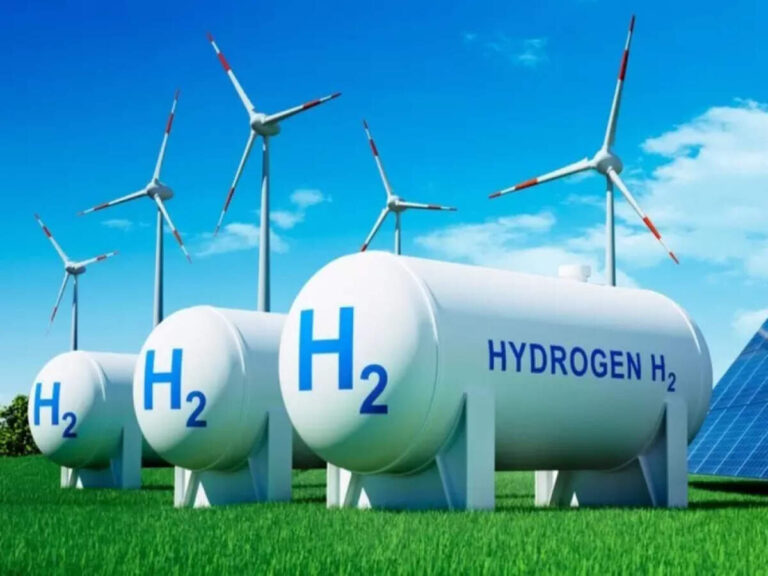
New Delhi: In a significant move for the advancement of the National Green Hydrogen Mission, the Government of India notified the Green Ammonia and Green Methanol Standards for India on 27th February 2026. The standards issued by the Ministry of New and Renewable Energy (MNRE), outlines the emission thresholds and eligibility conditions that must be compiled in order for ammonia & methanol produced to be classified as ‘Green’, i.e., produced using Green Hydrogen derived from renewable sources.

Green Ammonia Standard for India – Green Ammonia shall have a total non-biogenic greenhouse gas emission, arising from Green Hydrogen production, ammonia synthesis, purification, compression, and on-site storage, of not more than 0.38 kg CO₂ equivalent per kg of ammonia (kg CO₂ eq/kg NH₃), calculated as an average over the preceding 12-month period.

Green Methanol standard for India – Green Methanol shall have a total non-biogenic greenhouse gas emission, arising from Green Hydrogen production, methanol synthesis, purification, and on-site storage, of not more than 0.44 kg CO₂ equivalent per kg of methanol (kg CO₂ eq/kg CH₃OH), calculated as an average over the preceding 12-month period.

The notification further provides that carbon dioxide for Green Methanol production may be sourced from biogenic sources, Direct Air Capture (DAC), or existing industrial sources. The Ministry may revise the eligible sources of carbon dioxide from time to time, with such revisions applying prospectively along with appropriate grandfathering provisions.

In the process of Green Ammonia & Green Methanol production, renewable energy also includes electricity generated from renewable sources which is stored in an energy storage system or banked with the grid in accordance with applicable regulations.

The notification specifies that a detailed methodologies for measurement, reporting, monitoring, on-site verification, and certification of Green Ammonia & Green Methanol shall be issued separately by the Ministry of New & Renewable Energy.

Any tender, bid process, or solicitation issued prior to the date of notifications may continue to be governed by the terms and conditions applicable at the time of its issuance; however, the procuring entity may, where feasible and with mutual consent of the parties, align such tender with the provisions of notifications.

The notifications of the Green Ammonia & Green Methanol standards bring clarity to industry, investors, and other stakeholders engaged in the development of green hydrogen derivatives. The standards will facilitate decarbonisation of sectors such as fertilizers, shipping, power, and heavy industry, while strengthening India’s position as a reliable producer and exporter of green fuels.

Indian Green Hydrogen developers are targeting export markets for Green Ammonia & Green Methanol. With this notification, India further consolidates its regulatory framework for green hydrogen and its derivatives under the National Green Hydrogen Mission.

India–UK Conference on Green Hydrogen Standards and Safety Protocols Advances Cooperation for Safe Green Hydrogen Scale-Up

0

Vinod Bhat

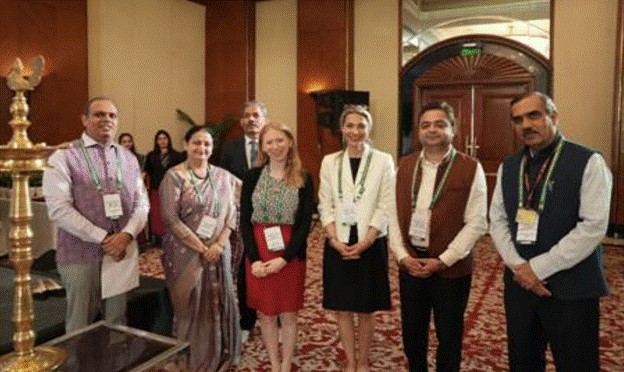
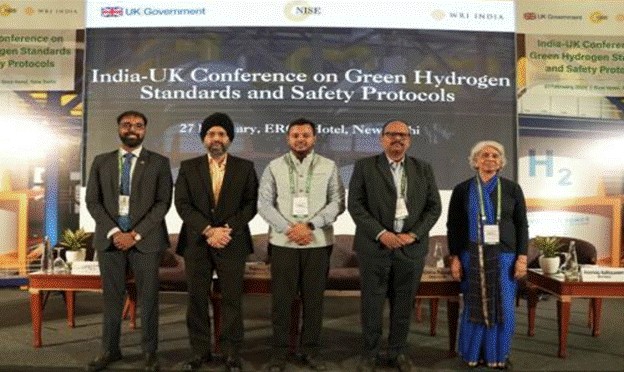
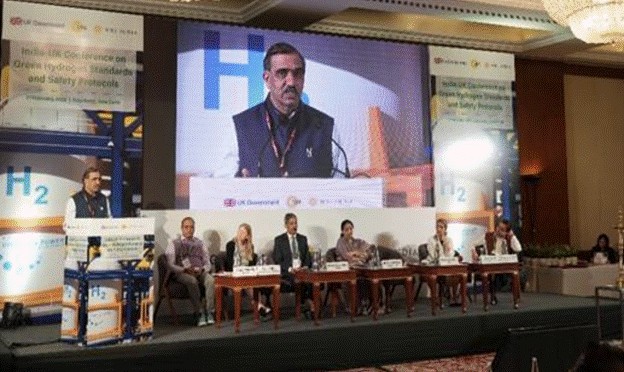
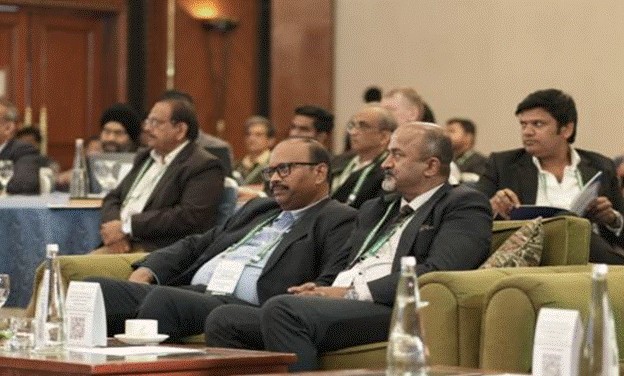
New Delhi: The India–UK Conference on Green Hydrogen Standards and Safety Protocols was convened on 27 February 2026 in New Delhi, bringing together representatives from India and the UK across government, industry, academia, standards bodies, testing institutions, research organisations, and regulatory agencies to strengthen cooperation on the safe deployment of green hydrogen under India’s National Green Hydrogen Mission.

The conference was organized by the National Centre for Hydrogen Safety (NCHS), established under the Ministry of New and Renewable Energy (MNRE) to support the National Green Hydrogen Mission, in collaboration with the British High Commission in India and WRI India, and featured key discussions on regulatory frameworks, international standards, and safety protocols across the green hydrogen value chain, including production, storage, transportation, and end-use applications.


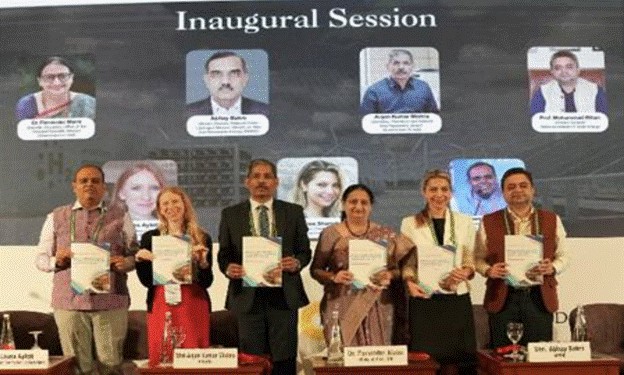
The inaugural session commenced with context-setting remarks by Mohammad Rihan, Director General, National Institute of Solar Energy. This was followed by special addresses by Abhay Bakre, Mission Director, National Green Hydrogen Mission, Ministry of New and Renewable Energy; Jinoos Shariati, First Secretary (Trade), British High Commission in India; Anjan Kumar Mishra, Secretary, Petroleum and Natural Gas Regulatory Board; and Laura Aylett, First Secretary (Climate & Energy), British High Commission in India.


Delivering the keynote address, Parvinder Maini, Scientific Secretary, Office of the Principal Scientific Adviser to the Government of India, emphasized the importance of strong safety frameworks, standards development, and international collaboration to enable the large-scale deployment of green hydrogen technologies.


A key highlight of the conference was the participation of national regulators responsible for hydrogen safety and standards. The Petroleum and Explosives Safety Organisation (PESO) shared regulatory perspectives on safety compliance, risk assessment, and hazard management for hydrogen systems. The Bureau of Indian Standards (BIS) presented insights on the evolving standards framework and ongoing efforts to align Indian hydrogen standards with international best practices.

Technical sessions during the conference featured presentations and discussions by eminent experts from industry, academia, and research institutions on safety practices across the hydrogen value chain. Speakers included representatives from Society of Indian Automobile ManufacturersNTPC LimitedAutomotive Research Association of IndiaCochin Shipyard LimitedArupPetroleum and Natural Gas Regulatory BoardCSIR-National Metallurgical LaboratoryCochin University of Science and Technology, and Indian Institute of Technology Madras. The sessions covered safety practices in hydrogen end-use applications, safe design and operation of hydrogen production, storage and transportation systems, risk assessment methodologies, incident case studies, and emerging innovations such as advanced sensor technologies and AI-enabled monitoring for hydrogen safety. The conference concluded with a shared commitment from India and the UK to strengthen collaboration on standards development, regulatory capacity building, and safety frameworks to support the reliable and large-scale deployment of green hydrogen technologies.

The conference concluded with a shared commitment to strengthen collaboration between India and the UK on developing robust standards, regulatory frameworks, and safety protocols to support the safe and large-scale deployment of green hydrogen technologies. The deliberations are expected to contribute to ongoing efforts under the National Green Hydrogen Mission to build a comprehensive safety ecosystem and facilitate the growth of a reliable and globally competitive green hydrogen sector in India.