spot_imgspot_img
spot_img
Home Blog Page 98

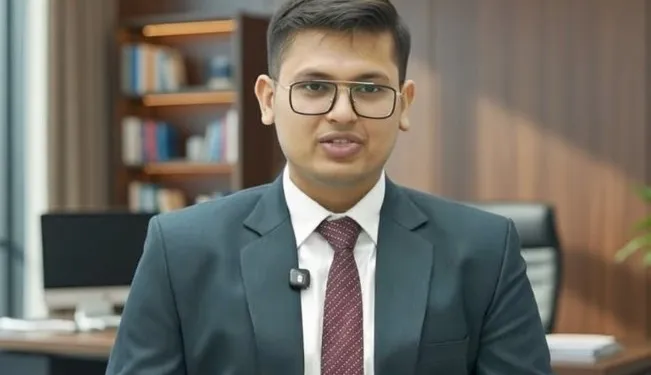
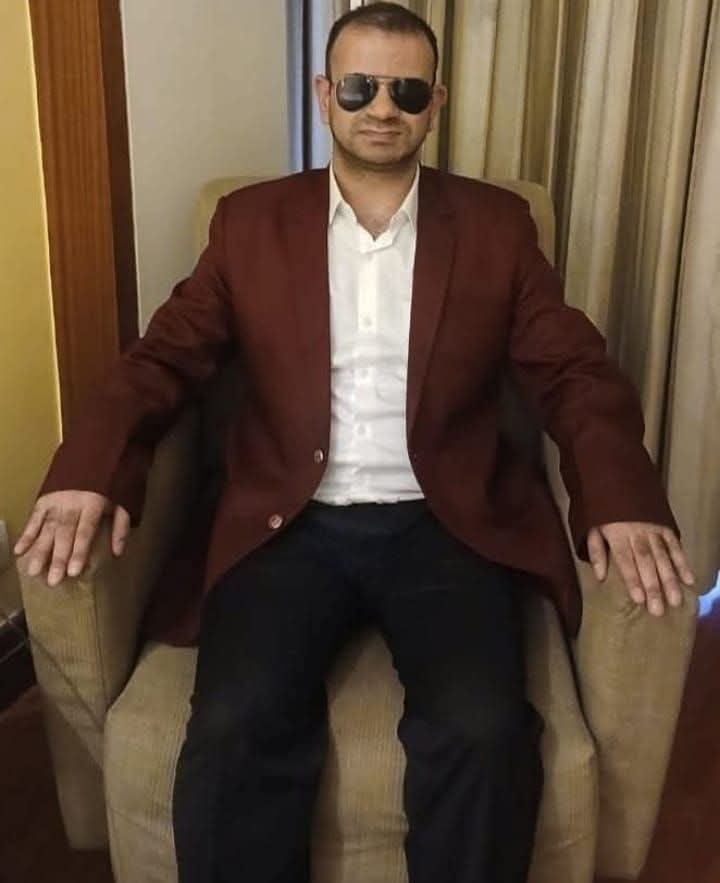
Bandipora Casual Labourer’s Son, Visually Impaired Youth Clears UPSC Civil Services Examination

0

Tauseef Ahmad

Bandipora, Mar 07: Defying severe physical and financial challenges, a visually impaired youth from Naidkhai village in the Sonawari area of Bandipora district has cleared the prestigious UPSC Civil Services Examination, bringing pride and celebration to his family and the entire region.

Irfan Ahmad Lone, the son of a casual labourer, secured a place in the civil services list after years of perseverance and hard work. His father, who once earned just ₹3,000 per month as a casual labourer before the wage was later increased to ₹9,000, continued to support his son’s education despite limited financial means.

He lost vision in one eye during childhood after a pencil accident. Over time, the sight in his other eye also deteriorated, leaving him completely visually impaired. Recognising the need for specialised education, his father enrolled him at the National Institute for the Empowerment of Persons with Visual Disabilities in Dehradun, where he completed his schooling up to Class 12. He got AIR 957 in the final selection list of UPSC announced yesterday.

Speaking with the Kashmir Despatch, his younger sister Shabia said that she always believes her brother will crack the exam because of his hard work and dedication. “He has made the whole Bandipora proud today and has become an inspiration raising from such circumstances is itself an achievement for all of us.”

She said that Irfan pursued higher education at Hindu College under University of Delhi and completed his postgraduate studies at Jawaharlal Nehru University. Though he was offered an opportunity to pursue a PhD at University of Oxford, Irfan instead chose to prepare for competitive examinations.

Currently working as an Assistant Administrative Officer at the Life Insurance Corporation of India in Delhi, he could not immediately visit his hometown due to financial year-end work commitments.

His cousin told Kashmir Despatch, that the village has been celebrating since the results were announced. “His father supported his education despite earning very little as a casual labourer. Today he has made not only his family proud but the entire area,” he said.

Hundreds of people early morning gathered at her house to celebrate Irfan’s success and said that despite heaving challenges he could not stop and make entire area proud which are less known to the authorities.

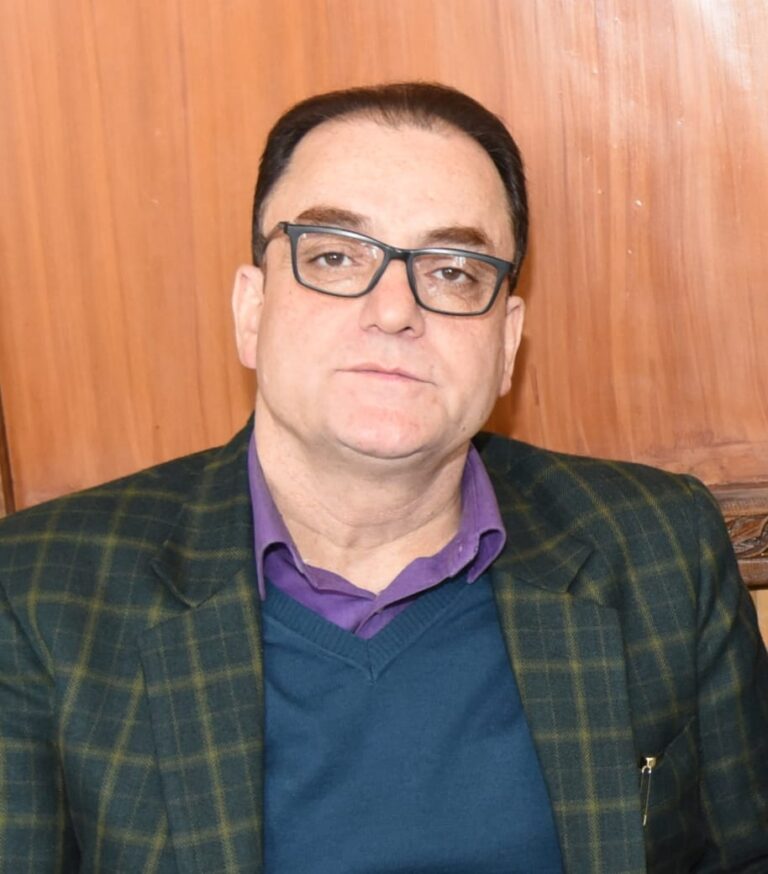
Meanwhile, former minister and senior Naeem Akhtar also congratulated Irfan Ahmad Lone and his family on the achievement. He said Irfan’s success despite visual impairment and financial challenges is inspiring, adding that such accomplishments bring pride to Bandipora and motivate many young people to pursue their dreams.
 

NCB Busts International Drug Trafficking Network Linking Nepal, India and Sri Lanka

0

Vinod Bhat

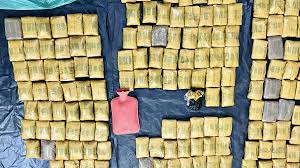
New Delhi: Pursuant to the vision of Hon’ble Prime Minister Narendra Modi for a DRUG FREE INDIA (Nasha Mukt Bharat) and acting upon the directives of the Hon’ble Union Home Minister, the Narcotics Control Bureau has achieved a significant success by affecting the seizure of 77.60 kgs. of Hashish Oil and 2 kgs. of Charas.

In a coordinated multi state operation, officers of the Narcotics Control Bureau, Chennai Zonal Unit in coordination with Hyderabad Zonal Unit successfully dismantled an international narcotics trafficking network operating across Nepal, India and Sri Lanka. The operation resulted in the seizure of 77.60 kgs. of Hashish Oil and 2 kgs. of Charas, along with the recovery of two cars, one motorbike and a fishing boat used for transportation of the contraband. So far, five persons have been arrested so far.

Acting on credible intelligence regarding the movement of narcotic drugs across multiple states, officers of NCB Hyderabad Zonal Unit intercepted a Tata Safari Storme car on 03.03.2026 near Raikal Toll Plaza on the Bengaluru–Hyderabad Highway in Telangana. During the search of the vehicle, 2 kgs. of Charas was recovered concealed in specially fabricated cavities. Two persons, one a Delhi resident, and the other a Uttar Pradesh resident, were apprehended in connection with the transportation of the contraband.

Preliminary investigation revealed that the recovered Charas along with other consignment of about 78 kgs. of Hashish Oil was trafficked into India from Kathmandu, Nepal, through Sonauli Indo-Nepal Border. Consignment of about 78 kgs. of Hashish Oil was already delivered by the arrested persons at Thoothukudi for onward trafficking to Sri Lanka via sea route.

NCB Chennai flung into action on trafficking of Hashish Oil from Tamil nadu to Sri Lanka. Subsequently, the NCB team seized about 78 kgs. of Hashish Oil from the possession of three persons, including a Sri Lankan refugee, taking the total number of arrests in this network to five. Vehicles used for transporting the contraband were also seized. Investigation has revealed that the traffickers had planned to transport the narcotic consignment through the coastal waters off Thoothukudi and deliver it mid sea to a Sri Lankan receiver, using a fishing boat for the maritime transfer.

With the assistance of Indian Coast Guard, NCB intercepted and seized the fishing boat suspected to be used for the planned mid sea transfer near the International Maritime Boundary Line, thereby thwarting the cross border maritime trafficking attempt.

Further probe has identified involvement of a Sri Lankan national, based in Sri Lanka as the final receiver of the seized consignment, who had financed and coordinated the shipment of receovered contraband from Nepal to Sri Lanka.


Further investigation is underway to identify the remaining members of the syndicate, trace financial transactions, and dismantle the broader international network involved in this trafficking operation.

This seizure once again exemplifies the NCB’s steadfast commitment to dismantling inter-state and trans-national drug trafficking networks in furtherance of the vision of a DRUG FREE INDIA.

Since the beginning of this year, NCB Chennai has seized about 973.35 kg of Ganja, 87.64 kg of Hashish Oil, and 1.045 kg of Amphetamine, leading to the arrest of nine individuals. The total estimated value of these seized drugs is approximately Rs. 12.5 Crores. Further, in the legal proceedings related to earlier cases investigated by NCB Chennai, three cases have been successfully prosecuted this year, resulting in the conviction of a total of eight accused persons in all three cases.

Public are encouraged to report any information related to drug trafficking or substance abuse through the MANAS National Narcotics Helpline – 1933, which is available to provide assistance and support.

17 Candidates From J&K Clear UPSC Civil Services Exam 2025

0

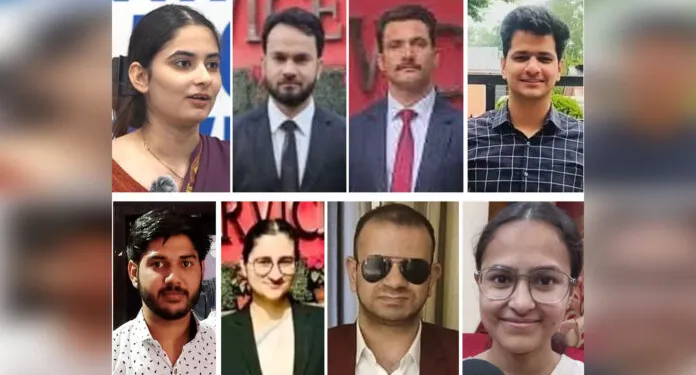
Srinagar, Mar 6: Seventeen candidates from Jammu and Kashmir have cleared the Civil Services Examination 2025, the results of which were declared on Friday by the Union Public Service Commission (UPSC).

As per available details, Suvan Sharma from Jammu secured rank 148, followed by Sugandha Gupta (207) and Towseef Ahmad Ganaie (254).

Other successful candidates from the Union Territory include Ritika Bhan (456), Sooyash Shivam (572), Muneeb Parrah (581), Ghulam Din (663), Dwarka Gaadhi (721), Akash (747), Koh-e-Safa (763), Yasaar (811), Abhishek (820), Pankaj (856), Mohd Ajaz (869), Azhar (886), Sarfraz (936) and Irfan (957).

The UPSC recommended a total of 958 candidates for appointment to various services, including the Indian Administrative Service (IAS), Indian Foreign Service (IFS), Indian Police Service (IPS) and other central services.

The results follow the written main examination conducted in August 2025 and the personality tests held between December 2025 and February 2026.

According to the commission, the recommended candidates have been selected against 1,087 vacancies reported by the government for the 2025 examination cycle. These include 180 posts in the IAS, 55 in the IFS, 150 in the IPS, 507 in Central Services Group ‘A’ and 195 in Group ‘B’.

UPSC data shows that 317 candidates recommended for appointment belong to the general category, 104 to the economically weaker sections, 306 to other backward classes, 158 to scheduled castes and 73 to scheduled tribes.

The commission has also released a consolidated reserve list of 258 candidates in line with the examination rules.

Officials said the reservation claims made by the selected candidates will be verified by the concerned authorities before appointments are finalised.

UPSC further stated that the candidature of 348 recommended candidates has been kept provisional, while the results of two candidates have been withheld.

High-speed internet, prepaid mobile services restored across Kashmir

0

Srinagar, Mar 6: High-speed mobile internet and prepaid calling services were restored across the Kashmir Valley on Thursday, bringing relief to residents after temporary restrictions on communication facilities.

Officials said the services were resumed after a review of the situation, allowing people to regain access to mobile data and prepaid voice services that had remained suspended for a brief period.

The restoration is expected to ease communication problems faced by residents, particularly students, traders and professionals who depend on internet connectivity for studies, business transactions and online services.

Several residents said the suspension had disrupted routine work, including online classes, digital payments and communication with family members outside the Valley.
With the services becoming operational again, normal digital activity is likely to resume gradually across the region, officials said.

Authorities added that the situation is being monitored to ensure that communication services continue to function without disruption.(KNS).

Indian Railways’ Electrification Drive Acts as a Safeguard Against Oil Supply Risks During the West Asia Crisis

0

Near 100% Railway Electrification Reflects India’s Energy Independence, Ensures Uninterrupted Passenger and Freight Mobility During Global Crisis

Vinod Bhat

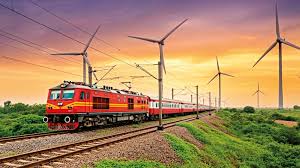
New Delhi:Indian Railways has undertaken electrification of its network in mission mode over the last decade, significantly reducing its dependence on imported diesel. As a result, 99.4% of the Broad Gauge (BG) railway network has now been electrified, marking one of the largest infrastructure transitions in the world.

With a growing share of the railway network now electrified, Indian Railways is able to rely more on domestically generated electricity, improving energy security, optimising energy expenditure and reducing exposure to volatility in global oil markets. This transformation has become particularly important in the current global context, where geopolitical tensions in West Asia may threaten crude oil supply chains.

Indian Railways saved 178 crore litres of diesel in 2024–25 compared to 2016–17, representing a 62% reduction in diesel usage. Today, the bulk of India’s train operations run on electric traction, powered through a diversified electricity mix that includes coal, hydro, solar, and other renewable sources.

During 2024–25, Indian Railways spent ₹32,378 crore on total energy consumption for traction, largely on electricity rather than diesel. The shift towards electric traction has therefore helped stabilise long-term energy costs while enhancing resilience against volatile global oil prices.

The near-complete electrification of the railway network is not just an infrastructure milestone, but also a strategic national preparedness measure – strengthening India’s energy independence and ensuring uninterrupted mobility for passengers and freight during global crises.

By reducing dependence on diesel and increasing the use of electric traction, Indian Railways is strengthening the reliability, sustainability, and energy efficiency of one of the world’s largest rail networks.

Principal Scientific Adviser to the Government of India and the Embassy of Switzerland co-hosts GESDA-Anticipatory Leadership Lab in New Delhi

0

Vinod Bhat

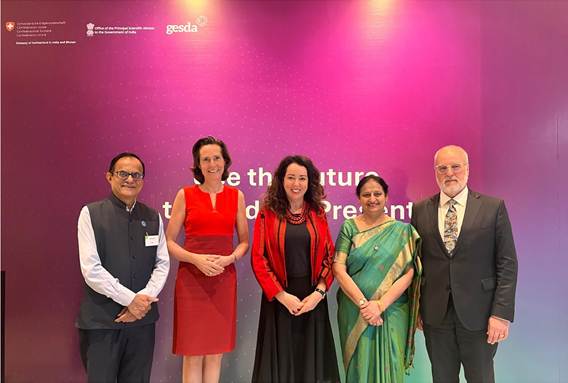
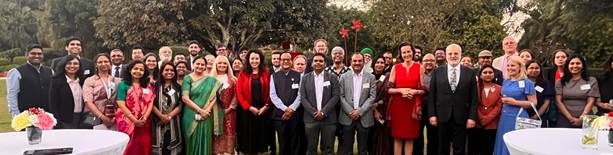
New Delhi: The Office of Principal Scientific Adviser to the Government of India jointly with the Embassy of Switzerland in India and the Geneva Science and Diplomacy Anticipator (GESDA) hosted an “Anticipatory Leadership Lab” in New Delhi on 6 March 2026. Key institutional leaders from India and Switzerland including Principal Scientific Adviser to the Government of India Prof Ajay Sood, Switzerland’s State Secretary for Foreign Affairs Ambassador Alexandar Fasel, Scientific Secretary Dr Parvinder Maini, the Ambassador of Switzerland to India Maya Tissafi and the Director General of GESDA Prof. Marilyne Andersen, facilitated this event.

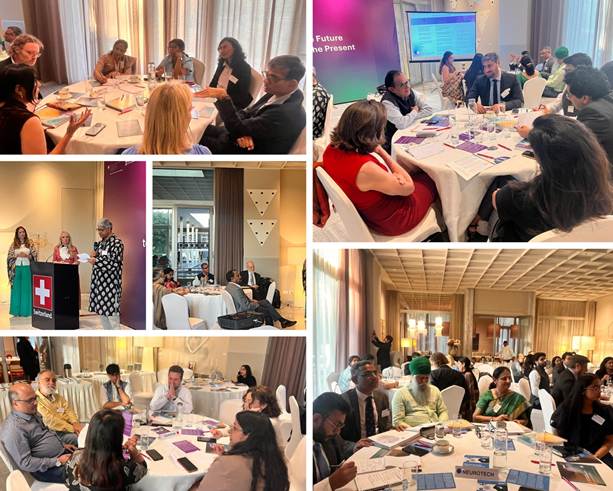
Built on GESDA’s Science Breakthrough Radar® and the anticipatory science diplomacy framework, the Lab brought together 60 leaders from academia, government, diplomatic missions, deeptech startups, business entities and civil society organisations for a structured, multistakeholder dialogue to strengthen their collective capacity to anticipate and govern emerging scientific and technological breakthroughs. The deliberations were focused on research advances in Quantum Computing, AI, Synthetic Biology and Neurotechnology, that expected to transform society and the planet over the next 5, 10 and 25 years.

A collage of several people sitting around tablesAI-generated content may be incorrect.

Addressing the gathering, Prof Sood remarked that, “As a technology matures and disruption occurs, a governance gap becomes visible. It is then the usual governance mechanism convenes, deliberate, and responds. This conventional reactive cycle served us adequately in eras when the pace of change was measured in decades. However, it is no longer adequate. The disruptive frontiers that will define the next quarter-century – quantum computing, artificial general intelligence, synthetic biology, neurotechnology are not distant abstractions. The governance choices we make in the next five to ten years will determine the effectiveness with which these technologies serve humanity”.

Ambassador Fasel commented that “For the Swiss government, anticipating and understanding scientific breakthroughs is no longer a luxury, but a diplomatic necessity. Science and technology have become a “core currency” in international affairs, influencing prosperity, sovereignty, and security on a global scale. Switzerland has therefore made anticipatory science diplomacy a priority in our foreign policy. Our collaboration with India reflects a shared vision between two global innovation leaders, combining cutting-edge excellence with India’s unparalleled ability to scale innovation for millions.”

Professor Marilyne Andersen, Director General of GESDA, remarked that “Anticipatory science diplomacy enables us to harness fast-moving scientific breakthroughs for the benefit of humanity before they deepen global fractures and inequalities. It grounds decision-making in rigorous science, allowing to keep the conversation open and preserved from competition, pressures or quick fixes. It opens an essential window of agency so as to carefully account for all implications and involve policymakers, diplomats, scientists, innovators and citizens across geographies, socio-economic realities and cultural contexts around the table.”

During this exercise, the participants engaged in a forward-looking brainstorming discussion to examine how emerging and frontier technologies could shape India and the global landscape across short-, medium-, and long-term horizons. The deliberations focused on identifying key opportunities and risks for public policy, diplomacy, and industry, while also suggesting potential pathways for sustained engagement and cooperation. The discussion was anchored in the principle that governance frameworks for disruptive technologies must be informed by ‘science anticipation’. By systematically identifying potential technological breakthroughs and their implications at an early stage, countries can create space for collaboration and collective risk assessment before competitive dynamics, geopolitical fragmentation, or crisis-driven responses begin to dominate the global technology landscape.

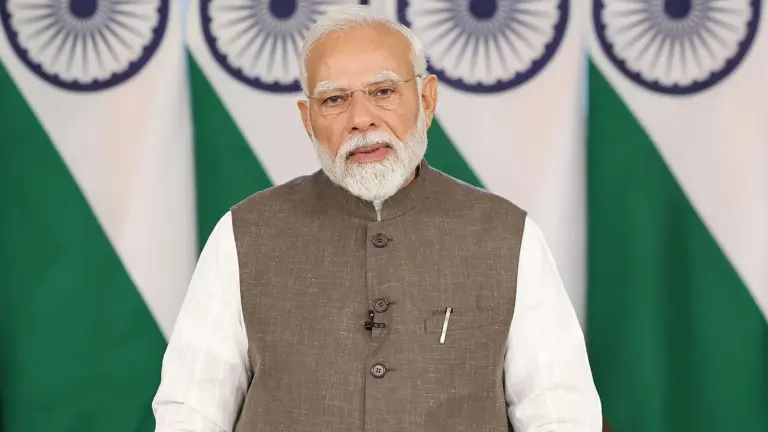
PM to Address Post-Budget Webinar on 9th March on the subject “Sabka Saath, Sabka Vikas – Fulfilling Aspirations of People: Education, Skills and University Townships”

0

Vinod Bhat

New Delhi: The Ministry of Information & Broadcasting (MIB), in collaboration with the Department of Higher Education, will participate in a Post-Budget Webinar on “Sabka Saath, Sabka Vikas – Fulfilling Aspirations of People: Education, Skills and University Townships”, to deliberate on key initiatives announced in the Union Budget 2026–27. The webinar will bring together policymakers, industry leaders, academia, startups, and students to discuss implementation pathways for strengthening India’s education, skills, and creative economy ecosystem.

The inaugural session will be graced by the Hon’ble Prime Minister on 9th March at 11:30 AM, who will deliver a special address outlining the vision behind the budgetary initiative for the AVGC–creator economy, where, creativity, culture and technology converge to drive growth, jobs and soft power.

Ministry of I&B Breakout Session on AVGC Content Creator Labs from 12:20 PM to 01:50 PM

As part of the webinar, the Ministry of Information & Broadcasting will host Breakout Session at on “AVGC Content Creator Labs in Schools and Colleges.” The session will focus on the implementation of the Union Budget announcement to establish AVGC Content Creator Labs (CCLs) across 15000 schools and 500 higher educational institutions, aimed at nurturing creative talent, strengthening India’s Animation, Visual Effects, Gaming and Comics (AVGC) ecosystem, and building a robust pipeline of skilled creators for the country’s rapidly expanding Orange Economy.

The breakout session on “AVGC Content Creator Labs in Schools & Colleges”, scheduled from 12:20 PM to 01:50 PM, will be moderated by Shri Chaitanya Chinchlikar – VP & CTO, Whistling Woods International. There will be a keynote address by Shri Sanjay Jaju, Secretary, Ministry of Information & Broadcasting outlining the importance of this initiative.

The session will then feature a panel discussion with experts from government and industry, including Shri Dheeraj Sahu, Additional Secretary (Department of School Education and Literacy), Dr. Ashish Kulkarni (Chairman, FICCI AVGC Forum), Shri Rajan Navani (Founder & Group CEO, JetSynthesys), and Ms Sonam Bhagat (CEO, Vygr), along with a student representative from IICT. The discussion will be further enriched through interventions by leading industry figures such as Shri Munjal Shroff (Graphiti Multimedia), Shri Biren Ghose (Technicolor Group), Shri Manvendra Shukul (Lakshya Digital), Ms Mala Sharma, (Adobe India), Ms Preeti Vyas (Amar Chitra Katha) and 2 of young volunteers of MyBharat.

J&K Minister Sakeena Itoo Writes to Union Education Minister Seeking Extension of NEET-UG 2026 Application Deadline

0

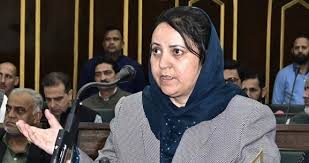
Srinagar, Mar 6: Jammu and Kashmir Minister for Health & Medical Education, School Education, Higher Education and Social Welfare, Sakeena Itoo has written to Union Minister for Education Dharmendra Pradhan seeking an extension of the application deadline for NEET-UG 2026 in view of the difficulties being faced by students in the Kashmir Division.

In a letter addressed to the Union Minister, the J&K Minister highlighted that many students in Jammu and Kashmir, particularly from the Kashmir Division, are facing significant challenges while submitting their online applications due to internet connectivity restrictions limited to 2G speed in certain areas.

She said the slow internet connectivity has created technical hurdles for aspirants, including problems with OTP verification and delays in uploading documents and completing the online submission process within the stipulated deadline.

The Minister emphasized that NEET-UG is a crucial examination for students aspiring to pursue medical education and related courses, and any inability to submit applications due to connectivity issues may adversely impact their academic prospects.

Sakeena Itoo further stated that a large number of students, especially those from remote and rural areas, depend on stable internet services to access the online application portal.

Keeping in view the genuine concerns raised by students, she requested the Ministry of Education to extend the deadline for submission of NEET-UG 2026 applications so that all eligible candidates from Jammu and Kashmir get a fair opportunity to apply.

The Minister expressed hope that the Union Ministry will consider the request sympathetically in the interest of students and ensure that no aspirant is deprived of the opportunity due to technical or connectivity issues. (KNC)

UPSC Results Out: Anuj Agnihotri Tops, 958 Clear Exam

0

New Delhi, Mar 6: Anuj Agnihotri has topped the civil services examination 2025, results of which were declared by the Union Public Service Commission (UPSC) on Friday.

Rajeshwari Suve M and Akansh Dhull bagged the second and third ranks respectively.

A total of 958 candidates have qualified the examination and are recommended for appointment to different central civil services, the Commission said.

The civil services examination is conducted annually in three stages — preliminary, main and interview — by the UPSC to select officers of the Indian Administrative Service (IAS), Indian Foreign Service (IFS) and Indian Police Service (IPS) among others.

The candidature of 348 recommended candidates has been kept provisional, the Commission said in a statement.

The Centre had reported 1,087 vacancies to be filled through the civil services examination.

The UPSC has a “facilitation counter” near the examination hall in its campus.

Candidates can obtain any information/clarification regarding their examinations/recruitments on the working days between 10 am to 5 pm in person or over telephone numbers 23385271/23381125/23098543.

“Marks will be available on the website within 15 days from the date of declaration of result,” the statement said.

Here is the list of candidates who secured the top 10 ranks.
1. ANUJ AGNIHOTRI
2. RAJESHWARI SUVE M
3. AKANSH DHULL
4. RAGHAV JHUNJHUNWALA
5. ISHAN BHATNAGAR
6. ZINNIA AURORA
7. A R RAJAH MOHAIDEEN
8. PAKSHAL SECRETRY
9. ASTHA JAIN
10. UJJWAL PRIYANK

Govt Medical College Srinagar and Associated Hospitals Mourns the Untimely Demise of Dr. Riyaz Ahmad Magray

0

Srinagar, March 6, 2026 – The Government Medical College Srinagar (GMC Srinagar) and its associated hospitals are deeply saddened to announce the sudden and untimely demise of Dr. Riyaz Ahmad Magray, a noble and kind-hearted person.

The Principal, Dean, Administrator, Heads of Departments, administrative staff, medical superintendents, and the entire medical and paramedical staff of GMC Srinagar and its associated hospitals express their profound grief and sorrow on the sad demise of Dr. Riyaz Ahmad Magray.

Dr. Riyaz Ahmad Magray was a compassionate and committed individual who dedicated his life to the medical fraternity. His passing is a great loss to the medical community, and he will be deeply missed.

GMC Srinagar extends its heartfelt condolences to the bereaved family, especially to his wife, Dr Shagufta, and other family members. Our thoughts and prayers are with them during this difficult time.

“The Government Medical College Srinagar and its associated hospitals mourn the loss of Dr. Riyaz Ahmad Magray, a dedicated medical professional and a kind-hearted individual. Our deepest condolences to the family and loved ones. May his soul rest in peace.”