SKIMS Flag Rapidly Rising Infection, Calls For Urgent Prevention, Early Screening, Specialised Care
SYED BASHARAT
SRINAGAR, Jan 3: The Department of Surgical Gastroenterology at the Sher-i-Kashmir Institute of Medical Sciences (SKIMS) has sounded a serious public health alert over the rapidly rising incidence of Alveolar Hydatid Disease (AHD) in the Kashmir Valley, a condition once considered rare but now emerging as a significant and expanding health challenge.
The concern was highlighted during a detailed Grand Round held on December 27, 2025, at the SKIMS Auditorium, under the leadership of Prof. Dr. Sadaf Ali, Head of the Department of Surgical Gastroenterology. The academic session, titled “Alveolar Hydatid Disease – From the Horse’s Mouth,” reflected insights drawn directly from the department’s extensive real-world clinical experience in managing the disease in an endemic setting.
The presentation was delivered by Dr. Tarun Yadav, M.Ch Scholar, Department of Surgical Gastroenterology. The clinicians in charge of the Grand Round were Prof. Dr. Sadaf Ali and Dr. M. Younis Bhat, Assistant Professor, Surgical Gastroenterology. The session was moderated by Prof. Dr. Jaswinder Singh, Head of the Department of Medical Gastroenterology, and Prof. Dr. Naseer Ahmad Choh from the Department of Radiology. Experts from multiple departments, including Medical Gastroenterology, Radiology and Paediatrics, attended the deliberations.
Cases explode:
From rare sightings to 33 cases in 2025, SKIMS flags a steep rise.
Liver under attack:
Disease mimics cancer, turns inoperable if diagnosis is delayed.
Hotspot districts:
Ganderbal, Shopian and Kulgam account for over half the cases.
Surgery saves lives:
75% patients need major liver surgery; others require lifelong drugs.
Preventable threat:
Deworming, clean water and hygiene key to stopping the spread.
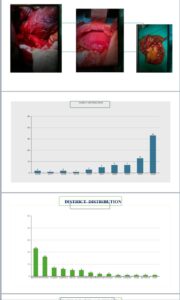
During the presentation, the department shared its compiled data on Alveolar Hydatid Disease, revealing a clear and worrying upward trend over the past decade. While only a few cases were reported annually between 2016 and 2019—when the department first documented and published its initial cases in the medical literature—the numbers have since risen dramatically. According to the data, 13 cases were recorded in 2024, followed by a sharp surge to 33 cases in 2025, signalling that the disease is no longer sporadic but an emerging and fast-growing public health issue in Kashmir.
Alveolar hydatid disease is caused by a parasitic infection in which foxes and dogs act as definitive hosts, while humans become accidental hosts through ingestion of parasite eggs via contaminated food, unsafe drinking water or poor personal hygiene. The disease most commonly affects the liver, where it grows slowly but aggressively and can mimic a malignant condition if left untreated. Experts emphasised that it is entirely different in behaviour and prognosis from the more common cystic hydatid disease of the liver.
The geographical analysis presented during the Grand Round showed that cases have been reported from multiple districts across the Valley, indicating widespread involvement. However, the highest disease burden—accounting for over 50 per cent of cases—was observed in Ganderbal, Shopian and Kulgam districts. This, experts said, underscores the need for heightened vigilance beyond tertiary care centres.
The department stressed that healthcare workers at district and sub-district hospitals, particularly in Ganderbal and Shopian, must actively engage in public awareness campaigns and initiate screening programmes using simple liver-focused abdominal ultrasonography. Early diagnosis, the experts warned, is critical, as delayed detection often renders the disease inoperable, complicating treatment to the extent that liver transplantation may become the only viable option.
Summarising outcomes from 74 documented cases, the department reported that 75 per cent of patients underwent surgical treatment in the form of liver resections, highlighting the central role of surgery in managing the disease. High-end hepatobiliary surgeries were performed, including major right and left hepatectomies in most cases, as well as complex procedures such as central hepatectomies in select patients.
Patients who were deemed unsuitable for surgery due to advanced disease and infiltration of vital structures in and around the liver were managed medically with anthelminthic therapy. While medical treatment was generally well tolerated, experts noted that such patients require lifelong medication. Importantly, long-term follow-up data available for some operated patients showed excellent recurrence-free survival beyond five years.
The department highlighted that the absence of mortality and low morbidity among the 45 surgically treated patients was attributable to the specialised and skilled care provided by a dedicated Hepato-Pancreato-Biliary (HPB) unit at SKIMS.
During the concluding discussion, experts unanimously stressed the importance of focusing on preventable aspects of the disease. It was recommended that regular anthelminthic treatment for all individuals above one year of age, using drugs such as albendazole, could significantly reduce the risk of both cystic and alveolar hydatid disease in humans—an approach considered particularly beneficial for resource-limited settings like India.
Environmental factors were also flagged as contributors, with participants noting the loss of natural habitats of carrier animals such as foxes, dogs and rodents, leading to their increased intrusion into human residential areas. The experts called for regular public education camps focusing on safe drinking water, proper food handling and personal hygiene.
Additionally, the need for collaboration with the veterinary department was strongly emphasised, particularly for the regular deworming of domestic and stray dogs with praziquantel. The meeting also underlined the urgency of large-scale, coordinated research involving tertiary healthcare institutions, veterinary researchers and the public health system.
The Grand Round reaffirmed SKIMS’ pivotal role in addressing an emerging parasitic disease of major public health importance in the Kashmir Valley. Experts concluded that timely referral, specialised care and aggressive, well-planned surgical resection significantly improve survival and quality of life, reinforcing the need for coordinated medical, surgical and preventive strategies to curb the growing burden of alveolar hydatid disease in the region.

