Submits memorandum highlighting demerits of current reservation policies
KD NEWS SERVICE
SRINAGAR, Nov 6: In a memorandum addressed to Irfan Hafiz Lone, Member of Legislative Assembly for the Wagoora-Kreeri constituency, Syed Shameem Ahmad Bukhari, Chairman of the Jammu and Kashmir General Category Welfare Forum (JKGCWF), has called for a re-evaluation of the current reservation policies.
Bukhari’s memorandum emphasized the need to adapt reservation frameworks to ensure merit-based opportunities, address shifting socio-economic realities, and foster societal harmony by reducing potential divides caused by over-reliance on reservations.
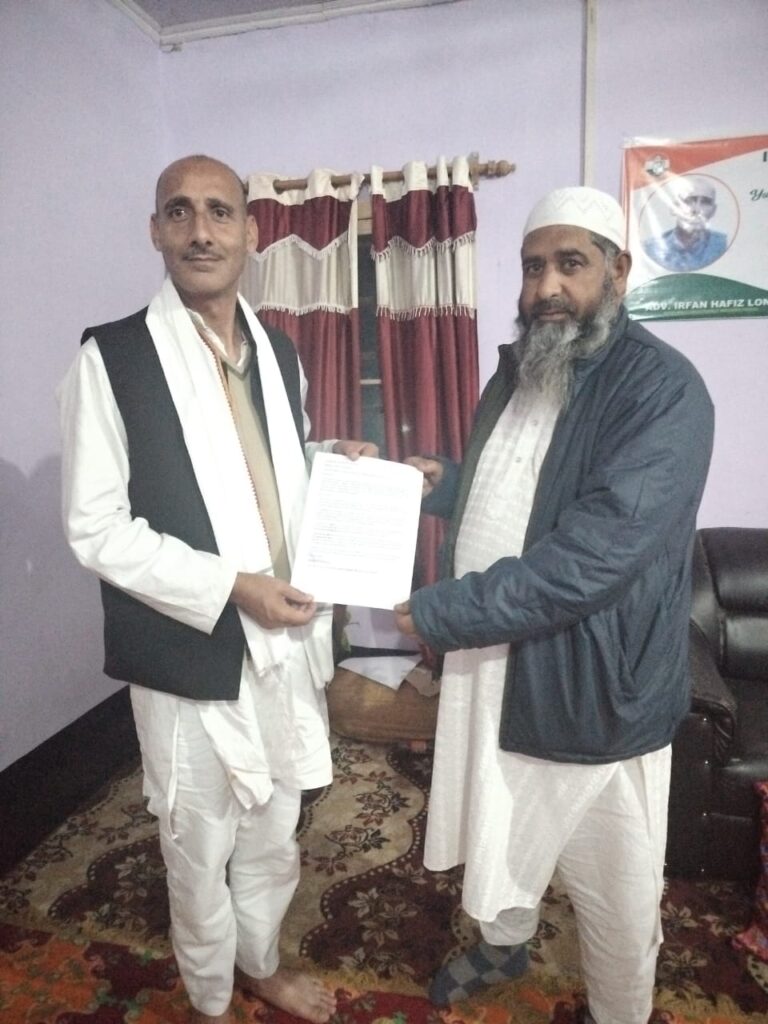
The memorandum outlines several key concerns regarding the current reservation system, which, according to Bukhari, may no longer align with the initial intent of uplifting historically marginalized communities. Bukhari acknowledges the purpose of reservations as a crucial step toward social equity but argues that policy reform is essential to make the system more equitable and inclusive for all citizens.
Merit-Based Opportunities and Fair Competition
One of the main points raised in the memorandum is the impact of reservations on merit-based selections, particularly in the fields of education and employment. Bukhari contends that while reservations were introduced to level the playing field, they often limit opportunities for individuals from non-reserved categories. “Many students and professionals find themselves disadvantaged in competitive sectors, which reduces the focus on merit and excellence,” Bukhari stated in the letter.
This merit-based concern is a recurring theme in recent debates on reservations across India, where stakeholders argue that qualified individuals, regardless of their background, deserve fair consideration. By advocating for this reform, Bukhari suggests that a more balanced approach would help foster a competitive environment that rewards hard work and talent.
Evolving Socio-Economic Conditions
Bukhari further notes that the socio-economic conditions in India have evolved since the inception of the reservation system, and as a result, many individuals from reserved categories no longer face the same systemic disadvantages as in the past. “The socio-economic landscape has shifted, and some individuals within reserved categories are now in better positions than before. Therefore, it may be appropriate to consider new criteria—such as economic status—when determining eligibility for reservation benefits,” Bukhari argued.
This point calls for a shift toward an economic-based reservation system that would better target individuals facing actual economic hardship, ensuring that benefits reach those who truly need them, regardless of caste or category. Bukhari believes this approach would increase the system’s fairness while addressing the current inequalities in its application.
Societal Harmony and the Spirit of Competition
The JKGCWF memorandum also highlights the potential risk of societal divisions that may arise from an over-reliance on reservations. Bukhari warns that continuing the present system without reform could inadvertently create divides within communities and undermine the values of self-reliance and healthy competition. “Our society would benefit greatly from a more inclusive and evolving approach to reservations. This would strengthen our collective spirit and encourage citizens to strive for self-improvement,” he added.
Bukhari’s memorandum echoes sentiments from various communities that believe a re-evaluation of the reservation policy would contribute to a more harmonious society, one where individuals are motivated by self-improvement and supported by a system that rewards effort and talent.
An Appeal for Legislative Support
In his appeal to the MLA Wagoora-Kreeri, Bukhari urged the representative to bring these concerns to the Legislative Assembly. He expressed confidence in the MLA’s commitment to representing the voices of the constituency and working toward the welfare of all sections of society. “We believe that with your representation, our government can adopt a balanced approach that supports the disadvantaged while upholding the principles of merit and equal opportunity for all,” Bukhari wrote.
This appeal marks a significant call to action within Jammu and Kashmir’s legislative arena, as it seeks to inspire broader dialogue on an issue that resonates with many communities across the region. The JKGCWF’s stance also aligns with national conversations on the importance of updating policies to reflect changing social realities while retaining the core values of equality and fairness.
The memorandum reflects a growing sentiment among citizens that while the reservation system has been instrumental in addressing historical inequities, it must be continually reviewed and refined to adapt to present-day needs. Whether this appeal will lead to policy discussions or legislative action remains to be seen, but it is evident that Bukhari’s request has added a notable voice to the ongoing discourse surrounding reservations in Jammu and Kashmir.

