J&K’s Education Renaissance Reaching All Corners, With Special Focus on the Marginalised
Arjumand Wani
SRINAGAR, Aug 1: “My name is Shaista Akhtar. I study in class first”, she replied to her teacher’s question in a canvas tarpaulin tent; a mobile school in Namblan area of Pulwama district, while standing in an honorary manner.
Akhtar, hardly a 7-year-old girl is a member of a nomadic family that migrates timely, which is one of the main ways that nomadic people deal with the lack of possibilities for a living in their home states.
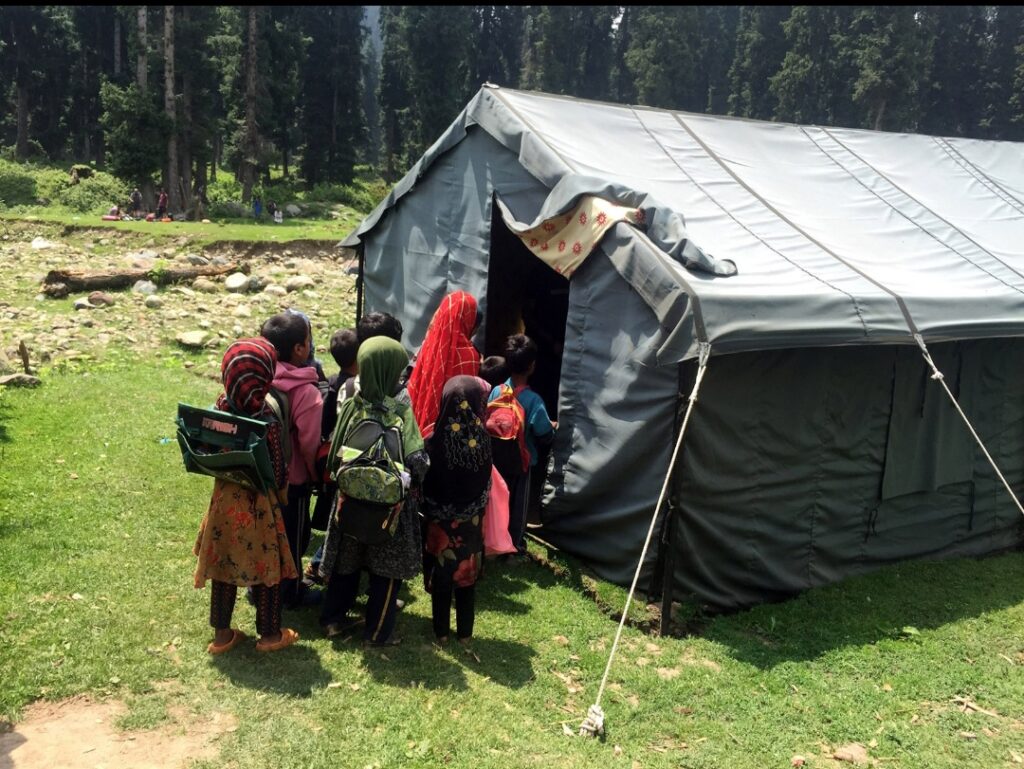
According to research done in 2021 by Associate Professor Kavita Suri at the Department of Lifelong Learning at the University of Jammu, the government had established more than 1500 mobile schools with nearly 33000 children, both boys and girls, pursuing basic education.
In these mobile classrooms, education is provided by more than 2000 teachers. The government has put a lot of effort into getting kids from the economically disadvantaged parts of society enrolled in pre-primary and primary classrooms. Nomadic children, children from remote places, girls and members of schedule caste and schedule tribe groups are all given the support they need to get an education and realize their goals.
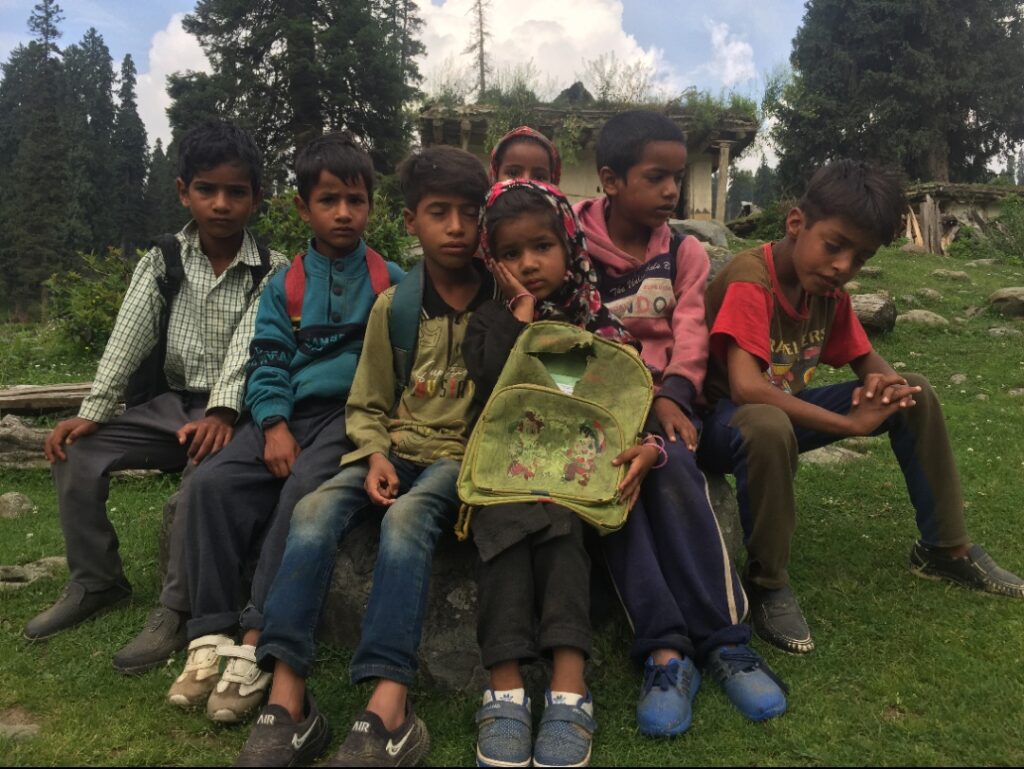
“Since past few years, especially after August 2019, I don’t feel marginalised anymore. I avail the same opportunities, the other students get which makes me happy,” Said Irfan Ahmad (19) from Sangarwani area of south Kashmir who is pursuing his BA from Government Degree College Charar-i-Shareef.
Ahmad said that their youngsters are now able to study, even while they are moving because of efforts from the government to bring education at every corner.
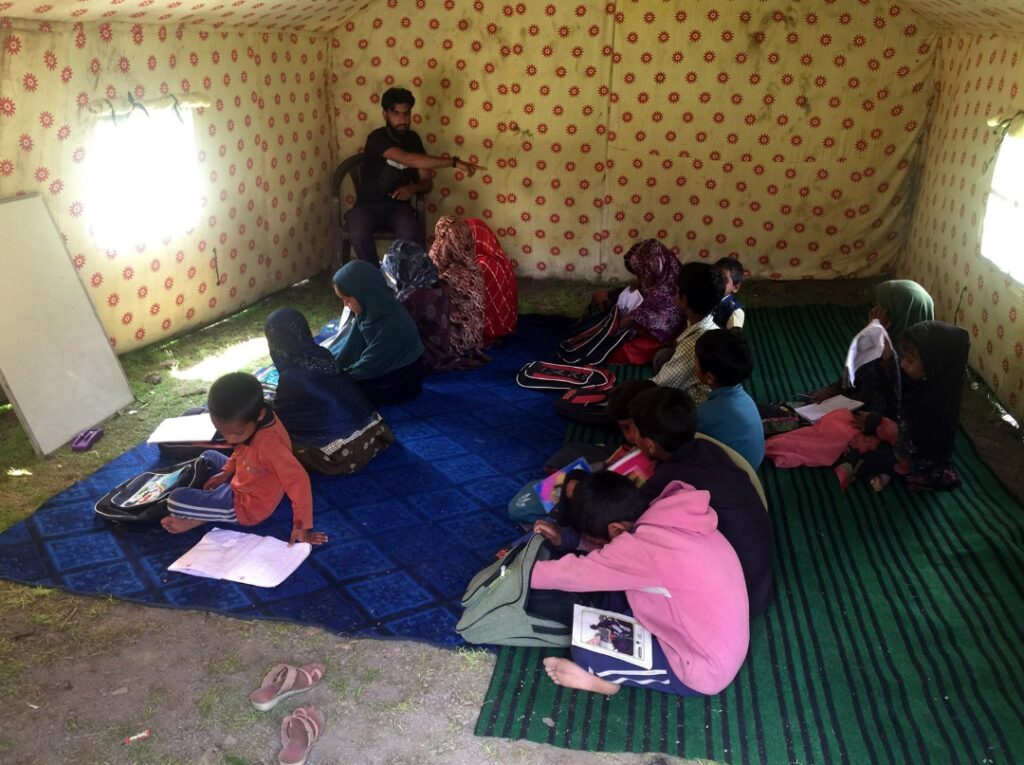
He also added that there is proper mobile network connectivity in his area now, which further works as a fuel in pursuing their goals.
Pertinently in an effort to further the interests of the tribal population in Jammu and Kashmir, the Tribal Affairs Department recently started the largest-ever distribution of scholarships among local students under a variety of scholarship programs.
Dr. Shahid Iqbal Choudhary, Secretary of Tribal Affairs, explained the Government’s initiative to empower these essential segments of the society through education by informing Kashmir Despatch that “a total amount of Rs. 45 crore shall be credited through DBT mode to the bank account of the beneficiaries under Pre Matric and Post Matric scholarship schemes.”
The procedure has been made more user-friendly and transparent as a result of its relocation to the National Scholarship Portal and connection with the PFMS.
Under the direction of Lieutenant Governor Manoj Sinha, the department has over the past two years built a solid basis for tribal education and addressed shortcomings, notably in planning, inclusive development, and empowerment with regard to education.
According to an official, in order to ensure an inclusive educational environment in Jammu and Kashmir, a number of exercises were carried out in 2021 to assess the status of education in tribal areas, which includes collect micro data, gather community feedback, evaluate the facilities and opportunities, and finally implement an all-encompassing education plan for tribal population.
Under the “Modernisation of Schools in Tribal Areas” experiment, which was begun in 2021, a further innovative effort in collaboration with the School Education Department is quietly altering the infrastructure of schools in distant tribal communities. At a cost of twenty crores, the first phase of the program produced 100 smart schools in 20 districts, and in last year, more than 200 schools signed up to receive smart classrooms.
With the government’s commitment to strengthening the weakest portions of society via different social and tribal welfare measures, the sizable budget for the fiscal year 2023–2024 would promote inclusive development for all segments of society.
More modern classrooms for children are still planned for in the budget, along with a way to monitor the population’s economic, medical, and educational status. Furthermore, 124300 Pre-Matric students in the First to Eighth grades who fall under the Scheduled Caste/Other Backward Classes/Economically Backward Classes/Physically Challenged Persons categories would receive scholarships under the budget.
As instructed by the lieutenant governor, Manoj Sinha, the tribal department has started a unique project that envisions a transhumant support system with transit lodging and transportation facilities for the migrating people.
The Tribal Affairs Department acquired a fleet of 40 trucks to transport about 30,000 families from Jammu to Kashmir via the Mughal Road and NH-44 connecting Jammu with Srinagar in accordance with the Lieutenant Governor’s announcement to lessen the hardships experienced by the Tribal community during seasonal migration. The department has bought these vehicles from J&K Road Transport Corporation.

