spot_imgspot_img
spot_img
Home Blog Page 121

Dr. Virendra Kumar inaugurates 29th Divya Kala Mela in Chandigarh

0

“This is not an exhibition, it is a celebration of dignity, self-reliance and empowerment” — Dr. Virendra Kumar inaugurates 29th Divya Kala Mela in Chandigarh

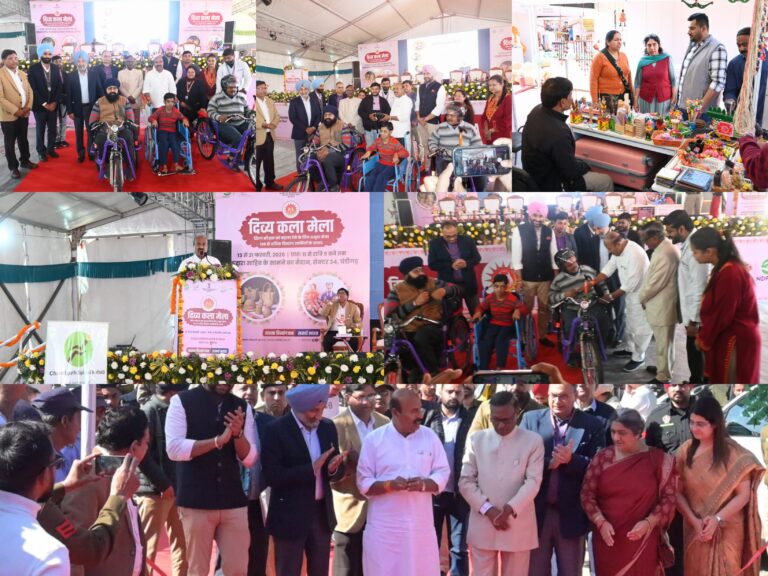
“This is not merely an exhibition; it is a celebration of dignity, self-reliance and empowerment.” With these powerful words, Dr. Virendra Kumar, Hon’ble Union Minister of Social Justice and Empowerment, inaugurated the 29th edition of Divya Kala Mela at the Exhibition Ground, Chandigarh, today. He described the Mela as a transformative movement that has emerged as a new ray of hope in the lives of Divyangjan across the country, reflecting the Government’s unwavering commitment to inclusive growth and equal opportunity.

Highlighting the journey of empowerment since 2014, the Minister said that the shift from insensitive terminology to the respectful term “Divyang” under the leadership of Shri Narendra Modi Hon’ble Prime Minister marked not just a change in vocabulary, but a change in vision. The enactment of the Rights of Persons with Disabilities Act, 2016, expansion of disability categories, and the implementation of the Sugamya Bharat Abhiyan have together laid the foundation for accessibility, dignity and participation. He emphasized that true respect goes beyond words — it must translate into economic strength, social inclusion and self-reliance. The Divya Kala Mela, he noted, embodies this philosophy by directly linking the talent of Divyang artisans and entrepreneurs to markets across India.

Shri Satnam Singh Sandhu, Hon’ble Member of Parliament (Rajya Sabha), in his address, remarked that according respect to Divyangjan in line with India’s cultural values is a historic step. However, he underlined that empowerment must accompany respect. “Without livelihood and self-reliance, dignity remains incomplete,” he said, appreciating the Ministry for creating platforms like Divya Kala Mela that enable Divyang youth, especially those unable to travel far, to showcase and market their products closer to home.

Shri Saurabh Joshi, Hon’ble Mayor of Chandigarh, described the occasion as a celebration of talent, confidence and human potential. He said that hosting Divya Kala Mela, Divya Kala Shakti and the Rozgar Mela in Chandigarh reflects the city’s commitment to inclusion, reinforcing the belief that disability is not a limitation but a distinct ability that enriches society.

In his welcome address, Shri Rajiv Sharma, Joint Secretary, Department of Empowerment of Persons with Disabilities (DEPwD), highlighted the tangible economic impact of the initiative. Over the past three years, Divya Kala Melas organized across various cities have recorded business transactions worth ₹2366.43 lakh, clearly demonstrating growing market acceptance and the rising entrepreneurial capacity of Divyang artisans. He affirmed that these Melas are not mere exhibitions but strong instruments of economic inclusion and self-reliance.

The 29th Divya Kala Mela is being organized at the Exhibition Ground, Chandigarh, in the gracious presence of distinguished dignitaries including Smt Anuradha S. Chagti, Secretary, Social Welfare & Women and Child Welfare Department, Chandigarh; Shri Vineet Rana, Chief General Manager, NDFDC; Shri M. K. Sahoo, Assistant General Manager, NDFDC; and other senior officials. So far, Divya Kala Melas have been organized at 28 locations across the country with the participation of around 2,362 Divyang entrepreneurs, collectively generating income of over ₹23 crore — a remarkable milestone in inclusive entrepreneurship.

In addition to providing marketing platforms, the Government has sanctioned loans exceeding ₹20 crore through these initiatives to further strengthen Divyang entrepreneurship. Parallel Rozgar Melas have witnessed participation of 3,131 candidates, out of which 1,007 were shortlisted and more than 313 have already received job offers, reflecting the employment-generating dimension of the initiative.

The Chandigarh Mela features around 75 stalls, including those by Divyang entrepreneurs, Government of India institutions and NGOs. A dedicated Rozgar Mela for Divyangjan is scheduled on 19 February 2026 to connect them with reputed organizations and companies. Visitors can also register for assistive devices at the ALIMCO stall, while several institutions are showcasing innovations and new initiatives aimed at empowerment. Inclusive sports activities such as Boccia and Blind Cricket, along with daily cultural performances by Divyang artists, are adding vibrancy to the event. On 21 February 2026, a special cultural presentation titled “Divya Kala Shakti” will celebrate the extraordinary artistic abilities of Divyang performers.

As the Mela unfolds in Chandigarh, it stands not only as a marketplace but as a movement — one that reinforces the message that when Divyangjan are empowered economically, they strengthen families, communities and the nation. Divya Kala Mela continues to shape an inclusive India where dignity, opportunity and self-reliance walk hand in hand.


DIPR organises day-long workshop on ‘Ethical Journalism and Evolving Landscape of Journalism’ at Jammu

0

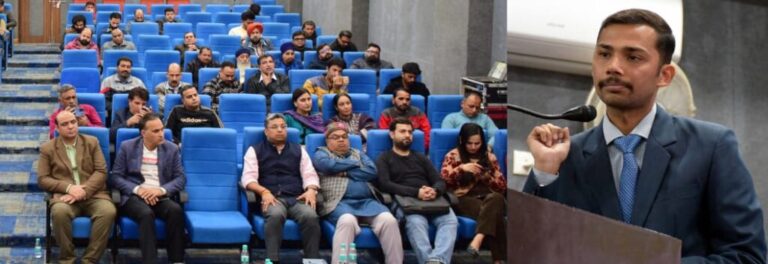
JAMMU: Directorate of Information and Public Relations (DIPR) organised a day-long workshop on ‘Ethical Journalism and the Evolving Landscape of Journalism’, for Mediapersons of Jammu at Media Complex here.

The objective of the workshop was to sensitise the media professionals and communication practitioners about the changing dynamics of journalism and the critical importance of ethical standards in the present digital age.

During the workshop, Regional Director IIMC Jammu, Dr. Dilip Kumar and Assistant Professor, Vishav were the resource persons.

The Resource persons enlightened the participants on emerging trends in journalism, challenges posed by misinformation, and the growing influence of digital platforms on news consumption and dissemination. They also spoke in length about the ethics in journalism and importance of ethical journalism in view of rising AI use in Journalism as well as digital journalism.

Speaking on the occasion, Director Information, Nitish Rajora highlighted the vital responsibility of journalists in the present scenario, stressing that the role of the media extends beyond reporting facts to shaping informed, balanced and responsible public opinion.

“Journalists today operate in a fast-paced environment where information travels instantly. This makes adherence to ethical principles like accuracy, fairness, objectivity and accountability more important than ever”, he said.

He also underscored the need for continuous capacity building to keep pace with technological advancements and evolving audience expectations.

The Director underlined the need for constant interaction between DIPR and Mediapersons, adding that the department will make it a regular feature to organise get togethers for Journalists .

In his welcome address, Joint Director Information (hqr), Dr. Zahoor Ahmad Raina spoke about the role of media in present scenario. He also highlighted about the importance of fairness and credibility in the media.

Joint Director Information Jammu, Deepak Dubey in his concluding remarks emphasized on the role of Mediapersons in present scenario of evolving digital age. He also said such workshops will be conducted in coming times also to strengthen collaborations between media institutions and government departments to promote professional excellence, transparency and responsible journalism.

During the workshop, an interactive session was also held between the participants and resource persons, sharing experiences and seeking guidance on ethical dilemmas faced in professional practice.

Deputy Director Information (PR), Javid Ahmad Rather; Information Officer Alka Misra alongwith other officers and officials of DIPR were present on the occasion.

The workshop was attended by Mediapersons of various National and local Media organisations.

Syed Mohammad Altaf Bukhari calls on New Delhi to restore dialogue, engage youth for confidence-building

0


Demands immediate conduct of Panchayat and ULB polls; calls for creating employment opportunities and revision of reservation policy


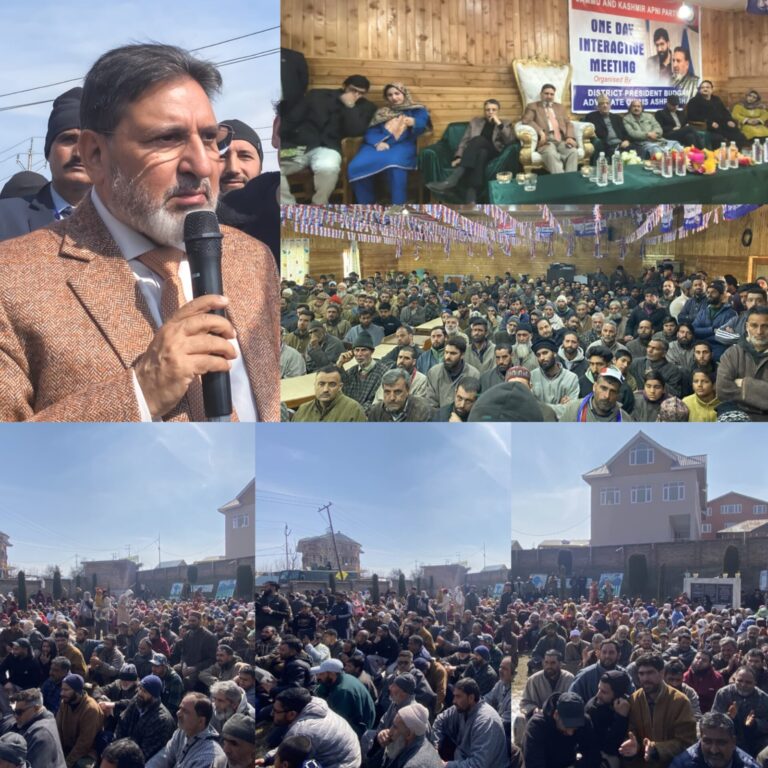
Srinagar, February 14: Apni Party President Syed Mohammad Altaf Bukhari on Saturday urged the Centre to restore dialogue with the people, especially the youth of Jammu and Kashmir, for confidence-building and to end the negative environment. He said that this is the appropriate time to end mistrust and negativity through meaningful dialogue.


Syed Mohammad Altaf Bukhari also urged the J&K government to take measures for the immediate holding of Panchayat and Urban Local Bodies elections. He also demanded that the existing reservation policy be rationalised.


The Apni Party President made these remarks while addressing a workers’ convention in Charar-e-Sharief.


He said that by holding Assembly elections in 2024, one tier of the democratic process was completed, but to ensure grassroots-level empowerment of the people and strengthen grassroots democratic institutions, it is important that Panchayat and ULB polls are held without any further delay.


He further said that grassroots-level empowerment through Panchayat and ULB polls was mentioned in the LG’s address to the House, but it seems that the elected government is not serious about holding these elections.


Expressing his concern over growing unemployment, Syed Mohammad Altaf Bukhari demanded that the government take concrete measures to create employment opportunities for the youth. He said that, unfortunately, there was nothing in the recently passed budget to generate job opportunities. He further stressed that the existing reservation policy must be rationalised to ensure fairness and balance.


Accusing the ruling NC and the Opposition BJP, along with their leaders, of dividing people for personal and political gains, he said that both parties are hand in glove and are helping advance each other’s agenda.


He alleged that the NC criticises the BJP merely to gain people’s support in the Valley, while the BJP does the same to secure public backing in Jammu. By doing so, he said, both parties reap political dividends at the cost of people’s unity and the harmony between the two regions.


In his speech, Syed Mohammad Altaf Bukhari explained how and why Apni Party was established on March 8, 2020, at a time when Jammu and Kashmir and its people were going through a period of distress and chaos in the aftermath of the abrogation of Articles 370 and 35A.


He said, “On August 5, 2019, the central government shocked us by revoking the special constitutional status of Jammu and Kashmir through the abrogation of Article 370 and bifurcating the erstwhile state into two Union Territories. This decision created widespread apprehension about potential demographic changes in the region. During those testing times, we took a bold stand and stepped forward to form an organisation to engage with leaders in the Union Government. We met the Hon’ble Prime Minister and the Hon’ble Home Minister and urged them to safeguard the special rights of the people of Jammu and Kashmir, particularly with regard to land and employment.”


He went on to say, “Our efforts led to the introduction of the domicile law, ensuring that no one can purchase land or secure government employment in Jammu and Kashmir unless they have resided here for at least 15 years. This residency period can be extended if an elected government has the will to do so.”


“If the present government is sincere in protecting the interests of the people, it should consider increasing the residency requirement for obtaining a domicile certificate from the current 15 years to 50 years,” Mr Bukhari added.


Apni Party President said that traditional regional leaders, especially those led by two families, have been exploiting people through deceitful slogans and false promises. He urged people to stop falling prey to their deceptions.


He said, “Your victimization and exploitation by these traditional parties and their leaders have been going on for decades. Unfortunately, you have allowed them to exploit you. At one point in history, you even chanted self-insulting slogans like, “Ala karay ga, wangan karay ga, bab karay ga.” Then we saw how they treated people like those vegetables. At the very least, you must now stop following the same parties and their leaders blindly.”


“These parties and their leaders are responsible for our miseries. They have consistently engaged in political gimmickry, allowing the rights of the people to be undermined for the sake of their own political gains, he said.


Syed Mohammad Altaf Bukhari said that in the 2024 Assembly elections, Apni Party suffered only because it did not resort to lies or fake promises.


He said, “We lost only because we believe in the politics of truthfulness and integrity. Unlike others, we do not believe in fake promises or unachievable goals. We say openly that New Delhi has given us deep wounds. There is no doubt about it. However, we also believe that solace for our wounds will come from New Delhi, not from anywhere else. This is the truth, and we will continue to say it.”


Speaking on the occasion, the party’s prominent leader and Chairman of the Parliamentary Affairs Committee (PAC) said, “The parties that claimed during the elections that they would restore Article 370 were simply lying. Article 370 was abrogated by Parliament. We can reinstate it only when we have a majority in Parliament, and that is unlikely.”


He further said, “After the events of August 5, thousands of people were jailed, and the Apni Party played a role in securing the release of 3,200 prisoners. That was our contribution at that time.”


Addressing the event, party General Secretary Rafi Ahmad Mir spoke about the local public issues and grievances that people in Budgam are facing. He said, “During our interaction with the people and party workers here, we came to know about the pressing issues they are grappling with. I assure you that we will bring these issues to the notice of the concerned officials, ensuring their prompt redressal.”


While speaking to the gathering, the party’s Media Advisor, Farooq Andrabi, asked people to make the Apni Party stronger and support its vision for the people. He told them not to fall for the tricks of old political parties and not to be fooled again by their repeated lies. He said people should take part in democracy in a careful and responsible way. He also asked them to support leaders who believe in honesty, responsibility, and real public welfare.


The other prominent party leaders who spoke on the occasion or were present included Spokesperson and Youth Wing President Yawar Dilawar Mir; District President Budgam, Owase Ashraf Shah; District President Shopian, Advocate Gowhar; Constituency In-charge for Budgam District and Senior Vice District President Mukhtar Ahmad Dar; Spokesperson Ishrat Bhat; Shaista Ji; Ghulam Hassan; Ghulam Nabi Dar; Irfan Mukhtar Sofi; Imtiyaz Ahmad; Dar; Ghulam Hassan Kumar; Ayaz Ahmad Najar; Riyaz Ahmad Dar; Jahangir Ahmad; Latief Ahmad Dar; Javeed Ahmad Khanday; Basharat Khanday; Abdul Majeed; Mohammad Shafi Mir; and others.


Sacrifice of Pulwama martyrs won’t go in vain : PM Modi

0

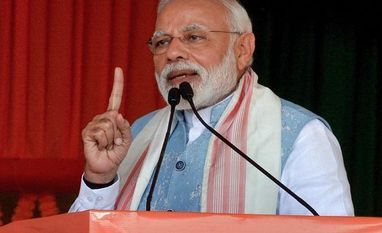
New Delhi, Feb 14  : Six years after the deadliest terror attack on security forces in Jammu and Kashmir, Prime Minister Narendra Modi on Saturday paid solemn tributes to the 40 Central Reserve Police Force (CRPF) personnel who were martyred in the 2019 Pulwama suicide bombing, asserting that their courage continues to inspire and strengthen every Indian.

Leading the nation in remembering the fallen heroes, the Prime Minister took to social media platform X to honour their memory. PM Modi as per news agency Kashmir News Service (KNS) underscored that their sacrifice remains indelibly etched in the national consciousness.

“Remembering the brave heroes who laid down their lives in Pulwama on this day in 2019. Their devotion, resolve and service to the nation remain forever etched in our collective consciousness. Every Indian draws strength from their enduring courage,” PM Modi posted.

Notably, It is marked as the ‘Black Day’ to remember the 40 brave CRPF soldiers who laid down their lives in the attack.

Pulwama Attack Anniversary: LG Manoj Sinha Pays Tributes to CRPF Martyrs

0

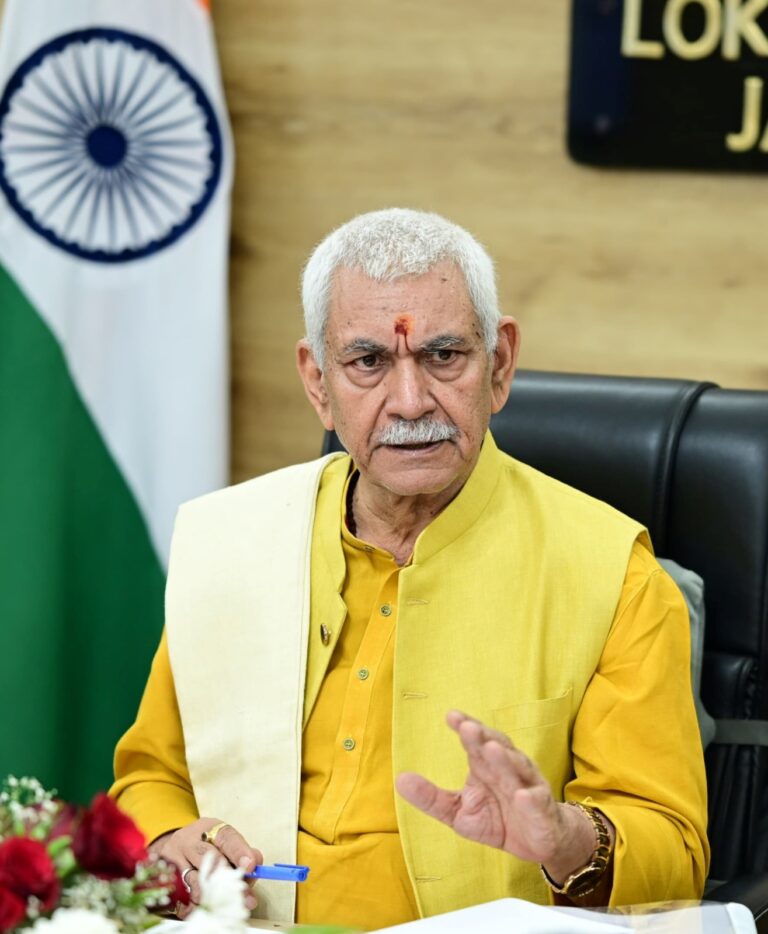
Srinagar, Feb 14 : Jammu and Kashmir Lieutenant Governor Manoj Sinha on Saturday paid homage to the 40 Central Reserve Police Force (CRPF) personnel who were martyred in the 2019 Pulwama terror attack, stating that their bravery and sacrifice will continue to inspire the country.

Taking to microblogging site ‘X’, the Lt Govverner Manoj Sinha, remembered the fallen heroes on the seventh anniversary of the dastardly attack.

“Humble tributes to the valiant martyrs who laid down their lives in the line of duty during the heinous terrorist attack in Pulwama in 2019,” the official handle of the Office of the LG, Jammu and Kashmir, posted.

“Their unmatched bravery, steadfast commitment, and selfless service to the motherland will continue to inspire every citizen of India,” the post added.

On February 14, 2019, a suicide bomber from the Jaish-e-Mohammed (JeM) terrorist group rammed an explosive-laden vehicle into a CRPF convoy in the Lethpora area of Pulwama district. The attack resulted in the martyrdom of 40 personnel and left several others injured.

The incident had escalated tensions between India and Pakistan. In a retaliatory response, the Indian Air Force (IAF) carried out the Balakot airstrikes, destroying JeM terror camps deep inside Pakistan on February 26, 2019.

Meanwhile, Security has been tightened in parts of South Kashmir, especially along the Jammu-Srinagar National Highway, to ensure the peaceful observance of the anniversary.

Spice, Survival and Silent Strength at Hazratbal

0


A Day in the Life of Kashmir’s Elderly Masala Sellers


TAQWA SHAFI

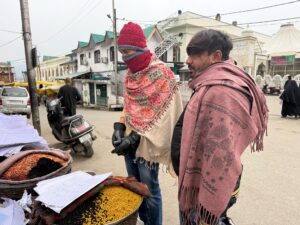
SRINAGAR, Feb 13: On a crisp Friday morning at Hazratbal Shrine in Srinagar, as the faithful stream toward the revered white marble domes for congregational prayers, another ritual quietly unfolds along the pavements.

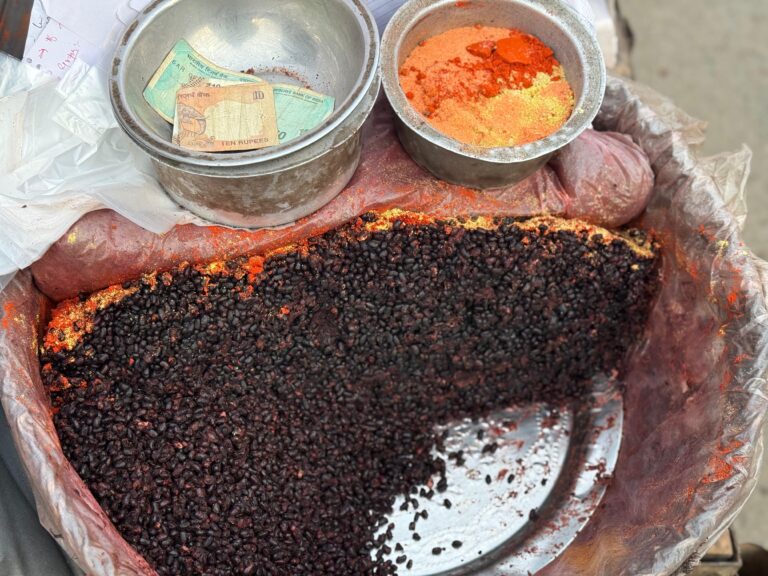
Beneath the open sky, seated on low wooden stools or folded blankets spread across cold concrete, elderly women unwrap their day’s hope. From cloth bags emerge small, neatly folded paper packets—filled with homemade black masala. The aroma rises before the sun fully does: roasted cumin, fennel, coriander, cloves, and the smoky warmth of tradition.

These are not merely spices.

They are survival, dignity, and memory—ground together before dawn.

Zaina’s Battle with Time

Seventy-year-old Zaina Begum adjusts her woollen shawl as she arranges her packets with deliberate care. For more than nine years, this pavement has been her workplace. But her struggle began long before that.

Twenty-five years ago, her husband was killed in a road accident, leaving her widowed with five children—three sons and two daughters—and no steady source of income. There was no pension, no savings, no safety net.

“I did whatever work I could get,” she says, her voice steady but weathered. “My children had to survive.”

She found employment at a local private school. Her duties were unglamorous and exhausting—cleaning toilets, sweeping corridors, serving tea to teachers. The work strained her body but strengthened her resolve. Every rupee went toward school fees, books, and meals.

Years passed. She married off her daughters. Her sons, too, began families of their own. But the promise of rest never came.

After her sons married, Zaina was asked to live separately. She was given a single small room—one space where she now sleeps, cooks, and spends her days alone.

Age tightened its grip. Diabetes followed. Medicines became expensive luxuries. When she finally left her school job, her income stopped—but her expenses did not.

With no pension and no dependable support, she turned to something she had always known: preparing traditional Kashmiri black masala—Masala Wagun.

Each morning before sunrise, Zaina dry-roasts cumin, fennel, coriander, and cloves in an iron pan. The crackle of spices is her morning soundtrack. She grinds them by hand, carefully blending proportions perfected over decades.

“This is not just business,” she says quietly. “This work keeps me alive. I earn with my own hands.”

On good days, she earns between ₹200 and ₹500—barely enough for food and medicines. But it is hers.

Fatima’s Fight for Her Children

A few steps away sits 60-year-old Fatima, her fingers stained faintly with spice dust. Her story echoes hardship of a different kind.

Divorced nearly 15 years ago after her husband remarried, Fatima was left to raise two daughters and a son alone. For a time, her former husband sent ₹10,000 per month. But five years ago, even that support stopped.

“I raised my children alone,” she says, her tone matter-of-fact, not bitter.

With no formal education and limited opportunities, she began selling black masala outside the shrine. What started as a desperate measure became a daily ritual.

Her modest earnings helped educate her children. Her elder daughter, now a graduate, teaches at a private school—the same school she once attended as a student.

“She helps run the house now,” Fatima says, pride flickering across her face. “But I still work.”

Not out of necessity alone—but out of habit, independence, and resilience.

The Spice that Binds Kashmir

Black masala is a staple in Kashmiri kitchens. Sprinkled over boiled eggs, potatoes, or steaming rice, it adds a burst of smoky warmth to simple meals. Unlike factory-made blends, the masala prepared by these women carries the texture of hand-grinding and the depth of slow roasting.

Customers know the difference.

“Whenever I visit the shrine, I make sure to buy from these women,” says Bilal Ahmad, a local schoolteacher. “The masala reminds me of my grandmother’s kitchen.”

Many buyers come not only for flavor but for familiarity. Some ask for the masala by the seller’s name.

“People recognise us here,” Fatima says. “They trust us.”

Trust, however, does not shield them from rising costs. The price of raw spices has nearly doubled in recent years. Selling rates remain largely fixed, leaving little room for profit.

“A few years ago, spices cost ₹200,” Zaina explains. “Now it’s almost double. But we can’t increase the price too much. Customers won’t buy.”

Without formal stalls or protection from the weather, they rely entirely on footfall—on Fridays, on festivals, on faith.

Most of the women here are widowed, divorced, or living alone. Their mats form a fragile marketplace of endurance.

Labour in the Shadows

As afternoon shadows lengthen and prayers conclude, the crowds begin to thin. The women count their earnings carefully—notes folded into the corners of shawls. Unsold packets are tucked away for the next day.

There are no closing announcements. No applause.

Only quiet departure.

“This is not about fame,” Zaina says softly as she gathers her things. “I just want enough to buy my medicines and live with dignity.”

Their labour is steady and largely unnoticed. They do not protest, demand, or complain loudly. They endure.

“We were never taught to ask,” Fatima says with a tired smile. “We were taught to make, to give, to carry on.”

In the shadow of Hazratbal’s gleaming dome, amid devotion and prayer, these elderly women conduct their own act of faith—faith in work, in resilience, and in survival.

Each small paper packet they hand over carries more than spice.

It carries a lifetime of struggle—ground fine, wrapped tight, and sold with grace.


Clean the Markets, Protect the People

0


The health and wellbeing of a society are inseparably linked to the purity of the food it consumes. In Jammu and Kashmir, where traditional cuisine is not merely sustenance but an integral part of cultural identity, the issue of food adulteration and sale of rotten consumables is not just a regulatory concern — it is a grave moral and public health crisis. The ongoing market checking drives launched by the Food Safety Department, particularly across Srinagar, are therefore not only timely but absolutely indispensable. These efforts must not slow down; rather, they should be intensified and institutionalised to permanently cleanse our markets of unscrupulous elements.

Over the past few years, there have been repeated complaints about adulterated spices, stale vegetables, rotten mutton, decomposed fish, and unhygienic poultry being openly sold in markets. In many cases, these items are cleverly disguised with artificial colouring, excessive preservatives, or chemical additives to appear fresh and appealing. Such criminal practices amount to nothing less than poisoning the public for profit. The victims are often unsuspecting households — families preparing daily meals, parents feeding children, and elderly citizens with already fragile health.

Spices adulterated with brick powder, artificial dyes, or low-grade fillers pose serious health hazards, including gastrointestinal disorders, liver damage, and long-term toxic effects. Rotten mutton and fish, when consumed, can lead to food poisoning, severe infections, and even life-threatening complications. Poultry stored in unhygienic conditions becomes a breeding ground for bacteria such as Salmonella and E. coli. The burden of such illnesses ultimately falls on an already strained healthcare system and, more painfully, on innocent families who suffer silently.

Srinagar, being the commercial hub of Kashmir, naturally witnesses high footfall in its markets. Areas such as Lal Chowk, Nowhatta, Batamaloo, and other bustling localities see brisk trade, particularly during festive seasons and marriage months. It is precisely during these peak periods that some black sheep in the market attempt to exploit the surge in demand by pushing substandard and rotten products. Without regular and surprise inspections, these malpractices flourish unchecked.

The Food Safety Department of Jammu and Kashmir deserves appreciation for its recent drives, inspections, and sampling operations. Raids that result in seizure and destruction of rotten meat and adulterated spices send a strong message. However, sporadic action is not enough. What is required is a sustained, year-round campaign with zero tolerance for violators. Markets must know that inspection teams can appear at any time and that penalties will be swift and severe.

The department should strengthen its enforcement mechanism by increasing the frequency of surprise inspections, particularly in vulnerable areas and wholesale supply chains. Cold storage facilities, meat processing units, and spice grinding mills must come under constant scrutiny. Laboratory testing of samples should be expedited, and results must be made public to ensure transparency and deterrence.

Equally important is the need for exemplary punishment. Heavy fines, cancellation of licenses, and even criminal prosecution must be pursued against repeat offenders. The message should be unambiguous: there is no place in our society for those who gamble with public health. Profit earned by selling poison disguised as food is blood money.

Public awareness must go hand in hand with enforcement. Consumers should be encouraged to report suspicious products or unhygienic practices. Display of licenses, proper labeling, and adherence to hygiene standards must be strictly enforced. The government can also consider setting up a dedicated helpline or strengthening grievance redressal systems to empower citizens.

Religious and moral values of our society strongly condemn cheating and exploitation. Selling rotten meat or adulterated spices is not merely a legal violation; it is an ethical betrayal of community trust. Traders who maintain high standards of quality and hygiene must also come forward to support strict action against those who tarnish the reputation of the entire business community.

Kashmir has already been witnessing a worrying rise in lifestyle and non-communicable diseases. Compromised food quality only compounds these challenges. Clean markets are not a luxury — they are a fundamental necessity for a healthy society.

The Food Safety Department must therefore continue, expand, and institutionalise its market checking campaign across Srinagar and other districts. The objective should not only be to seize rotten products but to permanently dismantle the networks that allow adulteration to thrive. Let there be a clear resolve: the black sheep of the market must be exposed, penalised, and removed so that the common, innocent people of Kashmir can eat without fear.

A society that cannot guarantee safe food to its citizens fails in its most basic duty. It is time to act decisively and relentlessly — for clean markets, for public health, and for the dignity of our people.


Ganderbal Press Association Condoles Demise of Ghulam Ahmad Mir

0

Ganderbal, Feb 13: The Ganderbal Press Association (GPA) has expressed deep sorrow over the demise of Ghulam Ahmad Mir, father-in-law of Greater Kashmir Editor Fayaz Ahmad Kaloo, who passed away after a prolonged illness at his residence in Haripora, Ganderbal.

Ghulam Ahmad Mir was also the beloved father of Afaq Mir, Deputy Superintendent of Police and Suhail Mir Advocate, both of whom stand prominent in public service.

GPA President Ayaz Sofi, along with all members of the association, offered heartfelt condolences to the bereaved family. In their message, GPA members remembered the late Ghulam Ahmad Mir as a dignified and respected figure, whose humility and kindness left a lasting impression on all who knew him.

GPA members joined in dua, praying that Almighty Allah grants the departed soul the highest place in Jannat and gives patience to the grieving family during this difficult time.

Army’s Gurez Snow Cricket Premier League 2026 Inspires and Empowers Border Girls In Snowbound Gurez Valley

0

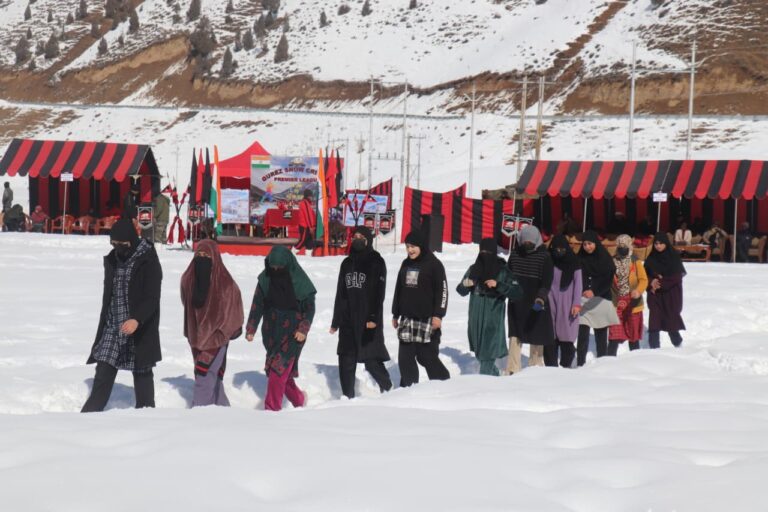
Gurez, Feb 13: In a commendable initiative for border girls, the Indian Army organized the Gurez Snow Cricket Premier League (GSCPL) 2026 in the snowbound Gurez Valley of Bandipora district. The tournament was aimed at promoting sports and empowering young girls living near the Line of Control (LoC), where harsh winters and heavy snowfall often disrupt normal life and limit recreational opportunities.

The much-anticipated Girls Exhibition Match of GSCPL 2026 was played between Habba Khatoon Cricket Club and Dard Shina Club, showcasing exceptional talent, confidence, and sporting spirit among the young players.

After winning the toss, Dard Shina Club elected to bat first and posted a competitive total of 50 runs in 12 overs. The team displayed determination and composure on the challenging snowy surface, setting up an exciting contest.

In reply, Habba Khatoon Cricket Club fought valiantly and kept the chase alive until the final moments. However, they were bowled out for 48 runs in 11.1 overs, falling short by just two runs in a nail-biting finish. Dard Shina Club secured victory with five balls remaining, making it one of the most thrilling matches of the tournament.

Shafiqa was declared Player of the Match for her outstanding bowling performance, claiming an impressive six wickets and playing a crucial role in her team’s victory.

The event was graced by Mehak Mehboob, who appreciated the players for their enthusiasm, discipline, and sportsmanship.

She praised the efforts being made to promote girls’ participation in sports in the region. Cash prizes and medals were awarded to both the winning and runner-up teams to encourage the continued involvement of young girls in cricket across the valley.
The match not only entertained spectators but also reflected the growing confidence, talent, and empowerment of girls through cricket in the snow-covered region.

Local girl players expressed heartfelt gratitude to the Indian Army for organizing the snow cricket tournament in this far-flung border area. They said that heavy snowfall during winters often cuts off the region from the rest of the world and limits opportunities for extracurricular activities.

The players acknowledged that such initiatives are helping girls from border areas participate in sports and develop confidence. They also expressed hope that similar programs will continue in the future to support and encourage young girls in the Gurez region.

J&K ACB Traps ASI in Srinagar for Accepting ₹8,000 Bribe

0

Srinagar: J&K ACB traps and arrests Mukhtar Ahmad Khan, Assistant Sub-Inspector of Police Station Bemina, Srinagar for demanding and accepting bribe of ₹8000

Anti-Corruption Bureau received a written complaint alleging that Mukhtar Ahmad Khan, Assistant Sub-Inspector, R/o Newa Pulwama, who was the Investigating Officer (IO) of FIR No. 88/2025 of Police Station Bemina, Srinagar, had demanded illegal gratification from the complainant despite the case having already been challaned before the competent court. The accused officer allegedly threatened to harass the complainant in case his demand was not fulfilled.

Upon receipt of the complaint, a discreet verification was conducted, which prima facie substantiated the allegations. Consequently, Case FIR No. 04/2026 under Section 7 of the Prevention of Corruption Act, 1988 was registered at Police Station ACB Srinagar and investigation was set into motion.

During the course of investigation, a trap team was constituted which laid a successful trap and apprehended the accused public servant, Mukhtar Ahmad Khan, Assistant Sub-Inspector, red-handed while demanding and accepting a bribe amount of ₹8,000/- from the complainant. The accused was immediately taken into custody and the bribe money was recovered on the spot in the presence of independent witnesses.

Further investigation in the case is in progress.