spot_imgspot_img
spot_img
Home Blog Page 122

Gulmarg set to host 6th Khelo India Winter Games from Feb 23; 400 Athletes to Compete

0


TAUSEEF AHMAD

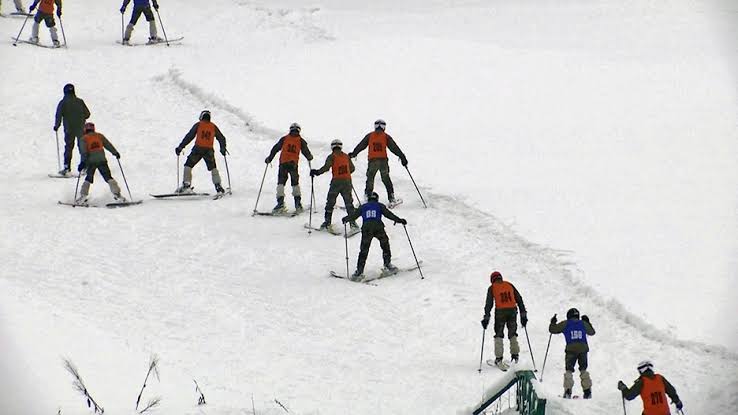
SRINAGAR, Feb 13: The world-famous ski resort of Gulmarg is poised to witness a major sporting spectacle as it prepares to host the sixth edition of the Khelo India Winter Games (KIWG) from February 23 to 26. Nearly 400 athletes from various states and Union Territories across the country are expected to participate in multiple snow sport disciplines, transforming the snowy slopes of Kongdoori into a vibrant arena of national-level winter competition.

The snow sports leg in Gulmarg follows the successful completion of the ice sports phase held in Ladakh from January 20 to 26, marking the first segment of KIWG 2026. The announcement regarding the Gulmarg leg was made by Union Minister for Youth Affairs and Sports Mansukh Mandaviya, who described the timing of the event as significant, coming close on the heels of the Winter Olympics. He expressed optimism about the smooth and successful conduct of the competitions in Jammu and Kashmir, underscoring the Centre’s commitment to promoting winter sports in the region.

Four Medal Disciplines at Kongdoori Slopes

According to officials, the Gulmarg edition will feature four key medal disciplines: Alpine Skiing, Nordic (Cross-Country) Skiing, Ski Mountaineering, and Snowboarding. All competitions are scheduled to be held at the renowned Kongdoori slopes, which are currently blanketed in fresh snow following recent snowfall in the Valley.

Among the four disciplines, Alpine Skiing is expected to witness the highest participation, reflecting its growing popularity among Indian winter sport athletes. Organizers believe that the natural terrain and snow conditions in Gulmarg offer an ideal competitive environment, comparable to several international venues.

Athletes See KIWG as Stepping Stone to Global Platforms

Speaking to Kashmir Despatch, Aasif, an alpine skier from the Valley, highlighted the importance of regular high-level domestic competitions in improving India’s global standing in winter sports.

“When athletes compete consistently under pressure at home, it sharpens their technical ability, timing, and mental strength,” he said. “Platforms like the Khelo India Winter Games create that competitive ecosystem in India. If we want to see more Indian skiers at the Winter Olympics, we must strengthen events like these.”

He added that competing in Gulmarg carries special emotional significance for local athletes. “For us, competing in Gulmarg is both an honour and a responsibility. We have trained on these slopes since childhood, but performing in a national event in front of athletes from across India adds a different level of pressure and pride. Hosting Khelo India here will inspire many local children to take winter sports seriously and believe they can represent the country one day.”

Boost to Tourism and Local Economy

Beyond sports, the event is expected to provide a significant boost to the local economy. Hotelier Fayaz Ahmad told Kashmir Despatch that Gulmarg has been witnessing an unprecedented tourist rush following recent snowfall, describing it as the first such surge since the Pahalgam attack.

He noted that hotels and guest houses are witnessing high occupancy rates, bringing much-needed relief to stakeholders in the hospitality sector. “Events like the Khelo India Winter Games not only provide a competitive platform for athletes but also support the livelihoods of thousands of people in Gulmarg who depend directly or indirectly on winter tourism,” he said.

The influx of athletes, officials, support staff, and visitors is expected to further enhance business for hoteliers, transport operators, ski instructors, and local vendors.

Administration Reviews Preparations

Officials have stated that comprehensive arrangements are in place to ensure the smooth conduct of the event. Director Tourism Kashmir, Syed Qamar Sajad, informed the media that there are no infrastructure gaps and that preparations related to accommodation, logistics, and venue readiness have been finalized in coordination with the district administration and other line departments.

Deputy Commissioner Baramulla, Minga Sherpa, also chaired review meetings to assess preparedness and directed concerned departments to ensure proper traffic regulation, uninterrupted water supply, and availability of essential services during the four-day event.

Athletes participating in the games are expected to arrive in the Valley on February 21 and 22 to acclimatize and complete pre-event formalities.

Medal Race and Defending Champions

The first leg of KIWG 2026 in Ladakh saw Haryana lead the medal tally with four gold medals. Meanwhile, the Indian Army, which topped the overall standings in the previous edition, will aim to defend its title in the snow sports leg at Gulmarg.

In recent years, the Khelo India Winter Games have evolved into a crucial national platform for promoting winter sports in India. By providing structured competition and encouraging wider participation in disciplines that once had limited visibility, the Games have played a key role in nurturing talent from regions like Jammu and Kashmir, Himachal Pradesh, Uttarakhand, and Ladakh.

As Gulmarg readies its slopes and hospitality infrastructure, the 6th edition of the Khelo India Winter Games promises not only thrilling competition but also renewed hope for India’s ambitions in international winter sports.
 

Snowbound No More

0


 Volunteers Bridge Winter Education Gap in Bandipora’s Tribal Belt


SEERAT-Un-NISA


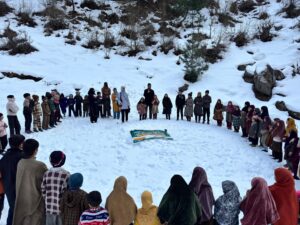
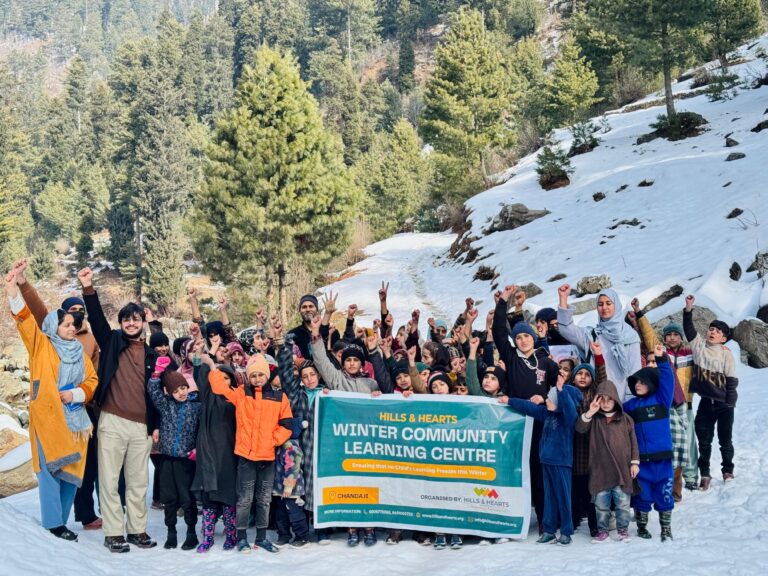
BANDIPORA, Feb 13: In the snow-laden tribal hamlets of Chandaji, Ketsan and Reshwari in north Kashmir’s Bandipora district, where winter often brings life to a standstill, a quiet educational revolution is taking shape. For the first time, volunteer-run Winter Community Learning Centres have emerged as a lifeline for hundreds of tribal children who would otherwise remain cut off from education for months.

Every year, harsh winters isolate these mountainous settlements under thick blankets of snow. Roads become impassable, public transport disappears, and government schools either function irregularly or remain inaccessible. For nearly three months, formal learning comes to a grinding halt — leaving children academically stranded and widening learning gaps that many never fully recover from.

The consequences have been severe: falling grades, declining confidence levels, and in some cases, permanent dropouts.

A Community Steps In

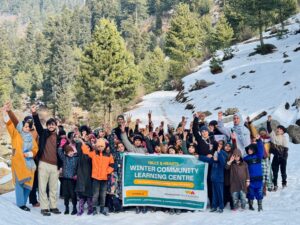
Recognising this recurring crisis, a youth-led group, Hills at Hearts Foundation, spearheaded by social activist Kifyatullah, launched a first-of-its-kind initiative — community-based Winter Community Learning Centres entirely run by volunteers.

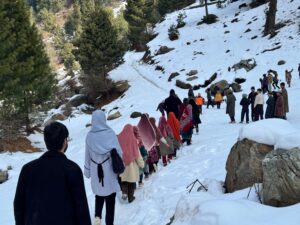
Set up in three remote tribal pockets with no access to coaching institutes and limited government academic outreach, these centres are operating against formidable odds. Many children trek several kilometres on foot from upper mountain settlements, navigating icy paths and freezing temperatures to attend classes.

“There has never been a coaching culture in these villages. During winters, education almost comes to a complete halt,” Kifyatullah told Kashmir Despatch. “The nearest private coaching centres are located 10 to 15 kilometres away. For most families, especially those dependent on seasonal labour, the cost of daily travel combined with tuition fees makes it completely unaffordable.”

Winter months are particularly difficult for tribal households, many of whom rely on daily-wage or seasonal work that dries up during heavy snowfall. With incomes reduced and mobility restricted, investing in private tuition becomes an impossible luxury.

Overwhelming Response

What began as a modest intervention soon exceeded expectations. Organisers initially anticipated enrolling around 150 students. Instead, more than 270 children registered across the three centres — nearly double the projected number.

To meet the growing demand, close to 30 volunteer teachers — graduates and postgraduates from local communities and neighbouring towns — stepped forward. Before classes began, volunteers underwent orientation and training sessions to ensure structured academic delivery in core subjects such as Mathematics, Science, Social Studies and Urdu.

Weekend sessions are dedicated to holistic development. Special instructors focus on English communication skills, reading proficiency, personality development, health awareness, and confidence-building exercises.

The goal, volunteers say, is not merely to prevent academic regression but to rebuild lost confidence.

“Many students in Class 8 struggled to read a simple sentence or introduce themselves in English,” said one volunteer teacher. “Now they raise their hands, participate in discussions, and speak without fear. The change in just a few weeks is remarkable.”

Visible Change at Home

For parents, the transformation is tangible.

Abdul Rashid, a resident of Chandaji, said winter used to mean academic stagnation for his son. “Earlier, he would forget much of what he had learned during the school year because there was no school or coaching in winters. Now, even in snowfall, he wakes up early and insists on attending the centre. His reading has improved, and he talks about becoming a teacher.”

Such aspirations were once rare in these isolated pockets, where limited exposure and educational disruptions often narrowed children’s ambitions.

Community elders say the initiative has not only strengthened academic continuity but has also fostered a renewed culture of learning in villages where winters traditionally symbolised dormancy.

Official Response

Responding to claims regarding the absence of winter coaching facilities for tribal students, Chief Education Officer Bandipora, G.M. Pujju, stated that 15 winter tutorial centres had been allotted to the district this year.

He clarified that two centres in the Gurez Zone — at Boys Higher Secondary School Dawer and High School Jurniyal — became non-functional due to zero enrolment, as students reportedly opted to attend centres in Bandipora town. The centre in the Aragam tribal belt, he added, is operational but has recorded low admissions.

The officer emphasised that the education department remains committed to strengthening infrastructure and ensuring quality academic support for tribal students across the district.

Bridging a Seasonal Divide

While government efforts continue, the volunteer-driven centres in Chandaji, Ketsan and Reshwari highlight the power of community-led intervention in addressing long-standing seasonal disparities in education.

In a region where winter once meant academic isolation, the sound of children reciting lessons inside modest community spaces now signals hope — proving that even in the harshest conditions, learning need not freeze.


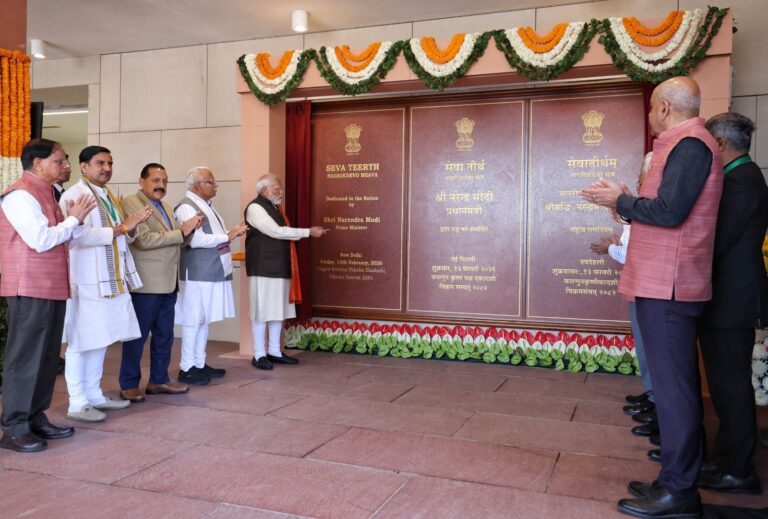
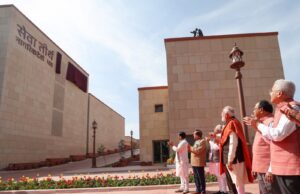
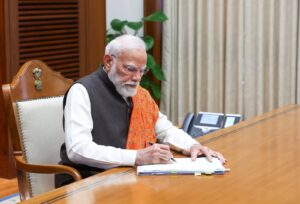
HM Amit Shah, terms the inauguration of the new Prime Minister’s Office ‘Seva Teerth’ by Prime Minister Shri Narendra Modi as historic

0

VINOD BHAT

Delhi, Feb 13:

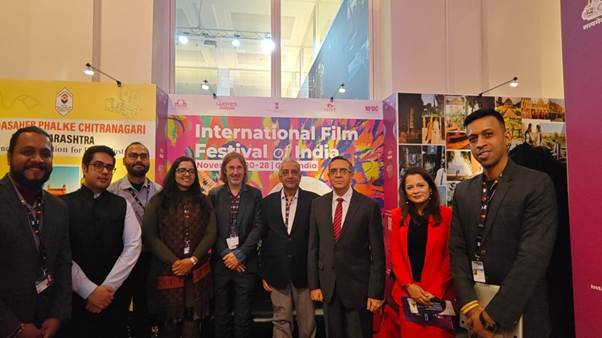
Marking a powerful and multidimensional presence at the European Film Market (EFM) 2026, held alongside the Berlin International Film Festival, India formally inaugurated the Bharat Pavilion, its official platform at the market, underlining the country’s expanding global role across cinema, culture, and creative technologies. The Pavilion was inaugurated by H.E. Ambassador Shri Ajit Vinayak Gupte, Ambassador of India to Germany, in the presence of prominent international market leaders, cultural representatives, and the Indian film and innovation delegation.


The inauguration ceremony reflected the growing depth of India–Germany engagement in the creative and cultural sectors. Among the distinguished attendees were Ms. Tanja Meissner, Director of Berlinale Pro and Head of the European Film Market, who leads one of the world’s most influential film markets; Mr. Peter Domsch, Head of Sales & Design, EFM, instrumental in shaping international participation and strategic industry engagement; and Ms. Trisha Sakhlecha, Director of the Tagore Centre, whose work has been central to strengthening artistic and cultural dialogue between India and Germany. The event was also attended by senior officials from the National Film Development Corporation (NFDC), members of the Embassy of India in Berlin, and a diverse Indian delegation representing the country’s evolving creative ecosystem.


Indian Filmmakers Expand Global Partnerships


India’s presence at EFM this year stands out for its strong blend of storytelling excellence and innovation-led participation. A major highlight is the participation of nine Indian filmmakers, who are actively engaging with international producers, sales agents, distributors, and festival programmers. Their presence reflects India’s growing integration into global co-production networks and the rising international appetite for Indian stories across languages and genres. Through structured market meetings and project discussions, these filmmakers are exploring partnerships that extend beyond traditional film trade, into cross-border collaboration and long-term creative alliances.


Equally significant is the participation of a delegation of four emerging start-ups representing India’s rapidly expanding media-tech and creative-tech sectors. These companies bring forward solutions that intersect storytelling, technology, and digital production, demonstrating how India’s creative economy is increasingly being shaped by innovation. Their presence at EFM signals India’s transition from being seen solely as a major content-producing nation to being recognized as a hub for technological advancement in the global entertainment ecosystem.


Young Innovators Represent India


The delegation also includes two winners of the Create in India Challenge (CIC), spotlighting breakthrough ideas and young creative entrepreneurs whose work embodies the spirit of innovation-driven storytelling.


Their participation highlights the country’s emphasis on nurturing new talent and providing global exposure to emerging voices. A cultural delegation from Maharashtra is also present, showcasing the state’s commitment to supporting filmmakers through favorable policies, funding options, and an array of resources for film productions, while reinforcing Maharashtra’s position as a major player on the global film map. Delhi’s delegation is here to promote the Delhi International Film Festival, highlight special filming incentives and clearance processes, and showcase the city’s exquisite shooting locations to a global audience.


During interactions at the Pavilion, NFDC management also spoke about India’s upcoming flagship festivals, including the Mumbai International Film Festival (MIFF) 2026, scheduled for June 2026, and the International Film Festival of India (IFFI), held annually from 20th to 28th November. These festivals were positioned as key global platforms for cinematic exchange, co-production, and market engagement, inviting greater international participation and collaboration.


In his address, Ambassador Shri Ajit Vinayak Gupte emphasized cinema and creativity as powerful instruments of international engagement. He noted that India’s presence at EFM reflects not only its longstanding storytelling traditions but also its expanding role in global creative industries. He highlighted the growing synergies between India and Germany in film, culture, and innovation, and underscored the importance of platforms such as EFM in building enduring creative and economic partnerships.


Bharat Pavilion unites creative stakeholders


Organized by NFDC, the Bharat Pavilion serves as a dynamic meeting point for the international industry. Throughout the market, the Pavilion is hosting business meetings, co-production discussions, networking interactions, and industry dialogues, while also promoting India as a compelling filming destination and collaborative content partner. It acts as a central space where filmmakers, producers, technology innovators, cultural representatives, and global stakeholders converge to explore partnerships.


A key dimension of India’s participation this year is its presence at the EFM Innovation Hub, where four Indian tech start-ups are presenting cutting-edge tools and platforms that address emerging needs in immersive storytelling, digital production, and media ecosystems. Their engagement highlights India’s growing footprint in the AVGC-XR and creative innovation space, demonstrating how technological entrepreneurship is becoming integral to the future of storytelling. This reflects a broader national focus on supporting start-ups and fostering innovation across the creative industries.


India’s structured and forward-looking participation at EFM 2026 reflects a clear strategic vision to position the country as a global leader not only in content creation but also in creative entrepreneurship, cultural exchange, and innovation-driven growth. By bringing together filmmakers, start-ups, cultural institutions, and international industry leaders, the Bharat Pavilion stands as a symbol of India’s expanding engagement with the global film and media landscape. As EFM continues, the Bharat Pavilion remains a vibrant hub of activity, dialogue, and collaboration, strengthening India’s connections with the international film community and reinforcing its role in shaping the future of global entertainment.


India Showcases Cinema, Culture and Innovation in Berlin at European Film Market 2026 with Bharat Pavilion Launch

0

VINOD BHAT

Delhi, Feb 13:

Marking a powerful and multidimensional presence at the European Film Market (EFM) 2026, held alongside the Berlin International Film Festival, India formally inaugurated the Bharat Pavilion, its official platform at the market, underlining the country’s expanding global role across cinema, culture, and creative technologies. The Pavilion was inaugurated by H.E. Ambassador Shri Ajit Vinayak Gupte, Ambassador of India to Germany, in the presence of prominent international market leaders, cultural representatives, and the Indian film and innovation delegation.


The inauguration ceremony reflected the growing depth of India–Germany engagement in the creative and cultural sectors. Among the distinguished attendees were Ms. Tanja Meissner, Director of Berlinale Pro and Head of the European Film Market, who leads one of the world’s most influential film markets; Mr. Peter Domsch, Head of Sales & Design, EFM, instrumental in shaping international participation and strategic industry engagement; and Ms. Trisha Sakhlecha, Director of the Tagore Centre, whose work has been central to strengthening artistic and cultural dialogue between India and Germany. The event was also attended by senior officials from the National Film Development Corporation (NFDC), members of the Embassy of India in Berlin, and a diverse Indian delegation representing the country’s evolving creative ecosystem.


Indian Filmmakers Expand Global Partnerships


India’s presence at EFM this year stands out for its strong blend of storytelling excellence and innovation-led participation. A major highlight is the participation of nine Indian filmmakers, who are actively engaging with international producers, sales agents, distributors, and festival programmers. Their presence reflects India’s growing integration into global co-production networks and the rising international appetite for Indian stories across languages and genres. Through structured market meetings and project discussions, these filmmakers are exploring partnerships that extend beyond traditional film trade, into cross-border collaboration and long-term creative alliances.


Equally significant is the participation of a delegation of four emerging start-ups representing India’s rapidly expanding media-tech and creative-tech sectors. These companies bring forward solutions that intersect storytelling, technology, and digital production, demonstrating how India’s creative economy is increasingly being shaped by innovation. Their presence at EFM signals India’s transition from being seen solely as a major content-producing nation to being recognized as a hub for technological advancement in the global entertainment ecosystem.


Young Innovators Represent India


The delegation also includes two winners of the Create in India Challenge (CIC), spotlighting breakthrough ideas and young creative entrepreneurs whose work embodies the spirit of innovation-driven storytelling.


Their participation highlights the country’s emphasis on nurturing new talent and providing global exposure to emerging voices. A cultural delegation from Maharashtra is also present, showcasing the state’s commitment to supporting filmmakers through favorable policies, funding options, and an array of resources for film productions, while reinforcing Maharashtra’s position as a major player on the global film map. Delhi’s delegation is here to promote the Delhi International Film Festival, highlight special filming incentives and clearance processes, and showcase the city’s exquisite shooting locations to a global audience.


During interactions at the Pavilion, NFDC management also spoke about India’s upcoming flagship festivals, including the Mumbai International Film Festival (MIFF) 2026, scheduled for June 2026, and the International Film Festival of India (IFFI), held annually from 20th to 28th November. These festivals were positioned as key global platforms for cinematic exchange, co-production, and market engagement, inviting greater international participation and collaboration.


In his address, Ambassador Shri Ajit Vinayak Gupte emphasized cinema and creativity as powerful instruments of international engagement. He noted that India’s presence at EFM reflects not only its longstanding storytelling traditions but also its expanding role in global creative industries. He highlighted the growing synergies between India and Germany in film, culture, and innovation, and underscored the importance of platforms such as EFM in building enduring creative and economic partnerships.


Bharat Pavilion unites creative stakeholders


Organized by NFDC, the Bharat Pavilion serves as a dynamic meeting point for the international industry. Throughout the market, the Pavilion is hosting business meetings, co-production discussions, networking interactions, and industry dialogues, while also promoting India as a compelling filming destination and collaborative content partner. It acts as a central space where filmmakers, producers, technology innovators, cultural representatives, and global stakeholders converge to explore partnerships.


A key dimension of India’s participation this year is its presence at the EFM Innovation Hub, where four Indian tech start-ups are presenting cutting-edge tools and platforms that address emerging needs in immersive storytelling, digital production, and media ecosystems. Their engagement highlights India’s growing footprint in the AVGC-XR and creative innovation space, demonstrating how technological entrepreneurship is becoming integral to the future of storytelling. This reflects a broader national focus on supporting start-ups and fostering innovation across the creative industries.


India’s structured and forward-looking participation at EFM 2026 reflects a clear strategic vision to position the country as a global leader not only in content creation but also in creative entrepreneurship, cultural exchange, and innovation-driven growth. By bringing together filmmakers, start-ups, cultural institutions, and international industry leaders, the Bharat Pavilion stands as a symbol of India’s expanding engagement with the global film and media landscape. As EFM continues, the Bharat Pavilion remains a vibrant hub of activity, dialogue, and collaboration, strengthening India’s connections with the international film community and reinforcing its role in shaping the future of global entertainment.


Cardiologist Dr Upendra Kaul Conferred Lifetime Achievement Award By ISCR

0

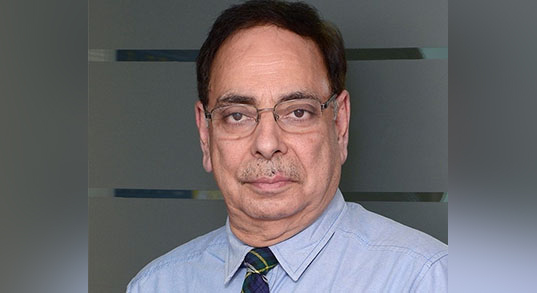
New Delhi, Feb 13: Cardiologist Prof Upendra Kaul was conferred the Life Time Achievement Award 2026 by the Indian Society of Clinical Research (ISCR) during its 20th Annual Conference held here, an official statement said.

With over four decades of experience in cardiology, Prof Kaul has authored more than 400 research publications, it said.

His contributions have earned him international recognition and numerous national honours, including the ICMR Shakuntala Amir Chand Award, the Dr BC Roy Award and the Padma Shri.


A clinician, researcher and teacher, Prof Kaul is also the founder of the Gauri Kaul Foundation, an NGO dedicated to healthcare outreach in Jammu and Kashmir since 2020. The foundation has expanded ethical clinical research in the region through the establishment of the Gauri Research Centre, the statement said.

The ISCR conferred the Life Time Achievement Award 2026 in recognition of his transformative impact on patient care and clinical research in India, it added.

Established in 2005 in Mumbai, ISCR is a professional, non-profit association that promotes ethical clinical research in India.

Government Cognisant of Growing Risks Posed by Fake, False and Misleading Content

0

VINOD BHAT

Delhi, Feb 13:

Freedom of speech is guaranteed under Article 19 of the Constitution. At the same time, the Government is also cognisant of the growing risks posed by fake, false and misleading information on digital platforms.


The Government has notified the Information Technology (Intermediary Guidelines and Digital Media Ethics Code) Rules, 2021, under the Information Technology Act, 2000. Part-III of these Rules provide for publishers of online curated content (OTT platforms) which, inter alia, require the publishers not to transmit any content which is prohibited by law for the time being in force.


The Code requires them to undertake age-based classification of content into 5 categories, based on general guidelines provided in the Schedule to the Rules. The Code also provides that the OTT Platform will put in place adequate safeguards for restricting age-inappropriate content for children. The Rules, inter alia, provide for Code of Ethics to be followed by publishers of news & current affairs. It includes adherence to the Programme Code laid down under the Cable Television Networks Act, 1995, and the Norms of Journalistic Conduct under the Press Council Act, 1978. The Programme Code and Norms of Journalistic Conduct, inter alia, require publishers not to disseminate content that is inaccurate, misleading, false, or half-truths.


A Fact Check Unit (FCU) has been set up under Press Information Bureau, Ministry of Information and Broadcasting in November, 2019 to check fake news relating to the Central Government. After verifying the authenticity of news from authorized sources in Ministries/ Departments of Government of India, FCU posts correct information on its social media platforms.


All programmes and advertisements telecast on private satellite TV channels are required to adhere to the Programme Code and Advertising Code laid down in Cable Television Networks Rules, 1994 framed under the Cable Television Networks (Regulation) Act, 1995. These codes contain a wide range of parameters to regulate content on such TV channels. The Programme Code inter-alia provides that no programme should be carried which contains anything obscene, defamatory, deliberate false and suggestive innuendos and half-truths.

Former Forest Minister and Ex-MLA Devsar Peerzada Ghulam Ahmad Shah passes away in Jammu

0


Jammu, Feb 13: Former Forest Minister and former Member of Legislative Assembly (MLA) from Devsar, Peerzada Ghulam Ahmad Shah, passed away in Jammu on Friday afternoon after a prolonged illness. He had been undergoing treatment for some time and breathed his last in Jammu.


As per news agency Kashmir News Corner—(KNC) Peerzada Ghulam Ahmad Shah was a respected political figure in the Devsar constituency and was widely known for his public outreach and contribution to social and political affairs in the region. During his tenure as MLA, he worked on various developmental initiatives and public welfare issues concerning his constituency. As Forest Minister, he played a significant role in matters related to forest conservation, environmental protection, and administrative reforms within the department.


He was the uncle of the sitting MLA from Devsar, Peerzada Feroze Ahmad Shah. News of his demise spread across the constituency and adjoining areas, with political leaders, party workers, and local residents expressing deep grief and extending condolences to the bereaved family.—(KNC)

WAVES Positions India as a Global Content Hub under ‘Create in India, Create for the World’ Vision

0

Vinod Bhat

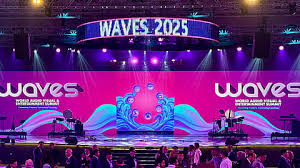
New Delhi: WAVES was organised in line with the Government’s vision of making India a global hub for content creation under the “Create in India, Create for the World” initiative. The Summit provided an integrated platform for Indian creators, producers and startups to engage with global buyers, investors, OTT platforms and technology leaders from over 100 countries.

The Create in India Challenges (CIC), a nationwide creative talent identification and nurturing initiative through 33 creative challenges in categories such as animation, gaming, AR/VR and music, attracted over one lakh registrations from creators across the world. The winners are being supported for participation, showcasing and B2B meetings at major international platforms including Melbourne, Osaka, Toronto, Tokyo, Madrid, Busan and Cannes. This opportunity was also provided at national events such as IndiaJoy, IGDC and IFFI Goa, positioning CIC as a key engine for creator discovery and intellectual property creation.

WaveX, a startup-led innovation and incubation platform for the media and entertainment sector supports job creation and entrepreneurship. At present, WaveX is incubating 34 startups under physical and hybrid models, with an additional pipeline of more than 100 applications. 10 startups selected under the KalaaSetu and BhashaSetu challenges are already executing pilot deployments with government organizations. WaveX is expected to scale substantially through its institutional partnerships, with T-Hub, Hyderabad, and FITT, IIT Delhi, aimed at a pan- India incubation and R&D along with partner incubators at IICT, FTII, IIMC and other institutes.

WAVES Bazaar has been operationalised as a year-round digital marketplace facilitating B2B meetings, licensing, co-productions and international market access for Indian audio-visual content. At present, WAVES Bazaar has more than 6,000 sellers and over 4,000 registered buyers and companies, enabling over 8,000 B2B meetings. It is being continued as a sustained platform for market access and business engagement. Further to WAVES, through more than ten international markets across four continents, WAVES Bazaar facilitated B2B meetings and the signing of multiple MoUs, supporting co-productions, licensing, investment partnerships and global market access.

Expansion of WaveX incubation centres and sustained implementation of the Create in India Challenges are being undertaken to further strengthen skilling, entrepreneurship and employment generation. Masterclasses, workshops and knowledge sessions by global experts contributes significantly to upskilling the creative workforce. Continued global outreach through WAVES Bazaar is envisaged to translate creative talent into sustainable livelihoods and growth in exports of Indian audio-visual content.

Indian Railways Strengthens Tatkal Booking System with Aadhaar Authentication and Anti-Bot Measures

0

Vinod Bhat

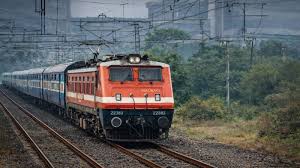
New Delhi: The reservation ticket booking system of Indian Railways is a robust and highly secure IT platform equipped with industry-standard, state-of-the-art cyber security controls. Indian Railways has taken the following measures to prevent auto filling of forms by hacking tools and curb fraud in tatkal ticketing booking through internet and to safeguard the system from cyber attacks :

1. Aadhaar authentication to book tatkal tickets – To curb misuse and improve fairness in tatkal bookings, Aadhaar based One-Time Password (OTP) verification for online tatkal ticket booking has been introduced.  Aadhaar authentication provides instantaneous verification of user uniqueness, which is critical considering the time-sensitive nature of tatkal ticket booking.   It helps in preventing the creation and operation of fake or unauthorized  agent-controlled  multiple user account by imposing a uniqueness constraint.  This measure acts as an effective safeguard against account multiplication and automated misuse, thereby ensuring fair allocation of tatkal tickets. It has contributed to improved ticket availability for genuine passengers and enhancing transparency in the online tatkal booking system.

2. Application layer Security Control  — Several application level security controls have been implemented including CAPTCHA (Completely Automated Public Turing test to tell Computers and Humans Apart) mechanism deployed at multiple levels to avoid scripting, Brute-Force Attack and also DDoS (Distributed Denial of Service) attacks.

A number of security measures have also been applied for handling the OWASP (Open Web Application Security Project) for application security vulnerability.

To optimize system performance Indian Railways has implemented a Content Delivery Network (CDN) to offload static content and reduce direct traffic on internet ticket booking website system. Further, Anti-bot solutions such as AKAMAI are deployed to filter non-genuine users which help in mitigating malicious /suspicious attempts on the internet ticket booking website system and ensure smooth booking for genuine passengers.  This helps in checking malicious traffic.

Use of multiple protective layers such as network firewalls, intrusion prevention systems, application delivery controllers and web application firewall to safeguard the system against cyber threats.

3.  Network and Infrastructure Layer Security Controls – The entire ICT (Infrastructure & Communication Technologies) infrastructure has been deployed on high availability mode to minimize failures.

The system is protected by industry-standard state-of-the-art and data centre grade network and security equipment consisting of network firewalls, network intrusion prevention system, application delivery controllers and web application firewalls.

The system is also protected from volume-based DDoS (Distributed Denial of Service) attacks with ISP (Internet Service Provider) layer, DDoS Detection and Mitigation Services through multiple ISPs with aggregated DDoS mitigation capacity nearly 30 Gbps.

The enterprise level Content Delivery Network (CDN), anti–bot, secure DNS and Web Application Firewall (WAF) services for enhanced security, better customer experience, reducing web traffic load, resource optimisation and threat mitigation have been deployed.

For comprehensive cyber threat intelligence services, RailTel has been engaged to undertake Deep-Dark Web Monitoring, Digital Risk Protection and improve incident response.

4. Physical Security Controls – The system is hosted in a captive data center facility Chanakyapuri, New Delhi secured with CCTV footage and restricted physical access.  The facility is ISO 27001 (ISMS) certified.

5. Security Audit and Monitoring —   The system is integrated with CERT-In TSAP (Threat & Situational Awareness Projects) for round the clock monitoring of security incidents and events.

The system has been integrated with CERT-In’s “Madhu-Sanjal” wherein CERT-In has deployed the honeypot sensor for monitoring the attacker behaviors, suspicious events/intrusions attempts and learning their tactics and improve defence against cyber threats.

Security log monitoring of the system is being done by on-premises security team for detection and mitigation of security incidents.

6. Administrative measures – Several anti-fraud measures have been adopted to prevent unauthorized access and to ensure seamless booking for genuine users.

–      Rigorous revalidation and verification of user accounts have been done.  About 3.03 crore suspicious user IDs have been deactivated in the year 2025.

–      Regular security audits of the reservation system are carried out by CERT-In empanelled information Security Audit Agencies.  Moreover, internet traffic related to the ticketing system is continuously monitored by CERT-In and the National Critical Information Infrastructure Protection Centre (NCIIPC) to detect and prevent cyber attacks.

–      376 complaints have been lodged on the National Cyber Crime Portal pertaining to 3.99 lakh suspicious bookings.

–      12819 suspicious email domains have been blocked in the year 2025.

Dr Jitendra Singh Announces First National Call of ₹2,000 Crore BIRAC–RDI Fund Under ₹1 Lakh Crore RDI Initiative to Boost Biotech Sector

0

Vinod Bhat

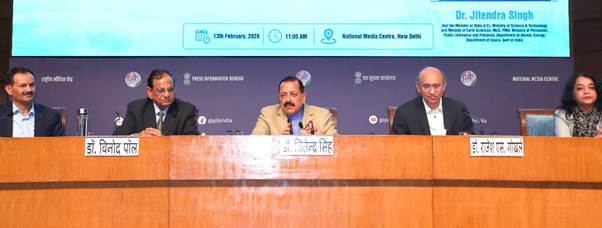
New Delhi: Union Minister Dr Jitendra Singh today announced the first national call for the BIRAC–RDI Fund, marking a major push to scale high-impact biotechnology innovations under the Government of India’s ₹1 lakh crore Research, Development, and Innovation (RDI) initiative. Union Minister of State (Independent Charge) for Science & Technology, Earth Sciences; and MoS PMO, Personnel, Public Grievances, Pensions, Atomic Energy and Space, Dr. Jitendra Singh said the launch reflects a decisive shift in India’s approach to science-led growth and signals that the country is no longer a late entrant but an early mover in emerging technologies.

The launch event was attended by Dr. Vinod Paul, Member, NITI Aayog; Dr. Rajesh S. Gokhale, Secretary, Department of Biotechnology; Dr. Jitendra Kumar, Managing Director, BIRAC; senior officials from DST and ANRF, industry leaders, venture capital representatives, and members of the scientific community.

Dr. Jitendra Singh said that over the past decade, India has moved from policy hesitation to policy acceleration in biotechnology. He said the transformation is visible in the expansion of the startup ecosystem, from around 50 biotech startups in 2014 to more than 11,000 today, reflecting what he described as a quantum jump in scale and ambition. The bioeconomy, which stood at about 8 billion dollars in 2014, has expanded rapidly, placing India among leading global players.

He said biotechnology will drive the next phase of industrial growth, much like information technology shaped India’s earlier transformation. According to him, the coming industrial revolution will be powered by biotech innovation, advanced manufacturing, and new-age entrepreneurship. He added that the current initiative strengthens India’s capacity not only to generate ideas but also to industrialise them.

Referring to emerging frontiers, the Minister said India has already entered areas such as space biotechnology and is preparing for future domains like space medicine. Biotechnology experiments are being conducted in space using kits developed domestically, covering plant sciences and life sciences research. He said such efforts position India to contribute knowledge and applications of global relevance, enhancing both scientific stature and geopolitical standing.

Dr. Rajesh S. Gokhale, Secretary, Department of Biotechnology; Director General, BRIC and Chairman BIRAC said the RDI Fund has been structured to support long-gestation, high-risk research that requires patient capital and advanced infrastructure. He said the initiative complements the BioE3 Policy and provides a framework to build next-generation products across biopharma, bio-industrial manufacturing, bioenergy, blue economy and biocomputation. The objective, he said, is to move from research outputs to scalable industrial outcomes.

Dr. Jitendra Kumar, Managing Director, Biotechnology Industry Research Assistance Council (BIRAC) said BIRAC has been appointed as a second-level fund manager under the RDI framework and will deploy ₹2,000 crore over a period of up to five years, with scope for further expansion. He said BIRAC has built a nationwide innovation ecosystem over the past decade, including more than 100 bio-incubation centres, over 10 lakh square feet of incubation space, and engagement with more than 15 lakh startup entrepreneurs. India’s bioeconomy, he said, has grown from 28 billion dollars in 2012 to 165.7 billion dollars in 2024, with a target of 300 billion dollars by 2030 and 1 trillion dollars by 2047.

The BIRAC–RDI Fund is part of the national RDI initiative approved by the Union Cabinet in July 2025 and launched in November 2025 under the Anusandhan National Research Foundation (ANRF), anchored by the Department of Science & Technology. The fund aims to bridge the gap between laboratory research and industrial-scale manufacturing by supporting technologies from TRL-4 to TRL-9 through a mix of equity, convertible instruments, and long-term debt.

The national call for applications is now open. Eligible startups, SMEs and industry partners can submit proposals through the official portal at https://biracrdif.org. The deadline for Phase 1 submissions is March 31, 2026.

Dr. Jitendra Singh said the launch sends a clear message that India is prepared to lead in biotechnology, combining scientific depth, entrepreneurial energy and policy backing to shape the next phase of global industrial transformation.