spot_imgspot_img
spot_img
Home Blog Page 126

UPSC Extends Call Centre Operations to Ensure Greater Ease and Convenience for Students

0

VINOD BHAT

Delhi, Feb 09:

The Union Public Service Commission has extended the operational hours of its call centre to provide enhanced support and guidance to aspirants, ensuring greater ease and convenience during the ongoing application process.


The call centre will remain operational on all days, including Saturdays, Sundays, and holidays, till the submission of application forms for the Civil Services Examination (CSE) 2026 and the Indian Forest Service (IFoS) Examination 2026. It will function in two shifts, from 7:00 am to 9:00 pm, enabling candidates to seek assistance beyond regular working hours.


In addition, the strength of the call centre has been doubled to significantly reduce waiting time for applicants seeking inputs or guidance related to the application process and examination-related queries.


Emphasising the Commission’s commitment to candidate facilitation, UPSC Chairman Dr. Ajay Kumar said that the extended call centre operations are part of a series of measures being undertaken to support aspirants. “These steps are aimed at facilitating aspirants and ensuring that all necessary support mechanisms are in place,” he said.


The initiative seeks to strengthen communication with applicants, enable quicker resolution of queries, and provide uninterrupted support to aspirants during this crucial phase of the examination cycle. It reflects the Commission’s continued efforts to build an examination system that is efficient, responsive, and student-centric.

Railway Board Pushes for Fast-Track Implementation of 7 New High-Speed Rail Corridors

0

VINOD BHAT


Seven Proposed High-Speed Rail Corridors Enter Planning and Execution Phase


Indian Railways Steps Up Pace on Next Wave of 7 High-Speed Rail Corridors


Delhi, Feb 09: The Ministry of Railways has initiated steps to expedite the implementation of seven new High-Speed Rail (HSR) corridors announced in the Union Budget 2026, marking a major push towards next-generation passenger travel in India.


The proposed corridors include Mumbai – Pune, Pune – Hyderabad, Hyderabad – Bengaluru, Hyderabad – Chennai, Chennai – Bengaluru, Delhi – Varanasi and Varanasi – Siliguri. These routes are envisioned as key growth connectors linking major economic, industrial and cultural centres across the country.


Following a high-level meeting at the Railway Board, the National High Speed Rail Corporation Limited (NHSRCL) has been directed to take immediate action to ensure timely progress. As part of the roadmap, Detailed Project Reports (DPRs) for completed corridors will be updated with current cost estimates to enable accurate financial viability assessments.


The Railway Board has also called for the standardisation of high-speed rail systems across India, creation of dedicated field-based core teams for each project and initiation of pre-construction activities, including contract documentation. Planning for trained technical manpower to support upcoming HSR projects has also been emphasised to ensure readiness for large-scale implementation. Progress on all action points will be reviewed at an appropriate level, underlining the government’s focus on accelerating high-speed rail development in the country.


The seven new corridors are expected to play a transformative role in reducing travel time, improving passenger comfort and supporting sustainable, low-emission rail connectivity, while also catalysing regional economic growth.

Wular Bird Festival attracts attention, but local stakeholders, trained bird watchers cry neglect

0


TAUSEEF AHMAD

BANDIPORA, Feb 09:

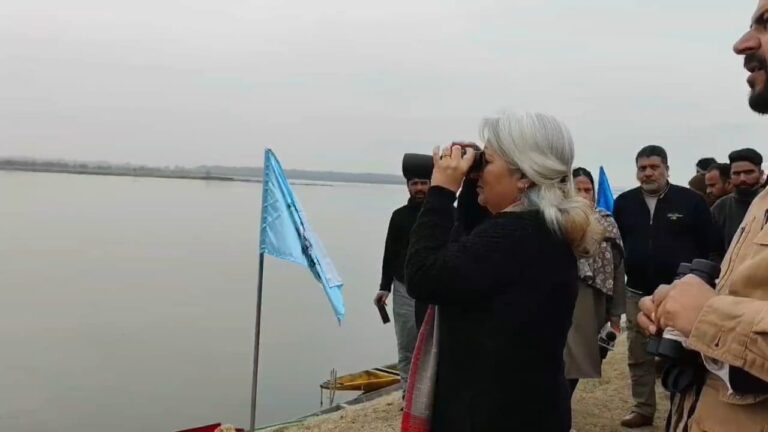
The five-day Wular Bird Festival commenced on Monday along the banks of Asia’s largest freshwater lake in north Kashmir’s Bandipora district, with authorities projecting the event as a flagship initiative to promote bird conservation, ecological awareness, and eco-tourism in the fragile Wular wetland ecosystem.

While the festival has drawn visitors, students, officials, and environmental enthusiasts, it has also triggered resentment among local stakeholders—particularly trained bird watchers, fishermen, and youth volunteers—who allege that the very community that has lived with, protected, and depended on Wular Lake for generations continues to be sidelined by the Wular Conservation and Management Authority (WUCUMA).

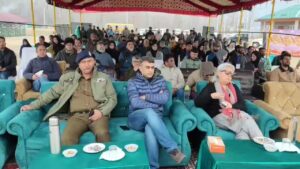
The festival was inaugurated by Deputy Commissioner Bandipora, Indu Kanwal Chib, JKAS, in the presence of WUCUMA officials, environmental experts, tourism stakeholders, and students. Officials described the event as an effort to sensitise people about migratory birds that visit Wular every winter, encourage conservation of the wetland’s fragile biodiversity, and generate sustainable livelihood opportunities through eco-tourism.

Speaking at the inauguration ceremony, DC Indu Kanwal Chib termed Wular Lake a vital ecological asset not only for Bandipora but for the entire Kashmir Valley. She emphasised the importance of community participation in preserving the lake and said that conservation efforts could not succeed without local involvement. WUCUMA officials, on the occasion, highlighted that the festival includes bird walks, awareness campaigns, exhibitions, cultural programmes, and expert interactions aimed at connecting people—especially the younger generation—with conservation initiatives.

However, on the ground, local fishermen, trained bird watchers, and youth volunteers tell a different story.

Several trained bird watchers alleged that despite being trained under WUCUMA-sponsored programmes, they are routinely ignored when surveys, monitoring exercises, or festival-related activities are conducted. Instead, they claim, outsiders are brought in for surveys and documentation, leaving locals unemployed and disillusioned.

“Every year, festivals and surveys are conducted in the name of Wular, but locals are pushed to the wall. Outsiders are brought in while trained youths from Wular villages are completely ignored,” said Showket Ahmad, a trained bird watcher who was trained by WUCUMA, while speaking to Kashmir Despatch.

Showket said he was among nearly 20 local youths trained by the Wular Conservation and Management Authority in 2020 with assurances that they would be engaged in bird monitoring, awareness drives, and conservation-related fieldwork. “Since our training, not once have we been given an opportunity to work on the ground. Our skills are simply being wasted,” he added.

Another youth from Zurimanz village in Bandipora, Manzoor Ahmad, echoed similar concerns. He said that despite volunteering for years and being trained in birdwatching and conservation awareness, he and many others continue to be overlooked.

“We are the people who spent our childhood on the banks of Wular. We know its birds, its fish, its seasons, and its problems better than anyone else. But instead of giving us a chance, priority is being given to people who don’t even know Wular,” Manzoor said.

He warned that the lake is slowly deteriorating due to pollution, encroachments, and unregulated activities. “Everyone contributes to the damage—from urban areas to rural settlements—but it is the fishing community that suffers the most because our survival is directly linked to Wular,” he added.

Another trained bird watcher, Rayees Ahmad, said that after receiving training, there has been no communication or follow-up from the authorities. “We were trained, but then forgotten. The authorities have forgotten those who breathe in Wular every day and those who continuously write and speak about saving the lake to sound a wake-up call,” he said.

Rayees alleged that locals are reduced to mere props during official events. “We were promised work in every project when authorities start work, but nothing happened. We are useful only for photo opportunities,” he added.

Several other local youths trained under earlier conservation and awareness projects said they remain unemployed despite repeated assurances. They claimed they were promised involvement in eco-tourism initiatives, bird monitoring programmes, and awareness campaigns, especially during dredging and restoration works at Wular Lake.

“We were told that employment opportunities would be created for Wular stakeholders once eco-tourism and conservation projects take off. Today, employment generation for local stakeholders is zero. The claims are tall, but nothing exists on the ground,” said another stakeholder.

Fishermen from nearby villages such as Saderkoot Bala also voiced similar grievances, alleging that they are invited to programmes only for optics and excluded from decision-making processes. “We depend on Wular Lake for our survival. Policies are framed without consulting us, even though we are the most affected,” said a local fisherman.

Meanwhile, WUCUMA Coordinator Altaf Ahmad rejected the allegations, stating that community participation remains a priority for the authority. He said WUCUMA is gradually expanding eco-tourism initiatives and training programmes and that local involvement will increase in the coming months.

Responding to questions regarding the bird watchers trained by WUCUMA in 2020, Altaf Ahmad said he was not aware of the specific programme. However, he assured that if such training had been conducted earlier, the authority would ensure the participation of trained local youths in future programmes.

As thousands of migratory birds return to Wular Lake every winter, residents and local stakeholders insist that conservation efforts will remain incomplete unless the communities living around the lake are meaningfully involved—not just during festivals, but through permanent livelihood planning, decision-making roles, and sustained engagement linked directly to the protection and revival of the Wular ecosystem.

Ganderbal Police Secure 20-Year Jail Term in POCSO Case

0


Touseef Wani


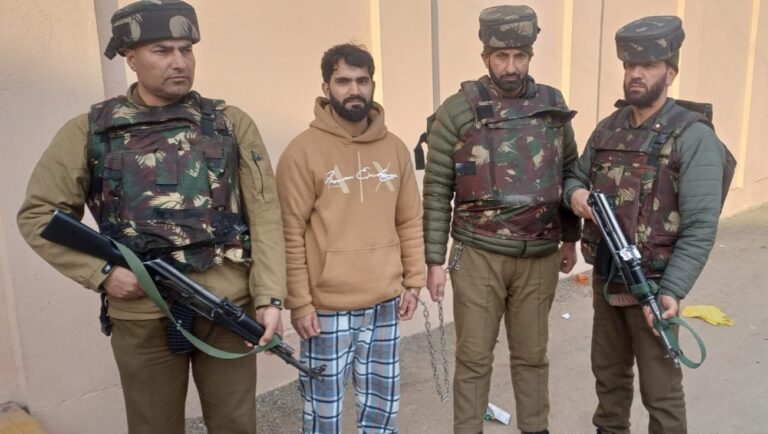
Ganderbal, Feb 9 : In a significant achievement, J&K Police at Ganderbal has secured 20 Year’s imprisonment for an accused involved in a grave offence under the Protection of Children from Sexual Offences (POCSO) Act.


The Conviction marks a major success in the Ganderbal Police’s unwavering efforts to ensure justice for the victims of such heinous crimes.


The accused, Rouf Ahmad Ganaie, Son of Bashir Ahmad Ganaie, Resident of Takiya Khalmulla Nagbal, Ganderbal has been awarded 20 Year’s imprisonment along with a fine of Rs.50,000 by the Hon’ble Court of Principal Sessions Judge, Ganderbal, under Section 3/4 of POCSO Act.


The judgment reflects the strong and effective prosecution put forth during the trial. The outstanding contribution of the Prosecution Department in ensuring a successful conviction has been highly commendable.


Mr. Shafat Ahmad Bhat (PP) had prosecuted the case and Mr. Jehangir Rafiqi (PP) argued the case on behalf of the prosecution.


The case was investigated by SI Mohammad Akbar, whose diligent and professional investigation played a crucial role in bringing the accused to justice.


Ganderbal Police reiterates its commitment to safeguarding vulnerable sections of society and ensuring that perpetrators of such offences are brought to face the full force of law.

Draft Electricity (Amendment) Bill, 2025 Intends to Remove Wasteful Duplication in Building Distribution Network

0

VINOD BHAT

Delhi, Feb 09:

The Electricity Act, 2003 (Act) already allows multiple distribution licensee in the same area. It also mandates non-discriminatory open access to the distribution network. But presently, every new licensee had to build its own separate network, which means duplication of poles, wires, and substations – making power costlier for everyone. The proposed amendment under draft Electricity (Amendment) Bill, 2025 intends to remove this wasteful duplication by allowing use of other distribution licensee’s network upon payment of charges decided by the State Electricity Regulatory Commission (SERC) by a distribution licensee for supplying power to its consumers.


Under the provisions of the Act, the area of supply for each distribution licensee is defined and it has to be approved by the SERC, while granting license. The subordinate legislations already prescribe a minimum geographical area for granting a distribution licence – covering either an entire Municipal Corporation or at least three adjoining revenue districts, or a smaller area only if specifically notified by the Appropriate Government. Every distribution licensee, whether public or private, will continue to have a Universal Service Obligation for all the consumers including the rural and domestic consumers, except the large consumers for which the distribution licensee is specifically exempted by the SERC, as per the provisions under the proposed draft Electricity (Amendment) Bill, 2025. They have a duty to supply electricity to all consumers in its area of supply, without discrimination. The amendment further proposed to mandate the SERCs to establish a clear framework for introducing multiple licensees within the same supply area, ensuring transparency and fairness.


It is envisaged that there would not be any adverse impact on agricultural and domestic consumers, rather, the competition will improve quality of service. Further, the subsidies for specified consumer categories including agricultural and domestic consumers may continue to be provided by the State Government under Section 65 of the Act.


This Information was given by The Minister of State in the Ministry of Power, Shri Shripad Naik, in a written reply in the Rajya Sabha today.


From States to Summit: Regional AI Conferences Power India’s AI Vision

0

VINOD BHAT

Delhi, Feb 09:

Key Highlights:


Seven Regional AI Conferences conducted across Meghalaya, Gujarat, Odisha, Madhya Pradesh, Uttar Pradesh, Rajasthan and Kerala

Organised under the IndiaAI Mission in partnership with State Governments, premier academic institutions andCentral Ministries

Focused on practical AI applications across governance, healthcare, agriculture, education, skilling, language technologies and public service delivery

Brought together policymakers, industry leaders, startups, researchers, academia, civil society and local communities

Emphasis on responsible, inclusive and trusted AI, aligned with regional priorities and citizen needs

Insights and recommendations from the regional conferences will directly inform the agenda and outcomes of the India AI Impact Summit 2026

India’s preparations for the India AI Impact Summit 2026 have gathered nationwide momentum through seven Regional AI Conferences held across Meghalaya, Gujarat, Odisha, Madhya Pradesh, Uttar Pradesh, Rajasthan and Kerala.


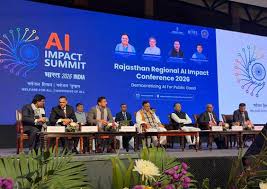
Organised under the IndiaAI Mission, in partnership with State Governments, premier academic institutions and thematic Central Ministries, these conferences served as high-level, outcome-oriented engagements leading up to the India AI Impact Summit, scheduled to be held in New Delhi from February 16–20, 2026.


Each conference, held between October 2025 and January 2026, addressed region-specific priorities while aligning with the national vision of using AI for good governance, economic growth, social empowerment and improved public service delivery. Discussions focused on practical AI applications across governance, healthcare, agriculture, education, language technologies, skilling, innovation and digital infrastructure.The regional engagements brought together policymakers, industry leaders, startups, researchers, academia, civil society and local communities, ensuring that India’s AI roadmap is grounded in regional realities and citizen needs. Insights from these conferences will directly inform the agenda and outcomes of the India AI Impact Summit 2026.


Key Voices from the Regional AI Conferences

“The Prime Minister has a clear mission to democratize technology so that intelligence powered by AI reaches every individual, every household, and every enterprise, rather than remaining confined to a select few. In line with this mission, a programme has been launched to train one million young people in AI skills, ensuring that India’s youth are fully prepared for this new technological era.”- Shri Ashwini Vaishnaw, Minister for Electronics & IT, Government of India


“The government has committed an investment of ₹10,000 crore under the India AI Mission to leverage AI across sectors with an objective to enhance citizens’ incomes, improve ease of living, and boost the overall productivity of the nation through responsible and inclusive use of AI.”- Shri Jitin Prasada, Minister of State (MoS) for Electronics & IT, Government of India


“Every pregnant woman in Meghalaya is digitally tracked, enabling early identification of high-risk cases and timely interventions. This data-driven approach has helped reduce maternal mortality by 50 percent.”-Shri Conrad K. Sangma, Chief Minister of Meghalaya


“Regional AI Conferences are crucial platforms to ensure that AI-driven development reaches every district and every language. These forums help turn ideas into action and improve lives on the ground.”- Shri Bhupendrabhai Rajnikant Patel, Chief Minister of Gujarat


“Artificial intelligence represents the next major phase in our country’s journey. Through AI and machine learning, public service delivery can be made faster, more transparent and more citizen-centric.”- Shri Bhajan Lal Sharma, Chief Minister of Rajasthan


“The Madhya Pradesh government believes that AI can benefit administration, citizens and industries alike. We are committed to policy support that maximises efficiency and accelerates AI-led growth across sectors.”-Dr. Mohan Yadav, Chief Minister of Madhya Pradesh


“In a large and sensitive state like Uttar Pradesh, addressing challenges at scale requires a timely, technology-driven and responsive model. Artificial Intelligence will play a pivotal role in this transformation.”- Shri Yogi Adityanath, Chief Minister of Uttar Pradesh


“Artificial Intelligence is no longer a technology of the future. The real challenge is not whether we adopt AI, but how we adopt it. Technology must strengthen democracy, protect dignity and serve the common citizen.”-Shri A.N. Shamseer, Speaker of the Kerala Legislative Assembly


Announcements at a Glance | Regional AI Conferences


Million Youth to be trained in AI Skills under a national AI skilling programme, YUVA AI for All, to build future-ready workforce

Expansion of India AI Data & AI Labs across states, including new labs in ITIs, polytechnics and technical institutions to strengthen hands-on AI education

Launch of Rajasthan AI/ML Policy 2026 along with a dedicated Rajasthan AI Portal to boost governance, innovation and employment, and Rajasthan AVGC-XR Portal to strengthen Animation, VFX, Gaming, Comics, and Extended Reality ecosystem in the state

Announcement of Uttar Pradesh AI Mission, backed by state funding, to build a large-scale AI ecosystem aligned with national priorities

Launch of Madhya Pradesh SpaceTech Policy 2026, integrating AI with space and geospatial technologies for public service delivery

Signing of multiple MoUs between India AI Mission, State Governments, academia and industry to advance AI research, skilling and innovation

Rollout of AI Stacks and Cloud Adoption Frameworks to support scalable, secure and citizen-centric AI deployment at the state level

Launch of AI-enabled digital portals and governance platforms to improve efficiency and citizen service delivery

Showcasing of state-led AI use cases, startups and innovation challenges, including hackathons and competitions to promote local talent

Regional recommendations to feed directly into the India AI Impact Summit 2026 agenda and outcomes

Memorandum of Understanding (MoU) signed with Google, IIT Delhi, National Law University, Jodhpur, and the Skill Development Network (Wadhwani Foundation) in Rajasthan to advance AI research, skilling, ethical frameworks, and innovation ecosystems

From States to Summit: Regional AI Conferences Power India’s AI Vision

0

Vinod Bhat

New Delhi: India’s preparations for the India AI Impact Summit 2026 have gathered nationwide momentum through seven Regional AI Conferences held across Meghalaya, Gujarat, Odisha, Madhya Pradesh, Uttar Pradesh, Rajasthan and Kerala.

Organised under the IndiaAI Mission, in partnership with State Governments, premier academic institutions and thematic Central Ministries, these conferences served as high-level, outcome-oriented engagements leading up to the India AI Impact Summit, scheduled to be held in New Delhi from February 16–20, 2026.

Each conference, held between October 2025 and January 2026, addressed region-specific priorities while aligning with the national vision of using AI for good governance, economic growth, social empowerment and improved public service delivery. Discussions focused on practical AI applications across governance, healthcare, agriculture, education, language technologies, skilling, innovation and digital infrastructure.The regional engagements brought together policymakers, industry leaders, startups, researchers, academia, civil society and local communities, ensuring that India’s AI roadmap is grounded in regional realities and citizen needs. Insights from these conferences will directly inform the agenda and outcomes of the India AI Impact Summit 2026.

Key Voices from the Regional AI Conferences

“The Prime Minister has a clear mission to democratize technology so that intelligence powered by AI reaches every individual, every household, and every enterprise, rather than remaining confined to a select few. In line with this mission, a programme has been launched to train one million young people in AI skills, ensuring that India’s youth are fully prepared for this new technological era.”- Shri Ashwini Vaishnaw, Minister for Electronics & IT, Government of India

“The government has committed an investment of ₹10,000 crore under the India AI Mission to leverage AI across sectors with an objective to enhance citizens’ incomes, improve ease of living, and boost the overall productivity of the nation through responsible and inclusive use of AI.”- Shri Jitin Prasada, Minister of State (MoS) for Electronics & IT, Government of India

“Every pregnant woman in Meghalaya is digitally tracked, enabling early identification of high-risk cases and timely interventions. This data-driven approach has helped reduce maternal mortality by 50 percent.”-Shri Conrad K. Sangma, Chief Minister of Meghalaya

“Regional AI Conferences are crucial platforms to ensure that AI-driven development reaches every district and every language. These forums help turn ideas into action and improve lives on the ground.”- Shri Bhupendrabhai Rajnikant Patel, Chief Minister of Gujarat

“Artificial intelligence represents the next major phase in our country’s journey. Through AI and machine learning, public service delivery can be made faster, more transparent and more citizen-centric.”- Shri Bhajan Lal Sharma, Chief Minister of Rajasthan

“The Madhya Pradesh government believes that AI can benefit administration, citizens and industries alike. We are committed to policy support that maximises efficiency and accelerates AI-led growth across sectors.”-Dr. Mohan Yadav, Chief Minister of Madhya Pradesh

“In a large and sensitive state like Uttar Pradesh, addressing challenges at scale requires a timely, technology-driven and responsive model. Artificial Intelligence will play a pivotal role in this transformation.”- Shri Yogi Adityanath, Chief Minister of Uttar Pradesh

“Artificial Intelligence is no longer a technology of the future. The real challenge is not whether we adopt AI, but how we adopt it. Technology must strengthen democracy, protect dignity and serve the common citizen.”-Shri A.N. Shamseer, Speaker of the Kerala Legislative Assembly

Artificial Intelligence for Culture and Languages

0

VINOD BHAT

Delhi, Feb 09: AI is being leveraged to integrate cultural and creative sectors into digital value chains, linking artisans to platforms and opportunities.

From Cultural Preservation to Cultural Participation


India’s cultural heritage and linguistic diversity shape its social identity and shared knowledge systems. From manuscripts, monuments, performing arts and crafts to oral traditions, folklore and indigenous knowledge, culture in India is created and passed on through many languages, scripts and spoken forms.


According to Census 2011, India’s linguistic landscape includes 22 Scheduled languages and 99 Non-Scheduled languages, spread across multiple language families, along with thousands of mother tongues and tribal languages[1]. The Government of India has undertaken sustained institutional, educational and digital initiatives to preserve and promote our linguistic heritage and the rich traditional knowledge that it holds.


At the core of this effort is the emphasis on leveraging emerging technology including AI, to preserve cultural resources and traditional knowledge, and make it available to people in the language and formats that they are familiar and comfortable with. This calls for democratisation of technology. AI has emerged as a key enabler in this process. By supporting the digitisation and discovery of cultural assets, enabling multilingual and voice-based access, and facilitating engagement at scale, AI helps bridge gaps between heritage and people, tradition and technology. This approach reflects the vision of using AI as technology for humanity, aligned with the goal of “Welfare for All and Happiness for All”.


Building Language as Digital Public Infrastructure


To expand access to culture, knowledge and public services, the Government of India is taking an infrastructure-based approach.


Key pillars of this language infrastructure include:


National Language Translation Mission (NLTM) – BHASHINI[2]


Launched in 2022 under the National Language Translation Mission, BHASHINI was developed to respond to India’s wide linguistic diversity in the digital space. The initiative focuses on building language and voice capabilities directly into digital systems. This allows public platforms to function effectively across the many languages used in the country.


BHASHINI addresses three key barriers together:


Language barrier – systems that do not understand local languages or accents

Digital barrier – complex interfaces that discourage use

Literacy barrier – dependence on reading and typing

At a system level, BHASHINI is building multilingual AI as national digital public infrastructure. It provides language services such as translation, speech-to-text, text-to-speech, transliteration and document understanding across Indian languages, allowing platforms to add language and voice features without building them from scratch.


BHASHINI is already operating at scale:


Supports voice in 22 languages and text services in 36 languages

Hosts 350+ AI models and datasets

Has completed over 4 billion language inferences so far

Its strength lies in collaboration. Research institutions, language experts, startups, state governments and industry partners jointly contribute to the platform, ensuring that language models improve through real-world use and local participation.


As a foundational language layer, BHASHINI turns linguistic diversity into practical digital access, enabling people to engage with information, culture and public services in languages and formats they understand.


Key examples of use of Bhashini

Real-Time Speech Translation at Kashi Tamil Sangamam 2.0[3]:

At the Kashi Tamil Sangamam event in Varanasi, Prime Minister Narendra Modi used the BHASHINI AI platform during his address. His Hindi speech was translated in real time into Tamil so that Tamil-speaking attendees could understand the address directly in their language, demonstrating BHASHINI’s real-time translation capability in a live cultural exchange context.


Multilingual Support at Maha Kumbh 2025[4]:

BHASHINI powered the Kumbh Sah’AI’yak chatbot, a multilingual, voice-enabled assistant used at Maha Kumbh 2025 to provide navigation and event information to pilgrims in 11 languages (Hindi, English and nine others). It also supported features like a digital Lost & Found solution with real-time text and voice translation to make the event more accessible for attendees from diverse linguistic backgrounds.


As foundational language infrastructure, BHASHINI translates diversity into access, helping people engage with information, culture and public services in their own languages and formats — a critical step toward inclusive participation and empowerment.


Technology Development for Indian Languages (TDIL)[5]


TDIL is a long-standing Government of India programme that laid the foundational technology base for Indian language computing, covering scripts, speech and text across multiple Indian languages.


It focuses on the development and standardisation of core language technologies, including:

machine translation

optical character recognition (OCR) for Indian scripts

speech-to-text and text-to-speech systems

handwriting recognition and transliteration tools

TDIL enables practical use by:

creating shared linguistic resources, datasets and standards that can be reused across platforms

supporting cross-lingual access, allowing users to retrieve and interact with information in their own languages

ensuring consistent digital representation of Indian languages across systems and devices

TDIL-supported systems, such as Indian language machine translation tools, demonstrated early real-world applications of multilingual access in governance, education and information dissemination.

As a foundational language technology programme, TDIL enabled India’s transition from language research to scalable language infrastructure, eventually directly supporting platforms such as BHASHINI and strengthening inclusive access to digital, cultural and knowledge ecosystems.


Anuvadini (AICTE)


Anuvadini is an AI-based multilingual translation platform developed by the All India Council for Technical Education (AICTE) to enable large-scale translation of academic, technical and knowledge content into Indian languages.


It supports practical language access through:

AI-enabled translation of textbooks, reference material and learning resources

Multimodal capabilities, including text, document and speech-based translation

Integration with national repositories such as e-KUMBH[6], enabling access to translated content at scale

Anuvadini enables practical use cases such as:

expanding access to higher education and technical knowledge for students in regional languages

supporting skilling and capacity building by making learning resources available in local languages

strengthening Indian languages as mediums of knowledge, not only communication

As an AI-driven language access platform, Anuvadini expands access to knowledge and skills in Indian languages. By enabling participation in education, skilling and cultural knowledge systems, it contributes to social empowerment and livelihood opportunities.


AI for Cultural Heritage, Knowledge Systems and Linguistic Diversity


To preserve India’s vast cultural legacy while enabling wider public access and participation, the Government of India is deploying AI across heritage preservation, traditional knowledge systems and linguistic diversity, with a focus on scale, discoverability and inclusion.


Gyan Bharatam Mission[7]


It is national mission for the survey, documentation, digitisation and dissemination of India’s manuscript heritage and traditional knowledge systems, including creation of a National Digital Repository.


Leverages AI-enabled tools such as:

handwritten text recognition (HTR) and OCR for ancient manuscripts

metadata extraction and intelligent cataloguing across scripts and languages

improved discovery and access to digitised heritage content

Key achievements include[8]:

Over 44 lakh manuscripts documented in the Kriti Sampada digital repository

Mission approved with an outlay of ₹482.85 crore (2024–31) to scale digitisation and access

The mission will ensure cultural heritage to move from physical archives to shared digital access, supporting long-term preservation and increased public engagement.


Gyan-Setu (National AI Innovation Challenge under Gyan Bharatam)[9]


Gyan-Setu was launched as a national challenge to source AI-led solutions for manuscript preservation, decipherment, restoration and access.


Focused on practical AI use cases including:

Cataloguing and Dataset Creation

Digitisation and Archiving

Script deciphering and Knowledge dissemination

Key outcomes include:

Successful completion of the national challenge with award-winning AI prototypes identified for heritage applications

The initiative created a pipeline of deployable AI solutions, strengthening collaboration between cultural institutions and the AI ecosystem.


Adi Vaani – AI Platform for Tribal Languages[10]


Adi Vaani is an AI-based platform for the preservation, promotion and revitalisation of tribal languages, which are central to India’s cultural and oral heritage.


Enables practical use through:

real-time translation between Hindi, English and tribal languages

speech-to-text transcription for oral languages

language learning modules for younger generations

digitisation of folklore, oral histories and community narratives

Key achievements (beta phase[11]):

Initial rollout covering tribal languages such as Santali, Bhili, Mundari and Gondi, with expansion underway

Use of the platform for subtitling advisories and public messages in tribal languages

Strengthens inclusion by bringing tribal languages into digital, educational and public communication spaces.

Enabling Participation and Opportunity through AI[12]


As AI improves access to culture, language and knowledge, the next step is to turn this access into economic opportunity and social empowerment. This is especially important for India’s cultural and creative sectors, where livelihoods depend on traditional skills, local knowledge and community-based practices.


Artisans, craftspeople and cultural practitioners make up a large part of India’s informal and creative economy. When designed to be inclusive and sensitive to local context, AI can support these livelihoods by improving visibility, productivity, skills and participation in digital markets—while preserving cultural identity.


AI-Enabled Pathways for Artisans and Cultural Workers


Improved market access through language-inclusive platforms

AI-based translation and discovery tools help artisans present their products, stories and cultural value across different languages and regions.

Multilingual catalogues and interfaces reduce dependence on intermediaries and expand reach to wider markets.

Voice-first and inclusive digital engagement

Voice-enabled interfaces allow artisans with limited literacy or digital familiarity to access platforms, training modules and services in their own languages.

Such interfaces enable broader participation in digital systems.

Skilling, productivity and enterprise support

AI-enabled learning tools can deliver on-demand training in areas such as quality improvement, digital marketing, pricing and inventory management.

Data-based insights help artisans plan production, manage demand and improve efficiency.

Trust, provenance and cultural authenticity

AI-supported documentation and tagging systems help establish authenticity and build trust for heritage and GI-tagged products.

Clear and transparent digital representation increases consumer confidence and protects cultural value.

By building language access, voice-based tools and cultural understanding into AI systems, artisans and cultural workers become active users of technology, not just beneficiaries. In this way, AI supports social empowerment by strengthening dignity of work, sustainable livelihoods and India’s cultural and creative traditions.


Advancing Inclusive AI for Culture, Languages and Livelihoods


As India expands the use of AI across public systems, the main aim is to ensure that technology leads to greater cultural participation, social empowerment and sustainable livelihoods. Recent policy thinking, including NITI Aayog’s report on AI for Inclusive Societal Development, points to the following key aspects for better use of AI in the public space[13]:


Building trust through verifiable digital credentials, allowing training providers, employers, platforms and government bodies to issue reliable work and skill certificates that can be easily verified across systems.

Strengthening AI infrastructure by expanding language-based AI tools and supporting AI systems that work offline and in areas with poor internet access.

Encouraging innovation at the local level by supporting state and district programmes, using local facilities as digital work hubs, and working with community organisations to improve digital skills and adoption.

Promoting multi-stakeholder collaboration, bringing together government, technology providers, academia, industry bodies and civil society to scale inclusive AI solutions in a coordinated and sustainable manner.

These efforts will position AI not merely as a technological tool, but as a public good that reflects India’s cultural and linguistic diversity. This human-centred approach reinforces the idea of technology for humanity—AI that listens, understands and responds to people’s lived realities. By aligning AI deployment with inclusion, participation and opportunity, India can ensure that its cultural heritage and creative communities continue to remain active contributors to a digitally empowered and socially inclusive future.


Click here for pdf file.


****


PIB Research Unit


(Explainer ID: 157269) Visitor Counter : 46


Link mygov.in

National Portal Of India

STQC Certificate

Sanchar Saathi Election Commission of India E Gazette India Prime Minister’s National Relief Fund Make in India Grievance Redress Mechanism in Government Goi Web Directory SHe Box Portal Sanchar Saathi Election Commission of India E Gazette India Prime Minister’s National Relief Fund Make in India Grievance Redress Mechanism in Government Goi Web Directory SHe Box Portal Sanchar Saathi Election Commission of India E Gazette India Prime Minister’s National Relief Fund Make in India Grievance Redress Mechanism in Government Goi Web Directory SHe Box Portal

RTI and Contact Us

Telephone Nos of PIB Officers of HqrsWHO’S WHO AT PIBTelephone Number of Regional Branch Offices of PIBPublic Grievance OfficerCPIOs Appellate Authority ListInformation ManualCitizen CharterTransparency AuditAllocation BudgetInternal Complaints CommitteeLiaison OfficerWork AllocationWeb Information ManagerRTI Transparency Audit ComplianceDelegation of financial powersLink for RFP uploaded on CBC website for Printing Publishing PIB handbook General Elections 2024Portal for Public Grievance SubmissionAmendment of RRs for Group C PostsAmendment of RRs for Group A and Group B postsTransfer Policy for CG-II & MTS of PIB Regional, Branch Offices

More

GOI Links

Ministry of Information and BroadcastingMinistry of Agriculture & Farmers WelfareMinistry of TextilesMinistry of Commerce & IndustryMinistry of DefenceMinistry of FinanceMinistry of Health and Family WelfareMinistry of Home AffairsMinistry of Housing and Urban AffairsMinistry of Education

More

TendersArchivesTerms & ConditionsCopyright PolicyPrivacy PolicyHyperlinking PolicyHelpFeedBack

Site is hosted by National Informatics Centre (NIC). Information is provided and updated by Press Information Bureau “A” wing, Shastri Bhawan, Dr. Rajendra Prasad Road, New Delhi – 110001, Phone: 23389338.


Visitor Counter: 58738Last Updated On: 09 Feb 2026 18:39:00 PM
Ashwini Vaishnaw Launches Blended Hospitality Services at Guwahati Station

0

Vinod Bhat

New Delhi: Strengthening rail connectivity and giving new momentum to the development of the Northeast, the Union Minister for Railways, Information & Broadcasting, and Electronics & Information Technology, Shri Ashwini Vaishnaw, inaugurated blended hospitality services at Guwahati Railway Station in Assam through video conferencing today. He also flagged off a new train service between Sairang and Silchar. Shri Lalduhoma, Chief Minister of Mizoram; Shri Parimal Suklabaidya, Member of Parliament from Silchar; Shri Kanad Purkayastha, Member of the Rajya Sabha; and other dignitaries were also present on the occasion.

The Sairang – Silchar passenger train will directly connect Mizoram’s capital with Assam’s Barak Valley, improving regional integration and providing students, daily commuters, and patients with safe, fast, and comfortable travel.


At the same time, modern hospitality facilities at Guwahati railway station, including sleeping pods, a modern air-conditioned lounge, and multi-cuisine restaurants will enhance passenger comfort and provide a refined, hygienic, and customer-friendly travel experience. These facilities ensure travelers have access to safe, convenient, and restful environments, improving overall station usability.


Shri Vaishnaw, in his address said that the government has significantly increased rail funding for the region over the past decade, with a record allocation of ₹11,486 crore in the Union Budget 2026‑27 for northeastern states. He added projects worth around ₹72,468 crore are already underway in the region, underscoring a sustained push to enhance connectivity and infrastructure.

The Union Minister said that this focus reflects the Prime Minister’s belief that development of the Northeast is integral to a “Viksit Bharat” and that every region must progress together. He emphasized that rail connectivity not only facilitates passenger movement but also boosts economic activity, enabling easier movement of goods, fostering trade, and opening up markets for local products.

Shri Vaishnaw highlighted that the Bairabi–Sairang railway line, which connects Mizoram’s capital to the Indian Railways network, has been a historic and technically challenging project completed under this expanded focus. He noted that this rail link, inaugurated by the Prime Minister, will be further enhanced with additional train services, improving connectivity from Mizoram to Assam and beyond.

He pointed out that the new passenger train service between Sairang and Silchar will significantly improve regional integration, benefiting residents of southern Assam, Mizoram, and other northeastern states.

Shri Lalduhoma expressed gratitude to the Railway Minister. He highlighted various railway projects and initiatives connecting Mizoram and Assam, which will benefit the region.

Over the past decade, the Northeast’s railway map has been rapidly transformed, with long-pending projects becoming reality and state capitals steadily linking to the national network. The commissioning of Mizoram’s 51 km Bairabi–Sairang broad-gauge line last year brought Aizawl onto India’s railway map for the first time, and the extension of passenger services up to Silchar now takes this connectivity forward, improving mobility and driving growth across the region.

Indian Railways Approves Major Projects Across India to Enhance Capacity, Safety, and Operational Efficiency

0

Vinod Bhat

New Delhi: Indian Railways has approved a comprehensive set of rail infrastructure projects aimed at eliminating congestion, enhancing line capacity, improving safety systems, and enabling faster, more reliable passenger and freight movement across the country. These approvals span Southern, Northern and South Eastern Railways, covering line doubling, third and fourth lines, bypass corridors, and advanced electronic interlocking systems.

Barbenda–Damrughutu Doubling & Damrughutu–Bokaro Steel City 3rd & 4th Lines: ₹815.32 crore

Barbenda–Damrughutu Doubling and Damrughutu–Bokaro Steel City 3rd & 4th Lines in Jharkhand are major capacity expansion projects under South Eastern Railway and a cornerstone of India’s Energy, Mineral, and Cement Corridor. Currently, the line operates at 108% utilisation, with train detention ranging between 90-150 minutes, handling 78 trains daily (38 passenger and 40 freight) and supporting a freight throughput of 35.22 MTPA. Without intervention, utilisation was projected to reach 132% by 2028–29.

The project strengthens connectivity to key industrial and energy hubs, including Central Coalfields, cement and steel plants, Hindustan Petroleum Corporation Limited Depot, Bharat Petroleum Corporation Limited Depot, and the Bokaro Steel City industrial ecosystem. By enhancing capacity, the expansion will directly improve energy logistics, industrial output, and the efficiency of national supply chains.

Electronic Interlocking on High-Density Network (HDN) and Highly Utilized Network (HUN) Routes: ₹421.41 crore

To further enhance safety and operational efficiency, Indian Railways has approved the implementation of Electronic Interlocking (EI) at 34 stations across Northern Railway routes where Kavach is being rolled out. This includes 21 stations in the Delhi Division at a cost of ₹292.24 crore and 13 stations in the Ambala Division costing ₹129.17 crore.

These upgrades will enable faster and safer train operations, improve the reliability of signalling systems, support higher train frequencies on high-density routes, and complement modern train protection systems.

Rajpura Bypass Line (13.46 km), Northern Railway: ₹411.96 crore

The approval of the Rajpura Bypass Line will significantly enhance capacity and operational efficiency on the Ambala–Jalandhar section, one of the busiest corridors on Northern Railway. The project will provide direct rail connectivity between New Shambhu Dedicated Freight Corridor (DFC) station and Kauli station on the Rajpura–Bathinda line, enabling freight trains to bypass the congested Rajpura Yard. This will streamline freight movement, ease pressure on existing lines, and support the projected rise in traffic demand, while ensuring smoother integration with the DFC and more reliable passenger and freight operations across the region.

Alappuzha–Ambalapuzha Doubling (12.66 km): ₹324.16 crore

This strategically important project removes a critical single-line constraint on the Ernakulam–Turavur–Kayankulam route. Once completed, it will enable nine additional passenger trains per day in each direction, add 2.88 million tonnes per annum (MTPA) of freight capacity, and generate additional annual earnings of ₹3.23 crore. The project will significantly improve operational efficiency by reducing detention for both passenger and freight trains.

By addressing the last remaining single-line stretch on this corridor, it ensures smoother and uninterrupted train movement, enhancing travel reliability for long-distance passengers and strengthening inter-State freight flows within Kerala, while decongesting major junctions for faster, seamless travel.

Palakkad Town–Parli Bypass Line (1.80 km): ₹163.57 crore

The Palakkad bypass project provides immediate operational and passenger benefits by eliminating engine reversal at Palakkad Junction in Kerala for multiple train services. It reduces average detention of passenger trains by 40-44 minutes and cuts freight detention by up to 120 minutes per train, while also supporting additional passenger services planned from Palakkad Junction.

By streamlining train movements, the bypass will significantly improve punctuality on routes connecting Shoranur, Thiruvananthapuram, and Pollachi, while easing congestion at one of Southern Railway’s busiest junctions.

Irugur–Podanur Doubling (10.77 km): ₹277.42 crore

One of the most significant developments for Tamil Nadu is the approval for the doubling of the Irugur–Podanur section, a crucial link on the Chennai–Thiruvananthapuram corridor. This project will allow the operation of 15 additional passenger trains per day and increase freight capacity by 3.12 million tonnes per annum (MTPA), with annual net earnings expected to rise by ₹11.77 crore.

Currently, line capacity utilisation stands at 60%, but with this expansion, it is projected to reach 131% by 2027–28, highlighting the urgency and strategic importance of the project. With multiple quadruplication projects already completed or underway on adjoining stretches, the doubling of this section will ensure that the entire Chennai–Coimbatore–Podanur belt transforms into a high-capacity, four-line corridor. This will directly benefit industrial hubs such as Coimbatore, improve terminal operations at Podanur, and support new train services to northern destinations.

These approvals reaffirm that Indian Railways remains fully prepared to deliver world-class rail infrastructure at scale. With timely cooperation from State Governments, these projects will translate into faster journeys, higher freight efficiency, improved safety, and sustained economic growth.